


Search results
Search for "absorption spectra" in Full Text gives 290 result(s) in Beilstein Journal of Nanotechnology. Showing first 200.
Colloidal solution of silver nanoparticles for label-free colorimetric sensing of ammonia in aqueous solutions
Beilstein J. Nanotechnol. 2018, 9, 499–507, doi:10.3762/bjnano.9.48
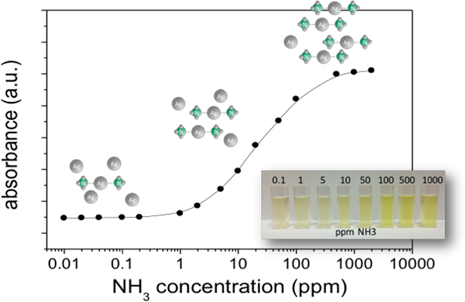
- nanoparticles, we show in Figure 1 the UV–vis absorption spectra obtained from the most representative samples. The peak at about 400 nm is due to SPR of the electrons in the conduction band of silver and indicates the formation of silver colloids with nanometre-sized dimensions. Ammonia modulates the UV–vis
- absorption spectra in a concentration-dependent manner and catalyses the formation of silver nanoparticles. Size, shape and surface functionalization of the nanoparticles can strongly influence the spectral trend of the plasmon band of the silver nanoparticles [28][29]. As evident from Figure 1, the plasmon
- particular, the results were interpreted by a first-order kinetic model [30][31]. As expected, the final result depends on NH3 concentration and on reaction time. Figure 6 shows the time evolution of UV–vis absorption spectra of two different colloidal solutions containing 200 ppm and 5 ppm ammonia (Figure



Sugarcane juice derived carbon dot–graphitic carbon nitride composites for bisphenol A degradation under sunlight irradiation
Beilstein J. Nanotechnol. 2018, 9, 353–363, doi:10.3762/bjnano.9.35

- content. Optical properties Figure 3a shows the UV–vis absorption spectra of CDs in an aqueous solution in the range from 200 nm to 750 nm. The obvious peak at about 330 nm could be ascribed to the n–π* transition of C=O bond [56]. The inset of Figure 3a shows that the CD solution emitted a strong blue
- onset of the absorption spectra of pure g-C3N4 started from 452 nm, showing a band gap of 2.75 eV, which is almost the same as that previously reported [28][46][64]. It is obvious that all CD/g-C3N4 composites displayed a broad light absorption in the whole solar spectrum ranging from 200 to 800 nm due
- absorption spectra after titanium dioxide (TiO2) loading [28] and acid treatment [29], the incorporation of CDs into g-C3N4 consistently red-shifted the absorption spectra towards the visible and NIR region. However, the photocatalytic performance of the composites is possibly limited under NIR light


Synthesis and characterization of electrospun molybdenum dioxide–carbon nanofibers as sulfur matrix additives for rechargeable lithium–sulfur battery applications
Beilstein J. Nanotechnol. 2018, 9, 262–270, doi:10.3762/bjnano.9.28
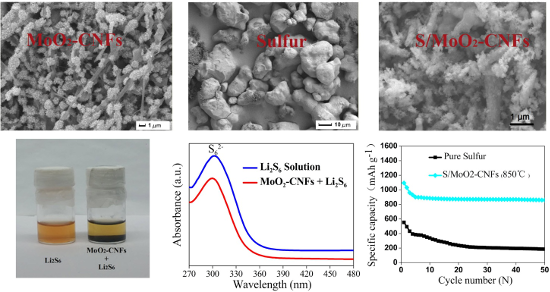
- composite. (c) Optical photo of Li2S6 adsorption on MoO2–CNFs and (d) UV–vis absorption spectra of the Li2S6 solution before and after the addition of MoO2–CNFs. (a) The CV curves of cells assembled with S/MoO2–CNF cathodes and pure sulfur cathodes. (b) Cycling performance of MoO2–CNFs calcined at different


Co-reductive fabrication of carbon nanodots with high quantum yield for bioimaging of bacteria
Beilstein J. Nanotechnol. 2018, 9, 137–145, doi:10.3762/bjnano.9.16
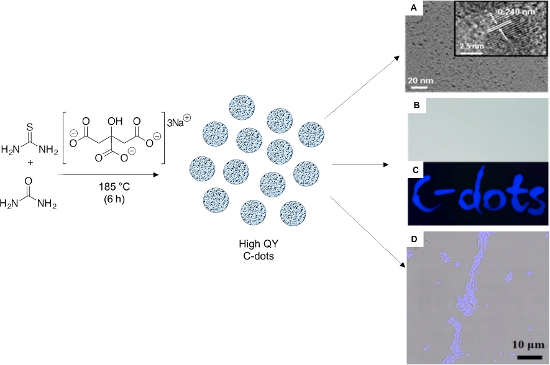
- spectroscopy (XPS), using a K-Alpha XPS spectrometer (Scientific Escalab 250) with an Al Kα X-ray radiation (1486.6 eV) source for excitation. UV–vis absorption spectra of the samples were recorded on a Perkin Elmer Lambda 950 spectrophotometer. FT-IR was conducted at room temperature on a Nicolet 670


Facile synthesis of silver/silver thiocyanate (Ag@AgSCN) plasmonic nanostructures with enhanced photocatalytic performance
Beilstein J. Nanotechnol. 2017, 8, 2781–2789, doi:10.3762/bjnano.8.277
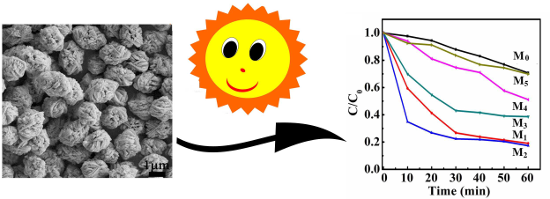
- experimental data. The Supporting Information contains details of the AgSCN characterization, Nyquist plots, EDS spectrum of different Ag/AgSCN samples, and UV–vis absorption spectra of oxytetracycline solutions with M2 as a catalyst. Acknowledgements This work is supported by the National Natural Science


CdSe nanorod/TiO2 nanoparticle heterojunctions with enhanced solar- and visible-light photocatalytic activity
Beilstein J. Nanotechnol. 2017, 8, 2741–2752, doi:10.3762/bjnano.8.273
- ) was used and the areas of each component were modified according to classical Scofield sensitivity factors. All the optical measurements were performed at room temperature (20 ± 1 °C) under ambient conditions. The absorption spectra of liquid samples were recorded on a Thermo Scientific Evolution 220
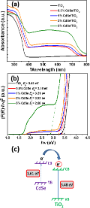
- , Raman analysis indicates that CdSe NRs are well-associated to TiO2 particles. The UV–visible absorption spectra of TiO2 and CdSe/TiO2 composites are shown in Figure 4a. The bandgap energies of TiO2, CdSe and CdSe/TiO2 composites were determined by plotting [F(R)hν]2 vs photon energy and extrapolating
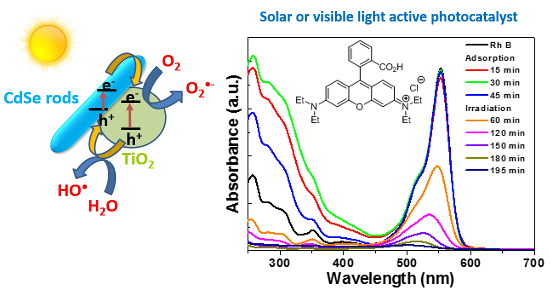
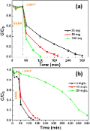
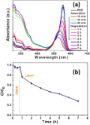
- discolored during photocatalytic experiments (Figure 6c) and the dye was also partially decomposed (the TOC value decreased from 6.9 ± 0.3 to 2.4 ± 0.2 mg/L after the 150 min of irradiation). The temporal evolution of the UV–vis absorption spectra is displayed in Figure 6b. The intensity of the RhB






Inelastic electron tunneling spectroscopy of difurylethene-based photochromic single-molecule junctions
Beilstein J. Nanotechnol. 2017, 8, 2606–2614, doi:10.3762/bjnano.8.261
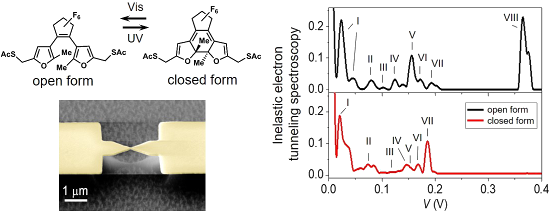
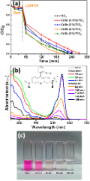
- in a change of the molecular orbitals. As can be seen in Figure 1b, we measured the absorption spectra of C5F-ThM molecules, while illuminating with UV light (313 nm) for different illumination times. The absorption band of the closed form extends to a higher wavelength (around 550 nm) than those of
- switch states under the illumination with UV and visible light. Shown at the bottom is a scanning electron microscopy image of a MCBJ device. (b) Variation of UV–visible absorption spectra under UV light irradiation (wavelength of 313 nm with an intensity of ca. 0.15 mW/cm−2) as a function of


PTFE-based microreactor system for the continuous synthesis of full-visible-spectrum emitting cesium lead halide perovskite nanocrystals
Beilstein J. Nanotechnol. 2017, 8, 2521–2529, doi:10.3762/bjnano.8.252
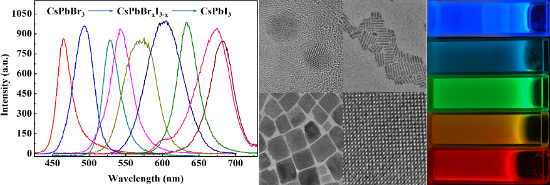
- Absorption spectra were investigated via a UV–vis spectrometer (Varian Cary 50, Varian, Inc.), and the PL spectra were acquired by a Varian Cary Eclipse (Varian, Inc.) spectrophotometer. The quantum yield (QY) of CsPbX3 was obtained by comparing the integrated PL intensity of QDs with a standard sample of


Comprehensive investigation of the electronic excitation of W(CO)6 by photoabsorption and theoretical analysis in the energy region from 3.9 to 10.8 eV
Beilstein J. Nanotechnol. 2017, 8, 2208–2218, doi:10.3762/bjnano.8.220
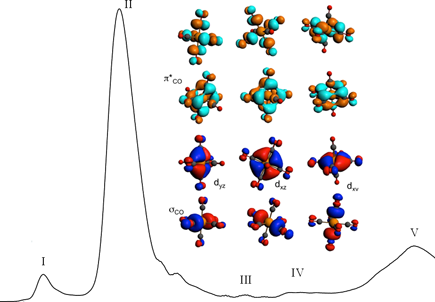
- calculations has allowed the reassessment and reassignment of some states, particularly those previously explored below 8 eV. However, despite a reasonable agreement between the TDDFT and VUV absorption spectra we should be aware that the description of double excited states or diffuse Rydberg states is not


Preparation and characterization of polycarbonate/multiwalled carbon nanotube nanocomposites
Beilstein J. Nanotechnol. 2017, 8, 2026–2031, doi:10.3762/bjnano.8.203
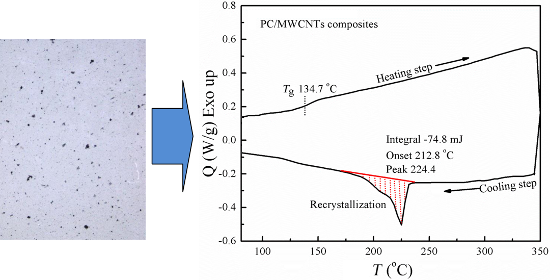
- presence of submicrometer-scale filler particles throughout the polymer matrix is also observed even at the highest MWCNT loading (see Figure 1d). UV–vis absorption spectra of the PC/MWCNT composite films are presented in Figure 2. Good dispersion is crucial for optimal optical properties and ensures
- solvent helps to overcome the van der Waals interaction in the nanotubes, eventually leading to better dispersion. Figure 3 shows the normalized FTIR absorption spectra of principal absorbance bands of the investigated PC/MWCNT nanocomposite films. FTIR spectroscopy demonstrated to be a useful tool to


Fabrication of carbon nanospheres by the pyrolysis of polyacrylonitrile–poly(methyl methacrylate) core–shell composite nanoparticles
Beilstein J. Nanotechnol. 2017, 8, 1897–1908, doi:10.3762/bjnano.8.190

- (BJH) method. UV–vis absorption spectra were performed on a Perkin Elmer Lambda 25 spectrophotometer. Results and Discussion PAN–PMMA nanoparticles To realize the efficient and controlled fabrication of PAN-based carbon nanospheres from a PAN–PMMA nanoparticle precursor via the pyrolysis method, one



Carbon nano-onions as fluorescent on/off modulated nanoprobes for diagnostics
Beilstein J. Nanotechnol. 2017, 8, 1878–1888, doi:10.3762/bjnano.8.188
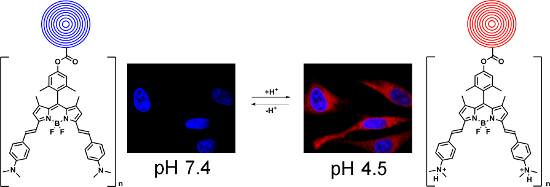
- HR 800 UV LabRam Raman microscope. For the Raman measurements, the samples were deposited directly on a silicon wafer and excited with a built-in 632 nm laser. Absorption and fluorescence spectroscopy Absorption spectra were recorded on an Agilent Cary 8454 UV–vis diode array spectrophotometer
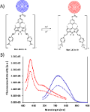
- replicates and the error bars were the results of the standard deviations of these replicates. Emission spectra of BODIPY 3 (blue line: Excitation at 680 nm; emission at 737 nm) and BODIPY 4 (red line: Excitation at 600 nm; emission at 637 nm). Inset: absorption spectra of BODIPY 3 (blue line) and BODIPY 4




Self-assembly of chiral fluorescent nanoparticles based on water-soluble L-tryptophan derivatives of p-tert-butylthiacalix[4]arene
Beilstein J. Nanotechnol. 2017, 8, 1825–1835, doi:10.3762/bjnano.8.184
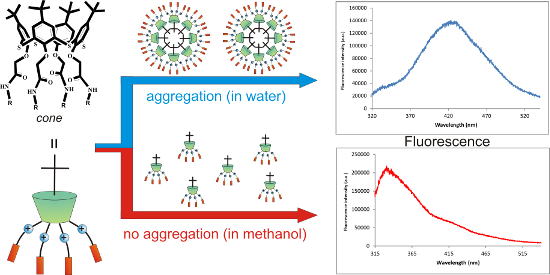
- fragments. To explain all these facts, we recorded the absorption spectra of the compounds 8–11 and the ester 2. The spectra of all these compounds are identical: there is an absorption band of low intensity corresponding to the π→π* transition of the indole fragment in the longwave region [49] and it is



(Metallo)porphyrins for potential materials science applications
Beilstein J. Nanotechnol. 2017, 8, 1786–1800, doi:10.3762/bjnano.8.180
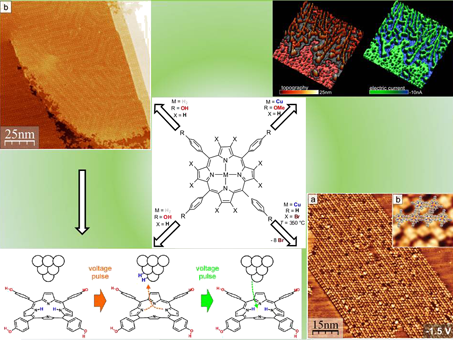
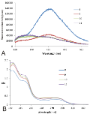
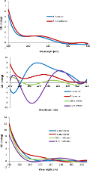
- covered with 100 nm thick Au layers were applied. Variable angle spectroscopic ellipsometry (VASE) was used to determine the absorption spectra of the as-obtained thin films. The extinction coefficients of the thin films display the typical features expected for (metallo)porphyrins, including expected
- corresponding to the observed features in the absorption spectra. This indicates that the LUMO of these molecules generating the Q band is a formerly degenerated state undergoing Zeeman splitting in the magnetic field. With respect to the spectroscopic ellipsometry and magneto-optical Kerr effect spectroscopy








Methionine-mediated synthesis of magnetic nanoparticles and functionalization with gold quantum dots for theranostic applications
Beilstein J. Nanotechnol. 2017, 8, 1734–1741, doi:10.3762/bjnano.8.174
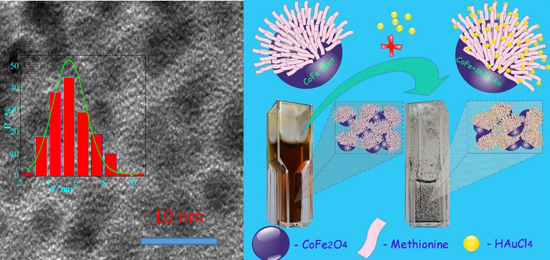
- . Typical UV–vis absorption spectra of aqueous methionine, tetrachlorauric acid and gold species solution are shown in Figure 3. The pure methionine solution does not exhibit any absorption peaks in the measured spectral range. For the chloroauric acid solution, however, a clearly resolved absorption peak
- responses of as-formed (1) and sonicated NPs in a 10 mmol·L−1 HAuCl4 solution, kept at a pH 12.2, at 37 °C for 4 h (2) are presented. HRTEM image of CoFe2O4@Met NPs after sonication in 15 mmol·L−1 HAuCl4 solution at 37 °C for 4 h (a) and their EDX spectrum (b). Absorption spectra of methionine (1


Fluorination of vertically aligned carbon nanotubes: from CF4 plasma chemistry to surface functionalization
Beilstein J. Nanotechnol. 2017, 8, 1723–1733, doi:10.3762/bjnano.8.173
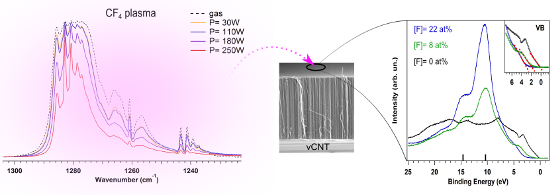
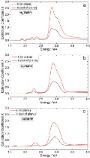
- increases again, due to the partial restoration of the delocalized charge in the conducting π orbitals. This effect is also observed in the near-edge absorption spectra acquired at the C–K edge (Figure 5b) where the peak at 285.4 eV (corresponding to the transition C 1s level to the unoccupied π* states
- Fermi level is depicted in the frame. For the same conditions, the absorption spectra acquired at C–K edge and F–K edge are reported in b) and c), respectively. The stability of the fluorination is presented as a function of time for four different samples containing increasing amount of fluorine




Three-in-one approach towards efficient organic dye-sensitized solar cells: aggregation suppression, panchromatic absorption and resonance energy transfer
Beilstein J. Nanotechnol. 2017, 8, 1705–1713, doi:10.3762/bjnano.8.171
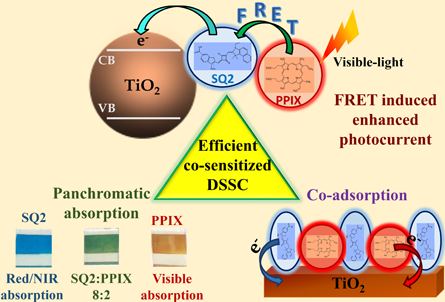
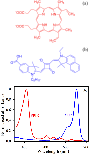
- two dyes increase the photocurrent as well as the efficiency of the device. From the absorption spectra of the co-sensitized photoanodes, PPIX was observed to be efficiently acting as a co-adsorbent and to reduce the dye aggregation problem of SQ2. It has further been proven by a comparison of the
- of designing strategies has been developed and reported in the literature in order to optimize the device performance and to minimize the effective costs [5][6][7][8][9][10]. A good spectral match between the absorption spectra of the sensitizer and the incident solar radiation is an essential
- that of the metallo-organic dyes because of their narrow absorption spectra, shorter excited-state lifetimes and the problem of self-aggregation on the semiconductor surface [14]. For efficient organic dye-sensitized solar cells, appreciated techniques to achieve a broad absorption window are either



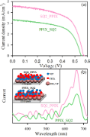
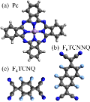
Charge transfer from and to manganese phthalocyanine: bulk materials and interfaces
Beilstein J. Nanotechnol. 2017, 8, 1601–1615, doi:10.3762/bjnano.8.160
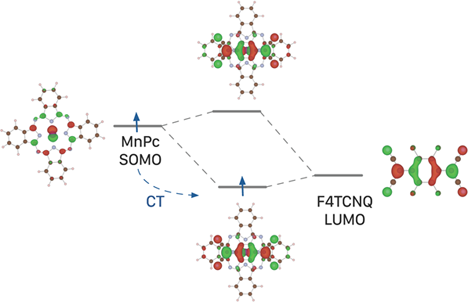
- revealed by polarization dependent X-ray absorption spectroscopy (XAS) studies [127]. In Figure 12 we present corresponding N 1s absorption spectra for pure MnPc and two different film thicknesses of an F16CoPc overlayer, deposited on a gold single crystal. Different light polarizations with respect to the
- different polarization directions of the incident synchrotron radiation, as depicted in Figure 13. The data for a 3 nm thick F16CoPc film on top of MnPc are very similar to the corresponding absorption spectra of pure CoPc on gold [130]. This indicates that fluorination of CoPc has little impact on the
- reaction between F16CoPc and MnPc at the corresponding interface, which affects the cobalt states of F16CoPc. This conclusion is supported by equivalent investigations of CoPc monolayers on gold and silver surfaces, where similar changes in the absorption spectra were observed and where a charge transfer



Bright fluorescent silica-nanoparticle probes for high-resolution STED and confocal microscopy
Beilstein J. Nanotechnol. 2017, 8, 1283–1296, doi:10.3762/bjnano.8.130
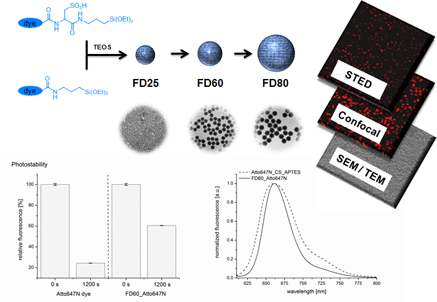
- influence of the integration. The spectra seem to be approximately the same (less than a few nanometres peak shift to longer wavelengths), showing two maxima for the Atto647N dye (Figure S16, Supporting Information File 1) in the absorption spectra, whereas the fluorescence spectra of the dye-modified


Synthesis, spectroscopic characterization and thermogravimetric analysis of two series of substituted (metallo)tetraphenylporphyrins
Beilstein J. Nanotechnol. 2017, 8, 1191–1204, doi:10.3762/bjnano.8.121
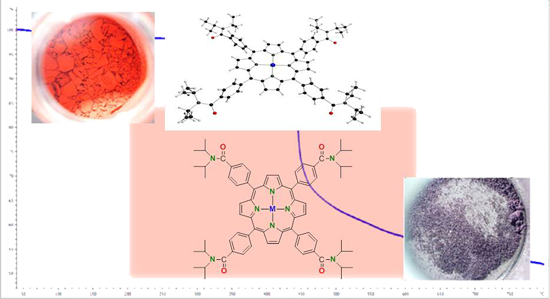
- terminal –C(O)NR2 groups. UV–vis studies The UV–vis absorption spectra of 2/2a–d and 3/3a–d were recorded in CHCl3 solution in the spectral range of 230–700 nm. In order to avoid possible impact of the concentrations on λabs and ε, which was reported for (metallo)phthalocyanines [28], we performed
- concentration-dependent UV–vis measurements. According to [28] the nature (cofacial, face-to-face, tilted) and degree (dimer, oligomer, polymer) of mutual interactions between (metallo)phthalocyanine molecules might modify their optical absorption spectra [28]. However, the UV–vis studies of 2/2a–d and 3/3a–d
- of 480–700 nm. Optical absorptions are numbered in relation to the wavelength, λabs and log ε values are summarized in Table 2. Generally, absorption spectra of free-base porphyrins consist of characteristic absorption bands: The more intense Soret band (or B band) arising from a1u(π)→eg*(π


Surface-enhanced Raman spectroscopy of cell lysates mixed with silver nanoparticles for tumor classification
Beilstein J. Nanotechnol. 2017, 8, 1183–1190, doi:10.3762/bjnano.8.120

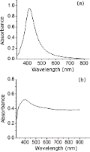
- after testing each batch permutation were summed up. UV–vis absorption spectra of (a) silver nanoparticles with an absorption band at 415 nm and (b) solution of silver nanoparticles and potassium chloride. The absorption band of aggregated nanoparticles was shifted to near infrared region. (a) Scanning


Enhanced catalytic activity without the use of an external light source using microwave-synthesized CuO nanopetals
Beilstein J. Nanotechnol. 2017, 8, 1167–1173, doi:10.3762/bjnano.8.118
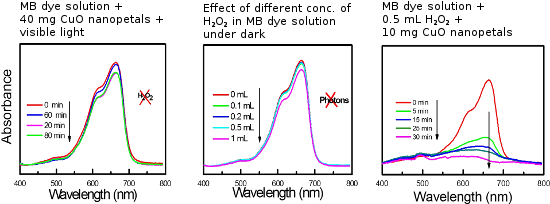
- the same morphology, further experiments were performed with as-synthesized nanopetals. Optical study The UV–vis absorption spectra of as-synthesized CuO nanopetals is shown in the Figure 2a. It reflects a wide absorption spectrum up to 700 nm covering almost the entire visible spectrum. The
- suspension at regular intervals and were centrifuged to filter suspended CuO powder. The MB concentration in the filtered suspension was studied with a Perkin Elmer Lambda 750 UV–vis spectrophotometer. Figure 2b shows the UV–vis absorption spectra of the aliquots taken out at different time intervals. In
- out to investigate the effect of different concentrations of H2O2 for MB degradation in the absence of CuO nanopetals (catalyst) without any irradiation (UV/visible light). Figure 2c shows the UV–vis absorption spectra for different concentrations of H2O2 in MB solution, without catalyst, after one


AgCl-doped CdSe quantum dots with near-IR photoluminescence
Beilstein J. Nanotechnol. 2017, 8, 1156–1166, doi:10.3762/bjnano.8.117
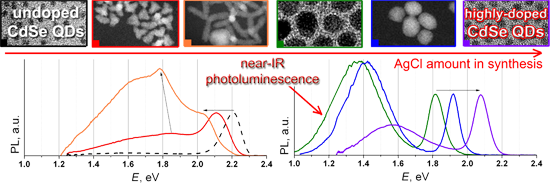
- spherical particles doped with AgCl. The absorption spectra of TPs begin at 2.0 eV. The black arrow in Figure 11 shows an increase in the intensity of the 2S3/2-1Se transition against the background of 1S3/2-1Se (blue arrow), which is connected with the increase of legs of TPs [30]. Low-energy regions of


ZnO nanoparticles sensitized by CuInZnxS2+x quantum dots as highly efficient solar light driven photocatalysts
Beilstein J. Nanotechnol. 2017, 8, 1080–1093, doi:10.3762/bjnano.8.110
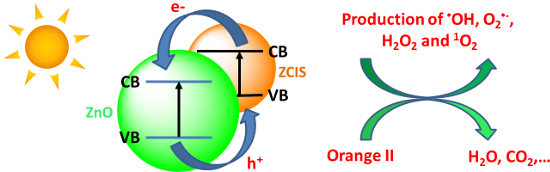
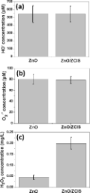
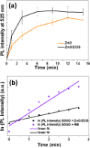
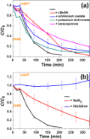
- the ZnO/ZCIS nanoparticles was determined using a Malvern Zetasizer Nano ZS instrument. All the optical measurements were conducted at room temperature (20 ± 1 °C) under ambient conditions. The absorption spectra of liquid samples were recorded on a Thermo Scientific Evolution 220 UV–visible




Assembly of metallic nanoparticle arrays on glass via nanoimprinting and thin-film dewetting
Beilstein J. Nanotechnol. 2017, 8, 1049–1055, doi:10.3762/bjnano.8.106
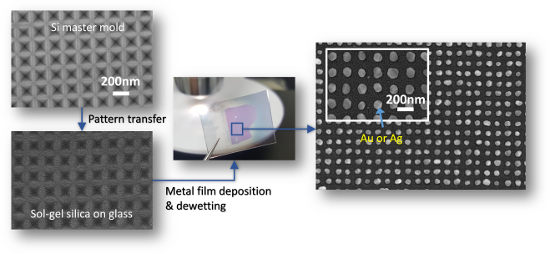
- substrates, the method presented here can extend the applications of metal nanoparticles for several optical purposes. (a) Silicon master mold with inverted pyramidal pits and (b) PDMS stamp with the transferred pattern. The inset in (b) is a high-magnification image. Evolution of the FTIR absorption spectra





