Search results
Search for "copper" in Full Text gives 577 result(s) in Beilstein Journal of Nanotechnology. Showing first 200.
Nickel nanoparticle-decorated reduced graphene oxide/WO3 nanocomposite – a promising candidate for gas sensing
Beilstein J. Nanotechnol. 2021, 12, 343–353, doi:10.3762/bjnano.12.28
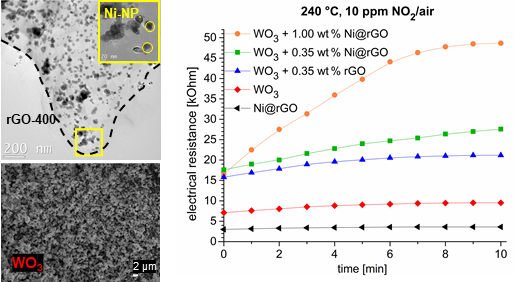
- . TEM samples were prepared by drop casting the with acetonitrile diluted material on 200 µm carbon-coated copper grids, followed by washing the grid several times with acetonitrile to remove the excess ionic liquid. The size distribution was determined manually or with the aid of the Gatan Digital


The patterning toolbox FIB-o-mat: Exploiting the full potential of focused helium ions for nanofabrication
Beilstein J. Nanotechnol. 2021, 12, 304–318, doi:10.3762/bjnano.12.25
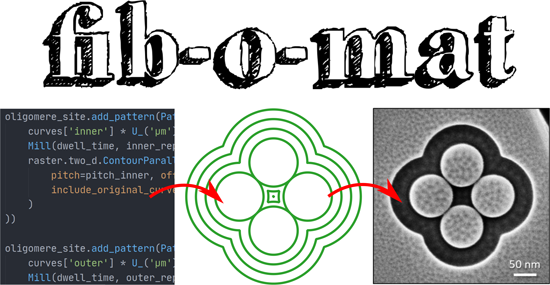
- combination with a thermal stability up to 2600 K [50], renders graphene an exciting candidate for room-temperature bolometry [51]. Single-layer graphene was grown by chemical vapor deposition onto a multicrystalline copper foil using methane as precursor gas at 1035 °C. For the transfer process, the graphene
- sheet was covered by a 500 nm thick PMMA layer. After etching the copper foil, the graphene sheet was transferred onto a SiN membrane with a regular grid of holes. The transfer process is described in detail elsewhere [52]. The SiN membrane was covered with a thin layer of gold, which allowed us to


Characterization, bio-uptake and toxicity of polymer-coated silver nanoparticles and their interaction with human peripheral blood mononuclear cells
Beilstein J. Nanotechnol. 2021, 12, 282–294, doi:10.3762/bjnano.12.23
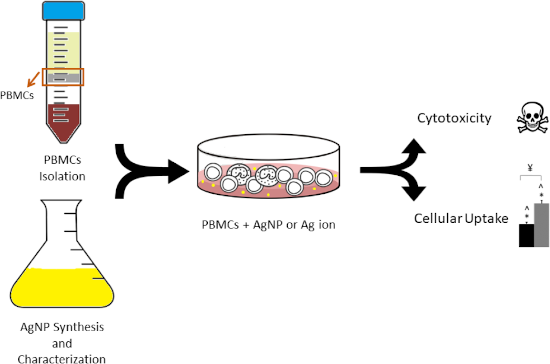
- ) and 100 IU/mL pen/strep (Gibco by Life Technologies), respectively [62]. Briefly, a carbon-coated copper grid (300 mesh; Agar scientific) was placed into a clear plastic centrifuge tube and 4 mL of sample was added into the tube very slowly. The tube was covered by parafilm and ultracentrifuged for 1



A review on the biological effects of nanomaterials on silkworm (Bombyx mori)
Beilstein J. Nanotechnol. 2021, 12, 190–202, doi:10.3762/bjnano.12.15
- to generate more reactive oxygen species (ROS) and to induce oxidative stress could be a reason for their antibacterial activity against R. solanacearum in tobacco plants [23]. Aside from MgO NPs, other nanomaterials, including titanium dioxide (TiO2 NPs), zinc oxide (ZnO NPs), copper oxide (CuO NPs
- zebrafish hatching enzyme 1 (ZHE1), which caused a delay in the hatching of zebrafish embryos by 50% following its exposure to copper oxide (CuO). The group of d’Amora [51] compared the toxicity of oxidized carbon nano-onions, oxidized carbon nano-horns, and graphene oxide on the development of zebrafish
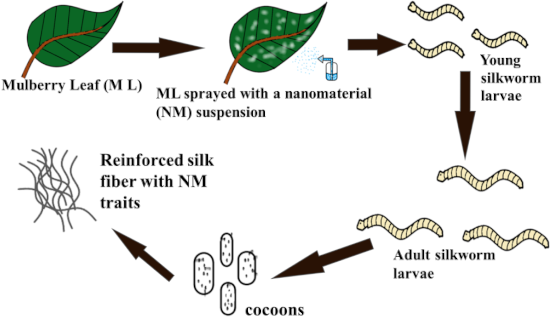
- ][158]. Improving the luster and the quality of silkworm silk is imperative and studies are being carried out in this direction. Feeding silkworms with nanomaterials, such as carbon nanotubes (CNTs), titanium dioxide, copper, and graphene has been reported to improve the mechanical properties and


Paper-based triboelectric nanogenerators and their applications: a review
Beilstein J. Nanotechnol. 2021, 12, 151–171, doi:10.3762/bjnano.12.12
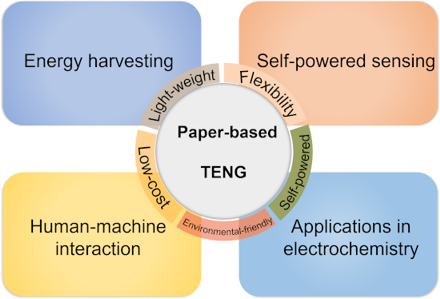
- flexible conductive materials, metallic materials (e.g., copper, zinc, silver, and gold) are still frequently used as electrodes for flexible electronics due to their excellent electrical conductivity. By using the Kapton tape to attach soft stencils to paper, various metals can be deposited through the
- by stencil-assisted vapor deposition [103]. The arrays of small holes with various shapes and distributions are drilled on the stencil via laser cutting, and a layer of copper with thickness of 100 nm is deposited onto the electrode via physical vapor deposition. By combining the stencil-assisted
- power sources or self-powering strategies. Chen et al. showed the construction of origami P-TENGs as a self-powered paper interface (SPIN) to harvest mechanical energy from contact–separation movements [132] (Figure 6b). The SPIN unit is made of copper tape electrodes, PTFE, and nylon sheet friction






The role of gold atom concentration in the formation of Cu–Au nanoparticles from the gas phase
Beilstein J. Nanotechnol. 2021, 12, 72–81, doi:10.3762/bjnano.12.6
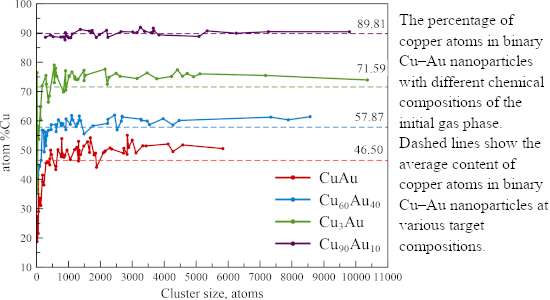
- concentration of gold atoms on the size and on the actual chemical composition of the formed bimetallic nanoparticles. The modeled region had a cubic shape with a face length of 1350 Bohr radii and contained a total of 91125 copper and gold atoms uniformly distributed in space. Thus, based on the results of the
- initial vapor phase, basically corresponded to a given target composition. Keywords: binary nanoparticles; computer simulation; copper; gold; molecular dynamics; Introduction The nanometer-sized Cu–Au compounds are being studied quite actively [1][2][3][4][5][6][7][8] because of their potential
- oxidation of benzyl alcohol to benzaldehyde and in the epoxidation of propene with nitrous oxide. Moreover, in experimental and theoretical works [9], it was clearly shown that the partial substitution of copper with gold leads to a change in the physicochemical properties in many cases. For example, there


ZnO and MXenes as electrode materials for supercapacitor devices
Beilstein J. Nanotechnol. 2021, 12, 49–57, doi:10.3762/bjnano.12.4
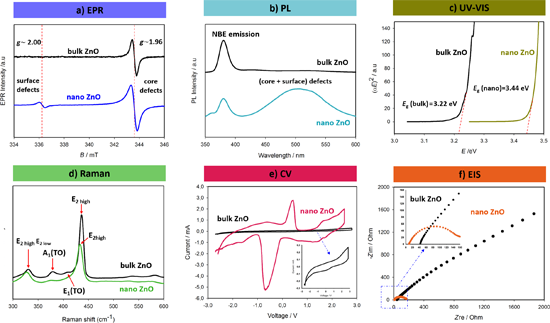
- less defective flakes were obtained. The volumetric capacitance of the delaminated Mo2CTx “paper” was measured as 700 F·cm−3 at 2 mV·s−1 [28]. Ramachandran et al. developed a MXene composite with non-peripheral octamethyl-substituted copper(II) phthalocyanine, MXene/N-CuMe2Pc, with different fractions

Effect of different silica coatings on the toxicity of upconversion nanoparticles on RAW 264.7 macrophage cells
Beilstein J. Nanotechnol. 2021, 12, 35–48, doi:10.3762/bjnano.12.3

- UCNPs, was dried on a carbon-coated copper grid (Cu 400 mesh, Quantifoil®: 100 carbon support films). The images were analyzed using the software FIJI. At least 300 particles per sample were analyzed. Dynamic light scattering and electrophoretic light scattering The DLS and ELS measurements were


Atomic layer deposited films of Al2O3 on fluorine-doped tin oxide electrodes: stability and barrier properties
Beilstein J. Nanotechnol. 2021, 12, 24–34, doi:10.3762/bjnano.12.2
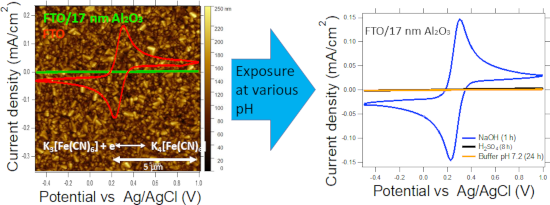
- semiconducting electrodes, such as ZnO. Aluminium oxide is another promising candidate for this task. It is amphoteric but insoluble in aqueous media at a neutral pH value [8][9]. ALD oxide layers, including Al2O3, were used as barrier coatings on copper to protect against corrosion in 0.1 M NaCl [10]. As


PEG/PEI-functionalized single-walled carbon nanotubes as delivery carriers for doxorubicin: synthesis, characterization, and in vitro evaluation
Beilstein J. Nanotechnol. 2020, 11, 1728–1741, doi:10.3762/bjnano.11.155
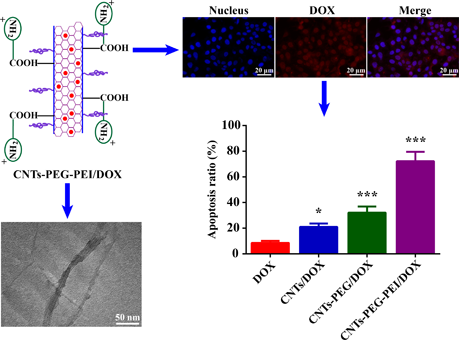
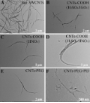
- was obtained by dialysis and vacuum drying successively as above. This difunctionalized CNT carrier was named CNTs-PEG-PEI. Characterization of nanocarriers Different aqueous dispersions of SWCNTs were dispersed onto holey carbon film on copper grids. The sample morphologies were observed by




Seebeck coefficient of silicon nanowire forests doped by thermal diffusion
Beilstein J. Nanotechnol. 2020, 11, 1707–1713, doi:10.3762/bjnano.11.153
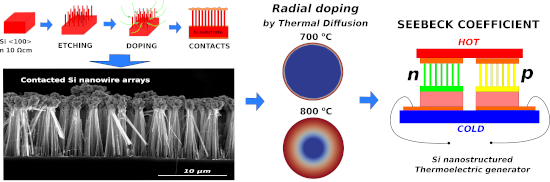
- fabricated on the top of a silicon nanowire forest, which can be achieved by copper electrodeposition [18]. 2) The optimum doping concentration of the nanowires for the exploitation of the maximum power factor of silicon [3] needs to be found. Both the Seebeck coefficient and the electrical conductivity
- maintained for the chosen doping time (ten minutes, typically). Then, the chips have been allowed to cool maintaining the nitrogen flux. After doping by thermal diffusion, a contact has been provided on top of the silicon nanowire forest exploiting the copper electrodeposition method described in a previous
- publication [18]. At first, a Cr (for adhesion)/Cu double metal layer has been deposited by thermal evaporation both on top of the nanowires and on the other side of the silicon wafer, that is, at the bottom of the substrate. The Cu layer on the top has been used as a seed for the electrodeposition of copper


The influence of an interfacial hBN layer on the fluorescence of an organic molecule
Beilstein J. Nanotechnol. 2020, 11, 1663–1684, doi:10.3762/bjnano.11.149
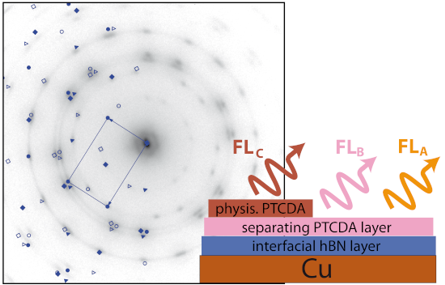
- , causing an enhancement by a factor of not more than 102–103 [46]. Recently, hBN has gained interest as a SERS substrate [49]. In a comparative study on 2DMs on SiO2 it was shown that hBN had an enhancement effect on the Raman modes of adsorbed copper phthalocyanine molecules [50]. The effect was explained
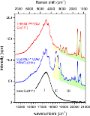
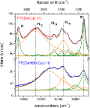
- similar intensity. We discuss two possible explanations for these different kinds of behavior after deposition at 20 K: (i) The dipole–dipole interaction between hBN and PTCDA enhances the Raman signal. In this process, the underlying copper would not be involved [50]. (ii) The Raman modes of PTCDA are






Piezoelectric sensor based on graphene-doped PVDF nanofibers for sign language translation
Beilstein J. Nanotechnol. 2020, 11, 1655–1662, doi:10.3762/bjnano.11.148
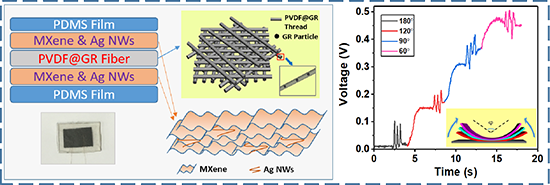
- ) are ultrasonically dispersed in deionized water (10 mL) for 1 h to obtain the spray solution. The liquid is transferred into a spray can and sprayed evenly on the surface of the fiber membrane. Then, the fiber membrane is dried at 60 °C for 5 min. After attaching copper wires on both sides, the
- membrane is encapsulated with PDMS. Thermoelectric test process: The PES unit is attached to a thin polyethylene plate and connected to the analogue signal test system via the copper wire electrodes. The surface of the plate heater is kept at a temperature of 50 °C. The polyethylene plate is fixed to a
- glove with double-sided tape. The thin copper wires were connected to the input terminals of the analogue measurement channels of a National Instruments BNC-2111 connector block. Voltage and current were measured with a Keithley 6514 electrometer (200 TΩ input impedance). The analogue signal of each


Oxidation of Au/Ag films by oxygen plasma: phase separation and generation of nanoporosity
Beilstein J. Nanotechnol. 2020, 11, 1608–1614, doi:10.3762/bjnano.11.143
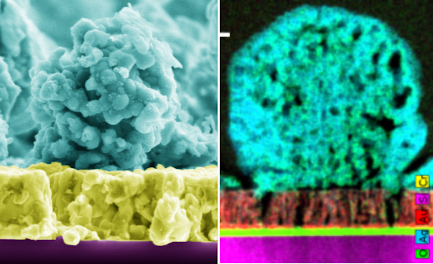
- a few have reported on the oxidation of silver alloys [15][20][21]. Gao et al. investigated the oxidation of Ag/Cu alloy by exposure to atomic oxygen. They demonstrated that the resistance of silver against corrosion by atomic oxygen was improved due to the presence of copper in the alloy [21]. From


Walking energy harvesting and self-powered tracking system based on triboelectric nanogenerators
Beilstein J. Nanotechnol. 2020, 11, 1590–1595, doi:10.3762/bjnano.11.141
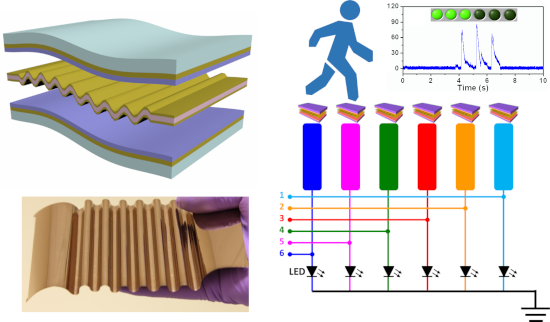
- triboelectric nanogenerator (u-TENG) was proposed and fabricated to scavenge the walking energy from areas with a high pedestrian flow. The as-prepared u-TENG is composed of two copper-coated nanostructured poly(tetrafluoroethylene) (PTFE) thin films as the back electrodes and an elastic undulated electrode in
- terephthalate) (PET) substrate. The Kapton film was fixed with a row of steel rods and heated, for 4 h in an oven at 100 °C, to achieve a wavy configuration. Copper foils were deposited onto both sides of the Kapton film by electron beam evaporation to form the wave-shaped electrode. The lead was connected to
- , nanostructured PTFE thin films coated with copper foils (back electrodes), and an elastic undulated electrode in between. The internal wave-shaped electrode is obtained by depositing copper layers onto both sides of the wave-shaped Kapton film, as displayed in Figure 1a. Due to their huge difference in electron





Cu2O nanoparticles for the degradation of methyl parathion
Beilstein J. Nanotechnol. 2020, 11, 1546–1555, doi:10.3762/bjnano.11.137
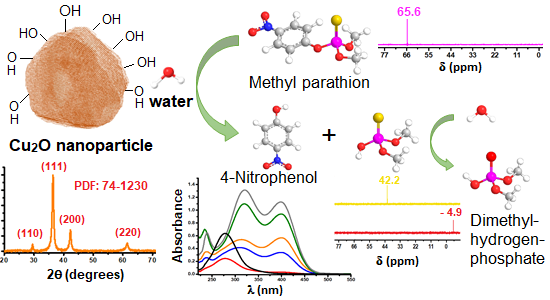
- University of Texas at Dallas, Texas 75080, United States 10.3762/bjnano.11.137 Abstract Methyl parathion (MP) is one of the most neurotoxic pesticides. An inexpensive and reliable one-step degradation method of MP was achieved through an aqueous suspension of copper(I) oxide nanoparticles (NPs). Three
- . Keywords: copper(I) oxide (Cu2O); Cu2O nanoparticles; degradation; methyl parathion; surface basicity; Introduction Organophosphorus pesticides (OPPs) are one of many kinds of pesticides that have attracted some attention mainly due to their neurotoxic effect [1][2][3]. The primary mechanism of action of
- bacteria are used for the degradation of MP, whereas photocatalytic degradation needs photons in the form of UV light and chemical degradation utilizes chemical species, such as copper(I) oxide (Cu2O) NPs in this work. Cu2O is widely known for its photocatalytic activity [29][30][31][32][33]. However


A wideband cryogenic microwave low-noise amplifier
Beilstein J. Nanotechnol. 2020, 11, 1484–1491, doi:10.3762/bjnano.11.131
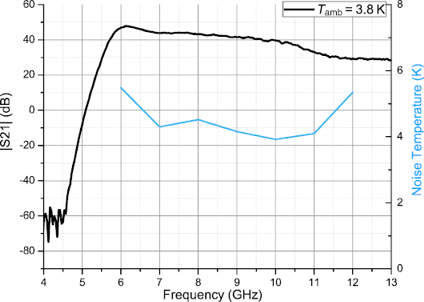
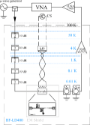
- system of the amplifier was based on a 10 mK closed-cycle dilution refrigerator where the amplifier was installed and fixed with screws to the copper holder at the 4 K plate. We used standard 2.2 mm CuBe 50 Ω coaxial microwave lines between 4 K stage and room-temperature SMA flange as input and output
- highly stable current source (marked as CS in Figure 5). The sample was placed in the copper sample holder with Pb and Mu-metal electromagnetic shields at the 10 mK temperature stage. A two-stage differential low-pass filter (marked as LPF) with 10 kHz bandwidth and wide stopband frequency range was




Antimicrobial metal-based nanoparticles: a review on their synthesis, types and antimicrobial action
Beilstein J. Nanotechnol. 2020, 11, 1450–1469, doi:10.3762/bjnano.11.129

- -based NPs have demonstrated antimicrobial activity over the last years. Several metal and metal oxide NPs, such as silver, copper, zinc oxide, titanium oxide, copper oxide, and nickel oxide NPs, are known to display antimicrobial activity [15][16][17] that depends on their composition, surface
- the environment [10]. Different parts of the plants can be used in the green synthesis of NPs. For example, spherical copper NPs (≈5–20 nm) were obtained by using Curcuma longa tuber extract and copper acetate dehydrate. These Cu NPs demonstrated excellent antibacterial activity against Gram-negative
- bacteria and fungi, has increased. The antimicrobial activity of CuO NPs obtained from an Actinomycete bacteria in a copper sulfate aqueous solution was tested against a few pathogenic bacteria, such as Staphylococcus aureus, Bacillus cereus, Proteus mirabilis, Edwardsiella tard, Aeromonas caviae


Wafer-level integration of self-aligned high aspect ratio silicon 3D structures using the MACE method with Au, Pd, Pt, Cu, and Ir
Beilstein J. Nanotechnol. 2020, 11, 1439–1449, doi:10.3762/bjnano.11.128
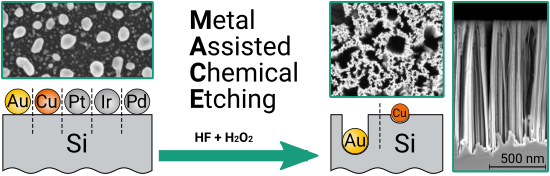
- also investigated palladium (Pd), platinum (Pt), and to a lesser extent even copper (Cu) [20][21][22]. However, there is no study analysing iridium (Ir) as catalytic metal. According to its standard reduction potential of 1.16 V, it is comparable to Pt (1.18 V) and Pd (0.95 V) and should work
- particles contribute significantly to surface coverage. The Au film covers 28% of the Si surface, while the Pd film covers more than 40% of the surface. This surface coverage comprises 1522 particles/μm2 at the Au wafers and 845 particles/μm2 at the Pd wafers, respectively. The wafers with copper show a
- structure partly rips and sometimes delaminates at the silicon–sponge interface. Figure 8 shows SEM images of the etching results using Cu nanoparticles. The wafers were etched with 10 mmol/L of H2O2 (Figure 8a,b) or with 50 mmol/L of H2O2 (Figure 8c,d). The images clearly demonstrate that copper is a


Triboelectric nanogenerator based on Teflon/vitamin B1 powder for self-powered humidity sensing
Beilstein J. Nanotechnol. 2020, 11, 1394–1401, doi:10.3762/bjnano.11.123
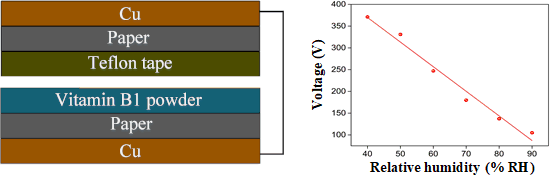
- lubricant to make a friction nanogenerator. Due to its sustainability and flexibility, paper can be used as a substrate and supporting structure. The conductive electrode is made of copper foil, while the triboelectric pair is comprised of Teflon tape and vitamin B1 powder. The approximate values of the
- -emitting diodes (LEDs) are integrated with the humidity sensor and the luminosity is an indicator of the relative humidity (RH) from the surrounding environment. Experimental The conductive copper foil tape is used as the electrode, while the paper (manufacturer: Miao Ben) at the bottom serves as a
- supporting platform. The Teflon tape (manufacturer: RUIGUAN) is cut to the desired size (4 cm × 5 cm) and pasted to the bottom of the conductive copper foil tape, serving as one element of the triboelectric pair. In addition, ≈20 ± 5 mg of vitamin B1 powder (manufacturer: Huazhong Pharmaceutical Co. LTD) is





Analysis of catalyst surface wetting: the early stage of epitaxial germanium nanowire growth
Beilstein J. Nanotechnol. 2020, 11, 1371–1380, doi:10.3762/bjnano.11.121
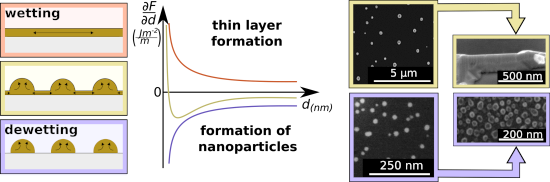
- beneficial when intentionally used (e.g., to create strongly localized heat sources [7][8]), but it can also be disruptive (e.g., when ultrathin copper layers collapse on titanium nitride, damaging electronic devices [9][10]). However, in thin film applications these phenomena are rarely attributed to the


Growth of a self-assembled monolayer decoupled from the substrate: nucleation on-command using buffer layers
Beilstein J. Nanotechnol. 2020, 11, 1291–1302, doi:10.3762/bjnano.11.113
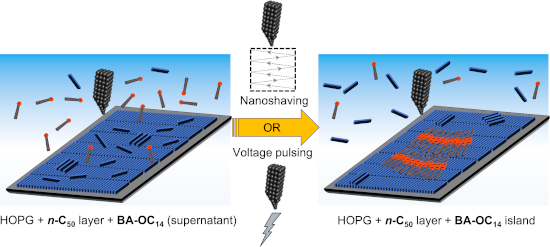
- symmetry of the underlying alkane layer [27]. Buffer layers of tetratriacontane [25] and tridecylamine [31] were used to template the self-assembly of copper phthalocyanine. Room temperature STM measurements revealed that the adsorption as well as the diffusion of clusters of CuPc molecules was strongly


Structure and electrochemical performance of electrospun-ordered porous carbon/graphene composite nanofibers
Beilstein J. Nanotechnol. 2020, 11, 1280–1290, doi:10.3762/bjnano.11.112
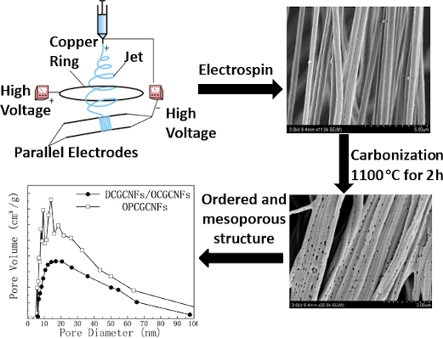
- of two high-voltage power generators (NTPS-35K, Ntsse Co., Korea), a flow pump (LSP01, Longerpump Co., Ltd., China), a syringe (20 mL) with a capillary tip (diameter = 0.5 mm), a copper ring and a parallel electrode collector. The needle tip and the copper ring were clamped on the anode of the high
- , the PGCNFs prepared via electrospinning were disordered, while the PGCNFs synthesized via MPEM were highly ordered (Figure 2b and Figure 2c). The explanation for these results lies in the fact that after the copper ring was added, the number of electric charges on the surface of the stretched jet
- increased. As a consequence, the resultant force generated by the copper ring also increased, leading to an increase in the jet kinetic energy and acceleration of the jet downward stretching speed [34]. Therefore, the results showed that MPEM improved both the stability and ordering of electrospun


Role of redox-active axial ligands of metal porphyrins adsorbed at solid–liquid interfaces in a liquid-STM setup
Beilstein J. Nanotechnol. 2020, 11, 1264–1271, doi:10.3762/bjnano.11.110
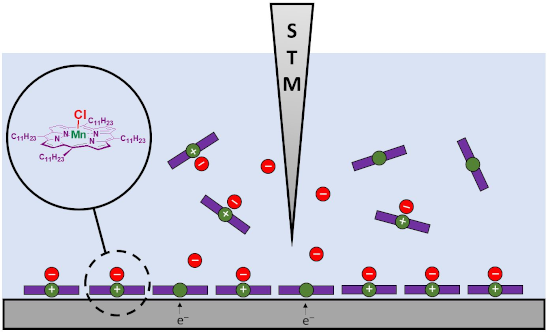
- additional currents were never observed in experiments with analogous porphyrins with a copper(II) or cobalt(II) center [10][11]. In the following, we will investigate the redox behavior of MnTUPCl at the solid–liquid interface in more detail. It is well-established that during and after the addition of


Magnetic-field-assisted synthesis of anisotropic iron oxide particles: Effect of pH
Beilstein J. Nanotechnol. 2020, 11, 1230–1241, doi:10.3762/bjnano.11.107
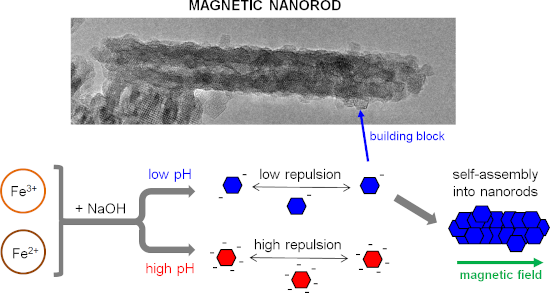
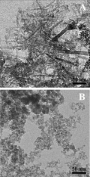
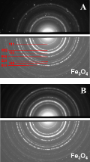
- (TEM) To prepare the TEM specimens, a drop (10 μL) of a freshly sonicated nanoparticle aqueous solution was deposited onto a 140 mesh Formvar-coated copper grid and and air-dried under ambient conditions. TEM micrographs and electron diffraction patterns were obtained on a LEO 912 AB OMEGA microscope
- [57]. High-resolution transmission electron microscopy (HRTEM) To prepare the specimens for HRTEM measurements, the samples were manually applied onto the lacey carbon-coated side of the 300 mesh copper grid and air-dried under ambient conditions. The particle morphology was characterized by TEM and
- HR800, Villeneuve-d'Ascq, France) equipped with 100× magnification lens. The copper substrates were dip-coated in the sample solutions and dried under ambient conditions. The measurements of the produced films were conducted at room temperature and atmospheric air. A He–Ne laser (λ = 632.8 nm) was used