


Search results
Search for "detection" in Full Text gives 834 result(s) in Beilstein Journal of Nanotechnology. Showing first 200.
Observation of multiple bulk bound states in the continuum modes in a photonic crystal cavity
Beilstein J. Nanotechnol. 2023, 14, 544–551, doi:10.3762/bjnano.14.45
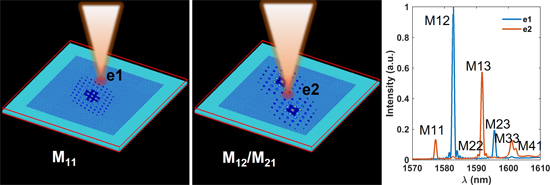
- confinement in a relatively simple way. Such strong resonances endow PhC-based BIC devices with a strong enhancement of light–matter interaction, indicating great potential for applications in ultrasensitive molecular fingerprint detection [12][13][35], hyperspectral biosensing imaging [36], novel flat light


Carbon nanotube-cellulose ink for rapid solvent identification
Beilstein J. Nanotechnol. 2023, 14, 535–543, doi:10.3762/bjnano.14.44
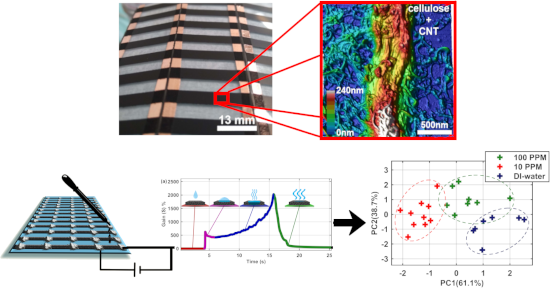
- sensor based on a carbon nanotube–cellulose ink that proves to be highly sensitive to various solvents and water with different impurity levels and can detect glycerin in water down to the 10–100 ppm range. We provide insights into the liquid detection mechanism, combining the well-known swelling
- the set [62]. Results and Discussion Liquid analysis Detection of glycerin in water The liquid sensing measurements were performed by applying a fixed voltage (5 V) on the device while measuring the current (I) as a function of the time. 6.5 µL of the tested liquid was dripped onto the transducers
- liquids, namely mixtures of water with low concentrations of glycerin (10 and 100 ppm) and a number of organic solvents (DI water, isopropyl alcohol, toluene, chloroform, and ethyl alcohol). To probe the limit of detection of the MFC/MWCNT composite, we performed measurements of glycerin in water at parts


Nanoarchitectonics to entrap living cells in silica-based systems: encapsulations with yolk–shell and sepiolite nanomaterials
Beilstein J. Nanotechnol. 2023, 14, 522–534, doi:10.3762/bjnano.14.43

- results only as a tentative experiment to evaluate the biocatalytic performance. However, these preliminary findings combined with the observed CO2 release from the cultures and the detection of alcohol allowed us to confirm that the encapsulated yeast produced ethanol likely faster and in higher amounts


The origin of black and white coloration of the Asian tiger mosquito Aedes albopictus (Diptera: Culicidae)
Beilstein J. Nanotechnol. 2023, 14, 496–508, doi:10.3762/bjnano.14.41
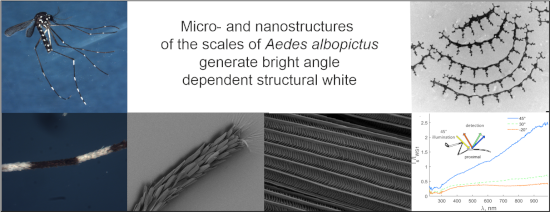
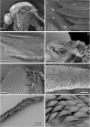
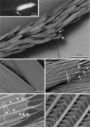
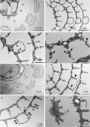
- dark pigment. The white colour of the scales has a structural origin. The structural white produced by the micro- and nanostructures of the scales on the tarsi of Ae. albopictus appears bright and is angle-dependent, since the reflected light changes according to the angle detection and according to
- in the near-infrared spectral range (>900 nm) is about 2.5 times stronger than the WS1 reflection (!) and up to five times stronger (at 45° detection) than in the UV spectral range (<300 nm) (Figure 6). Pronounced specular reflection (at 45° detection) could be seen at proximal and distal
- illumination (Figure 6). Enhanced reflection at 30° detection and distal illumination (compared with proximal illumination) (Figure 6a,b) should be related to the tilt angle of the individual scales (Figure 3a). There is also relative strong light scattering on the thin scale surface structure (Figure 3c–e



A mid-infrared focusing grating coupler with a single circular arc element based on germanium on silicon
Beilstein J. Nanotechnol. 2023, 14, 478–484, doi:10.3762/bjnano.14.38
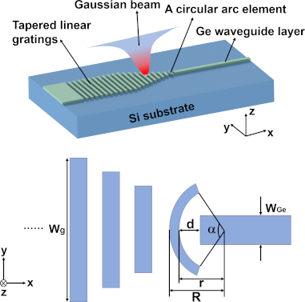
- couplers requiring secondary etching, the proposed full-etch grating coupler structure can reduce the complexity of fabrication and can provide a prospective platform for MIR photonic integration and photonic biosensor detection. Keywords: circular arc element; focusing grating coupler; germanium-on
- -silicon; mid-infrared; Introduction The mid-infrared (MIR) spectrum region covers the absorption band of most organic and inorganic matter. Thus, it has a broad application prospect in gas detection, environmental monitoring, lidar, free space optical communication, and remote sensing technologies [1][2
- proposed MIR grating coupler [14]. Finally, the transmission characteristics of the output fiber can be detected using an optical spectrum analyzer. There is a wide range of sensors for applications in, for example, biosensing, healthcare, disease detection, and gas detection. Therefore, research on those


Evaluation of electrosynthesized reduced graphene oxide–Ni/Fe/Co-based (oxy)hydroxide catalysts towards the oxygen evolution reaction
Beilstein J. Nanotechnol. 2023, 14, 420–433, doi:10.3762/bjnano.14.34
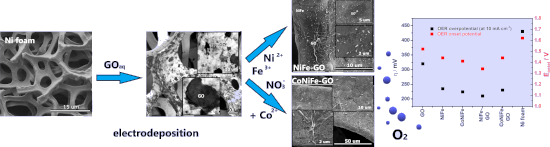
- ]. The spectra were obtained using the total electron yield (TEY) detection mode, which can sample down to a depth of a few nanometers at room temperature. The beamline optics was optimized to perform the experiment with an energy resolution of 200 meV and better. X-ray diffraction (XRD) measurements




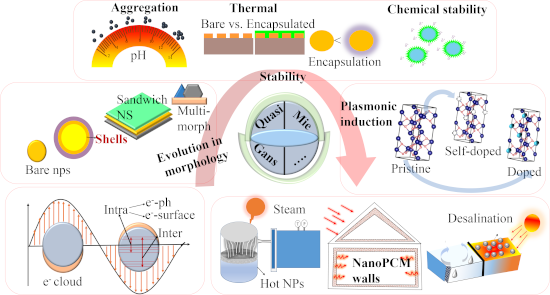
Plasmonic nanotechnology for photothermal applications – an evaluation
Beilstein J. Nanotechnol. 2023, 14, 380–419, doi:10.3762/bjnano.14.33




The steep road to nonviral nanomedicines: Frequent challenges and culprits in designing nanoparticles for gene therapy
Beilstein J. Nanotechnol. 2023, 14, 351–361, doi:10.3762/bjnano.14.30

- , specifically for dose/particle calculations. Lastly, a volume or mass distribution should be presented. Dynamic light scattering (DLS) is often be used for the inspection of aqueous suspensions with results bedeviled by the normal constraints of DLS and ensemble detection [64]. Both disc centrifugation and
- ultracentrifugation provide ensemble detection of size distributions with their own issues and complexities (e.g., gradient-induced aggregation and pressure-induced particle reconfiguration) [65]. Determination of size on a per-particle basis, such as that obtained from NTA or the aforementioned cryo-TEM/solution AFM

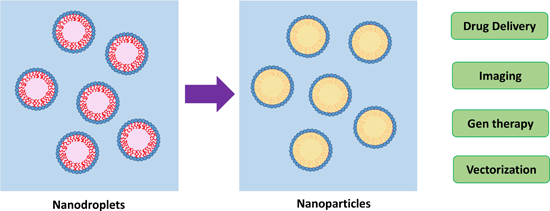
Polymer nanoparticles from low-energy nanoemulsions for biomedical applications
Beilstein J. Nanotechnol. 2023, 14, 339–350, doi:10.3762/bjnano.14.29
- flocculation of the nanoparticles with an analyte detection limit of 10 μg/mL. Calderó et al. [40] prepared PIC nanoemulsions at room temperature using poly(oxyethylene)(4) sorbitan monolaurate as surfactant. The hydrophobic phase dispersed in the droplets was constituted by 10% ethyl cellulose dissolved in




Quasi-guided modes resulting from the band folding effect in a photonic crystal slab for enhanced interactions of matters with free-space radiations
Beilstein J. Nanotechnol. 2023, 14, 322–328, doi:10.3762/bjnano.14.27
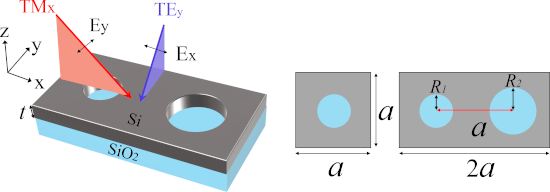
- have been demonstrated in all aspects of light–matter interactions, ranging from optical generation [6], propagation [7], nonlinear processes [8] to signal detection [9] and collection, to name a few. Although QBIC resonances in all-dielectric nanostructures have become a popular and mainstream


Biocatalytic synthesis and ordered self-assembly of silica nanoparticles via a silica-binding peptide
Beilstein J. Nanotechnol. 2023, 14, 280–290, doi:10.3762/bjnano.14.25
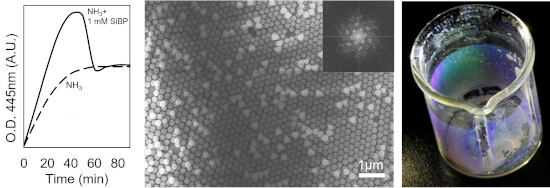
- –MS analyses were done with a fused silica capillary column a (Restek 14623, Thermo Fischer Scientific Inc, Waltham, MA, USA), 150 °C injection temperature, 250 °C detection temperature, 1 µL injection volume, and 1 mL/min He flow rate. Dionex Chromeleon 7.2 software (Thermo Fischer Scientific Inc




High–low Kelvin probe force spectroscopy for measuring the interface state density
Beilstein J. Nanotechnol. 2023, 14, 175–189, doi:10.3762/bjnano.14.18
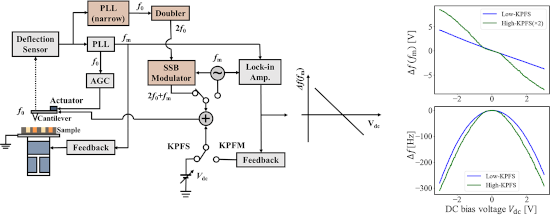
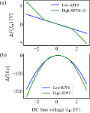
- known as a method that can measure the contact potential difference (CPD) between a tip and a sample with high spatial resolution [4][5]. KPFM is based on the detection of the electrostatic force between a tip and a sample using atomic force microscopy (AFM) [6][7][8]. CPD and topographic measurements
- advantages, namely high sensitivity to the electrostatic force gradient, high detection sensitivity using a cantilever with a weak spring constant at the first resonance, ease of implementation in adding FM-AFM, and no need to enhance the bandwidth of the cantilever deflection sensor. FM-KPFM is used to
- measured using the displacement detection system was controlled by an automatic gain control (AGC) circuit to keep the cantilever vibration amplitude A constant, and the frequency shift Δf of the cantilever was measured using a phase-locked loop (PLL) circuit (SPECS GmbH: Nanonis OC4). AFM measurements



Intermodal coupling spectroscopy of mechanical modes in microcantilevers
Beilstein J. Nanotechnol. 2023, 14, 123–132, doi:10.3762/bjnano.14.13
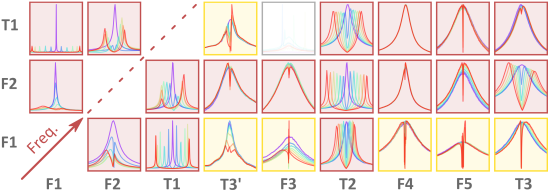
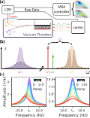
- the topographical features [1][2][3][4][5][6]. There is, however, room for improvement in cutting-edge AFM experiments, as the standard quantum limit in sensitivity, represented by a minimum between detection noise and backaction noise, has not been reached [7][8]. Beyond this limit, techniques exist
- . Thus, the mechanical position can be read through the optical cavity. Upon this basic interaction, many emerging kinds of behaviour were found: sideband cooling down to quantum levels [15][16], parametric amplification [17] before signal detection, state squeezing [18][19][20], and Bogoliubov modes [21
- ][22] for drastically reducing noise and directional amplifiers [23][24]. The group of proposed applications is even larger and hosts ideas such as quantum circulators [23][24], Ising model simulators [25], and improved gravity wave detection experiments [8]. All these techniques can be migrated to AFM


Characterisation of a micrometer-scale active plasmonic element by means of complementary computational and experimental methods
Beilstein J. Nanotechnol. 2023, 14, 110–122, doi:10.3762/bjnano.14.12
- detection methods [19][20], as their formation is highly dependent on refractive index changes, and sub-wavelength optics [21]. Our active plasmonic element also provides the potential for an even more sensitive technique. Active plasmonics has further advantages due to the tunable nature of the physics
- . Because of this extreme sensitivity, small changes in the local temperature, and hence in optical constants, will result in subtle but appreciable changes of reflectivity in the SPR curve. Homodyne detection, with the modulated electric currents as reference, enables a detailed examination of the
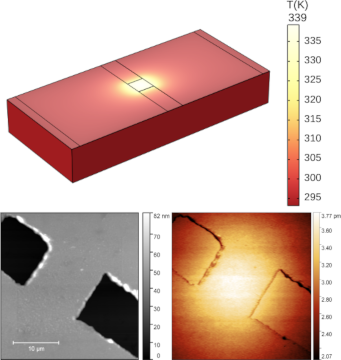
- equivalent profile obtained experimentally for a 10 × 10 μm2 structure with FWHM ≈19.4 μm. The simulation results for the thermoelectrical effects are in line with the experimental results observed through AFM detection of thermal expansion, showing the same distribution, and similar FWHM, as Figure 10


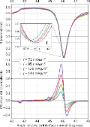


Antimicrobial and mechanical properties of functionalized textile by nanoarchitectured photoinduced Ag@polymer coating
Beilstein J. Nanotechnol. 2023, 14, 95–109, doi:10.3762/bjnano.14.11
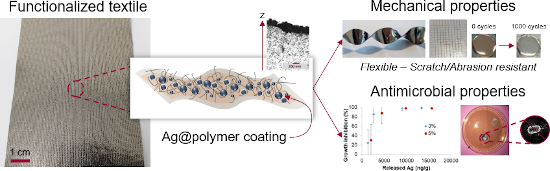
- non-bonding doublets of oxygen atoms create steric hindrance and avoid their aggregation. The coating, colorless before irradiation, becomes progressively pale yellow, orange, then finally brown. Due to the strong increase of AgNPs, the measurement system reaches the detection limit (OD > 3) after 15



Combining physical vapor deposition structuration with dealloying for the creation of a highly efficient SERS platform
Beilstein J. Nanotechnol. 2023, 14, 83–94, doi:10.3762/bjnano.14.10
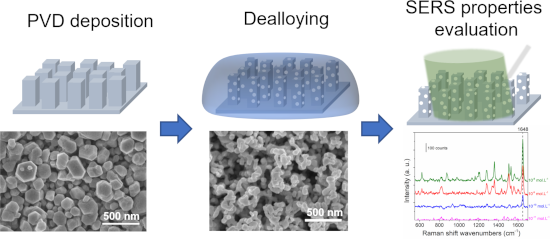
- Nanostructured noble metal thin films are highly studied for their interesting plasmonic properties. The latter can be effectively used for the detection of small and highly diluted molecules by the surface-enhanced Raman scattering (SERS) effect. Regardless of impressive detection limits achieved, synthesis
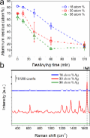
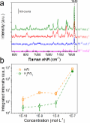
- tuning deposition (i.e., the alloy chemical composition) and dealloying (i.e., dealloying media) parameters to reach the best SERS properties. These are reported for samples dealloyed in HCl and with 30 atom % of silver at the initial state with a detection limit down to 10−10 mol·L−1 for a solution of
- sensors are promising for various applications in chemical (e.g., explosive [3] or chemical warfare agents [4]) or biological (e.g., lipid or protein [5]) sensing, environmental monitoring [6] as well as in food safety through the detection of pollutants such as phenol [3][7] or rhodamine [8]. The SERS




Frontiers of nanoelectronics: intrinsic Josephson effect and prospects of superconducting spintronics
Beilstein J. Nanotechnol. 2023, 14, 79–82, doi:10.3762/bjnano.14.9

- [15][16]. - Detection of ultrahigh frequency radiation by new devices: Based on Josephson junctions with frequencies of 72–265 GHz using the Josephson grain boundary junction fabricated in YBaCuO films [17] and broad-band detectors based on YBaCuO Josephson junctions fabricated on ZrYO bicrystals with
The influence of structure and local structural defects on the magnetic properties of cobalt nanofilms
Beilstein J. Nanotechnol. 2023, 14, 23–33, doi:10.3762/bjnano.14.3
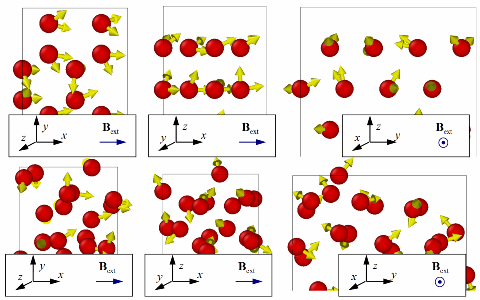
- performance improvement can be solved with the help of spintronics devices, which are currently presented in a fairly wide variety of valuable effects: spin valves and valves in thin films and heterostructures [19][20], sensors based on the anomalous Hall effect [21], spin injection and magnetism detection


Observation of collective excitation of surface plasmon resonances in large Josephson junction arrays
Beilstein J. Nanotechnol. 2022, 13, 1578–1588, doi:10.3762/bjnano.13.132
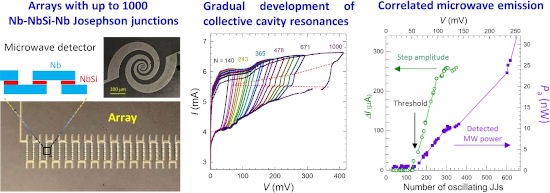
- consequence of collective surface-plasmon resonances. The finite threshold number is the consequence of the collective excitation of the cavity mode [32][33]. Radiation detection For detection of EMW emission we use a superconducting microwave detector. Figure 6a shows an optical image of the detector. It
- detection efficiency, Pa/PMW ≈ 10−3, is small because of geometrical constraints, (ra/rMW)2 ≪ 1. For the analysis of EMW emission, the detector is placed face-to-face at about 1.5 cm distance from the array. The sample/detector arrangement is similar to that described in [9]. The detector position is fixed
- function of the number of active junctions, N. Blue symbols are measured directly from the I–V characteristics, and orange symbols are obtained by integration of the resonant peak area in dI/dV. (c) Simultaneous transport and detection measurements of a secondary resonance from Figure 7a. (d) Step




Induced electric conductivity in organic polymers
Beilstein J. Nanotechnol. 2022, 13, 1551–1557, doi:10.3762/bjnano.13.128
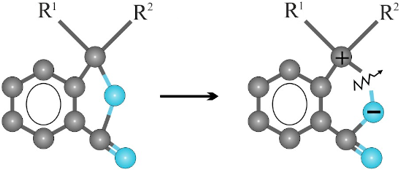
- characteristics of each lead electrode separately. To measure differential characteristics dI/dV(V), modulation technique and phase-sensitive lock-in detection were used. To suppress the negative effect of stray electromagnetic pickups, a multistage RLC filter system was used [17]. While R(T) measurements at


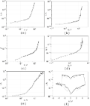

Non-stoichiometric magnetite as catalyst for the photocatalytic degradation of phenol and 2,6-dibromo-4-methylphenol – a new approach in water treatment
Beilstein J. Nanotechnol. 2022, 13, 1531–1540, doi:10.3762/bjnano.13.126
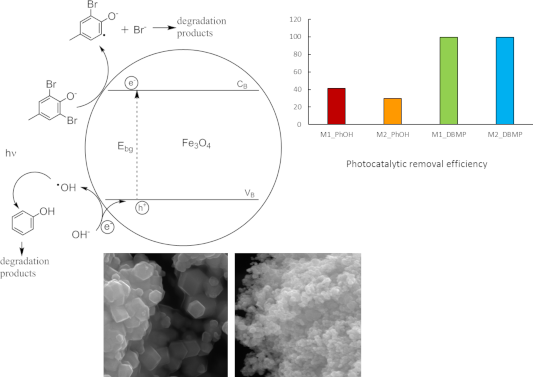
- C18 H, with precolumn). The analysis conditions were as follows: mobile phase: 70% acetonitrile and 30% water; flow rate: 1.0 cm3·min−1; injection volume: 20 × 10−3 cm3; absorbance detection: 270 and 310 nm for PhOH and DBMP, respectively. External standards of seven concentration levels ranging from


Rapid and sensitive detection of box turtles using an electrochemical DNA biosensor based on a gold/graphene nanocomposite
Beilstein J. Nanotechnol. 2022, 13, 1458–1472, doi:10.3762/bjnano.13.120
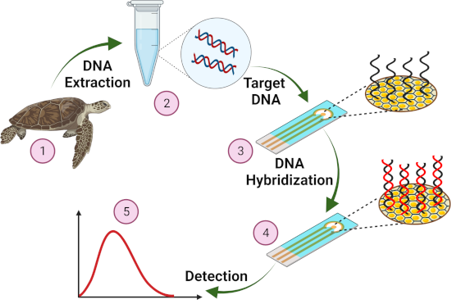
- probe using bioinformatics tools, and it was also validated in wet-lab experiments. As a detection platform, a screen-printed carbon electrode (SPCE) enhanced with a nanocomposite containing gold nanoparticles and graphene was used. The morphology of the nanoparticles was analysed by field-emission
- in the range of 1 × 10⁻¹¹–5 × 10⁻⁶ M with a limit of detection of 0.85 × 10⁻¹² M. This indicates that the proposed biosensor has the potential to be applied for the detection of real turtle species. Keywords: box turtle; DNA detection; electrochemical DNA biosensor; nanocomposite; screen-printed
- the applications of impedance DNA hybridisation biosensors for the detection of a number of analytes [31][32][33][34]. Nanomaterials may significantly enhance biosensor performance, stability, repeatability, and sensitivity [35][36][37][38][39]. Among various nanomaterials, graphene (Gr) [40] and gold

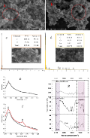


Coherent amplification of radiation from two phase-locked Josephson junction arrays
Beilstein J. Nanotechnol. 2022, 13, 1445–1457, doi:10.3762/bjnano.13.119
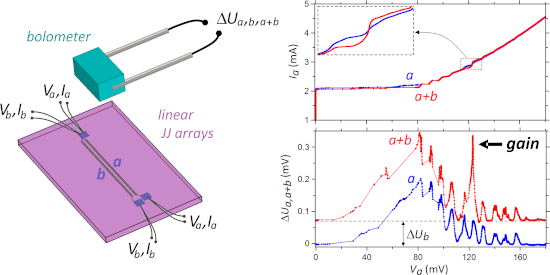
- nearby “array-b” is biased with a fixed current. Sample-1 and sample-2 were used for on-chip analysis where two linear arrays are placed on the same substrate. We also present data for off-chip synchronization. To this end, two linear arrays were stacked on top of each other. Radiation detection An InSb
- bolometer is used for the detection of Josephson radiation. The detector and measurement procedure are the same as described in [9][12], where additional information can be found. The bolometer is based on a high-purity n-doped InSb crystal with dimension of 2–3 mm, which is placed approximately 0.5 cm
- necessary condition for phase locking. In Figure 3b, we present results of the radiation detection measured simultaneously with the IVCs in Figure 3a. The lower green curve shows the detector signal ΔUa(Va, Vb = 0) as a function of the voltage Va in array-a, for the unbiased array-b, Vb = 0. It represents


Double-layer symmetric gratings with bound states in the continuum for dual-band high-Q optical sensing
Beilstein J. Nanotechnol. 2022, 13, 1408–1417, doi:10.3762/bjnano.13.116
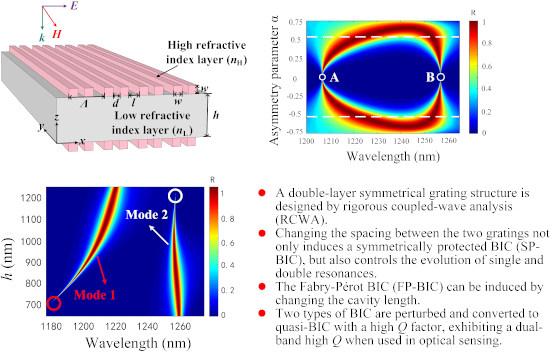
- reported HCG structures that support dual-band high-Q resonances. Differing from a single high-Q resonance, dual-band high-Q resonances allows for simultaneous modification of the line shape at two spectral locations [19], which provides multiple detection points for sensing applications. In 1929, von
- ]. Particularly, the QBIC sensor enables highly accurate detection of environmental changes by reading variations in the spectrum. However, numerous research works have focused on the BIC mechanism of single-mode resonance [26][28], which may limit its application. In this work, we proposed a double-layer
- length h, which is necessary for refractive index sensing applications. When the QBIC is applied to refractive index sensing, it enables more sensitive detection owing to its high figure of merit (FOM), the physical mechanism of which uses resonant position variations to detect changes in the refractive


Orally administered docetaxel-loaded chitosan-decorated cationic PLGA nanoparticles for intestinal tumors: formulation, comprehensive in vitro characterization, and release kinetics
Beilstein J. Nanotechnol. 2022, 13, 1393–1407, doi:10.3762/bjnano.13.115
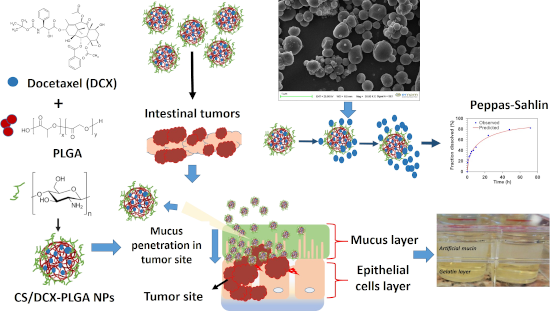
- of DCX was measured by UV spectrophotometry (Shimadzu UV-1800 UV–vis spectrophotometer, Shimadzu corporation, Japan) at 230 nm (λmax). Validation of the spectrophotometric method was carried out. Linearity, accuracy, precision, reproducibility, limit of detection (LOD), and limit of determination





