


Search results
Search for "dose" in Full Text gives 320 result(s) in Beilstein Journal of Nanotechnology. Showing first 200.
Deterministic placement of ultra-bright near-infrared color centers in arrays of silicon carbide micropillars
Beilstein J. Nanotechnol. 2019, 10, 2383–2395, doi:10.3762/bjnano.10.229
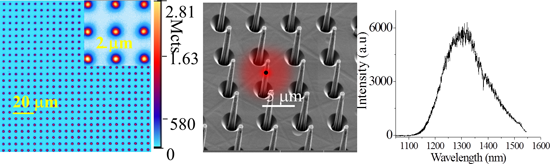
- irradiation dose. In Figure 6c the measured lifetimes of NCVSi emission using a LP at 1319 nm were τ = 1.557 ± 0.006 ns in the pillar and τ = 1.621 ± 0.006 ns in the gap. The values were modeled using a single exponential. These short lifetimes indicate that the NCVSi center can be ideally used as a bright


Integration of sharp silicon nitride tips into high-speed SU8 cantilevers in a batch fabrication process
Beilstein J. Nanotechnol. 2019, 10, 2357–2363, doi:10.3762/bjnano.10.226
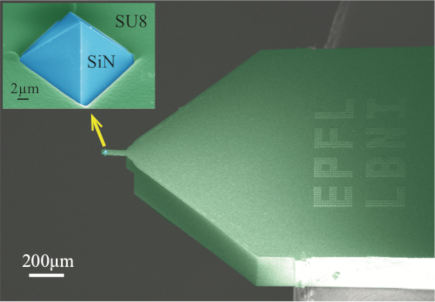
- so large that it touches the sample, which we have not observed so far. One way to reduce this problem could be adjusting the exposure dose to values not higher than absolutely required. The increased detection bandwidth of the SU8 cantilevers arises from the viscoelastic nature of the SU8 polymer


Atomic force acoustic microscopy reveals the influence of substrate stiffness and topography on cell behavior
Beilstein J. Nanotechnol. 2019, 10, 2329–2337, doi:10.3762/bjnano.10.223
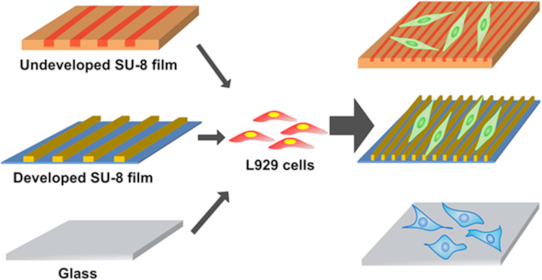
- topography is determined by both the exposure dose and the development of the SU-8 films. We cultured L929 cells on undeveloped and developed SU-8 surfaces as well as on a reference glass substrate. The structural responses of the L929 cells on the substrate topography were probed using AFAM. A fluorescence
- dose of 1000 μC∙cm−2, which produced the best topography structure. Then the SU-8 films were developed for 1 min using the MicroChem SU-8 developer and dried in air. The resulting developed nanostripe sections are separated by 1.5 μm and have of a width of 500 nm and a deepness of 175 nm. AFAM imaging
- with increasing exposure dose. This could be attributed to the increase of the surface stiffness. To further characterize the elasticity of the substrate the Young’s moduli of the undeveloped arrays were calculated using the Hertzian model. Here, the Young’s modulus measurements were repeated twenty


Microfluidics as tool to prepare size-tunable PLGA nanoparticles with high curcumin encapsulation for efficient mucus penetration
Beilstein J. Nanotechnol. 2019, 10, 2280–2293, doi:10.3762/bjnano.10.220
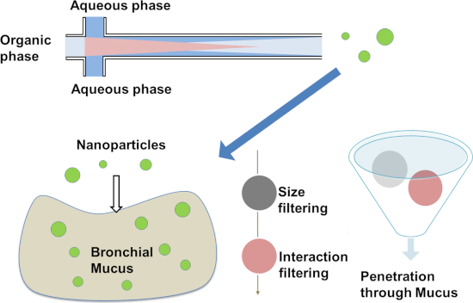
- permeation of the particles through mucus, small particles are required. To ensure proper treatment, it is necessary to reach the target dose; therefore, a high drug loading into the NP carrier is necessary to compensate for their small size in order to reach the target dose. In this study, the encapsulation


Targeted therapeutic effect against the breast cancer cell line MCF-7 with a CuFe2O4/silica/cisplatin nanocomposite formulation
Beilstein J. Nanotechnol. 2019, 10, 2217–2228, doi:10.3762/bjnano.10.214
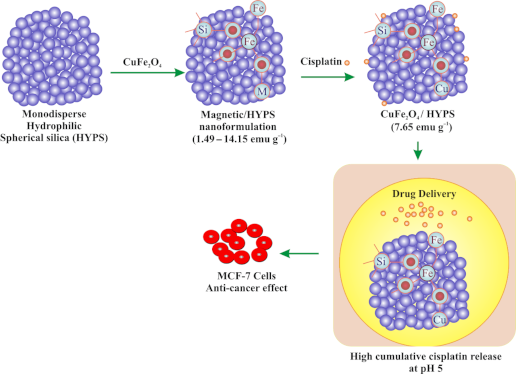
- form aggregates, exert variable oxidation states and result in dose-dependent toxicity. Several supports, including silica and carbon, were used to reduce such aggregation. Notably, different types of nanocomposites were reported based on Co, Ni, Mn and Fe over mesoporous carbon capsules [8]. A carbon
- viability (Figure 8 and Table 1). Interestingly, when cisplatin was loaded into CuFe2O4-coated silica nanoparticles (group E), it was still able to significantly reduce the cell viability in a dose dependent manner. At the highest concentration used (0.5 mg/mL), cisplatin/CuFe2O4/HYPS nanoparticles resulted
- for in vitro study. The stoichiometric amount of CuFe2O4/silica nanocomposite. Significance and p values of experimental groups using the highest dose. * p < 0.05; ** p < 0.01; *** p < 0.001; **** p < 0.0001 versus control. N.S. indicates non-significant. EC50 values of the various drug groups used in


Nitrogen-vacancy centers in diamond for nanoscale magnetic resonance imaging applications
Beilstein J. Nanotechnol. 2019, 10, 2128–2151, doi:10.3762/bjnano.10.207
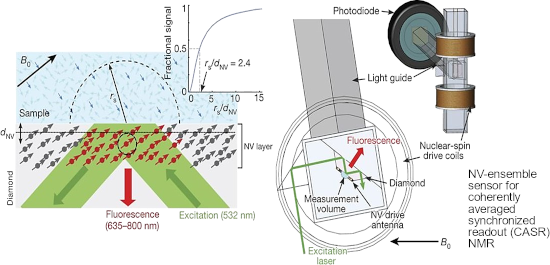
- positive or negative imaging contrast for resolution as fine as cell clusters. The more precise the imaging that is required, the higher is the dose of the contrast medium that is necessary. This poses a question of possible toxicity that must be adequately considered and ultimately constitutes a key


Gold-coated plant virus as computed tomography imaging contrast agent
Beilstein J. Nanotechnol. 2019, 10, 1983–1993, doi:10.3762/bjnano.10.195
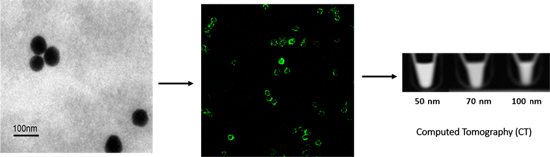
- 17.7 wt % of iodine at a dose of 170 mg of iodine per kilogram were able to show an attenuation of 150 HU in the heart [19], 57 HU in the liver and 90 HU in the spleen [20]. The development of AuNPs as imaging agents was invigorated after Hainfeld reported the formulation of a 1.9 nm contrast X-ray
- imaging agent after the injection of rats with 2.7 g gold per kilogram with no observable toxic effects [21]. Cai et al. synthesized AuNPs coated with PEG-2000 with a hydrodynamic radius of 38 nm and a 10 nm core [22] that generated a 100 HU signal in the aorta at a dose of 493 mg of gold per kilogram
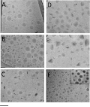
- nanoparticles distributed uniformly on the same position as the electron-dense particles in (A); (D) carbon from the biological matrix of the cells. The electron dose is 20e−/Å2 per frame (200 kV, probe current of 691 pA). Top and lower panels represent different magnifications of two independent experiments




Synthesis and potent cytotoxic activity of a novel diosgenin derivative and its phytosomes against lung cancer cells
Beilstein J. Nanotechnol. 2019, 10, 1933–1942, doi:10.3762/bjnano.10.189
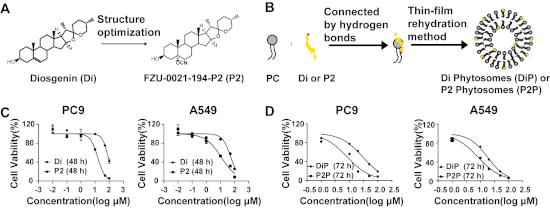
- the blank lipid nanoparticles was first investigated. As shown in Figure 4, P did not show any antiproliferative effects on A549 and PC9 cells, indicating the safety of the carrier material. DiP and P2P showed efficient antiproliferative activity in a dose- and time-dependent manner. DiP and P2P



Engineered superparamagnetic iron oxide nanoparticles (SPIONs) for dual-modality imaging of intracranial glioblastoma via EGFRvIII targeting
Beilstein J. Nanotechnol. 2019, 10, 1860–1872, doi:10.3762/bjnano.10.181
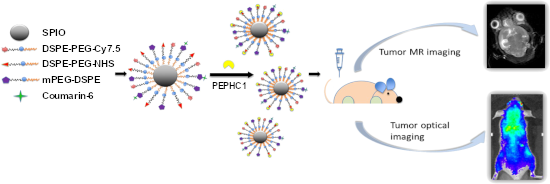
- -EGFRvIII cell inoculation, the glioblastoma-bearing mice were randomly divided into 2 groups (NP and PNP group, n = 4). The accumulation of NPs and PNPs in the tumor tissue of glioblastoma-bearing mice was assessed as formerly described [42]. The mice were injected with Cy7.5-labeled NPs or PNPs at a dose
- divided into two groups (NP and PNP group, n = 4) and were injected with 200 µL of Cy7.5-labeled NPs or PNPs at a dose of 20 mg of Fe/kg via the tail vein. 24 hours after injection, the mice were sacrificed and the brains were collected and dehydrated in 15% and 30% sucrose, embedded and cut into 10 µm




Toxicity and safety study of silver and gold nanoparticles functionalized with cysteine and glutathione
Beilstein J. Nanotechnol. 2019, 10, 1802–1817, doi:10.3762/bjnano.10.175
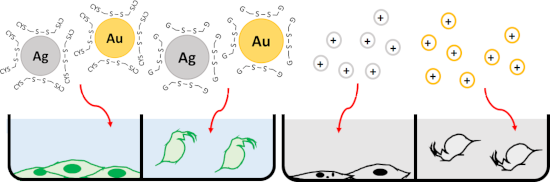
- results, as presented in Figure 4, demonstrated dose-dependent toxic effects of CYS- and GSH-coated AgNPs, while AuNPs showed no toxicity in the tested concentration range (1–300 mg Au L−1). However, GSH-coated AuNPs decreased cell viability by 20% at a dose of 300 mg Au L−1. The GSH-coated AgNPs
- decreased cell viability by more than 50% at a dose 5 times lower than CYS-coated AgNPs. Ionic silver was the most toxic and destroyed the cells at 10 times higher dose compared to Au3+ (Figure 4a). Evidently, the most lethal tested substance was Ag+ followed by GSH-coated AgNPs. If we compare these results
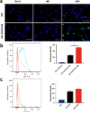
- cytometry, showed dose-dependent cell penetration except for the GSH-AuNPs (Figure S6 in Supporting Information File 1). The highest efficiency of cell uptake was observed for CYS-coated AuNPs. For both CYS- and GSH-coated AgNPs, the uptake was significant only at the highest examined concentration (25 mg


Lipid nanostructures for antioxidant delivery: a comparative preformulation study
Beilstein J. Nanotechnol. 2019, 10, 1789–1801, doi:10.3762/bjnano.10.174
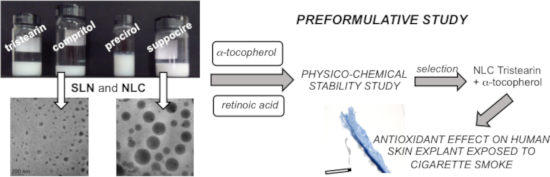
- suggest that NLC T10-TOC can effectively reduce the induction of cutaneous HO-1, which is a sensor of tissue stress, suggesting the ability of this topical application to prevent CS-induced skin damage. Further studies will be required to investigate the dose and type-dependent manner of action of TOC

Precise local control of liquid crystal pretilt on polymer layers by focused ion beam nanopatterning
Beilstein J. Nanotechnol. 2019, 10, 1691–1697, doi:10.3762/bjnano.10.164
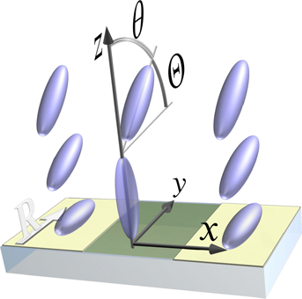
- within a raster consisting of up to 4096 × 3536 pixel2 as well as the time spent by the beam on each pixel (the so-called dwell time). According to our previous comparative study [31], a relatively small dose of Ga+ ions is sufficient for the required polymer transformation and we adopt here the same


Direct observation of oxygen-vacancy formation and structural changes in Bi2WO6 nanoflakes induced by electron irradiation
Beilstein J. Nanotechnol. 2019, 10, 1434–1442, doi:10.3762/bjnano.10.141
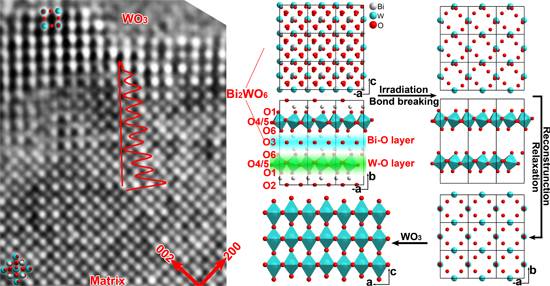
- complex (inset of Figure 3b) consisting of two large nanoflakes each of ca. 140 nm in size, and the specimen was tilted along the [010] zone axis. In order to capture the transition state, the electron beam was spread out to match the large screen of the TEM to reduce the electron dose, and the exposure


Kelvin probe force microscopy of the nanoscale electrical surface potential barrier of metal/semiconductor interfaces in ambient atmosphere
Beilstein J. Nanotechnol. 2019, 10, 1401–1411, doi:10.3762/bjnano.10.138
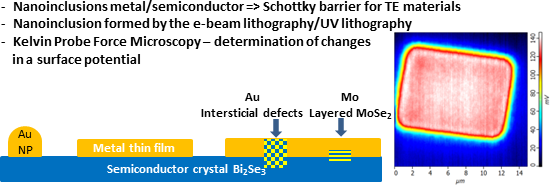
- center of the irradiated area) with respect to the non-irradiated area of the Au layer (Figure 6). It should be noted, that the edges of the irradiated area are topographically elevated and exhibit a decreased surface potential because of the higher electron irradiation dose at the turning points of the
- e-beam. A higher dose led to a higher local temperature, which implies an increased formation of Au alloy and rims. The comparable so-called “Marangoni effect” was observed in laser-irradiated polymers as described by Lyutakov and co-workers [61]. The NIs formed on the thinnest Au (12 nm) exhibited


Fabrication of phase masks from amorphous carbon thin films for electron-beam shaping
Beilstein J. Nanotechnol. 2019, 10, 1290–1302, doi:10.3762/bjnano.10.128
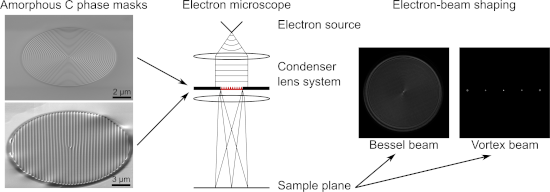
- objective lens are known problems. These effects are expected to only marginally affect the PM performance because of the almost parallel illumination of the PMs leading to a substantially reduced areal electron dose [17][21]. We have developed two different procedures to fabricate aC PMs in this work. The
- × 2048 pixels and a dwell time of 50 ns was used which results in a dose of around 0.2 ions/nm2. Phase-mask patterning In the case of BBs the required thickness profile (Equation 3) was milled with custom FIB routines. These are realized in the form of text files in which the spatial coordinates for the



Enhanced inhibition of influenza virus infection by peptide–noble-metal nanoparticle conjugates
Beilstein J. Nanotechnol. 2019, 10, 1038–1047, doi:10.3762/bjnano.10.104
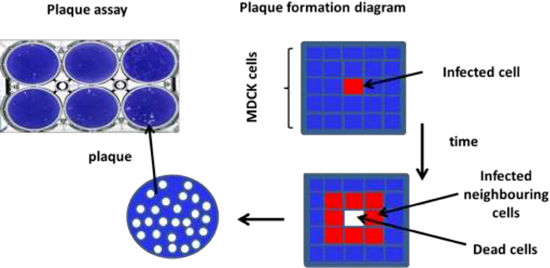
- was concentration-dependent (Figure 3). Counting plaques in multiple experiments allowed for the determination of the dose response and the IC50 values. In these experiments the IC50 value of the original FluPep sequence was found to be of the order of 140 pM (Figure 3, inset). This is less potent
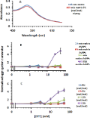
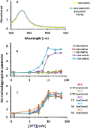
- was due to one infective virus particle was met. Stability of gold nanoparticles to DTT ligand exchange. (A) UV–vis spectra of mixed-matrix-capped gold nanoparticles and mixed-matrix-capped gold nanoparticles incorporating 5% (mol/mol) FluPep ligand in PBS. Time- and dose-dependence of DTT ligand
- in PBS. Time and dose-dependence of DTT ligand exchange for (B) mixed-matrix silver nanoparticles and (C) silver nanoparticles incorporating different molar fractions of FluPep ligand. Results are the mean ± SD (n = 3). Purification of FluPep ligand-functionalised silver nanoparticles by CM-Sepharose




Serum type and concentration both affect the protein-corona composition of PLGA nanoparticles
Beilstein J. Nanotechnol. 2019, 10, 1002–1015, doi:10.3762/bjnano.10.101
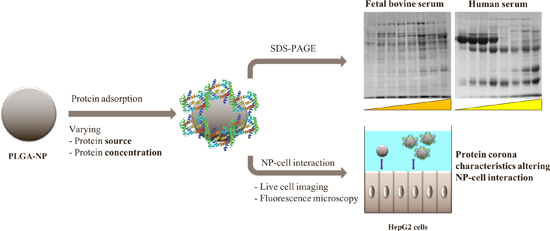
- -affinity proteins, for example immunoglobulins, facilitate phagocytosis by cells of the mononuclear phagocyte system (MPS) [26]. Furthermore, one has to consider that the ratio between NP surface and protein concentration is closely related to the administration route and dose [27]. As a result



Effects of gold and PCL- or PLLA-coated silica nanoparticles on brain endothelial cells and the blood–brain barrier
Beilstein J. Nanotechnol. 2019, 10, 941–954, doi:10.3762/bjnano.10.95
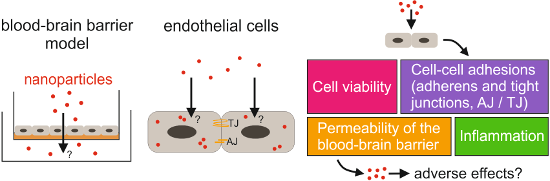
- inflammation and apoptosis via connection to the NF-κB pathway [22]. Size- and dose-dependent cytotoxicity and disruption of the BBB after exposure to SiO2 particles were shown in a human model and confirmed in vivo [23]. Integrity and function of the BBB of primary porcine brain microvascular ECs (PBECs) in



The systemic effect of PEG-nGO-induced oxidative stress in vivo in a rodent model
Beilstein J. Nanotechnol. 2019, 10, 901–911, doi:10.3762/bjnano.10.91
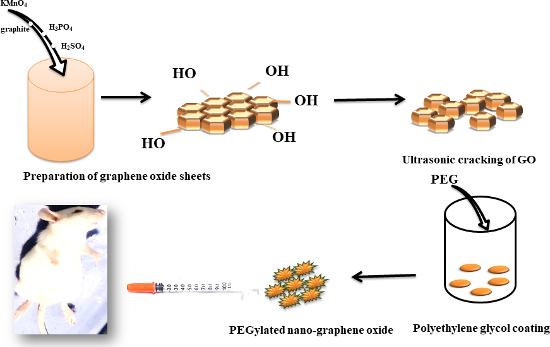
- , namely lipid peroxides, as well as antioxidant agents, including catalase, superoxide dismutase, glutathione, and glutathione S-transferase was conducted. A comparison at different intervals of time after the administration of a dose (5 mg/kg) of PEG-nGO was carried out. An increase in free radicals and
- the average size distribution of nGO and PEG-nGO, respectively. In vivo assays The number of free radicals produced by a dose of PEG-nGO was estimated by the comparative levels of lipid peroxides present in the control and treated groups. The level of lipid peroxides and free radical scavengers are
- Zhang and co-workers [29]. Biocompatibility of nGO was achieved by coating with polyethylene glycol (PEG). Then, a single dose (5 mg/kg) of synthesized PEG-nGO was administered to groups of groups of six mice. The dosage was found to be optimum in previous studies [28][29]. The animals were dissected


Polydopamine-coated Au nanorods for targeted fluorescent cell imaging and photothermal therapy
Beilstein J. Nanotechnol. 2019, 10, 794–803, doi:10.3762/bjnano.10.79
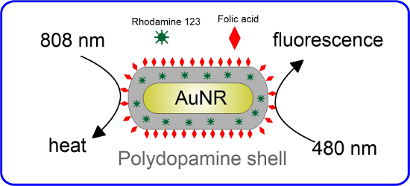
- nonspecific uptake. To understand the safe dose of PEG-coated and folate-functionalized polydopamine-encapsulated AuNRs, we investigated their biocompatibility by a standard resazurin-based cytotoxic assay. Both folate-functionalized and PEG-coated nanocomposites incubated with HeLa cells during 24 and 48 h
- nanoparticles compared with PEG-coated particles. HeLa (F+) and HEK 293 (F−) cells were incubated with AuNR-PDA-R123-folate and AuNR-PDA-R123-PEG at a nanoparticle dose of 1010 mL−1 for 2 h. Fluorescent images of randomly selected cells under 488 nm light excitation were obtained using a Leica DM 2500
- ) dyes, coloring live cells in green and apoptotic cells in red (Figure 4B–D). To quantify the efficiency of treatment the cell viability was estimated by using the resazurin assay. After irradiation with the NIR laser for 200 s, HeLa cells treated with AuNR-PDA-R123-folate exhibited a dose-dependent


On the transformation of “zincone”-like into porous ZnO thin films from sub-saturated plasma enhanced atomic layer deposition
Beilstein J. Nanotechnol. 2019, 10, 746–759, doi:10.3762/bjnano.10.74
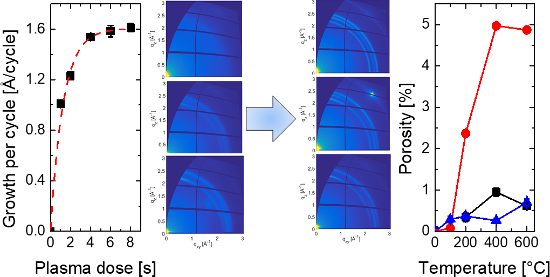
- , development of controlled porosity, and formation and growth of ZnO crystallites. The layers developed controlled nanoporosity in the range of 1–5%, with pore sizes between 0.27 and 2.00 nm as measured with ellipsometric porosimetry (EP), as a function of the plasma dose and post-annealing temperature
- (GPC) as a function of the plasma dose time is reported in Figure 1a. The GPC was found to saturate at 1.6 Å/cycle, which is in line with the literature values for processes carried out at room temperature and the ones previously reported [40][57]. Plasma dose times below 6 s led to lower GPC, as
- reported as a function of the plasma dose. Two characteristics absorptions were identified. The stretching (ν) of hydroxyl (–OH) moieties was present in the spectra for all layers at wavenumbers in the range 3000–3600 cm−1. The νOH intensity was found to increase as a function of the plasma dose. This was


Nanocomposite–parylene C thin films with high dielectric constant and low losses for future organic electronic devices
Beilstein J. Nanotechnol. 2019, 10, 428–441, doi:10.3762/bjnano.10.42
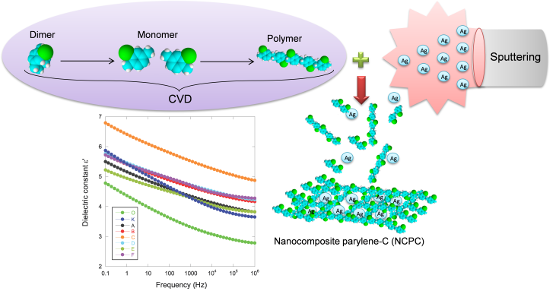
- layer). The thickness of each single layer (either with or without Ag) was measured by RBS in monomeric units·cm−2. As highlighted in the Experimental section (see below), the parylene C amount deposited on the substrate (in monomeric units·cm−2) is directly obtained from the Cl RBS atomic dose, since
- corresponding Ag dose incorporated in these samples as a function of the number of rotations. If the samples B and C are neglected, one finds that the dose increases almost linearly as could be expected. Ag dose incorporated during a single rotation is 8.3 × 10¹⁵ atoms·cm−2. The reason of the anomalous behavior
- of samples B and C, the dose of which is higher than expected, is not completely clear, but it is thought to lie mainly in the very peculiar nature of the parylene deposition process, which is controlled by setting the pressure inside the chamber. This control method gives rise to hysteresis loops in




Advanced scanning probe lithography using anatase-to-rutile transition to create localized TiO2 nanorods
Beilstein J. Nanotechnol. 2019, 10, 412–418, doi:10.3762/bjnano.10.40
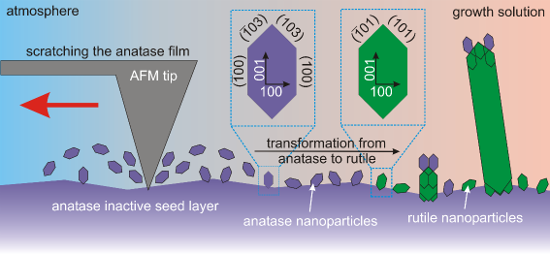
- deposited via resistive evaporation with a deposition rate of 3 Å/s. The Zeiss CrossBeam 1540XB FE SEM was employed for electron-beam exposure using an acceleration voltage of 10 kV, a current of 25 pA, a dose of 200 μAs/cm2, an area step size and dwell time of 1.6 nm and 200 ns, respectively, and an


Geometrical optimisation of core–shell nanowire arrays for enhanced absorption in thin crystalline silicon heterojunction solar cells
Beilstein J. Nanotechnol. 2019, 10, 322–331, doi:10.3762/bjnano.10.31
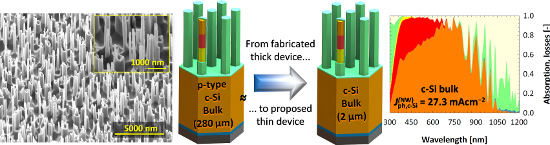
- of SiOxFy particles, which start the formation of randomly distributed etch pits [42]. These regions become deeper during the process, thanks to the strong anisotropic nature of this RIE etching. A back-side emitter was formed by phosphorous ion implantation, with energy of 2 × 1015 cm−2 and dose of


Removal of toxic heavy metals from river water samples using a porous silica surface modified with a new β-ketoenolic host
Beilstein J. Nanotechnol. 2019, 10, 262–273, doi:10.3762/bjnano.10.25
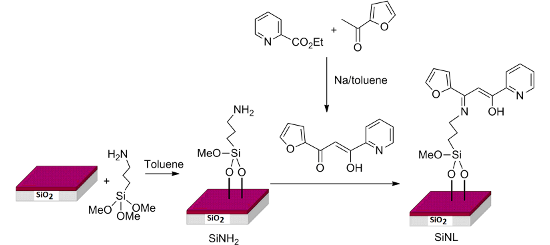
- isotherm plots of SiG, SiNH2 and SiNL. Effect of pH on the adsorption of metal ions on SiNL, Adsorption dose: V = 10 mL, m = 10 mg of SiNL at optimum concentration (100 ppm in each case), t = 35 min and 25 °C, ∆qe = 0.3 (mg·g−1). (The optimum concentration means the initial concentration of metal ions
- required to reach a plateau shape). Effect of contact time on the adsorption capacity of Zn(II), Pb(II), Cd(II) and Cu(II) ions. Adsorption dose: V = 10 mL, m = 10 mg of SiNL at optimum concentration (100 ppm in each case), at pH 6 and 25 °C, ∆qe = 0.3 (mg·g−1). Pseudo-first-order and pseudo-second-order
- models fits for the adsorption of Zn(II), Pb(II), Cd(II) and Cu(II) ions by SiNL. Adsorption dose: V = 10 mL, m = 10 mg of SiNL using optimum pH (pH 6), optimum concentration (100 ppm in each case), and at 25 °C, ∆qe = 0.3 (mg·g−1). Effect of concentration on metal ion adsorption onto SiNL. Adsorption





