


Search results
Search for "electric field" in Full Text gives 398 result(s) in Beilstein Journal of Nanotechnology. Showing first 200.
A highly efficient porous rod-like Ce-doped ZnO photocatalyst for the degradation of dye contaminants in water
Beilstein J. Nanotechnol. 2019, 10, 1157–1165, doi:10.3762/bjnano.10.115
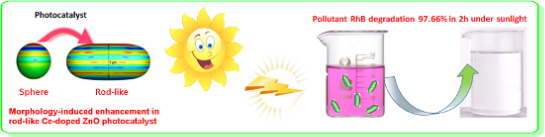
- chose a ZnO sphere with diameter of 1 µm and a ZnO rod with length of 3 µm and width of 1 µm for comparison (refractive index was given by Querry [39]). From the results in Figure 6 and Figure 7, we can see that the electric field along the propagation direction of the incident field on the ZnO sphere
- to implement the field-only surface integral method used to calculate the electric field on the particle surface. Synthesis of ZnO Zn(OAc)2·2H2O (4.39 g, 0.02 mol) and 2-methylimidazole (6.16 g, 0.075 mol) were dissolved in 150 mL of methanol (MeOH). Then the solution of 2-methylimidazole was poured
- activity of samples with different Ce doping percentages. The cycle usage of the CZO-4 photocatalyst under optimized conditions in 2 h. XRD patterns of ZnO and CZO-4 (3% Ce doping). Ce 3d XPS of the catalyst CZO-4. SEM micrographs of (a) ZnO and (b) CZO-4 (3% Ce doping). The total electric field on the


Quantitative analysis of annealing-induced instabilities of photo-leakage current and negative-bias-illumination-stress in a-InGaZnO thin-film transistors
Beilstein J. Nanotechnol. 2019, 10, 1125–1130, doi:10.3762/bjnano.10.112
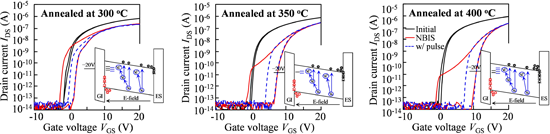
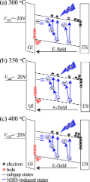
- results demonstrate that the high concentration of VO defects near EV is excited to VO+/VO2+, located below the bottom of the conduction band [12]. Meanwhile, the photo-excited electron–hole pairs from the EV are separated because of a vertical electric field (VGS = −20 V). Consequently, the transfer
- carriers are driven by the electric field and drift to the interfaces (Figure 5b). In virtue of the relative high quality of the IGZO bulk as well as its adjacent interfaces, the transfer curves show only a small hump and a small gap-shift without SS distortion in the forward and reverse scanning. When the


Revisiting semicontinuous silver films as surface-enhanced Raman spectroscopy substrates
Beilstein J. Nanotechnol. 2019, 10, 1048–1055, doi:10.3762/bjnano.10.105
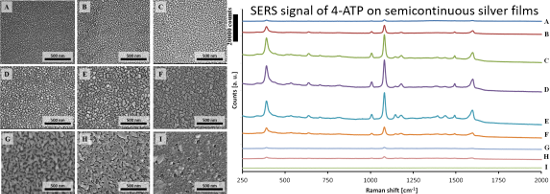
- dielectric constant of the metal, surrounding dielectric, shape and size of the nanostructure, and its orientation with respect to the electric component of the electromagnetic field [1][2]. At resonance, the electric field near the surface of metallic nanostructures can be greatly enhanced and localized in


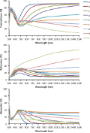


Correlation of surface-enhanced Raman scattering (SERS) with the surface density of gold nanoparticles: evaluation of the critical number of SERS tags for a detectable signal
Beilstein J. Nanotechnol. 2019, 10, 1016–1023, doi:10.3762/bjnano.10.102
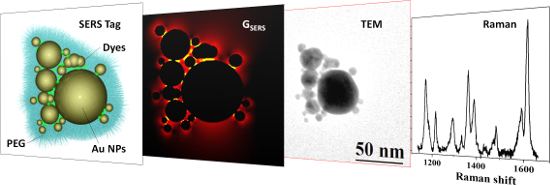
- phenomena, the local electric field enhancement due to the surface plasmon resonance of the metal nanostructure (electromagnetic enhancement) and the charge transfer between the molecule and the metal substrate (chemical enhancement) [6][7][8]. In addition, given the generally low Raman scattering cross
- local field enhancement in a AuNT with structure reproducing the aggregate in Figure 1B. In particular, the SERS enhancement factor (GSERS) was obtained from the 4th power of the ratio between the local electric field, Eloc, in the proximity to the surface of the metal nanostructure and the incident
- electric field, E0, from linearly polarized 633 nm electromagnetic radiation propagating in a medium with refractive index of PVA (n = 1.526) [6][55]. As shown in Figure 1D, GSERS can reach values as high as 106 and consistently between 105–106, depending on the hot spot considered. Importantly, by


Experimental study of an evanescent-field biosensor based on 1D photonic bandgap structures
Beilstein J. Nanotechnol. 2019, 10, 967–974, doi:10.3762/bjnano.10.97
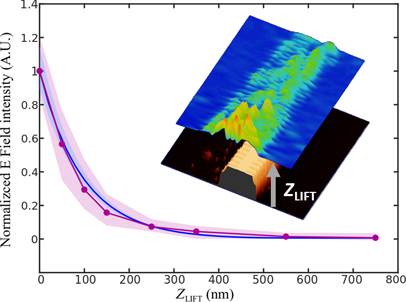
- scenario of water cladding. Figure 5 shows the electric-field profile simulated when considering upper claddings of air or water, as well as the variation of its intensity as a function of the distance to the sensor surface for these two scenarios. Note that, in order to consider an equivalent situation
- cladding of air (λ = 1550 nm) and (b) an upper cladding of water (λ = 1600 nm). (c) Variation of the electric field intensity as a function of the distance to the sensor surface for the FDTD simulations when considering an air (blue) and a water upper cladding (red). As for Figure 4, the shaded areas


Nanoscale optical and structural characterisation of silk
Beilstein J. Nanotechnol. 2019, 10, 922–929, doi:10.3762/bjnano.10.93
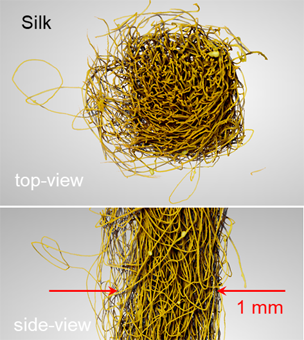
- the real part of the index via Snell’s law [11]. As a result, comparative measurements of the absorbance by different near- and far-field techniques are essentially required to understand differences in electric-field determination of the local light and its interaction with the sample [12]. Different


Rapid, ultraviolet-induced, reversibly switchable wettability of superhydrophobic/superhydrophilic surfaces
Beilstein J. Nanotechnol. 2019, 10, 866–873, doi:10.3762/bjnano.10.87
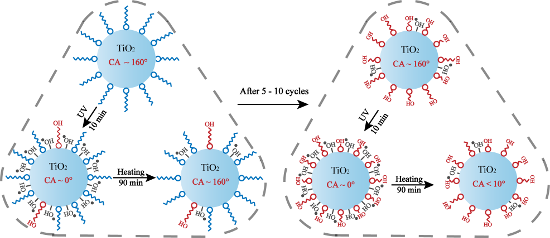
- sensors, smart filtration and separation, and microfluidic devices [9][10][11][12]. While controlling wettability through heating is mostly limited to toxic materials, such surfaces cannot be applied in human science [13][14]. Although the application of an electric field is an efficient method to achieve


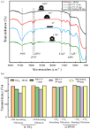
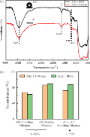

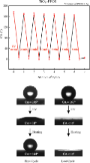
Novel reversibly switchable wettability of superhydrophobic–superhydrophilic surfaces induced by charge injection and heating
Beilstein J. Nanotechnol. 2019, 10, 840–847, doi:10.3762/bjnano.10.84
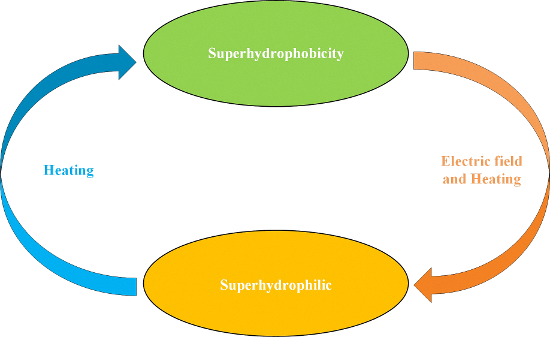
- ], temperature [12][13][14][15], pH [16][17][18], and electric field [19][20][21][22][23][24][25] stimulation. Zhang et al. [4] reported that superhydrophobic titanium dioxide surfaces become hydrophilic with a contact angle of 0° after 240 min of ultraviolet radiation. Nishimoto et al. [5] developed a method
- environments. At 150 V, the maximum contact angle could be reduced by 23° by electrical wetting in a reversible manner. Li et al. [23] studied the diffusion of droplets of ionic liquids on an insulating electrode subjected to an external voltage. The catalytic effect of a vertical electric field on the
- by an electrochemical process. The surface wettability could be controlled from superhydrophobic to superhydrophilic. When the sample was dried at room temperature or heated at 100 °C, the wettability could be reversed. Compared with the electrowetting phenomenon caused by electric-field-driven solid


Electronic properties of several two dimensional halides from ab initio calculations
Beilstein J. Nanotechnol. 2019, 10, 823–832, doi:10.3762/bjnano.10.82
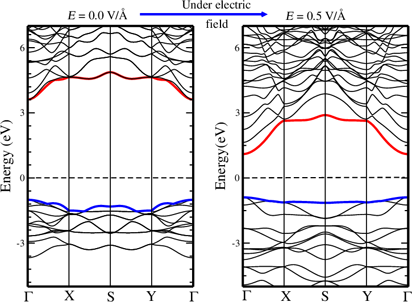
- electronic bandgaps, as obtained with the HSE hybrid functional, range between 3.0 and 7.5 eV and that their phonon spectra are dynamically stable. Additionally, we show that under an external electric field some of these systems exhibit a semiconductor-to-metal transition. Keywords: density functional
- fact that electronic screening is much more efficient in a bulk material, and therefore reduces the value of the bandgap significantly in comparison with the one of the corresponding monolayer. Effect of an external transverse electric field Earlier theoretical studies have reported that applying an
- external electric field to a rippled MoS2 monolayer [45] or a MoS2 nanoribbon [46][47] causes important changes in the electronic structure and reduces the bandgap. Also, applying an electric field to a 2D material mimics the presence of a gate voltage [48], and understanding the resulting changes in the


An iridescent film of porous anodic aluminum oxide with alternatingly electrodeposited Cu and SiO2 nanoparticles
Beilstein J. Nanotechnol. 2019, 10, 735–745, doi:10.3762/bjnano.10.73
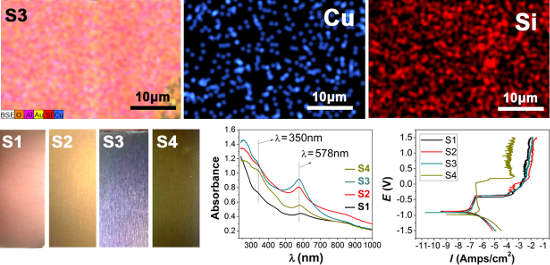
- simultaneous way, into a stable structure possessing a regular geometric appearance. In contrast, electrodeposition involves the nucleation at an electrode surface under the action of an electric field [25]. For example, a high-purity aluminum foil was directly used as a template, on which anodic aluminum
- stainless steel tube and a carbon fiber as the anode and cathode under the action of a circular electric field, respectively, resulting in a cylindrical fibrous structure. The control over the electrodeposition voltage and time allowed for the fabrication of fibers with different thicknesses, and the


Review of time-resolved non-contact electrostatic force microscopy techniques with applications to ionic transport measurements
Beilstein J. Nanotechnol. 2019, 10, 617–633, doi:10.3762/bjnano.10.62
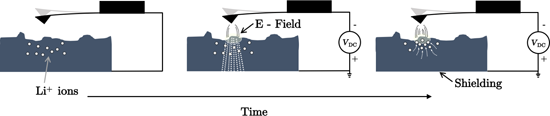
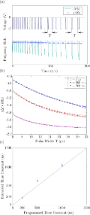
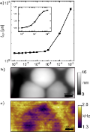
- techniques have been developed aimed at measuring local electronic and ionic properties on a wide range of samples. By carefully controlling the electric field between the tip and sample many properties can be measured with high spatial resolution including static properties such as local contact potential
- therefore be modulated by the electric field between the tip and sample, which may vary with time. The first use of an AFM to measure the time evolution of sample charge carriers was reported by Schönenberger and Alvarado [25]. They first applied a voltage pulse between the tip and sample to inject charge
- conducting materials as well. To probe ionic transport a step potential is applied between the AFM tip and a conducting back electrode, creating an electric field across the tip–sample gap and through the sample, illustrated in Figure 1b. The mobile ions inside the sample move in response to this field over





Coexisting spin and Rabi oscillations at intermediate time regimes in electron transport through a photon cavity
Beilstein J. Nanotechnol. 2019, 10, 606–616, doi:10.3762/bjnano.10.61
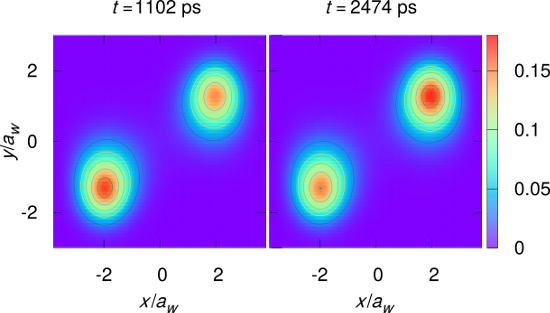
- the center of the z = 0 plane. For the Coulomb gauge used here the polarization of the electric field of the cavity photons parallel to the transport in the x-direction (with the unit vector ex) is realized in the TE011 mode, or perpendicular to the transport (defined by the unit vector ey) in the


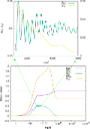
![[Graphic 40]](/bjnano/content/inline/2190-4286-10-61-i49.svg?max-width=637&scale=1.418184) and photon
and photon ![[Graphic 41]](/bjnano/content/inline/2190-4286-10-61-i50.svg?max-width=637&scale=1.418184) content in the open central system as a function of time. In additio...
content in the open central system as a function of time. In additio...
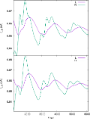
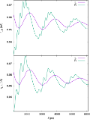
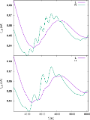
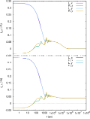

![[Graphic 60]](/bjnano/content/inline/2190-4286-10-61-i69.svg?max-width=637&scale=1.418184)
![[Graphic 61]](/bjnano/content/inline/2190-4286-10-61-i70.svg?max-width=637&scale=1.418184)
![[Graphic 62]](/bjnano/content/inline/2190-4286-10-61-i71.svg?max-width=637&scale=1.418184) and
and ![[Graphic 63]](/bjnano/content/inline/2190-4286-10-61-i72.svg?max-width=637&scale=1.418184) i...
i...
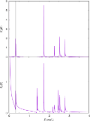
![[Graphic 76]](/bjnano/content/inline/2190-4286-10-61-i85.svg?max-width=637&scale=1.418184) in the steady state. The cavity pho...
in the steady state. The cavity pho...
Integration of LaMnO3+δ films on platinized silicon substrates for resistive switching applications by PI-MOCVD
Beilstein J. Nanotechnol. 2019, 10, 389–398, doi:10.3762/bjnano.10.38
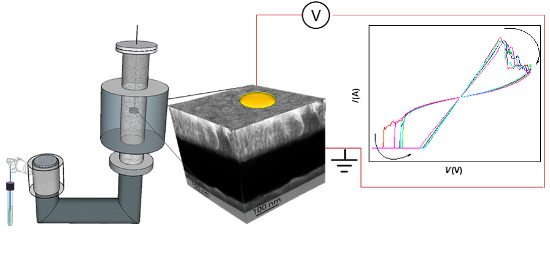
- –insulator/semiconductor–metal, MIM), namely memristors, when a non-volatile change of resistance is produced under the effect of an applied current or electric field [1]. As these resistance changes are reversible, RS is suitable for redox-based resistive switching random access memory (Re-RAM) applications




Geometrical optimisation of core–shell nanowire arrays for enhanced absorption in thin crystalline silicon heterojunction solar cells
Beilstein J. Nanotechnol. 2019, 10, 322–331, doi:10.3762/bjnano.10.31
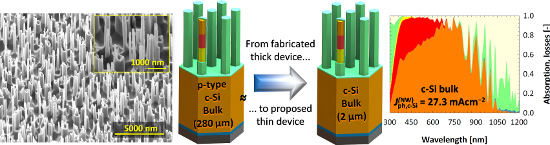
- absorption profile of the NW model, on the other hand, presents a significantly larger number of peaks. Still the typical shape of F-P interference can be observed, only lifted to higher absorption values due to the diffraction promoted by the presence of nanowires. The electric field (E) distribution inside
- two effects combine to increase the total intensity of the electric field within the absorber layer. This in turn results in a value of absorption, for the NW model, significantly enhanced with respect to the FLAT sample, as shown in (II) in Figure 4. Finally, at λ(III) = 983 nm a peak in can be seen
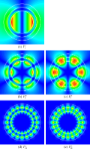
- considered, while (b) focuses on the spectrum between 800 and 1000 nm. Black vertical lines in (b) indicate the position of interference resonances, calculated with Equation 2. The corresponding electric field distributions are presented in Figure 5. Distribution of the electric field inside the absorber


Electromagnetic analysis of the lasing thresholds of hybrid plasmon modes of a silver tube nanolaser with active core and active shell
Beilstein J. Nanotechnol. 2019, 10, 294–304, doi:10.3762/bjnano.10.28
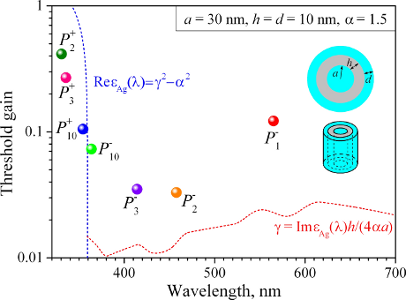
- has the radius a. This configuration of the active region is selected as the most favorable for achieving lower thresholds of the LSP modes. Such anticipation is based on the finding of [17] (see Equation 36 there): low threshold needs good overlap of the active region with the electric field of mode
- expressed as and Vmin is the volume of open resonator, that is the inner domain of the minimum circle containing all of the resonator elements [17]. If the mode electric field is normalized by its maximum magnitude value, then WN coincides with the effective mode volume – this quantity is an important
- also a sum of two partial values, so it is convenient to introduce the overlap coefficients between each part of the active region and the mode electric field, Then the “gain = loss” Equation 6 takes the following form: Equation 13 is, of course, simply a re-written optical theorem and hence it is


![[Graphic 29]](/bjnano/content/inline/2190-4286-10-28-i46.svg?max-width=637&scale=1.18182) λ = 565.03...
λ = 565.03...

![[Graphic 36]](/bjnano/content/inline/2190-4286-10-28-i53.svg?max-width=637&scale=1.18182) ...
...


Threshold voltage decrease in a thermotropic nematic liquid crystal doped with graphene oxide flakes
Beilstein J. Nanotechnol. 2019, 10, 71–78, doi:10.3762/bjnano.10.7
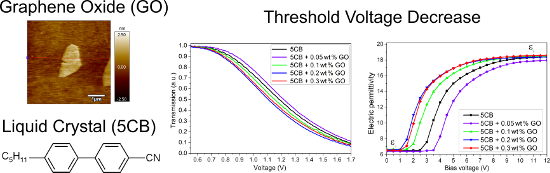
- presence of the electric field was discussed. Keywords: graphene oxide; liquid crystal; nematic phase; switching; threshold voltage; Introduction Liquid crystals (LCs) are classified as a type of soft matter which are characterized by anisotropic molecules and a liquid-like fluidity behavior. Of all LC
- electric field can change the director orientation thereby causing a change in the optical properties. In the absence of an electric field, the orientation of n is determined by anchoring conditions. The field-induced reorientation of the LC director is known as the Frédericksz effect [3]. In the
- Frédericksz effect, the deformation of a homogeneous layer of a NLC is caused by the electric field E, which is initially perpendicular to the director. Such structural transition appears at a certain magnitude called the threshold voltage, Uth. When the applied voltage, U, is lower than the threshold U < Uth



Surface plasmon resonance enhancement of photoluminescence intensity and bioimaging application of gold nanorod@CdSe/ZnS quantum dots
Beilstein J. Nanotechnol. 2019, 10, 22–31, doi:10.3762/bjnano.10.3
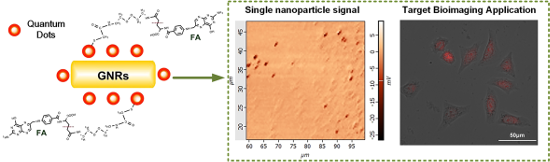
- function of wavelength and (b) wavelength and photoluminescence of GNRs under polarized light. The inset images inserted are the FDTD simulation of the electric field intensity distribution (indicated by the color bar) of the gold nanorods. (a) TEM image of a GNR; (b) TEM image of GNR@CdSe/ZnS; (c) energy


Electrostatic force microscopy for the accurate characterization of interphases in nanocomposites
Beilstein J. Nanotechnol. 2018, 9, 2999–3012, doi:10.3762/bjnano.9.279
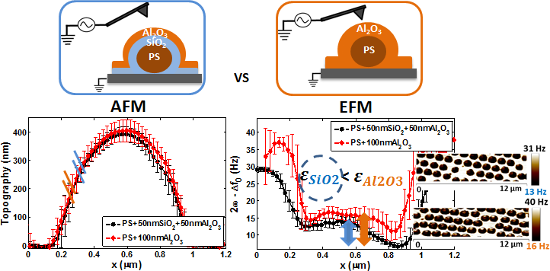
- that scatters the electric field, and the long range nature of the electrostatic forces that complicate the identification of the actual probed region. Therefore, the objectives of this study were to determine whether EFM can identify an interface region, and most importantly, to identify the
- simulations matched the experimental data (see Table 2). The relatively small difference between PS + 50 nm Al2O3 + 50 nm SiO2 and PS + 100 nm SiO2 signals can be explained by the thickness of the upper layer (50 nm) that limits the electric field penetration, and consequently, the effect of the subsurface
- profiles, b) average EFM signal profiles (lower panel) and the corresponding EFM images (upper panels). Typical simulation of the electric field map obtained with a 2D axisymmetric model of the EFM tip and the PS + Al2O3 sample as a substrate. Experimental data and simulations for a typical reference




Charged particle single nanometre manufacturing
Beilstein J. Nanotechnol. 2018, 9, 2855–2882, doi:10.3762/bjnano.9.266
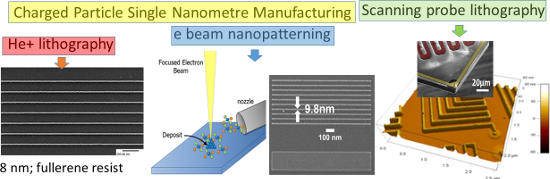
- of the much lighter and less damaging 4He+ ion. ALIS is a highly developed version of the gas field ion source (GFIS), the operation of which is shown schematically in Figure 1 [23][24]. The non-uniform high electric field at the atomically sharp tip of a tungsten needle maintained at cryogenic
- applied between sample and tip. Due to the tip shape the electric field is enhanced up to 25-times near the tip [127] and electrons are consequently emitted [128][129][130]. In Figure 14a, the electric field between tip and sample is shown for a representative tip shape and tip–sample distance. The
- physical process of emission is quantum mechanical tunneling of the electrons through the potential barrier, which is tilted due to the electric field (see Figure 14b for a schematic description of the tunneling process). The theory of electron field emission from metals was developed by Ralph H. Fowler


Controlling surface morphology and sensitivity of granular and porous silver films for surface-enhanced Raman scattering, SERS
Beilstein J. Nanotechnol. 2018, 9, 2813–2831, doi:10.3762/bjnano.9.263
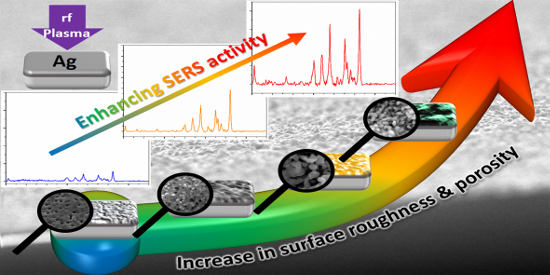
- radio frequency field using a frequency of 13.56 MHz. The setup consists simply of two parallel plates about 10 cm apart where the substrate is placed on the bottom electrode. These electrodes are connected to radio frequency generator generating the alternating electric field at 13.56 MHz frequency
- (Scheme S1, Supporting Information File 1). At this frequency, electrons quickly respond to any minor changes in the electric field thus gaining a significant amount of energy. When these highly energetic electrons collide with the feed gas atoms or molecules this results into a series of successive





Contactless photomagnetoelectric investigations of 2D semiconductors
Beilstein J. Nanotechnol. 2018, 9, 2741–2749, doi:10.3762/bjnano.9.256
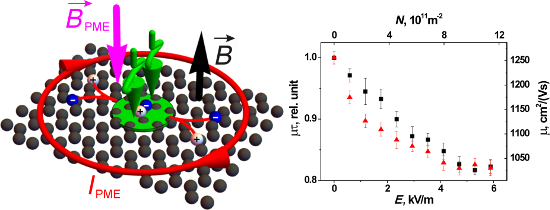
- concentration (μe = 1256(25) cm2V−1s−1 and ne = 4.65(6)·1016 m−2 determined using Van der Pauw method). It should be underlined that one of the most important properties of graphene [33][34][35] and other 2D materials [2][36][37][38][39][40][41] is the strong electric field effect which leads to
- weak magnetic field), one can find . Therefore, the left axis in Figure 6c presents the square root of the measured PME response (shown in Figure 6b) scaled as the μτ. The data are presented as a function of intensity of electric field (bottom axis) and concentration of electrostatically induced
- observed PME response in non-suspended graphene. It agrees with theoretical predictions [43] based on the influence of charged impurities scatterers on transport of carriers in graphene. Figure 6d shows the difference between electron and hole mobilities as a function of electric field (bottom axis) and

![[Graphic 1]](/bjnano/content/inline/2190-4286-9-256-i2.svg?max-width=637&scale=1.18182) evoked by the PME circulating current in a point-illuminated 2D...
evoked by the PME circulating current in a point-illuminated 2D...

![[Graphic 7]](/bjnano/content/inline/2190-4286-9-256-i8.svg?max-width=637&scale=1.18182) vs the illumination intensity for differe...
vs the illumination intensity for differe...

![[Graphic 15]](/bjnano/content/inline/2190-4286-9-256-i16.svg?max-width=637&scale=1.18182) vs the carrier lifetime for different values ...
vs the carrier lifetime for different values ...


Silencing the second harmonic generation from plasmonic nanodimers: A comprehensive discussion
Beilstein J. Nanotechnol. 2018, 9, 2674–2683, doi:10.3762/bjnano.9.250
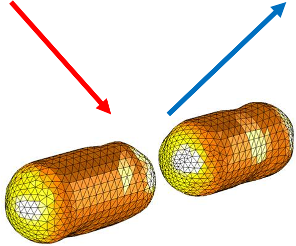
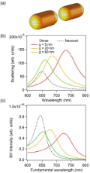
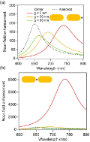
- nanostructures corresponds to the limited far-field second harmonic radiation despite the huge fundamental electric field enhancement in the interstice between two plasmonic nanoparticles forming a nanodimer. In this article, we report a comprehensive investigation of this effect using a surface integral
- concentrate light into subwavelength regions [1][2]. The collective oscillations of these electrons in a given plasmonic nanostructure are called localized surface plasmon resonances (LSPRs) [3][4][5]. The high electric field enhancement associated with the optical excitation of such a resonance has been
- –Glisson (RWG) basis functions. The expansion coefficients are found by applying the method of moments with Galerkin’s testing [23][24]. A Poggio–Miller–Chang–Harrington–Wu–Tsai formulation is used to ensure accurate solutions even at resonant conditions [23][24]. The SH electric field is then deduced from


Two-dimensional semiconductors pave the way towards dopant-based quantum computing
Beilstein J. Nanotechnol. 2018, 9, 2668–2673, doi:10.3762/bjnano.9.249
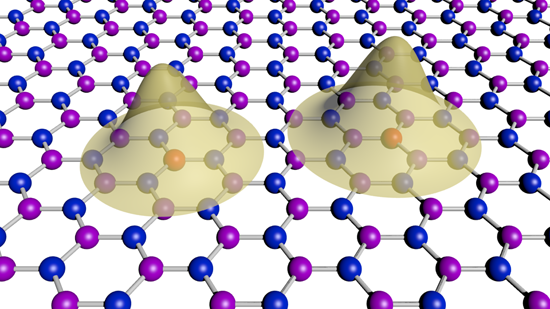
- materials may vary and eventually be tuned by an electric field, for instance, in the case of buckled silicene and germanene [31]. There is much less information on the dielectric screening of 2D materials, which also depends on the substrate and environment. It has been calculated only for a few cases (for


![[Graphic 7]](/bjnano/content/inline/2190-4286-9-249-i7.svg?max-width=637&scale=1.18182) and energy for one electron bound to a donor pair
and energy for one electron bound to a donor pair ![[Graphic 8]](/bjnano/content/inline/2190-4286-9-249-i8.svg?max-width=637&scale=1.18182) as a function of R. For R = 2a*, ...
as a function of R. For R = 2a*, ...

Silicene, germanene and other group IV 2D materials
Beilstein J. Nanotechnol. 2018, 9, 2665–2667, doi:10.3762/bjnano.9.248

- 2D layer properties, for example, via chemical functionalization or external fields. This could be efficiently utilized in a transistor, where the electronic band gap can then be tuned by the electric field applied perpendicular to the lattice plane. As an example, ab initio calculations have shown
- that the two sub-lattices in silicene, resulting from the buckling, are moved further apart by an orthogonal electric field, which leads to a band gap opening [7][8]. Another important advantage of these new materials is the significant spin–orbit interaction, which also increases with increasing

Nanostructured liquid crystal systems and applications
Beilstein J. Nanotechnol. 2018, 9, 2644–2645, doi:10.3762/bjnano.9.245
- years, no practical interest in liquid crystals was found. Much later, in 1927, the effect of the orientation of liquid crystals by an electric field was discovered by Russian physicist Vsevolod Fréedericksz [4][5][6]. Today, the operation of the liquid crystal display (LCD) is based on this effect



