Search results
Search for "humidity" in Full Text gives 297 result(s) in Beilstein Journal of Nanotechnology. Showing first 200.
Noble metal-modified titania with visible-light activity for the decomposition of microorganisms
Beilstein J. Nanotechnol. 2018, 9, 829–841, doi:10.3762/bjnano.9.77
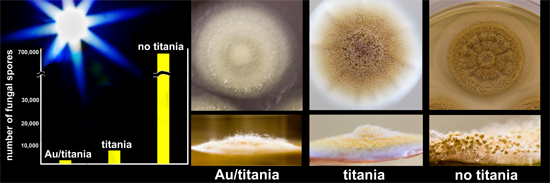
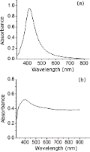
- the dark). Accordingly, it is proposed that silver-modified samples are more promising as antibacterial agents, due to high efficiency (both in the dark and under vis irradiation) as well as the lower price of silver. Antifungal activity of plasmonic photocatalysts High humidity, positive temperature


A review of carbon-based and non-carbon-based catalyst supports for the selective catalytic reduction of nitric oxide
Beilstein J. Nanotechnol. 2018, 9, 740–761, doi:10.3762/bjnano.9.68
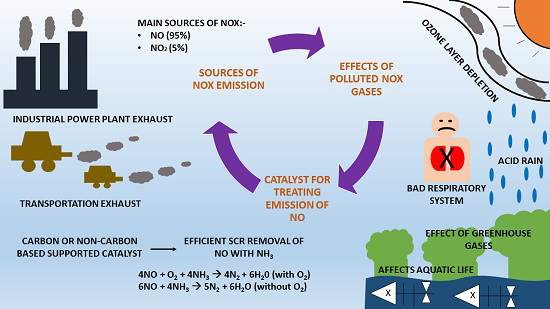
- problem, which affects the natural characteristics of the atmosphere (gaseous constituents, water vapour that determines humidity and ozone layer) and adversely impacts the environment and human health. Nitrogen oxides (NOx, x = 1, 2) are irritant gases that cause problems such as photochemical smog
Synthesis and characterization of two new TiO2-containing benzothiazole-based imine composites for organic device applications
Beilstein J. Nanotechnol. 2018, 9, 721–739, doi:10.3762/bjnano.9.67
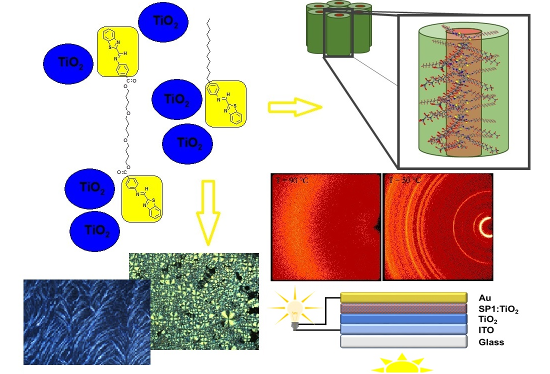
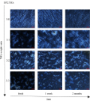
- for SP1 and SP2 imines mixed with TiO2. Figure 8 shows POM textures of SP2 imine and SP2:TiO2 mixtures with different weight ratios 3:3, 3:2, 3:1, 3:0, taken after different periods of time under standard laboratory conditions (humidity about 50%, temperature about 24 °C). The investigated samples on






Tuning adhesion forces between functionalized gold colloidal nanoparticles and silicon AFM tips: role of ligands and capillary forces
Beilstein J. Nanotechnol. 2018, 9, 660–670, doi:10.3762/bjnano.9.61
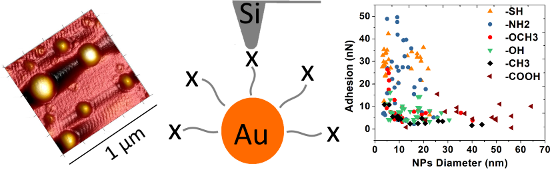
- interactions represent a major part of the molecular forces acting between both contact surfaces, however, the presence of water vapor (humidity rate of the order of 35%) in air, has a strong impact on these results via capillary forces. In ambient conditions a water mono-bilayer with thickness around 1 nm can
- bare solid, γSL is the interface energy between solid and liquid and γLV is the interface energy between liquid and vapour. This parameter shows the surface energy per unit area between the tip–liquid and substrate–liquid contacts. In the presence of humidity, Fadh is the sum of the direct adhesion Fss
- ° and θTL = 60° [36] are the static contact angles of the liquid on substrate (–NH2) and tip, respectively and γLV = 7.28 × 10⁻² N/m is the liquid (water) surface tension. For the given values the capillary forces are around 7 nN. From Equation 2, it can be deduced that for the low humidity there is no


Nanoparticle delivery to metastatic breast cancer cells by nanoengineered mesenchymal stem cells
Beilstein J. Nanotechnol. 2018, 9, 321–332, doi:10.3762/bjnano.9.32
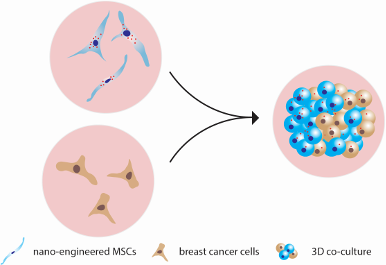
- . The cells were subsequently incubated for 24 and 48 h. After incubation, 10 µL of CCK8 reagent was added to each well, and the cells were incubated for 2 h at 37 °C in 5% CO2 and 90% humidity. The background signal controls containing QDs at all tested concentrations in the cell culture medium were



Review: Electrostatically actuated nanobeam-based nanoelectromechanical switches – materials solutions and operational conditions
Beilstein J. Nanotechnol. 2018, 9, 271–300, doi:10.3762/bjnano.9.29


Humidity-dependent wound sealing in succulent leaves of Delosperma cooperi – An adaptation to seasonal drought stress
Beilstein J. Nanotechnol. 2018, 9, 175–186, doi:10.3762/bjnano.9.20
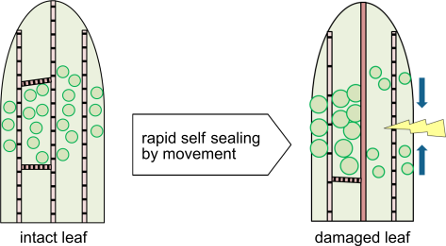
- were measured in terms of the relative bending angle over 55 minutes under various humidity conditions. The higher the relative air humidity, the lower the bending angle. Negative bending angles were found when a droplet of liquid water was applied to the wound. The statistical analysis revealed highly
- significant differences of the single main effects such as “humidity conditions in the wound region” and “time after wounding” and their interaction effect. The centripetal arrangement of five tissue layers with various thicknesses and significantly different mechanical properties might play an additional
- determine hydraulically driven effects, we have carried out analysis of the relative bending angle as a measure of the self-sealing efficiency under various humidity conditions and over time. Third, the obtained results are discussed not only regarding the self-sealing process as such, but also concerning


Electron-driven and thermal chemistry during water-assisted purification of platinum nanomaterials generated by electron beam induced deposition
Beilstein J. Nanotechnol. 2018, 9, 77–90, doi:10.3762/bjnano.9.10
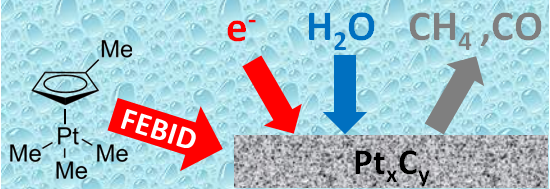
- MeCpPtMe3 have a nanogranular structure, i.e., they consist of nanoscale Pt particles embedded in a carbonaceous matrix [12]. While FEBID-based PtC metal-matrix nanocomposites can serve, for instance, as transducing elements for humidity sensing [13], other applications call for high electrical conductivity
- carbonaceous matrix of nanogranular FEBID materials under humid conditions as relevant, for instance, in applications such as humidity sensing [13]. Results and Discussion Thermal reactions between intact MeCpPtMe3 and H2O In ALD processes for deposition of Pt performed at 100 °C and consisting of alternating



A robust AFM-based method for locally measuring the elasticity of samples
Beilstein J. Nanotechnol. 2018, 9, 1–10, doi:10.3762/bjnano.9.1
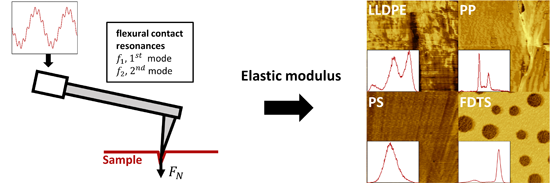
- , pressure or humidity. Since its invention, the atomic force microscope (AFM) [4] has confirmed its value for locally determining nanomechanical properties, such as the Young’s modulus, of the sample surface. Initially, the measures were done qualitatively, with the cantilever operated in intermittent
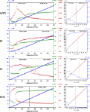
- Young’s modulus of 500 MPa was used to determine parameter α(A1). The measurements were performed in non-dry air with a relative humidity of 36% at an ambient temperature of 27 °C. Results and Discussion Force–distance and frequency shift–distance curves Before starting the investigation of the sample
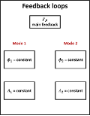
- quantitative determination of local elastic modulus of sample under ambient conditions (humidity and temperature). It combines the simplicity of the theoretical model developed by Herruzo et al. [7] for the determination of sample elasticity from 1 MPa to 3 GPa with a robust measuring method based on contact


Hyperthermic intracavitary nanoaerosol therapy (HINAT) as an improved approach for pressurised intraperitoneal aerosol chemotherapy (PIPAC): Technical description, experimental validation and first proof of concept
Beilstein J. Nanotechnol. 2017, 8, 2729–2740, doi:10.3762/bjnano.8.272
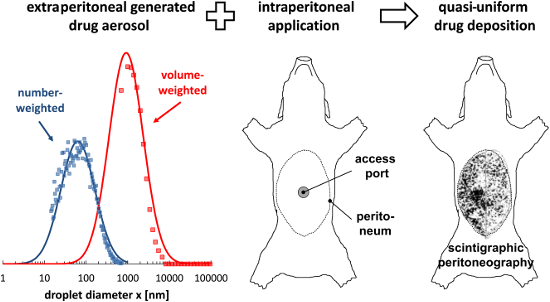
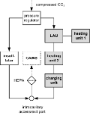
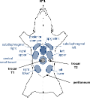
- intra-abdominal temperature by means of a temperature/humidity probe (XA Lufft; Lufft Mess- und Regeltechnik GmbH, Fellbach, Germany). In order to visualise the droplet deposition, HINAT-LAU was operated with an undiluted aqueous methylene blue solution (Toluidinblau; Dr. Franz Köhler Chemie GmbH




Dry adhesives from carbon nanofibers grown in an open ethanol flame
Beilstein J. Nanotechnol. 2017, 8, 2719–2728, doi:10.3762/bjnano.8.271
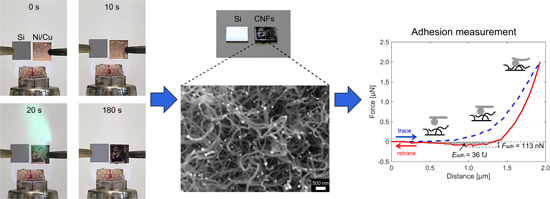
- . Areas covered with 1D-CNs are limited to spots of the ethanol flame with nearly constant process conditions and a temperature in the range of 750 °C. Another limitation is the process stability, especially the environmental conditions. Humidity and temperature are critical factors for the successful
- find such 1D-CNs of different qualities on our samples, it should be mentioned that the quality of the resulting arrays obtained by the magnetic-field assisted growth in an ethanol flame, depends on the environmental conditions, i.e., temperature and humidity. Summarizing about 30 experiments conducted
- all over the year under different environmental conditions, we observed that a growth of CNFs is, in general, only successful at lower ambient lab temperatures and humidity as shown in Figure 5. We, therefore, assume that water condenses on the hygroscopic NiCl2·6H2O catalytic layer at elevated


Exploring wear at the nanoscale with circular mode atomic force microscopy
Beilstein J. Nanotechnol. 2017, 8, 2662–2668, doi:10.3762/bjnano.8.266
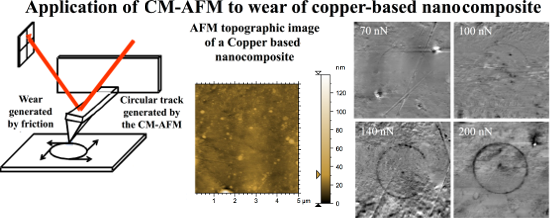
- humidity of 30%. The AFM tips were either a unique DLC coating tip with a rectangular cantilever (from NT-MDT) or a unique silicon nitride (Si3N4) probe with a triangular cantilever. Both nominal tip radius values were 100 nm and 70 nm for the DLC and Si3N4 probes, respectively, and the cantilever


Enhanced photoelectrochemical water splitting performance using morphology-controlled BiVO4 with W doping
Beilstein J. Nanotechnol. 2017, 8, 2640–2647, doi:10.3762/bjnano.8.264
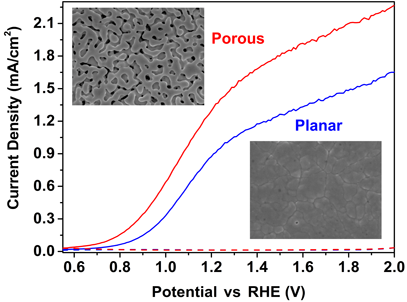
- solution. Second, the cations are chelated and form a polymeric resin when dried. Finally, this resin decomposes at high temperatures and forms the targeted W-doped BiVO4 films [20]. Jaramillo et al. reported that the ambient humidity affects the rate of both hydrolysis and polycondensation reactions and


Strategy to discover full-length amyloid-beta peptide ligands using high-efficiency microarray technology
Beilstein J. Nanotechnol. 2017, 8, 2446–2453, doi:10.3762/bjnano.8.243
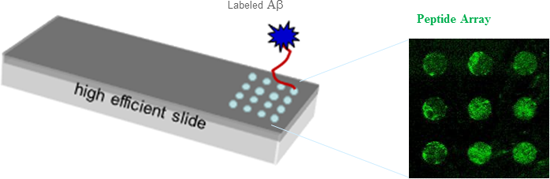
- aggregates in the incubation solution, the aggregation state was assessed by TEM. For that purpose, a 1 μM Cy3-Aβ40 solution was placed onto TEM carbon grids and stored in a suitable humidity chamber for different times. Immediately after storage, the grids were then inserted in the TEM vacuum chamber. The
- high vacuum in the TEM chamber dried them completely and all of the solute species precipitated on the grid carbon layer. After storage in the humidity chamber for one hour, the standard time used for the amyloid incubation in our microarray experiments, no fibrillar structures were observed, in
- accordance with literature data [21]. The appearance of fibrillar structures was only observed for the longer-aged samples. Figure 1 shows the morphology of fibrils observed after two days of storage in the humidity chamber. The fibrillar structures appear with a diameter of about 5 nm and are


Involvement of two uptake mechanisms of gold and iron oxide nanoparticles in a co-exposure scenario using mouse macrophages
Beilstein J. Nanotechnol. 2017, 8, 2396–2409, doi:10.3762/bjnano.8.239
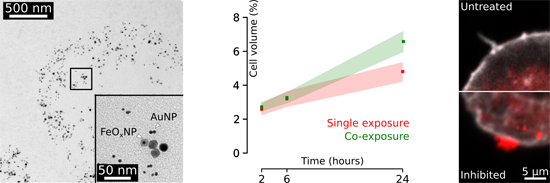
- stage temperature was kept at 3 °C, and the pressure was set to a value between 700 and 740 Pa, in most cases 720 Pa. These pressure and temperature settings created 100% relative humidity in the ESEM chamber as needed to ensure the constant coverage of the cells with a thin film of water. For every



Vapor-based polymers: from films to nanostructures
Beilstein J. Nanotechnol. 2017, 8, 2219–2220, doi:10.3762/bjnano.8.221

- desired nanostructures. This combination of a conductive polymer with a hydrogel in a single nanostructure shows potential for the use in humidity sensors. Without the need for additives or solvents, a high purity of the resulting film is ensured, which is of paramount importance in the area of electronic
High-stress study of bioinspired multifunctional PEDOT:PSS/nanoclay nanocomposites using AFM, SEM and numerical simulation
Beilstein J. Nanotechnol. 2017, 8, 2069–2082, doi:10.3762/bjnano.8.207
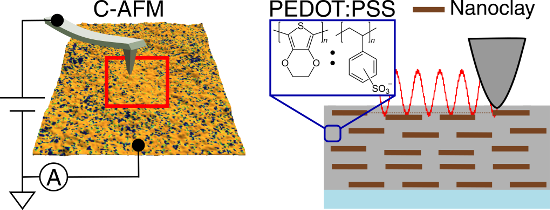
- sensing humidity [21] and for temperature-dependent switching of electrochemical behavior using nanoclay substitutes [22]. Recently, nacre-mimetic electrically conductive nanocomposites have been reported, one of which exhibited good electrical conductivity and excellent mechanical properties [23] and the
- worth noting that the environmental humidity had a significant impact on the strain measurements. In fact, for samples that were stored and measured in very dry environments, no measurable deformation in the coating was obtained. Assuming that the nanocomposite has a linear-elastic behavior, the strain


Identifying the nature of surface chemical modification for directed self-assembly of block copolymers
Beilstein J. Nanotechnol. 2017, 8, 1972–1981, doi:10.3762/bjnano.8.198
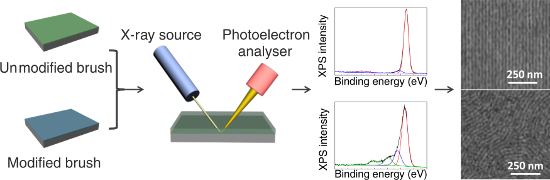
- the brush surface while applying a voltage under high humidity conditions. Details on the preparation methods can be found in the Experimental section. Results and Discussion Two-step electron beam and oxygen plasma modification Figure 2 shows SEM images of directed self-assembled films of PS-b-PMMA
- affinity of the PS–OH brush layer (see middle of Figure 1) [12]. The third method (PON) [18], shown in the bottom of Figure 1, is performed by contacting a conductive mold with the PS–OH surface while applying a voltage under conditions of high humidity. The stamp consists of a 1 cm2 piece of a DVD replica
- ranging between 40 and 180 s was applied while the stamp was gently (50 kPa) pressed upon the substrate. Relative humidity was kept above 70%. These parameters are similar to the parameters used to perform an oxidation scanning probe lithography (SPL) experiment [29]. The authors have already demonstrated


Imidazolium-based ionic liquids used as additives in the nanolubrication of silicon surfaces
Beilstein J. Nanotechnol. 2017, 8, 1961–1971, doi:10.3762/bjnano.8.197
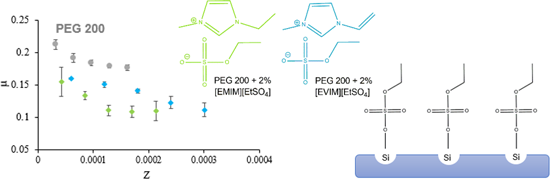
- , it mainly hydrated the substrate surface. However, in both cases, ambient humidity was found to disturb the ion-pair coordination, which resulted in an increase in friction [31]. Tests carried out at macroscale showed the same effect when using hydrophobic imidazolium-based ILs to lubricate silica
- ]. Recently, the same group reported somewhat different results when studying the tribological behavior of silica/silicon pairs lubricated with [EMIM][EtSO4] with a pin-on-disk tribometer at high load (4.5 N) [32]. They studied the effect of ambient humidity and found a decrease in friction and wear of both



Uptake and intracellular accumulation of diamond nanoparticles – a metabolic and cytotoxic study
Beilstein J. Nanotechnol. 2017, 8, 1649–1657, doi:10.3762/bjnano.8.165
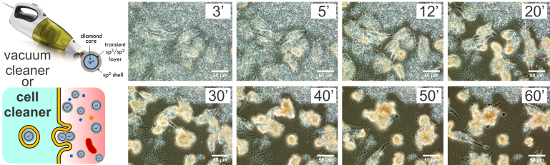
- , Japan) with phase contrast installed. The microscope was equipped with a cell incubation chamber (Solent Scientific, UK) with humidity regulation (95%), controlled temperature (37 °C) and CO2 concentration (5%). The cells were photographed for 72 h at 2 min intervals for the first 6 h and thereafter at


Light-induced magnetoresistance in solution-processed planar hybrid devices measured under ambient conditions
Beilstein J. Nanotechnol. 2017, 8, 1502–1507, doi:10.3762/bjnano.8.150
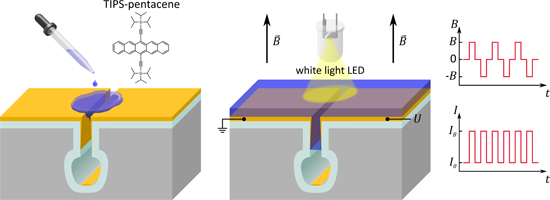
- diode (LED), with an emission ranging from 400 to 700 nm for the measurements of the photocurrent and of the magnetoresistance. The measurements were performed at room temperature (ca. 25 °C) and the ambient humidity was maintained at (20 ± 5)%. The electrical measurements were conducted using a


Miniemulsion copolymerization of (meth)acrylates in the presence of functionalized multiwalled carbon nanotubes for reinforced coating applications
Beilstein J. Nanotechnol. 2017, 8, 1328–1337, doi:10.3762/bjnano.8.134
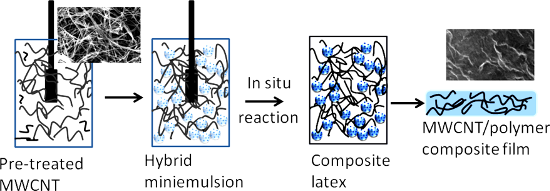
- hybrid latexes MMA/BA/HEMA/MWCNT and from the blends were cast on Teflon molds and dried in a constant climate chamber (Espec Bench SH-641) at 25 °C and 80% of relative humidity for 3 days. Table 1 presents the nomenclature and characteristics of all the samples investigated throughout this study
- between the clamps of 2 mm. The mechanical properties of the films were determined by tensile test measurement. The films with an average thickness of 450 µm were prepared by drying in Teflon molds at 25 °C and 80% humidity for 3 days. The measurements were performed in an MTS Insight 10 instrument at a


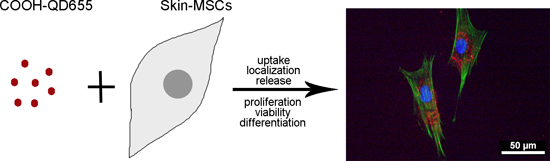
Nano-engineered skin mesenchymal stem cells: potential vehicles for tumour-targeted quantum-dot delivery
Beilstein J. Nanotechnol. 2017, 8, 1218–1230, doi:10.3762/bjnano.8.123
- 100%. After incubation, 10 µL of CCK-8 reagent was added to each well and incubated for 2 h at 37 °C in 5% CO2 at 90% humidity. The change in the medium colour corresponds to the amount of dye produced in the sample and is directly proportional to the number of viable cells. The optical density was
- samples were propagated in complete medium for 21 days. For the chondrogenic differentiation assay, 5 µL of a cell suspension with a density of 1.6 × 10⁷ cells/mL in complete medium was seeded onto 96-well plates and incubated for 2 h under high-humidity conditions at 37 °C and 5% CO2. Chondrogenic
- × 104 cells per well were seeded on 8-well chamber slides (Nunc, Sigma-Aldrich, USA) in complete medium and left to adhere overnight at 37 °C, 5% CO2 and more than 90% humidity. 16 nM QDs diluted in complete medium were added, and samples were incubated from 15 min to 24 h. Control wells contained

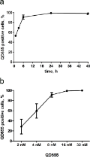

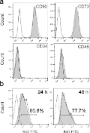



Metal oxide nanostructures: preparation, characterization and functional applications as chemical sensors
Beilstein J. Nanotechnol. 2017, 8, 1205–1217, doi:10.3762/bjnano.8.122
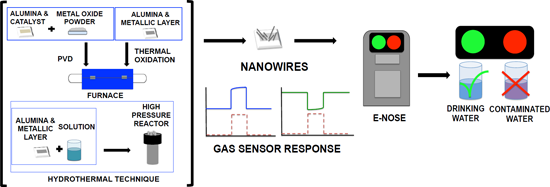
- dry air [15]: The role of water vapour also needs to be taken into account [16][17][18], but its effect on the sensing mechanism strongly depends on the used material. For example, it has been demonstrated that for SnO2, humidity competes with reducing gases for the same reactive oxygen species, and
- it has a site blocking effect when interacting with the surface [16][17]. For this reason, in presence of humidity the concentration of adsorbed oxygen is lower, and the response of the SnO2 sensor to CO is lower than under dry conditions. On the contrary, the lattice of WO3 is oxidized by humidity
- compounds (SIAD, Italy) were injected inside the chamber for 30 min, followed by 1 h of recovery using synthetic air. The relative humidity was kept constant at 50%. Small sensor system The device we used in this work is a “Small Sensor System” (S3). The sensor array is located in a thermally controlled


Surface-enhanced Raman spectroscopy of cell lysates mixed with silver nanoparticles for tumor classification
Beilstein J. Nanotechnol. 2017, 8, 1183–1190, doi:10.3762/bjnano.8.120
- % humidity and 5% carbon dioxide in air. 75 cm2 cell culture flasks (658170; Greiner Bio-One GmbH, Germany) were used for cultivation of the cell lines. Every two or three days the medium was changed until approximately 100% confluence was reached. Cells were detached from the substrate by a 0.05% of trypsin