Search results
Search for "relaxation" in Full Text gives 388 result(s) in Beilstein Journal of Nanotechnology. Showing first 200.
Scavenging of reactive oxygen species by phenolic compound-modified maghemite nanoparticles
Beilstein J. Nanotechnol. 2019, 10, 1073–1088, doi:10.3762/bjnano.10.108
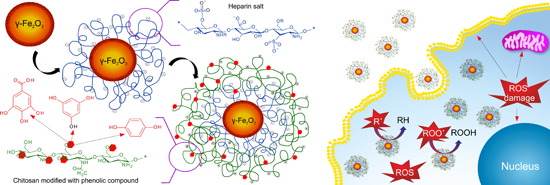
- a Bruker Avance III 600 spectrometer (Billerica, MA, USA) with a 90° width, 10 μs pulse, 10 s relaxation delay, 2.18 s acquisition time, and 100 scans. DCl (2 wt %) in D2O was used as a solvent. The chemical shift was calibrated from the 4,4-dimethyl-4-silapentane-1-sulfonic acid signal at δ = 0 ppm





Structural and optical properties of penicillamine-protected gold nanocluster fractions separated by sequential size-selective fractionation
Beilstein J. Nanotechnol. 2019, 10, 955–966, doi:10.3762/bjnano.10.96
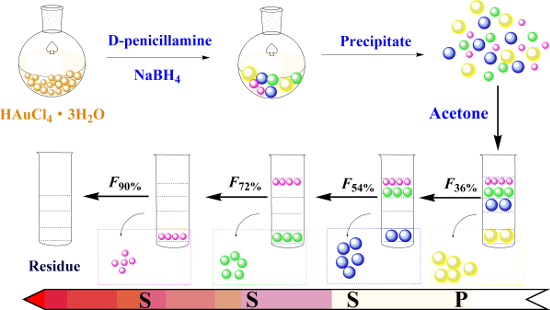
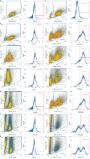
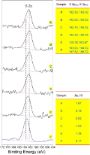
- F36%). This is qualitatively consistent with rotational spin relaxation (T2); that is, the larger 3.0 nm average core size AuNCs (Figure 5, spectrum 3) are significantly slower than the smallest 1.2 nm average core size (Figure 5, spectrum 6) [26]. Further expansion of the packing density gradient



Co-doped MnFe2O4 nanoparticles: magnetic anisotropy and interparticle interactions
Beilstein J. Nanotechnol. 2019, 10, 856–865, doi:10.3762/bjnano.10.86
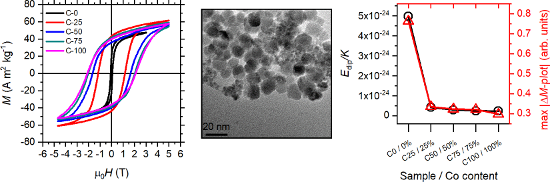
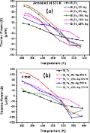
- is the anisotropy energy of the single particle, kB the Boltzmann constant and τ0 the characteristic relaxation time. The fit to the Arrhenius law led to unphysical values of the characteristic relaxation time and anisotropy constant. Since this model describes a non-interacting system, the results


Electronic properties of several two dimensional halides from ab initio calculations
Beilstein J. Nanotechnol. 2019, 10, 823–832, doi:10.3762/bjnano.10.82
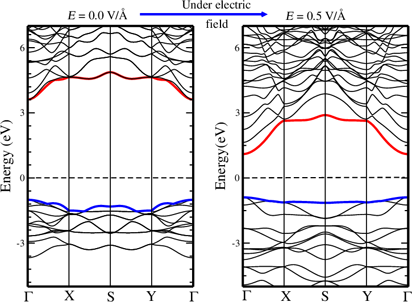
- electronic structure is important for the fabrication of transistors. Therefore, we have used a similar strategy to tune the bandgap of the different monolayers, with electric fields up to 1.0 V/Å applied perpendicularly. A full relaxation of the structure was conducted under the electric field. Notice that


The effect of translation on the binding energy for transition-metal porphyrines adsorbed on Ag(111) surface
Beilstein J. Nanotechnol. 2019, 10, 706–717, doi:10.3762/bjnano.10.70
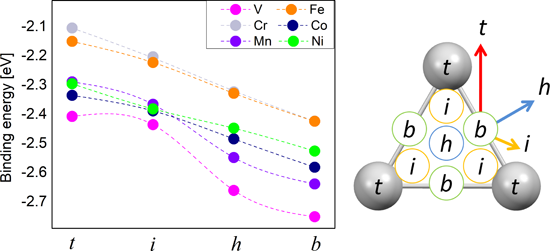
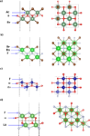
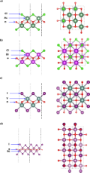
- are detailed here as resulted from DFT calculations. Van der Waals interactions as well as the strong correlation in 3d orbitals of transition metals were taken into account in all calculations, including the structural relaxation. For each system we investigate four relative positions of the metallic
- structures and relaxation procedure for molecule are presented in the next section. The exchange–correlation (xc) functionals used in DFT are plagued by one- and many-electron self-interaction error (SIE) [59]. In the case of correlated electrons this effect may lead to significant errors. One of the most
- atoms. Further relaxation of the positions of nitrogen atoms will probably diminish these values, which should be considered as the maximum possible values. It is interesting to observe that the dependence on the adsorption position is weaker from left to right in the panels of Figure 1, suggesting that


![[Graphic 1]](/bjnano/content/inline/2190-4286-10-70-i1.svg?max-width=637&scale=1.18182) , for all systems and relative molecule–surface positions. Right: symm...
, for all systems and relative molecule–surface positions. Right: symm...


![[Graphic 7]](/bjnano/content/inline/2190-4286-10-70-i7.svg?max-width=637&scale=1.18182) for selected TMPP systems (M = V, Mn, Co; red: positive values, blue: negative value...
for selected TMPP systems (M = V, Mn, Co; red: positive values, blue: negative value...
Outstanding chain-extension effect and high UV resistance of polybutylene succinate containing amino-acid-modified layered double hydroxides
Beilstein J. Nanotechnol. 2019, 10, 684–695, doi:10.3762/bjnano.10.68
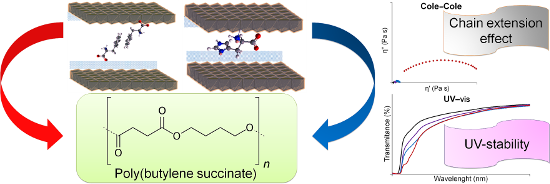
- ][31]. This work, however, used a different LDH platelet composition (Zn2Al) that is known to present some UV screening due to Zn2+ cations. However, hydrotalcite-type Mg2Al (as used in this work) has yet to be investigated. The temperature and frequency-dependent mechanical relaxation data for the


A carrier velocity model for electrical detection of gas molecules
Beilstein J. Nanotechnol. 2019, 10, 644–653, doi:10.3762/bjnano.10.64
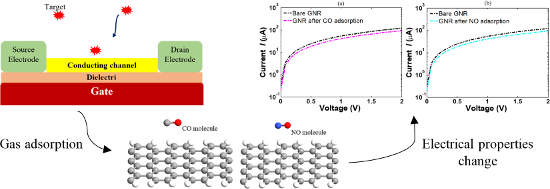
- configurations were considered. Several orientations of the C–O bond above the AGNR plane were tested. After a complete relaxation of the structure, the optimal configuration for the CO molecule above the AGNR was found, where the C–O bond was parallel to the substrate and the molecular distance from the AGNR




Enhancement in thermoelectric properties due to Ag nanoparticles incorporated in Bi2Te3 matrix
Beilstein J. Nanotechnol. 2019, 10, 634–643, doi:10.3762/bjnano.10.63
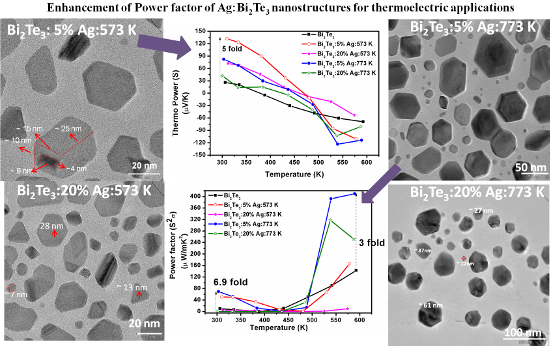
- electrons is caused by the existence of an electrostatic potential at the interface. The Seebeck coefficient depends on the energy derivative of the relaxation time at the Fermi energy. Thus the electron-energy filtering, in which high-energy electrons remain unaffected, strongly enhances Seebeck



Review of time-resolved non-contact electrostatic force microscopy techniques with applications to ionic transport measurements
Beilstein J. Nanotechnol. 2019, 10, 617–633, doi:10.3762/bjnano.10.62
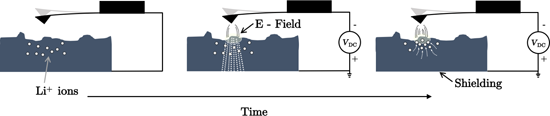
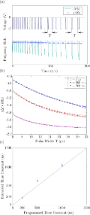
- relaxation times [31]. Nonetheless, this complicates time-domain measurements of ionic transport as the functional form of the relaxation must be fully captured in order to reliably extract the relevant parameters, namely τ* and β. With slow ionic relaxation times (longer than milliseconds) and typical
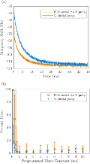
- operating (scanning) parameters (bandwidth of ca. 100 Hz) the PLL response will not affect the extracted values obtained from directly fitting the data. However, as the relaxation time approaches the response time of the PLL, the output signal will become a convolution of the PLL response function and the
- ionic relaxation. This makes any quantification of the transport properties challenging. To investigate the effect of τPLL on the ability to extract parameters from measured signals, a digitially synthesized voltage waveform varying in time as a stretched exponential (Equation 1, β = 0.7) was applied





Direct observation of the CVD growth of monolayer MoS2 using in situ optical spectroscopy
Beilstein J. Nanotechnol. 2019, 10, 557–564, doi:10.3762/bjnano.10.57
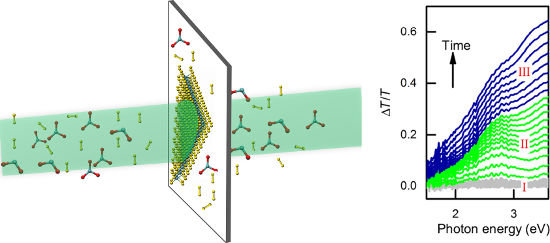
- the interband transitions transpiring near the critical point of Γ, where the valance and conduction bands are nested [30]. The relaxation of the transitions A and B gives strong PL emission, which is plotted in Figure 1f. The strong PL emission corroborates the monolayer thickness of the MoS2 layer


Nanocomposite–parylene C thin films with high dielectric constant and low losses for future organic electronic devices
Beilstein J. Nanotechnol. 2019, 10, 428–441, doi:10.3762/bjnano.10.42
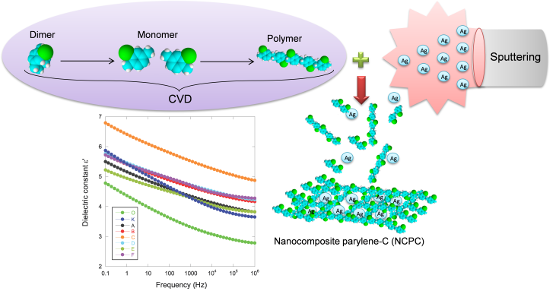
- of the permittivity. In particular, β-relaxation is affected by the addition of nanoparticles as well as the dissipation factor, which is even improved. A dielectric constant of 5 ± 1 with a dissipation factor of less than 0.045 in the range from 0.1 Hz to 1 MHz is obtained for a 2.7 µm thick NCPC
- relaxation of the C–Cl bond (β-relaxation) [34]. Compared to the pure parylene sample (O) all other samples present a higher dielectric constant over the whole frequency range. Many factors could explain this result: 1. An increase in polymer thickness sometimes leads to an increase in the dielectric
- parameter modifying the frequency trend of the β-relaxation is the dielectric strength Δε = ε’LF − ε’HF [62], where ε’LF is the low-frequency dielectric constant (measured at 0.1 Hz in our case) and ε’HF is the high-frequency dielectric constant (measured at 1 MHz in our case). Δε is associated to the




Intuitive human interface to a scanning tunnelling microscope: observation of parity oscillations for a single atomic chain
Beilstein J. Nanotechnol. 2019, 10, 337–348, doi:10.3762/bjnano.10.33
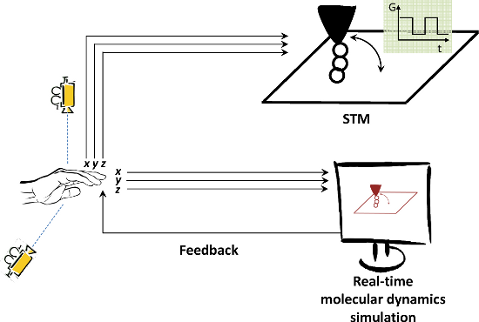
- temperature difference with the reference temperature T0 with an adjustable coupling to a heat bath: where τB is the temperature relaxation time, related to the strength of the coupling. The velocities of all atoms are rescaled at every timestep (Δt) with the same factor: A typical value for τB in condensed
- structural relaxation step in a system analogous to the one shown in Figure 3 and checked the difference in the final total energy of the relaxed state between our method and a conventional approach. We found that the error in final total energy induced by the cutoff radii and the lookup table is very small
- unwanted adsorbates that may be present in the UHV chamber, most likely hydrogen. In fact we have observed this jump to contact when approaching a Au adatom from the top in more than 80% of the times and we attribute it to the relaxation [42] of tip and surface atoms. Recent work [43][44], albeit not




Mechanism of silica–lysozyme composite formation unravelled by in situ fast SAXS
Beilstein J. Nanotechnol. 2019, 10, 182–197, doi:10.3762/bjnano.10.17
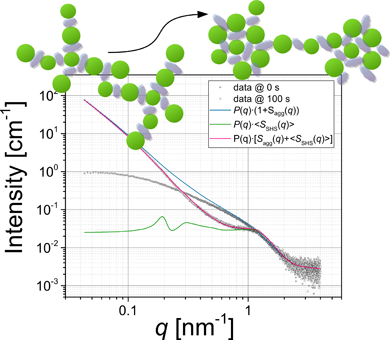
- of the protein molecules are considerably smaller than the native dimensions of lysozyme in any possible orientation. Hence, this suggests that initially the binding of silica NPs by lysozyme involves a severe deformation/unfolding of the protein molecules, followed in time by a relaxation and
- model to link the evolution in the measured structure factor to the lysozyme molecule, and we found that the aggregation processes involve severe deformation of the protein molecules, which is then followed by the relaxation towards the original dimensions. Appendix Derivation of Equation 17 The



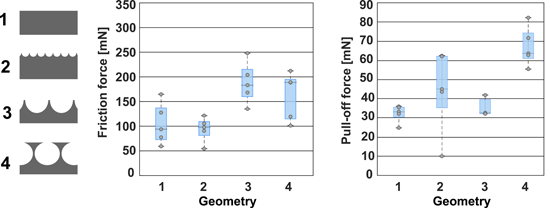
Pull-off and friction forces of micropatterned elastomers on soft substrates: the effects of pattern length scale and stiffness
Beilstein J. Nanotechnol. 2019, 10, 79–94, doi:10.3762/bjnano.10.8





Threshold voltage decrease in a thermotropic nematic liquid crystal doped with graphene oxide flakes
Beilstein J. Nanotechnol. 2019, 10, 71–78, doi:10.3762/bjnano.10.7
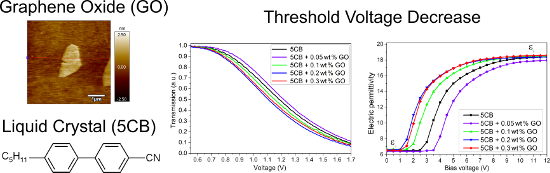
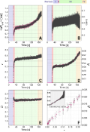
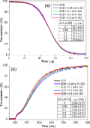
- light (τ90–10). It was found that τON increases with the increase of the GO concentration. The effect can be attributed to the increase of the rotational viscosity γ. Figure 7b illustrates the τOFF dependence. The switch-off time is the time of the director relaxation after removing an electric signal



Hydrogen-induced plasticity in nanoporous palladium
Beilstein J. Nanotechnol. 2018, 9, 3013–3024, doi:10.3762/bjnano.9.280
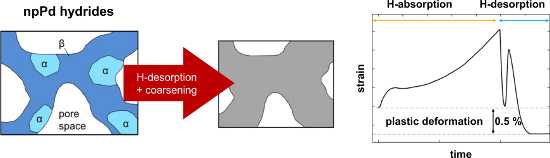
- relaxation). When the PdHβ-phase vanished, the lattice constant of PdHα was reported to be higher than its value before initial absorption, indicating an irreversible effect of the hydrogen treatment on the lattice [38]. It is important to note that also during absorption a decrease in lattice constant for
- the process of lattice-constant relaxation in the α-phase, while the fraction of PdHβ is reduced. Region (e) corresponds to the desorption from PdHα, which is the predominant phase at this point, until the sample is completely dehydrogenated. The same strain overshoot was monitored during desorption
- sample contracts as expected with a strain rate approximately proportional to the unloading current. The relaxation of the strained α-phase appears without an externally applied potential or current (black after unloading in red), resulting in a similar overshooting effect. As indicated above, a possible


Controlling surface morphology and sensitivity of granular and porous silver films for surface-enhanced Raman scattering, SERS
Beilstein J. Nanotechnol. 2018, 9, 2813–2831, doi:10.3762/bjnano.9.263
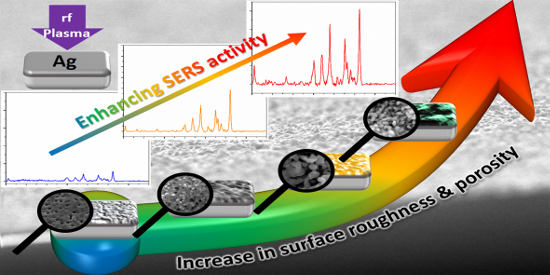
- complex processes, namely ionization (1 and 2), excitation (3) and relaxation (4) as well as dissociation in case of diatomic species (5) [75]: Thus controlled rf plasma treatment is a very interesting technique for the modification of surfaces as a number of different chemical species can be generated






Variation of the photoluminescence spectrum of InAs/GaAs heterostructures grown by ion-beam deposition
Beilstein J. Nanotechnol. 2018, 9, 2794–2801, doi:10.3762/bjnano.9.261
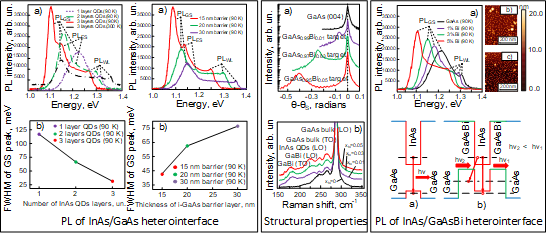
- intensity at 0 radians (θs = 33°) from the GaAs substrate, and low-intensity peaks with negative Δθ due to the strained GaAs1−xBix epitaxial lattice. That kind of peak splitting (with respect to the substrate) is usually observed in epitaxial layers with lattice relaxation. The Bi contents were calculated
- methods also show that the InAs/GaAs1−xBix heterosystem has a large lattice relaxation compared to that of InAs/GaAs. It is demonstrated that the surface diffusion of In increases during ion-beam deposition of InAs QDs on the GaAs1−xBix surface. a) Photoluminescence spectra of samples with vertically


Near-infrared light harvesting of upconverting NaYF4:Yb3+/Er3+-based amorphous silicon solar cells investigated by an optical filter
Beilstein J. Nanotechnol. 2018, 9, 2788–2793, doi:10.3762/bjnano.9.260
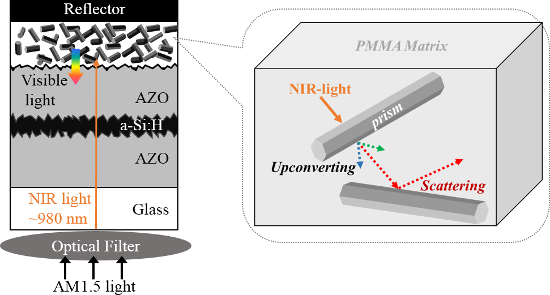
- in Figure 2c, under 980 nm excitation with a power of 60 mW, Yb3+ ions firstly capture the energy of the photons and then transfer it to neighboring Er3+ ions in a 4I11/2 → 4F7/2 transition. After non-radiative relaxation to lower energy levels, the excited electrons return to the ground level (4I15


Size-selected Fe3O4–Au hybrid nanoparticles for improved magnetism-based theranostics
Beilstein J. Nanotechnol. 2018, 9, 2684–2699, doi:10.3762/bjnano.9.251
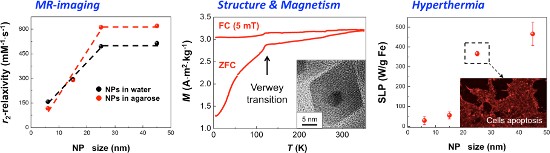
- light scattering data (Table S1, Supporting Information File 1). The ability of magnetite NPs to increase the T2-contrast in MRI arises from the creation of huge magnetic field gradients, accelerating the relaxation rate of water protons in the vicinity of the NPs [56]. The correlation of r2-relaxivity
- and the corresponding stray field are so large that water molecules experience a nearly constant magnetic field during their T2-relaxation. These NPs are then in the so-called static dephasing regime (SDR) [63], which determines the relaxivity limit, and the r2 value reaches a plateau. In the SDR, the
- in agarose in comparison with water solutions (Figure 5C), while for the smaller NPs, lower r2 values are observed. This splits the batches into two size regimes, namely SDR and MAR for the larger and smaller batches, respectively. According to these relaxation regimes, the NPs up to about 20–25 nm


High-temperature magnetism and microstructure of a semiconducting ferromagnetic (GaSb)1−x(MnSb)x alloy
Beilstein J. Nanotechnol. 2018, 9, 2457–2465, doi:10.3762/bjnano.9.230
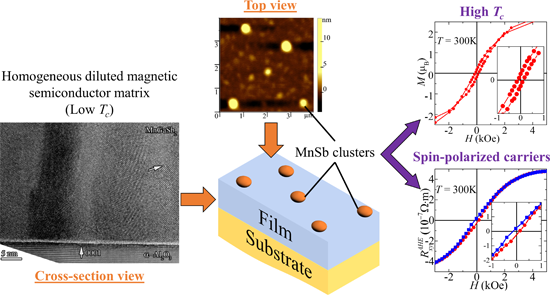
- carriers their interaction have to be sufficiently strong. This implies that has to be a large amount of such inclusions with distances between them shorter than the carrier spin-relaxation length. However, the comparatively high carrier mobilities in the studied samples still leave some doubt on the



Influence of the thickness of an antiferromagnetic IrMn layer on the static and dynamic magnetization of weakly coupled CoFeB/IrMn/CoFeB trilayers
Beilstein J. Nanotechnol. 2018, 9, 2198–2208, doi:10.3762/bjnano.9.206
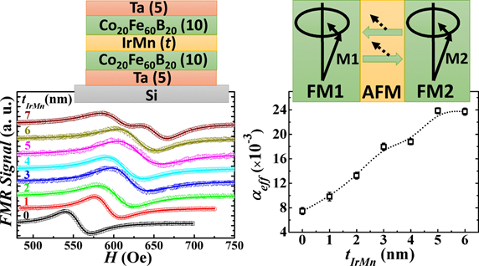
- -magnon propagation [15][16][17][18][19][20][21]. Besides spin transport, it is important to understand and tune the magnetic relaxation in multilayers from both fundamental physics and technological viewpoints. There are many applications that require low damping of gyromagnetic precession, e.g., in
- lowering the spin torque critical current switching density [22][23]. For various other applications a fast relaxation is favored, e.g., in magnetoresistive heads [24][25]. The FM/AF exchange coupling is one of the approaches to tune the magnetization relaxation by enhancing the field linewidth ΔH and
- displacing the resonance field Hr [26][27][28][29]. Spin transport and relaxation studies in FM/AF/FM trilayers are intriguing due to the presence of two interfaces shared between FM and AF. Also, little is known about how effective magnetic damping evolves when there is a weak interlayer exchange coupling


Dumbbell gold nanoparticle dimer antennas with advanced optical properties
Beilstein J. Nanotechnol. 2018, 9, 2188–2197, doi:10.3762/bjnano.9.205
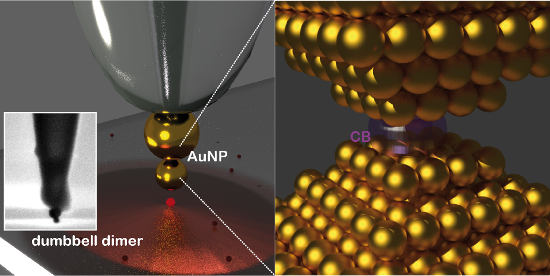
- enhancement due to the interaction of the molecule with the evanescent electromagnetic field of the antenna and 2.) quenching of the excited state, i.e., the relaxation of the excited state by means of radiationless energy transfer to the metallic interface of the AuNP. Since the spontaneous emission rate




Fabrication of photothermally active poly(vinyl alcohol) films with gold nanostars for antibacterial applications
Beilstein J. Nanotechnol. 2018, 9, 2040–2048, doi:10.3762/bjnano.9.193
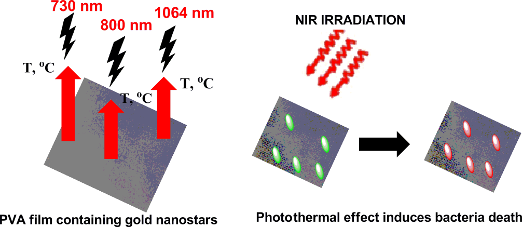
- materials that can coat surfaces and are capable of eradicating biofilms with remote physical activation. Even though gold nanoparticles are not intrinsically antibacterial, the thermal relaxation upon NIR light activation can be a major force of antibacterial action as it was shown for monolayers of GNSs


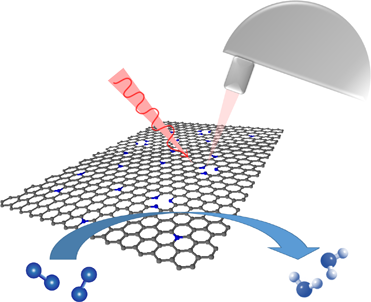
Metal-free catalysis based on nitrogen-doped carbon nanomaterials: a photoelectron spectroscopy point of view
Beilstein J. Nanotechnol. 2018, 9, 2015–2031, doi:10.3762/bjnano.9.191
- structure of bulk and nanoscale objects, illustrating the so-called “phonon bottleneck” phenomenon. The excitation relaxation time is enhanced when the spacing between the size-quantized energy levels ΔE is larger than the vibrational energy ħω. This mechanism is discussed for illustration purposes only
- . There are many other nonradiative relaxation channels in nanosystems that affect the excitation lifetimes. Reproduced with permission from [83], copyright 2010 American Institute of Physics. (d–i) Production of defects in graphene under ion irradiation as revealed by the analytical potential molecular