Search results
Search for "spin" in Full Text gives 583 result(s) in Beilstein Journal of Nanotechnology. Showing first 200.
Effect of substitutional defects on resonant tunneling diodes based on armchair graphene and boron nitride nanoribbons lateral heterojunctions
Beilstein J. Nanotechnol. 2020, 11, 688–694, doi:10.3762/bjnano.11.56
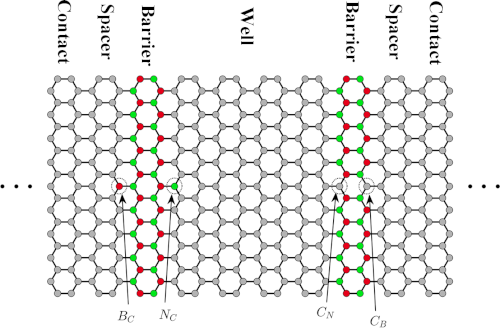
- considers the interfaces of the Gr/hBN regions are parallel to the transport direction so that there are no bandgap variations in the transport direction. Since the electron transport is in zigzag direction, spin-polarized transport calculations are utilized. Instead, in the study presented here, the
- electron transport is in armchair direction, which is not spin-polarized. Therefore, nonequilibrium Green’s functions with tight-binding Hamiltonians (without considering spin degree of freedom) are utilized for electronic transport calculations. Furthermore, in the proposed RTD there are four GNR/BNNR



Silver-decorated gel-shell nanobeads: physicochemical characterization and evaluation of antibacterial properties
Beilstein J. Nanotechnol. 2020, 11, 620–630, doi:10.3762/bjnano.11.49
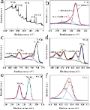
- -resolution spectra for these elements. The direct evidence for metallic silver embedded in the polymer matrix is the spin–orbit doublet recorded at 368.3 and 374.3 eV for Ag 3d5/2 and 3d3/2, respectively (Figure 5A), followed by plasmon loss peaks at 372 and 378 eV [30][31]. However, the asymmetric shape of
- the spectra suggests another spin–orbit pair with binding energies at 368.8 and 374.8 eV. This indicates the presence of some other form of silver, e.g., Ag bonded to organic molecules [32] or non-reduced silver ions [33] embedded in the gel layer. The content of this form of silver is ca. 37.1% (w/w
- , with respect to the overall amount of Ag). The S 2p signal reveals the presence of two non-equivalent types of sulfur atoms in the sample (the ratio of these two types of atoms is 1.2:1). The spin–orbit doublet (2p3/2/2p1/2) with a 2:1 intensity ratio and a binding energy splitting of 1.16 eV was used


DFT calculations of the structure and stability of copper clusters on MoS2
Beilstein J. Nanotechnol. 2020, 11, 391–406, doi:10.3762/bjnano.11.30
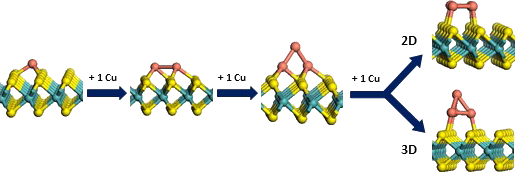
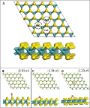
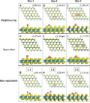
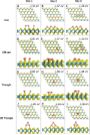
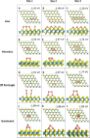
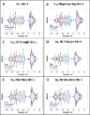
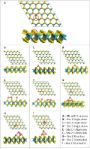
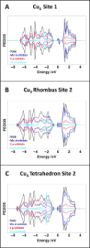
- out with density functional theory (DFT) using the Vienna ab initio simulation package (VASP) version 5.4 [34]. It uses 3D periodic boundary conditions and the spin-polarized generalized gradient approximation (GGA) using the Perdew–Burke–Ernzerhof (PBE) approximation to the exchange–correlation
Formation of nanoripples on ZnO flat substrates and nanorods by gas cluster ion bombardment
Beilstein J. Nanotechnol. 2020, 11, 383–390, doi:10.3762/bjnano.11.29
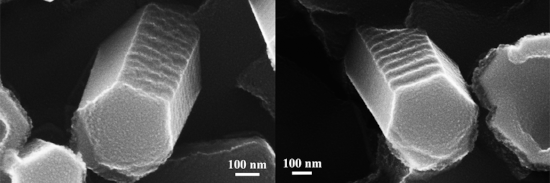
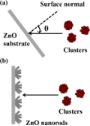
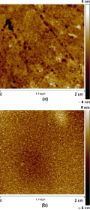
- mL of deionized (DI) water for 4 h at 60 °C. Then, the solution was heated in an oven for 20 h at 60 °C. Next, ZnO seeds were synthesized on the Si substrates through spin-coating. First, a drop of the seed solution was put onto the cleaned substrate at 700 rpm for 10 s and then at 2000 rpm for 60 s



Implementation of data-cube pump–probe KPFM on organic solar cells
Beilstein J. Nanotechnol. 2020, 11, 323–337, doi:10.3762/bjnano.11.24
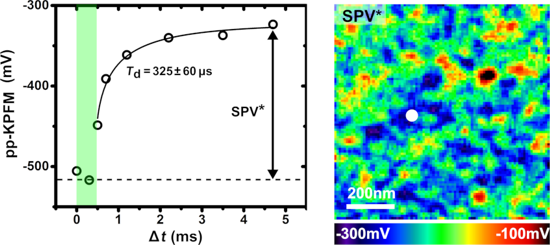
- procedure published by Liang et al. [28]. PTB7 (Ossila, Mw = 85 kDa, PDI = 2.0) and PC71BM (Solenne BV, 99% purity) were used as received. A thin layer of filtered (0.45 µm) PEDOT:PSS (Baytron A14083, Clevios) was spin-coated onto the activated ITO surface at 5000 rpm for 25 s, 4000 rpm for 60 s and 4000
- rpm for 1 s (≈30 nm) and annealed at 120 °C for 10 min under ambient conditions. The substrate was then transferred into an argon-filled glovebox for spin-coating of an active layer of the PTB7:PC71BM solution (1:1.5 weight ratio, 25 mg∙mL−1 total concentration) in anhydrous chlorobenzene. The blend


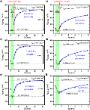


Anomalous current–voltage characteristics of SFIFS Josephson junctions with weak ferromagnetic interlayers
Beilstein J. Nanotechnol. 2020, 11, 252–262, doi:10.3762/bjnano.11.19
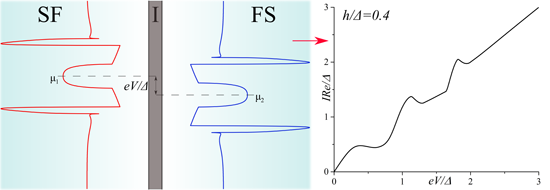
- , e.g., single-flux quantum circuits [46][47], spintronic devices [48], memory elements [49][50][51][52][53][54][55][56][57][58] and spin-valves [59][60][61][62][63][64][65], magnetoelectronics [66][67][68], qubits [69], artificial neural networks [70], microrefrigerators [71][72], and low-temperature
- (G = cos θ) and anomalous (F = sin θ) Green’s functions and write the Usadel equations in the F layers in the form [94][95], where the positive and negative signs correspond to the spin-up (“↑”) and spin-down (“↓”) states, respectively. In terms of the electron fermionic operators ψ↑(↓) the spin-up
- state corresponds to the anomalous Green’s function F↑ ∼ ⟨ ψ↑ψ↓⟩, while spin-down state corresponds to F↓ ∼ ⟨ψ↓ψ↑⟩. The expressions ω = 2πT(n + 1/2) are the Matsubara frequencies, where n = 0, ±1, ±2, …, and h is the exchange field in the ferromagnet. The scattering times are labeled here as τz, τx, and


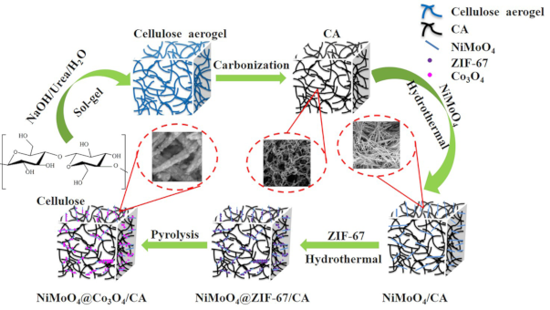
High-performance asymmetric supercapacitor made of NiMoO4 nanorods@Co3O4 on a cellulose-based carbon aerogel
Beilstein J. Nanotechnol. 2020, 11, 240–251, doi:10.3762/bjnano.11.18
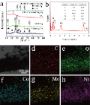
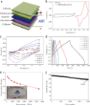
- 2p3/2 and Co 2p1/2, respectively, indicating that the NiMoO4@Co3O4/CA composite electrode material contains both Co3+ and Co2+ [35]. The peaks at 787.1 and 802.8 eV with a spin-energy separation of 15.7 eV can be attributed to the shake-up satellite peaks of Co2+ [36]. Figure 4d shows the Ni 2p
- spectrum where two characteristic peaks appear at 856.5 and 874.3 eV along with two shake-up satellite peaks with a spin-energy separation of 17.8 eV, corresponding to the Ni 2p3/2 and the Ni 2p1/2 levels of Ni2+ [37][38]. The Mo 3d core-level spectrum (Figure 4e) shows two main peaks at 232.4 and 235.5 eV




Nonequilibrium Kondo effect in a graphene-coupled quantum dot in the presence of a magnetic field
Beilstein J. Nanotechnol. 2020, 11, 225–239, doi:10.3762/bjnano.11.17
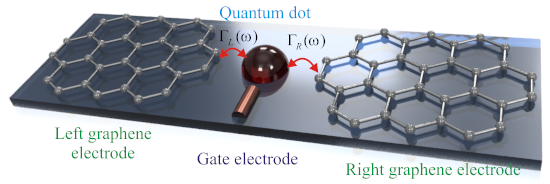
- result of the interaction between a single magnetic impurity (e.g., a magnetic atom or a localized spin) and the free electrons in a nonmagnetic material (e.g., a continuum of states) [23][24]. The Kondo effect has been extensively studied theoretically within the framework of the EOM method applying the
- , to the right for spin-up electrons and to the left for spin-down electrons. Thus, the Kondo peaks originally located at the values of the chemical potentials are split into two new peaks. It was found that the differential conductance consists of an observable peak when the asymmetric bias voltage
- Hamiltonian, which describes the massless Dirac fermions in the left (L) and right (R) graphene leads and can be expressed as: where and cαskσ denote the creation and annihilation operators of the Dirac fermions with wave vector k and spin σ. Here, α identifies the channel in the left (L) and right (R


Recent progress in perovskite solar cells: the perovskite layer
Beilstein J. Nanotechnol. 2020, 11, 51–60, doi:10.3762/bjnano.11.5

- films Benefiting from the advances of various film deposition techniques, such as one-step spin coating [13][21], two-step sequential solution deposition [22][23] and inkjet printing fabrication [24][25], unprecedented progress in the improvement of the efficiency of PSCs has been made. To obtain high
- deposition approach based on one-step spin coating, which involves dripping a noncoordinate solvent such as toluene, chlorobenzene, dichlorobenzene or trifluorotoluene onto the perovskite film while spinning. This method has shown to produce extremely smooth and homogeneous perovskite films. PSCs with a PCE
- development of large-scale semi-transparent PSCs with large area, having diverse applications in the field of building-integrated photovoltaics (BIPVs) or as top cells for tandem devices. It has become a problem that a considerable amount of toxic Pb-containing material is discarded during the spin coating


Self-assembly of a terbium(III) 1D coordination polymer on mica
Beilstein J. Nanotechnol. 2019, 10, 2440–2448, doi:10.3762/bjnano.10.234
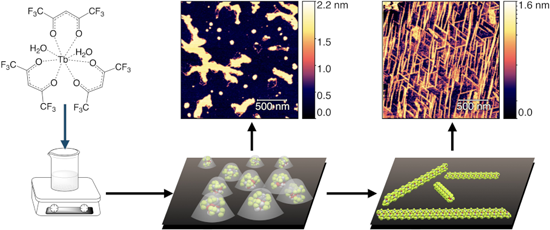
- spin carrier. However, a full saturation of the magnetization is not observed at 40 kOe, probably because of a partial loss of the magnetic anisotropy of TbIII in the deposits (vide infra). Dynamic magnetic measurements have also been performed (Figure 5). In these measurements, the magnetic
- susceptibility χ is measured as χ = χ′ + iχ″ where χ′ is the in-phase and χ″ is the out-of-phase magnetic susceptibility. Clear magnetic signals have been observed. This is a remarkable result for such a tiny amount of spin centers. The in-phase signal (χ′) has been used to estimate the weight of the deposits by
- layering on the mica substrate. This may be a result of i) the geometric distribution of the Tb coordination environment in the deposits similar to what has been observed when SMMs are dissolved in liquid matrixes [27] or ii) a modification of the spin–phonon coupling, as the phonon bath of such deposits




Semitransparent Sb2S3 thin film solar cells by ultrasonic spray pyrolysis for use in solar windows
Beilstein J. Nanotechnol. 2019, 10, 2396–2409, doi:10.3762/bjnano.10.230
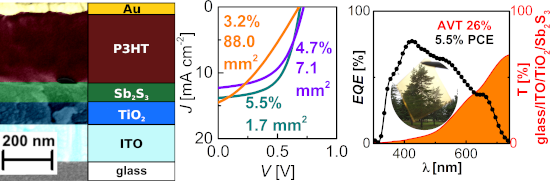
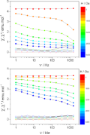
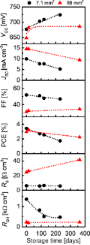
- thin film when it is grown by CBD from an aqueous solution [18]. In 2018, PCE ≈ 5.7% was achieved for a cell based on a spin-coated Sb2S3 absorber, and the same group further increased the PCE of this cell to 6.4% by Zn doping during spin-coating of Sb2S3 [39][40]. Soon after, by doping Sb2S3 with CsOH
- , the PCE of planar Sb2S3 solar cells was boosted from 4.3% to 6.6% [41]. When looking forward to mass production on meter-sized substrates, however, spin-coating cannot be upscaled due to design limitations [42]. Industrialization is feasible only for low-cost, upscalable methods, to the detriment of



Deterministic placement of ultra-bright near-infrared color centers in arrays of silicon carbide micropillars
Beilstein J. Nanotechnol. 2019, 10, 2383–2395, doi:10.3762/bjnano.10.229
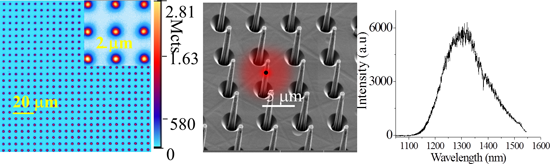
- systems for quantum devices such as single-photon sources and spin–photon interfaces for quantum interconnects [1][2][3]. Points defects or color centers in SiC are considered as alternative candidates for quantum applications such as solid-state quantum bits [4][5], spin–photon interfaces [6], single
- -photon sources (SPSs) [7][8][9][10], nanoscale magnetic or electric fields sensors, and pressure or temperature sensors [3][11][12][13]. Electrically driven SPSs in SiC have been realized [14][15][16], and the coherent control of electron spin can be achieved up to 500 K [17]. SiC offers an alternative
- . Current studies aim to determine more accurately the quantum properties of these defects by using more recent methods of single-photon detection and single-color center isolation, and quantum coherent spin control. The parameters used to describe the quantum properties of color centers include zero-phonon


Polyvinylpyrrolidone as additive for perovskite solar cells with water and isopropanol as solvents
Beilstein J. Nanotechnol. 2019, 10, 2374–2382, doi:10.3762/bjnano.10.228
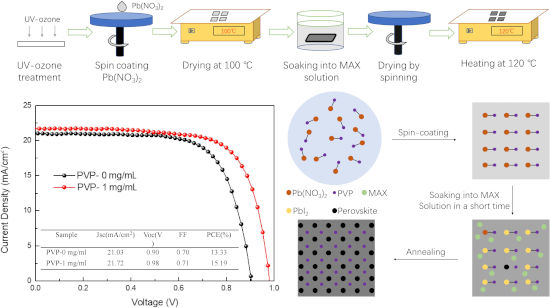
- . Device fabrication Prior to spin-coating, the ITO glass substrate was cleaned sequentially with detergent, acetone, ethanol, deionized water, each for 15 min, then dried with a nitrogen flow, and then cleaned with UV/ozone for 20 min. A thin layer of SnO2 nanoparticles was spin-coated on the ITO
- substrate at 4000 rpm for 30 s and annealed at 150 °C for 10 min, then treated with UV/ozone for 20 min. The Pb(NO3)2 layer was prepared by spin-coating an aqueous Pb(NO3)2 solution (the concentration of Pb(NO3)2 was 1.0 M, doped with 0, 0.5, 1, 2, or 3 mg/mL PVP) at 4000 rpm for 20 s and annealed at 100 °C
- transport layer (HTL) was spin-coated on top of the CH3NH3PbI3 film using a Spiro-OMeTAD solution (the composition of the Spiro-OMeTAD solution was 72.3 mg Spiro-OMeTAD, 28.8 μL 4-tert-butylpyridine, 17.5 μL of lithium bis(trifluoromethanesulfonyl)imide solution (520 mg/mL in acetonitrile) and 1 mL


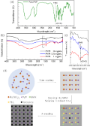


Atomic force acoustic microscopy reveals the influence of substrate stiffness and topography on cell behavior
Beilstein J. Nanotechnol. 2019, 10, 2329–2337, doi:10.3762/bjnano.10.223
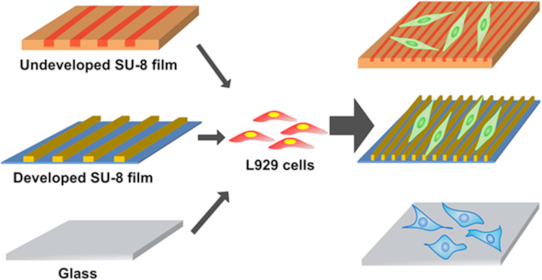
- with deionized water and dried in air. The SU-8 photoresist (2000.5, MicroChem) was spin-coated on the glass slides at a speed of 4000 rpm for 60 s. The slides were subsequently heated to 95 °C on a hot plate for 60 s to remove the solvent. The resulting SU-8 coating is approximately 400 nm thick


Nontoxic pyrite iron sulfide nanocrystals as second electron acceptor in PTB7:PC71BM-based organic photovoltaic cells
Beilstein J. Nanotechnol. 2019, 10, 2238–2250, doi:10.3762/bjnano.10.216
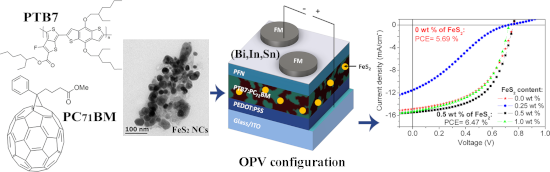
- thickness and morphology of the devices [32][35]. Spin-coating is one of the most widely used techniques for active layer deposition that provides a small active area film with a low root-mean-squared roughness of about 1–3 nm [36]. It has been proved that, with the incorporation of a third component in the
- at 80 °C for at least 12 h. Then, the ITO substrates were treated with UV-ozone plasma for 15 min. A PEDOT:PSS layer of ≈40 nm thickness was spin-coated on top of the ITO substrate at 4500 rpm for 1 min, and then it was thermally treated at 120 °C for 20 min. The active layers with and without FeS2
- were spin-coated onto ITO/PEDOT:PSS at 1900 rpm for 60 s at atmospheric conditions, and then the films were annealed at 80 °C for 15 min (active layer thickness ≈100 nm). A PFN layer (≈5–10 nm) was spin-coated at 6000 rpm on top of the active layer and exposed to thermal annealing for 15 min at 80 °C


Targeted therapeutic effect against the breast cancer cell line MCF-7 with a CuFe2O4/silica/cisplatin nanocomposite formulation
Beilstein J. Nanotechnol. 2019, 10, 2217–2228, doi:10.3762/bjnano.10.214
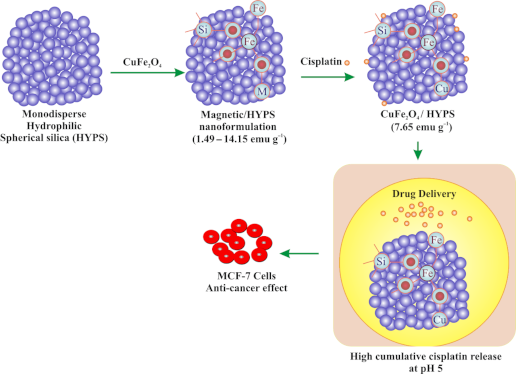
- inverse spinels occupying the A site, while Cu2+ prefers the B site. SQUID-vibrating sample magnetometry (VSM) analysis showed the formation of superparamagnetic behavior, while a temperature dependence study using field cooling and zero field cooling analysis (ZFC/FC) showed spin-glass-like surface
- nanometer-sized copper spinel clusters over HYPS (Figure 5). The particle size reduction tends to decrease the saturation magnetization. In particular, noncollinear spin arrangements present at the external nanoparticle surface play a major role, which in influences the response of the material to the


Ultrathin Ni1−xCoxS2 nanoflakes as high energy density electrode materials for asymmetric supercapacitors
Beilstein J. Nanotechnol. 2019, 10, 2207–2216, doi:10.3762/bjnano.10.213
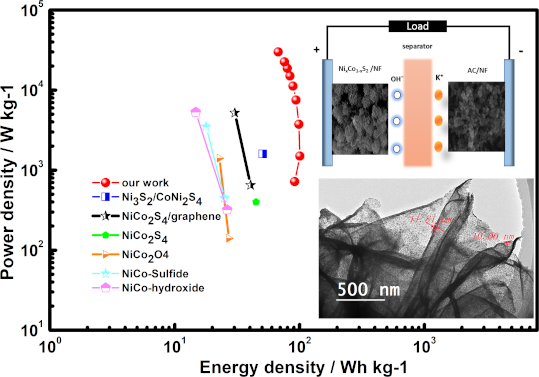
- ]. The Co 2p HRXPS spectrum (Figure 2c) shows characteristic peaks of Co 2p, which were both fitted with two main peaks at 781.4 eV and 796.7 eV, corresponding to a spin-energy separation of 15.3 eV. This energy can be attributed to the existence of Co3+ in the Ni1−xCoxS2 [32][33]. In the S 2p spectra


Liquid crystal tunable claddings for polymer integrated optical waveguides
Beilstein J. Nanotechnol. 2019, 10, 2163–2170, doi:10.3762/bjnano.10.209
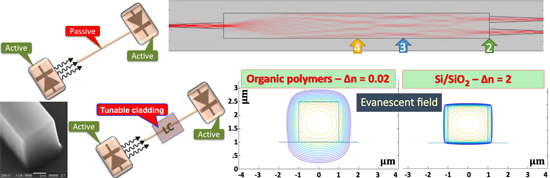
- conditioned with spin-coated polyimide (PIA-2304, Lixon Aligner) for homogeneous LC alignment, parallel to the plate, along the waveguide. Both the glass surface and the waveguide were gently rubbed with a velvet cloth to induce the desired orientation. If an external electric field is applied to the LC


Nitrogen-vacancy centers in diamond for nanoscale magnetic resonance imaging applications
Beilstein J. Nanotechnol. 2019, 10, 2128–2151, doi:10.3762/bjnano.10.207
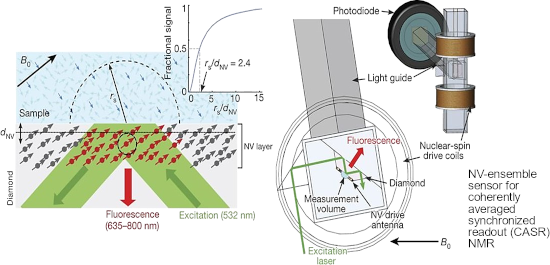
- methods, this review presents a survey of the latest advances in NV center nano-MRI. Keywords: nanodiamonds; nanoscale magnetic resonance imaging (nano-MRI); nitrogen-vacancy center; optically detected magnetic resonance; Review Introduction Spin echoes and free induction decays were first detected in
- (MRFM). Among the other approaches, magnetic dipole interaction is a new way to replace magnetic induction to allow for nanoscale MRI detection and has delivered promising results in the employment of spin sensors based on atomic-scale diamond impurities. The use of diamond NV centers with nano-MRI has
- allowed for in vivo imaging on the single-biomolecular scale at room temperature [12]. Other approaches not based on NV centers are evolving at the same pace as methods based on NV centers. For example, a new method for high-resolution nano-MRI coupling high spin sensitivity of nanowire-based MR detection


Improved adsorption and degradation performance by S-doping of (001)-TiO2
Beilstein J. Nanotechnol. 2019, 10, 2116–2127, doi:10.3762/bjnano.10.206
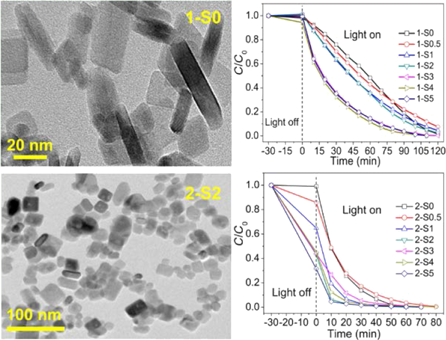
- Instruments, USA). The pore size distribution was calculated using the Barret–Joyner–Halenda (BJH) method. The photoluminescence (PL) was measured on a fluorescence spectrophotometer (F-4500, Hitachi, Japan). Electron spin resonance (ESR) signals of the reactive species spin trapped by 5,5-dimethyl-1




Microbubbles decorated with dendronized magnetic nanoparticles for biomedical imaging: effective stabilization via fluorous interactions
Beilstein J. Nanotechnol. 2019, 10, 2103–2115, doi:10.3762/bjnano.10.205
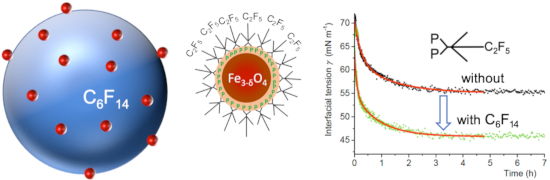
- result is already obtained with C2F5, for which MBs of ≈1.0 μm in radius reach a half-life of ≈6.0 h. An atomic force microscopy investigation of spin-coated mixed films of DPPC/IONP@C2X5OEG8Den combinations (molar ratio 28:1) shows that the IONPs grafted with the fluorinated dendrons are located within
- indicate that fluorous interactions exist between F-hexane in the gas core and the fluorinated NPs and play a significant role for the MB size and stability characteristics. AFM analysis of spin-coated films of DPPC, dendronized iron oxide nanoparticles and their mixtures With the aim to understand if the
- dendronized IONPs are incorporated within the DPPC shell of the MBs or located at the surface of the shell (Figure 8), mixed films composed of phospholipid and nanoparticles were prepared by spin-coating on silicon wafers. The morphology of the films was investigated by AFM in the peak–force tapping mode. We


Synthesis of highly active ETS-10-based titanosilicate for heterogeneously catalyzed transesterification of triglycerides
Beilstein J. Nanotechnol. 2019, 10, 2039–2061, doi:10.3762/bjnano.10.200
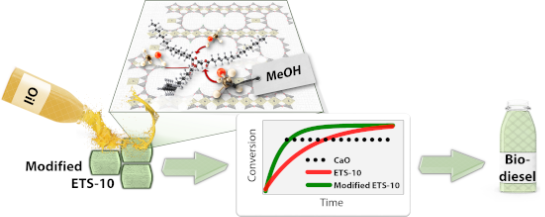
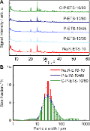
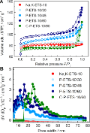
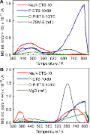
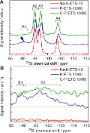
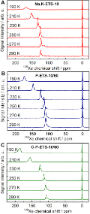
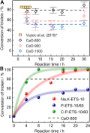
- expectedly showed no signals of Ti(III) around 3500 G due to its oxidation state Ti(IV), which is diamagnetic and thus EPR-silent. Both samples, C-P-ETS-10/60 and P-ETS-10/60, display a typical signal of high spin Fe(III) of dispersed paramagnetic centers. Their g-value of 4.3 is indicative of a large axial








Improvement of the thermoelectric properties of a MoO3 monolayer through oxygen vacancies
Beilstein J. Nanotechnol. 2019, 10, 2031–2038, doi:10.3762/bjnano.10.199
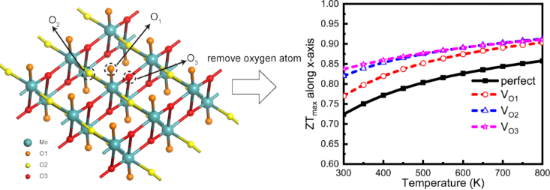
- –Ernzerhof (PBE) [20] pseudopotentials without spin–orbit interaction. Since the PBE functional fails to capture the electrical and optical properties of bulk MoO3 by a large margin (band gap of less than half of the experimental value), we also employ the Heyd–Scuseria–Ernzerhof (HSE06) hybrid functional


Magnetic properties of biofunctionalized iron oxide nanoparticles as magnetic resonance imaging contrast agents
Beilstein J. Nanotechnol. 2019, 10, 1964–1972, doi:10.3762/bjnano.10.193
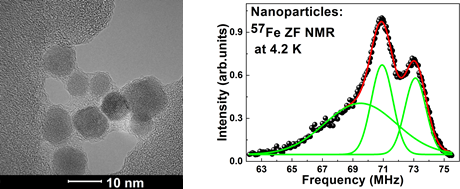
- . The contrast between the tissues in MRI images depends on their properties such as fat and water content as well as on the sequence of the procedure parameters. There are three main characteristics that determine the contrast of the image: 1) proton density; 2) the spin–lattice relaxation time T1; and
- 3) the spin–spin relaxation time T2. Generally, these natural differences in tissue properties provide the necessary contrast, but in some cases, the pathological focus cannot be visualized in the images, for instance, due to size effects or the difficulty in delineating boundaries to determine
- containing paramagnetic gadolinium, reduce the spin–lattice relaxation time (T1), which makes the pathological focus brighter. Negative contrast agents typically contain MNPs with Fe2+ and Fe3+ ions. They reduce the T2 relaxation time and therefore weaken the signal from the tissues that absorbed the agent




Oblique angle deposition of nickel thin films by high-power impulse magnetron sputtering
Beilstein J. Nanotechnol. 2019, 10, 1914–1921, doi:10.3762/bjnano.10.186
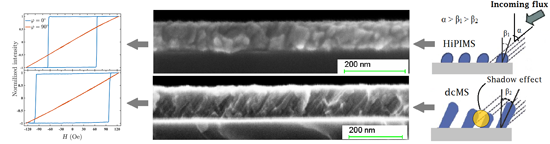
- sputtering; magnetic anisotropy; nickel; Introduction The realization of electronics based on utilizing the electron spin degree of freedom, commonly referred to as spintronics, requires the integration of ferromagnetic films with semiconductors [1]. Nickel is a ferromagnetic heavy 3d transition metal that