


Search results
Search for "FTIR" in Full Text gives 342 result(s) in Beilstein Journal of Nanotechnology. Showing first 200.
Cytotoxicity of doxorubicin-conjugated poly[N-(2-hydroxypropyl)methacrylamide]-modified γ-Fe2O3 nanoparticles towards human tumor cells
Beilstein J. Nanotechnol. 2018, 9, 2533–2545, doi:10.3762/bjnano.9.236
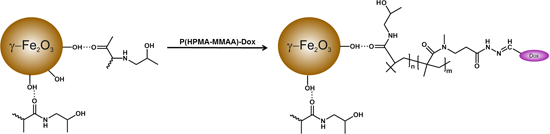
- /mL) to obtain γ-Fe2O3@PHPMA. Second, P(HPMA-MMAA)-Dox (0.1–13.0 µg) was dissolved in aqueous γ-Fe2O3@PHPMA colloid (2–260 µg; 50 mg γ-Fe2O3/mL) to get γ-Fe2O3@P(HPMA-MMAA)-Dox before use in the cell experiments. Characterization methods 1H NMR (in CDCl3) and FTIR spectra of MMAA were recorded on a
- methyl ester of sarcosine was methacryloylated. Structure and purity of MMAA was confirmed by 1H NMR (Figure 1a), gas chromatography (Figure 1b), and FTIR spectroscopy (Figure 1c). The FTIR spectrum exhibited characteristic peaks at 1745 and 1620 cm−1 ascribed to strong C=O stretching vibrations of ester
- of the copolymer was confirmed by the FTIR spectrum exhibiting characteristic peaks at 2973 and 2933 cm−1 ascribed to CH stretching vibrations. The peak at 1729 cm−1 belongs to C=O ester stretching vibrations and those at 1631 and 1528 cm−1 were attributed to C=O and NH amide stretching and bending


Non-agglomerated silicon–organic nanoparticles and their nanocomplexes with oligonucleotides: synthesis and properties
Beilstein J. Nanotechnol. 2018, 9, 2516–2525, doi:10.3762/bjnano.9.234
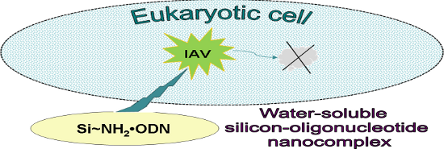
- Si–NH2 solution was recorded on a Cary 660 FTIR spectrometer (Agilent Technologies, USA) within the range of 4000–500 cm−1 at 4 cm−1 resolution, and 100 scans were accumulated in the attenuated total reflectance (ATR) mode using a GladiATR unit (Pike Technologies). The spectrum of the substance is


Enhanced antineoplastic/therapeutic efficacy using 5-fluorouracil-loaded calcium phosphate nanoparticles
Beilstein J. Nanotechnol. 2018, 9, 2499–2515, doi:10.3762/bjnano.9.233
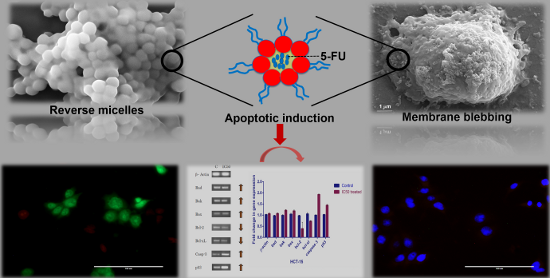
- -transform infrared spectroscopy (FTIR), and X-ray diffraction (XRD). The antineoplastic potential of the CaP@5-FU NPs against colorectal and lung cancer cells was reported. The CaP@5-FU NPs were found to inhibit half the population (IC50) of lung adenocarcinoma (A549) cells at 32 μg/mL and colorectal (HCT
- loading (Figure 2C). The characteristic FTIR peaks were found in both unloaded and drug-loaded nanoparticles, which was confirmed by the PO43− peaks at 1089 and 1046 cm−1 and corresponds to previous reports [32]. The calcium phosphate nanoparticles exhibited FTIR peaks in the range of 1000–1100 cm−1
- , corresponding to the phosphate bending. Evidence of P=O bonds was confirmed by a peak at 1200–1100 cm−1 [32] in the two nanoparticle samples synthesized in addition to P–O bonds in the range of 1100–1000 cm−1. In addition, the FTIR spectrum of 5-FU alone was collected for comparative analysis as shown in Figure


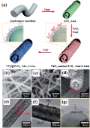
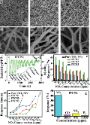
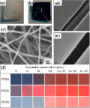
Electrospun one-dimensional nanostructures: a new horizon for gas sensing materials
Beilstein J. Nanotechnol. 2018, 9, 2128–2170, doi:10.3762/bjnano.9.202






Nanoconjugates of a calixresorcinarene derivative with methoxy poly(ethylene glycol) fragments for drug encapsulation
Beilstein J. Nanotechnol. 2018, 9, 2057–2070, doi:10.3762/bjnano.9.195
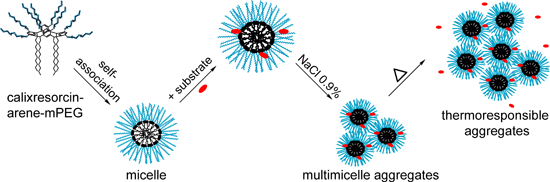
- and FTIR. Its molecular weight was measured by static light scattering (SLS) and MALDI-TOF. In the 1H NMR spectrum of 3 signals of ethyleneoxy and methoxy groups at 3.65 and 3.37 ppm, respectively, are observed; signals of bridged methylidene groups and aromatic groups are very broad (Figure 1b). Also
- the NMR time scale and, consequently, to the broadening of the signals of calixresorcinarene platform in the NMR spectra. The same broadening in the spectra of tetraundecylcalix[4]resorcinarene with poly-ε-caprolactone fragments on the upper rim was described earlier [22]. In the FTIR spectrum of 3
- methanol were consecutively applied onto the target and evaporated. An aqueous solution of cesium chloride (CsCl) at a concentration of 1 mg/mL was added to improve the ionization of the analyzed sample. IR spectra were recorded with a Bruker Vector 22 FTIR Spectrometer (Bruker Optics, USA) in KBr pellets


Synthesis of a MnO2/Fe3O4/diatomite nanocomposite as an efficient heterogeneous Fenton-like catalyst for methylene blue degradation
Beilstein J. Nanotechnol. 2018, 9, 1940–1950, doi:10.3762/bjnano.9.185
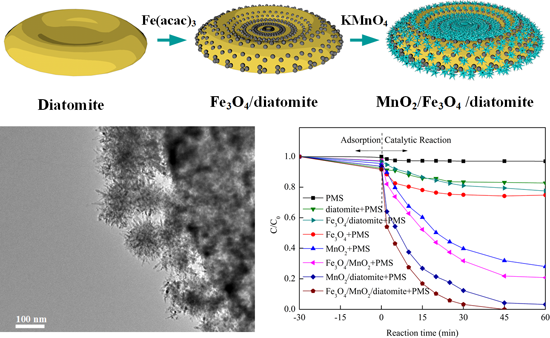
- Fourier transform infrared spectroscopy (FTIR) using a Nicolet Nexus 670 spectrometer. The morphology of samples was observed with a TESCAN MIRA3 LMU scanning electron microscope (SEM) and a JEOL JEM-1200EX transmission electron microscope (TEM). The X-ray photoelectron spectroscopy (XPS) measurements
- . However, the original characteristic peaks of magnetite are weakened. This indicates that the nano-MnO2 covering on the Fe3O4/diatomite is of low crystallinity or amorphous. Figure 2 shows the FTIR spectra of purified diatomite, Fe3O4/diatomite and MnO2/Fe3O4/diatomite. The broad peaks at 3400 and 1630 cm
- organic pollutants. XRD patterns of the purified diatomite and the prepared diatomite-supported composites. FTIR spectra of the purified diatomite and prepared diatomite-supported composites. The SEM images of diatomite (a), Fe3O4/diatomite (b, d), MnO2/Fe3O4/diatomite (c and e), EDX spectrum (f) and


Uniform cobalt nanoparticles embedded in hexagonal mesoporous nanoplates as a magnetically separable, recyclable adsorbent
Beilstein J. Nanotechnol. 2018, 9, 1770–1781, doi:10.3762/bjnano.9.168
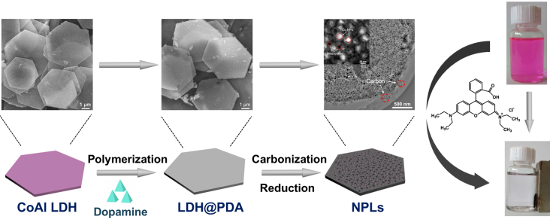
- were observed by scanning electron microscopy (SEM, ZEISS, Germany) and transmission electron microscopy (TEM, JEM-2100F, Japan). Energy dispersive X-ray (EDX) analysis was recorded via an EDX spectrometer attached to the SEM. The functional groups on the surface of the samples were measured by FTIR
- spectra on a Nicolet Nexus FTIR spectrometer using the KBr method within the wavelength range of 400–4000 cm−1. Nitrogen adsorption–desorption isotherms were obtained at 77 K on an Autosorb–iQ2–MP nitrogen adsorption apparatus. The Brunauer–Emmett–Teller (BET) specific surface area of the samples was
- carbonization of PDA above 650 °C. After calcination of pure CoAl LDH in a nitrogen atmosphere at 800 °C, only Co3O4 and CoAl2O4 mixtures are obtained (Figure 1f). The successful coating of PDA on the surface of CoAl LDH is verified by FTIR spectra (Figure S1 in Supporting Information File 1). The


Nanocomposites comprised of homogeneously dispersed magnetic iron-oxide nanoparticles and poly(methyl methacrylate)
Beilstein J. Nanotechnol. 2018, 9, 1613–1622, doi:10.3762/bjnano.9.153
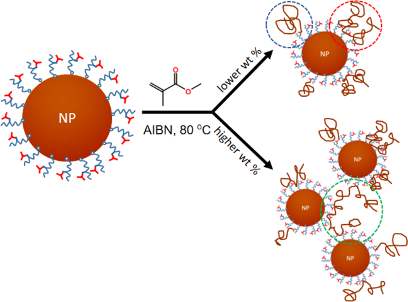
- NMR and FTIR spectra, respectively (Supporting Information File 1, Figures S1 and S2). The shift of the peak for the methine group, denoted with D, from 3.62 ppm in the 1H NMR spectrum of the original ricinoleic acid to 4.88 ppm in the 1H NMR spectrum of RA-MMA, and a pronounced increase in intensity
- enhanced in the NP-MMA sample when compared to the NP-RA sample (Figure 2), indicating the formation of the methacrylate ester, as depicted in Scheme 1. After polymerization (NP-PMMA-3) the FTIR spectrum shows the characteristic features of PMMA (Figure 2). Based on these results we can conclude that the
- reactions involved in the preparation of the nanocomposites. Supporting Information Additional description of materials used and the synthesis and characterization of nanocomposite materials. Additional FTIR and NMR spectra, TGA curves, a correlation function of the suspensions and TEM images showing the


Closed polymer containers based on phenylboronic esters of resorcinarenes
Beilstein J. Nanotechnol. 2018, 9, 1594–1601, doi:10.3762/bjnano.9.151
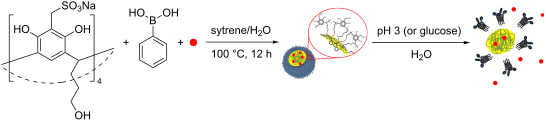
- the region of 4000–400 cm−1 by using a Bruker Vector-22 FTIR-spectrophotometer with a resolution of 4 cm−1. Samples for the registration of the IR spectra were prepared in KBr pellets. NMR spectroscopic experiments were carried out with an Avance 600 spectrometer (Bruker, Germany) equipped with a


Colorimetric detection of Cu2+ based on the formation of peptide–copper complexes on silver nanoparticle surfaces
Beilstein J. Nanotechnol. 2018, 9, 1414–1422, doi:10.3762/bjnano.9.134
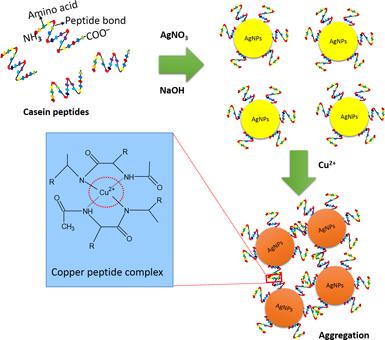
- characterized by high-resolution transmission electron microscopy (HR-TEM), XPS, XRD, and Fourier-transform infrared (FTIR) spectroscopy. The shape of the SPR peak determined the qualitative characterization of the AgNPs, and the size range of the particles in solution concurred with the HR-TEM images. As can
- of AgNPs and to identify their crystalline structure (Figure 3a). The diffraction peaks at scattering angles, 2θ, of 38.25°, 44.42°, 64.51° and 77.55° were assigned to the crystallographic planes (111), (200), (220) and (311), respectively. FTIR was performed to examine the capping of casein peptides
- grids. Shape, size-distribution, and images were observed on Tecnai G2 (FEI Company, USA). The XRD measurements were performed using a thin film sample containing the AgNPs (Rigaku Ultima-IV diffractometer, Cu Kα radiation). The centrifuged AgNPs were examined by FTIR spectroscopy using a Thermo


Induced smectic phase in binary mixtures of twist-bend nematogens
Beilstein J. Nanotechnol. 2018, 9, 1297–1307, doi:10.3762/bjnano.9.122
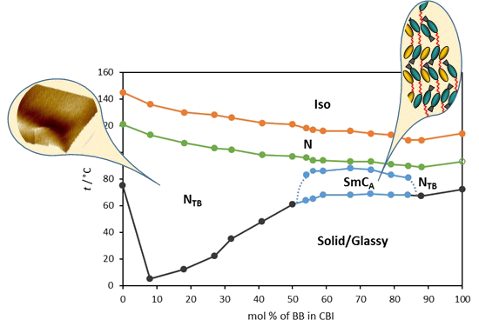
- in controlling the self-organizing processes. Keywords: binary mixture; liquid crystals; smectic phase induction; temperature-dependent FTIR; twist-bend nematogen; Introduction Nowadays liquid crystal (LC) substances possess a wide range of uses. However, it is rather rare that a single organic
- of pure compounds shows no new absorption band (Figure S3, Supporting Information File 1). The peak at 290 nm present in pure CBI shifts toward lower wavelengths as the ratio of BB in the mixture rises, approaching the value of 266 nm characteristic of pure BB. Since FTIR spectroscopy is a sensitive
- technique for determining changes in chemical interactions and molecular geometry in LC phases [37][38][39][40], we investigated the 73 mol % BB mixture using temperature-dependent FTIR measurements. IR spectra were recorded using a KBr pastille method. Since in a binary mixture the cyano group of CBI may




Heavy-metal detectors based on modified ferrite nanoparticles
Beilstein J. Nanotechnol. 2018, 9, 762–770, doi:10.3762/bjnano.9.69
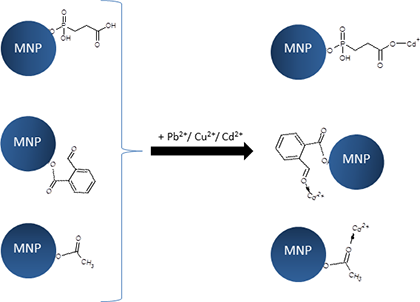
- metals Cd, Cu and Pb. The obtained nanoparticles were structurally characterized by transmission electron microscopy (TEM), X-ray diffraction (XRD), Fourier transform infrared spectroscopy (FTIR) and Mössbauer spectroscopy. The amounts of Cd, Cu and Pb were measured out by atomic absorption spectroscopy


A review of carbon-based and non-carbon-based catalyst supports for the selective catalytic reduction of nitric oxide
Beilstein J. Nanotechnol. 2018, 9, 740–761, doi:10.3762/bjnano.9.68

- spectroscopy (FTIR), X-ray photoelectron spectroscopy (XPS), and temperature-programmed desorption (TPD), the comparison of the properties for both ACFP and ACFN was clarified. Chuang et al. [18] considered three different methods, i.e., impregnation, polyol, and microwave-heated polyol methods for the
Synthesis and characterization of two new TiO2-containing benzothiazole-based imine composites for organic device applications
Beilstein J. Nanotechnol. 2018, 9, 721–739, doi:10.3762/bjnano.9.67
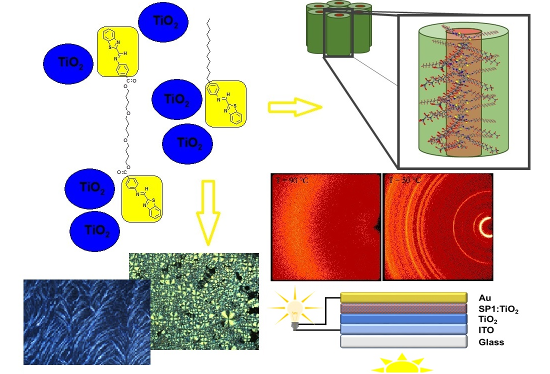
- fitting. Temperature evolution of the FTIR spectrum of SP1 imine obtained during heating in two spectral ranges: 1200–650 cm−1 (a) and between 1780–1220 cm−1 (b). Temperature evolution of the FT-MIR spectrum of SP2 imine obtained during heating between: (a) 3080 and 2800 cm−1 (left) and temperature






Cyclodextrin-assisted synthesis of tailored mesoporous silica nanoparticles
Beilstein J. Nanotechnol. 2018, 9, 693–703, doi:10.3762/bjnano.9.64
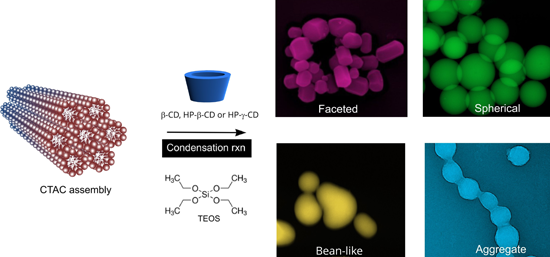
- smaller particle size than those produced with HP-functional CDs. FTIR, TGA and solid-state 13C NMR demonstrated the adsorption of CDs on the particle surfaces. The proposed concept allows for the synthesis of silica nanoparticles with control over particle shape and size by adjusting the concentration of
- , chemical analysis by FTIR and solid state 13C NMR, thermal properties and composition by TGA, and pore structure by WAXS. Results and Discussion Figure 2 shows the silica particles produced at β-CD concentrations of 0.5 and 1% (w/v) and constant tetraethoxysilane (TEOS) concentration of 1% (v/v). At these
- shape. EDX analysis of particles demonstrated the presence of carbon in addition to oxygen and silicone, suggesting physical attachment of CDs. FTIR was used to confirm adsorbed CDs on silica particles (Figure S1b, Supporting Information File 1). The peaks at 2860 and 2930 cm−1 are associated with the C


Perovskite-structured CaTiO3 coupled with g-C3N4 as a heterojunction photocatalyst for organic pollutant degradation
Beilstein J. Nanotechnol. 2018, 9, 671–685, doi:10.3762/bjnano.9.62
- 45 kV and 100 mA. The scans were collected over a 2θ range of 10–90° with a scan rate of 2° per minute. Fourier transform infrared (FTIR) spectra were recorded for functional group analysis by using an Agilent K8002AA Carry 660 instrument. Thermogravimetric analysis (TGA) was carried out in order to
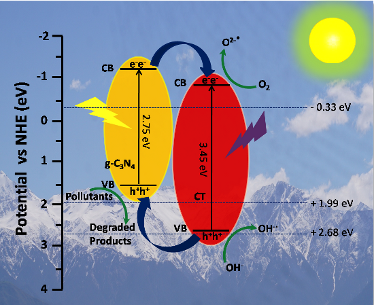
- phase purity of CT. Although the (002) peak of g-C3N4 could be evidenced in the diffraction pattern of the CTCN heterojunction, the (001) peak of g-C3N4 could not be seen, which could be attributed to its weak diffraction intensity in comparison to the other peaks. Furthermore, FTIR spectroscopy has
- –C units. The peaks at 1398 cm−1, 1540 cm−1 and 1636 cm−1 correspond to the stretching vibration of aromatic C–N bonds [16][34]. The broad peak from 3000–3600 cm−1 can be assigned to the terminal NH or NH2 groups of the aromatic rings and O–H stretching of surface hydroxyl groups [20]. The FTIR


Anchoring Fe3O4 nanoparticles in a reduced graphene oxide aerogel matrix via polydopamine coating
Beilstein J. Nanotechnol. 2018, 9, 591–601, doi:10.3762/bjnano.9.55
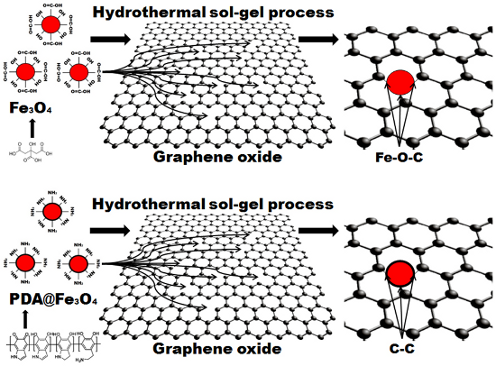
- reference value. In order to investigate the nature of possible functional groups at the aerogels surface, the samples were analyzed using FTIR spectroscopy. Figure 5a presents FTIR spectra obtained for rGO, rGO-Fe3O4 and rGO-PDA@Fe3O4 aerogels. From this figure one can notice the difference in intensity of
- Fourier Transform Infrared (FTIR) spectroscopy (Bruker Optics, TENSOR 27) equipped with a MCT detector and globar source. The chemical composition of the samples was studied using X-ray photoelectron spectroscopy (XPS). The measurements were performed in an ultra-high vacuum (UHV) chamber using a
- -Fe3O4 and rGO-PDA@Fe3O4 aerogel samples. FTIR absorption (a) and XPS survey (b) spectra of rGO, rGO-Fe3O4 and rGO-PDA@Fe3O4 aerogel samples. XPS C 1s, O 1s, N 1s and Fe 2p spectra of rGO, rGO-Fe3O4 and rGO-PDA@Fe3O4 aerogel samples. The intensity scales are the same for respective elements (in order to


Green synthesis of fluorescent carbon dots from spices for in vitro imaging and tumour cell growth inhibition
Beilstein J. Nanotechnol. 2018, 9, 530–544, doi:10.3762/bjnano.9.51
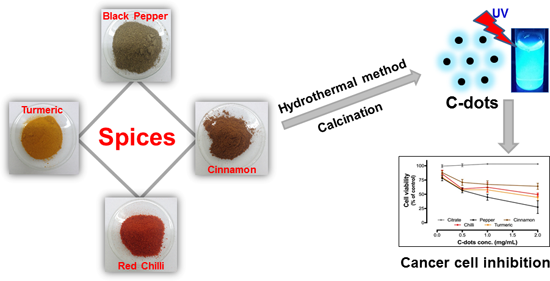
- compounds present in the spices will partially remain inside or at the surface of the C-dots after the hydrothermal process, leading to different photoluminescent and biomedical properties. The synthesized C-dots have been extensively characterized with UV–vis, fluorescence, FTIR and Raman spectroscopy, DLS
- literature and it has been reported that they are biocompatible. TEM, DLS, XRD, FTIR and Raman spectra of C-dots TEM images showed that the obtained C-dots are spherical regardless of the starting material. As it can be observed in Figure 3, C-dots are uniform in size and shape. A TEM histogram was plotted
- characteristic peaks of graphene oxide [42][43][44], and they are also in agreement with the HR-TEM lattice distances measured. FTIR spectroscopy of the synthesized C-dots confirms the presence of different functional groups in each sample depending on the starting material. The FTIR spectrum of cinnamon C-dots


Ultralight super-hydrophobic carbon aerogels based on cellulose nanofibers/poly(vinyl alcohol)/graphene oxide (CNFs/PVA/GO) for highly effective oil–water separation
Beilstein J. Nanotechnol. 2018, 9, 508–519, doi:10.3762/bjnano.9.49
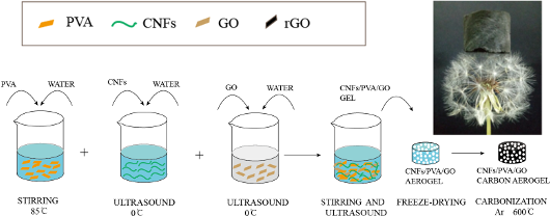
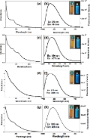
- the carbonization treatment was complete, which is in good agreement with the FTIR and Raman data. Chemical properties The FTIR spectrum of the CNFs, PVA, GO, rGO, CNF/PVA/GO and CNF/PVA/GO carbon aerogels are shown in Figure 3. The CNFs exhibit FTIR absorption bands around 3323 cm−1 (the stretching
- moieties, C–OH and C–O vibrations, respectively. As shown in the spectrum of rGO (Figure 3d), most peaks corresponding to the carbon–oxygen functional groups disappeared, which indicates the complete reduction of GO. Figure 3e shows the FTIR spectrum of the CNF/PVA/GO aerogel. Simultaneously, the
- previous studies [19][29], which is in agreement with the SEM results. FTIR can only be used to detect signals from molecules with infrared activity. Therefore, Raman spectroscopy analysis was studied to detect the stretching vibration characteristic peak of homonuclear diatomic pairs. The Raman spectrum


Facile synthesis of ZnFe2O4 photocatalysts for decolourization of organic dyes under solar irradiation
Beilstein J. Nanotechnol. 2018, 9, 436–446, doi:10.3762/bjnano.9.42
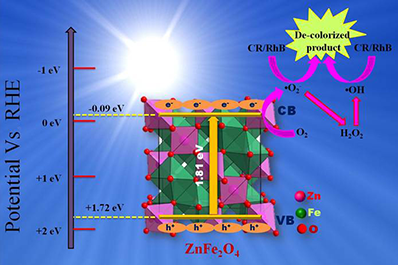
- , FESEM, UV–vis DRS, PL, FTIR and photocurrent measurements. The photocatalytic activity of the prepared material is studied with regard to the degradation of rhodamine B (Rh B) and Congo red under solar irradiation. The kinetic study showed that the material exhibits zeroth and first order reaction
- photoluminescence (PL) emission spectra were investigated by a JASCO-FP-8300 fluorescence spectrometer with an excitation wavelength of 330 nm. The chemical composition and vibrational modes of the ZFO samples were analysed by JASCO FTIR-4600. A ZEISS SUPRA 55 was used for FESEM analysis. Morphology and
- highest photocatalytic activity, which is in good agreement with the experimental photocatalytic activity (degradation of Congo red and Rh B) discussed later. FTIR analysis FTIR spectra of the ZFO samples were measured in the range of 4000–400 cm−1 (Figure 6). The bands in the region of 3600–3300 cm−1 and


Engineering of oriented carbon nanotubes in composite materials
Beilstein J. Nanotechnol. 2018, 9, 415–435, doi:10.3762/bjnano.9.41
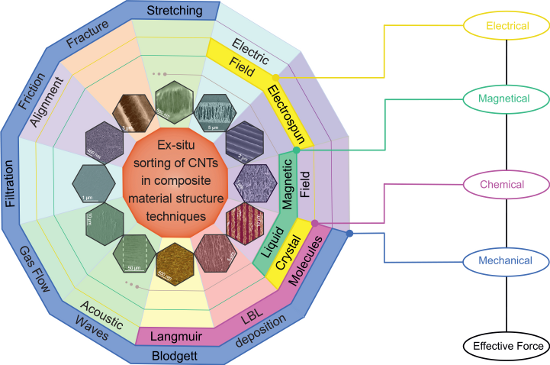
- ]) effects on the application and quality of composites. For this aim, many techniques have been developed such as Raman spectroscopy, Fourier-transforms infrared spectroscopy (FTIR) and X-ray photoelectron spectroscopy (XPS). Raman spectroscopy: Raman spectroscopy is a powerful tool to identify and quantify
- signals that mask the signals of other organic components. In such cases, tunable UV Raman spectroscopy may be used, although this technique is rarely used. Fourier-transform infrared spectroscopy: FTIR is often used to characterize molecular bonding on the CNT surface and to determine the modification of
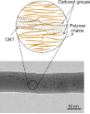
- the CNT structure by adding compounds. It is very difficult to get a good FTIR spectrum of CNTs, thus attenuated total reflection (ATR) FTIR can be used (except with carbon crystal, when germanium is more suitable). The investigation of the intermolecular interaction between the polymer chain and CNT








Electron interaction with copper(II) carboxylate compounds
Beilstein J. Nanotechnol. 2018, 9, 384–398, doi:10.3762/bjnano.9.38
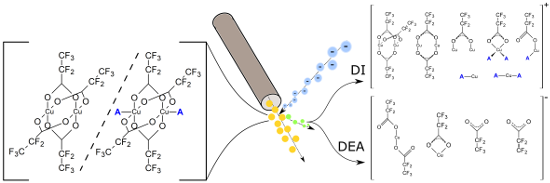
- FTIR spectrometer and a Spectrum RXI PerkinElmer, using KBr plates (400–4000 cm−1). The Cu content was determined with a Varian Spectr AA-20 Plus spectrophotometer. The content of C and H was determined CHNS Elemental Analyser-Euro Vector model 3018. The yield of the complexes synthesis was about 60


Photocatalytic and adsorption properties of TiO2-pillared montmorillonite obtained by hydrothermally activated intercalation of titanium polyhydroxo complexes
Beilstein J. Nanotechnol. 2018, 9, 364–378, doi:10.3762/bjnano.9.36
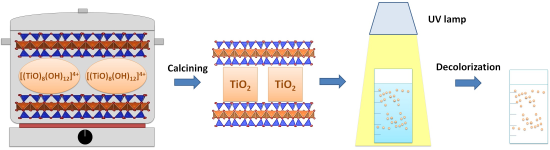
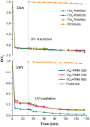
- , TiO2-PMMх, and TiO2-PMMHх (see Experimental section for abbreviations). XRD patterns of the raw MM and TiO2-PMMx, and TiO2-PMMHx, where М, C, А, and R represent montmorillonite, cristobalite, anatase, and rutile phases, respectively. FTIR spectra of the raw MM, and TiO2-pillared MM. Thermogravimetric






Sugarcane juice derived carbon dot–graphitic carbon nitride composites for bisphenol A degradation under sunlight irradiation
Beilstein J. Nanotechnol. 2018, 9, 353–363, doi:10.3762/bjnano.9.35
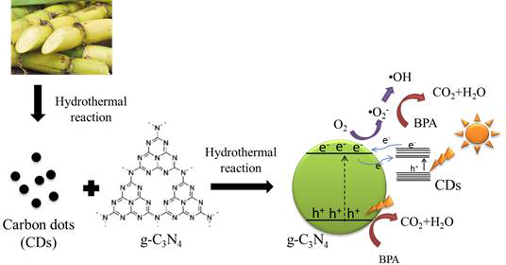
- degradation of endocrine disrupting chemicals (EDCs). Bisphenol A (BPA) was chosen as a model pollutant under natural sunlight irradiation. Herein, the structural and optical properties of samples were characterized by X-ray diffraction (XRD), Fourier transform infrared spectroscopy (FTIR), photoluminescence
- lattice fringes of the CDs were found to be about 0.24 nm (Figure 1f), which correlated with the (100) in-plane lattice spacing of graphene [45]. X-ray diffraction (XRD) and Fourier-transform infrared spectroscopy (FTIR) Figure 2a shows the XRD patterns of all CD/g-C3N4 composites. A major diffraction
- . Characterization of CD/g-C3N4 composites FTIR spectra (Perkin Elmer Spectrum 400 spectrophotometer) were conducted in the range of 400–4000 cm−1 with the samples dispersed in KBr. The XRD analyses were performed using the powder XRD (PANalytical-Empyrean) with Cu Kα radiation at a scanning speed of 0.02 s−1. A


Synthesis and characterization of electrospun molybdenum dioxide–carbon nanofibers as sulfur matrix additives for rechargeable lithium–sulfur battery applications
Beilstein J. Nanotechnol. 2018, 9, 262–270, doi:10.3762/bjnano.9.28
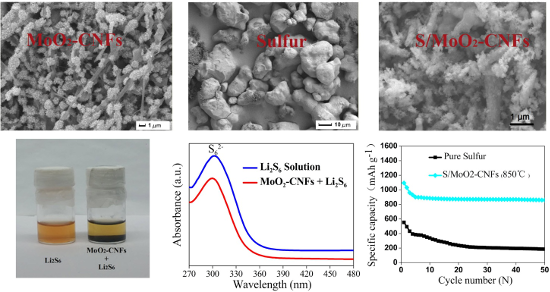
- using an electrospinning technique followed by calcination, using sol–gel precursors and polyacrylonitrile (PAN) as a processing aid. The resulting samples were characterized by X-ray diffraction (XRD), Fourier transform infrared spectroscopy (FTIR), Raman spectroscopy, Brunauer–Emmet–Teller (BET
- MoO2–CNF was successfully prepared through electrospinning. The Fourier transform infrared spectroscopy (FTIR) spectra of PAN fibers, as-prepared composite PAN/PMA fibers, and composite fibers calcined at different temperatures are illustrated in Figure 2. The FTIR spectra of PAN fibers and as-prepared
- treatments. XRD, FTIR and Raman results suggest that MO2–CNFs were obtained after being calcined at 550 °C and complete removal of the inorganic compound. The SEM images showed that the as-prepared MO2–CNF composite fibers had a smooth surface which turned to rough after calcination, revealing the increased





