


Search results
Search for "HRTEM" in Full Text gives 225 result(s) in Beilstein Journal of Nanotechnology. Showing first 200.
Carbon nano-onions (multi-layer fullerenes): chemistry and applications
Beilstein J. Nanotechnol. 2014, 5, 1980–1998, doi:10.3762/bjnano.5.207

- -resolution transmission electron microscopy (HRTEM) has been widely employed to visualize CNOs and to study the mechanisms of CNO formation and their structural properties. Raman spectroscopy is another useful technique for the structural characterization of CNOs and corroborates the basic graphitic
- , which corroborated the presence of alkyl groups on the CNO surface. Additional HRTEM and SEM experiments were carried out to further support the successful functionalization and excellent solubility of CNO-C16. The authors also studied the reversibility of this alkylation reaction, which could be
- particles have demonstrated high cellular uptake, low cytotoxicity and lower inflammatory potential than CNTs and a very promising future for biomedical applications. HRTEM images of (a) diamond nanoparticles, (b) spherical carbon onions, and (c) polyhedral carbon onions. Diamond nanoparticles are


Synthesis of Pt nanoparticles and their burrowing into Si due to synergistic effects of ion beam energy losses
Beilstein J. Nanotechnol. 2014, 5, 1864–1872, doi:10.3762/bjnano.5.197
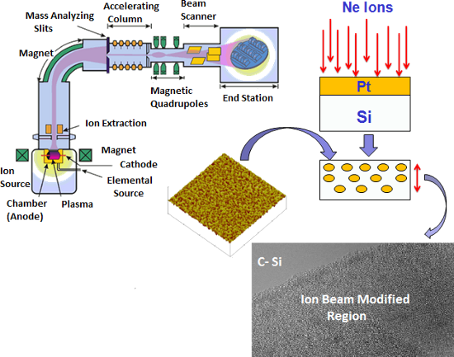
- /Sn) from 1 to 10. The irradiated films were characterized using Rutherford backscattering spectroscopy (RBS), atomic force microscopy (AFM), scanning electron microscopy (SEM), X-ray diffraction (XRD) and high resolution transmission electron microscopy (HRTEM). A TEM image of a cross section of the
- RBS within a few nm) and this is probably the reason why the Pt edge has a small shift (compared to pristine) in the RBS measurement of the sample. Figure 5c covers the near-surface region of HRTEM analysis which shows that ≈5 nm crystalline NPs are uniformly distributed below the surface. The density
- in Figure 6) upon 50 keV neon ion irradiation, which seems to be responsible for the Pt diffusion, matches well with the NP distribution (obtained from the cross sectional HRTEM analysis) in the film irradiated under the same conditions. Total vacancies produced in the system for a chosen ion–target



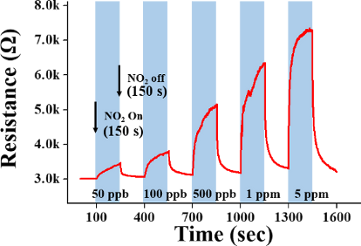
Room temperature, ppb-level NO2 gas sensing of multiple-networked ZnSe nanowire sensors under UV illumination
Beilstein J. Nanotechnol. 2014, 5, 1836–1841, doi:10.3762/bjnano.5.194
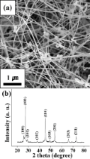
- approximately 80 nm. The HRTEM image in Figure 2b confirmed that the core region of the nanowire was perfectly crystalline, whereas the edge region showed twinning along the axis of the nanowire. Fringes with spacings of 0.346 and 0.331 nm corresponding to the interplanar distances of the {100} and {002



The influence of molecular mobility on the properties of networks of gold nanoparticles and organic ligands
Beilstein J. Nanotechnol. 2014, 5, 1664–1674, doi:10.3762/bjnano.5.177
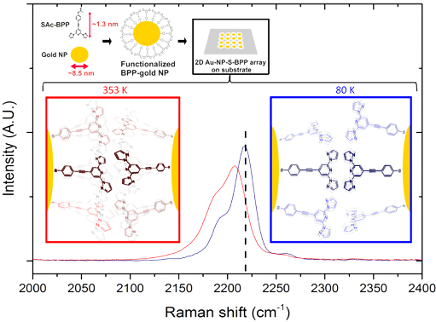
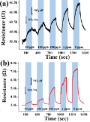
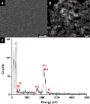
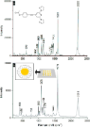
- results of the structural and spectroscopic characterisation of the synthesized 2D ligand-gold nanoparticle arrays (in short Au-NP–S-BPP-arrays), by means of UV-vis and electron microscopy (SEM, HRTEM and 3D TEM) experiments, will be presented. Specifically, surface enhanced Raman spectroscopy (SERS
- -STEM, HRTEM and 3D TEM) are also used to accurately characterise the nanoscale structuring of the multilayered networks on carbon-covered TEM grids. It should be noted that, whereas regular 2D structures are readily obtained on flat (oxidized) silicon substrates, the ordered assembly on the TEM grids




Growth evolution and phase transition from chalcocite to digenite in nanocrystalline copper sulfide: Morphological, optical and electrical properties
Beilstein J. Nanotechnol. 2014, 5, 1542–1552, doi:10.3762/bjnano.5.166
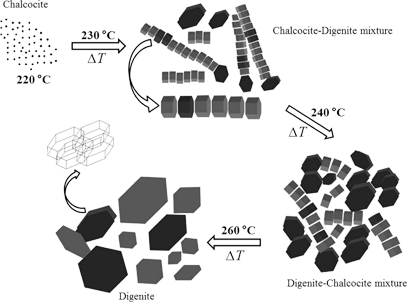
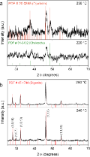
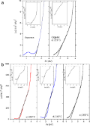
- strain decreases in the samples shown that the least stress was at 260 °C (−8.26 × 10⁻⁵) and the highest was at 230 °C (−2.73 × 10⁻³). Morphology from TEM and HRTEM TEM images revel that amorphous CuxS from aqueous solution is constituted of nanometric particles with undefined shape that are agglomerated
- phase, from chalcocite to digenite. In order to verify the full transition of the digenite phase an HRTEM analysis of the crystals was made. The distance between the lines in the HRTEM image (Figure 3) is approximately 0.32 nm. This corresponds to the (0015) plane spacing of the digenite phase, which
- predominant phase is the digenite. TEM images of copper sulfide synthesized in organic solution at a) 220, b) 230, c) 240 and d) 260 °C. The morphology of the CuxS change from irregular nanoparticles to nanoprisms with increasing temperature. The encircled area shows an alignment of the nanorrods (b). HRTEM




Probing the electronic transport on the reconstructed Au/Ge(001) surface
Beilstein J. Nanotechnol. 2014, 5, 1463–1471, doi:10.3762/bjnano.5.159
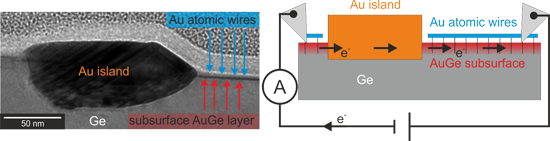
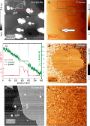
- observations show that the excess amount of Au forms clusters of [110]-orientation, in agreement to previous STM studies of the same system by Wang et al. [20]. Also, HRTEM images with atomic resolution show that the Au clusters are crystalline. Apart from that, in Figure 4a, a thin layer exhibiting the
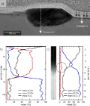
- atomic wires at the surface are not coupled to each other. Our HRTEM data supports this assumption. In Figure 5, an atomically resolved HRTEM image of the interface between the Au cluster and the substrate surface is shown. In image a), on the right side the substrate surface level is indicated by a
- atomic structure of Ge(001) bulk is visible. a) An atomically resolved HRTEM image of the interface between the Au cluster and the surrounding substrate surface. The substrate surface level is indicated with the dashed line. The arrow points to the discontinuity region (“cavity”) between the crystalline




Synthesis, characterization, and growth simulations of Cu–Pt bimetallic nanoclusters
Beilstein J. Nanotechnol. 2014, 5, 1371–1379, doi:10.3762/bjnano.5.150
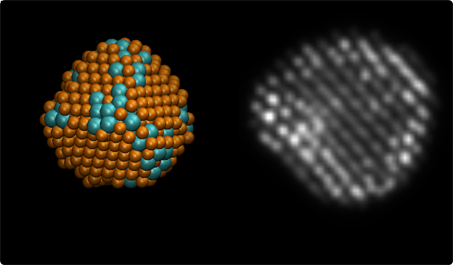
- characterized by transmission electron microscope (TEM) and high resolution transmission electron microscopy (HRTEM) by using a JEOL 2010F operated at 200 kV. The STEM images were recorded in a Cs-corrected JEOL JEM-ARM 200F operated at 200 kV. HAADF STEM images were obtained with a convergence angle of 26 mrad


An insight into the mechanism of charge-transfer of hybrid polymer:ternary/quaternary chalcopyrite colloidal nanocrystals
Beilstein J. Nanotechnol. 2014, 5, 1235–1244, doi:10.3762/bjnano.5.137
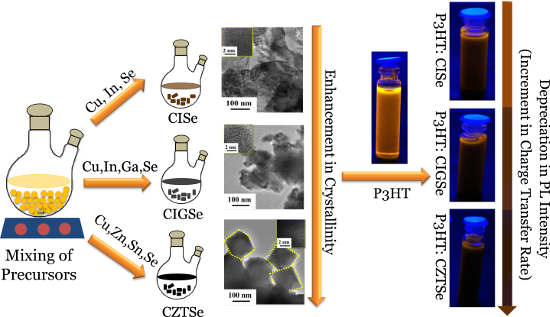
- characterized by tetragonal morphologies, more agglomeration in the nanocrystals, and lack of the distinct presence of the isolated nanocrystals. The inset in Figure 2a shows a high resolution TEM (HRTEM) image, which demonstrates the presence of crystalline planes with an interplanar spacing d of 0.34 nm
- . Figure 2b shows the TEM micrograph of CIGSe nanocrystals with a size of 100–120 nm and exhibiting a slight improvement in the appearance of the tetragonal morphology, which is characteristic of these chalcopyrites-based nanocrystals. The inset depicts the HRTEM micrograph with well-aligned crystalline
- in terms of crystallinity can be seen due to the emergence of nanocrystals of the size of 150–200 nm. The HRTEM micrograph shown as an inset in Figure 2c depicts the presence of sharp crystalline planes with an interplanar spacing of 0.325 nm. However, a similar trend was observed upon light-soaking


Enhanced photocatalytic hydrogen evolution by combining water soluble graphene with cobalt salts
Beilstein J. Nanotechnol. 2014, 5, 1167–1174, doi:10.3762/bjnano.5.128
- , in the absence of G-SO3 nanoparticles aggregated in size of about hundreds nanometers. Each particle is composed of lots of small nanoparticles of several nanometers in diameter. The lattice fringes in the HRTEM (high resolution TEM) images suggest a well-defined crystal structure. The lattice
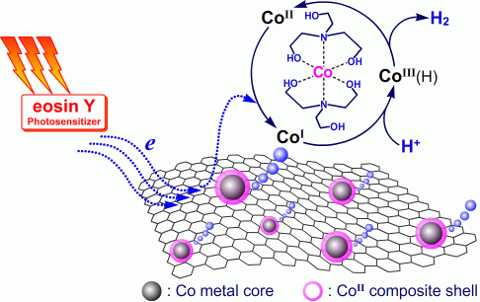
- of the nanoparticles were smaller. The HRTEM image also showed the lattice fringes, and the lattice spacing (0.191 and 0.203 nm) is consistent with those observed in the system without G-SO3. This phenomenon indicated that G-SO3 provides a platform to support cobalt catalysts, and at the same time G


Template-directed synthesis and characterization of microstructured ceramic Ce/ZrO2@SiO2 composite tubes
Beilstein J. Nanotechnol. 2014, 5, 1152–1159, doi:10.3762/bjnano.5.126
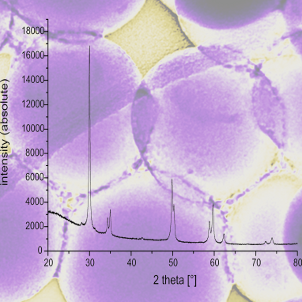
- template fibers and the obtained bundles of as-prepared ceramic silica tubes after calcination and removal of the electrospun PS fiber template (750 °C, 4 h). Their tubular structure consists of densely packed agglomerated silica particles (see Figure 1). A high-resolution TEM (HRTEM) study reveals the
- Ce0.12/Zr0.88O2 [11]. Scheme 1 shows the series of synthetic steps which first lead to the PS/silica tubes exotemplate (A) and after sol–gel infiltration to the final CeO2/ZrO2@SiO2 composite tubes (B). An examination of the tube surface composition by HRTEM reveals the spherical Stoeber sol particles of
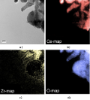
- has been assumed by HSEM and in HRTEM. Moreover, the intensity of cerium compared to zirconium in the elemental EDX scan is significantly lower, which reflects the phase composition as found by PXRD and Raman spectroscopy. Conclusion A template-directed synthesis was employed for the synthesis of



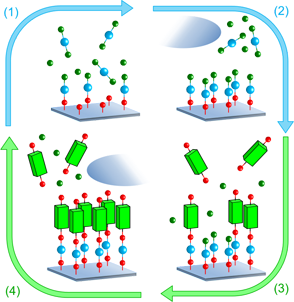
Organic and inorganic–organic thin film structures by molecular layer deposition: A review
Beilstein J. Nanotechnol. 2014, 5, 1104–1136, doi:10.3762/bjnano.5.123




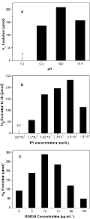
Enhancement of photocatalytic H2 evolution of eosin Y-sensitized reduced graphene oxide through a simple photoreaction
Beilstein J. Nanotechnol. 2014, 5, 801–811, doi:10.3762/bjnano.5.92
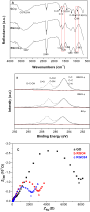
- -resolution TEM (HRTEM) images were taken on a JEOL JEM-2010 (TEM) equipped with an energy dispersive spectrometer (EDS). Electrochemical impedance spectroscopy (EIS) was measured on an IVIUMSTAT electrochemical workstation (Netherlands). The electrochemical experiments were performed in a 3-compartment cell
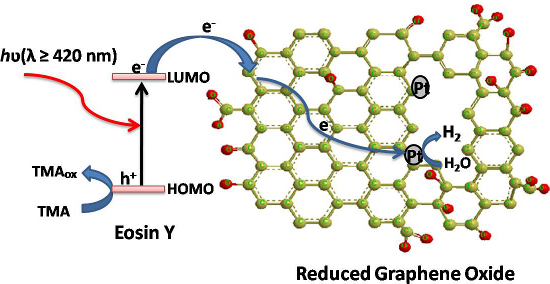
- ), and HRTEM image of deposited Pt (D). The inset of Figure 9D is the EDS spectrum. Schematic diagram of the reduction of GO by irradiation. Proposed mechanism for the photocatalytic hydrogen evolution of a EY-RGOx/Pt system under visible light irradiation. Peak area ratios of oxygen-containing bonds to





Biomolecule-assisted synthesis of carbon nitride and sulfur-doped carbon nitride heterojunction nanosheets: An efficient heterojunction photocatalyst for photoelectrochemical applications
Beilstein J. Nanotechnol. 2014, 5, 770–777, doi:10.3762/bjnano.5.89
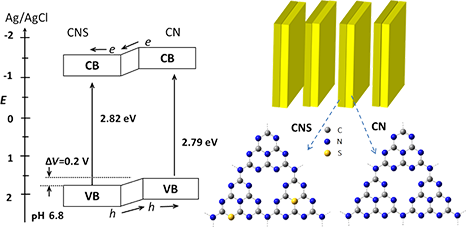
- (HRTEM) analysis as shown in Figure 5b. Furthermore, it can be observed that the dense CN layer intimately connects with the CNS nanosheet to form a heterostructure. The HRTEM image of CN/CNS as shown in Figure 5b clearly distinguishes the phases of CN (the dark region) and CNS (the dim region). The
- lattice spacing for the dark region and the dim region are 0.328 nm and 0.322 nm respectively, which are consistent with the XRD results. The HRTEM image gives solid evidence towards the formation of heterojunction in CN/CNS. Figure 6a shows the photoluminescence (PL) spectra of CN, CNS and a CN/CNS
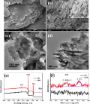
- heterojunction. (a) FESEM image of CN/CNS heterostructure, (b) XRD and (c) nitrogen adsorption–desorption isotherms and (d) pore size distribution (insert) of CN, CNS and CN/CNS heterostructure. TEM (a) and HRTEM (b) images of a CN/CNS heterostructure. (a) Photoluminescence of CN, CNS and CN/CNS in aqueous


Carbon dioxide hydrogenation to aromatic hydrocarbons by using an iron/iron oxide nanocatalyst
Beilstein J. Nanotechnol. 2014, 5, 760–769, doi:10.3762/bjnano.5.88
- catalyst was reused 10 times. No decrease of the catalytic activity was observed. This observation is based on the consumption efficiency of CO2 from the gas phase and product analysis by GC–MS. Characterization of the catalysts (TEM, HRTEM, XRD, XPS) The TEM image reveals that the newly synthesized Fe
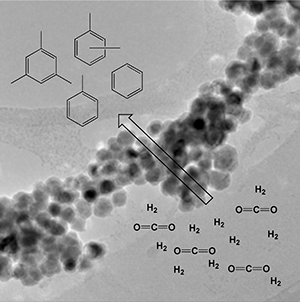
- /Fe3O4 nanoparticles are roughly spherical with a core/shell structure (Figure 2). The mean core diameter is 12 nm, and the shell thickness is 2 nm. HRTEM indicate that each Fe/Fe3O4 nanoparticle assumes polycrystalline structure with rigid edges. TEM images (Figure 3) of recycled catalyst after 10 runs
- of reactions shows that the nanoparticles fused to larger irregularly shaped particles with crystalline substructures on the surface. HRTEM reveal that the substructure is polycrystalline. The XRD patterns of the Fe/Fe3O4 nanoparticles as a function of the number of catalytic runs is shown in Figure


Effects of the preparation method on the structure and the visible-light photocatalytic activity of Ag2CrO4
Beilstein J. Nanotechnol. 2014, 5, 658–666, doi:10.3762/bjnano.5.77
- the S-M sample, transmission electron microscopy (TEM) observation is carried out. As shown in Figure 3a, the S-M sample is composed of nanoparticles with an average particle size of about 30 nm. The high-resolution transmission electron microscopy (HRTEM) image in Figure 3b clearly shows the lattice
- observation was carried out by SEM (S4800, Hitachi, Japan) at an accelerating voltage of 5 kV. TEM and HRTEM analysis were conducted by the transmission electron microscopy (JEM-2100F, JEOL, Japan) at an accelerating voltage of 200 kV. The DRS were taken with a UV–vis spectrophotometer (UV2550, Shimadzu
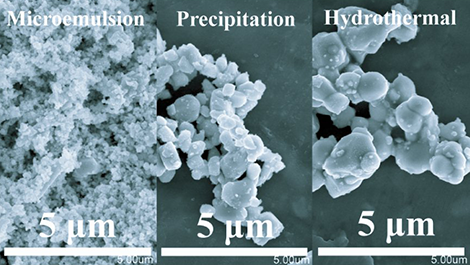
- different methods: (a) microemulsion, (b) precipitation, and (c) hydrothermal. SEM images of Ag2CrO4 samples obtained from different methods: (a) microemulsion, (b) precipitation, and (c) hydrothermal. TEM (a) and HRTEM (b) images of Ag2CrO4 sample prepared by microemulsion method. The inset of (b) is the


Enhanced photocatalytic activity of Ag–ZnO hybrid plasmonic nanostructures prepared by a facile wet chemical method
Beilstein J. Nanotechnol. 2014, 5, 639–650, doi:10.3762/bjnano.5.75
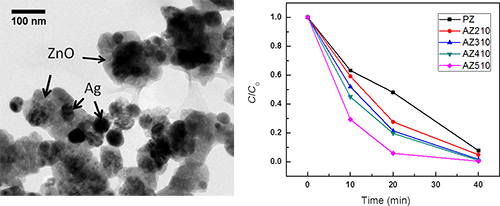
- anisotropic nanostructures decorated with nanoparticles. HRTEM study of these decorating nanoparticles confirmed them to be of Ag. Figure 4b shows the selected area diffraction (SAD) pattern from a region marked by a dotted circle. The SAD pattern shows concentric rings consisting of distinct spots, which is
- fringes and the measured lattice spacing is 2.8 Å. The HRTEM image of of Ag–ZnO hybrid nanostructures shown in Figure 4b reveals lattice fringes of 2.3 Å and 2.8 Å, which correspond to the (111) and (100) interplanar spacing (d-spacings) of Ag and ZnO, respectively. Some of the measured d-spacings from
- prepared with varying AgNO3 concentrations and different [Ag+]/[citrate] ratios (a) 1:1, (b) 1:10. (a) Low-magnification TEM image of ZnO nanostructures in sample PZ. (b) HRTEM image showing lattice fringes. (c) STEM-HAADF image from the same area of TEM image. (d) EDX spectra from a region marked by area


Artificial sunlight and ultraviolet light induced photo-epoxidation of propylene over V-Ti/MCM-41 photocatalyst
Beilstein J. Nanotechnol. 2014, 5, 566–576, doi:10.3762/bjnano.5.67
- photocatalyst. The XRD pattern indicates a mesoporous hexagonal lattice with a clear feature of (100). The (110) and (200) peaks are not well-separated, maybe due to the high calcination temperature of 823 K [33]. The HRTEM image of V-Ti/MCM-41 in Figure 3 reveals a uniform hexagonal structure, which is a
- (XANES) of the vanadium K-edge was carried out with synchrotron radiation at the beam line 16A, National Synchrotron Radiation Research Center, Taiwan. The standard metal foil and V oxides (V2O5 and V2O3) powders were used as references. High resolution transmission electron microscope (HRTEM) was
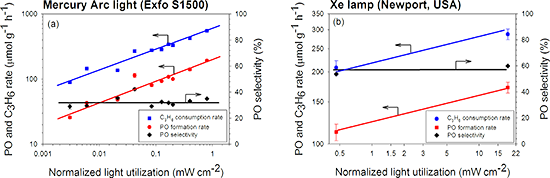
- –vis absorption of V-Ti/MCM-41, and emission of (b) 200 W mercury arc lamp, (c) 300 W Xe lamp (extracted from [22]) and (d) AM1.5G filter [31]. The low-angle XRD pattern of V-Ti/MCM-41. The HRTEM images of V-Ti/MCM-41 photocatalyst. Summary of the V K-edge characterization of V-Ti/MCM-41 with




Chemi- vs physisorption in the radical functionalization of single-walled carbon nanotubes under microwaves
Beilstein J. Nanotechnol. 2014, 5, 537–545, doi:10.3762/bjnano.5.63
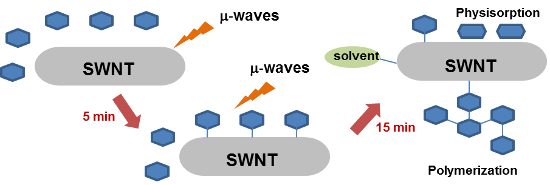
- min, 10 min and 15 min (Scheme 1). After treatment, the obtained functionalized samples (f-SWNT-5min, f-SWNT-10min and f-SWNT-15min) were analyzed by dispersion tests, high resolution transmission electron microscopy (HRTEM), Raman spectroscopy, and TGA–MS. Figure 1 shows photographs of the
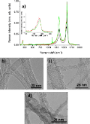
- diameter dt is 1.34 nm as expected for arc-discharge produced SWNTs. The modification of the SWNT structure caused by functionalization is also revealed in the HRTEM images shown in Figure 2. For the raw sample, the walls of the SWNTs exhibit a low defect level (Figure 2b) and appear undamaged. After
- functionalization (Figure 2c and 2d), SWNT walls whose damages are difficult to identify in the images are observed. No significant difference between the three functionalized samples (including f-SWNT-5min, not shown in Figure 2) could be evidenced by using HRTEM. Functionalization levels and nature of the created




Mesoporous cerium oxide nanospheres for the visible-light driven photocatalytic degradation of dyes
Beilstein J. Nanotechnol. 2014, 5, 517–523, doi:10.3762/bjnano.5.60

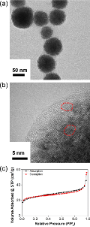
- cerium oxide to obtain the band gap. (a) TEM and (b) HRTEM images of the mesoporous cerium oxide nanospheres. (c) Nitrogen adsorption–desorption isotherm of the mesoporous cerium oxide nanospheres. Comparison of RhB concentrations over time at 554 nm, after photocatalytic degradation with mesoporous
- analyzer. The authors also thank Dr. Wei Fengxia for her assistance with HRTEM measurements and Dr. Sarifuddin Gazi for his help with EPR experiments.

Plasma-assisted synthesis and high-resolution characterization of anisotropic elemental and bimetallic core–shell magnetic nanoparticles
Beilstein J. Nanotechnol. 2014, 5, 466–475, doi:10.3762/bjnano.5.54
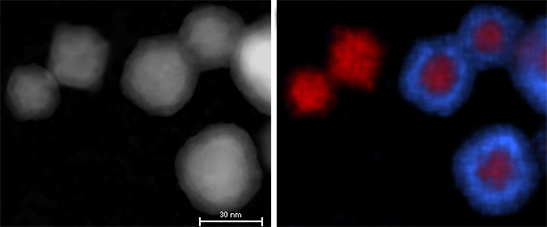
- transmission electron microscopy (HRTEM) investigation was done using a probe-Cs corrected FEI Titan3 G2 60-300 microscope operating at 300 kV acceleration voltage. Energy dispersive X-ray (EDX) analysis was performed by using a FEI SuperX detector with high visibility low-background FEI holder. The data was
- , lattice plane separations in individual particles were assessed by analysing the FFT of HRTEM micrographs. In a first step, only the core of individual particles was taken into consideration. It was found to be polycrystalline and yielded results in agreement with Cu and Ni fcc phases (JCPDS: 04-0836 a
- shell consists of an oxygen-rich outer part of several nanometers thickness, which is in agreement with previous HRTEM bright field image results. Finally, the long-term stability of the samples has been analyzed. CS-NPs have therefore been stored for 12 months under ambient air conditions. Subsequent


One-step synthesis of high quality kesterite Cu2ZnSnS4 nanocrystals – a hydrothermal approach
Beilstein J. Nanotechnol. 2014, 5, 438–446, doi:10.3762/bjnano.5.51
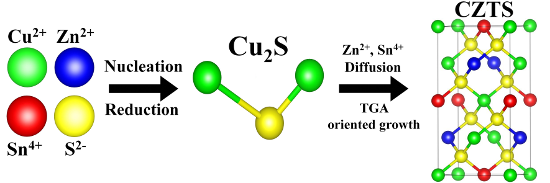
- a JEOL JEM-1400 microscope. High-resolution TEM (HRTEM) and selected area electron diffraction (SAED) images were obtained using JEOL JEM-2100 microscope at an accelerating voltage of 200 kV. Ultraviolet–visible (UV–vis) absorption spectrum of the sample was measured at room temperature using a
- observed, suggesting the highly purity of the synthesized CZTS material [19][20]. The morphology and particle size of the CZTS nanocrystals are shown in Figure 1c, which suggests the CZTS nanocrystals are monodisperse with crystal sizes around 10 ± 3 nm. High-resolution TEM (HRTEM) image in Figure 1d
- reaction duration are shown in Figure 6. Figure 6a illustrates that, prior to the hydrothermal process, the precipitate obtained from the precursor solution is consisting of microspheres with size around 20–250 nm. The HRTEM indicates that the microparticle is the result of aggregation of numerous oval




Dye-sensitized Pt@TiO2 core–shell nanostructures for the efficient photocatalytic generation of hydrogen
Beilstein J. Nanotechnol. 2014, 5, 360–364, doi:10.3762/bjnano.5.41
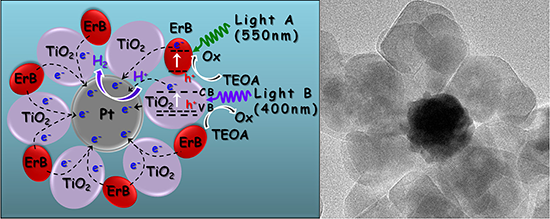
- diameter of 30 nm, and the TiO2 shell thickness is around 60 nm. The HRTEM image (Figure 2C) indicates lattice distances of 0.228 nm and 0.341 nm, which correspond to the (111) spacing of the core Pt particle and the (101) spacing of the anatase TiO2 shell. The SEM image (Figure 2D) reveals that these core
- thermal conductivity detector (TCD). XRD patterns of Pt@TiO2 and Pt/TiO2 samples. TEM and SEM images of the Pt@TiO2 sample. (A) (B) TEM images of Pt@TiO2, (C) HRTEM images of Pt@TiO2, (D) SEM image of Pt@TiO2. UV–vis diffuse reflectance spectra of the Pt@TiO2 and Pt/TiO2 samples. The H2 yield from Pt@TiO2


Oriented attachment explains cobalt ferrite nanoparticle growth in bioinspired syntheses
Beilstein J. Nanotechnol. 2014, 5, 210–218, doi:10.3762/bjnano.5.23
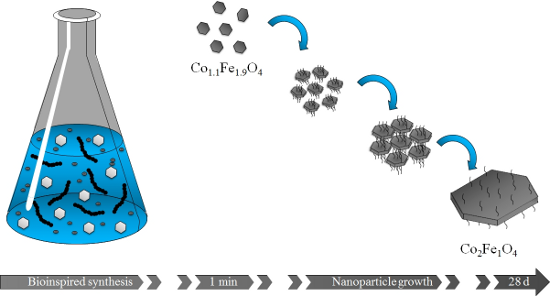
- primary-building-block-like substructures as well as mesocrystal-like structures, were observed in HRTEM measurements. These structures display regions of substantial orientation and possess the same shape and size as the resulting discs. An increase in orientation with time was observed in electron
- stages of the growth process using transmission electron microscopy (TEM), high resolution transmission electron microscopy (HRTEM), electron energy loss spectroscopy (EELS) and electron diffraction measurements. Results In this bioinspired synthesis, stoichiometric Co2FeO4 discs of hexagonal, diamond
- : one at Dsmall = 5–20 nm and a second one at Dlarge = 35 nm. Incomplete discs, as displayed in Figure 3d,e can be found in addition to the discs throughout the entire growth process. HRTEM measurements of an incomplete, irregularly-shaped particle (Figure 3e) reveal that it is composed of several


Preparation of NiS/ZnIn2S4 as a superior photocatalyst for hydrogen evolution under visible light irradiation
Beilstein J. Nanotechnol. 2013, 4, 949–955, doi:10.3762/bjnano.4.107
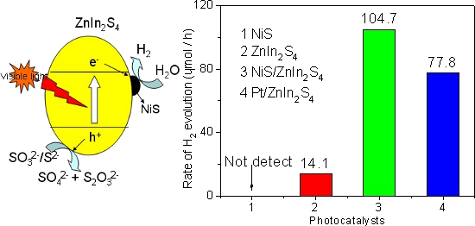
- successfully prepared via a facile two-step hydrothermal process. The as-prepared samples were characterized by X-ray diffraction (XRD), X-ray photoelectron spectroscopy (XPS), transmission electron microscopy (TEM) and high-resolution transmission electron microscopy (HRTEM). Their photocatalytic performance
- were observed in the XRD patterns, the existence of NiS in the nanocomposite is confirmed by the HRTEM image (Figure 2c). Clear lattice fringes of 0.32 nm and 0.29 nm, which can be ascribed to the (102) plane of hexagonal ZnIn2S4 and the (300) plane of rhombohedral NiS respectively, can be observed. As
- Bruker D8 Advance X-ray diffractometer with Cu Kα radiation. The transmission electron microscopy (TEM) and high-resolution transmission electron microscopy (HRTEM) images were measured by a JEOL model JEM 2010 EX instrument at an accelerating voltage of 200 kV. The powder particles were supported on a


Synthesis of boron nitride nanotubes from unprocessed colemanite
Beilstein J. Nanotechnol. 2013, 4, 843–851, doi:10.3762/bjnano.4.95
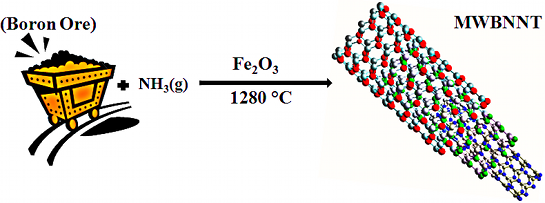
- imaging and spectroscopic techniques including SEM, TEM, HRTEM, FTIR, Raman, UV–vis. The impurity of the BNNTs was verified with ICP-MS and XRD. It was found that the metallic impurities could be removed from crude BNNTs by washing in a hot HCl solution. With this method, randomly oriented BNNTs with 10
- NH3, which is 450 °C. The decomposed NH3 has an important role in the synthesis of BNNT. It was observed that while the BNNTs were formed on top of the alumina boat, BNNT was not formed at the bottom of the reaction mixture (Figure 2f). TEM and HRTEM analysis The structure of BNNTs was further
- 6 nm (Figure 3e and f). The HRTEM image of the synthesized BNNT showed that the distance between the walls was 0.34 nm. We propose that the BNNTs are synthesized according to the base growth mechanism. In this mechanism, metallic Fe in a certain size forms from the Fe2O3 catalyst. This initial step





