


Search results
Search for "contamination" in Full Text gives 325 result(s) in Beilstein Journal of Nanotechnology. Showing first 200.
Chemistry for electron-induced nanofabrication
Beilstein J. Nanotechnol. 2018, 9, 1317–1320, doi:10.3762/bjnano.9.124

- the ligands is co-deposited along with the desired elements. This unintended contamination often deteriorates the targeted properties of the deposit and thus impedes the progress of FEBID technology [7][8]. Novel molecular precursors and improved processes are thus needed to advance FEBID to its full
Formation mechanisms of boron oxide films fabricated by large-area electron beam-induced deposition of trimethyl borate
Beilstein J. Nanotechnol. 2018, 9, 1282–1287, doi:10.3762/bjnano.9.120
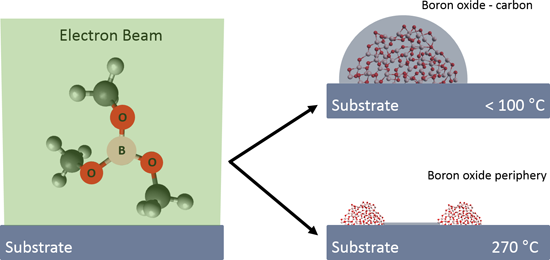
- of nanometers to a few micrometers using modified scanning electron microscope (SEM) tools [10][11]. While deposition of films of the order of millimeters has been shown using residual contamination or diffusion pump oil in high-vacuum conditions [12][13], the deposition of films of this thickness



Field-controlled ultrafast magnetization dynamics in two-dimensional nanoscale ferromagnetic antidot arrays
Beilstein J. Nanotechnol. 2018, 9, 1123–1134, doi:10.3762/bjnano.9.104
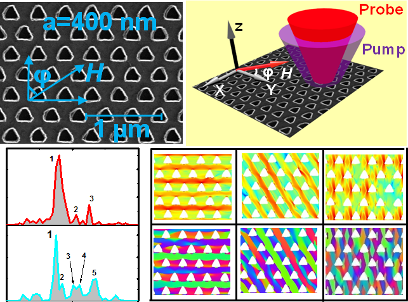
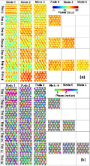
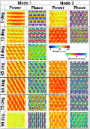
- -thick protective layer of Al2O3 was deposited on top of the Py film in an ultrahigh vacuum chamber at a base pressure of 2 × 10⁻⁸ Torr. The Al2O3 capping layer was deposited on the Py film to protect the samples from external contamination of the environment, degradation with time, and also from direct



Review on nanoparticles and nanostructured materials: history, sources, toxicity and regulations
Beilstein J. Nanotechnol. 2018, 9, 1050–1074, doi:10.3762/bjnano.9.98

- by-products during diesel and gas combustion processes [91]. More than 90% of carbon NPs present in the atmosphere are diesel-generated particles [92]. Thus, pollution from vehicles is a major cause of nanoparticulate contamination in urban atmosphere [93]. The hazardous effect of automobile exhaust
- nanocrystals [178] and Ag NPs [179], respectively, as shown in Figure 5A. Recently, it was found that the spores of bacteria such as Bacillus anthracis on the nanoscale can cause food contamination and contagious diseases [180]. Similarly, a list of autotrophic plants and heterotrophic microbes that help in


Comparative study of antibacterial properties of polystyrene films with TiOx and Cu nanoparticles fabricated using cluster beam technique
Beilstein J. Nanotechnol. 2018, 9, 861–869, doi:10.3762/bjnano.9.80
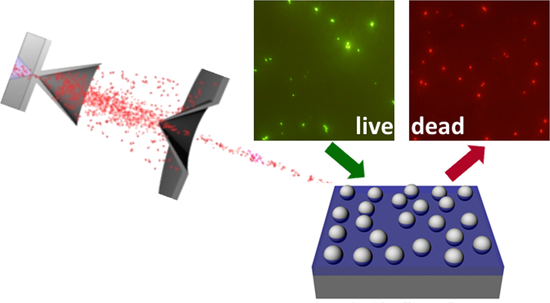
- considered, namely a potential contamination with Cu ions. Hence, polymers with Cu NPs should be used carefully in the cases of food or drugs. Experimental Preparation of polymer films with metal clusters PS films are prepared by a standard spin-coating procedure from a solvent mixture of 2 wt % PS in




Synthesis and characterization of two new TiO2-containing benzothiazole-based imine composites for organic device applications
Beilstein J. Nanotechnol. 2018, 9, 721–739, doi:10.3762/bjnano.9.67
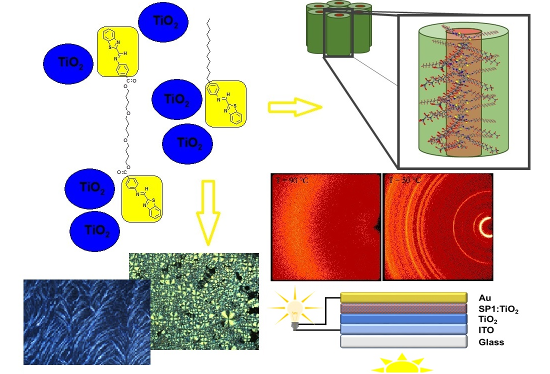
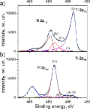
- (0.3248 g) and degassed at high vacuum for 8 h at 150 °C in order to remove the contamination. Adsorption–desorption isotherms were recorded at the pressure of 10−5 to 760 mmHg which was close to the saturation pressure of 1.0 p/p0. To calculate the surface area of TiO2 Brunauer–Emmett–Teller (BET) theory






Dynamics and fragmentation mechanism of (C5H4CH3)Pt(CH3)3 on SiO2 surfaces
Beilstein J. Nanotechnol. 2018, 9, 711–720, doi:10.3762/bjnano.9.66
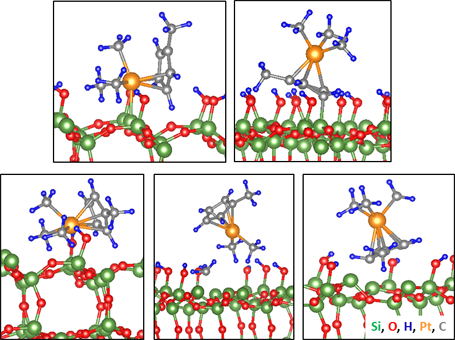
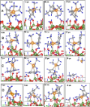
- of the organic contamination, a fundamental understanding of how the molecules behave on the substrates is necessary. This will be helpful, either to modify the existing class of precursor materials or to design a novel set of precursors, specific for electron beam deposition. To address this, we
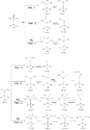
- fully and partially hydroxylated SiO2 surfaces. We focus on explaining the initial reactions and the possible fragmentation pathways of the (C5H4CH3)Pt(CH3)3 molecule on the SiO2 surface, and we explain the nature of organic contamination in the deposits. Computational Details DFT calculations for the
- detachment of either the methylcyclopentadienyl ring or the methyl group. Detached methylcyclopentadienyl rings and the dissociated methyl groups block the surface active sites and might be the source of organic contamination. Since the composition of the obtained deposits dictate the conductance behavior



Tuning adhesion forces between functionalized gold colloidal nanoparticles and silicon AFM tips: role of ligands and capillary forces
Beilstein J. Nanotechnol. 2018, 9, 660–670, doi:10.3762/bjnano.9.61
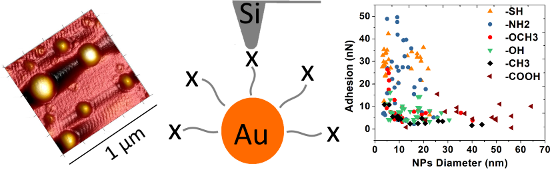
- the size and shape of the particles, and longer contact times may contribute to the increase of these interaction forces. The low values of adhesion obtained for –OH coated Au NPs can be explained by a possible contamination of the Au NPs deposited on the silicon wafer. Due to the high polarity of the
- –OH functional group compared to those of –NH2 and –SH groups, a higher adhesion value might have been expected. However, this high polarity of the tail group also confers a high reactivity to Au NPs, especially with contamination in air. As a result, the final adhesive behavior of the Au coated NPs
- to take all aspects into account and give decisive explanation of the obtained results and broad scattering of measured values. Possible reasons may include deviation of NPs geometry from spherical shape, variation of the tip radii between different AFM probes, contamination and wear of the AFM tip


Single-step process to improve the mechanical properties of carbon nanotube yarn
Beilstein J. Nanotechnol. 2018, 9, 545–554, doi:10.3762/bjnano.9.52
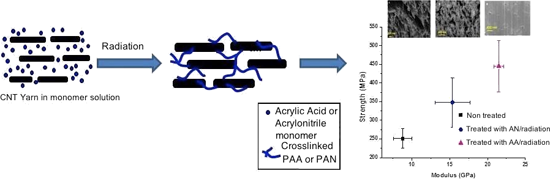
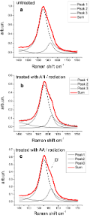
- polyacrylonitrile (PAN) from the literature (Figure 1c). This process relies on the fundamentals of radiation grafting polymerization. The advantage of the process is that an initiator is not required, avoiding the formation of free radicals on the substrate backbone/monomer, contamination and problems with local




Review: Electrostatically actuated nanobeam-based nanoelectromechanical switches – materials solutions and operational conditions
Beilstein J. Nanotechnol. 2018, 9, 271–300, doi:10.3762/bjnano.9.29


Comparative study of post-growth annealing of Cu(hfac)2, Co2(CO)8 and Me2Au(acac) metal precursors deposited by FEBID
Beilstein J. Nanotechnol. 2018, 9, 91–101, doi:10.3762/bjnano.9.11
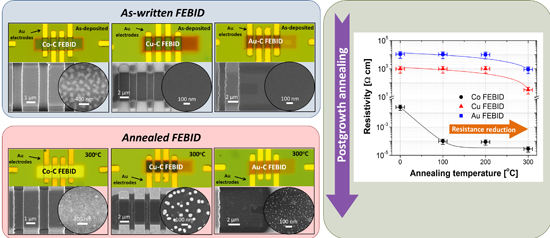
- , respectively. The precursors have been separately filled into their reservoirs inside a glove box in argon atmosphere, before being introduced on the substrate surface by heating up to 50 °C the GIS. Each precursor was used separately on different samples and experiments in order to avoid cross contamination
- . Thus, the K-values of each atom were extracted from both the FEBID deposit and the substrate. The background signal from the detector, as well as the residual carbon signal arising from contamination deposition occurring during the EDX scan, were subtracted from the EDX spectra using a reference
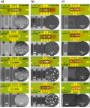


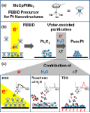
Electron-driven and thermal chemistry during water-assisted purification of platinum nanomaterials generated by electron beam induced deposition
Beilstein J. Nanotechnol. 2018, 9, 77–90, doi:10.3762/bjnano.9.10
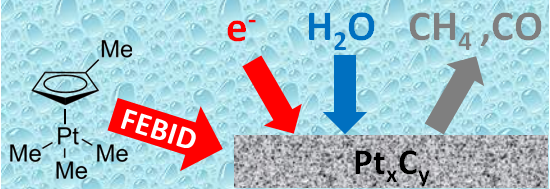
- insights into the chemistry that occurs during purification of FEBID nanostructures with implications also for the stability of the carbonaceous matrix of nanogranular FEBID materials under humid conditions. Keywords: carbon contamination; electron induced reactions; focused electron beam induced


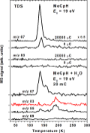

Response under low-energy electron irradiation of a thin film of a potential copper precursor for focused electron beam induced deposition (FEBID)
Beilstein J. Nanotechnol. 2018, 9, 57–65, doi:10.3762/bjnano.9.8
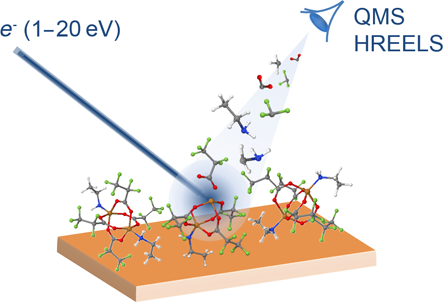
- corresponds to the loss of an entire ligand, which is certainly the most favourable situation to achieve improved purity of the final deposit. On the contrary, the ligand fragmentation can be viewed as a potential source of carbonaceous contamination of the future deposited product. The amine ligand



Facile synthesis of silver/silver thiocyanate (Ag@AgSCN) plasmonic nanostructures with enhanced photocatalytic performance
Beilstein J. Nanotechnol. 2017, 8, 2781–2789, doi:10.3762/bjnano.8.277
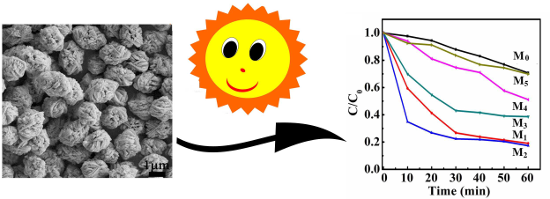
- . Keywords: Ag@AgSCN; degradation of oxytetracycline; plasmonic photocatalyst; stability; Introduction In the past decade, water decontamination technology has attracted great attention due to the increasing health risk that water contamination poses to humankind. The removal of pollutants has been


Impact of titanium dioxide nanoparticles on purification and contamination of nematic liquid crystals
Beilstein J. Nanotechnol. 2017, 8, 2766–2770, doi:10.3762/bjnano.8.275
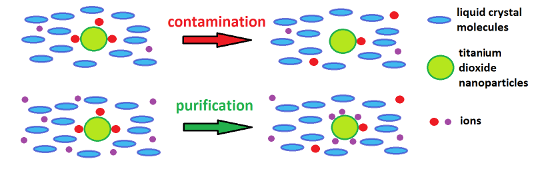
- contamination of liquid crystals. Nematic liquid crystals with high and low initial ionic contamination have been examined. It has been shown that titanium dioxide nanoparticles reduced the ion density of liquid crystals with high initial ionic contamination from 134.5 × 1012 cm−3 to 63.2 × 1012 cm−3. In the
- case of liquid crystals with low initial ionic contamination, the nanoparticles led to an insignificant increase of ion density from 19.8 × 1012 cm−3 to 25.7 × 1012 cm−3. Keywords: ionic impurities; liquid crystals; nanoparticles; titanium dioxide; Findings Nowadays, liquid crystals (LCs) are widely
- addition, nanoparticles can induce other new functions in liquid crystals, including improved response time [14][15], surface plasmon resonance [16], and improvements in alignment [17]. The ionic contamination of LCs remains one of the challenges to LC technology. Ionic conductivity negatively affects LC
Dry adhesives from carbon nanofibers grown in an open ethanol flame
Beilstein J. Nanotechnol. 2017, 8, 2719–2728, doi:10.3762/bjnano.8.271
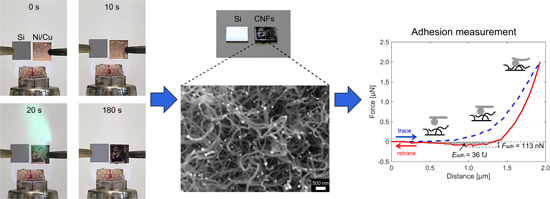
- in a good agreement with XPS investigations of CNFs by other authors [41][42]. The weak component at 285.0 eV (blue dashed line) originates from so-called ’adventitious carbon’ sp3, describing hydrocarbon contamination due to the exposure to ambient atmosphere. The HRTEM images in Figure 4 b reveal


Localized growth of carbon nanotubes via lithographic fabrication of metallic deposits
Beilstein J. Nanotechnol. 2017, 8, 2592–2605, doi:10.3762/bjnano.8.260
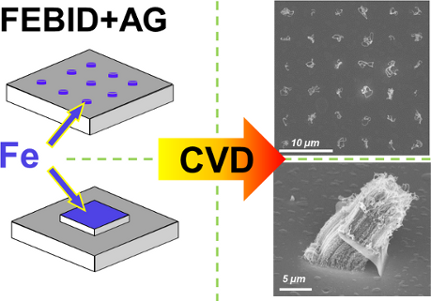
- contain high amounts of carbon as contamination. For example, Sharma et al. [20] presented the possibility to control the deposited particle size by varying the EBID parameters (i.e., electron dose and beam current) but no further CNTs were shown to grow on these as-deposited Fe-containing nanoparticles
- . Carbon contamination had a pronounced negative influence on the activity of the EBID deposits. The CNT yield on these deposits was low and post-treatment with oxygen plasma was necessary to clean the EBID Co deposits before the corresponding CVD experiment could be successfully conducted with sufficient
- CNT yield [21]. The existence of the corresponding carbon contamination was traced back to deposits from the residual gas in the high-vacuum (HV) environment and the dissociation of the carbon-containing precursor ligands [19]. With our “surface science approach” to FEBIP, that is, working in an ultra




Direct writing of gold nanostructures with an electron beam: On the way to pure nanostructures by combining optimized deposition with oxygen-plasma treatment
Beilstein J. Nanotechnol. 2017, 8, 2530–2543, doi:10.3762/bjnano.8.253
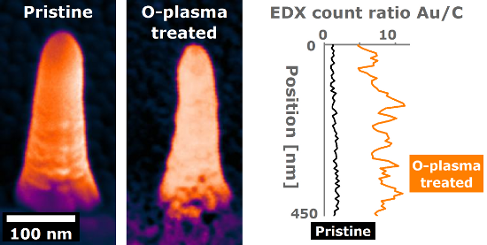
- microstructures can be fabricated by one-step direct-write lithography process using focused electron beam induced deposition (FEBID). Typically, as-deposited gold nanostructures suffer from a low Au content and unacceptably high carbon contamination. We show that the undesirable carbon contamination can be
- only slightly increased under deposition in reactive environments [43][44]. Logically, it would seem that the best way to avoid carbon contamination is to use a carbon-free precursor. Indeed, FEBID experiments using the PF3AuCl precursors yielded almost pure Au structures [32], but this precursor was
- content of the deposit. The carbon contamination, which mainly originates from the imperfect chemical decomposition of the precursor, is a strong limitation for possible usage of FEBID nanomaterials in optical, magnetic, electronic or information storage devices. It is therefore essential to improve their

Strategy to discover full-length amyloid-beta peptide ligands using high-efficiency microarray technology
Beilstein J. Nanotechnol. 2017, 8, 2446–2453, doi:10.3762/bjnano.8.243
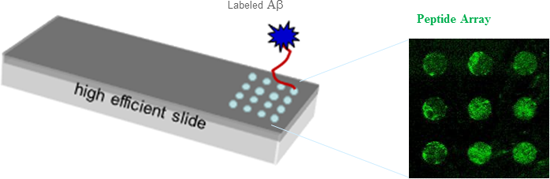
- controlled rate in order to reproducibly grow layers of silicon oxide of a defined thickness. Thermal growth allows high-quality SiO2 films to be obtained with very low auto-fluorescence and very low contamination. The wafers were then cut in pieces to the exact dimensions of conventional microscope slides


Au nanostructure fabrication by pulsed laser deposition in open air: Influence of the deposition geometry
Beilstein J. Nanotechnol. 2017, 8, 2438–2445, doi:10.3762/bjnano.8.242
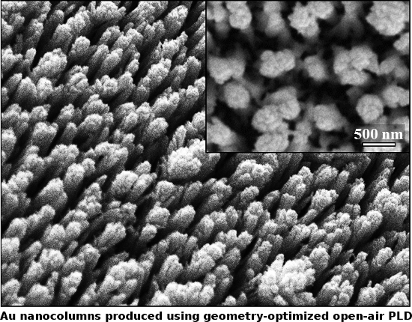
- their fabrication. Such applications require contamination-free nanostructures, suggesting that the development and use of physical nanofabrication methods is further warranted. One of the physical vapor deposition techniques widely applied in bottom-up nanotechnology is pulsed laser deposition (PLD


Surfactant-induced enhancement of droplet adhesion in superhydrophobic soybean (Glycine max L.) leaves
Beilstein J. Nanotechnol. 2017, 8, 2345–2356, doi:10.3762/bjnano.8.234
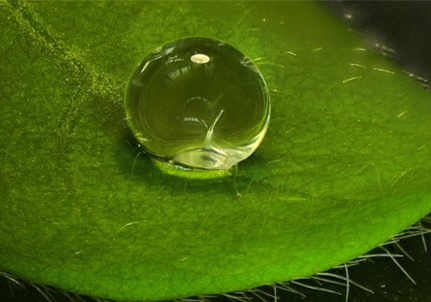
- applied droplets, even on superhydrophobic leaves, to reduce undesirable soil contamination by roll-off of agrochemical formulations from the plant surfaces. The wettability and morphology of soybean (Glycine max L.) leaf surfaces before and after treatment with six different surfactants (Agnique® SBO10


Material property analytical relations for the case of an AFM probe tapping a viscoelastic surface containing multiple characteristic times
Beilstein J. Nanotechnol. 2017, 8, 2230–2244, doi:10.3762/bjnano.8.223

- damage induced by constant tip drag. Additionally, these methods are prone to significant tip wear and contamination which could make quantitative characterization unreliable due to constant changes in tip geometry. Dynamic methods have been designed to overcome the above issues, whereby tapping-mode AFM


Ester formation at the liquid–solid interface
Beilstein J. Nanotechnol. 2017, 8, 2139–2150, doi:10.3762/bjnano.8.213
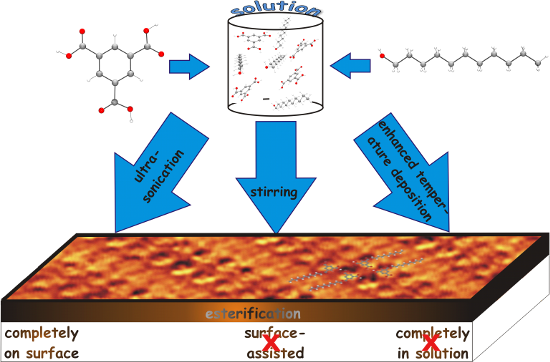
- location of esterification, respectively: 1) The ester molecules originate all from the solution (either as contamination or as the result of an esterification in the bulk liquid phase); 2) the seed molecules for the ordered adsorbed ester pattern originate from the solution but around them further


Magnetic properties of optimized cobalt nanospheres grown by focused electron beam induced deposition (FEBID) on cantilever tips
Beilstein J. Nanotechnol. 2017, 8, 2106–2115, doi:10.3762/bjnano.8.210
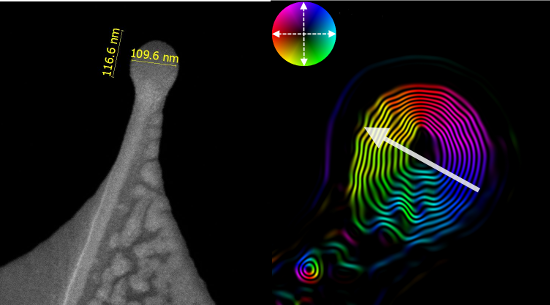
- reports on Co-FEBID, which have confirmed this layer to be non-ferromagnetic [50]. Furthermore, a thin layer containing carbon and oxygen of about 7 nm is formed due to contamination before and during the electron beam irradiation in the TEM experiment. As a result, the average diameter of cobalt under
- ). Figure 5a shows the bright field image of the Co nanosphere overlapped with the interference fringe pattern of the hologram, revealing a significant amount of contamination which did not disappear after standard Ar/O2 plasma cleaning procedures. Furthermore, the holograms before and after (not shown
- ) reversing the object show how contamination builds up during the experiment, which affects the quantitative properties of the technique (particularly for the smaller sphere of 90 nm, shown in the Supporting Information File 1). The electrostatic (φE) and magnetic (φM) contributions to the phase shift


A systematic study of the controlled generation of crystalline iron oxide nanoparticles on graphene using a chemical etching process
Beilstein J. Nanotechnol. 2017, 8, 2017–2025, doi:10.3762/bjnano.8.202
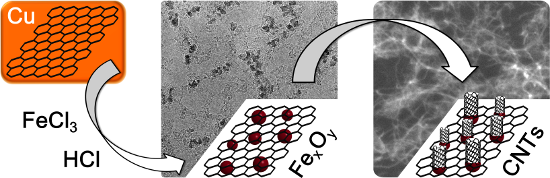
- quality of the transferred graphene. The protective polymer coatings typically used generate residues and contamination on the ultrathin graphene layer. In this work, we have developed a graphene transfer process which works without a coating and allows the transfer of graphene onto arbitrary substrates
- without the need for any additional post-processing. During the course of our transfer studies, we found that the etching process that is usually employed can lead to contamination of the graphene layer with the Faradaic etchant component FeCl3, resulting in the deposition of iron oxide FexOy
- ][34]. As graphene is close to or even atomically thin, even very minor amounts of contamination can affect its electronic properties [22][33][34]. Additional processing such as thermal annealing in vacuum or hydrogen atmosphere is required to completely remove the protective layer, making polymer





