


Search results
Search for "defect" in Full Text gives 407 result(s) in Beilstein Journal of Nanotechnology. Showing first 200.
Effects of post-lithography cleaning on the yield and performance of CVD graphene-based devices
Beilstein J. Nanotechnol. 2019, 10, 349–355, doi:10.3762/bjnano.10.34
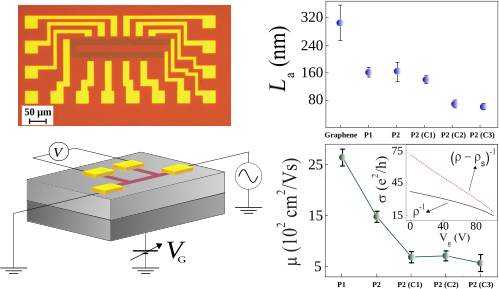
- terms of the mobility μc, associated to charged impurities scattering centers, according to [24][25][26]: The lattice defects can be modeled as a deep potential well of radius R, which gives rise to the mobility μd, as: where nd ~ (2RLa)−1 is the defect density and kF corresponds to the Fermi wave


Geometrical optimisation of core–shell nanowire arrays for enhanced absorption in thin crystalline silicon heterojunction solar cells
Beilstein J. Nanotechnol. 2019, 10, 322–331, doi:10.3762/bjnano.10.31
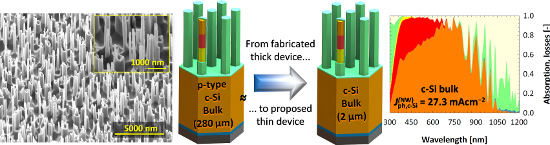
- defect removal etching [53], which would dramatically improve the surface passivation. Geometrical study of nanowire arrays To further understand the interaction of light with nanowires, and how the presence of the NW array affects the absorption in the active silicon layer, optical simulations were used


Site-specific growth of oriented ZnO nanocrystal arrays
Beilstein J. Nanotechnol. 2019, 10, 274–280, doi:10.3762/bjnano.10.26
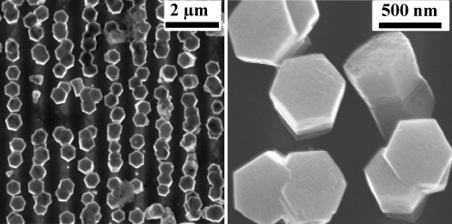
- added in the reaction bath, the incorporation of some exotic metal ions in the ZnO lattice may produce some inadvertent defect levels and charge carrier recombination centers, in turn deteriorating some of the important material properties. Moreover, these reactants are responsible for changing the


Study of silica-based intrinsically emitting nanoparticles produced by an excimer laser
Beilstein J. Nanotechnol. 2019, 10, 211–221, doi:10.3762/bjnano.10.19
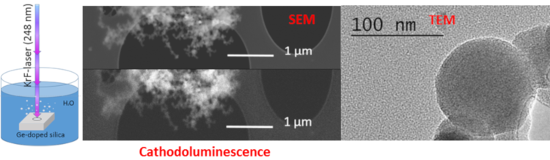
- of the silica by facilitating energy absorption processes such as multiphoton absorption or by introducing absorbing point defects. Defect generation in bulk pure silica before nanoparticle production starts is also suggested by our results. Regarding the Ge-doped samples, scanning electron
- in the glass network and the addition of Ge decreases the silica band gap [18][21][22][23]. The presence of Ge is associated with the appearance of new structures of optically active point defects such as the so-called germanium lone pair center (GLPC) [19][24]. This defect is responsible for an
- detecting the Ge atoms with EDX measurements. The suggestion that the addition of Ge atoms (which results in lowering the band-gap and introducing defect species with an absorption band at 5.1 eV) is able to facilitate the nanoparticle generation is confirmed by the high difference (about one order of



Wet chemistry route for the decoration of carbon nanotubes with iron oxide nanoparticles for gas sensing
Beilstein J. Nanotechnol. 2019, 10, 105–118, doi:10.3762/bjnano.10.10
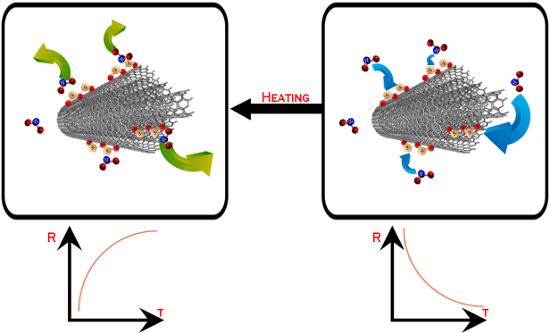
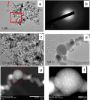
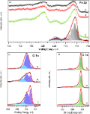
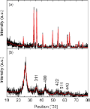
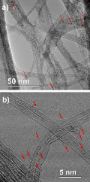
- distribution histograms can be found in Supporting Information File 5, Figure S6). For all the decorated samples we have used the same source of acidic-functionalized MWCNTs. Accordingly, all the MWCNTs used have, more or less, the same defect size and distribution on the side walls. As the amount of iron salt




Pull-off and friction forces of micropatterned elastomers on soft substrates: the effects of pattern length scale and stiffness
Beilstein J. Nanotechnol. 2019, 10, 79–94, doi:10.3762/bjnano.10.8
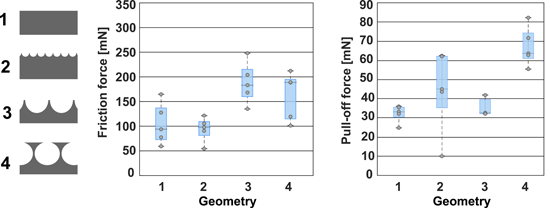
- pull-off and friction forces, such as defect control and crack trapping, as reported in the literature for hard substrates, seem to disappear on soft substrates. The dimple geometry with a terminal layer generated significantly higher pull-off forces compared to other geometries, presumably due to
- - and/or nanoscale fibrillar geometries have been reported [7], where the flexibility of the individual fibrils leads to a low Eeff [8]. Furthermore, micropatterns with a fibrillar geometry have been shown to have better defect control [9] and better stress distribution [10] compared to smooth adhesives
- material is used for the micropattern, the Eeff is low, leading to better defect control, stress distribution, and contact stiffness compared to micropatterns made of stiffer materials [22]. Also, the strength of the contacts formed between the adhesive and the substrate is affected by the material





Amorphous NixCoyP-supported TiO2 nanotube arrays as an efficient hydrogen evolution reaction electrocatalyst in acidic solution
Beilstein J. Nanotechnol. 2019, 10, 62–70, doi:10.3762/bjnano.10.6
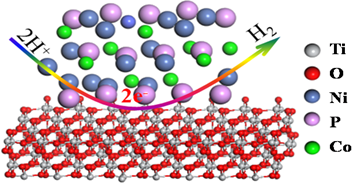
- to large-scale industrial application. Amorphous catalysts intrinsically contain more defect sites which probably work as active centers compared to the crystalline counterparts. A representative work is that by Zhang et al. where they synthesized Ni–Co–P/nickel foam electrodes via a facile




Surface plasmon resonance enhancement of photoluminescence intensity and bioimaging application of gold nanorod@CdSe/ZnS quantum dots
Beilstein J. Nanotechnol. 2019, 10, 22–31, doi:10.3762/bjnano.10.3
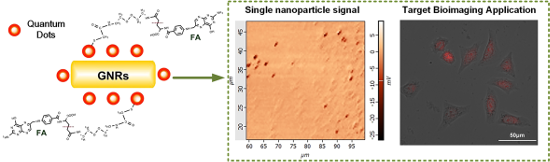
- suggests that when metal or chemical materials are doped with QDs, the number of surface trap states (which can lead to exponential PL decay) is affected by the surface passivation and by the degree of quantum confinement. In CdSe/ZnS QDs with higher defect densities, binding with GNRs having very
- . Here, B is a percentage of the lifetime and t is the lifetime. From Figure 4 we can see that the band edge of the QDs is near 500 nm and the band edge of our CdSe/ZnS sample is calculated to be about 2.48 eV, which is larger than the value of 1.76 eV for CdSe, thus the PL of CdSe/ZnS is surface defect


Accurate control of the covalent functionalization of single-walled carbon nanotubes for the electro-enzymatically controlled oxidation of biomolecules
Beilstein J. Nanotechnol. 2018, 9, 2750–2762, doi:10.3762/bjnano.9.257
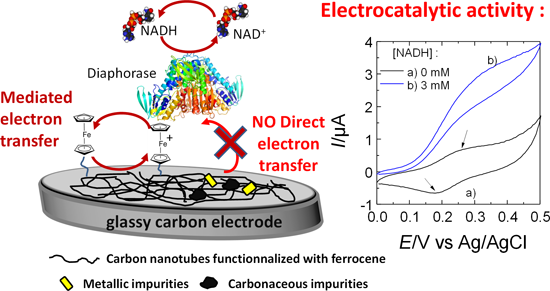
- Raman spectrum of a dispersive defect-induced band, called the D band, around 1350 cm−1. Figure 8 reports the Raman spectra of raw, oxidized and functionalized samples using a laser wavelength of 514 nm. In Figure S3 (Supporting Information File 1), some Raman spectra obtained for the samples using a






Oriented zinc oxide nanorods: A novel saturable absorber for lasers in the near-infrared
Beilstein J. Nanotechnol. 2018, 9, 2730–2740, doi:10.3762/bjnano.9.255
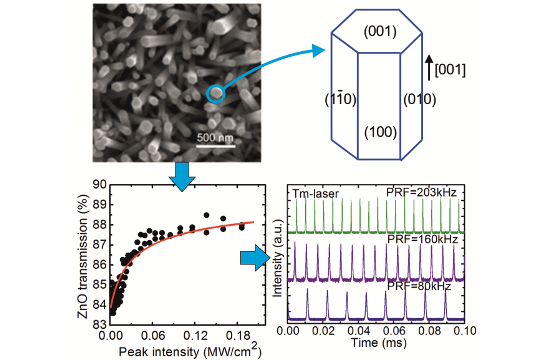
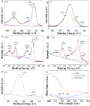
- were grown hydrothermally (in oxygen-rich conditions) one can expect the presence of zinc vacancies that have a low formation energy under such conditions. The singly charged zinc vacancy (VZn−1) is typically located at 0.8–0.9 eV above the ZnO valence band (VB) [9][33][34]. This defect site can be a
- of electrons from the conduction band (CB) to the VB of ZnO (band-to-band transition). The violet emission near 0.415 µm can be assigned to the radiative recombination of electrons from a zinc interstitial (Zni) defect level, typically located ≈0.22 eV below the CB, to the VB of ZnO [35]. The PL band
- the singly (VO+1) and doubly charged (VO+2) oxygen vacancy states of ZnO, respectively [36][37][38]. Based on these assignments, a schematic diagram showing the position of the various defect states within the bandgap of ZnO and the corresponding PL lines is presented in Figure 3e. Absorption



Disorder in H+-irradiated HOPG: effect of impinging energy and dose on Raman D-band splitting and surface topography
Beilstein J. Nanotechnol. 2018, 9, 2708–2717, doi:10.3762/bjnano.9.253
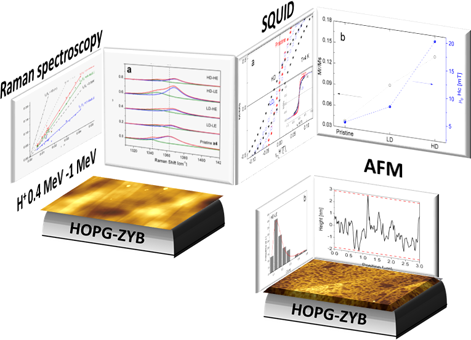
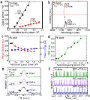
- characterization showed a distribution of surface defects, which were ascribed to the burst of hydrogen blisters formed as a consequence of the irradiation process. The results presented in this work contribute to the current trend in nanotechnology in areas devoted to the control of properties by defect
- clear explanation of the dependence of the D-band components on the irradiation parameters together with the type of defect is still a challenge. Hydrogen-irradiated carbon allotropes have received special attention as promising materials to develop hydrogen storage devices [16][17][18][19][20][21], as
- 2D-band relative to G-band intensity, in addition to a band located around 2950 cm−1, assigned to a combination mode (D + D′) [18]. It was also found that multilayer graphene with the same top-layer defect density as single-layer graphene exhibits a lower ID/IG ratio because intact sub-layers with π


Optimization of Mo/Cr bilayer back contacts for thin-film solar cells
Beilstein J. Nanotechnol. 2018, 9, 2700–2707, doi:10.3762/bjnano.9.252
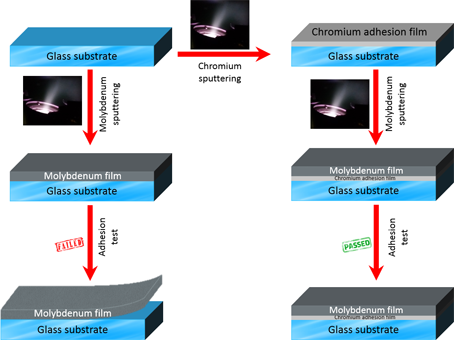
- is beneficial and can enhance the electro-optical properties of the absorber layer [41][42][43][44][45]. On the other side, Cr incorporation in CIGS absorber layer reduces the cell performance due to creation of deep defect levels in the CIGS layer [46]. In order to investigate the diffusion


Silencing the second harmonic generation from plasmonic nanodimers: A comprehensive discussion
Beilstein J. Nanotechnol. 2018, 9, 2674–2683, doi:10.3762/bjnano.9.250
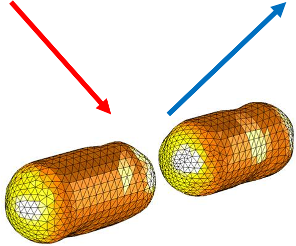
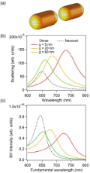
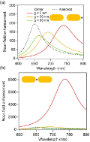
- from a practical point of view, since the second harmonic light is often collected in these two directions. Note that the case of a single defect located in the gap has been considered in a previous publication, showing the same behavior [36]. Gold dimers made of rectangular arms In this last section


Nanoantenna structures for the detection of phonons in nanocrystals
Beilstein J. Nanotechnol. 2018, 9, 2646–2656, doi:10.3762/bjnano.9.246
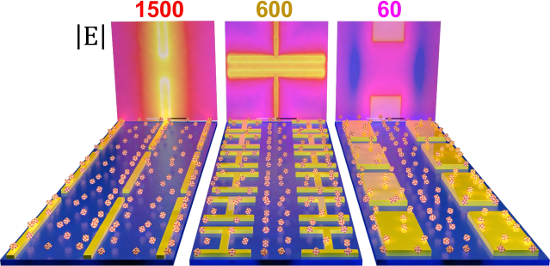
- current’s symmetry. The simplest way to the symmetry breakdown is to deform the nanoantenna shape. Such a defect-induced activation of the 2nd-order LSPR mode was observed for non-ideal nanoantennas at normal incidence [37]. The second way to the symmetry breakdown condition is off-normal illumination [38


Exploring the photoleakage current and photoinduced negative bias instability in amorphous InGaZnO thin-film transistors with various active layer thicknesses
Beilstein J. Nanotechnol. 2018, 9, 2573–2580, doi:10.3762/bjnano.9.239
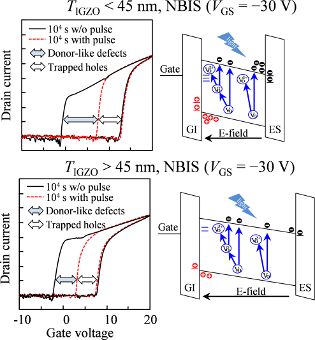
- are exactly identical, except the deposition duration, the results suggest that the variation in the SS value mainly originates from the density of defect states in the active layer. Correspondingly, the obtained results indicate that the increase in the Nt majorly stems from the increase of the IGZO
- channel layer is totally depleted under the negative VGS bias since the TIGZO is less than the Debye length. Therefore, the photoexcited electrons and holes will be respectively accumulated and trapped at the IGZO/etch-stopper and the GI/IGZO interfaces. Meanwhile, the defect states are generated, which
- originate from the photoexcited VO+/VO2+. In the forward measurement, the transfer curves exhibit a positive shift in the VGS direction with a hump at the turn-on voltage region when the NBIS duration exceeds 1000 s, which is attributed to the synergistic effects of the generated defect states and the


ZnO-nanostructure-based electrochemical sensor: Effect of nanostructure morphology on the sensing of heavy metal ions
Beilstein J. Nanotechnol. 2018, 9, 2421–2431, doi:10.3762/bjnano.9.227
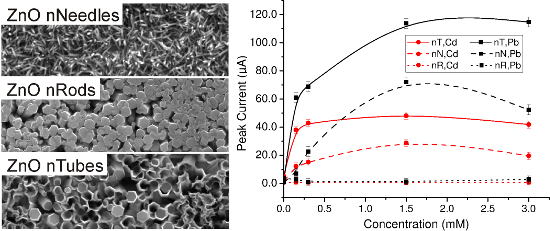
- improvements in nanotube adsorption rates compared to similar diameter nanorods and nanoneedles are associated with both the increase in surface area (via the formation of a cavity) and the adsorption bonds due to surface defect sites. A large number of defects can be explained by the fact that, unlike
- ZnO nanoplates, the measured CV curve shows even better results in the reduction component than in the case of nanotubes, thereby proving the effectiveness of porous structures: adsorption bonds, which are located on surface defect sites or on metastable polar planes, have a better ability to form
- higher sensitivity than nanorods and nanoneedles. This confirms that adsorption bonds associated with defect states contribute more to the process than the adsorption bonds, which are located on the nonpolar, side surfaces. This fact was also confirmed by an additional experiment on ZnO nanoplates. The


Pinning of a ferroelectric Bloch wall at a paraelectric layer
Beilstein J. Nanotechnol. 2018, 9, 2356–2360, doi:10.3762/bjnano.9.220
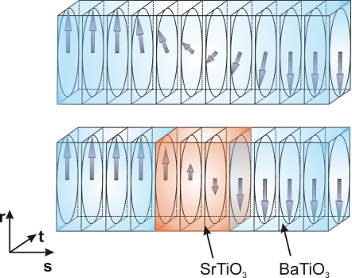
- placed 1–7 nm away from the defect layer always spontaneously moved back to it. These simulations suggest that an approximately 1 nm thin SrTiO3 layer incorporated in ferroelectric BaTiO3 crystal is capable of considerably influencing the structure and properties of the 180-degree Bloch domain walls

![[Graphic 2]](/bjnano/content/inline/2190-4286-9-220-i2.svg?max-width=637&scale=1.18182) -oriented 180-degree domain walls in a) pure BaTiO3, b) BaTiO3–SrTiO3 superla...
-oriented 180-degree domain walls in a) pure BaTiO3, b) BaTiO3–SrTiO3 superla...


Intrinsic ultrasmall nanoscale silicon turns n-/p-type with SiO2/Si3N4-coating
Beilstein J. Nanotechnol. 2018, 9, 2255–2264, doi:10.3762/bjnano.9.210
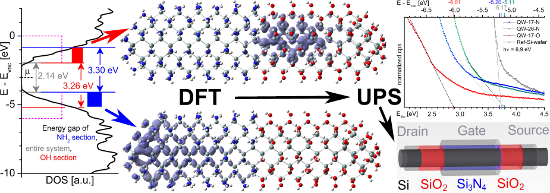
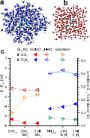
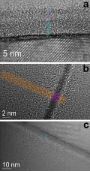
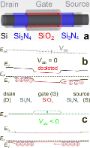
- [7][8] and dopant-associated defect states [8][9]. Modulation doping – i.e., doping of materials adjacent to semiconductors which then provide free carriers to the unperturbed semiconductor – was first used for group III–V semiconductor combinations such as GaAs/AlAs in the late 1970s [10]. Recently





Lead-free hybrid perovskites for photovoltaics
Beilstein J. Nanotechnol. 2018, 9, 2209–2235, doi:10.3762/bjnano.9.207


Electrospun one-dimensional nanostructures: a new horizon for gas sensing materials
Beilstein J. Nanotechnol. 2018, 9, 2128–2170, doi:10.3762/bjnano.9.202

- 10 ppm H2S compared with pure ZnO NFs with a response of 1.57 at 230 °C and response and recovery times of 18 s and 20 s, respectively [196]. Doping with multivalent ions (In3+, Al3+, Sn4+, etc.) may change the defect density and carrier concentration of a ZnO matrix [201][202][203][204]. A common






Spin-coated planar Sb2S3 hybrid solar cells approaching 5% efficiency
Beilstein J. Nanotechnol. 2018, 9, 2114–2124, doi:10.3762/bjnano.9.200
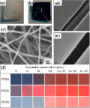
- the absorption strength of the substrate becomes comparable to that of the Sb2S3 film which is evident from the characteristic H2O absorption peak of Corning glass below 1 eV. While the layer crystallized at 265 °C and 300 °C behave almost identical, the defect absorption of the layer crystallized at
- °C sample does not coincide with the other samples that match very well for energies above the band gap. The increased defect absorption for the crystallization at 350 °C or higher hints towards a lower cell performance because a higher defect density would cause increased recombination and
- drastically which is consistent with the increased defect absorption observed with PDS (Figure 3c). When the film morphology degenerates at 400 °C the cell performance decays further. Next, a similar study was conducted for the Sb-BDC process with a focus on crystallization at 265 °C and 300 °C. The SEM image


Metal-free catalysis based on nitrogen-doped carbon nanomaterials: a photoelectron spectroscopy point of view
Beilstein J. Nanotechnol. 2018, 9, 2015–2031, doi:10.3762/bjnano.9.191
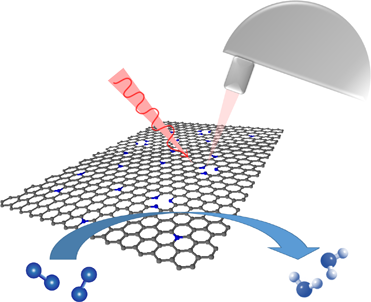
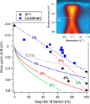
- molecular dynamics combined with analytical potential and density functional theory methods, Lehtinen et al. reported on the influence of the ion kinetic energy and mass on the probability of defect formation during irradiation of suspended graphene sheets and single-walled CNTs [86]. Being proportional to
- higher kinetic energies, the cross section for vacancy creation decreases and more complex defect configurations are created, such as di-vacancies and distortions (Figure 5) [83][86][87]. The effect of different ion kinetic energies on supported graphene has been highlighted in the case of CF4 plasma
- vacancies, a higher substitution-to-defect ratio can be reached [87]. Other advantages of the post-synthesis functionalization methods include the possibility to perform the doping after the integration of the nanostructures in a device and the possibility to create different nanopatterns using appropriate




Recent highlights in nanoscale and mesoscale friction
Beilstein J. Nanotechnol. 2018, 9, 1995–2014, doi:10.3762/bjnano.9.190
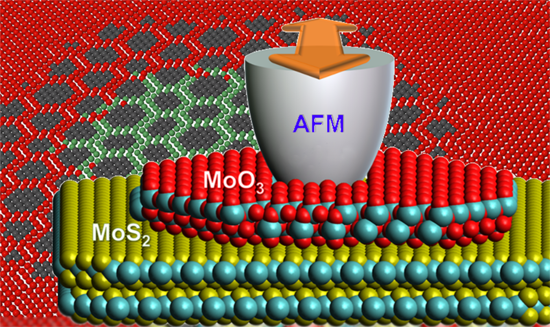
- annealing, dehalogenation as well as cyclodehydrogenation can be achieved, which leads to clean, defect-free GNRs. Therefore, ideal contacts, free of contaminants, can be grown on the gold surface. The GNRs are observed to move preferentially in the [−101] direction, where the moiré pattern forming with Au


Defect formation in multiwalled carbon nanotubes under low-energy He and Ne ion irradiation
Beilstein J. Nanotechnol. 2018, 9, 1951–1963, doi:10.3762/bjnano.9.186
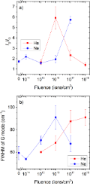
- ]. For He+ irradiation of graphene, Stone–Thrower–Wales defects form preferentially [10]. For graphene, 1000 eV proved also to be the optimum energy for defect and nanopore formation at an incidence angle of 60° with respect to the surface normal and of 400–500 eV for angles closer to the surface normal
- defect production in SWCNTs [26], the characterisation of composite materials containing MWCNTs [27], the implantation of Si and C ions into DWCNTs [28], and to differentiate between carbon materials with different sp2 environment [29]. The latter study focused on graphene, highly oriented pyrolytic
- scattering processes around the K point of the Brillouin zone and, like the D band, is sensitive to the defect density [1]. It gets significantly broadened with increasing fluence, indicating that the defect density is increasing, but significant difference between He+ and Ne+ irradiation is not observed. A



Synthesis of carbon nanowalls from a single-source metal-organic precursor
Beilstein J. Nanotechnol. 2018, 9, 1895–1905, doi:10.3762/bjnano.9.181
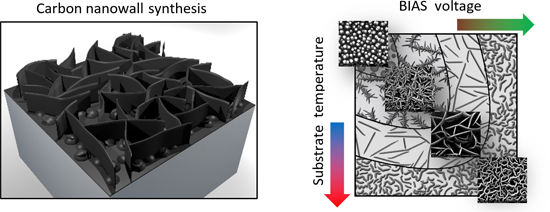
- between the nanorods and the straight CNWs. Chemical characterization Raman spectroscopy can give information about the hybridization and the defect density of the carbon material. All samples were measured at three different positions and the measured values were averaged for the interpretation. In
- ratio) is higher for shorter mean wall lengths. A high intensity of the D-peak can be interpreted as high defect density in the carbon material. Since shorter walls mean more edges and smaller graphitic crystals, the defect density is higher with more carbon atoms at grain boundaries. Furthermore, the





