


Search results
Search for "displays" in Full Text gives 457 result(s) in Beilstein Journal of Nanotechnology. Showing first 200.
Outstanding chain-extension effect and high UV resistance of polybutylene succinate containing amino-acid-modified layered double hydroxides
Beilstein J. Nanotechnol. 2019, 10, 684–695, doi:10.3762/bjnano.10.68
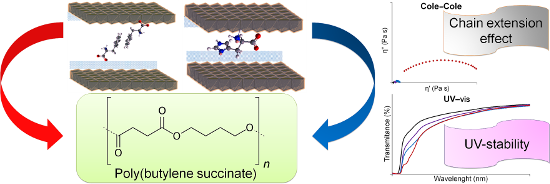
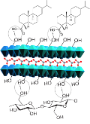
- interpretation of the XRD patterns based on a more detailed analysis of the position of the X-ray diffraction peaks and the matching between the surface area per unit charge of LDH host and the organic guest. Mg2Al/nitrate, as a reference sample, displays an X-ray diffraction pattern typical of lamellar
- observed, from 90 Pa s (unmodified PBS) up to more than 7,000 Pa s for Mg2Al/PHE LDH (5 wt %), respectively. Moreover, the PBS nanocomposite composition displays the desired UV-stabilizing effect (described below), which was described previously but only for PBS composites with Zn2Al/amino acid LDHs [15


Review of time-resolved non-contact electrostatic force microscopy techniques with applications to ionic transport measurements
Beilstein J. Nanotechnol. 2019, 10, 617–633, doi:10.3762/bjnano.10.62
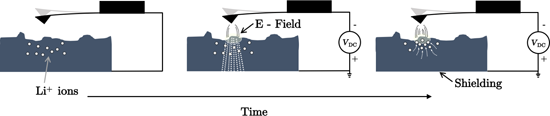
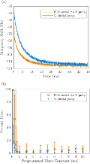
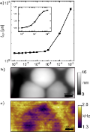
- extract the relaxation time constant; the initial jump only leads to a higher statistical uncertainty, which is due to the slow initial response of the PLL relative to the fast jump from 0 to 2.5 V. This becomes especially apparent for τ* ≈ τPLL. The stretching factor displays exactly the same behaviour





Coexisting spin and Rabi oscillations at intermediate time regimes in electron transport through a photon cavity
Beilstein J. Nanotechnol. 2019, 10, 606–616, doi:10.3762/bjnano.10.61
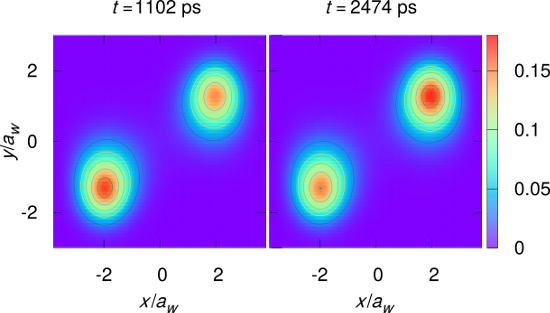
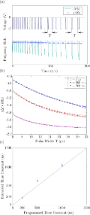
- transport in the far-infrared (FIR) regime. The time-dependent electronic transport through a two-dimensional (2D) nanosystem patterned in a GaAs heterostructure, which is in turn embedded in a three-dimensional (3D) FIR photon cavity, generally displays three regimes: i) The switching transient regime in
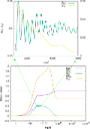
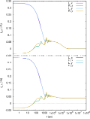
- the transport current have been predicted in the transient regime [16], and current–current noise spectra in the steady state reveal their signs [15]. Figure 4 displays the mean electron and photon numbers over the whole time scale (lower panel) relevant to the present model parameters for the case of
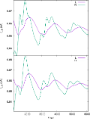
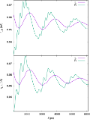
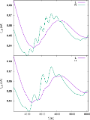
- , into the central system and the right current, IR, out of it. The transport current can give us further insight into the dynamics in the system. It is displayed in Figure 5 for the same parameters as were used in Figure 4. The upper panel displays the current for the x-polarized cavity photon field and


![[Graphic 40]](/bjnano/content/inline/2190-4286-10-61-i49.svg?max-width=637&scale=1.418184) and photon
and photon ![[Graphic 41]](/bjnano/content/inline/2190-4286-10-61-i50.svg?max-width=637&scale=1.418184) content in the open central system as a function of time. In additio...
content in the open central system as a function of time. In additio...

![[Graphic 60]](/bjnano/content/inline/2190-4286-10-61-i69.svg?max-width=637&scale=1.418184)
![[Graphic 61]](/bjnano/content/inline/2190-4286-10-61-i70.svg?max-width=637&scale=1.418184)
![[Graphic 62]](/bjnano/content/inline/2190-4286-10-61-i71.svg?max-width=637&scale=1.418184) and
and ![[Graphic 63]](/bjnano/content/inline/2190-4286-10-61-i72.svg?max-width=637&scale=1.418184) i...
i...
![[Graphic 76]](/bjnano/content/inline/2190-4286-10-61-i85.svg?max-width=637&scale=1.418184) in the steady state. The cavity pho...
in the steady state. The cavity pho...
Topochemical engineering of composite hybrid fibers using layered double hydroxides and abietic acid
Beilstein J. Nanotechnol. 2019, 10, 589–605, doi:10.3762/bjnano.10.60
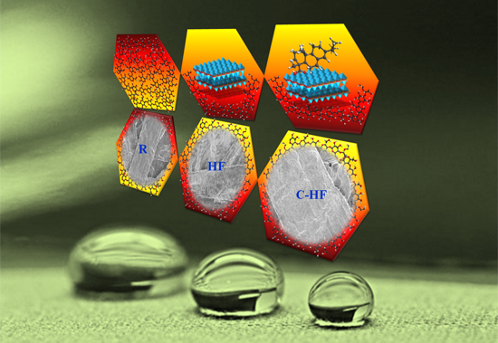
- fibers show a dense complex web of longer and thicker cellulose fibers having hairy projections on the surface (Figure 8a). HF displays a similar appearance but with few LDH crystals present on the surface (Figure 8c). C-F reveal a very thick AA layer (Figure 8b), whereas C-HF fibers show only a minimal




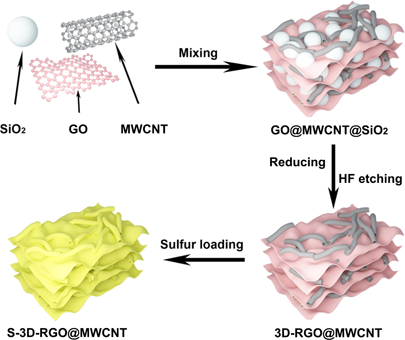
A porous 3D-RGO@MWCNT hybrid material as Li–S battery cathode
Beilstein J. Nanotechnol. 2019, 10, 514–521, doi:10.3762/bjnano.10.52
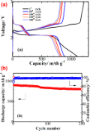
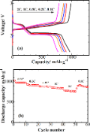
- , confirming that a great amount of sulfur can be stored in the structure. Figure 5 displays the first four CV cycles of S-3D-RGO@MWCNT cathode at 0.1 mV·s−1. During the cathodic cycle, the peaks around 2.30 and 2.05 V correspond to the transformation of elemental sulfur to long-chain polysulfides (Li2Sn, n



Biological and biomimetic surfaces: adhesion, friction and wetting phenomena
Beilstein J. Nanotechnol. 2019, 10, 481–482, doi:10.3762/bjnano.10.48

- Keywords: adhesion; air retention; contact mechanics; fluid transport; friction; functional gradients; wetting; This Thematic Series is the continuation of the previous series on the broad topic of biological and bioinspired materials and surfaces [1][2][3]. This collection of articles displays a current
Improving control of carbide-derived carbon microstructure by immobilization of a transition-metal catalyst within the shell of carbide/carbon core–shell structures
Beilstein J. Nanotechnol. 2019, 10, 419–427, doi:10.3762/bjnano.10.41
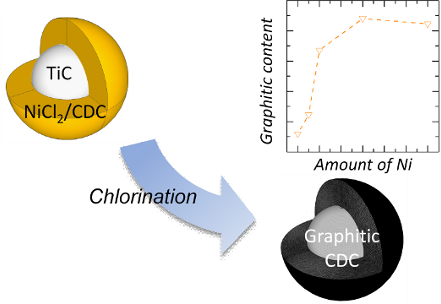
- a decrease in the adsorbed volume of N2 in the low-pressure range. The pore size distributions evaluated by the QSDFT model are displayed in Figure 6b. CDC-Ni0 displays mainly pores in the micropore regime (<2 nm). On the other hand, the CDCs produced with the aid of the nickel catalyst show pores
- structures (N2 sorption). The reference of CDC-Ni0 features SSAN2 of ca. 1500 m2·g−1 and a mean pore size of 0.94 nm. CDC-Ni5 displays a lower surface area of ca. 1000 m2·g−1, which is caused by the presence of larger pores as a consequence of the nickel catalyst. The mean pore size of CDC-Ni5 increases by


Advanced scanning probe lithography using anatase-to-rutile transition to create localized TiO2 nanorods
Beilstein J. Nanotechnol. 2019, 10, 412–418, doi:10.3762/bjnano.10.40
- ], fuel cells [20], lithium batteries [21][22][23][24][25][26], field-emission devices [27], data storage devices [28], gaso- and electrochromic displays [29][30], and nonlinear optical devices [31]. Even in the field of medical engineering, such structures are promising candidates for improving the
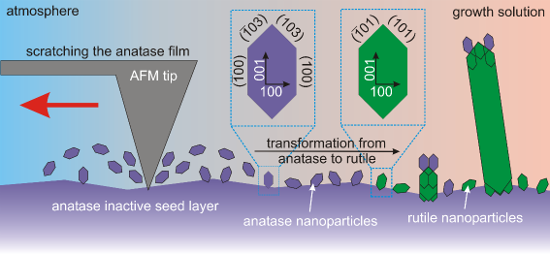
- and promote the growth of rutile TiO2 nanorods as described by Li et al. [37]. The SEM image displays the resulting row of nanorods obtained with the method presented in this report. SEM images with different magnifications after scratching (panel A1, using scanning probe lithography) and seed
- hydrothermal growth process. Inside the yellow rectangle, the substrate was scratched in an identical way, but the growth was suppressed by an intensive electron-beam exposure. Panel C displays the area shown in panel A after the hydrothermal growth process. The image is separated in different areas marked by


Geometrical optimisation of core–shell nanowire arrays for enhanced absorption in thin crystalline silicon heterojunction solar cells
Beilstein J. Nanotechnol. 2019, 10, 322–331, doi:10.3762/bjnano.10.31
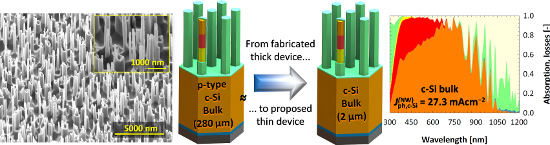
- propagates differently inside the absorber layer, in particular the absorption spectrum of the NW device displays more (resonance) peaks, as highlighted in Figure 4b for wavelengths between 800 and 1000 nm. In this spectrum range, follows the typical profile of a Fabry–Perót interference (F-P), due to the


Study of silica-based intrinsically emitting nanoparticles produced by an excimer laser
Beilstein J. Nanotechnol. 2019, 10, 211–221, doi:10.3762/bjnano.10.19
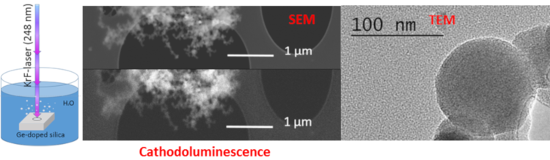
- displays the central part, evidencing the different shapes of the obtained particles and their states of aggregation/agglomeration. Another group of particles (Figure 3c) illustrates the variety of observed sizes and shapes. In this image, we can distinguish some spherical nanoparticles among other



Nanoporous water oxidation electrodes with a low loading of laser-deposited Ru/C exhibit enhanced corrosion stability
Beilstein J. Nanotechnol. 2019, 10, 157–167, doi:10.3762/bjnano.10.15
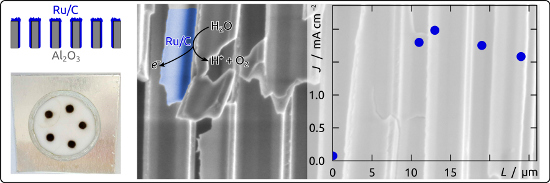
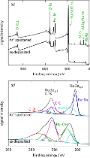
- region, displays the Ru 3d5/2 and Ru 3d3/2 peaks. The experimental data are provided as dashed lines, the fit as solid black lines, and the individual deconvoluted peaks are color-coded. Cyclic voltammograms of Ru/C electrodes recorded in a KH2PO4 electrolyte at pH 4 (scan rate: 50 mV s−1). The applied




Graphene–graphite hybrid epoxy composites with controllable workability for thermal management
Beilstein J. Nanotechnol. 2019, 10, 95–104, doi:10.3762/bjnano.10.9
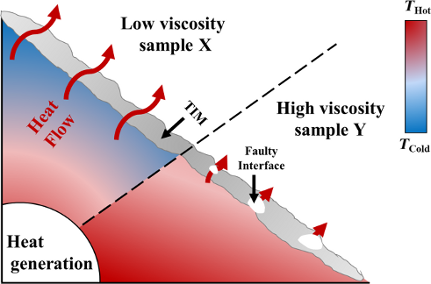
- ). Single-filler composites: (a) TC and (b) viscosity and relative viscosity as functions of filler type and volume fraction at constant shear rate (0.1 1/s) and temperature of 25 °C. Each graph displays the fitting parameters. The solid lines in (a) are fits to the ROM model (Equation 1), and those in (b



Threshold voltage decrease in a thermotropic nematic liquid crystal doped with graphene oxide flakes
Beilstein J. Nanotechnol. 2019, 10, 71–78, doi:10.3762/bjnano.10.7
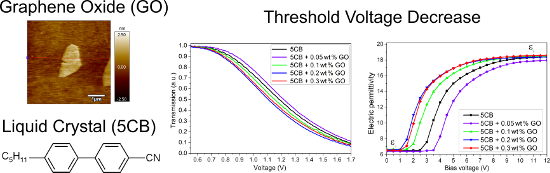
- dispersed graphene oxide flakes are interesting candidates for potential applications in liquid crystal modulators and filters, smart windows, and isotropic liquid crystal displays. (a) SEM image of graphene oxide flakes, (b) the equivalent diameter distribution of the GO flakes obtained by SEM. (a) AFM



Zn/F-doped tin oxide nanoparticles synthesized by laser pyrolysis: structural and optical properties
Beilstein J. Nanotechnol. 2019, 10, 9–21, doi:10.3762/bjnano.10.2
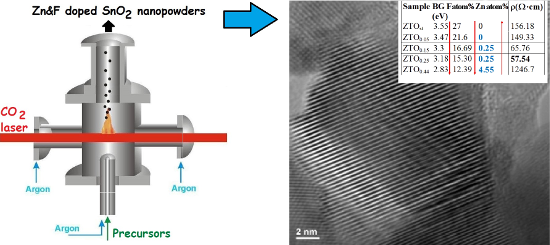
- commercial applications that require both transparency and electrical conductivity (employed in liquid crystal displays, organic light emitting diodes (OLEDs), touchscreens or in solar panels) is indium tin oxide (ITO), which unfortunately suffers from high cost and a limited supply of indium [5]. One



A novel polyhedral oligomeric silsesquioxane-modified layered double hydroxide: preparation, characterization and properties
Beilstein J. Nanotechnol. 2018, 9, 3053–3068, doi:10.3762/bjnano.9.284
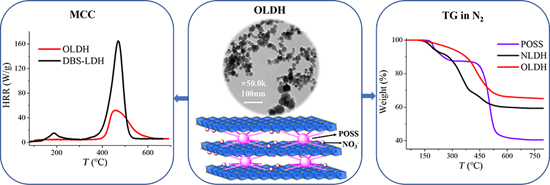
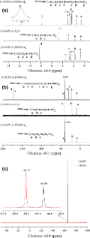
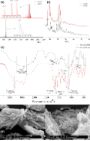
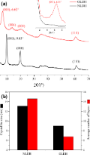
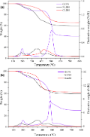
- water or centrifugation during LDH preparation [21]. In contrast, the HRR curve of OLDH displays a single peak around 458 °C, corresponding to the thermal decomposition of OCPS anions in LDH interlayers. The absence of a peak at lower temperatures suggests the purity of OLDH, which was consistent with







Femtosecond laser-assisted fabrication of chalcopyrite micro-concentrator photovoltaics
Beilstein J. Nanotechnol. 2018, 9, 3025–3038, doi:10.3762/bjnano.9.281
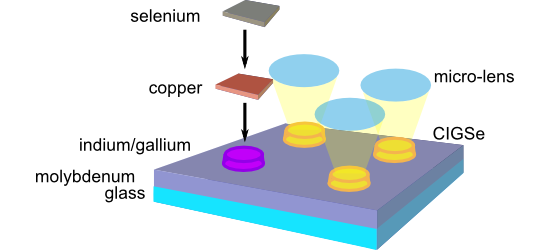
- of the islands. By optimizing the growth conditions, it was possible to determine parameters (ca. 500 °C substrate temperature and 0.3 Å/s deposition rate) at which suitable indium island (precursor) dimensions were achieved [17]. Figure 7 displays the result of the optimization process for an array
- laser fluence of F = 7.8 J/cm2, the lower image displays the spray-like deposit on the acceptor side. Figure 9 provides the result of a LIFT process of a combined copper–indium donor layer consisting of a 20 nm thick copper layer and a 200 nm thick indium layer. In contrast to pure copper or indium


Electrostatic force microscopy for the accurate characterization of interphases in nanocomposites
Beilstein J. Nanotechnol. 2018, 9, 2999–3012, doi:10.3762/bjnano.9.279
- filler. For instance, although the inorganic filler usually displays higher permittivity values than the polymer, the resulting nanofiller mixture in the matrix presents, at low nanofiller concentrations, a surprisingly lower dielectric constant than that of the two mixture components [10][11][12][13
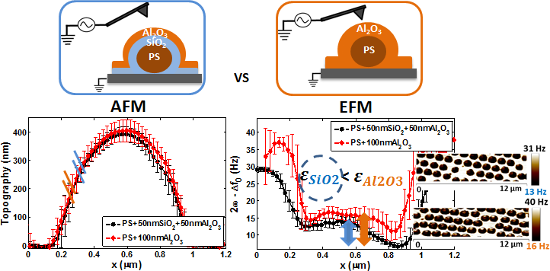
- dielectric permittivity value of 9.8 (error = 5%) for a calibrated SiO2 upper layer with an apparent permittivity value of 17 (step A). Experimental data and simulations for PS + 50 nm SiO2 + 50 nm Al2O3 and PS + 100 nm Al2O3 samples. The subsurface SiO2 layer displays a dielectric permittivity value of 3.9




Co-intercalated layered double hydroxides as thermal and photo-oxidation stabilizers for polypropylene
Beilstein J. Nanotechnol. 2018, 9, 2980–2988, doi:10.3762/bjnano.9.277
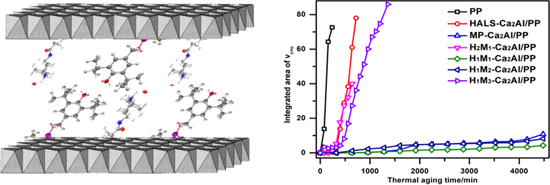
- molar ratio between HALS and MP in the interlayer regions. Results and Discussion Analysis of HnMn′-Ca2Al-LDHs Figure 2 displays powder XRD patterns of HnMn′-Ca2Al-LDHs with sharp (002), (004) and (006) reflection peaks at low angles and the weaker (110) peak at a higher angle, corresponding to the
- visible-light transmission. Figure 7c,d displays the surface morphology and element distribution of H1M1-Ca2Al/PP composites from SEM and element mapping. Consistent with PP free of filler, a spherical structure is observed for Ca2Al/PP composites and Al (left) and Ca (right) elements are homogenously
- be used to slightly tune the thermal properties of the LDH/PP composites. Figure 8d displays the photo-oxidation degradation of HnMn′-Ca2Al/PP composite films under UV irradiation. The integrated area in the range of 1810–1660 cm−1 for all samples becomes larger with increasing UV exposure time. In


Nanostructure-induced performance degradation of WO3·nH2O for energy conversion and storage devices
Beilstein J. Nanotechnol. 2018, 9, 2845–2854, doi:10.3762/bjnano.9.265
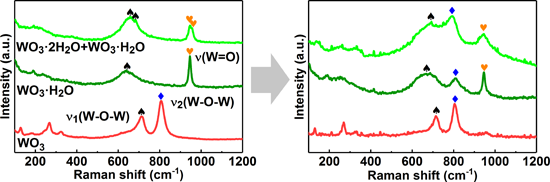
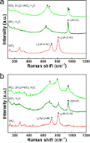
- supports the dehydration tendency of WO3·H2O. When the samples were grown at 180 °C, only monoclinic WO3 (JCPDS no. 43-1035) with its dominant (002) facet existed in the sample. The crystal structure of monoclinic WO3 presented in Figure 1d displays 3D covalent bonding structures compared to the stacked 2D
- with grouped flower-like balls is highlighted in Figure 2g,h. The images show that the flower-like balls have a diameter of ca. 2.5 μm and are composed of self-assembled square nanosheets with similar sizes as the nanosheets in the layer grown beneath. The magnified image in Figure 2i displays
- ca. 2.8 μm and a thickness of ca. 0.4 μm grew crossed with each other at all angles, forming a network structure (Figure 4c,d). Figure 4e clearly displays the crossed square nanosheets in the network structure. The individual square sheets were measured to be ca. 3.5 μm long and ca. 0.7 μm thick


Controlling surface morphology and sensitivity of granular and porous silver films for surface-enhanced Raman scattering, SERS
Beilstein J. Nanotechnol. 2018, 9, 2813–2831, doi:10.3762/bjnano.9.263
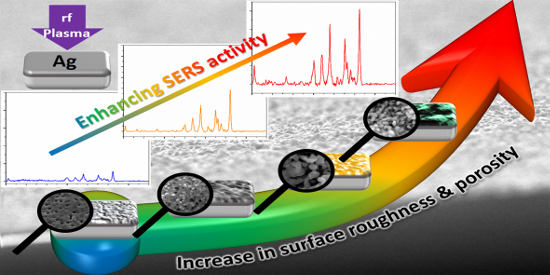
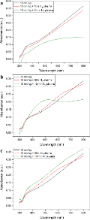
- wavelength of 632.8 nm is given in Figure 15a,b and Table S3 (Supporting Information File 1). As expected the commercial SERS substrate displays a higher SERS activity than the as-sputtered 200 nm silver film. However, the SERS enhancement of the as-sputtered 200 nm silver film can be greatly enhanced by an





Magnetic and luminescent coordination networks based on imidazolium salts and lanthanides for sensitive ratiometric thermometry
Beilstein J. Nanotechnol. 2018, 9, 2775–2787, doi:10.3762/bjnano.9.259
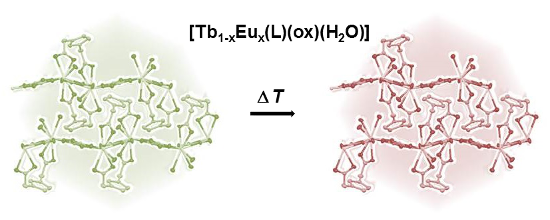
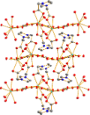
- , the excited states of the ligands also contribute to the entire excitation spectra of Tb3+, as shown below. The emission spectra of [Gd(L)(ox)(H2O)], [Eu(L)(ox)(H2O)] and [Tb(L)(ox)(H2O)] recorded at 297 K and 12 K are given in Figure 5. [Gd(L)(ox)(H2O)] displays two broad bands from 390 to ca. 650 nm



Low cost tips for tip-enhanced Raman spectroscopy fabricated by two-step electrochemical etching of 125 µm diameter gold wires
Beilstein J. Nanotechnol. 2018, 9, 2718–2729, doi:10.3762/bjnano.9.254
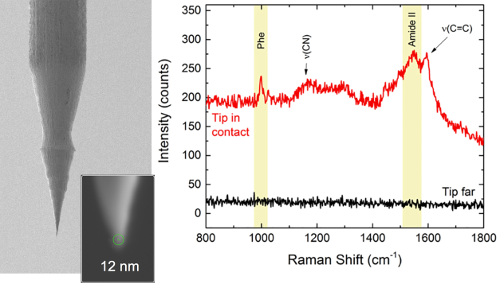
- step size of 10 nm. It displays adjacent gold terraces separated by trenches. The top diagonal trench has a depth of ≈10 nm and width of ≈50 nm at its largest point (line profile in Figure 9b). The bottom trench is approximately two times deeper. The TERS map in Figure 9c displays a strongly enhanced


Nanostructured liquid crystal systems and applications
Beilstein J. Nanotechnol. 2018, 9, 2644–2645, doi:10.3762/bjnano.9.245
- Alexei R. Khokhlov Alexander V. Emelyanenko Lomonosov Moscow State University, Faculty of Physics, Leninskie Gory, Moscow 119991, Russia 10.3762/bjnano.9.245 Keywords: artificial muscles; displays; energy saving; liquid crystals; photoinduction; sensors; Liquid crystals are smart materials
- having numerous applications in liquid crystal displays, modulators, sensors, solar cells, etc. Liquid crystals are used in both large and small devices. They surround us everywhere: in our house, on the street, and at our job. Liquid crystals are applied in biology and medicine, and for oil recovery as
- indicates that investigations of liquid crystals on the nanoscale are essential for the survival and development of civilization. Most everyone today in the modern world uses multiple display devices (e.g., TV, computer monitors, smartphones, projectors). Most of such displays are based on nematic liquid
Characterization of the microscopic tribological properties of sandfish (Scincus scincus) scales by atomic force microscopy
Beilstein J. Nanotechnol. 2018, 9, 2618–2627, doi:10.3762/bjnano.9.243
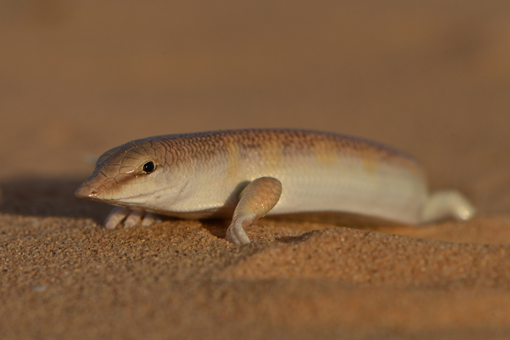
- . Figure 6a displays the friction-vs-load curves of the investigated samples comprising Teflon, PMMA, silicon, sandfish, S. diadema and HOPG. All of these measurements were conducted with the same sharp silicon tip. For each sample, we measured a friction loop [17] for each load value and calculated the


Enhanced antineoplastic/therapeutic efficacy using 5-fluorouracil-loaded calcium phosphate nanoparticles
Beilstein J. Nanotechnol. 2018, 9, 2499–2515, doi:10.3762/bjnano.9.233
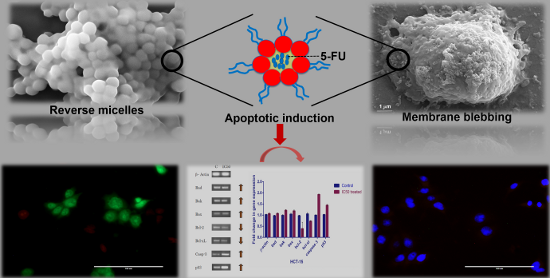
- introduced in 1958, displays higher therapeutic efficacy in solid tumours like colon, rectum and breast cancers. 5-FU exhibits increased bioavailability and a versatile generation of antineoplastic properties and is a commonly administered chemotherapeutic drug. Due to its nucleotide analogue chemical





