Search results
Search for "environment" in Full Text gives 1023 result(s) in Beilstein Journal of Nanotechnology. Showing first 200.
Controllable physicochemical properties of WOx thin films grown under glancing angle
Beilstein J. Nanotechnol. 2024, 15, 350–359, doi:10.3762/bjnano.15.31
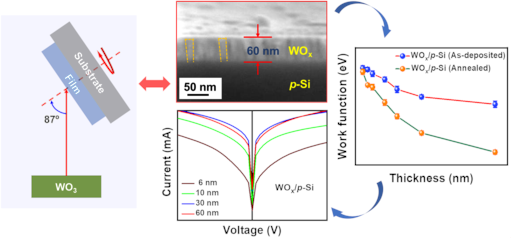
- duration of 1200 s to achieve stability in depositions and contamination-free films. A constant substrate rotation (10 rpm) was maintained to achieve uniform WOx films. Post-growth annealing of all WOx films (grown under the same conditions) was performed at 673 K for 60 min in a vacuum environment (3 × 10
- uniformity. WSxM software was used to carry out AFM image analysis. Kelvin probe force microscopy (KPFM) was used to study the local work function of the WOx films. WOx samples were removed from the high-vacuum environment right before the KPFM measurements to avoid any contamination in air. For KPFM


Exploring the relationships between physiochemical properties of nanoparticles and cell damage to combat cancer growth using simple periodic table-based descriptors
Beilstein J. Nanotechnol. 2024, 15, 297–309, doi:10.3762/bjnano.15.27
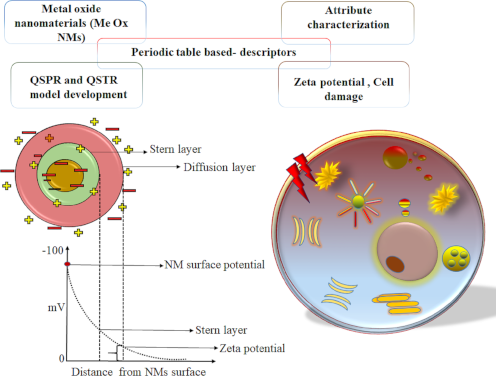
- them effectively for regulated use. Although NMs are utilized in therapeutics, their cytotoxicity has attracted great attention. Nanoscale quantitative structure–property relationship (nano-QSPR) models can help in understanding the relationship between NMs and the biological environment and provide
- studies have demonstrated that metal oxide nanoparticles (MeOx NPs) are toxic and tend to have adverse effects on living organisms and the environment [2][3][4][5][6]. The toxicity of NPs depends on various structural (intrinsic) [7] and extrinsic properties. Depending on the dispersing environment
- solution. It is closely related to suspension stability and morphology. In metals, the zeta potential can be altered by altering pH, concentration, and conductivity of the components of NPs [10]. Zeta potential can provide information regarding the fate, behavior, and toxicity of NPs in the environment as


Determining by Raman spectroscopy the average thickness and N-layer-specific surface coverages of MoS2 thin films with domains much smaller than the laser spot size
Beilstein J. Nanotechnol. 2024, 15, 279–296, doi:10.3762/bjnano.15.26
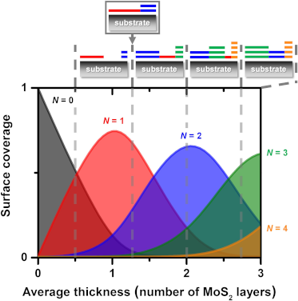
- MoS2 flakes prepared in different ways. In other words, one cannot define a single master curve, ΔωA−E vs N, which would be valid for all the MoS2 flakes independently of their preparation method or environment. The dependencies on N of the normalized integrated intensities of A1g and E12g modes and


Vinorelbine-loaded multifunctional magnetic nanoparticles as anticancer drug delivery systems: synthesis, characterization, and in vitro release study
Beilstein J. Nanotechnol. 2024, 15, 256–269, doi:10.3762/bjnano.15.24
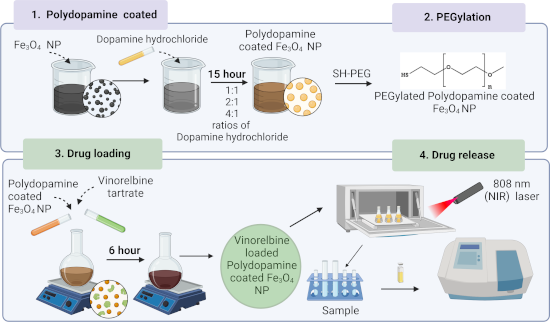
- ]. During this process in an alkaline environment, PDA polymerizes into its oxide form. As a result, the nanostructure undergoes coating with PDA [47]. The average distribution of PDA coating sizes and thicknesses was determined using FE-SEM size analysis. In Figure 1c, the average size of bare Fe3O4 NPs
- modulate the chemical environment in which the polymerization occurs [57]. Consequently, pH alterations may induce changes in the surface charge of the nanoparticles. This could profoundly affect the drug binding capacity of the nanoparticles and implies that the nanoparticles may exhibit varying


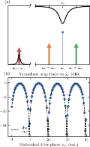
Design, fabrication, and characterization of kinetic-inductive force sensors for scanning probe applications
Beilstein J. Nanotechnol. 2024, 15, 242–255, doi:10.3762/bjnano.15.23
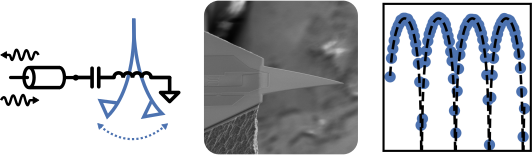
- interferometric and beam-deflection detectors of motion are sufficient to resolve the thermal noise force determined by the damping of the cantilever eigenmode in thermal equilibrium with its environment. Operation in high vacuum and at cryogenic temperatures reduces this force noise, improving sensitivity to the
- was verified both at room temperature and in a cryogenic environment. Thus, the deposited material is suitably conductive for STM and various electrostatic AFM techniques that require applying a low-frequency voltage to the tip. Mechanical mode Our chips were the same size as an AFM cantilever chip



Multiscale modelling of biomolecular corona formation on metallic surfaces
Beilstein J. Nanotechnol. 2024, 15, 215–229, doi:10.3762/bjnano.15.21
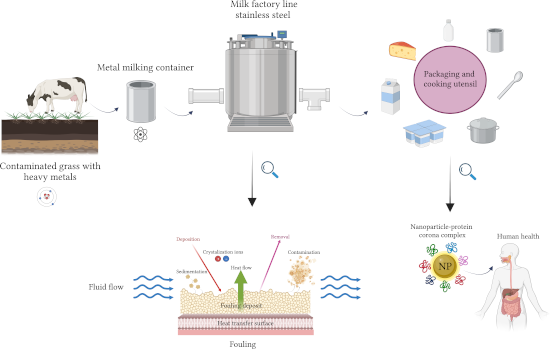
- of the NP, which is influenced by its physicochemical composition, (ii) the interface between the solid NP and the surrounding liquid environment, where notable changes occur upon interaction, and (iii) the contact zone between the solid–liquid interface and biological substrates (Figure 2) [22]. In
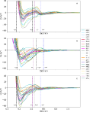
- analogues (SCA) within the system [33][34]. The AMBER force field is a widely recognized and extensively validated force field that provides accurate descriptions of molecular systems [35]. We evaluated the short-range PMFs between 22 SCAs and an Al slab in a solvent environment comprising water and salt





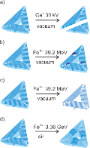
Ion beam processing of DNA origami nanostructures
Beilstein J. Nanotechnol. 2024, 15, 207–214, doi:10.3762/bjnano.15.20
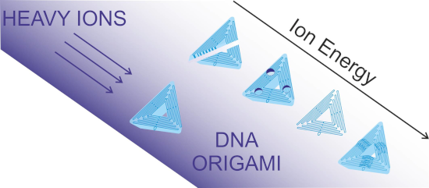
- install in large infrastructures. Nonetheless, it is possible that the most probable mechanism of the height variation could be the radical attack from the environment when the irradiation is done in air. A similar behavior was observed also upon chemical modification of the nanostructures [38]. DNA


Graphene removal by water-assisted focused electron-beam-induced etching – unveiling the dose and dwell time impact on the etch profile and topographical changes in SiO2 substrates
Beilstein J. Nanotechnol. 2024, 15, 190–198, doi:10.3762/bjnano.15.18
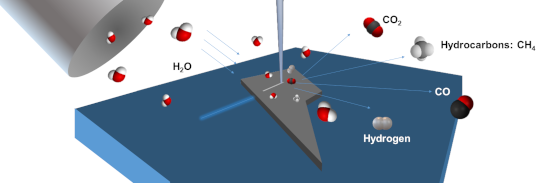
- analysis. Thus, the graphene could be modified and immediately measured by AFM without changing the environment. The analysis was performed by using the tapping mode and the Akiyama probe (Nanosensors). Data shown in Figure 4 were measured with the following parameters: scan speed of 20 µm/m, scan range of


Assessing phytotoxicity and tolerance levels of ZnO nanoparticles on Raphanus sativus: implications for widespread adoptions
Beilstein J. Nanotechnol. 2024, 15, 115–125, doi:10.3762/bjnano.15.11
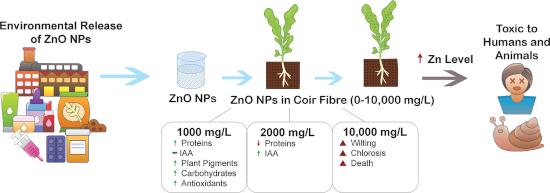
- Lanka 10.3762/bjnano.15.11 Abstract The escalating release of zinc oxide nanoparticles (ZnO NPs) into the environment poses a substantial threat, potentially leading to increased concentrations of zinc (Zn) in the soil and subsequent phytotoxic effects. This study aimed to assess the effects of ZnO NPs
- toxicity of nanoscale agrochemicals and the unknown risks to the environment and humans have been gaining greater attention [9]. The application of ZnO NPs to the soil as fertilizers and pesticides has given rise to increasing usage of ZnO NPs in consumer products and agriculture [15]. The global yearly
- output of ZnO NPs is estimated to be between 550–35,000 tons [16]. From this, a significant percentage of approx. 8–28 tons is being released directly or indirectly into the soil environment, where plants are exposed to the direct influence of ZnO NPs [16]. Thus, plants become a prospective conduit for


Development and characterization of potential larvicidal nanoemulsions against Aedes aegypti
Beilstein J. Nanotechnol. 2024, 15, 104–114, doi:10.3762/bjnano.15.10
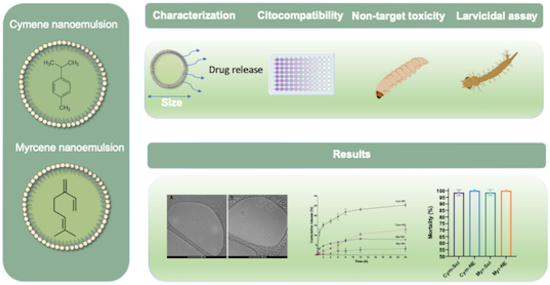
- ), Laboratório de Fisiologia e Controle de Artrópodes Vetores (Laficave). Avenida Brasil, 4365 Manguinhos, Rio de Janeiro – RJ, CEP: 21040-360, Brazil 10.3762/bjnano.15.10 Abstract Plant-based insecticides offer advantages such as negligible residual effects, reduced risks to both humans and the environment
- mosquitoes [4][5]. Therefore, it becomes urgent to search for safer and more effective vector control agents to prevent vector-borne diseases [6]. Bioinsecticides from plant derivatives, which degrade rapidly in the environment and have less toxicity in non-target organisms, are a promising option for vector
- had equal or greater insecticidal properties than free terpenes and they might facilitate their dispersion in an aqueous environment. The larvicidal effect of the nanoemulsions, together with their safety and sustained release attributes, holds significant promise for environmentally friendly and


Study of the reusability and stability of nylon nanofibres as an antibody immobilisation surface
Beilstein J. Nanotechnol. 2024, 15, 83–94, doi:10.3762/bjnano.15.8
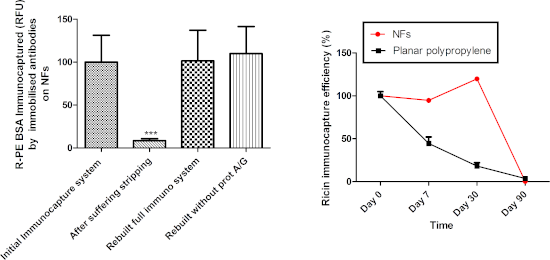
- has to be taken into account, but also ease of handling, on-site use, and low production cost. Thus, several authors, such as Janik-Karpinska and colleagues in 2022 [3], have pointed out that rapid detection of pathogens and toxins in food, water, and the environment is a paramount health and safety
- an environment of high ion concentration capable of interacting with any charge density group, disrupting the hydrophobic bonds between protein A/G and antibody and the hydrogen bonds between protein A/G and nylon, as well as the bare nylon nanofibres. Results of stability study As this system is


Berberine-loaded polylactic acid nanofiber scaffold as a drug delivery system: The relationship between chemical characteristics, drug-release behavior, and antibacterial efficiency
Beilstein J. Nanotechnol. 2024, 15, 71–82, doi:10.3762/bjnano.15.7
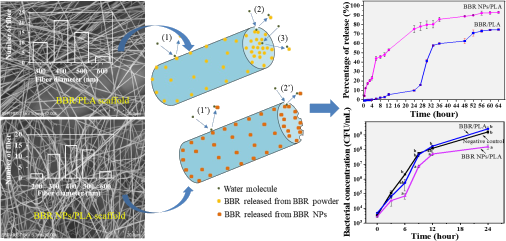
- 21 days and inhibited the growth of Staphylococcus aureus and Escherichia coli bacteria. Human bone marrow mesenchymal stem cells were well attached and proliferated on the surface of the LAP/AMX functionalized PLA scaffolds, which provided a bacteria-free environment for bone differentiation in the


Influence of conductive carbon and MnCo2O4 on morphological and electrical properties of hydrogels for electrochemical energy conversion
Beilstein J. Nanotechnol. 2024, 15, 57–70, doi:10.3762/bjnano.15.6
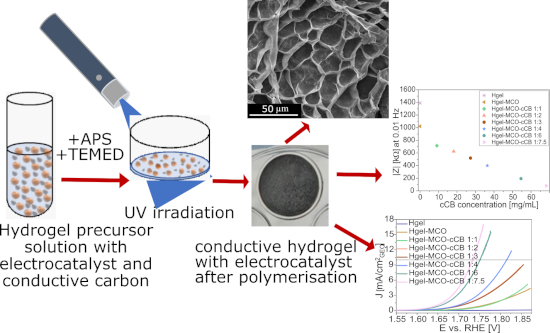
- of the polymer hydrogel in an aqueous environment makes this unlikely choice of material very important, and the optimal combination of polymer and catalyst can provide a robust and efficient electrode system in which the aqueous electrolyte is absorbed in the polymer matrix. This structure is


Nanotechnological approaches in the treatment of schistosomiasis: an overview
Beilstein J. Nanotechnol. 2024, 15, 13–25, doi:10.3762/bjnano.15.2

- advantages of using this type of nanoparticles as nanocarriers are their potential use for drug controlled release, the ability to protect drugs and other molecules with biological activity against the environment, improvement of their bioavailability and therapeutic index [17]. These nanocarriers are
- , and topical routes, and they are biodegradable, biocompatible, and non-immunogenic [45]. Moreover, they improve the therapeutic performance of the drug by protecting it from the biological environment and restricting effects to target cells, thereby reducing the clearance of the drug [45]. Drugs for


TEM sample preparation of lithographically patterned permalloy nanostructures on silicon nitride membranes
Beilstein J. Nanotechnol. 2024, 15, 1–12, doi:10.3762/bjnano.15.1
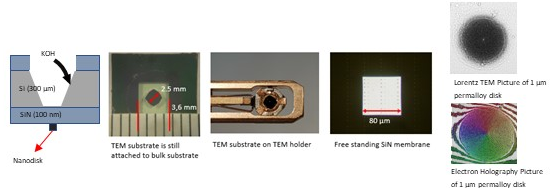
- magnetron sputtering through the resist aperture. We used DC magnetron sputtering in a pure Ar environment at a pressure of 1 Pa to deposit Py at room temperature. The effective permalloy target had a diameter of 8 mm. The sputtered material almost forms a parallel beam when it approaches the substrate at a


unDrift: A versatile software for fast offline SPM image drift correction
Beilstein J. Nanotechnol. 2023, 14, 1225–1237, doi:10.3762/bjnano.14.101
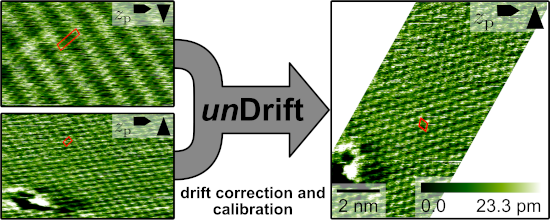
- ]. Hence, many processes relevant at room temperature or elevated temperatures are impossible to study in a cryogenic environment. The same applies to SPM studies at the solid–liquid interface. For these measurements, the effect of thermal drift needs to be compensated. A variety of different strategies


Fluorescent bioinspired albumin/polydopamine nanoparticles and their interactions with Escherichia coli cells
Beilstein J. Nanotechnol. 2023, 14, 1208–1224, doi:10.3762/bjnano.14.100
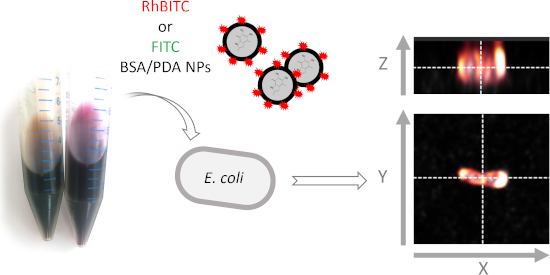
- ). This probably results from a change in polarity in the close environment of the bound fluorophore. In addition, the absorption intensity of FITC-BSA/PDA and RhBITC-BSA/PDA NPs above 600 nm is a typical feature of melanin materials. The high background (decreasing from 400 to 800 nm and similar to the



A combined gas-phase dissociative ionization, dissociative electron attachment and deposition study on the potential FEBID precursor [Au(CH3)2Cl]2
Beilstein J. Nanotechnol. 2023, 14, 1178–1199, doi:10.3762/bjnano.14.98
- electron beam energy and current, the substrate material, the environment inside the deposition chamber, and the composition of the precursor [14][15][16][17]. Heretofore, various chemical vapor deposition (CVD) precursors have been applied for FEBID depositions. For gold nanostructures, these include, for



Hierarchically patterned polyurethane microgrooves featuring nanopillars or nanoholes for neurite elongation and alignment
Beilstein J. Nanotechnol. 2023, 14, 1157–1168, doi:10.3762/bjnano.14.96
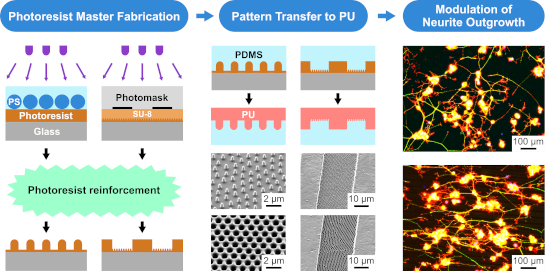
- tips (presumably growth cones; insets) laid on the flat base area between the pillars and most likely anchored on most of the nanopillar sidewalls, resulting in a more complex, meta-2D or “2.5D” growth environment [25]. (Note that the SEM shows collapsed nanopillars due to the drying process.) Growth


A multi-resistance wide-range calibration sample for conductive probe atomic force microscopy measurements
Beilstein J. Nanotechnol. 2023, 14, 1141–1148, doi:10.3762/bjnano.14.94
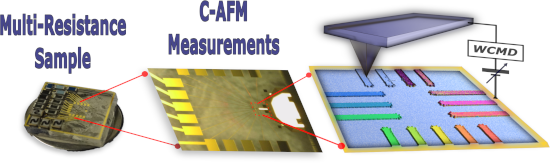
- MPS150) coupled to a programmable voltage source (Marconi 104A) and a high-precision ammeter to measure the resistance values of the SMD devices in an electromagnetically shielded environment under stabilized air temperature (22.9 ± 0.1) °C and relative humidity (40.7 ± 0.3)%. Two different calibrated


A bifunctional superconducting cell as flux qubit and neuron
Beilstein J. Nanotechnol. 2023, 14, 1116–1126, doi:10.3762/bjnano.14.92
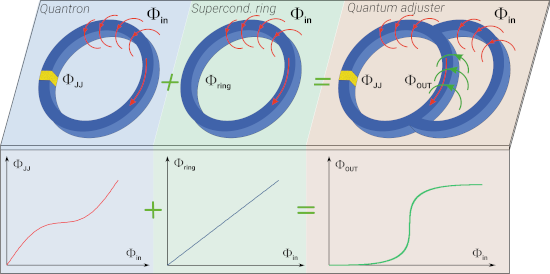
- multilevel structure of these artificial atoms [39][40][41][42]. It is also used to obtain information about the connection of the qubits with a noisy environment and to form dissipative stable entanglements in quantum tomography protocols [43][44][45]. Let us further consider the limitations that such non
- characteristic obtained is very useful for using the adiabatic cell in question as an auxiliary qubit. This feature of the system’s behaviour, together with the possibility of tuning the energy spectrum, makes it possible to minimise its parasitic “magnetic” influence on the environment. Figure 4b presents the



Prediction of cytotoxicity of heavy metals adsorbed on nano-TiO2 with periodic table descriptors using machine learning approaches
Beilstein J. Nanotechnol. 2023, 14, 939–950, doi:10.3762/bjnano.14.77
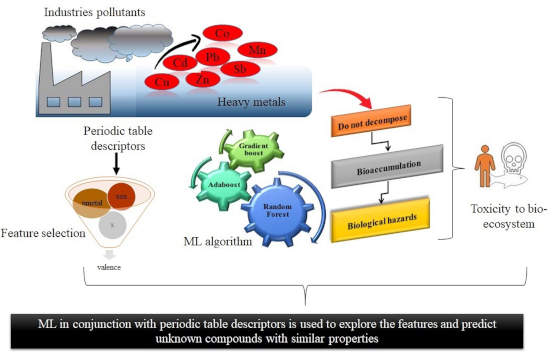
- cause co-exposure effects on living organisms. The extensive use of heavy metals in areas such as medicine and agriculture increased the negative impact of heavy metals on environment and living organisms, raising the need for risk assessment. Unlike other pollutants, heavy metals do not decompose


Antibody-conjugated nanoparticles for target-specific drug delivery of chemotherapeutics
Beilstein J. Nanotechnol. 2023, 14, 912–926, doi:10.3762/bjnano.14.75
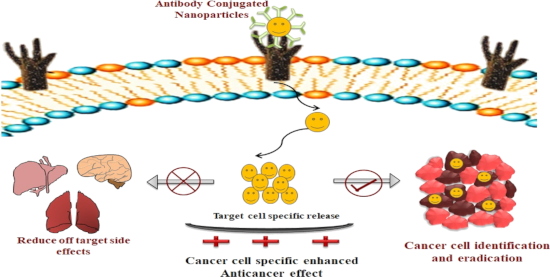
- ), which eventually decrease the number of NPs at the target site [14]. In blood stream, proteins get adsorbed onto the NPs and form a protein corona. The proteins from the biological environment produce a screening effect, which affects the targeting ability of the NPs [15][16]. Protein corona formation



Green SPIONs as a novel highly selective treatment for leishmaniasis: an in vitro study against Leishmania amazonensis intracellular amastigotes
Beilstein J. Nanotechnol. 2023, 14, 893–903, doi:10.3762/bjnano.14.73
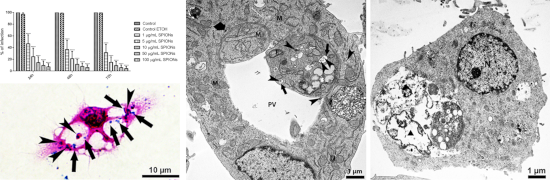
- , scanning electron microscopy and chemical element mapping analysis were carried out to confirm the uptake of the SPIONs by L. amazonensis intracellular amastigotes after removing the plasma membrane to expose the cytoplasmic environment (Figure 2). Secondary electron imaging revealed intracellular
- and toxic to humans and the environment [6]. In this scenario, our group demonstrated the therapeutic potential of low-cost biocompatible SPIONs produced by green synthesis [9]. The present study aimed to evaluate in vitro the therapeutic potential of SPIONs produced with coconut water to treat


Two-dimensional molecular networks at the solid/liquid interface and the role of alkyl chains in their building blocks
Beilstein J. Nanotechnol. 2023, 14, 872–892, doi:10.3762/bjnano.14.72
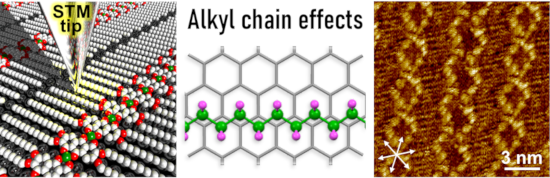
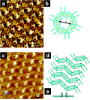
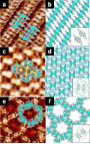
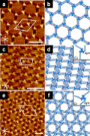
- related to energy and environment, among others. However, the fabrication of ordered nanoarchitectures remains a challenge, even in two dimensions. Therefore, a deeper understanding of the self-assembly processes and substantial factors for building ordered structures is critical for tailoring flexible