


Search results
Search for "field emission" in Full Text gives 303 result(s) in Beilstein Journal of Nanotechnology. Showing first 200.
The rational design of a Au(I) precursor for focused electron beam induced deposition
Beilstein J. Nanotechnol. 2017, 8, 2753–2765, doi:10.3762/bjnano.8.274
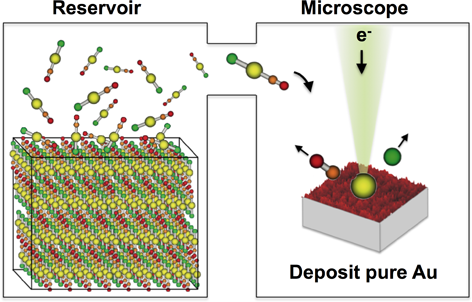
- reservoir or the Al crucible of an FEI gas injection system (GIS) in Ar or N2 atmosphere. Electron microscopy Crystals of ClAuCO, ClAuPMe3, ClAuPEt3 and MeAuPMe3 were inserted in the sample chamber of a Philips XL30 environmental scanning electron microscope (SEM), equipped with a field-emission gun and an


Patterning of supported gold monolayers via chemical lift-off lithography
Beilstein J. Nanotechnol. 2017, 8, 2648–2661, doi:10.3762/bjnano.8.265
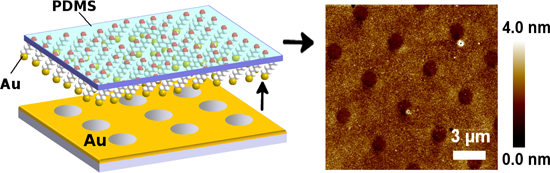
- microscopy was performed using a JEOL JSM-6700F scanning electron microscope (JEOL, Inc., Tokyo, Japan) with a 750 V DC detector bias and 5 kV accelerating voltage. Field-emission gun variable pressure electron microscopy of Au on PDMS The scanning electron micrographs of Au–alkanethiolate monolayers on flat


Enhanced photoelectrochemical water splitting performance using morphology-controlled BiVO4 with W doping
Beilstein J. Nanotechnol. 2017, 8, 2640–2647, doi:10.3762/bjnano.8.264
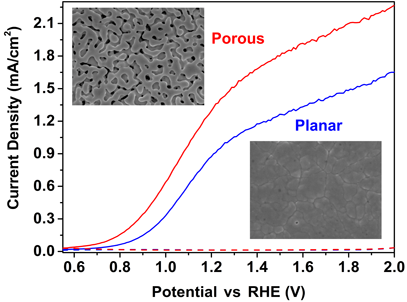
- : The morphologies were observed using a field-emission scanning electron microscope (FESEM, JEOL JSM-7600F). Crystallinity was identified by X-ray diffraction (XRD) patterns (Shimadzu 6000 X-ray diffractometer) with Cu Kα radiation (λ = 0.154 nm), using a 2θ scan mode with a fixed incidence angle at 5
- °. Elemental analysis was conducted by energy-dispersive X-ray spectroscopy (EDX) equipped on a field-emission scanning electron microscopy (FESEM, JEOL JSM-7600F). Light absorption was measured using a UV–visible spectrophotometer by measuring the reflectance and transmittance with an integrating sphere


Localized growth of carbon nanotubes via lithographic fabrication of metallic deposits
Beilstein J. Nanotechnol. 2017, 8, 2592–2605, doi:10.3762/bjnano.8.260
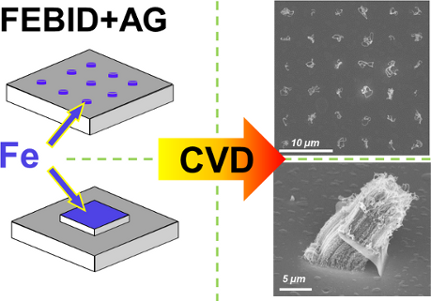
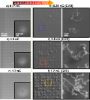
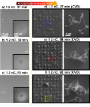
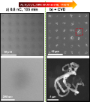
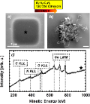
- S-4700 Type II cold field emission SEM instrument operated at 10–15 kV accelerating voltage with an integrated Röntec QX2 EDX detector. (a) Scheme of the electron beam induced deposition (EBID) process with Fe(CO)5 as precursor molecule, producing a point matrix of Fe deposits. (b) SEM micrograph of




Direct writing of gold nanostructures with an electron beam: On the way to pure nanostructures by combining optimized deposition with oxygen-plasma treatment
Beilstein J. Nanotechnol. 2017, 8, 2530–2543, doi:10.3762/bjnano.8.253
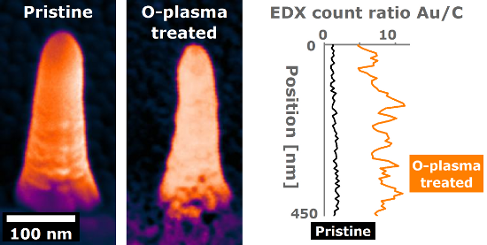
- well as in nanomedicine [30]. Many applications require precise positioning of Au structures on the nanoscale, e.g., for fabrication of interconnects [31][32] and field emission tips [33] or in direct writing of plasmonic and photonic nanostructures and devices [4][34][35][36][37][38][39][40]. We

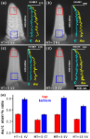
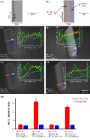
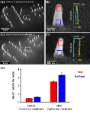
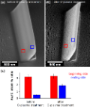
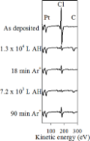
Comparing postdeposition reactions of electrons and radicals with Pt nanostructures created by focused electron beam induced deposition
Beilstein J. Nanotechnol. 2017, 8, 2410–2424, doi:10.3762/bjnano.8.240
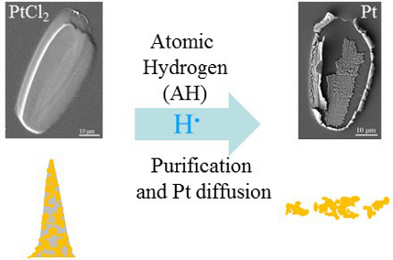
- identified and imaged by SEM. All of the effects of electrons and atomic hydrogen reported in this study were independent of the substrate on which the deposits were created. Deposits generated in the Auger system were imaged and analyzed ex situ using a cold-cathode field-emission SEM (JEOL 6700F, LEI




Surfactant-induced enhancement of droplet adhesion in superhydrophobic soybean (Glycine max L.) leaves
Beilstein J. Nanotechnol. 2017, 8, 2345–2356, doi:10.3762/bjnano.8.234
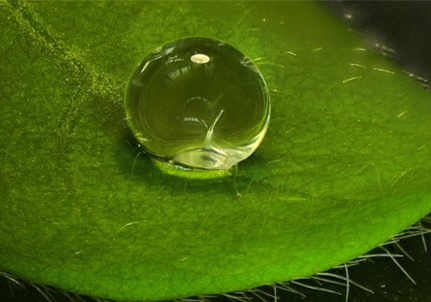
- Stereoscan 200 (Cambridge Instruments GmbH, Dortmund) instrument or with a high-resolution field emission scanning electron microscope (FE-SEM, Gemini Supra 40VP, Carl Zeiss GmbH, Oberkochen, Germany), equipped with a cryo-preparation unit (Emitech K1250X, Gabler Instrumente GmbH, Germany), consisting of a


Substrate and Mg doping effects in GaAs nanowires
Beilstein J. Nanotechnol. 2017, 8, 2126–2138, doi:10.3762/bjnano.8.212
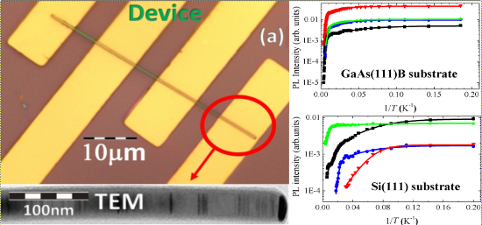
- performance Schottky field emission HR-FESEM Hitachi SU-70 microscope equipped with in-lens secondary-electron and backscattered-electron detectors. The crystalline structure of GaAs nanowires was investigated by grazing incidence X-ray diffraction (GID) carried out on a PANalytical X’Pert MRD diffractometer


In situ controlled rapid growth of novel high activity TiB2/(TiB2–TiN) hierarchical/heterostructured nanocomposites
Beilstein J. Nanotechnol. 2017, 8, 2116–2125, doi:10.3762/bjnano.8.211
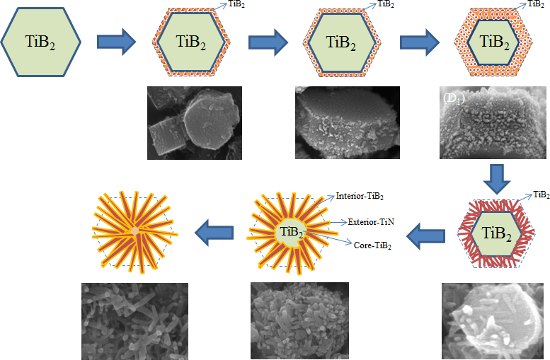
- characterized using powder X-ray diffraction (XRD) with Cu Kα radiation. The morphology and microstructure of the samples were investigated using a Hitachi S4800 field emission scanning electron microscope (FSEM), a Philips CM12 transmission electron microscope (TEM), a JEOL JEM-2100F high-resolution
- samples was measured with the help of the Netzsch STA 449F3 thermogravimetric and differential scanning calorimetry analyzer (TG-DSC) at a heating rate of 10 °C/min. Typical field emission scanning electron microscope (FSEM) images (a, b), EDX spectra (c) and XRD pattern (d) of the as-synthesized TiB2
- samples. Moreover, based on the obtained experimental results and previous work, the possible chemical reactions as well as the appropriate growth mechanism of the TiB2/(TiB2–TiN) hierarchical/heterostructured nanocomposites were also discussed. Results and Discussion Figure 1a,b gives the typical field


Magnetic properties of optimized cobalt nanospheres grown by focused electron beam induced deposition (FEBID) on cantilever tips
Beilstein J. Nanotechnol. 2017, 8, 2106–2115, doi:10.3762/bjnano.8.210
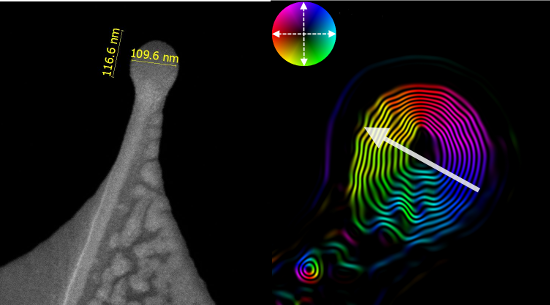
- a probe-corrected FEI Titan 60-300 equipped with a high brightness field emission gun (X-FEG), a CEOS corrector for the condenser system and a Gatan Tridiem 866 ERS image filter/spectrometer. The EELS acquisition was performed with a convergence angle of 25 mrad, a collection semi-angle of around 60
- further correction for thickness effects was applied. Off-axis electron holography has been carried out in an FEI Titan Cube 60-300 equipped with a Schottky field emission gun (S-FEG), a CEOS corrector for the objective lens and a motorized electrostatic biprism. The experiments have been performed in


A comparative study of the nanoscale and macroscale tribological attributes of alumina and stainless steel surfaces immersed in aqueous suspensions of positively or negatively charged nanodiamonds
Beilstein J. Nanotechnol. 2017, 8, 2045–2059, doi:10.3762/bjnano.8.205
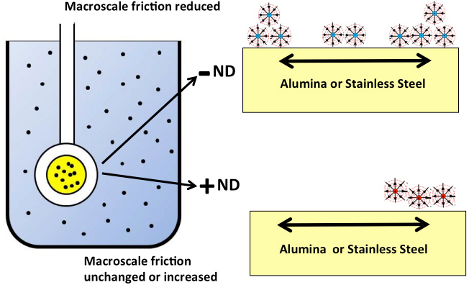
- method to several literature approaches yielded roughness parameters within experimental error of each other [33]). Scanning electron microscope imaging was performed using an FEI Verios 460L field-emission microscope. A high resolution through-the-lens detector was used in a beam-deceleration mode for


Systematic control of α-Fe2O3 crystal growth direction for improved electrochemical performance of lithium-ion battery anodes
Beilstein J. Nanotechnol. 2017, 8, 2032–2044, doi:10.3762/bjnano.8.204
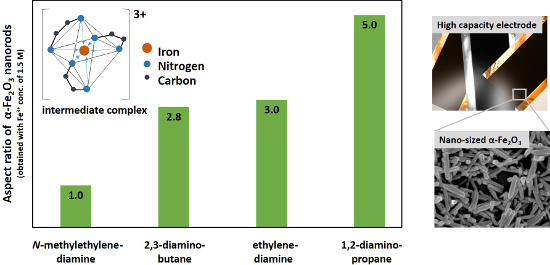
- samples was analyzed using a JEOL 6340F field emission scanning electron microscope (FESEM) in secondary electron imaging mode. The accelerating voltage was set to 5 kV. The electrodes were prepared by mixing 40% of as-synthesized active iron oxide powder with 40% of conductive additives (Super P Li


Fabrication of carbon nanospheres by the pyrolysis of polyacrylonitrile–poly(methyl methacrylate) core–shell composite nanoparticles
Beilstein J. Nanotechnol. 2017, 8, 1897–1908, doi:10.3762/bjnano.8.190

- element contents of various samples were determined using an Elementar Vario EL III element analysis system. The morphology of the various polymer nanoparticles and carbon nanospheres was observed by transmission electron microscopy (TEM) and field emission scanning electron microscopy (FESEM). The carbon
- observations were performed on a Hitachi S-4800 field emission scanning electron microscope. Powder X-ray diffraction (XRD) patterns were recorded using an X-ray diffractometer (Model D8 Advance, Bruker AXS) with Cu Kα radiation. Low-temperature nitrogen adsorption experiments were performed at the boiling



Self-assembly of chiral fluorescent nanoparticles based on water-soluble L-tryptophan derivatives of p-tert-butylthiacalix[4]arene
Beilstein J. Nanotechnol. 2017, 8, 1825–1835, doi:10.3762/bjnano.8.184
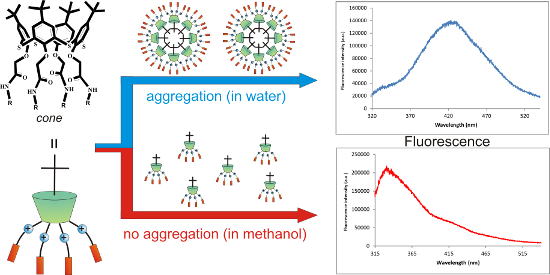
- in a transmission electron microscope. The analysis was performed at an accelerating voltage of 100 kV in TEM mode. Determination of particle diameter by SEM Additional measurements of the particle diameter were carried out by using a field-emission high-resolution scanning electron microscope (SEM



Synthesis and functionalization of NaGdF4:Yb,Er@NaGdF4 core–shell nanoparticles for possible application as multimodal contrast agents
Beilstein J. Nanotechnol. 2017, 8, 1815–1824, doi:10.3762/bjnano.8.183
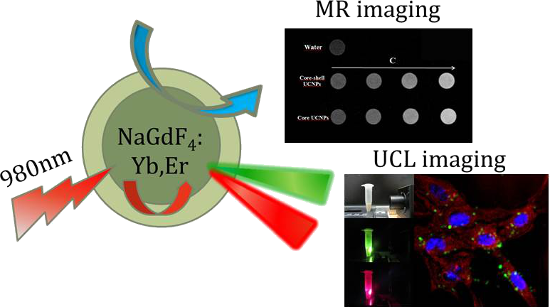
- particle morphology was characterized using a field emission scanning electron microscope (SU-70 Hitachi, FE-SEM) at an acceleration voltage of 10 kV. The UC luminescence spectra were recorded using an Edinburgh Instruments FLS980 spectrometer equipped with a double emission monochromator, a cooled (−20 °C


Fluorination of vertically aligned carbon nanotubes: from CF4 plasma chemistry to surface functionalization
Beilstein J. Nanotechnol. 2017, 8, 1723–1733, doi:10.3762/bjnano.8.173
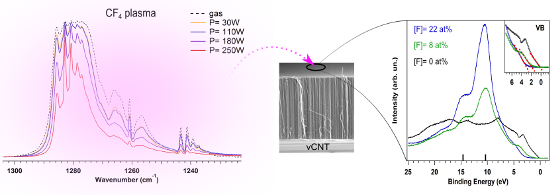
- ][24]. In single- and multiwalled nanotubes the tuning of surface properties via fluorine-based plasma has been investigated highlighting the modification of morphology, chemical composition and electronic properties, as well as focusing on the field emission performances and the thermal stability [25




Near-infrared-responsive, superparamagnetic Au@Co nanochains
Beilstein J. Nanotechnol. 2017, 8, 1680–1687, doi:10.3762/bjnano.8.168
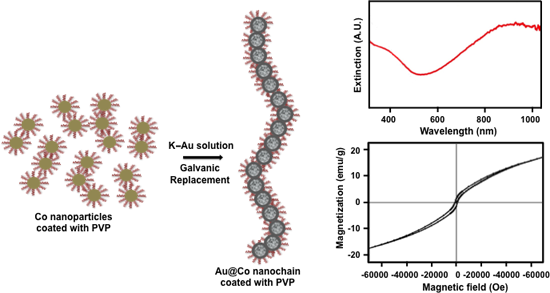
- collected by centrifugation at 3000 rpm for 30 min using an RC-3B refrigerated centrifuge (Sorvall Instruments) and redispersed in Milli-Q water prior to analysis. Characterization methods The size and morphology of the composite nanochains were characterized by field-emission scanning electron microscopy


Process-specific mechanisms of vertically oriented graphene growth in plasmas
Beilstein J. Nanotechnol. 2017, 8, 1658–1670, doi:10.3762/bjnano.8.166
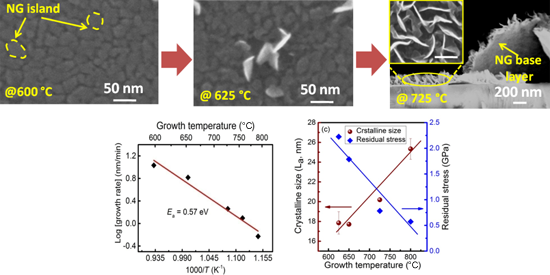
- same sp3 content in the film. The effects of the substrate temperature and the electric field in vertical alignment of the graphene sheets are reported. These findings help to develop and optimize the process conditions to produce VGNs tailored for applications including sensing, field emission
- , non-agglomerated structure, sharp edges, excellent thermal and electrical properties, thermal and electrochemical stability and ease in functionalization make VGNs promising candidates for a wide range of applications that include field emission, sensing, energy storage, metamaterials, biomedical and
- properties [2][8]. Moreover, electrical, structural and optical properties of VGNs can be tuned by controlling the vertical sheet density, structural imperfections and the chemical nature of edge states [9][10][11]. Shih et al. [12] have reported the importance of optimized growth for better field-emission


Fixation mechanisms of nanoparticles on substrates by electron beam irradiation
Beilstein J. Nanotechnol. 2017, 8, 1523–1529, doi:10.3762/bjnano.8.153
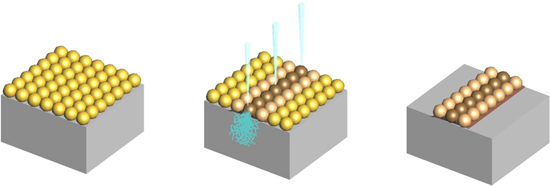
- nanoparticles using a field-emission scanning electron microscope (SEM, JEOL JSM7800-UHV), to immobilize particles on the substrate. The fixing mechanisms are described elsewhere [8]. The substrate was rinsed using ultra-sonication in an ethanol solution of dodecanethiol for 10 min to remove unfixed particles


Development of a nitrogen-doped 2D material for tribological applications in the boundary-lubrication regime
Beilstein J. Nanotechnol. 2017, 8, 1476–1483, doi:10.3762/bjnano.8.147
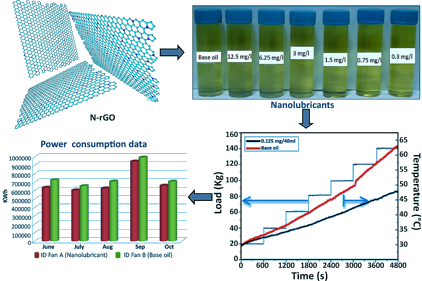
- the range of 2θ = 5° to 2θ = 90° using a Rigaku X-ray diffractometer. Raman scattering spectra of graphite, GO and N-rGO were collected by using a WITec Raman spectrometer equipped with Nd:YAG laser (λ = 532 nm). The surface morphology of the sample was analyzed by using field-emission scanning


Fabrication of hierarchically porous TiO2 nanofibers by microemulsion electrospinning and their application as anode material for lithium-ion batteries
Beilstein J. Nanotechnol. 2017, 8, 1297–1306, doi:10.3762/bjnano.8.131
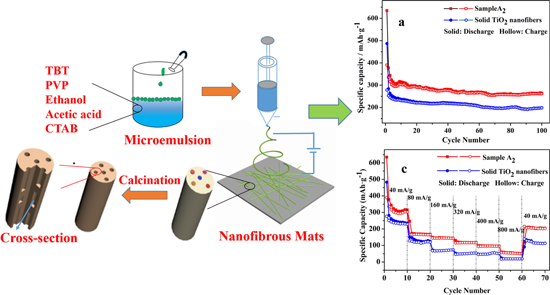
- porous TiO2 nanofibers were recorded on a Bruker D8 Advance X-ray diffractometer with Cu Kα radiation (wavelength λ = 1.54 Å) at a scanning speed of 4 °C/min. A Hitachi field emission scanning electron microscope (FE-SEM, SU4800) was employed to observe the surface morphology of porous TiO2 nanofibers




Charge transport in organic nanocrystal diodes based on rolled-up robust nanomembrane contacts
Beilstein J. Nanotechnol. 2017, 8, 1277–1282, doi:10.3762/bjnano.8.129
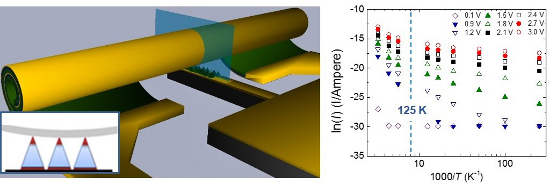
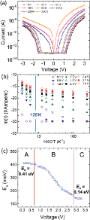
- [17]. The transport in such diode is subject to tunneling and field emission mechanisms due to the ultra-thin smooth film, while in the present report the thermal activated transport via bulk nanostructures dominates the transport progress. Conclusion In summary, in this work we investigated the


Metal oxide nanostructures: preparation, characterization and functional applications as chemical sensors
Beilstein J. Nanotechnol. 2017, 8, 1205–1217, doi:10.3762/bjnano.8.122
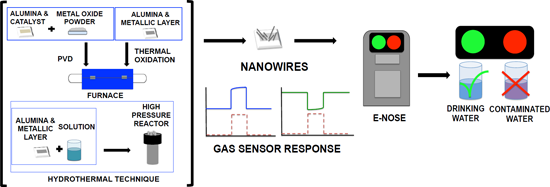
- ). Characterization techniques A field-emission scanning electron microscope (FE-SEM) LEO 1525 was used to investigate the morphology of samples. The electron beam was set at 3–5 keV energy and the samples were attached to metallic stub via carbon glue, to reduce charging effect due to the interaction of electron


Surface-enhanced Raman spectroscopy of cell lysates mixed with silver nanoparticles for tumor classification
Beilstein J. Nanotechnol. 2017, 8, 1183–1190, doi:10.3762/bjnano.8.120
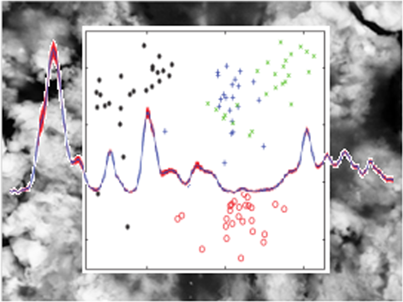
- mesh copper grid. After 1 min of adsorption the excess liquid was blotted off with filter paper. Dried samples were then examined by a JEM 1400 (JEOL, Tokyo, Japan) transmission electron microscope. Scanning electron microscopy (SEM): Measurements were performed by a field emission microscope JSM-6300F


Enhanced catalytic activity without the use of an external light source using microwave-synthesized CuO nanopetals
Beilstein J. Nanotechnol. 2017, 8, 1167–1173, doi:10.3762/bjnano.8.118
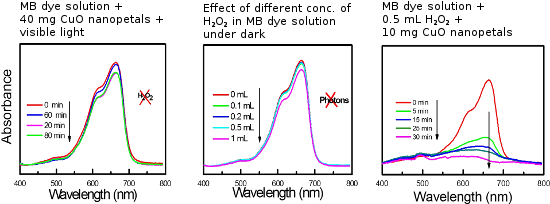
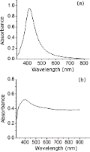
- Scherrer equation and is estimated to be ≈11 nm. As the sample obtained after 5 min exhibits phase impurity, only samples obtained with the reaction duration of 10 and 15 min were considered for further characterization. Figure 1b,c shows field-emission scanning electron microscope (FESEM) images of CuO
- Oxford detectors, field-emission scanning electron microscopy using a Carl Zeiss SUPRA 40 instrument, and the surface area was characterized using a Quantachrome ChemBET TPR/TPD analyzer. The optical properties were analyzed using a UV–vis absorption spectrophotometer by Schimadzu 1800. Material





