Search results
Search for "force microscopy" in Full Text gives 650 result(s) in Beilstein Journal of Nanotechnology. Showing first 200.
Stochastic excitation for high-resolution atomic force acoustic microscopy imaging: a system theory approach
Beilstein J. Nanotechnol. 2020, 11, 703–716, doi:10.3762/bjnano.11.58
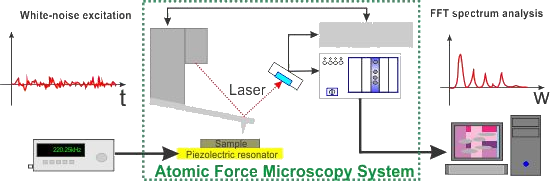
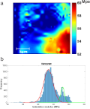
- –sample interaction is excited with a white-noise signal. Then, a fast Fourier transform is applied to the deflection signal that comes from the photodiodes of the atomic force microscopy (AFM) equipment. This approach allows for the measurement of several vibrational modes in a single step with high
- compared to conventional techniques. Keywords: atomic force microscopy; fast Fourier transform; mechanical properties; system theory; white noise; Introduction There are several methods to measure mechanical properties at the nanoscale level, based on, e.g., nanoindentation or on other physical phenomena
- [1][2]. However, each method has its limitations due to instrumentation capabilities and the geometry of the contact. Also, some of these methods can be destructive or provide only poor resolution because of the nanometric dimensions [1]. Atomic force microscopy (AFM) is a fundamental tool in



Structural optical and electrical properties of a transparent conductive ITO/Al–Ag/ITO multilayer contact
Beilstein J. Nanotechnol. 2020, 11, 695–702, doi:10.3762/bjnano.11.57
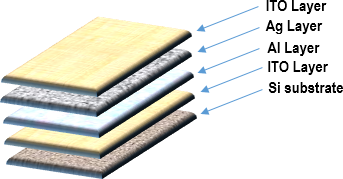
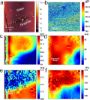
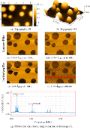
- fraction of Sn is low because it is the dopant element in ITO. The low content of Al is attributed to the very thin layer. The EDXS spectra of the films before and after annealing are shown in Figure 2. The surface morphology of the IAAI and ITO films was studied using atomic force microscopy (AFM) of an


Comparison of fresh and aged lithium iron phosphate cathodes using a tailored electrochemical strain microscopy technique
Beilstein J. Nanotechnol. 2020, 11, 583–596, doi:10.3762/bjnano.11.46
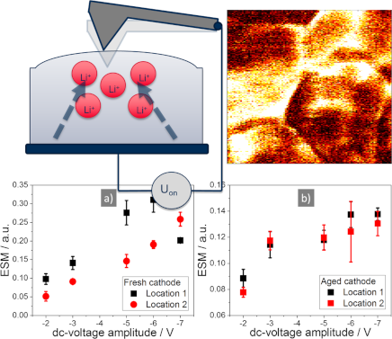
- , Institute of Building Energetics, Thermal Engineering and Energy Storage (IGTE), Pfaffenwaldring 31, 70569 Stuttgart, Germany 10.3762/bjnano.11.46 Abstract Electrochemical strain microscopy (ESM) is a powerful atomic force microscopy (AFM) mode for the investigation of ion dynamics and activities in energy
- (FIB) SEM and X-ray absorption near edge structure (XANES) [6][7][8][9][10][11][12][13]. Another technique for post-mortem analysis is atomic force microscopy (AFM). In its basic form, it provides information on the topography of the sample. More advanced AFM modes extract in addition to the topography
- solid electrolyte interface (SEI) on graphite anodes and HOPG [14][15][16], Li metal [17] and on cathode materials [18][19] as well as the changes in particle size during ageing [19][20]. Other AFM modes used for the analysis of ageing are, for example, Kelvin probe force microscopy (KPFM) and



Examination of the relationship between viscoelastic properties and the invasion of ovarian cancer cells by atomic force microscopy
Beilstein J. Nanotechnol. 2020, 11, 568–582, doi:10.3762/bjnano.11.45
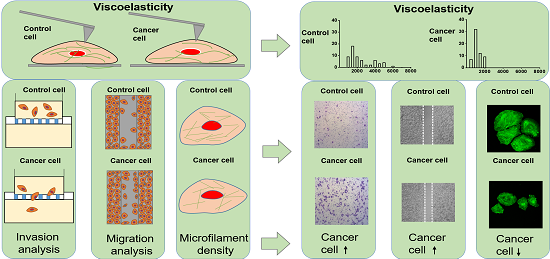
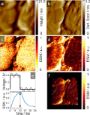
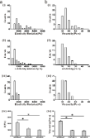
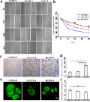
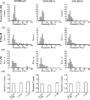
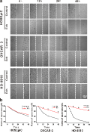
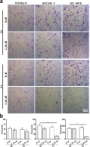
- The mechanical properties of cells could serve as an indicator for disease progression and early cancer diagnosis. This study utilized atomic force microscopy (AFM) to measure the viscoelastic properties of ovarian cancer cells and then examined the association with the invasion of ovarian cancer at
- light on the biomechanical changes for early diagnosis of tumor transformation and progression at single-cell level. Keywords: atomic force microscopy (AFM); cancer invasion; cancer migration; ovarian cancer cells; viscoelasticity; Introduction Ovarian cancer is a lethal gynecological malignancy with
- cells could be detected biomechanically. At present, a variety of research technologies, such as optical tweezers, micropipette aspiration, magnetic twisting cytometry and atomic force microscopy (AFM), have been developed to characterize the mechanical properties of biological samples [7][8][9][10


Multilayer capsules made of weak polyelectrolytes: a review on the preparation, functionalization and applications in drug delivery
Beilstein J. Nanotechnol. 2020, 11, 508–532, doi:10.3762/bjnano.11.41
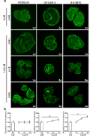
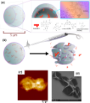
- force [13] using confocal laser scanning microscopy (CLSM), atomic force microscopy (AFM), and reflection interference contrast microscopy (RICM). Fabrication conditions such as the type of polymer (e.g., thicker layers are formed by PEs having lower charge density) [14], concentration of the polymer



Current measurements in the intermittent-contact mode of atomic force microscopy using the Fourier method: a feasibility analysis
Beilstein J. Nanotechnol. 2020, 11, 453–465, doi:10.3762/bjnano.11.37
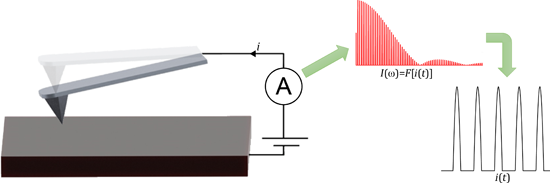
- Berkin Uluutku Santiago D. Solares The George Washington University, Department of Mechanical and Aerospace Engineering, 800 22nd St. NW, Suite 3000, Washington, DC 20052, USA 10.3762/bjnano.11.37 Abstract Atomic force microscopy (AFM) is an important tool for measuring a variety of nanoscale
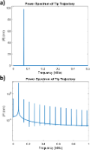
- significant instrumentation challenges are anticipated, the modelling results are promising and suggest that Fourier-based higher-harmonics current measurement may enable the development of a reliable intermittent-contact conductive AFM method. Keywords: atomic force microscopy (AFM); conductivity; current
- ; intermittent contact; Fourier analysis; tapping-mode AFM; Introduction Conductive atomic force microscopy (C-AFM), a contact-mode technique, has been extensively utilized to investigate local electrical properties of nanoscale systems, such as organic solar cells [1][2][3][4][5][6][7], semiconductors [8][9




Atomic-resolution imaging of rutile TiO2(110)-(1 × 2) reconstructed surface by non-contact atomic force microscopy
Beilstein J. Nanotechnol. 2020, 11, 443–449, doi:10.3762/bjnano.11.35
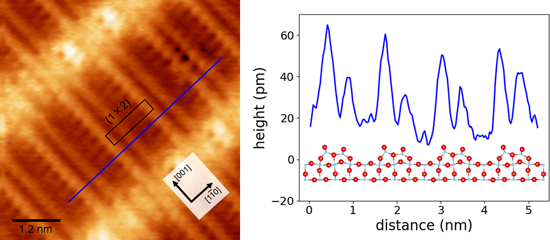
- , because it cannot be clarified whether the (1 × 2) structure is formed over a wide area or only locally using macroscopic analysis methods such as diffraction. We used non-contact atomic force microscopy, scanning tunneling microscopy, and low-energy electron diffraction at room temperature to
- force microscopy; (1 × 2) reconstruction; rutile; surface structure; titanium dioxide (TiO2); Introduction Titanium dioxide (TiO2) is a well-known photocatalyst and has been studied for applications in water splitting and the coating of materials [1]. To optimize the photocatalytic function, it is
- clean surface is relatively easy. A well-known rutile TiO2(110) surface is the (1 × 1) structure [2]. The (1 × 1) surface has been studied using low-energy electron diffraction (LEED) [3][4], surface X-ray diffraction [5], non-contact atomic force microscopy (NC-AFM) [6][7][8][9], scanning tunneling


Electrochemically derived functionalized graphene for bulk production of hydrogen peroxide
Beilstein J. Nanotechnol. 2020, 11, 432–442, doi:10.3762/bjnano.11.34
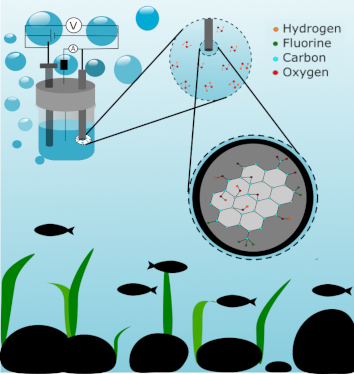
- its layered nature (Supporting Information File 1, Figure S2). Here the thickness variation is confirmed using atomic force microscopy (AFM), and the results are given in Figure S3. This indicates that with an increase in the concentration of the electrolyte, the thickness is increased from 40 nm to


High dynamic resistance elements based on a Josephson junction array
Beilstein J. Nanotechnol. 2020, 11, 417–420, doi:10.3762/bjnano.11.32
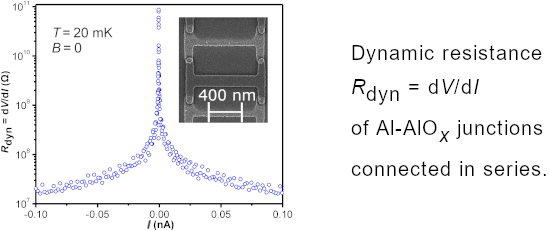
- situ to form tunnel barriers. Each sample consisted of 25 pairs of JJs connected in parallel where the area of each superconductor–insulator–superconductor (SIS) contact was about 100 × 100 nm (Figure 1). The samples were analyzed by scanning electron microscopy (SEM) (Figure 1) and atomic force
- microscopy (AFM). Transport measurements were made inside a 3He4He dilution refrigerator at temperatures below 400 mK, corresponding to the superconducting transition of Ti QPSJs [10][12]. All input/output lines were carefully filtered [13] to reduce the impact of the noisy electromagnetic environment. When

Implementation of data-cube pump–probe KPFM on organic solar cells
Beilstein J. Nanotechnol. 2020, 11, 323–337, doi:10.3762/bjnano.11.24
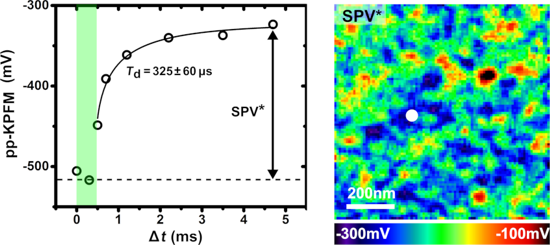
- Benjamin Grevin Olivier Bardagot Renaud Demadrille Univ. Grenoble Alpes, CNRS, CEA, IRIG-SyMMES, 38000 Grenoble, France 10.3762/bjnano.11.24 Abstract An implementation of pump–probe Kelvin probe force microscopy (pp-KPFM) is reported that enables recording the time-resolved surface potential in
- PTB7 and PC71BM is subsequently investigated by recording point-spectroscopy curves as a function of the optical power at the cathode and by mapping 2D time-resolved images of the surface photovoltage of the bare organic active layer. Keywords: bulk heterojunctions; Kelvin probe force microscopy (KPFM
- the development of new time-resolved extensions of electrostatic force microscopy (EFM) and Kelvin probe force microscopy (KPFM). Time-resolved EFM (trEFM) has been used to map photoinduced charging rates (i.e., the time needed to reach an electrostatic equilibrium after illumination) in organic donor




Nonclassical dynamic modeling of nano/microparticles during nanomanipulation processes
Beilstein J. Nanotechnol. 2020, 11, 147–166, doi:10.3762/bjnano.11.13
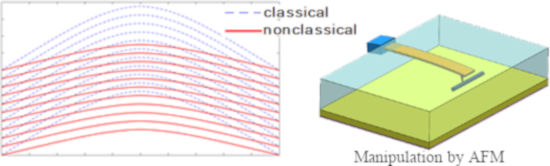
- , Science and Research Branch, Islamic Azad University, Tehran, Iran 10.3762/bjnano.11.13 Abstract Since the manipulation of particles using atomic force microscopy is not observable in real-time, modeling the manipulation process is of notable importance, enabling us to investigate the dynamical behavior
- of the classical method on polystyrene nanorods. The results for cylindrical gold nanoparticles indicate that the material length scale has a major effect on the exact positioning of cylindrical nanoparticles. Keywords: atomic force microscopy; modified couple stress theory; nanomanipulation
- ; nanoparticle modeling; size effects; Introduction It is not possible to simultaneously observe and manipulate a nanoparticle using atomic force microscopy (AFM) as the imaging and manipulation tools are combined. As a result, dynamic modeling and simulation are essential in this field of research. For the







A review of demodulation techniques for multifrequency atomic force microscopy
Beilstein J. Nanotechnol. 2020, 11, 76–91, doi:10.3762/bjnano.11.8

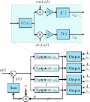
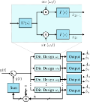
- multifrequency atomic force microscopy. The compared methods include the lock-in amplifier, coherent demodulator, Kalman filter, Lyapunov filter, and direct-design demodulator. Each method is implemented on a field-programmable gate array (FPGA) with a sampling rate of 1.5 MHz. The metrics for comparison include
- the sensitivity to other frequency components and the magnitude of demodulation artifacts for a range of demodulator bandwidths. Performance differences are demonstrated through higher harmonic atomic force microscopy imaging. Keywords: atomic force microscopy (AFM); multifrequency; demodulation
- ; Kalman filter; Lyapunov filter; digital signal processing; field-programmable gate array (FPGA); Introduction Atomic force microscopy (AFM) [1] has enabled innovation in nanoscale engineering since it was invented in 1986 by Binnig and co-workers. Atomic-scale topographical resolution is achieved by


Simple synthesis of nanosheets of rGO and nitrogenated rGO
Beilstein J. Nanotechnol. 2020, 11, 68–75, doi:10.3762/bjnano.11.7
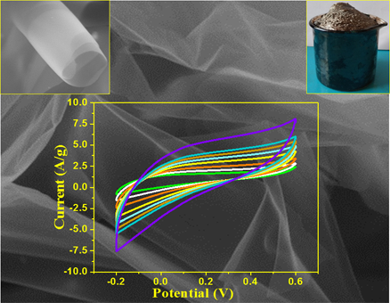
- force microscopy (AFM), X-ray diffraction (XRD) and thermogravimetric analysis (TGA). X-ray diffraction patterns of the samples were collected in the range of 10–70° (2θ) using a Bruker D8 diffractometer with a Cu Kα source (λ = 0.154178 nm). The morphology of the samples was examined using a Tescan


The effect of heat treatment on the morphology and mobility of Au nanoparticles
Beilstein J. Nanotechnol. 2020, 11, 61–67, doi:10.3762/bjnano.11.6
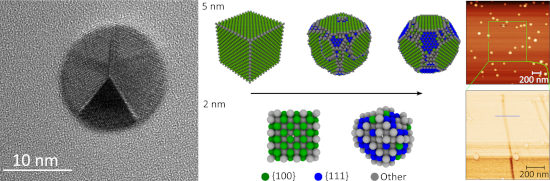
- particles became immovable again. This effect was attributed to the diffusion of Au into the Si substrate and to the growth of the SiO2 layer. Keywords: annealing; atomic force microscopy (AFM); Au nanoparticles; manipulation; melting; nanotribology; Introduction Gold is one of the most prominent


The different ways to chitosan/hyaluronic acid nanoparticles: templated vs direct complexation. Influence of particle preparation on morphology, cell uptake and silencing efficiency
Beilstein J. Nanotechnol. 2019, 10, 2594–2608, doi:10.3762/bjnano.10.250
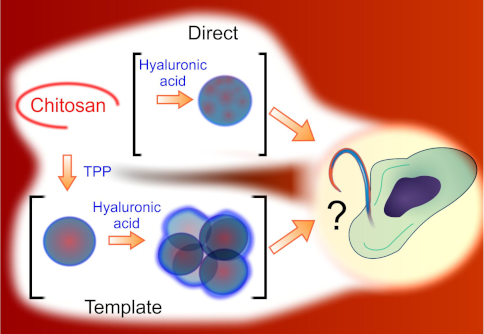
- Synergy2 Biotek plate reader. Atomic force microscopy (AFM). Drops (ca. 35 µL) of the chitosan/HA nanoparticle suspensions were deposited on a clean mica surface and left to dry overnight in Petri dishes at room temperature. A molecular force probe 3D AFM (MFP-3D, Asylum Research, Oxford Instruments



Evaluation of click chemistry microarrays for immunosensing of alpha-fetoprotein (AFP)
Beilstein J. Nanotechnol. 2019, 10, 2505–2515, doi:10.3762/bjnano.10.241
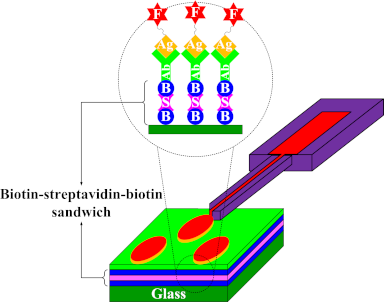
- occurring in the spectra at 400.0 eV also result from the successful reactions. To confirm the quality of the functionalized layers, after each step of the functionalization process, the roughness of the samples was monitored by atomic force microscopy (AFM). The results are shown in Supporting Information
- bare and functionalized glasses was characterized using surface-sensitive techniques, including atomic force microscopy (AFM) and X-ray photoelectron spectroscopy (XPS). To map the surface roughness, AFM in tapping mode was conducted with a Dimension Icon (Bruker, Germany) device with HQ:NSC15/Al BS


Mobility of charge carriers in self-assembled monolayers
Beilstein J. Nanotechnol. 2019, 10, 2449–2458, doi:10.3762/bjnano.10.235
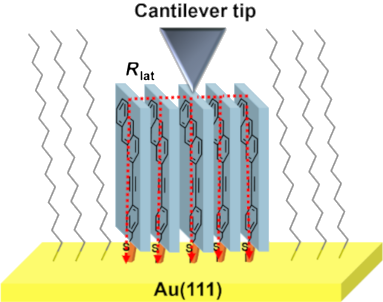
- study charge transport within 2D layers of organic semi-conductors (OSCs) using atomic force microscopy (AFM)-based lithography applied to self-assembled monolayers (SAMs), fabricated from appropriate organothiols. The extent of lateral charge transport was investigated by insulating pre-defined patches
- the determination of mobilities in macroscopic samples. Keywords: conducting atomic force microscopy; lateral charge transport; nanografting; organic semiconductor; self-assembled monolayer; Introduction Charge transport in organic semiconductors plays a central role in the field of molecular


Self-assembly of a terbium(III) 1D coordination polymer on mica
Beilstein J. Nanotechnol. 2019, 10, 2440–2448, doi:10.3762/bjnano.10.234
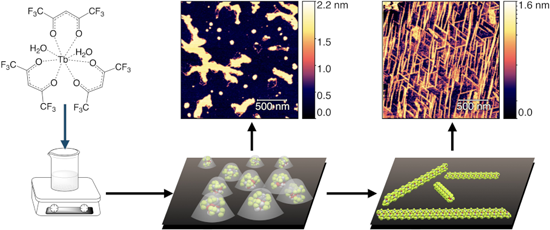
- candidate for the creation of surface-based magnetic and luminescent devices. In the present work, we report the epitaxial growth of needle-like objects composed of [Tb(hfac)3·2H2O]n (where hfac = hexafluoroacetylacetonate) polymeric units on muscovite mica, which is observed by atomic force microscopy. The
- (375 µs) and the CHCl3 solution (13 µs) further reinforces the idea of water-induced growth. Keywords: atomic force microscopy (AFM); luminescence; nanostructuration; polymer; self-assembly; surface; terbium complexes; Introduction The study of materials for the realization of novel magnetic [1][2][3
- suitable for atomic force microscopy (AFM) imaging [24] as well as for its hydrophilic nature promoting the interaction with the deposited molecules. Indeed, muscovite mica has already been used for the deposition of magnetic materials such as FeCoN magnetic films [25] or tungsten oxide nanowires [21]. The




Integration of sharp silicon nitride tips into high-speed SU8 cantilevers in a batch fabrication process
Beilstein J. Nanotechnol. 2019, 10, 2357–2363, doi:10.3762/bjnano.10.226
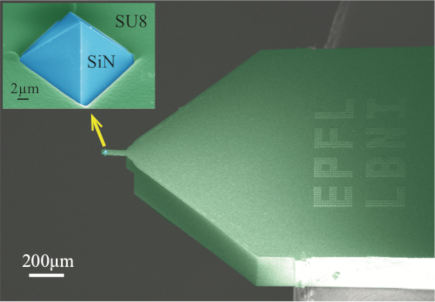
- Abstract Employing polymer cantilevers has shown to outperform using their silicon or silicon nitride analogues concerning the imaging speed of atomic force microscopy (AFM) in tapping mode (intermittent contact mode with amplitude modulation) by up to one order of magnitude. However, tips of the
- any photo-processable polymer cantilever. Keywords: Atomic force microscopy (AFM); durability; imaging speed; polymer cantilever; silicon nitride tip; Introduction Atomic force microscopy (AFM) cantilevers have been developed for numerous applications since the invention of scanning probe microscopy


A novel method to remove impulse noise from atomic force microscopy images based on Bayesian compressed sensing
Beilstein J. Nanotechnol. 2019, 10, 2346–2356, doi:10.3762/bjnano.10.225
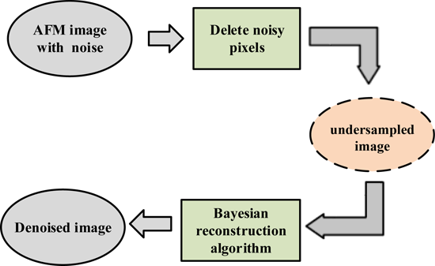
- , China School of Physics, Beihang University, Beijing 100191, China 10.3762/bjnano.10.225 Abstract A novel method based on Bayesian compressed sensing is proposed to remove impulse noise from atomic force microscopy (AFM) images. The image denoising problem is transformed into a compressed sensing
- proposed method is robust and its performance is not influenced by the noise density in a certain range. Keywords: atomic force microscopy (AFM); Bayesian compressed sensing; denoising; image processing; impulse noise; Introduction Atomic force microscopy (AFM) is a powerful tool in the fields of


Atomic force acoustic microscopy reveals the influence of substrate stiffness and topography on cell behavior
Beilstein J. Nanotechnol. 2019, 10, 2329–2337, doi:10.3762/bjnano.10.223
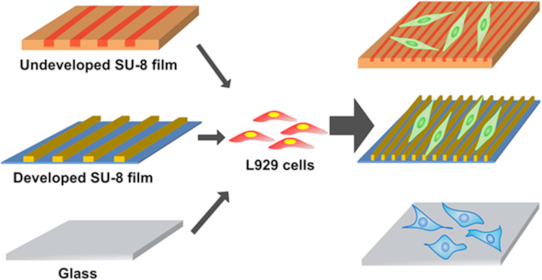
- ], confocal microscopy, scanning electron microscopy (SEM) [12] and atomic force microscopy (AFM) [16][17] have been employed to investigate cell–substrate interactions. Fluorescence and confocal microscopy are traditional techniques to investigate the intra- and intercellular processes in biological studies


Nitrogen-vacancy centers in diamond for nanoscale magnetic resonance imaging applications
Beilstein J. Nanotechnol. 2019, 10, 2128–2151, doi:10.3762/bjnano.10.207
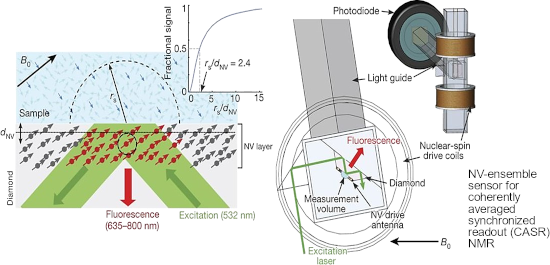
- current approaches based on the magneto-optic Kerr effect in X-ray and electron microscopy [11]. Nano-MRI techniques studied in current research endeavors include several quantum mechanical and nanotechnological approaches, such as optically detected MR (ODMR) using NV centers and MR force microscopy
- coronas of proteins) are fundamental to making nanoprobes biocompatible. However, this promising field still needs to overcome challenges to deliver its full potential. Solid chemical shifts have been measured in 2D with 1 µm accuracy by MR force microscopy [17], a technique that is readily extendable to


Microbubbles decorated with dendronized magnetic nanoparticles for biomedical imaging: effective stabilization via fluorous interactions
Beilstein J. Nanotechnol. 2019, 10, 2103–2115, doi:10.3762/bjnano.10.205
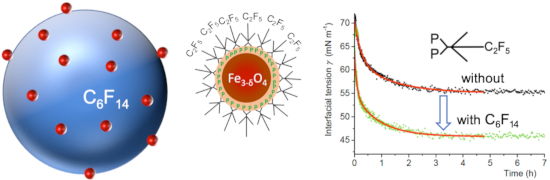
- result is already obtained with C2F5, for which MBs of ≈1.0 μm in radius reach a half-life of ≈6.0 h. An atomic force microscopy investigation of spin-coated mixed films of DPPC/IONP@C2X5OEG8Den combinations (molar ratio 28:1) shows that the IONPs grafted with the fluorinated dendrons are located within
- stability characteristics of F-hexane-stabilized DPPC-shelled MBs incorporating IONP@CnX2n+1OEG8Den. Fourth, we report an atomic force microscopy (AFM) study that reveals that the location of the dendronized nanoparticles in the phospholipid film strongly depends on the nature of the terminal group. Results


The importance of design in nanoarchitectonics: multifractality in MACE silicon nanowires
Beilstein J. Nanotechnol. 2019, 10, 2094–2102, doi:10.3762/bjnano.10.204
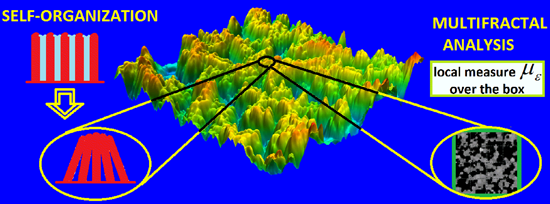
- conditions and the capacity dimension of the nanowires was obtained. Keywords: atomic force microscopy (AFM); capillary force; metal-assisted chemical etching (MACE); multifractal analysis; nanoarchitectonics; nanowires; self-assembly; Introduction In the last years, huge progress was made regarding the
- describe it by just one scaling law. In this latter case a shift to multifractal analysis is necessary. In the present work we show the results of multifractal analysis of nanoarchitectured surfaces of MACE Si NWs. The spontaneous arrangements of the NWs were investigated by using atomic force microscopy




Ion mobility and material transport on KBr in air as a function of the relative humidity
Beilstein J. Nanotechnol. 2019, 10, 2084–2093, doi:10.3762/bjnano.10.203
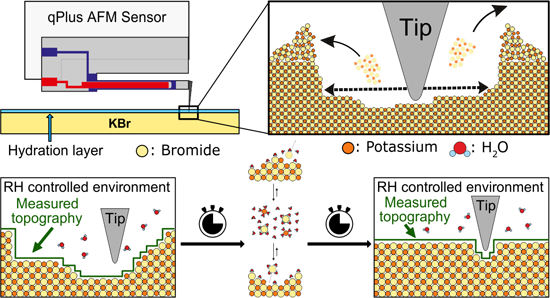
- to the surface. We collected atomic force microscopy images of KBr surfaces in a humidity-controlled glove box at various relative humidities below 40%. By scratching and poking the surface with the AFM tip, we constructed energetically unfavorable holes or scratch sites and material accumulations
- force microscopy; material transport; relative humidity; Introduction Defining surface properties under ambient conditions is challenging as they are heavily influenced by the environment. In general, there are various contributing factors such as temperature, air pressure and air composition
- relationship between humidity, water coverage and movement speed, however, is complex. In this study we investigated the surface of KBr, a salt crystal, by using frequency-modulation atomic force microscopy (FM-AFM) using a qPlus sensor [9][10][11]. The aim of our experiments is a qualitative and quantitative