Search results
Search for "kinetics" in Full Text gives 454 result(s) in Beilstein Journal of Nanotechnology. Showing first 200.
Synthesis and enhanced photocatalytic performance of 0D/2D CuO/tourmaline composite photocatalysts
Beilstein J. Nanotechnol. 2020, 11, 407–416, doi:10.3762/bjnano.11.31
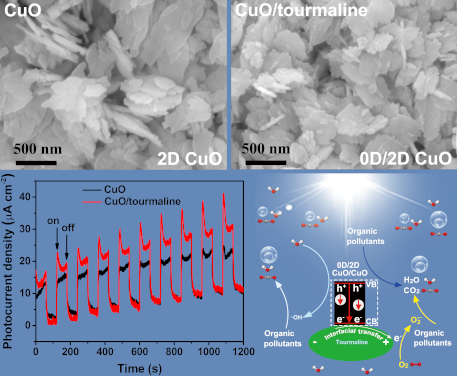
- 17.9% and 19.8%, respectively. The CuO/tourmaline-4:1 composite exhibited the optimum activity with MB degradation (%) of 99.6% within 140 min. The apparent pseudo-first-order equation was adopted to interpret the photocatalytic degradation kinetics. The corresponding fitted lines of −ln(C/C0) vs time


Using gold nanoparticles to detect single-nucleotide polymorphisms: toward liquid biopsy
Beilstein J. Nanotechnol. 2020, 11, 263–284, doi:10.3762/bjnano.11.20
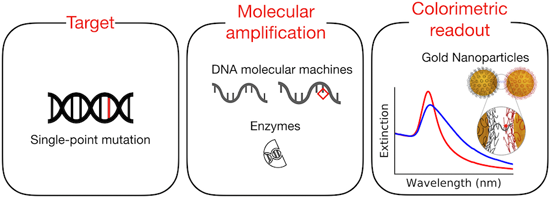
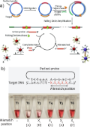
- target. c) Colorimetric assay based on unmodified nanoparticles: Single-stranded DNA (ssDNA) stabilizes gold nanoparticles against salt-induced aggregation, while in the presence of double-stranded DNA (dsDNA) particles undergo aggregation. Discrimination of SNPs by means of the kinetics of particle




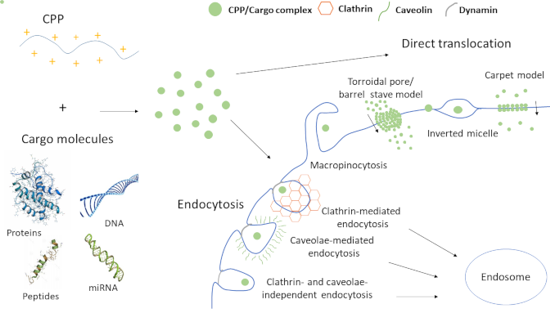
Internalization mechanisms of cell-penetrating peptides
Beilstein J. Nanotechnol. 2020, 11, 101–123, doi:10.3762/bjnano.11.10


Influence of the epitaxial composition on N-face GaN KOH etch kinetics determined by ICP-OES
Beilstein J. Nanotechnol. 2020, 11, 41–50, doi:10.3762/bjnano.11.4
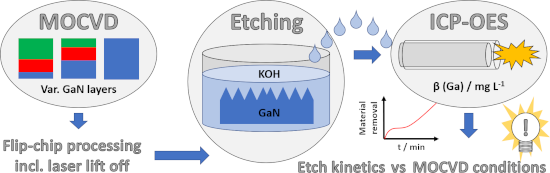
- diffraction (XRD). Thin-film processing including laser lift off (LLO) was applied. The influence of epitaxial changes on the N-face etch kinetics was determined in aqueous KOH solution at elevated temperature. Inductively-coupled plasma optical emission spectroscopy (ICP-OES) was used to measure the etch
- Discussion ICP-OES analysis of etch kinetics Fourfold ICP-OES analysis of an identical KOH dilution stemming from a single GaN chip etched at RT for 1 h yielded 249 ± 3 nm average GaN removal and thus a relative error of 1% (mean ± SDM, n = 4; Figure 2). The measurement of different dilutions from the same
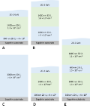
- spanned the entire epitaxial layer up to the MQW region. As the respective layers B and C showed similar XRD FWHM results as A and D, the dislocation density values given in Figure 1 were transferred. Effect of epitaxial changes on etch kinetics The etch kinetics of A and B were compared at 70 °C and 80


The different ways to chitosan/hyaluronic acid nanoparticles: templated vs direct complexation. Influence of particle preparation on morphology, cell uptake and silencing efficiency
Beilstein J. Nanotechnol. 2019, 10, 2594–2608, doi:10.3762/bjnano.10.250
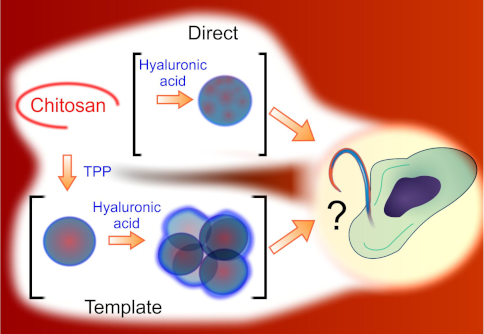
- all a higher aspect ratio (Rg/RH) and a lower fractal dimension. We then compared the kinetics of uptake and the (antiluciferase) siRNA delivery performance in murine RAW 264.7 macrophages and in human HCT-116 colorectal tumor cells. The preparative method (and therefore the internal particle
- morphology) had little effect on the uptake kinetics and no statistically relevant influence on silencing (templated particles often showing a lower silencing). Cell-specific factors, on the contrary, overwhelmingly determined the efficacy of the carriers, with, e.g., those containing low-MW chitosan
- and HA, producing nanoparticles selectively containing one labelled polymer. Following either chitosan- or HA-associated fluorescence (respectively black and red symbols in Figure 5), we observed qualitatively similar uptake kinetics, which is a sign that the two components are mostly internalized



Fully amino acid-based hydrogel as potential scaffold for cell culturing and drug delivery
Beilstein J. Nanotechnol. 2019, 10, 2579–2593, doi:10.3762/bjnano.10.249
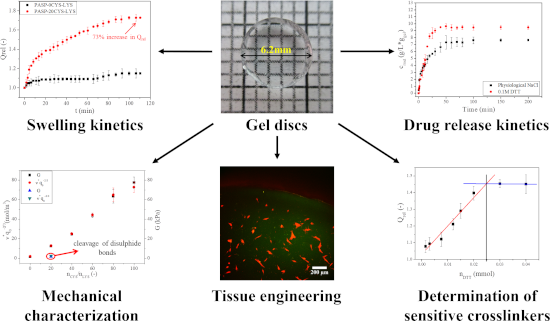
- established. Using metoprolol as a model drug, cell proliferation and drug release kinetics were studied at different LYS contents and in the presence of thiol groups. The optimal ratio of cross-linkers for the proliferation of periodontal ligament cells was found to be 60−80% LYS and 20−40% CYS. The
- well as biocompatibility and biodegradability are also fundamental features of polymers developed for numerous medical applications [11][12]. Polymer hydrogels are capable of releasing physically entrapped drug molecules. The release kinetics of the loaded drug molecules depend significantly on the
- improve the pharmacological and therapeutic properties of various drugs [28]. By applying such microcarriers, the drug release kinetics can be controlled. Among the anionic amino acids, glutamic acid was previously used for the preparation of polymer-based microcarriers [33]. However, there are only


Antimony deposition onto Au(111) and insertion of Mg
Beilstein J. Nanotechnol. 2019, 10, 2541–2552, doi:10.3762/bjnano.10.245
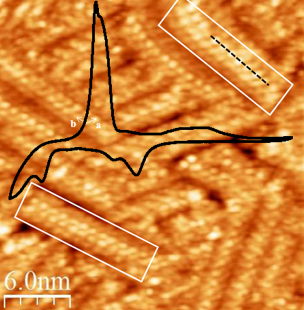
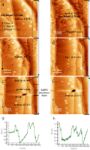
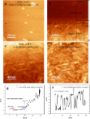
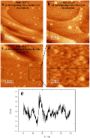
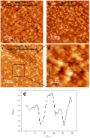
- paper, we will study the kinetics of the insertion process in more detail [19]. Experimental Chemicals, materials and electrolyte The Au(111) single crystal was prepared by cooling down after flame annealing in pure argon (Air Liquid, 99.999%,) atmosphere as described elsewhere [20]. A typical cyclic
- and EC-SPM Studies of Electrode Kinetics and Electrode Structure” (University of Bonn, Germany). Author contributions: L. X. Zan and A. A. Abd-El-Latif designed experiments suggested by H. Baltruschat and L. X. Zan; D. Xing and A. A. Abd-El-Latif performed the electrochemical studies and





Air oxidation of sulfur mustard gas simulants using a pyrene-based metal–organic framework photocatalyst
Beilstein J. Nanotechnol. 2019, 10, 2422–2427, doi:10.3762/bjnano.10.232
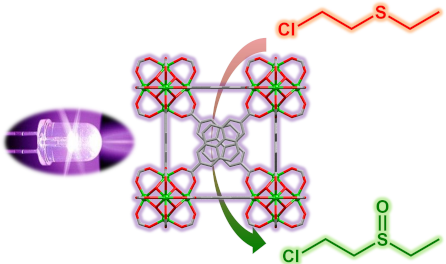
- points, filtered using syringe filters and, after dilution with dichloromethane, analyzed by GC-FID to monitor the reaction kinetics. Oxidation products were analyzed by NMR spectroscopy using deuterated methanol as a solvent. Under these conditions, reaction monitoring revealed that complete and




Multiwalled carbon nanotube based aromatic volatile organic compound sensor: sensitivity enhancement through 1-hexadecanethiol functionalisation
Beilstein J. Nanotechnol. 2019, 10, 2364–2373, doi:10.3762/bjnano.10.227
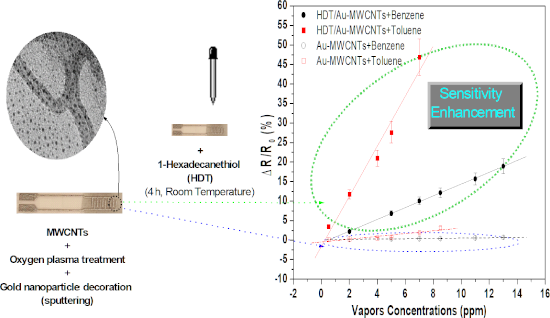
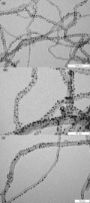
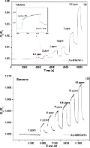
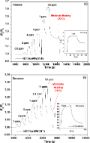
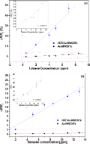
- the non-functionalised sensor. The same kinetics were also observed, where physisorption is visible for toluene below a concentration of 7 ppm (below 5 ppm for benzene). A short heating for a few seconds at 70 °C is sufficient for desaturating the sensor (desorbing the vapour molecules) and its return




Design of a nanostructured mucoadhesive system containing curcumin for buccal application: from physicochemical to biological aspects
Beilstein J. Nanotechnol. 2019, 10, 2304–2328, doi:10.3762/bjnano.10.222
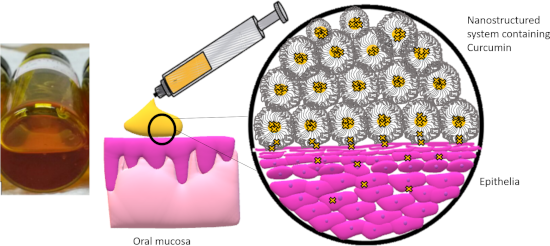
- elucidated by incorporation kinetics and location studies. They revealed that the drug was quickly incorporated and located in the hydrophobic portion of nanometer-sized polymeric micelles. Moreover, the systems displayed plastic behavior with rheopexy characteristics at 37 °C, viscoelastic properties and a
- ]. Furthermore, the temperature changes were more remarkable than the variation in pH, with the systems investigated at 45 °C displaying higher anisotropy values in comparison to those evaluated at 37 °C. Incorporation kinetics Incorporation kinetics were evaluated by observing the fluorescence emission
- used to evaluate the release mechanism of CUR. Here, the release exponent (n), which determines if the drug release mechanism is Fickian (Case I) or non-Fickian (transport Case II, anomalous or super case II) revealed an n value of 0.6517. The nanostructured systems displayed anomalous release kinetics


Microfluidics as tool to prepare size-tunable PLGA nanoparticles with high curcumin encapsulation for efficient mucus penetration
Beilstein J. Nanotechnol. 2019, 10, 2280–2293, doi:10.3762/bjnano.10.220
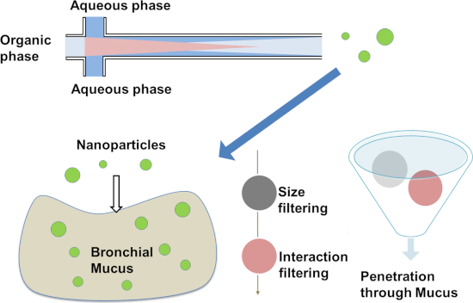
- nanoprecipitation in order to have better control over the kinetics of the colloid formation. To the best of our knowledge, no comprehensive study has presented relevant experimental evidence enabling more insight into the nanoprecipitation mechanism. Our microfluidic system has a unique feature allowing us to
- through pulmonary human mucus [39]. Different sized PLGA NPs (60 nm, 120 nm and 400 nm) were synthesized using microfluidics (fluorescently labelled). NPs in aqueous suspension were added on top of a thin layer of human pulmonary mucus. Then, the penetration kinetics was analyzed by scanning a defined


Design and facile synthesis of defect-rich C-MoS2/rGO nanosheets for enhanced lithium–sulfur battery performance
Beilstein J. Nanotechnol. 2019, 10, 2251–2260, doi:10.3762/bjnano.10.217
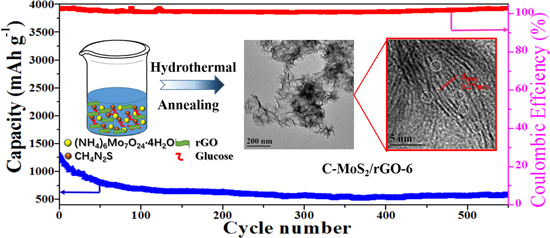
- galvanostatic discharge–charge curves of C-MoS2/rGO-6-S at several current densities are shown in Figure 4d. The two standard discharge plateaus can still be identified even at rate of 2C, indicating the effortless kinetics of the sulfur redox reaction. Figure 6e and Figure S4c (Supporting Information File 1


A novel all-fiber-based LiFePO4/Li4Ti5O12 battery with self-standing nanofiber membrane electrodes
Beilstein J. Nanotechnol. 2019, 10, 2229–2237, doi:10.3762/bjnano.10.215
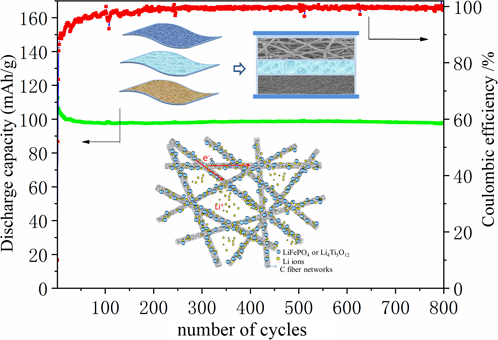
- of active substances in these two electrodes. It is known that nanomerization could improve the rate capability and insertion kinetics of electrode materials. The SEM and TEM images in Figure 3 and Figure 4 show that the grain size of LiFePO4 is larger than that of Li4Ti5O12, which is the possible


Ultrathin Ni1−xCoxS2 nanoflakes as high energy density electrode materials for asymmetric supercapacitors
Beilstein J. Nanotechnol. 2019, 10, 2207–2216, doi:10.3762/bjnano.10.213
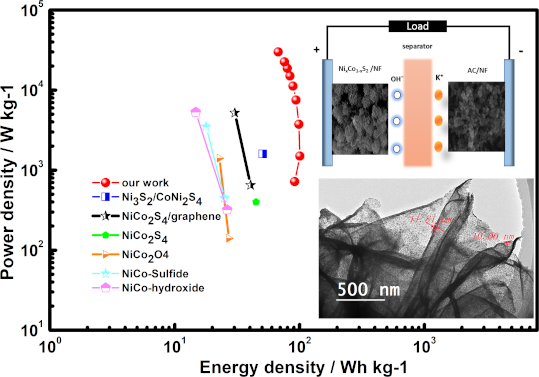
- the material can shorten the ion diffusion path lengths, overcoming the kinetics barrier of the faradaic redox reaction for most of the energy storage materials. The hierarchical nanostructure can provide abundant surface active sites for electrochemical reactions during the charge/discharge process


Mannosylated brush copolymers based on poly(ethylene glycol) and poly(ε-caprolactone) as multivalent lectin-binding nanomaterials
Beilstein J. Nanotechnol. 2019, 10, 2192–2206, doi:10.3762/bjnano.10.212
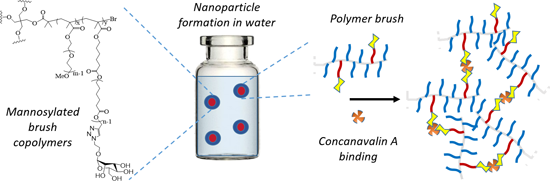
- semilogarithmic kinetic plots revealed first-order kinetics (Figure 2A), demonstrating a good reaction control over the polymer molecular weight and the molecular weight distribution, which was also confirmed by dispersity Ð values lower than 1.24 (Figure 2B, Table 1). The deviation of the number average
- ] (Figure 6A). Glycopolymers were tested in the presence of Con A in HBS buffer at pH 7.4. A fixed mannose concentration 2.5 times higher than the Con A binding site concentration was used, and turbidity was measured using an UV–vis spectrometer (Figure 7). The kinetics of glycopolymer-induced clustering
- , Table 3). This result may be ascribed to an effect of the different polymer composition on the aggregation kinetics. As general trend, the rate constant k of Con A clustering decreased as the valency increased, and consequently the time to reach half of the maximum turbidity t1/2 increased as the



Microbubbles decorated with dendronized magnetic nanoparticles for biomedical imaging: effective stabilization via fluorous interactions
Beilstein J. Nanotechnol. 2019, 10, 2103–2115, doi:10.3762/bjnano.10.205
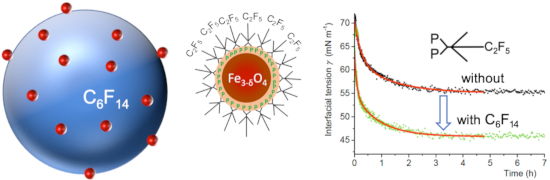
- 1). First, we present the synthesis and the characterization of the IONPs grafted with the selected dendrons (IONP@CnX2n+1OEG8Den). Second, we report the adsorption kinetics of IONP@CnX2n+1OEG8Den at the interface between air or F-hexane-saturated air and water. Third, we discuss the size and
- did not preclude performing the adsorption kinetics studies. Altogether, owing to their dendritic structure, the OEG chains were found to confer excellent dispersibility and stability to the IONPs [33]. Adsorption kinetics of dendronized nanoparticles at the gas/liquid interface The adsorption of the
- nm, red), C4H9OEG8Den (95 ± 12 nm, orange), C4F9OEG8Den (197 ± 15 nm, blue) in aqueous dispersions (Fe conc. 0.05 mg mL−1). Adsorption kinetics of IONPs grafted with various dendrons measured at 25 °C: A) C2H5OEG8Den, B) C2F5OEG8Den, C) C4H9OEG8Den and D) C4F9OEG8Den, at various Fe concentrations: a


Incorporation of doxorubicin in different polymer nanoparticles and their anticancer activity
Beilstein J. Nanotechnol. 2019, 10, 2062–2072, doi:10.3762/bjnano.10.201
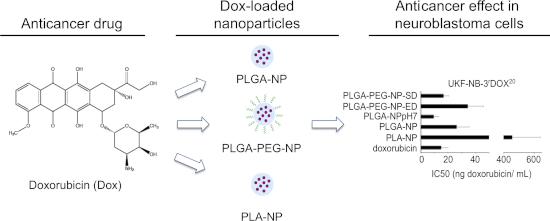
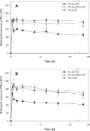
- preparation by solvent displacement led to the smallest nanoparticles. In PLGA nanoparticles, the drug load could be optimised using solvent displacement at pH 7 reaching 53 µg doxorubicin/mg nanoparticle. These PLGA nanoparticles displayed sustained doxorubicin release kinetics compared to the more burst
- -like kinetics of the other preparations. In neuroblastoma cells, doxorubicin-loaded PLGA-PEG nanoparticles (presumably due to their small size) and PLGA nanoparticles prepared by solvent displacement at pH 7 (presumably due to their high drug load and superior drug release kinetics) exerted the
- [50]. To optimise the loading efficiency and drug release kinetics of PLGA nanoparticles the pH value of the stabiliser solution used during nanoparticle preparation was increased to 7. At this pH value, doxorubicin exists in the more lipophilic deprotonated form [51]. The use of PVA solution at pH 7





Pulsed laser synthesis of highly active Ag–Rh and Ag–Pt antenna–reactor-type plasmonic catalysts
Beilstein J. Nanotechnol. 2019, 10, 1958–1963, doi:10.3762/bjnano.10.192
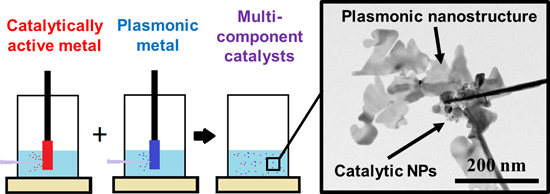
- . Afterwards, 0.015 mL of fresh aqueous 10−1 M NaBH4 was spiked into the mixture, as reducing agent, and the time-dependent absorption spectrum was recorded. As NaBH4 was used in excess, the reaction kinetics are assumed to follow a first-order rate law. The absorption peak at 400 nm (Abs400nm) forms
- to be stable, and the activity was measured for a variety of Ag–Rh/Pt loading ratios, demonstrating that the enhancement persisted at low loading ratios. Further and future inquiry will include: (1) studying the reaction kinetics in the absence of visible light to confirm plasmonic enhancement; (2


Biocatalytic oligomerization-induced self-assembly of crystalline cellulose oligomers into nanoribbon networks assisted by organic solvents
Beilstein J. Nanotechnol. 2019, 10, 1778–1788, doi:10.3762/bjnano.10.173
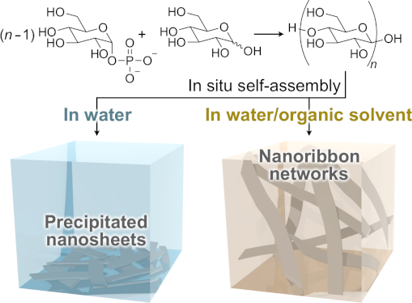
- ], distorted nanosheets with a bilayer structure [35], helical nanorods with a bilayer structure [35], and network structures composed of nanoribbon-shaped lamellar crystals [33][42][43][44][45][46] have been successfully constructed by changing the enzymatic reactions, tuning the self-assembly kinetics





Growth dynamics and light scattering of gold nanoparticles in situ synthesized at high concentration in thin polymer films
Beilstein J. Nanotechnol. 2019, 10, 1768–1777, doi:10.3762/bjnano.10.172
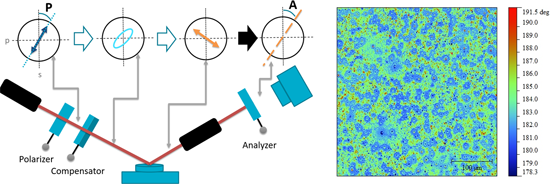
- mass ratio increases, the absorbance reaches an increasing plateau value. Moreover, increasing the annealing temperature increases the reduction kinetics. The plateau value is reached within shorter times. Besides playing a role in the growth kinetics of the nanoparticles by promoting the reduction of


TiO2/GO-coated functional separator to suppress polysulfide migration in lithium–sulfur batteries
Beilstein J. Nanotechnol. 2019, 10, 1726–1736, doi:10.3762/bjnano.10.168
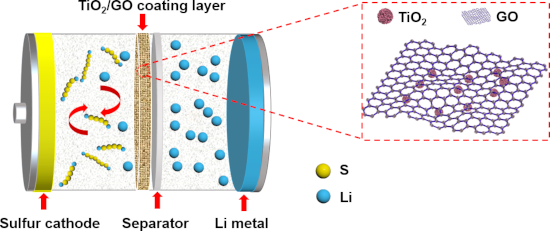
- electrochemical impedance spectroscopy (EIS) analysis to analyze the charge transfer kinetics in Li/S batteries with pristine and TiO2/GO-coated separators. Figure 8 presents the Nyquist plots of Li/S batteries with pristine and TiO2/GO-coated separators before and after cycling. As shown in Figure 8a, the charge


Doxorubicin-loaded human serum albumin nanoparticles overcome transporter-mediated drug resistance in drug-adapted cancer cells
Beilstein J. Nanotechnol. 2019, 10, 1707–1715, doi:10.3762/bjnano.10.166
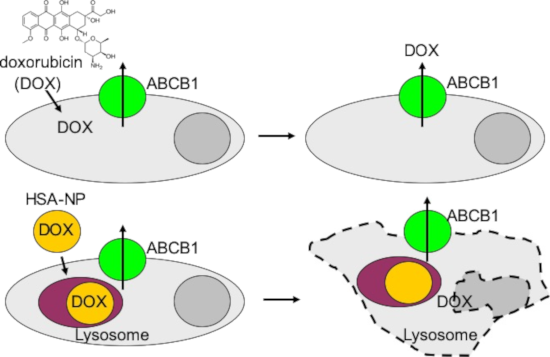
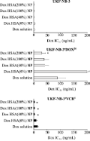
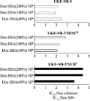
- paclitaxel with albumin may differ from that of doxorubicin. Hence, variations in drug binding and drug release kinetics may be responsible for this difference. Despite the prominent role of ABCB1 as a drug resistance mechanism, attempts to exploit it as drug target have failed so far, despite the


Tuning the performance of vanadium redox flow batteries by modifying the structural defects of the carbon felt electrode
Beilstein J. Nanotechnol. 2019, 10, 1698–1706, doi:10.3762/bjnano.10.165
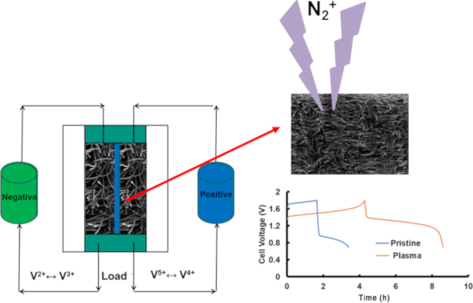
- configuration, showed poor electrochemical performance for the positive (V5+/V4+) redox reaction. Taking into account that the negative redox reaction is the limiting reaction in VRFB, the overall enhancement in the full cell performance was purely attributed to enhancement in the V3+/V2+ redox kinetics due to


Layered double hydroxide/sepiolite hybrid nanoarchitectures for the controlled release of herbicides
Beilstein J. Nanotechnol. 2019, 10, 1679–1690, doi:10.3762/bjnano.10.163
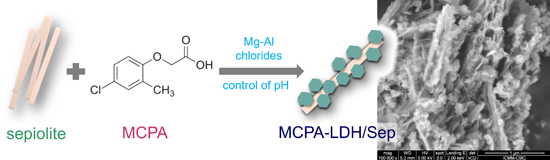
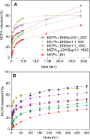
- that they remain attached to the silicate fibers (Figure 6F). In vitro release of MCPA in water The release of MCPA from the hybrid nanoarchitectures was evaluated in in vitro tests in deionized water (pH approx. 5.5), simulating the conditions of rain. The kinetics of the release depends on the
- nanoarchitecture composition (Figure 7), but in all cases an initial fast release is observed, followed by another zone showing slower kinetics. These two regimes could be due to the initial release of more accessible MCPA, most likely related to interparticle diffusion, while the second zone could be due to
- hydration or the presence of OH− species in the systems consolidated at lower temperature, which determines a different mechanism of attack of H+ to produce the degradation of the LDH and the subsequent release of entrapped MCPA. The fastest kinetics is observed with the lowest LDH content (Figure 7 and


Nanoporous smartPearls for dermal application – Identification of optimal silica types and a scalable production process as prerequisites for marketed products
Beilstein J. Nanotechnol. 2019, 10, 1666–1678, doi:10.3762/bjnano.10.162
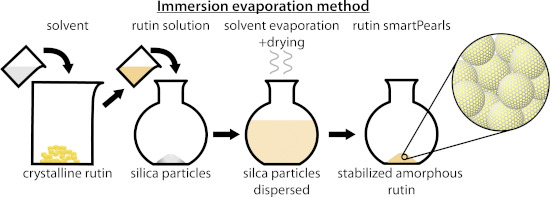
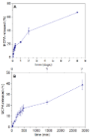
- the skin. The dissolution kinetics of rutin from the smartPearls is much faster than from the raw rutin powder. With smartPearls, the solubility saturation is reached after almost 1 min, for the raw rutin powder, it takes 5–10 min. For the dermal formulation the kinetics is not relevant, only the