


Search results
Search for "magnetic field" in Full Text gives 325 result(s) in Beilstein Journal of Nanotechnology. Showing first 200.
Formation and development of nanometer-sized cybotactic clusters in bent-core nematic liquid crystalline compounds
Beilstein J. Nanotechnol. 2018, 9, 1288–1296, doi:10.3762/bjnano.9.121
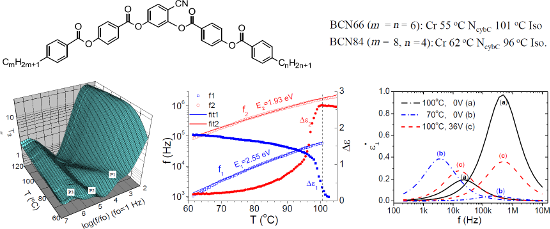
- (POM) [25], Raman scattering [26][27], XRD [28][29], photon correlation spectroscopy (PCS) [27][30][31] and NMR [32][33]. Recently Kim et al. [29] carried out X-ray experiments on a bent-core system in its nematic phase. They aligned the long molecular axes by applying a strong magnetic field parallel
- around the long axes needs to be broken by aligning one of the short axes or if the long axes need to be subjected to such a strong magnetic field. Can such a large field induce the orientational order parameter greater than its thermodynamic value? Nevertheless it is now clear that many of the


Proximity effect in a two-dimensional electron gas coupled to a thin superconducting layer
Beilstein J. Nanotechnol. 2018, 9, 1263–1271, doi:10.3762/bjnano.9.118
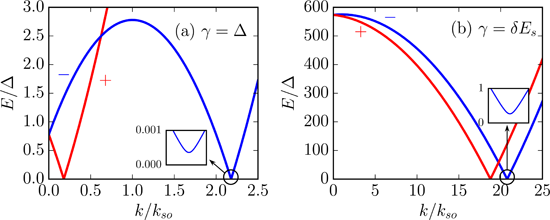
- the application of an out-of-plane magnetic field [4][5] (though orbital effects are not incorporated here) or due to the proximity of a magnetic insulator [8]. Also, it is possible to apply an in-plane magnetic field (to avoid unwanted orbital effects) to reach the topological phase if the 2DEG has a
- finite Dresselhaus SOI, as shown in [9]. An in-plane magnetic field in the presence of only Rashba SOI is not sufficient to reach the topological phase because it does not open a gap in the Rashba spectrum. The spectrum in the presence of the Zeeman splitting, which again is determined by poles in the


![[Graphic 15]](/bjnano/content/inline/2190-4286-9-118-i42.svg?max-width=637&scale=1.18182) in the absence of tunneling, assuming
in the absence of tunneling, assuming ![[Graphic 16]](/bjnano/content/inline/2190-4286-9-118-i43.svg?max-width=637&scale=1.18182) an...
an...


Circular dichroism of chiral Majorana states
Beilstein J. Nanotechnol. 2018, 9, 1194–1199, doi:10.3762/bjnano.9.110
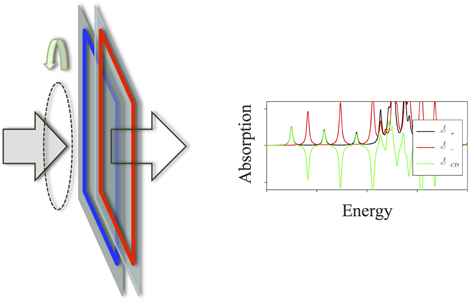
- , to the hybrid devices of [17], consisting of a quantum-anomalous Hall insulator and a superconductor material. In such systems, chiral Majorana modes propagating along the edges in a clockwise or anticlockwise manner, depending on the orientation of a perpendicular magnetic field, are formed at the
- negative. In the limit of a long 2D ribbon there is a preferred CD sign, depending on the magnetic field orientation. For a disc geometry the generalized angular momentum Jz becomes a good quantum number. Then, the combination of circular and particle–hole symmetries in a disc causes a vanishing absorption
- of any chirality preference exactly vanishes. Results and Discussion Chiral bands Figure 1 shows the evolution of the eigenvalue spectrum as a function of the magnetic field parameter ΔB. The results reproduce already known results [17]. At vanishing ΔB the spectrum around zero energy is gapped, a


![[Graphic 14]](/bjnano/content/inline/2190-4286-9-110-i18.svg?max-width=637&scale=1.18182) . Panels a) and b) correspond to the phases in Figure 1d with one (ΔB = 2...
. Panels a) and b) correspond to the phases in Figure 1d with one (ΔB = 2...
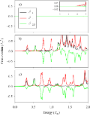
![[Graphic 15]](/bjnano/content/inline/2190-4286-9-110-i19.svg?max-width=637&scale=1.18182) ,
, ![[Graphic 16]](/bjnano/content/inline/2190-4286-9-110-i20.svg?max-width=637&scale=1.18182) and
and ![[Graphic 17]](/bjnano/content/inline/2190-4286-9-110-i21.svg?max-width=637&scale=1.18182) defined in the main text. The shown results correspond to the spe...
defined in the main text. The shown results correspond to the spe...

![[Graphic 19]](/bjnano/content/inline/2190-4286-9-110-i23.svg?max-width=637&scale=1.18182) ,
, ![[Graphic 20]](/bjnano/content/inline/2190-4286-9-110-i24.svg?max-width=637&scale=1.18182) and
and ![[Graphic 21]](/bjnano/content/inline/2190-4286-9-110-i25.svg?max-width=637&scale=1.18182) for (a) a square of Lx = Ly = 20 LU), and for (b) a rectangle of L...
for (a) a square of Lx = Ly = 20 LU), and for (b) a rectangle of L...
Inverse proximity effect in semiconductor Majorana nanowires
Beilstein J. Nanotechnol. 2018, 9, 1184–1193, doi:10.3762/bjnano.9.109
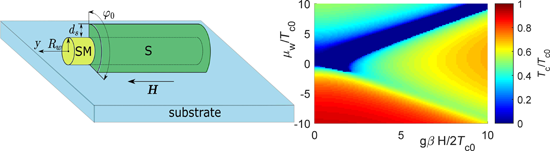
- separates the regimes with trivial and nontrivial topological properties of the system [3][4][18]. Further increase in the magnetic field is known to suppress the proximity effect since in the absence of the spin–orbit coupling the Fermi level crosses the only energy branch with a complete spin polarization
- along the magnetic field direction. The nonzero spin–orbit coupling destroys this spin polarization mixing different spin projections and resulting in a nonzero induced superconducting gap in the wire of approximately αΔind/gβH, where Δind is the induced superconducting order parameter in the wire, and
- α is the spin–orbit coupling constant. Still, even in the presence of the spin–orbit coupling the increasing magnetic field suppresses the induced superconductivity, which definitely restores the superconducting order parameter in the S film. This reentrant superconductivity stimulated by the


Thermoelectric current in topological insulator nanowires with impurities
Beilstein J. Nanotechnol. 2018, 9, 1156–1161, doi:10.3762/bjnano.9.107
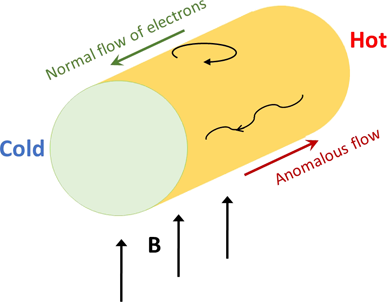
- charge current generated by maintaining a temperature difference over a nanowire at zero voltage bias. For topological insulator nanowires in a perpendicular magnetic field the current can change sign as the temperature of one end is increased. Here we study how this thermoelectric current sign reversal
- depends on the magnetic field and how impurities affect the size of the thermoelectric current. We consider both scalar and magnetic impurities and show that their influence on the current are quite similar, although the magnetic impurities seem to be more effective in reducing the effect. For moderate
- insulator material, such as BiSe, is formed into a nanowire, topological states can appear on its surface. Recently, such wires in a magnetic field have been studied extensively both theoretically [20][21][22][23][24] and experimentally [5][6][7][8][9][10][25]. When the nanowires are of circular cross


Field-controlled ultrafast magnetization dynamics in two-dimensional nanoscale ferromagnetic antidot arrays
Beilstein J. Nanotechnol. 2018, 9, 1123–1134, doi:10.3762/bjnano.9.104
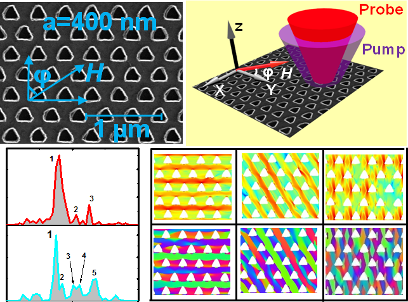
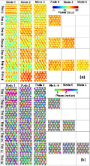
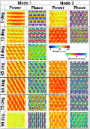
- micromagnetic simulations have been exploited to study the magnetization precession and spin-wave modes of the antidot lattice with varying lattice constant and in-plane orientation of the bias-magnetic field. A remarkable variation in the spin-wave modes with the orientation of in-plane bias magnetic field is
- ], spin-wave filters [14], spin-logic [15] and reprogrammable magnonic devices [16]. The edges of the antidots lead to quantization of SW modes due to lateral confinement as well as the generation of a periodically modulated internal magnetic field due to the demagnetization effect. A number of parameters
- mode structures as well as the anisotropy in the frequency spectra [25]. Quantized SW modes have been found to be transformed to propagating ones and vice versa in rhombic antidot lattices with the variation of the in-plane orientation of the bias-magnetic field [26]. A particular study showed the



Review on nanoparticles and nanostructured materials: history, sources, toxicity and regulations
Beilstein J. Nanotechnol. 2018, 9, 1050–1074, doi:10.3762/bjnano.9.98

- magnets, so-called ferrofluids, are ultrastable suspensions of small magnetic NPs with superparamagnetic properties [36]. Upon applying a magnetic field, the liquid will macroscopically magnetize, which leads to the alignment of NPs along the magnetic field direction [37]. Recent research has focused on


Magnetic characterization of cobalt nanowires and square nanorings fabricated by focused electron beam induced deposition
Beilstein J. Nanotechnol. 2018, 9, 1040–1049, doi:10.3762/bjnano.9.97
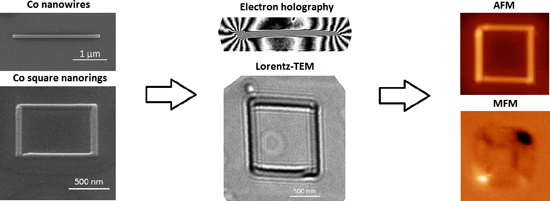
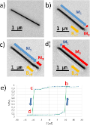
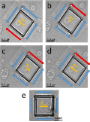
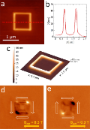
- using beam energies of 5 and 15 keV have the characteristics of magnetic dipoles, with larger magnetic moments observed for NWs deposited at lower energy. L-TEM is used to image magnetic domain walls in NWs and nanorings and their motion as a function of applied magnetic field. The NWs are found to have
- holography (EH) [22]. Here, we use different techniques and different magnetization conditions to investigate the magnetic states of NWs and square nanorings formed from four NWs. The magnetization states of the square nanorings are studied both in the presence of an applied magnetic field and at remanence
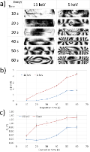
- images were taken underfocus in low magnification mode, using the objective mini-lens as the imaging lens, with the objective lens slightly excited (at 10% of the value used for eucentric focus), in order to impart a specimen-tilt-angle-dependent magnetic field to the sample. Off-axis electron holography
Non-equilibrium electron transport induced by terahertz radiation in the topological and trivial phases of Hg1−xCdxTe
Beilstein J. Nanotechnol. 2018, 9, 1035–1039, doi:10.3762/bjnano.9.96
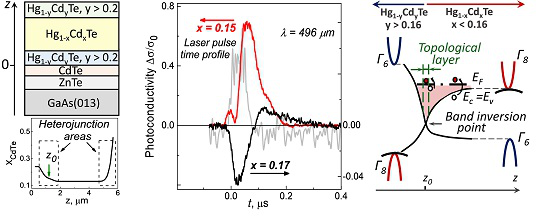
- inverted band structure (topological phase). Hall effect measurements have shown that all the samples are of the n-type. Free electron concentration values determined in magnetic field of 0.05 T at T = 4.2 K are in the range from 3.7 × 1014 cm−3 to 5.2 × 1014 cm−3. Within the two-band Kane model, the given


Single-crystalline FeCo nanoparticle-filled carbon nanotubes: synthesis, structural characterization and magnetic properties
Beilstein J. Nanotechnol. 2018, 9, 1024–1034, doi:10.3762/bjnano.9.95
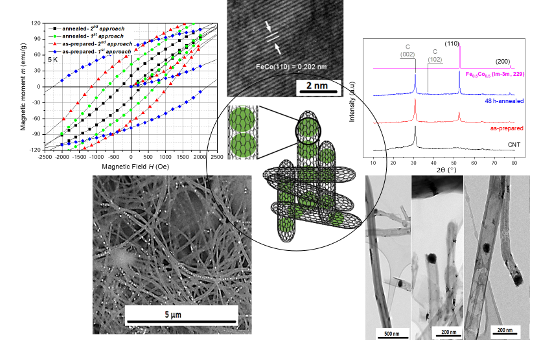
- ) were heated to a temperature of 900 °C with a heating rate of 5 K/min followed by an isothermal of 15 min under air atmosphere with a flow rate of 100 mL/min. The magnetic field dependence of the magnetization at 5 K and 300 K in an external magnetic field up to ±5 T was measured by means of
- diffraction peaks for the corresponding oxides were observed as shown by XRD measurements. Magnetic properties The magnetic field dependence of the magnetization M(H) has been measured for the as-prepared and annealed samples of Fe50Co50@CNT prepared by both filling approaches as shown in Figure 7a and Figure
- shielded by the carbon shell. To be specific, the presence of oxide layers would imply the presence of an antiferromagnetic shell around the ferromagnetic cores, i.e., the material would evolve the exchange bias effect where nanoparticles cooled under a magnetic field show a significant shift between the


Enzymatically promoted release of organic molecules linked to magnetic nanoparticles
Beilstein J. Nanotechnol. 2018, 9, 986–999, doi:10.3762/bjnano.9.92
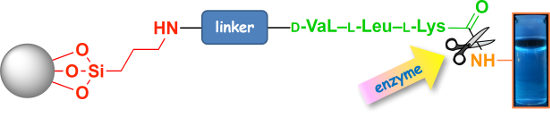
- nanoparticles (NPs) [1] are a major class of nanoscale materials, which are actively investigated as carriers for targeted drug delivery [2][3]. In this approach, the nanoparticles that are carrying the appropriate drug are remotely directed to the disease site by means of a magnetic field gradient. Then the
- -superconducting quantum interference device (SQUID) magnetometer (Magnetic Properties Measurement System, Quantum Design) with resolution better than 10−7 emu. The room temperature magnetic hysteresis cycles were obtained in the 0–5 Tesla μ0H magnetic field range. DLS measurements were performed using a Zetasizer




Heavy-metal detectors based on modified ferrite nanoparticles
Beilstein J. Nanotechnol. 2018, 9, 762–770, doi:10.3762/bjnano.9.69
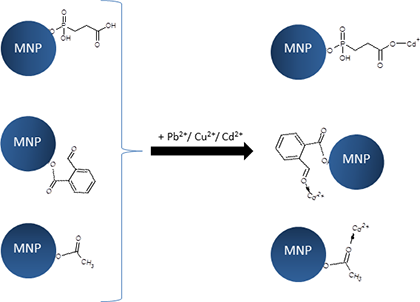
- of the spectral lines is much smaller than in the other cases. An especially wide spectrum is observed in the case of magnetite doped by Mn atoms. The value of the average hyperfine magnetic field on the iron atoms is highest on the sample with Co dopant. The second characteristic feature is the


Anchoring Fe3O4 nanoparticles in a reduced graphene oxide aerogel matrix via polydopamine coating
Beilstein J. Nanotechnol. 2018, 9, 591–601, doi:10.3762/bjnano.9.55
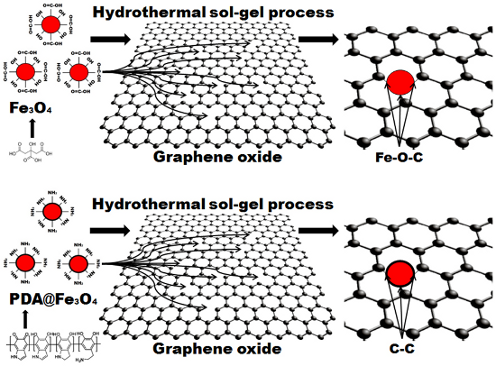
- and compressed aerogel structures (this sample is further referred as c-rGO-PDA@Fe3O4). The magnetization curves are presented in Figure 7. The room temperature magnetization dependences on the magnetic field (M–H curves) for rGO-Fe3O4, rGO-PDA@Fe3O4 and c-rGO-PDA@Fe3O4 aerogels are shown in Figure 7a
- to 350 K. The magnetic hysteresis loops (M–H dependences) were measured at RT at a magnetic field varying between ±30 kOe. Powder X-ray diffraction (XRD) studies of source materials were carried out to determine the crystallographic structure of the studies compounds. The diffractometer (PANalytical
- allow for direct comparison). Room temperature M–H curves of rGO-Fe3O4, rGO-PDA@Fe3O4 and c-rGO-PDA@Fe3O4 aerogels (a). The inset in (a) presents M–H curves at low magnetic field. ZFC and FC temperature dependences of susceptibility for rGO, rGO-PDA@Fe3O4 and c-rGO-PDA@Fe3O4 aerogels under the applied


Revealing the interference effect of Majorana fermions in a topological Josephson junction
Beilstein J. Nanotechnol. 2018, 9, 520–529, doi:10.3762/bjnano.9.50
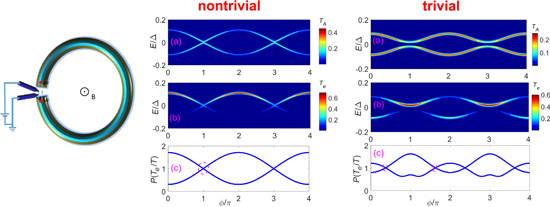
- , respectively. Moreover, α, β are the spin indices, t is the hopping amplitude, μ is the chemical potential, UR is the Rashba coupling strength, and Vx is the Zeeman energy caused by magnetic field along the wire direction. Δ is the superconducting pairing amplitude and Vimp(i) is the Gaussian impurity. Hc


Engineering of oriented carbon nanotubes in composite materials
Beilstein J. Nanotechnol. 2018, 9, 415–435, doi:10.3762/bjnano.9.41
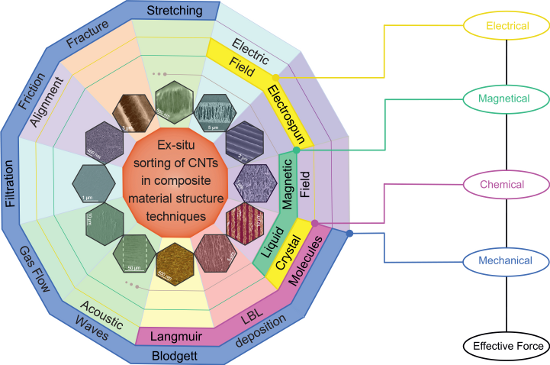
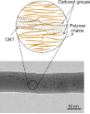
- molecular structure of the liquid crystal (LC) (i.e., that it can be simply oriented in the direction of an applied electric or magnetic field) the alignment and dispersion of the CNTs in a solution of liquid crystals is also achievable (Figure 15). The biggest advantage of this method is that small fields
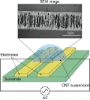
- . This method is also used to produce electrical contacts with individual CNTs [28][106][107]; and recently, the ability of the technique has been investigated to purify metallic SWCNTs from the mixture species [106]. Magnetic field The alignment of CNTs using a magnetic field is a unique technique
- because of its remote action. One of the most common methods to apply a magnetic field is to cast the suspension of CNTs onto a substrate that is placed in the vicinity of a magnet. While the layer on the substrate is drying, CNTs are aligned in the direction of the magnetic field. In this case, unlike an








Dynamic behavior of nematic liquid crystal mixtures with quantum dots in electric fields
Beilstein J. Nanotechnol. 2018, 9, 399–406, doi:10.3762/bjnano.9.39

- the field is switched off. Acknowledgements The work has been funded by University Politehnica of Bucharest, through the ’Excellence Research Grants’ Program, UPB–GEX. Identifier: UPB–EXCELENŢĂ–2016 Research project title Phase modulation in nematic liquid crystals subjected to magnetic field


Dynamic behavior of a nematic liquid crystal with added carbon nanotubes in an electric field
Beilstein J. Nanotechnol. 2018, 9, 233–241, doi:10.3762/bjnano.9.25
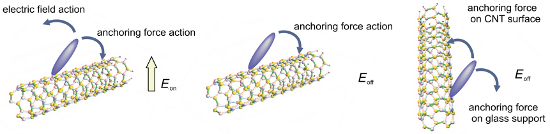
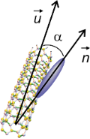
- the 5CB + SWCNTs mixture. Acknowledgements The work has been funded by University Politehnica of Bucharest, through the ’Excellence Research Grants’ Program, UPB–GEX. Identifier: UPB–EXCELENŢĂ–2016 Research project title Phase modulation in nematic liquid crystals subjected to magnetic field

![[Graphic 1]](/bjnano/content/inline/2190-4286-9-25-i33.svg?max-width=637&scale=1.18182) is the undistu...
is the undistu...



Atomic layer deposition and properties of ZrO2/Fe2O3 thin films
Beilstein J. Nanotechnol. 2018, 9, 119–128, doi:10.3762/bjnano.9.14
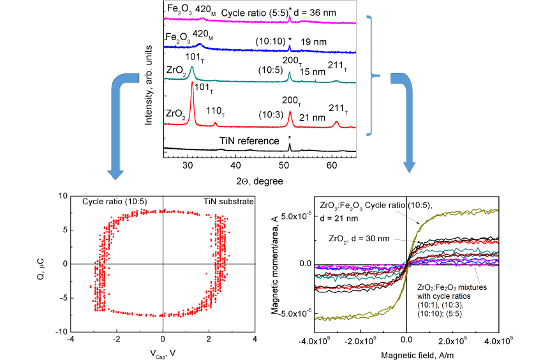
- performed using a vibrating sample magnetometer (VSM) option of the physical property measurement system (14T, Quantum Design) by scanning the magnetic field from −1 T to 1 T parallel to the film surface at room temperature. Results and Discussion Film growth and composition The film thickness varied


Review on optofluidic microreactors for artificial photosynthesis
Beilstein J. Nanotechnol. 2018, 9, 30–41, doi:10.3762/bjnano.9.5
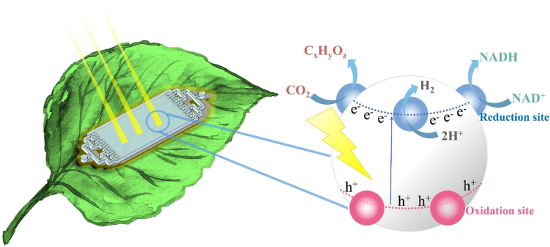
- profound and meaningful work is expected to appear in the field of optofluidics-based APS since the optofluidic devices are versatile and can be integrated together with other functions, for instance, deoxygenation, temperature control, electricity/magnetic field and pressure [118][119][120][121]. (A) A


Magnetic field induced orientational transitions in liquid crystals doped with carbon nanotubes
Beilstein J. Nanotechnol. 2017, 8, 2807–2817, doi:10.3762/bjnano.8.280
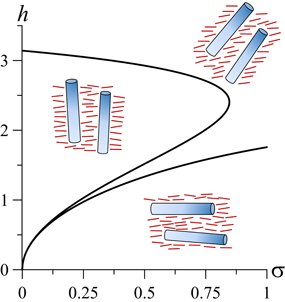
- Danil A. Petrov Pavel K. Skokov Alexander N. Zakhlevnykh Physics of Phase Transitions Department, Perm State University, Bukireva St. 15, 614990 Perm, Russia 10.3762/bjnano.8.280 Abstract We propose a continuum theory of orientational phase transitions induced by an external magnetic field in a
- suspension of carbon nanotubes in a nematic liquid crystal. It is shown that in a magnetic field a non-uniform and two different uniform phases are possible in the suspension. The uniform phases of the suspension differ by the type of orientational coupling of nanotubes with the liquid crystal matrix (the
- and non-uniform phases of the suspension are found analytically. It is shown that, when the nanotubes are weakly coupled to the matrix, the magnetic field induces reentrant transitions (uniform planar phase–non-uniform phase–uniform homeotropic phase–non-uniform phase). These transitions can be of


![[Graphic 43]](/bjnano/content/inline/2190-4286-8-280-i72.svg?max-width=637&scale=1.18182) for the Fréedericksz transition as a function of the couplin...
for the Fréedericksz transition as a function of the couplin...

![[Graphic 58]](/bjnano/content/inline/2190-4286-8-280-i87.svg?max-width=637&scale=1.18182) and (b)
and (b) ![[Graphic 59]](/bjnano/content/inline/2190-4286-8-280-i88.svg?max-width=637&scale=1.18182) on the coupling energy of CNTs w...
on the coupling energy of CNTs w...
Dry adhesives from carbon nanofibers grown in an open ethanol flame
Beilstein J. Nanotechnol. 2017, 8, 2719–2728, doi:10.3762/bjnano.8.271
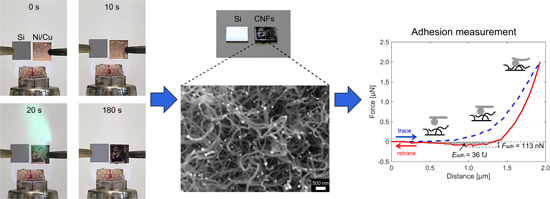
- , 76344 Eggenstein-Leopoldshafen, Germany Institute for Applied Materials, Karlsruhe Institute of Technology (KIT), Hermann-von-Helmholz-Platz 1, 76344 Eggenstein-Leopoldshafen, Germany 10.3762/bjnano.8.271 Abstract Based on magnetic-field-assisted growth of carbon nanofibers in an open ethanol flame we
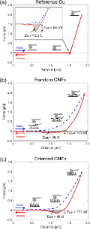
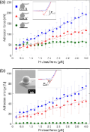
- linear with preload force. Carbon nanofibers oriented by a magnetic field show a 68% higher adhesion (0.66 N/cm2) than the randomly oriented fibers. Endurance tests revealed that the carbon nanofiber arrays withstand 50.000 attachment/detachment cycles without observable wear. Keywords: adhesion; atomic
- demonstrated possible alignment during growth with an external electric [6] or magnetic field [9]. Surprisingly, these alternative growth methods for 1D-CNs did not receive much attention so far. One among many promising applications of carbon nanotubes are dense arrays that feature interesting adhesion


Beyond Moore’s technologies: operation principles of a superconductor alternative
Beilstein J. Nanotechnol. 2017, 8, 2689–2710, doi:10.3762/bjnano.8.269

- zero static power dissipation inside the cryogenic cooler. The bias current is terminated off the chip at room temperature. (ii) A well-known design problem of RSFQ circuits is the large magnetic field of the returning bias current affecting the logic cells. It is recommended [45] to keep the maximum


Interactions of low-energy electrons with the FEBID precursor chromium hexacarbonyl (Cr(CO)6)
Beilstein J. Nanotechnol. 2017, 8, 2583–2590, doi:10.3762/bjnano.8.258
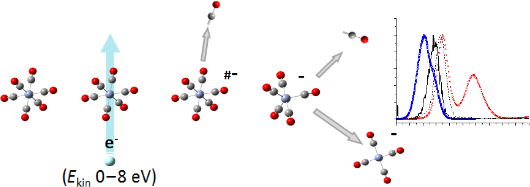
- by a repeller lens out of the interaction region, accelerated by a voltage drop of 6 kV, momentum-selected by the magnetic sector, energy-selected by the electric sector, and detected by a channel electron multiplier (Dr. Sjuts, Germany). Mass scans were taken by varying the magnetic field while the



Ferrocholesteric–ferronematic transitions induced by shear flow and magnetic field
Beilstein J. Nanotechnol. 2017, 8, 2552–2561, doi:10.3762/bjnano.8.255
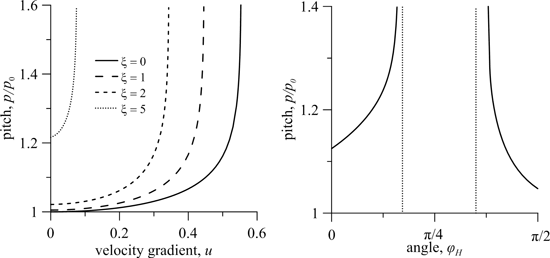
- magnetic field and a shear flow. Both influences are able to induce the ferrocholesteric–ferronematic transition independently; however, the differences between the magnetic field orientation and the flow alignment direction lead to a competition between magnetic and hydrodynamic mechanisms of influence on
- the ferrocholesteric structure. We analyze various orientations of a magnetic field relative to the direction of a shear flow. The pitch of the ferrocholesteric helix is obtained as function of the strength and the orientation angle of the magnetic field, the shear velocity gradient and a reactive
- parameter. Phase diagrams of ferrocholesteric–ferronematic transition and the pitch of the ferrocholesteric helix as functions of the material and the governing parameters are calculated. We find out that imposing a shear flow leads to a shift of the magnetic field threshold. The value of the critical


Alternating current magnetic susceptibility of a ferronematic
Beilstein J. Nanotechnol. 2017, 8, 2515–2520, doi:10.3762/bjnano.8.251
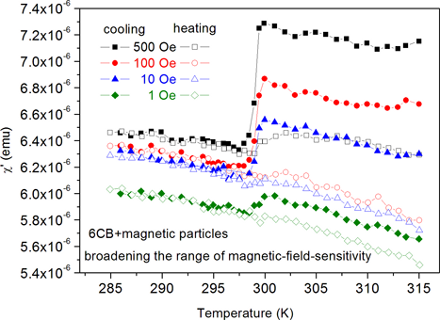
- , that in the isotropic phase of a ferronematic, a weak dc bias magnetic field of a few oersteds increases the ac magnetic susceptibility. This increment vanishes irreversibly if the substance is cooled down to the nematic phase, but can be reinduced by applying the dc bias field again in the isotropic
- phase [Tomašovičová, N. et al. Soft Matter 2016, 12, 5780–5786]. The effect has no analogue in the neat host liquid crystal. Here, we demonstrate that by doubling the concentration of the magnetic nanoparticles, the range of the dc bias magnetic field to which the ferronematic is sensitive without
- saturation can be increased by about two orders of magnitude. This finding paves a way to application possibilities, such as low magnetic field sensors, or basic logical elements for information storage. Keywords: ac magnetic susceptibility; ferronematics; magnetic particles; Introduction The great


![[Graphic 7]](/bjnano/content/inline/2190-4286-8-251-i7.svg?max-width=637&scale=1.18182) = 10−4 in the nematic phas...
= 10−4 in the nematic phas...





