Search results
Search for "oxidation" in Full Text gives 778 result(s) in Beilstein Journal of Nanotechnology. Showing first 200.
Revealing local structural properties of an atomically thin MoSe2 surface using optical microscopy
Beilstein J. Nanotechnol. 2022, 13, 572–581, doi:10.3762/bjnano.13.49
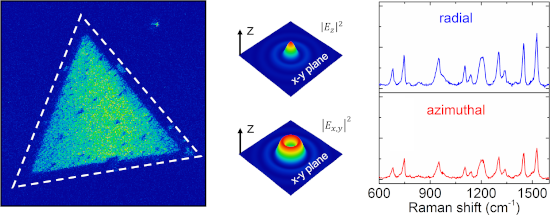
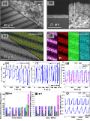
- , in the AFM image in Figure 2c, one can clearly see the presence of particle aggregates, which were reported to be oxidation products (MoOxSey or MoO3) either through the CVD growth process or through aging in air. Sahoo et al. have reported that the aging of WSe2 flakes by exposure to air produces
- nanoparticles, which lead to a redshift by 2 to 4 nm in the photoluminescence peak position as compared to the pristine flake. They attributed the observed photoluminescence redshift to the formation of different states or strains in the presence of oxidation nanoparticles [42]. In Figure 2f, we see redshifts


Influence of thickness and morphology of MoS2 on the performance of counter electrodes in dye-sensitized solar cells
Beilstein J. Nanotechnol. 2022, 13, 528–537, doi:10.3762/bjnano.13.44
- precursor solutions show redox peaks associated with the oxidation/reduction of the precursor ions on the surface of the FTO electrode. In detail, the CV recorded in Na2S solution shows a broad anodic peak around −0.50 V due to the oxidation of S2− ions [25][26]. The CV curve of (NH4)6Mo7O24 solution
- recorded in the mixture solution showed two oxidation peaks at −0.20 V and −0.50 V attributed to the oxidation of Mo7O246− and S2− ions, respectively. Moreover, a new reduction peak appeared around −1.20 V related to the reduction of MoS42− to form MoS2 as described in Equation 5. This CV behavior is
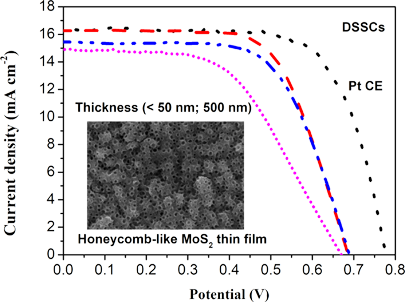
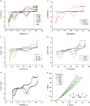
- and compared to that of a Pt CE. As can be seen in Figure 5, there are two redox pairs (Ox1/Red1) and (Ox2/Red2). These redox peaks were well defined as the oxidation and reduction of iodide and triiodide (3I− − 2e− → I3− (Ox1), I3− + 2e− → 3I− (Red1) and 2I3− − 2e− → 3I2 (Ox2), 3I2 + 2e− → 2I3− (Red2


Ethosomal (−)-epigallocatechin-3-gallate as a novel approach to enhance antioxidant, anti-collagenase and anti-elastase effects
Beilstein J. Nanotechnol. 2022, 13, 491–502, doi:10.3762/bjnano.13.41
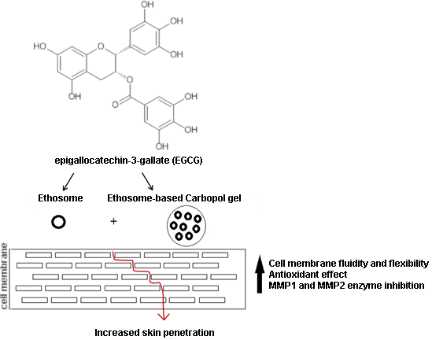
- collagenase and elastase enzymes were investigated compared to those of the solution form. Within the scope of antioxidant activity studies, 2,2-diphenyl-1-picrylhydrazyl (DPPH•) and 2,2'-azino-bis(3-ethylbenzothiazoline-6-sulfonic acid) (ABTS+•) radical scavenging and β-carotene/linoleic acid co-oxidation
- thus protect cells from oxidation-induced damage by slowing/inhibiting oxidation. They are of critical importance in maintaining the structural integrity of cells/tissues and ensuring the continuity of their functions, which include the ability to prevent side effects of free radicals [4][5][6
- values compared to the those of the standard (14.2 µg/mL and 1.54 µg/mL, respectively) [32]. However, the β-carotene/linoleic acid co-oxidation inhibitory effects of our ethosomal formulations were different when compared to those of the synthetic antioxidant butylated hydroxytoluene (BHT) used as the



A non-enzymatic electrochemical hydrogen peroxide sensor based on copper oxide nanostructures
Beilstein J. Nanotechnol. 2022, 13, 424–436, doi:10.3762/bjnano.13.35
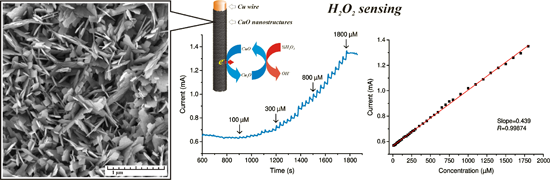
- nanostructures were obtained by a one-step hydrothermal oxidation method. The resulting coating is uniform and dense and shows good adhesion to the wire surface. Structure, surface, and composition of the obtained samples were studied using field-emission scanning electron microscopy along with energy-dispersive
- , such as thermal oxidation of copper electrodes in an oxygen atmosphere [72][73], hydrothermal chemical oxidation of copper surfaces [56], and hydrothermal synthesis using various precursors containing copper ions [74][75]. Copper oxide nanostructures can also be obtained as a powder and then applied to
- electrodes without additional treatments such as surface modification or enzyme immobilization. This article describes the process of obtaining wire electrodes with nanostructured CuO coatings by a one-step chemical hydrothermal oxidation method and their application in electrochemical measurements for the




A chemiresistive sensor array based on polyaniline nanocomposites and machine learning classification
Beilstein J. Nanotechnol. 2022, 13, 411–423, doi:10.3762/bjnano.13.34
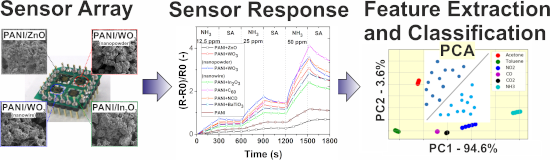
- /NCD, and PANI/BaTiO3) sensing layers were fabricated similarly as reported in [10]. The whole fabrication process of the sensor array is described in Figure 13. First, the protonated emeraldine salt form of PANI was prepared by oxidation of 0.2 M aniline hydrochloride with 0.25 M ammonium persulfate




Coordination-assembled myricetin nanoarchitectonics for sustainably scavenging free radicals
Beilstein J. Nanotechnol. 2022, 13, 284–291, doi:10.3762/bjnano.13.23
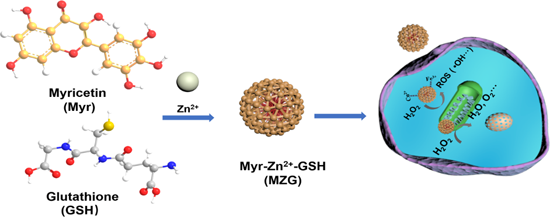
- , cysteine, and glutamic acid. The cysteine residue plays a pivotal role in protecting the body from oxidation damage; however, GSH is easily metabolized by enzymes [23]. In this work, we employed a facile co-assembly strategy to design hybrid nanoparticles as antioxidants [24][25][26][27][28][29][30][31


Investigation of a memory effect in a Au/(Ti–Cu)Ox-gradient thin film/TiAlV structure
Beilstein J. Nanotechnol. 2022, 13, 265–273, doi:10.3762/bjnano.13.21
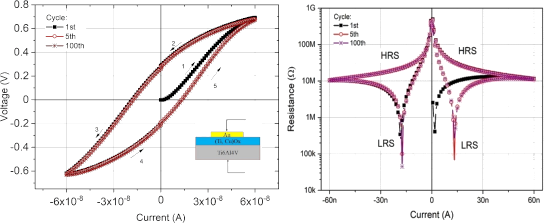
- transitions using the Tauc method. Structure and elemental composition Surface properties The oxidation state of copper on the surface of (Ti0.48Cu0.52)Ox thin film was analyzed with the XPS Cu 2p core level spectrum (Figure 6). The Cu 2p core level has split spin–orbit components with ΔBE of 19.8 eV and an
- intensity ratio of Cu 2p1/2 and Cu 2p3/2 of approximately 0.5. It is possible to distinguish Cu oxidation states taking into consideration not only the position of the Cu 2p3/2 peak but also the satellite features that could be visible above the binding energy of this peak. According to Biesinger [48][49
- oxidation state +4 of titanium present at the surface. The ratio between the areas of the Ti 2p3/2 and Ti 2p1/2 peaks is equal to 2:1, which confirms the presence of stoichiometric TiO2 at the surface of (Ti0.48Cu0.52)Ox thin film. Furthermore, the O 1s spectrum (Figure 6c) was deconvoluted into three peaks



Relationship between corrosion and nanoscale friction on a metallic glass
Beilstein J. Nanotechnol. 2022, 13, 236–244, doi:10.3762/bjnano.13.18
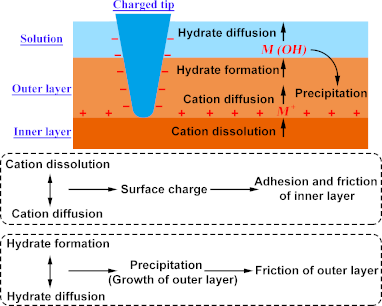
- solution and corrosion products on the surfaces reduced the friction coefficient [16][17]. The native oxide layers grown in the air were found to strengthen the friction coefficient and the wear resistance of MGs at the nanoscale [18][19]. The thermal oxidation caused a higher contribution of shearing and


Surfactant-free syntheses and pair distribution function analysis of osmium nanoparticles
Beilstein J. Nanotechnol. 2022, 13, 230–235, doi:10.3762/bjnano.13.17
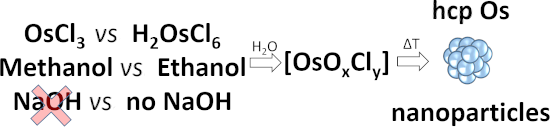
- surfactants. Despite the absence of surfactants, the small-sized NPs are stable, in agreement with previous surfactant-free Os NP syntheses [37]. This can be attributed to chloride stabilization and/or stabilization by oxidation products of the monoalcohols [25]. Here, as opposed to the synthesis of Pt, Ir


Impact of device design on the electronic and optoelectronic properties of integrated Ru-terpyridine complexes
Beilstein J. Nanotechnol. 2022, 13, 219–229, doi:10.3762/bjnano.13.16
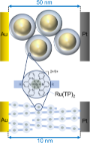
- the oxidation state of the Ru ions bound to the respective molecular compounds is not feasible by these methods. In contrast, XPS BE highly depend on the oxidation state and/or the chemical composition and are, thus, a suitable means to reveal details of the Ru(TP)2-complex wire growth process
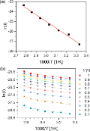
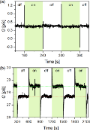
- has been successfully conducted and reveal the oxidation state of Ru during complex wire growth [19]. Electrical properties of Ru(TP)2-complex devices Here, we study the relation between device design and device performance and compare the transport and optical switching properties of functional Ru(TP


Engineered titania nanomaterials in advanced clinical applications
Beilstein J. Nanotechnol. 2022, 13, 201–218, doi:10.3762/bjnano.13.15
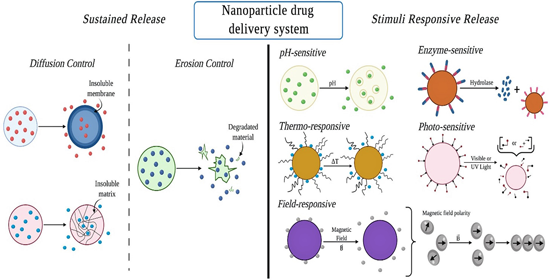
- photocatalytic activity. Upon UV irradiation, the electrons in the valence band get excited to the conduction band, leading to the formation of electron–hole pairs and the generation of ROS. Subsequently, the generated holes (h+) convert water/hydroxide molecules to peroxide/hydroxyl radicals by oxidation. The
- the main connective tissue cells that secrete the collagen-rich extracellular matrix (ECM) for generating soft tissues that bind with the implants. Wang and co-workers reported that the super hydrophilic nanotubular structure of hydrogenated TiO2 prepared by anodic oxidation and thermal hydrogenation


Low-energy electron interaction and focused electron beam-induced deposition of molybdenum hexacarbonyl (Mo(CO)6)
Beilstein J. Nanotechnol. 2022, 13, 182–191, doi:10.3762/bjnano.13.13
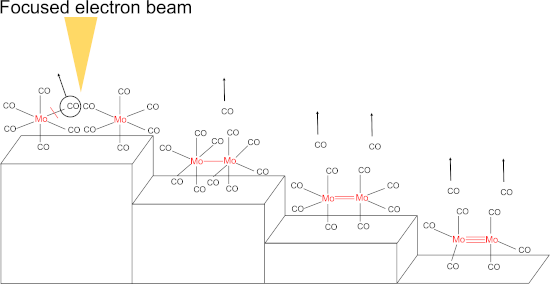
- reduction of the respective compound while ionization through electron removal represents oxidation. Thus, if sufficient proximity is provided, DEA as an initial fragmentation step should provide the prerequisite for metal–metal bond formation and nucleation points for further CO loss as is shown


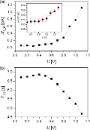
Thermal oxidation process on Si(113)-(3 × 2) investigated using high-temperature scanning tunneling microscopy
Beilstein J. Nanotechnol. 2022, 13, 172–181, doi:10.3762/bjnano.13.12
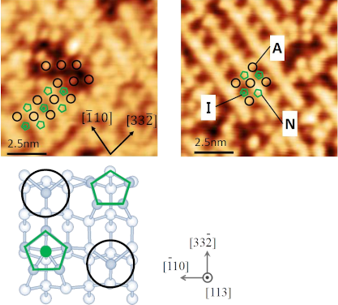
- Institute for Materials Science, 1-1 Namiki, Tsukuba, Ibaraki 305-0044, Japan 10.3762/bjnano.13.12 Abstract Thermal oxidation of Si(113) in a monolayer regime was investigated using high-temperature scanning tunneling microscopy (STM). Dynamic processes during thermal oxidation were examined in three
- oxidation modes – oxidation, etching, and transition modes – in the third of which both oxidation and etching occur. A precise temperature–pressure growth mode diagram was obtained via careful measurements for Si(113), and the results were compared with those for Si(111) in the present work and Si(001) in
- the literature. Initial oxidation processes were identified based on high-resolution STM images. Keywords: high-index Si surface; in situ measurement; oxidation; scanning tunneling microscopy (STM); Introduction High-index silicon surfaces have drawn considerable interest for their usefulness in



A comprehensive review on electrospun nanohybrid membranes for wastewater treatment
Beilstein J. Nanotechnol. 2022, 13, 137–159, doi:10.3762/bjnano.13.10
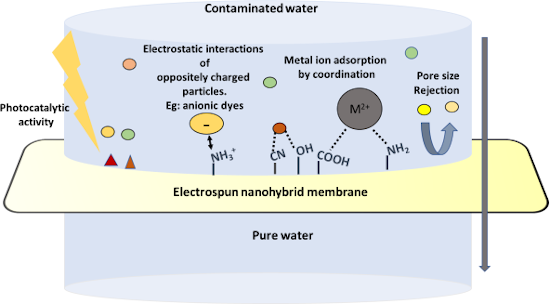
- 5.5 [63]. Utilizing the synergistic effect of the oxidation of manganese dioxide and strong adsorption of iron oxides to As5+, Aliahmadipoor et al. developed a novel electrospun nanohybrid membrane incorporating inorganic Fe–Mn binary oxide nanoparticles into PVDF for the decontamination of As5+. A




Bacterial safety study of the production process of hemoglobin-based oxygen carriers
Beilstein J. Nanotechnol. 2022, 13, 114–126, doi:10.3762/bjnano.13.8
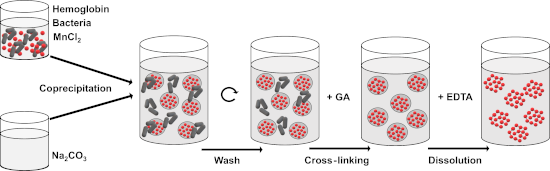
- the oxidation of iron in the heme group. Methemoglobin is not able to release oxygen [14][15]. It is, therefore, not suitable for the use in the production of HbMP applied as an artificial oxygen carrier. Since the aforementioned sterilization methods cannot be used, the solution to obtain sterile


Tin dioxide nanomaterial-based photocatalysts for nitrogen oxide oxidation: a review
Beilstein J. Nanotechnol. 2022, 13, 96–113, doi:10.3762/bjnano.13.7
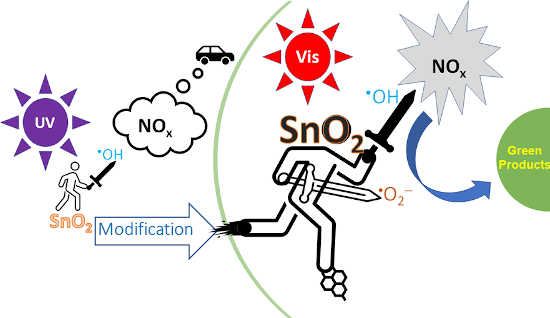
- received particular attention from the scientific community. The photocatalytic NOx oxidation will be an important contribution to mitigate climate change in the future. Existing review papers mainly focus on applying SnO2 materials for photocatalytic oxidation of pollutants in the water, while studies on
- review. Keywords: green products; nanomaterials; NO oxidation; photocatalysis; SnO2; Review Introduction A World Health Organization (WHO) report indicated that 4.2 million deaths every year occur due to exposure to ambient (outdoor) air pollution [1]. This number is much higher than the deaths from
- in recent years. There are many methods for controlling and removing NOx, such as reducing the burning temperature, reducing the residence time at peak temperature, chemical reduction or oxidation of NOx, removal of nitrogen from combustion fuels, and sorption, both adsorption and absorption [7][8


Theranostic potential of self-luminescent branched polyethyleneimine-coated superparamagnetic iron oxide nanoparticles
Beilstein J. Nanotechnol. 2022, 13, 82–95, doi:10.3762/bjnano.13.6
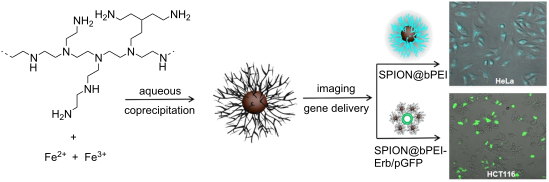
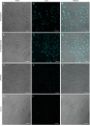
- partial PEI oxidation during the synthesis. Here, we demonstrate in vitro dye-free optical imaging and successful gene transfection with luminescent SPION@bPEI, which was further modified for receptor-mediated delivery of the cargo selectively to cancer cell lines overexpressing the epidermal growth
- the backbone, acidification of amines, hydrogen bonding, exciplex formation, amine oxidation, and solvent-induced aggregation were reported as factors that amplify the weak luminescence of PEI and amine-containing dendrimers [15][16][17][18][20][24]. The luminescence of these materials is especially
- to SPION which has strong absorbance in the visible window of the electromagnetic spectrum. A tremendous enhancement in the poor, mostly unrecognized and unutilized blue luminescence of bPEI was achieved when it was used as a coating on SPION crystals. We suggested that the partial oxidation of the




Influence of magnetic domain walls on all-optical magnetic toggle switching in a ferrimagnetic GdFe film
Beilstein J. Nanotechnol. 2022, 13, 74–81, doi:10.3762/bjnano.13.5
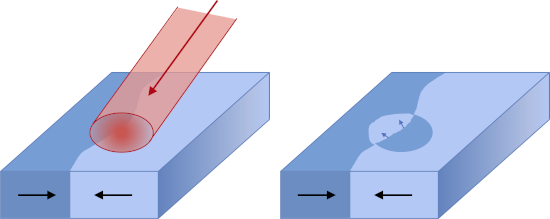
- thermally oxidized SiOx layer and covered with a 3 nm Al capping layer to prevent oxidation. Composition and layer thicknesses were determined by calibrating the sputter rates with a quartz balance before the depositions. Thus, the sample structure was as follows: Al (3 nm)/Gd26Fe74 (15 nm)/Pt (5 nm)/SiOx


Sputtering onto liquids: a critical review
Beilstein J. Nanotechnol. 2022, 13, 10–53, doi:10.3762/bjnano.13.2
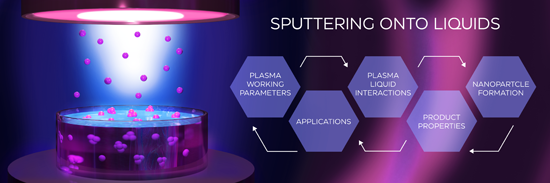
- specific mechanism of NP production by SoL is discussed based on the detailed analysis of the effect of various experimental parameters on the size of NPs and their colloidal and oxidation stability in host liquid matrices. Furthermore, a carefully structured overview of all types of products produced by






Measurement of polarization effects in dual-phase ceria-based oxygen permeation membranes using Kelvin probe force microscopy
Beilstein J. Nanotechnol. 2021, 12, 1380–1391, doi:10.3762/bjnano.12.102
- spinel or perovskite phase applicable in membrane reactors for partial oxidation reactions. Dual-phase membranes with FeCo2O4, or its iron-rich pendant Fe2CoO4, and Gd-doped ceria as an ion conductor have already been successfully applied as oxygen permeation membranes with high permeability in the
- partial oxidation reactions. Apart from Gd-doped ceria, Sm-doped ceria also could be an interesting alternative in this kind of composite due to its high ionic conductivity [17]. Obstacles that generally still need to be addressed for the application of dual-phase ceria-based membranes in such an
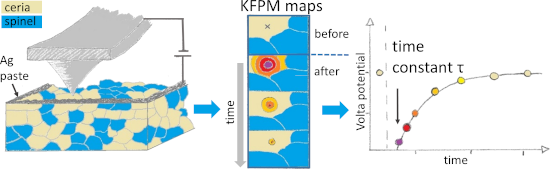
- temperatures above 400 °C. However, the implications of local oxidation and reduction for charge carrier mobility at lower temperatures are by far less well studied. Therefore, a combined polarization-KPFM experiment was performed on a dual-phase material consisting of 60 vol % Ce0.8Sm0.2O1.9 and 40 vol


Chemical vapor deposition of germanium-rich CrGex nanowires
Beilstein J. Nanotechnol. 2021, 12, 1365–1371, doi:10.3762/bjnano.12.100
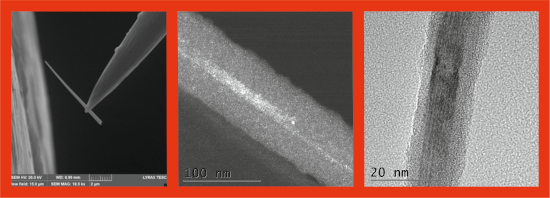
- species, Ar+ ion sputtering was used. The initial atomic elemental ratio was [Cr]/[Ge]/[O] = 1:7.33:11.61; after 90 s of Ar+ ion sputtering the ratio was [Cr]/[Ge]/[O] = 1:4.41:2.43. The presence of oxygen indicated oxidation after the experiment. The [Cr]/[Ge] atomic elemental ratio of 1:4.41 was
- ), which was in accordance with EDX measurements of a large area of the deposit. Ge 3d components (Figure 4a) showed elemental Ge/metal germanide (29.5, 29.0 eV) and a small amount of GeO (30.6 eV) formed by oxidation. The chromium Cr 2p3/2 peak was deconvoluted into a component at 574.4 eV and five



Biocompatibility and cytotoxicity in vitro of surface-functionalized drug-loaded spinel ferrite nanoparticles
Beilstein J. Nanotechnol. 2021, 12, 1339–1364, doi:10.3762/bjnano.12.99
- , magnetite NPs have some serious limitations, such as chemical reactivity, rapid oxidation, particle agglomeration, and high surface energy which may affect their biocompatibility and performance [11]. Moreover, they have low magnetization at a smaller size and the presence of iron has been associated with





Identifying diverse metal oxide nanomaterials with lethal effects on embryonic zebrafish using machine learning
Beilstein J. Nanotechnol. 2021, 12, 1297–1325, doi:10.3762/bjnano.12.97
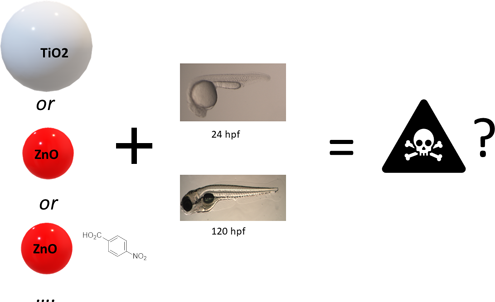
- different oxidation states of the same metal were not considered in our dataset may also have resulted in a variable related purely to the metal atom identity being assigned elevated significance. Our finding that surface characteristics are of negligible importance, compared to core chemical composition is


Plasmon-enhanced photoluminescence from TiO2 and TeO2 thin films doped by Eu3+ for optoelectronic applications
Beilstein J. Nanotechnol. 2021, 12, 1271–1278, doi:10.3762/bjnano.12.94
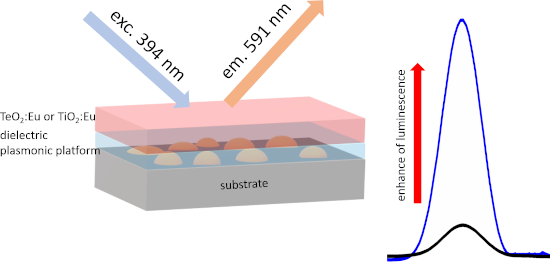
- been intensely studied for a few decades. Although Eu usually assumes a trivalent oxidation state (Eu3+), the divalent state (Eu2+) is also stable, but characterized by different luminescent properties. The Eu3+ emission spectrum consists of sharp lines, which are ascribed to 5D0→7FJ (J = 0–6


Morphology-driven gas sensing by fabricated fractals: A review
Beilstein J. Nanotechnol. 2021, 12, 1187–1208, doi:10.3762/bjnano.12.88
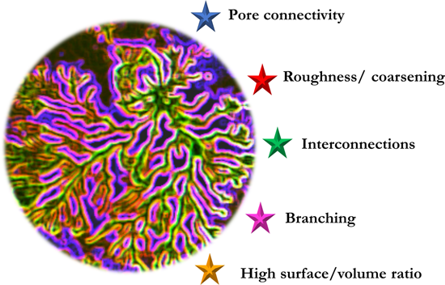
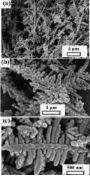
- study, Kante et al. prepared SnO2 films with fractal morphology by an electrochemical method with a subsequent oxidation process [68]. Both groups tested the films for CO gas sensing at different temperatures. Figure 8a–d shows the SEM images of SnO2 thin films on a Si(100) substrate obtained by Chen
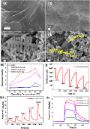
- . 3D porous nanoscale hybrid SnO2/CuO foam sensors were prepared by Jeun et al. via electrochemical deposition followed by thermal oxidation [72]. These foam sensors were studied for H2S gas sensing. Figure 10a and Figure 10b show SEM images of the porous and 3D network structure of as-prepared Sn/Cu
- foam after electrodeposition. Figure 10c and Figure 10d illustrate the porous foam structure formed at 700 °C by thermal oxidation and the dendritic structures formed in pore wall. The foam sensor was able to detect down to 4 ppm of H2S. The highest gas response (S = 576) was obtained for 20 ppm of H2S