Search results
Search for "spin" in Full Text gives 583 result(s) in Beilstein Journal of Nanotechnology. Showing first 200.
Charge-transfer interactions between fullerenes and a mesoporous tetrathiafulvalene-based metal–organic framework
Beilstein J. Nanotechnol. 2019, 10, 1883–1893, doi:10.3762/bjnano.10.183
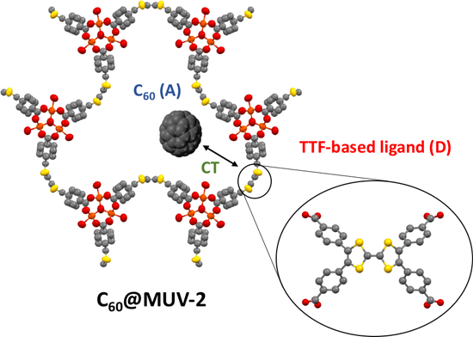
- , respectively). Theoretical calculations In order to get further insight into the donor–acceptor interactions between C60 and the TTF-based MOF, theoretical calculations were performed under the density functional theory (DFT). The MUV-2 framework was modelled as previously described [53], with a high-spin Fe
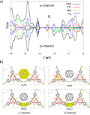
- a small bandgap calculated to be 0.90 eV in spin-up or α-channel, and 0.72 eV in spin-down or β-channel (Figure 6), slightly smaller than that predicted for pristine MUV-2 (0.86 eV in β-channel) [53]. Analysis of the projected density of states (PDoS) indicates that the valence band maximum (VBM) in
- calculations were performed under the density functional theory framework. Periodic boundary conditions (PBC) calculations were carried out with the FHI-AIMS (Version 171221) software [57]. MUV-2 was modelled as previously described, with Fe(III) ions in a high-spin d5-configuration. The guest C60 molecule was




Growth dynamics and light scattering of gold nanoparticles in situ synthesized at high concentration in thin polymer films
Beilstein J. Nanotechnol. 2019, 10, 1768–1777, doi:10.3762/bjnano.10.172
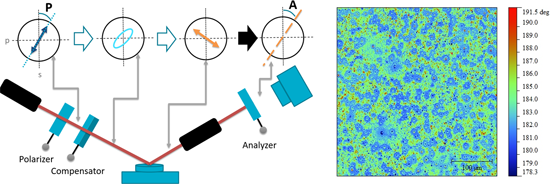
- values of Ψ and Δ are reported in Figure 10 as functions of the time. The behavior of the sample is complex during the first 10 min of annealing. During that period, the temperature rises from room temperature to 135 °C. We expect the mechanical constraints induced by the spin-coating to relax as soon as
- + cations was spin-coated using a Laurell WS-650-23B coater on RCA-cleaned Si(100) wafers fragments (2000 rpm, 90 s). Based on an average volume mass for PVA of 1.26 g/cm3, the 2% gold-to-PVA mass ratio corresponds to a volume fraction of fAu = 0.13% in the dry film. Optical scattering measurements Optical


Remarkable electronic and optical anisotropy of layered 1T’-WTe2 2D materials
Beilstein J. Nanotechnol. 2019, 10, 1745–1753, doi:10.3762/bjnano.10.170
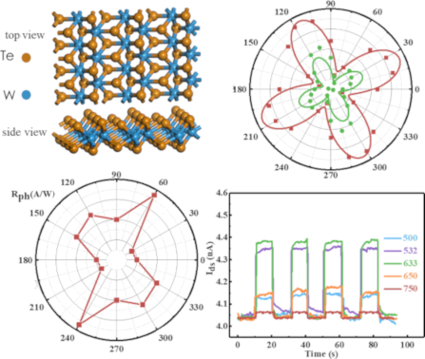
- for the type-II Weyl semimetal [18] and quantum spin Hall insulator material [19]. Additionally, many other remarkable properties of WTe2 have also been revealed, such as the temperature-driven Lifshitz transition [20], pressure-induced superconductivity [21], linear Nernst response [22], etc


Precise local control of liquid crystal pretilt on polymer layers by focused ion beam nanopatterning
Beilstein J. Nanotechnol. 2019, 10, 1691–1697, doi:10.3762/bjnano.10.164
- display-quality glass substrates covered with ca. 150 nm thin transparent ITO electrodes. Polyimide (PI) is deposited onto the substrates by a conventional routine combining a precursor spin-coating and annealing at 190 °C for 1 h, which produces a mechanically robust PI layer of 10–20 nm thickness. Next
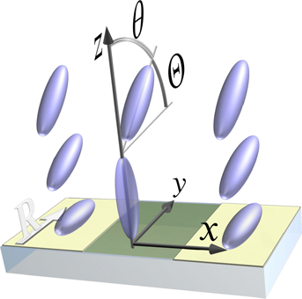
- of chromolane (spin-coated from 0.1 wt % ethanol solution and then dried at 95 °C). Note that in such a cell geometry, when the LC is vertically aligned at the top substrate, the difference between optical phase retardations of differently polarized normally incident light is fully determined by the


Giant magnetoresistance ratio in a current-perpendicular-to-plane spin valve based on an inverse Heusler alloy Ti2NiAl
Beilstein J. Nanotechnol. 2019, 10, 1658–1665, doi:10.3762/bjnano.10.161
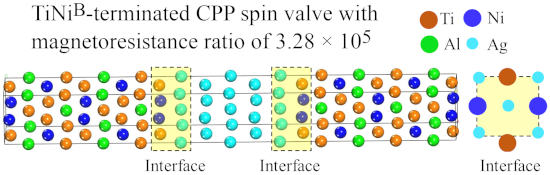
- Physics, Zunyi Normal College, Zunyi 563002, People’s Republic of China 10.3762/bjnano.10.161 Abstract A Ti2NiAl inverse Heusler alloy based current-perpendicular-to-plane (CPP) spin valve (SV) with various kinds of atomic terminated interfaces has been designed to explore the potential application of
- Heusler alloys in spintronics devices. By performing first principles calculations combined with the nonequilibrium Green’s function, it is revealed that spin magnetic moments of interfacial atoms suffer a decrease, and the electronic structure shows that the TiNiB-terminated structure possesses the
- largest interface spin polarization of ≈55%. Our study on spin-transport properties indicates that the total transmission coefficient at the Fermi level mainly comes from the contribution from the spin up electrons, which are regarded as the majority of the spin electrons. When the two electrodes of the


Subsurface imaging of flexible circuits via contact resonance atomic force microscopy
Beilstein J. Nanotechnol. 2019, 10, 1636–1647, doi:10.3762/bjnano.10.159
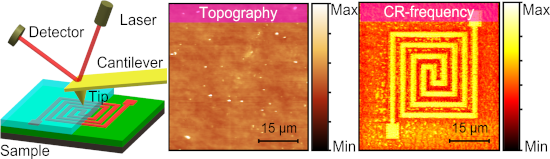
- PMMA–Au–PMMA sandwich structure with a thick PMMA film as the bottom layer, a patterned Au layer as the middle, functional circuit layer, and a thin PMMA film as the top protection layer, as schematically shown in Figure 1. The bottom layer was first coated on a clean silicon substrate by spin casting



Unipolar magnetic field pulses as an advantageous tool for ultrafast operations in superconducting Josephson “atoms”
Beilstein J. Nanotechnol. 2019, 10, 1548–1558, doi:10.3762/bjnano.10.152
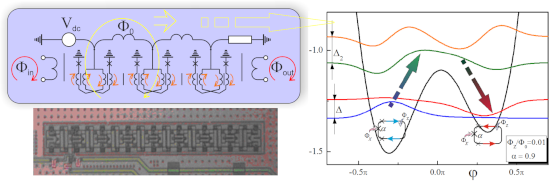
- transitions between the qubit states and to allow for Raman Λ-type transitions between them via the upper level. Using an existing analogy with spin states |↓⟩ and |↑⟩ the direction of should be chosen along the z-axis such that the interaction term μzHz is proportional to the matrix, which prevents the
- direct spin-flip transition. Finally we expand the non-stationary wave function of the system in terms of the considered eigenfunctions of the double-well potential φn with energies En, and obtain a set of coupled differential equations for the probability amplitudes Cn(t) of the corresponding states
- , which is dramatically faster than that obtained in the case of a carrier magnetic pulse resonant to the direct transition between spin states. Since in the experimental realization of such a scheme it is rather difficult to provide explicitly the required duration of the magnetic pulse, the required


Development of a new hybrid approach combining AFM and SEM for the nanoparticle dimensional metrology
Beilstein J. Nanotechnol. 2019, 10, 1523–1536, doi:10.3762/bjnano.10.150
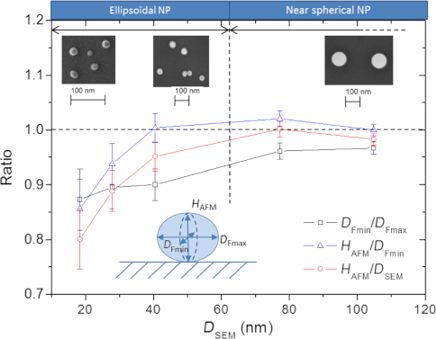
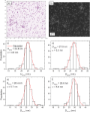
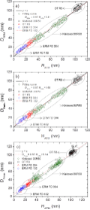
- silicon substrates through the spin-coating method detailed in [11]. This method yields well-dispersed nanoparticles on the substrate while maximizing the number of isolated NPs preventing agglomeration of the NPs. NP SEM images have been recorded using a Zeiss ULTRA-Plus field-emission (FE) microscope
- particularly suitable for a controlled deposition of NPs implementing the spin-coater detailed in [11]. The best coverage of isolated NPs has been found in an intermediary area between the substrate edges and the central area very close to rotation axis of the spin-coater. As a consequence, the patterns




Synthesis of P- and N-doped carbon catalysts for the oxygen reduction reaction via controlled phosphoric acid treatment of folic acid
Beilstein J. Nanotechnol. 2019, 10, 1497–1510, doi:10.3762/bjnano.10.148
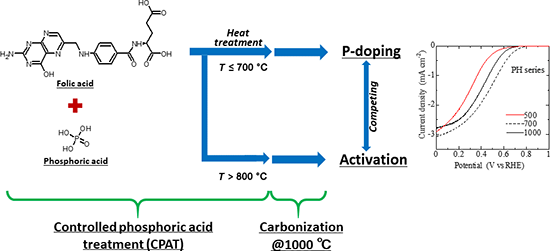
- of P2 and P3 species, i.e., by the contents of P atoms directly bonded to one or two carbon atoms as shown in Figure 9. Previously, the enhanced ORR activity of PN-doped carbon materials was ascribed to an increase of asymmetric spin density [24][25][39], electron transfer from N or P to C [36





Superconducting switching due to a triplet component in the Pb/Cu/Ni/Cu/Co2Cr1−xFexAly spin-valve structure
Beilstein J. Nanotechnol. 2019, 10, 1458–1463, doi:10.3762/bjnano.10.144
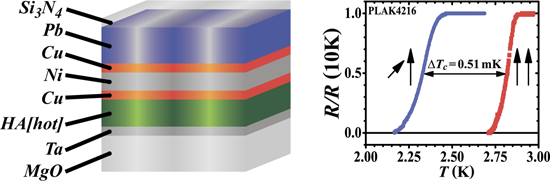
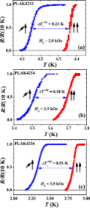
- Technology, 141700 Dolgoprudny, Russia National Research University Higher School of Economics, 101000 Moscow, Russia 10.3762/bjnano.10.144 Abstract We report the superconducting properties of the Co2Cr1−xFexAly/Cu/Ni/Cu/Pb spin-valve structure the magnetic part of which comprises the Heusler alloy layer HA
- = Co2Cr1−xFexAly with a high degree of spin polarization (DSP) of the conduction band and a Ni layer of variable thickness. The separation between the superconducting transition curves measured for the parallel (α = 0°) and perpendicular (α = 90°) orientation of the magnetization of the HA and the Ni
- suggests that the observed minimum and the corresponding full switching effect of the spin valve is caused by the long-range triplet component of the superconducting condensate in the multilayer. Such a large effect can be attributed to a half-metallic nature of the HA layer, which in the orthogonal



Gas sensing properties of individual SnO2 nanowires and SnO2 sol–gel nanocomposites
Beilstein J. Nanotechnol. 2019, 10, 1380–1390, doi:10.3762/bjnano.10.136
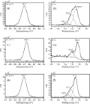
- about chemical binding energy contributions in surface layers with complex phase compositions [43][44][45][46][47]. In the present study, we investigated core 1s states of oxygen atoms and core 3d states of tin atoms with high resolution provided by monochromatized synchrotron radiation. The spin–orbit




Highly ordered mesoporous silica film nanocomposites containing gold nanoparticles for the catalytic reduction of 4-nitrophenol
Beilstein J. Nanotechnol. 2019, 10, 1368–1379, doi:10.3762/bjnano.10.135
- Mettler-Toledo TGA/SDTA851e device at a heating rate of 10 °C min−1. For the fabrication, the sol–gel solution was spin-coated on a quartz plate using a Laurell spin coater, model WS-400-6NPP-LITE. Calcination was carried out under atmospheric conditions using a Nabertherm model LE6/11 muffle furnace
- room temperature. For fabrication as thin films, 70 µL of the final sol–gel solution was spin-coated on a glass substrate to produce a colorless transparent thin film (around 0.5 mg of composite was successfully coated). It was followed by air-drying for a day at ambient temperature. Synthesis of


The effect of magneto-crystalline anisotropy on the properties of hard and soft magnetic ferrite nanoparticles
Beilstein J. Nanotechnol. 2019, 10, 1348–1359, doi:10.3762/bjnano.10.133
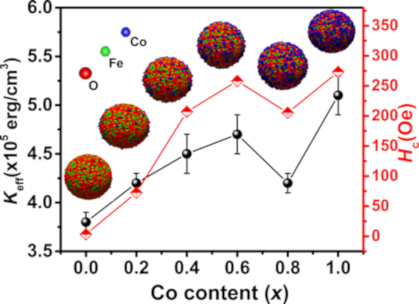
- the particles size. In fact, the high surface-to-volume ratio in the smaller nanoparticles leads to an increase of the surface effects such as spin disorder and dead layer on the surface, eventually resulting in a decrease of the magnetization. The thickness of the surface dead layer (t) equaling to t


Fabrication of phase masks from amorphous carbon thin films for electron-beam shaping
Beilstein J. Nanotechnol. 2019, 10, 1290–1302, doi:10.3762/bjnano.10.128
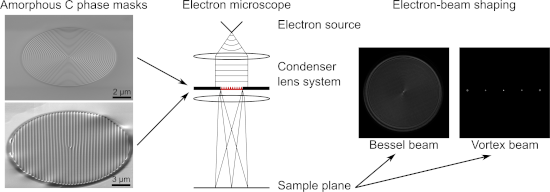
- thickness profile showed considerable deviations from the ideal structure. Experimental For (positive) optical lithography we used a spin coater from POLOS to coat our wafers with a TI35ES resist (Microchemicals GmbH). Lithography masks for a mask aligner (MA6 by SÜSS MicroTec, light source with λ = 356 nm



Alloyed Pt3M (M = Co, Ni) nanoparticles supported on S- and N-doped carbon nanotubes for the oxygen reduction reaction
Beilstein J. Nanotechnol. 2019, 10, 1251–1269, doi:10.3762/bjnano.10.125
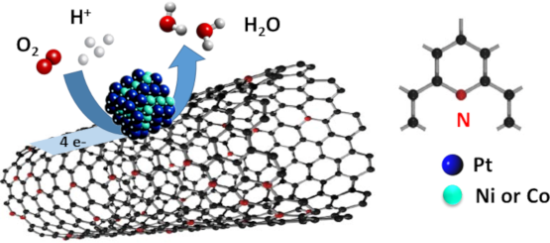
- correspond to the oxidation of the sulfur species introduced during the doping during the purification step in H2SO4. As the S 2p peaks are typically presented in spin–orbit doublets of S 2p3/2 and S 2p1/2 (splitting magnitude ≈1.18 eV), four S 2p3/2 peaks representing sulfur bonding of FeS2 (≈162.5 eV), H–S








Molecular attachment to a microscope tip: inelastic tunneling, Kondo screening, and thermopower
Beilstein J. Nanotechnol. 2019, 10, 1243–1250, doi:10.3762/bjnano.10.124
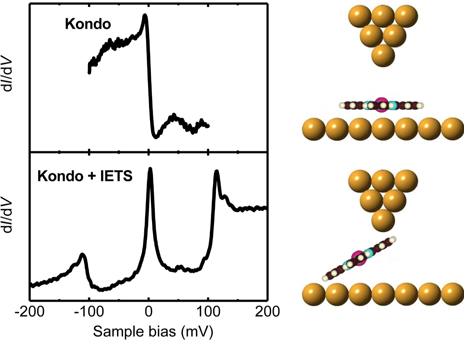
- surfaces [13][14][15][16][17][18][19][20][21]. Low-temperature STM/STS is an ideal tool to study the Kondo effect, which manifests itself by a sharp zero-bias resonance in the conductance spectrum of a localized moment on a conducting substrate, due to the coherent spin-flip scattering between the
- localized spin and the conduction electrons of the substrate. Manganese phthalocyanine (MnPc) molecules adsorbed on noble-metal surfaces have been studied quite extensively by STM and Kondo behavior of MnPc is well documented [19][20][21]. However the electron transport through a single MnPc molecule
- on the Au(111) surface. The feature at zero bias in the spectrum of the flat-lying MnPc molecule of Figure 2b can be attributed to the Kondo resonance arising from the exchange interaction between the MnPc molecular spin and the itinerant conduction electrons of the Au(111) substrate [21]. The red


Angle-dependent structural colors in a nanoscale-grating photonic crystal fabricated by reverse nanoimprint technology
Beilstein J. Nanotechnol. 2019, 10, 1211–1216, doi:10.3762/bjnano.10.120
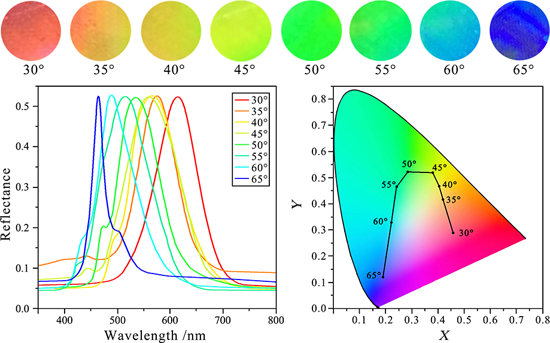
- solution was firstly poured onto the PC mould after degassing; (2) the PDMS film was fabricated through spin-coating at a speed of 500 rpm; (3) the photonic crystal was fabricated by reverse imprinting with the parameters of 0.5 MPa and 80 °C for 4 h to complete filling and cross-linking; (4) the photonic


Electroluminescence and current–voltage measurements of single-(In,Ga)N/GaN-nanowire light-emitting diodes in a nanowire ensemble
Beilstein J. Nanotechnol. 2019, 10, 1177–1187, doi:10.3762/bjnano.10.117
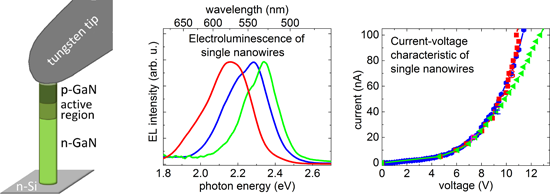
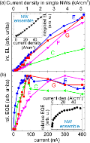
- around 100 nm. Figure 1a shows a micrograph of the as-grown NW ensemble acquired in a Hitachi S-4800 field-emission SEM. The NW-ensemble LED we use as a reference for the EL and I–V characterizations in this study was processed from the same sample. The NW ensemble was planarized by spin coating using a


Tailoring the magnetic properties of cobalt ferrite nanoparticles using the polyol process
Beilstein J. Nanotechnol. 2019, 10, 1166–1176, doi:10.3762/bjnano.10.116
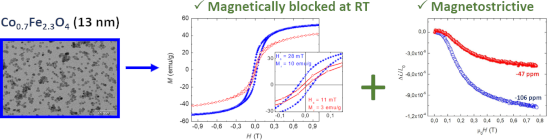
- loss of ca. 30% of the magnetostrictive response. Such a result is quite reasonable since the magnetostriction of cobalt ferrites is induced by Co2+ ions in octahedral sites and the spin–orbit–lattice interaction with the distorted cubic crystal field. The other striking conclusion is that the larger




Influence of dielectric layer thickness and roughness on topographic effects in magnetic force microscopy
Beilstein J. Nanotechnol. 2019, 10, 1056–1064, doi:10.3762/bjnano.10.106
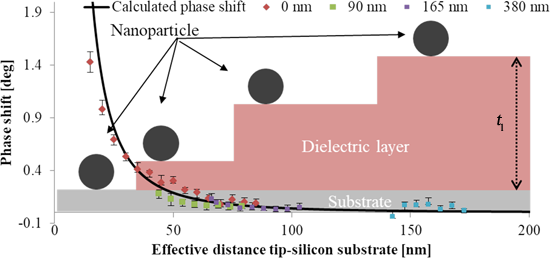
- a weak capacitive coupling between tip and dielectric layer. Figure 9 shows magnetic nanoparticles on a silicon substrate with a spin-coated dielectric layer of 380 nm thickness. The repulsive force of capacitive coupling is reduced significantly. However, an increase of the phase shift can still be
- paper to remove offset and slope of the measured data. The SPIONs with 10 ± 2 nm diameter with oleic acid as stabilizing ligand were used as received (Merck). A single-crystal silicon substrate with <100> orientation (Siegert Wafer) was cut in 2 cm2 squares. The dielectric layers were spin-coated on
- silicon substrates at 3000 rpm using a closed-system spin-coater with rotating lid (BLE). Bisphenol A-epichlorohydrin resin was used as dielectric layer. The resin is the hard component of AR-P 5910 resist (Allresist) with a dielectric constant of 3.1 [21]. The thickness was varied by different dilutions


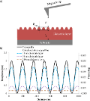


![[Graphic 2]](/bjnano/content/inline/2190-4286-10-106-i7.svg?max-width=637&scale=1.18182) ; black line) and measured phase shift for single nanoparticles with 10 ± 2 nm diameter...
; black line) and measured phase shift for single nanoparticles with 10 ± 2 nm diameter...


Electronic and magnetic properties of doped black phosphorene with concentration dependence
Beilstein J. Nanotechnol. 2019, 10, 993–1001, doi:10.3762/bjnano.10.100
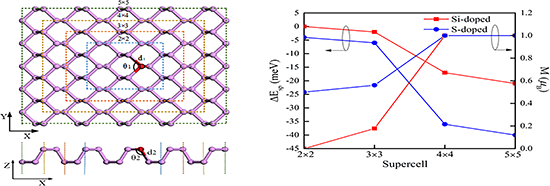
- structures of Si- and S-doped phosphorene without spin polarization always show metallic states suggesting the bandgap is insensitive to the in-plane size of the supercell and the dopant content. However, the results are fairly different once the spin polarization is taken into account. The band structures
- for the Si-doped phosphorene with 2 × 2 × 1 supercell and a dopant content of 6.25%. The magnetic moment induced by 3p orbit–spin splitting increases with the in-plane size of the supercell, and the largest magnetic moment can be found in 4 × 4 × 1 and 5 × 5 × 1 supercells. These findings offer an
- supercell size due to decreasing deformation and dopant content. In the following, we discuss the magnetic and electronic properties of the stable doped phosphorenes induced by the deformation and impurity concentration. Band structure without spin polarization Before investigating the magnetic properties


Structural and optical properties of penicillamine-protected gold nanocluster fractions separated by sequential size-selective fractionation
Beilstein J. Nanotechnol. 2019, 10, 955–966, doi:10.3762/bjnano.10.96
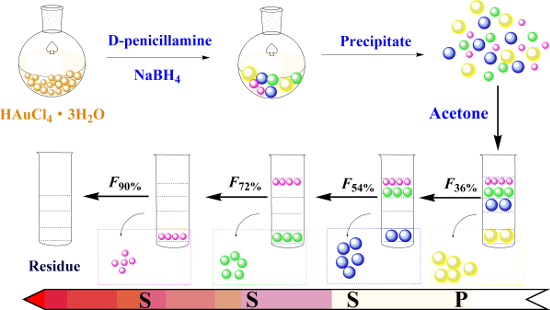
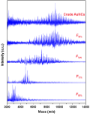
- F36%). This is qualitatively consistent with rotational spin relaxation (T2); that is, the larger 3.0 nm average core size AuNCs (Figure 5, spectrum 3) are significantly slower than the smallest 1.2 nm average core size (Figure 5, spectrum 6) [26]. Further expansion of the packing density gradient
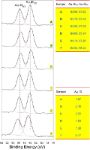
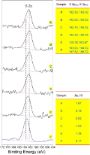
- (2p1/2). Each doublet has a peak area ratio of 2:1 and a splitting of ≈1.2 eV that is consistent with the results determined theoretically by the spin–orbit splitting effect. The sulfur binding energy for S 2p3/2 at 162 eV suggests that all the sulfur atoms are bound to gold as a thiolate species [34



Co-doped MnFe2O4 nanoparticles: magnetic anisotropy and interparticle interactions
Beilstein J. Nanotechnol. 2019, 10, 856–865, doi:10.3762/bjnano.10.86
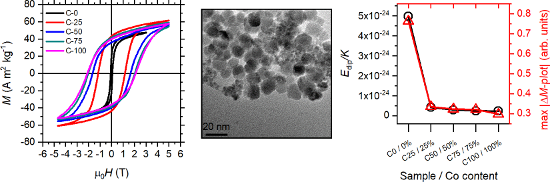
- radius, magnetic nanoparticles (NPs) organize themselves as a single magnetic domain, where all magnetic moments align in the same direction forming a “super spin” with a magnitude of 103–104 Bohr magnetons [12]. Due to the similarity of such superspins with atomic magnetic moments, even if with
- temperature Tg. Both the Vogel–Fulcher and power-law model fit our data well. Hence, to confirm possible spin glass dynamics, the investigation has been extended to non-equilibrium dynamics, i.e., memory effects. As a reference curve, a conventional ZFC magnetization vs temperature curve has been measured
- general increment of the anisotropy. The Co2+ ions produced a marked magneto-crystalline contribution to the anisotropy in the spinel structure, more than Mn2+ and Mn3+ ions. Indeed, the crystal field does not entirely quench its orbital magnetic moment, allowing for a spin–orbital coupling responsible


Periodic Co/Nb pseudo spin valve for cryogenic memory
Beilstein J. Nanotechnol. 2019, 10, 833–839, doi:10.3762/bjnano.10.83
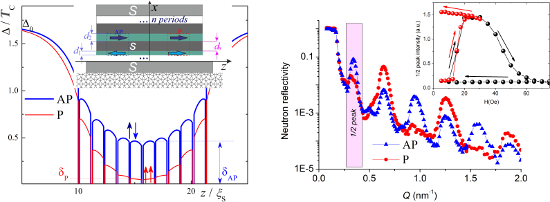
- lead to a significant enhancement of the critical current through the junction. To control the magnetic alignment we propose to use a periodic system whose unit cell is a pseudo spin valve of structure F1/s/F2/s where F1 and F2 are two magnetic layers having different coercive fields. In order to check
- alignment can be controlled with a magnetic field of only several tens of Oersted. Keywords: cryogenic computing; neutron scattering; spin valve; superconducting spintronics; Findings Superconductor digital devices have attracted growing attention due to their unique energy efficiency and performance [1
- magnetic state can be switched between parallel and antiparallel directions of the magnetization vectors of the F layers [7]. The use of a thin superconducting layer (s) as a spacer instead of an N layer may lead to enhancement of the spin-valve effect due to the proximity of the thick superconductor banks


Electronic properties of several two dimensional halides from ab initio calculations
Beilstein J. Nanotechnol. 2019, 10, 823–832, doi:10.3762/bjnano.10.82
- monolayers CrOF, GaOF, InOF and LaOF are shown in Figure 5. From the DOS, it can be seen that the CrOF monolayer has a finite spin polarisation, and its magnetic moments are ordered ferromagnetically. Also, it is seen that the fluorine atoms contribute to the valence bands for all fluorides monolayers, while
- , we have investigated their electronic structure, and demonstrated their dynamical stability by computing their phonon spectra (see Supporting Information File 1). We have found that their electronic bandgap energies range between 3.0 and 7.5 eV and that CrOF is found to have a spin polarisation