


Search results
Search for "template" in Full Text gives 287 result(s) in Beilstein Journal of Nanotechnology. Showing first 200.
Hemolysin coregulated protein 1 as a molecular gluing unit for the assembly of nanoparticle hybrid structures
Beilstein J. Nanotechnol. 2016, 7, 351–363, doi:10.3762/bjnano.7.32
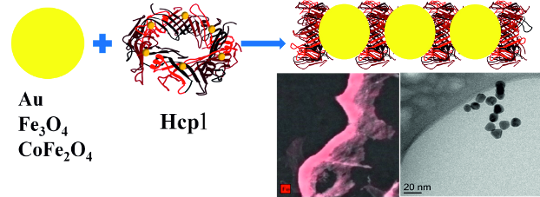
- anisotropy in shape and possible properties. However, nanoparticle (NP) assembly leading to one-dimensional (1D) superstructures or arrays has received less attention compared to their two- or three-dimensional equivalents [2]. The NP assembly can be conducted in a template-based or template-free way. In
- particular, a template-free approach is more difficult to achieve since specific interactions in terms of chemical and spatial interplay have to be ensured. The controlled assembly of NPs using organic compounds such as polymers [3][4][5][6][7], peptides [8][9] and DNA [10][11][12][13][14] demonstrate great
- nanomaterials. Furthermore, kinetic investigation of the formation of such 1D Au NP structures and the utilization of this structure, for example, as a SERS template and catalyst are also of great interest. The formation kinetics of Au NP networks triggered by Hcp1_cys3 is investigated using UV–vis spectroscopy




Functional fusion of living systems with synthetic electrode interfaces
Beilstein J. Nanotechnol. 2016, 7, 296–301, doi:10.3762/bjnano.7.27
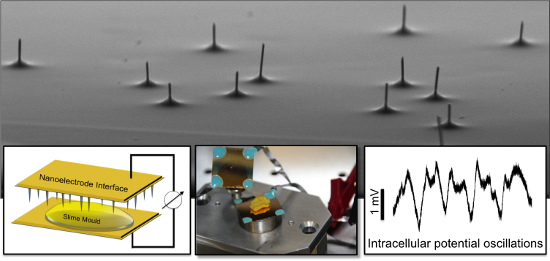
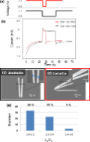
- : biointerface; biosensor; energy harvesting; nanoelectrodes; Physarum polycephalum; Findings The formation process of nanoelectrode interfaces (NEIs) was based on track-etch template synthesis as schematically shown in Figure 1a. First, monocrystalline gold (Au) nanowires in parallel arrangement featuring


Determination of Young’s modulus of Sb2S3 nanowires by in situ resonance and bending methods
Beilstein J. Nanotechnol. 2016, 7, 278–283, doi:10.3762/bjnano.7.25
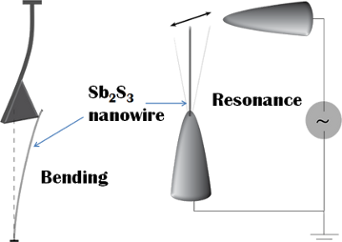
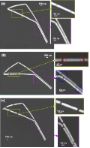
- conditions (e.g., clamping) than alignment of the external force. The obtained mean value was then compared to that of bulk material [35]. Experimental The examined Sb2S3 NWs were synthesized inside cylindrical pores of anodic aluminum oxide template (AAO) by a solvent-less technique. The as-synthesized NWs
- removing outgrown NWs from the surface of the AAO template. Alternatively NWs from dissolved AAO templates were also used for mechanical testing. In this case filled AAO templates with NW diameters ranging from 80 to 200 nm were polished, dissolved in 9% H3PO4, washed and dried. The as-prepared Sb2S3 NW


Chemical bath deposition of textured and compact zinc oxide thin films on vinyl-terminated polystyrene brushes
Beilstein J. Nanotechnol. 2016, 7, 102–110, doi:10.3762/bjnano.7.12
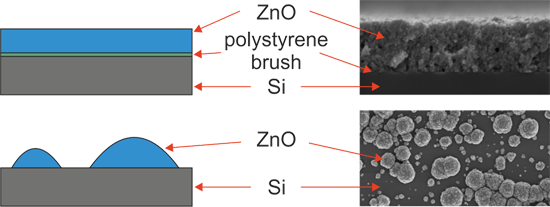
- stronger interaction between the then polar template and polar ZnO crystallites in solution. This may lead to oriented attachment of the crystallites so that the observed (002) texture arises. Characterization of the templates and the resulting ZnO films were performed with ζ-potential and contact angle
- measurements as well as scanning electron microscopy (SEM), atomic force microscopy (AFM) and X-ray diffraction (XRD). Infrared spectroscopy (IR) measurements were used to investigate the polystyrene brushes before and after modification. Keywords: bioinspired synthesis; polymer brush; template activation
- results imply an activated dynamic precipitation model of ZnO thin films, which is the result of a base-catalyzed transesterification of polystyrene brushes in the early stage of ZnO precipitation. Results and Discussion Template characterization For the deposition of the PS brush, the molecule depicted


Fabrication and characterization of novel multilayered structures by stereocomplexion of poly(D-lactic acid)/poly(L-lactic acid) and self-assembly of polyelectrolytes
Beilstein J. Nanotechnol. 2016, 7, 81–90, doi:10.3762/bjnano.7.10
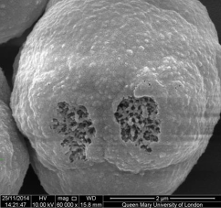
- mass of the multilayers. Then, hollow, spherical microcapsules were obtained by the removal of the CaCO3 sacrificial template. The chemical composition of the obtained microcapsules was confirmed by differential scanning calorimetry (DSC) and wide X-ray diffraction (WXRD) analyses. The microcapsule
- are stable in acidic or basic conditions. This is due to the lack of pH-sensitive functional groups on the PLA polymers. Conclusion PLA stereocomplex microcapsules were successfully fabricated by the LBL technique using CaCO3 as a sacrificial template and enantiomeric PLAs with and without PEM
- the stereocomplex was also confirmed by the IR measurements. The SEM images showed a qualitative difference in the template surfaces coated with PLA and PEM layers respect to those coated only with PEM precursor. The characterization by TEM confirmed a successful template removal, resulting in intact


Green and energy-efficient methods for the production of metallic nanoparticles
Beilstein J. Nanotechnol. 2015, 6, 2354–2376, doi:10.3762/bjnano.6.243
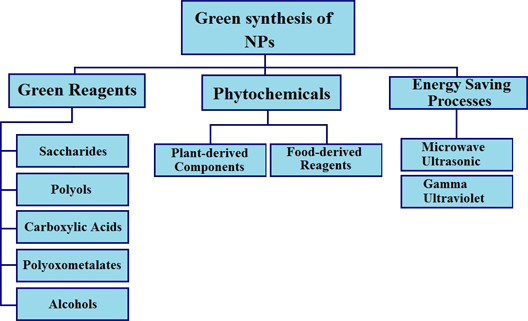
- reduced to spherical NPs and their sizes range from 18 to 40 nm depending on pH, temperature, and the Au3+/dextran ratio. However, in acidic conditions, the reduction is very slow and large Au NPs with different shapes are formed [35]. Saha et al. utilized calcium alginate gel beads as a template for Ag


Fabrication of hybrid graphene oxide/polyelectrolyte capsules by means of layer-by-layer assembly on erythrocyte cell templates
Beilstein J. Nanotechnol. 2015, 6, 2310–2318, doi:10.3762/bjnano.6.237
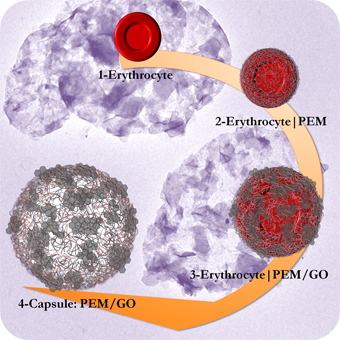
- approximate shape and size of the erythrocyte template after the latter is totally removed by oxidation with NaOCl in water. The PE/GO capsules maintain their integrity and can be placed or located on other surfaces such as in a device. When the capsules are dried in air, they collapse to form a film that is
- subsequent electrochemical reduction of the GO to rGO [18][19]. Using LbL, we explored the assembly of exfoliated GO into 3D structures and developed micrometre-sized capsules on the basis of GO and polyelectrolytes using chicken erythrocyte cells as templates. Template cells have been used in the past as
- capsule templates on the basis of a simple protocol, which includes the oxidation of the cell components to leave a thin polymer film in the form of a capsule that mimics the dimensions and topological features of the cell template [20][21][22]. We show that by incorporating GO within the LbL assembly on


Green synthesis, characterization and catalytic activity of natural bentonite-supported copper nanoparticles for the solvent-free synthesis of 1-substituted 1H-1,2,3,4-tetrazoles and reduction of 4-nitrophenol
Beilstein J. Nanotechnol. 2015, 6, 2300–2309, doi:10.3762/bjnano.6.236
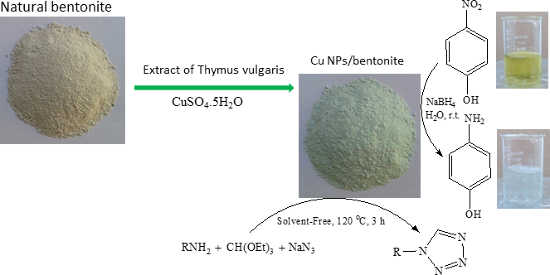
- NPs/bentonite The Cu NPs/bentonite composite was prepared by a simple and inexpensive method involving the immobilization of Cu NPs on bentonite using an aqueous extract of Thymus vulgaris without the usage of any special capping agents or surfactant template. The plant not only functioned as a


Kelvin probe force microscopy for local characterisation of active nanoelectronic devices
Beilstein J. Nanotechnol. 2015, 6, 2193–2206, doi:10.3762/bjnano.6.225
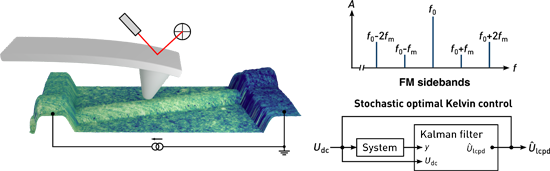
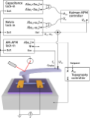
- component in C++ using the Eigen template library for linear algebra [43], allowing us to perform offline tests with the same code that is compiled for the DSP. In its current state, our custom FM-KFM controller can work at sampling rates of up to 7200 Sa/s. Since the sideband signals are detected


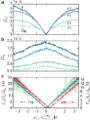
![[Graphic 33]](/bjnano/content/inline/2190-4286-6-225-i48.png?max-width=637&scale=1.18182) for different modulation amplitu...
for different modulation amplitu...




Electrochemical coating of dental implants with anodic porous titania for enhanced osteointegration
Beilstein J. Nanotechnol. 2015, 6, 2183–2192, doi:10.3762/bjnano.6.224
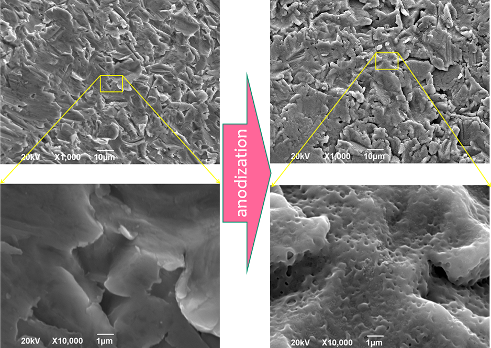
- oxide according to mutual interaction in a form of self-assembly. In addition, further opportunities for surface organization are provided by subsequent functionalization of the APT with functional overcoating layers of bioactive materials, eventually using the pores as a template. Here we report on APT


Self-assembly mechanism of Ni nanowires prepared with an external magnetic field
Beilstein J. Nanotechnol. 2015, 6, 2123–2128, doi:10.3762/bjnano.6.217
- , electronic, sensor and electrochemical devices [1][2][3][4][5][6]. In particular, Ni nanowires have been the focus of intense research due to their easy preparation compared with iron and cobalt nanowires. There are several reported routes for the preparation of Ni nanowires including template-based
- electrodeposition [7][8][9][10], block copolymer lithography [11], and wet chemical reduction [12]. Among these methods, template-based electrodeposition is the most widely used to prepare Ni nanowires as highly-ordered and size-controlled nanowires can be obtained with this method. However, additional steps such
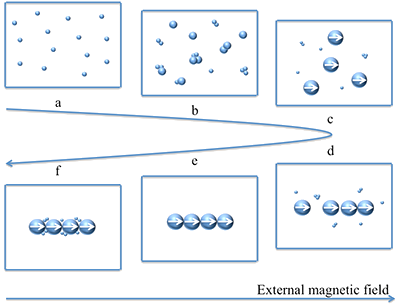
- aqueous solution by a template-free method combined with chemical reduction and the application of an external magnetic field. Based on a previous study [23][24], this paper focuses on the morphology change during the reaction in order to place the self-assembly mechanism into perspective. Surprisingly




Distribution of Pd clusters on ultrathin, epitaxial TiOx films on Pt3Ti(111)
Beilstein J. Nanotechnol. 2015, 6, 2007–2014, doi:10.3762/bjnano.6.204
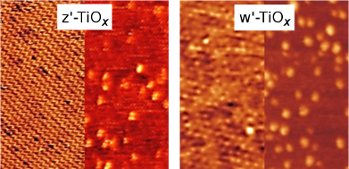
- (i.e., oxygen vacancies) in this structure are confined to these trenches and act as nucleation sites. Therefore, the Pd clusters are mostly arranged in unidirectional rows along the trenches, creating a template effect. The second phase, w'-TiOx, exhibits a hexagonal, long range, (7 × 7)R21.8°, Moiré
- -type superstructure with fewer and shallower defects, making the template effect less discernible. Keywords: cluster growth; palladium; platinum–titanium alloy; scanning tunnelling microscopy (STM); template; titanium oxide; Introduction Catalysts often consist of metal nanoparticles dispersed on an
- we investigate the template effect of two different structures of the same type of oxide on the cluster growth of the same metal, namely Pd on z'-TiOx and w'-TiOx. Experimental setup The scanning tunnelling microscopy (STM) experiments were conducted on our custom-built LT-STM, which for the


An ISA-TAB-Nano based data collection framework to support data-driven modelling of nanotoxicology
Beilstein J. Nanotechnol. 2015, 6, 1978–1999, doi:10.3762/bjnano.6.202
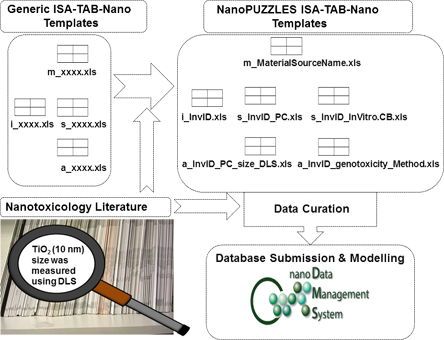
- case but creating these specific files “on-the-fly” (i.e., at the point of data collection) is problematic. For example, a generic Assay file template would only indicate that certain, unspecified, experimental variables and endpoint values should be recorded using “Parameter Value […]” (or other
- specification [23]. The generic templates were adapted as follows. 1. Predefined “Comment […]” fields were added to the Investigation file template for recording additional important metadata, e.g., “Comment [GLP]” for recording whether or not the corresponding studies were carried out according to Good
- . For example, an Assay file template was designed for recording size measurements from a non-predetermined assay type (“a_InvID_PC_size_Method.xls”) in addition to some Assay file templates for recording size measurements obtained using specific assay types - such as dynamic light scattering (DLS



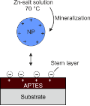
Template-controlled mineralization: Determining film granularity and structure by surface functionality patterns
Beilstein J. Nanotechnol. 2015, 6, 1763–1768, doi:10.3762/bjnano.6.180
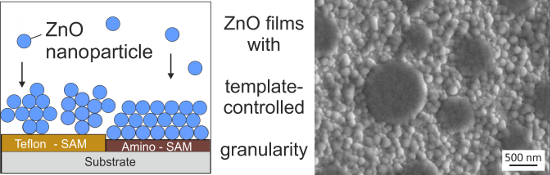
- controlling the properties of a self-assembling mineral film by means of the functionality and polarity of a substrate template. In the presented case, a zinc oxide film is deposited by chemical bath deposition on a nearly topography-free template structure composed of a pattern of two self-assembled
- monolayers with different chemical functionality. We demonstrate the template-modulated morphological properties of the growing film, as the surface functionality dictates the granularity of the growing film. This, in turn, is a key property influencing other film properties such as conductivity
- , piezoelectric activity and the mechanical properties. A very pronounced contrast is observed between areas with an underlying fluorinated, low energy template surface, showing a much more (almost two orders of magnitude) coarse-grained film with a typical agglomerate size of around 75 nm. In contrast, amino

The eNanoMapper database for nanomaterial safety information
Beilstein J. Nanotechnol. 2015, 6, 1609–1634, doi:10.3762/bjnano.6.165
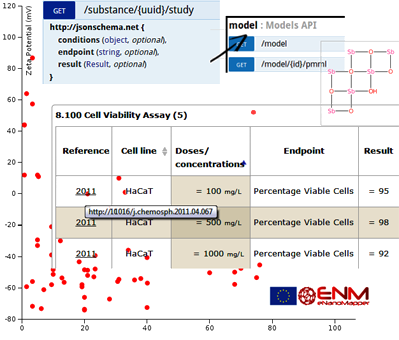
- concentration, GI50, percentage viable cells), and cell line information, though not consistently. Importing the data into eNanoMapper takes advantage of NanoWiki using Semantic MediaWiki and its template framework: all data relevant to NanoQSAR can be retrieved from the wiki as RDF, in the form of a RDF/XML


Peptide-equipped tobacco mosaic virus templates for selective and controllable biomineral deposition
Beilstein J. Nanotechnol. 2015, 6, 1399–1412, doi:10.3762/bjnano.6.145
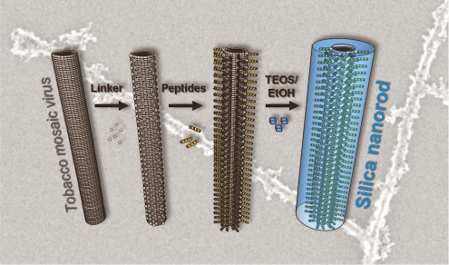
- of the template by chemical conjugation of peptides [16], poly(ethylene glycol) (PEG) [22], aniline [25][26], or succinamate [27] has been reported. Virus-based templates have gained especially important roles in the synthesis of organic–inorganic hybrid nanostructures. They combine several
- and charge distribution of the surface of the core [22][26][27][63][64]. During the mineralization process, great effort is needed to avoid non-templated byproducts, as well as aggregation, re-organization and precipitation of the templates into extended superstructures of amorphous silica-template
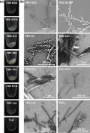
- and plain TMVLys controls (and in some tests wildtype TMVwt) under equal conditions. The products were analyzed and compared to determine favorable TMV template–peptide combinations for specific silica mineralization. Results and Discussion Surface functionalization of TMVLys templates by conjugation




Formation of substrate-based gold nanocage chains through dealloying with nitric acid
Beilstein J. Nanotechnol. 2015, 6, 1362–1368, doi:10.3762/bjnano.6.140
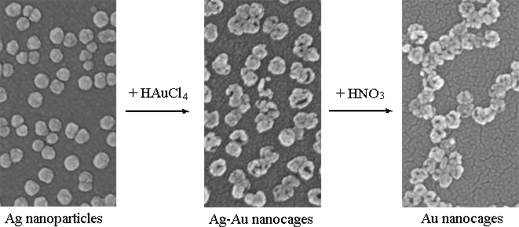
- -enhanced Raman scattering (SERS), imaging [9], and catalysis [10][11]. Up to now, several methods, such as template-based methods, Kirkendall effect, Ostward ripening, and galvanic replacement, have been developed to synthesize hollow metal nanostructures [12][13][14]. Among them, the galvanic replacement
- quasi-spherical nanoparticles [3]. During the replacement reaction, Au atoms are deposited epitaxially on the surface of the Ag template. They nucleate and grow into small islands, and eventually evolve into a shell around the silver particles. The thin shell formed in the early stage is incomplete, and
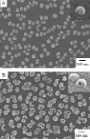
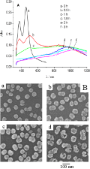
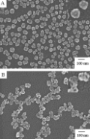
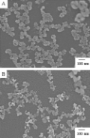
- of nanocages In our previous reports [23][24][25], we have electro-deposited template silver nanoparticles (AgNPs) on ITO substrates and carried out the galvanic replacement reactions. Figure 1 shows top-view and tilted-view SEM images of unreacted AgNP templates and those exposed to aqueous 0.1 mM

Growth and morphological analysis of segmented AuAg alloy nanowires created by pulsed electrodeposition in ion-track etched membranes
Beilstein J. Nanotechnol. 2015, 6, 1272–1280, doi:10.3762/bjnano.6.131
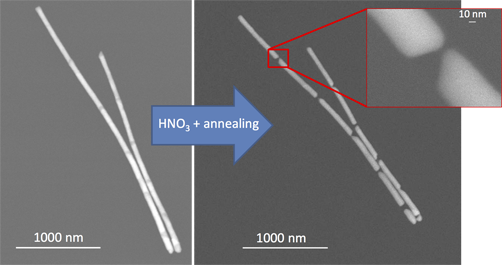
- including composition, dimension, and crystallinity. Therefore, to develop synthesis methods that guarantee a precise control of these properties is important. A powerful technique to synthesise nanowires with well-controlled morphological and crystallographic characteristics is the so-called template
- diameters as small as about 15 nm can be fabricated [18]. By choosing different types of polymer membranes the surface morphology of the nanowires can be varied [19][20]. Since the successful growth of Cu/Co and Ni/Cu multilayer nanowires back in the 1990s [1][2][21], the template method has allowed for the
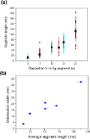
- File 1. In a next step, a Au layer was sputtered on one side of the polymer template, serving as the cathode for the deposition. It was reinforced with Cu, electrodeposited at room temperature in a two electrode set-up at a potential of −0.5 V between the Cu anode and cathode. The electrodeposition of

Preparation of Ni/Cu composite nanowires
Beilstein J. Nanotechnol. 2015, 6, 1268–1271, doi:10.3762/bjnano.6.130
- characterized by XRD, SEM and TEM. The method has notable advantages: It is template-free, inexpensive, easy-to-operate, and it only needs a short reaction time, which makes it suitable for large-scale preparation. Keywords: copper nanoparticles; nickel nanowires; Ni/Cu composite nanowires; Introduction In
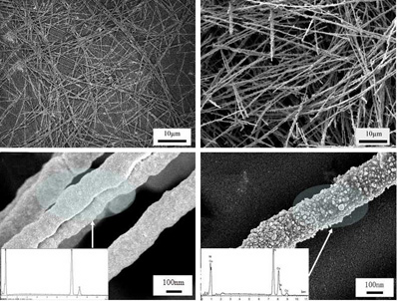
- surface of nickel nanowires, named Ni/Cu composite nanowires, was developed for the first time. The synthetic process consisted of two steps. Firstly, pure nickel nanowires were prepared in solution without template by applying a weak external magnetic field. Secondly, the obtained nickel nanowires were
- synthesized Ni nanowires before being used as a special template is shown in Figure 1a. Figure 1b shows the SEM image of the prepared Ni/Cu nanowires under optimal conditions that can be achieved at present. Uniform Ni/Cu composite nanowires with an average size of approximately 200 nm in diameter and 80 µm


Polymer blend lithography for metal films: large-area patterning with over 1 billion holes/inch2
Beilstein J. Nanotechnol. 2015, 6, 1205–1211, doi:10.3762/bjnano.6.123
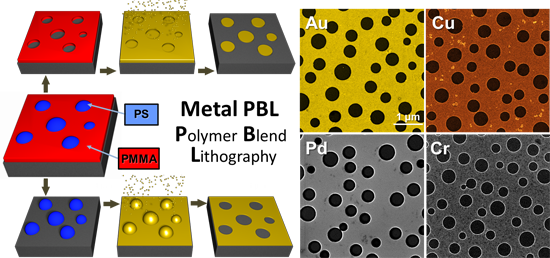
- plasmonic resonance; metal islands; metal nanostructures; metal polymer blend lithography (metal PBL); nano-patterned template; nanoscale discs; optical transmission; perforated metal film; polymer phase separation; poly(methyl methacrylate) (PMMA); polystyrene (PS); self-assembly; spin-coating; surface


From lithium to sodium: cell chemistry of room temperature sodium–air and sodium–sulfur batteries
Beilstein J. Nanotechnol. 2015, 6, 1016–1055, doi:10.3762/bjnano.6.105


Fabrication of high-resolution nanostructures of complex geometry by the single-spot nanolithography method
Beilstein J. Nanotechnol. 2015, 6, 976–986, doi:10.3762/bjnano.6.101
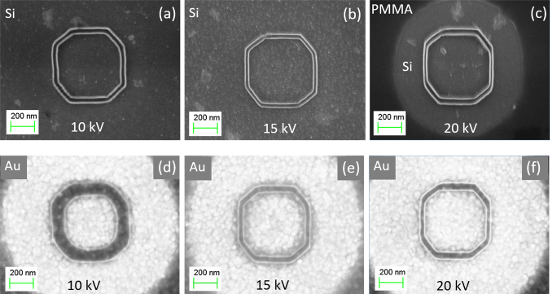
- required for a template pattering can be estimated to be on the order of hours or even tens of hours. Often, during such a long exposure, a pattern generator will produce an error due to a buffer overflow because of the large data exchange. Moreover, the main drawback of EBL is the exposure speed (usually
- method is very promising for fabrication of high-quality, artificial, spin-ice lattices [21][22], magnonic [23] and photonic [24] crystals on large scale. An important additional advantage of the proposed method is the fast patterning of a template as compared with the exposure time required for the
- reversed pattern on positive resist using conventional lithography techniques, where a sequential scan of the selected area is required. To fabricate a template in the form of an array of 25 × 25 (625 elements in total) equilateral triangles with a length of 210 nm and a line width of 40 nm, only 17.6 s


A simple approach to the synthesis of Cu1.8S dendrites with thiamine hydrochloride as a sulfur source and structure-directing agent
Beilstein J. Nanotechnol. 2015, 6, 881–885, doi:10.3762/bjnano.6.90
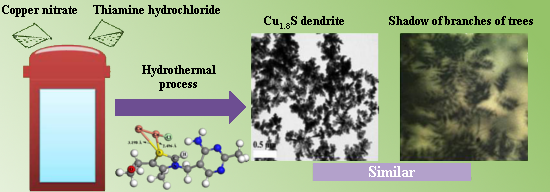
- Bi2S3 without a template [11]. Li et al. demonstrated that L-cysteine could assist the formation of snowflake-like patterns and flower-like microspheres as well as porous hollow microsphere CuS structures [12]. Thiamine, abundant and inexpensive, contains one sulfur atom and is supposed to be used as a


Microwave assisted synthesis and characterisation of a zinc oxide/tobacco mosaic virus hybrid material. An active hybrid semiconductor in a field-effect transistor device
Beilstein J. Nanotechnol. 2015, 6, 785–791, doi:10.3762/bjnano.6.81
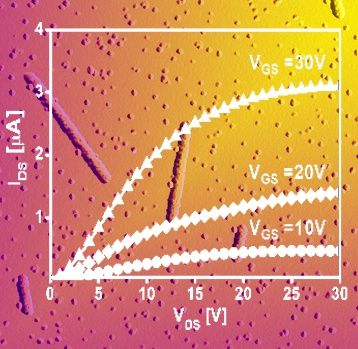
- Biology and Plant Virology, University of Stuttgart, 70550 Stuttgart, Germany 10.3762/bjnano.6.81 Abstract Tobacco mosaic virus (TMV) has been employed as a robust functional template for the fabrication of a TMV/zinc oxide field effect transistor (FET). A microwave based approach, under mild conditions
- light scattering (DLS), transmission electron microscopy (TEM), grazing incidence X-ray diffractometry (GI-XRD) and atomic force microscopy (AFM). TEM and DLS data confirm the formation of crystalline ZnO nanoparticles tethered on top of the virus template. GI-XRD investigations exhibit an orientated
- nature of the deposited ZnO film along the c-axis. FET devices fabricated using the zinc oxide mineralized virus template material demonstrates an operational transistor performance which was achieved without any high-temperature post-processing steps. Moreover, a further improvement in FET performance


Magnetic properties of self-organized Co dimer nanolines on Si/Ag(110)
Beilstein J. Nanotechnol. 2015, 6, 777–784, doi:10.3762/bjnano.6.80
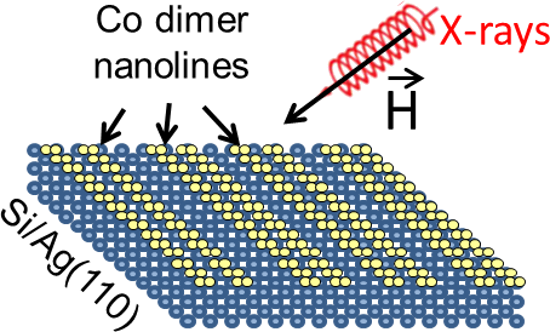
- growth temperature, individual or regular arrays (with a pitch of 2 nm) of Si nanoribbons can be grown. Next, the Si/Ag(110) system is used as a novel one-dimensional Si template to guide the growth of Co dimer nanolines on top of the Si nanoribbons, taking advantage of the fact that the thermally
- transition metal nanostructures, it appears interesting to also study the growth of such objects on a non-metallic template. We underline that since self-organized growth allows the fabrication of a high-density of nanostructures with a narrow size distribution, this route of nanofabrication opens up the
- nanolines on top of the Si NRs, reproducing the 1D pattern of the Si template. This, however, is limited by defects induced by Co incorporation into the Si NRs [21]. In the experiments reported herein, Co was deposited at 220 K to kinetically block this Co incorporation process and obtain long, defect-free





