Search results
Search for "transfer" in Full Text gives 1093 result(s) in Beilstein Journal of Nanotechnology. Showing first 200.
In situ magnesiothermic reduction synthesis of a Ge@C composite for high-performance lithium-ion batterie anodes
Beilstein J. Nanotechnol. 2023, 14, 751–761, doi:10.3762/bjnano.14.62
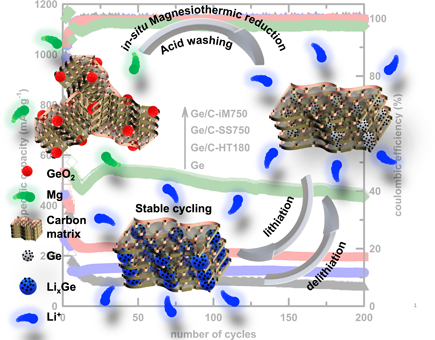
- the low-frequency region. The former component is characteristic of charge transfer resistance, while the latter presents the diffusion of ions in the solid phase. Compared to the pure Ge electrode, the diameters of the semicircle are smaller in the Ge@C electrodes because of the higher electrical
- conductivity of the additional carbon matrix, indicating the decrease in charge transfer resistance of the composite electrodes. The EIS results were fitted using an equivalent circuit model, including an internal or electrolyte resistance (Re), a charge transfer resistance (Rct), and two constant phase
- elements (CPE) [65]. According to Table 2, the charge transfer resistances of all Ge@C electrodes are much lower than the values of the pure Ge electrode, and Ge/C-iM750 exhibits the lowest value. The ionic conductivity was evaluated using the lithium-ion diffusion coefficient () using the following


Control of morphology and crystallinity of CNTs in flame synthesis with one-dimensional reaction zone
Beilstein J. Nanotechnol. 2023, 14, 741–750, doi:10.3762/bjnano.14.61
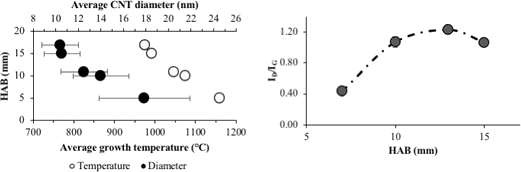
- are formed with catalyst particles at the bottom if the catalyst–substrate interaction force is more substantial [23]. Nevertheless, the rapid growth of CNTs was observed from the catalytic reaction within the flame environment. Because of the coupled energy and mass transfer phenomena, the


Current-induced mechanical torque in chiral molecular rotors
Beilstein J. Nanotechnol. 2023, 14, 711–721, doi:10.3762/bjnano.14.57
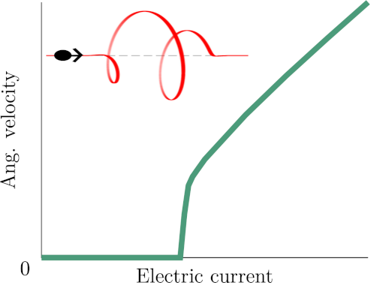
- has been great endeavor to engineer molecular rotors operated by an electrical current. A frequently met operation principle is the transfer of angular momentum taken from the incident flux. In this paper, we present an alternative driving agent that works also in situations where angular momentum of
- work is that the wire rotates even if the net transfer of angular momentum of the transmitted particles is zero. The operation principle is that the particle exerts a torque when entering and leaving the molecular wire. Even if both exactly compensate, the wire rotates while the particle travels along
- particle does not vanish. In this situation, the rotation trivially appears due to the angular momentum transfer (“garden hose effect”). This situation represents molecular junctions where the incoming or outgoing current can carry a non-vanishing angular momentum. We present the characteristics of the




![[Graphic 29]](/bjnano/content/inline/2190-4286-14-57-i54.svg?max-width=637&scale=1.18182)


A graphene quantum dots–glassy carbon electrode-based electrochemical sensor for monitoring malathion
Beilstein J. Nanotechnol. 2023, 14, 701–710, doi:10.3762/bjnano.14.56
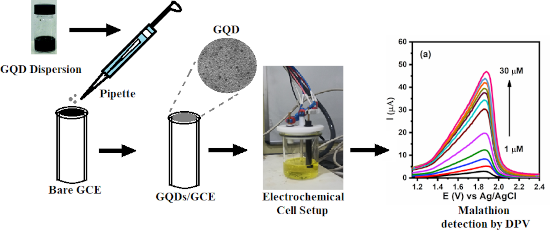
- , the sensor’s oxidation–reduction behavior was investigated. Electrochemical impedance spectroscopy was conducted to study the electrochemical properties of the modified the GQDs/GCE working electrode, which showed excellent charge transfer properties. We measured malathion in varying concentrations
- use of graphene and its derivatives is widespread for electrochemical detection since 2D graphene sheets provide numerous electrochemical sites for the detection of target molecules, while electrons in the sp2-hybridized pz orbital have a faster electron transfer rate, which enhances response time and
- /reduction behavior and charge transfer resistance, cyclic voltammetry and electrochemical impedance spectroscopy were performed. An investigation of the relationship between concentrations and peak currents was conducted using differential pulse voltammetry (DPV). In this study, the modified GQD electrodes


Metal-organic framework-based nanomaterials as opto-electrochemical sensors for the detection of antibiotics and hormones: A review
Beilstein J. Nanotechnol. 2023, 14, 631–673, doi:10.3762/bjnano.14.52
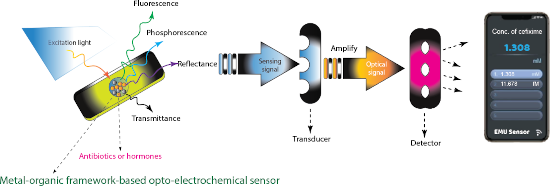
- on an energy transfer mechanism in the sensing system. A water-stable two-dimensional lanthanide-based MOF (Ln-MOF) was synthesised by Ren et al. [38] in a different study to serve as a reversible luminescent sensor for the detection of sulfamethazine (SMZ) antibiotics. According to the authors, the
- limit of detection for SMZ is 0.655 μM, and the Ln-MOF luminescence is strongly quenched, with a quenching constant of 4.60 × 10⁴ M−1. They proposed two potential mechanisms for quenching (inner-filter effect and electron transfer). The overlap between the antibiotic’s absorption spectrum and the Ln
- -MOF’s excitation/emission spectrum is thought to be the cause of the inner-filter effect, as shown in Figure 7. The second process was linked to an electron transfer from the L-MOF’s conduction band to the antibiotic’s lowest unoccupied molecular orbital. In a related study, Zhang et al. [43


Titania nanoparticles for photocatalytic degradation of ethanol under simulated solar light
Beilstein J. Nanotechnol. 2023, 14, 616–630, doi:10.3762/bjnano.14.51
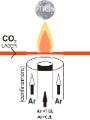
- . Ethylene was used to absorb the infrared laser radiation and transfer the energy to the precursor molecules, thus playing the role of a sensitizer. The reaction took place in the volume delimited by the orthogonally intersection of the laser beam with the precursor flow (Figure 12). The precursors were




Suspension feeding in Copepoda (Crustacea) – a numerical model of setae acting in concert
Beilstein J. Nanotechnol. 2023, 14, 603–615, doi:10.3762/bjnano.14.50
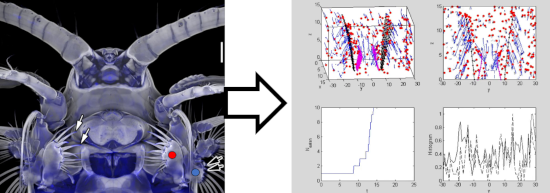
- particle collection, the particle motion patterns, and the transfer of particles to the mouth opening. It clearly depicts that short and long setae are more effective when they work in concert and have different mechanical properties and different adhesion forces. This study is rather a protocol for


Thermal transport in kinked nanowires through simulation
Beilstein J. Nanotechnol. 2023, 14, 586–602, doi:10.3762/bjnano.14.49

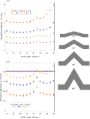
- be taken with a grain of salt, particularly in the MD simulations. Heat flux field In systems with complex geometry, the nuances of heat transfer beyond broad thermal conductance can be understood by examining the heat flux throughout the system. By investigating the flux through kinked systems, it
- . Classical heat transport solutions Fourier solutions were obtained through the use of Mathematica’s standard heat transfer library [55], built on a geometry matching that of the PMC, with appropriate boundary conditions to match the isothermal regions implemented in the PMC. Dimensionless units are used for








Carbon nanotube-cellulose ink for rapid solvent identification
Beilstein J. Nanotechnol. 2023, 14, 535–543, doi:10.3762/bjnano.14.44
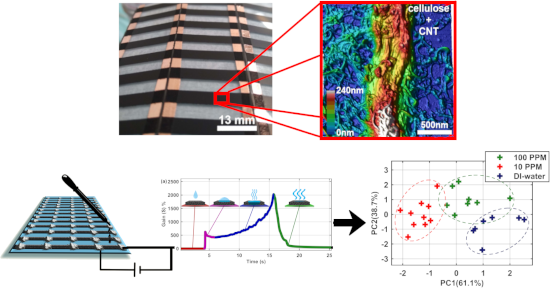
- regarding the width of the peaks. The interaction of the liquid with the hot crucible is analogous to the interaction of the liquid with the transducer from the thermal point of view. In both cases, the contact of the liquid with the hot surface causes a temperature drop due to the heat transfer from the


Conjugated photothermal materials and structure design for solar steam generation
Beilstein J. Nanotechnol. 2023, 14, 454–466, doi:10.3762/bjnano.14.36
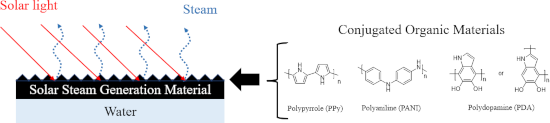
- and describe commonly used conjugated organic materials and structural designs. Keywords: absorption; conjugated molecules; energy transfer; photothermal materials; solar steam generation; Review Introduction With the rapid development of the world economy, global water shortages are occurring
- either undergo radiative relaxation in the form of photons or nonradiative relaxation in the form of phonons (heat) to release and transfer energy to impurities/defects or dangling bonds on the material surface. When energy is released in the form of phonons, local heating of the lattice is induced
- -withdrawing (EW) groups, such as malononitrile (DCV) and 2-(3-oxo-indan-1-ylidene)malononitrile (INCN) to the DPP core enhances the stability of DPP dyes [27]. In addition, when a thienyl spacer was introduced between the DPP and EW groups, efficient intramolecular charge transfer (ICT) interactions were


Evaluation of electrosynthesized reduced graphene oxide–Ni/Fe/Co-based (oxy)hydroxide catalysts towards the oxygen evolution reaction
Beilstein J. Nanotechnol. 2023, 14, 420–433, doi:10.3762/bjnano.14.34
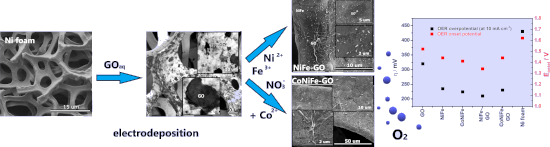
- a strong crystal field) [28][29]. The shape of the XAS spectra (Ni edge) indicates a similar type of oxides in the structure of the catalysts. The addition of GO to NiFe and CoNiFe intensified both the nickel and iron L3 edge peaks, indicating partial electron transfer from nickel and iron to the
- indicate charge transfer from cobalt to carbon and the formation of Co–O–C bonds in the catalyst [31]. Moreover, the spectra show that the dominant cobalt species in the studied catalysts were Co3+ and Co2+ [25]. The L3 edge of carbon in NiFe-GO and CoNiFe-GO is presented in Figure 3d. In general, the
- the improvement in the OER of NiFe-GO with the higher Qdep of NiFe and GO resulted mainly from the NiFe structure and the electroactive surface area and the porosity of GO. Electrochemical impedance spectroscopy (EIS) was performed in order to determine the charge transfer resistance (Rct) of the




Plasmonic nanotechnology for photothermal applications – an evaluation
Beilstein J. Nanotechnol. 2023, 14, 380–419, doi:10.3762/bjnano.14.33
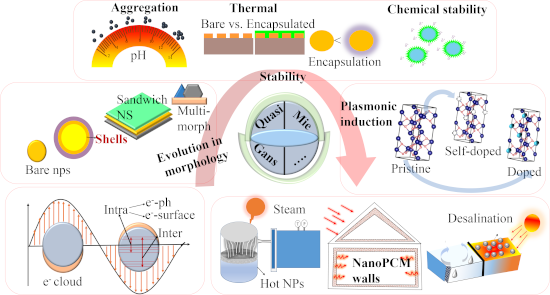
- inevitable reduction in the dependency on fossil fuels, global energy demand looks to solar power to be a significant provider for its needs, with various solar power conversion technologies in place and rapidly progressing [1]. Electromagnetic radiation, when interacting with a material can transfer energy
- are processes other than complete absorption through which photon energy can be transferred to a material. Elastic scattering is not relevant for PT applications as there is no transfer of energy into the material for heating. Absorption/inelastic scattering of electromagnetic radiation can lead to
- distribution. The electromagnetic absorptivity of the metal conduction electrons is proportional to the rate of momentum transfer to the lattice. It can be written as [64]: m* is the effective electron mass, n is the electron density, and τeff is the conduction electron relaxation time given by τ is the




Quercetin- and caffeic acid-functionalized chitosan-capped colloidal silver nanoparticles: one-pot synthesis, characterization, and anticancer and antibacterial activities
Beilstein J. Nanotechnol. 2023, 14, 362–376, doi:10.3762/bjnano.14.31
- Izzet Baysal University, 14030 Bolu, Türkiye Department of Medical Microbiology, Faculty of Medicine, Bolu Abant Izzet Baysal University, 14030 Bolu, Türkiye Technology Transfer Application and Research Center, Bolu Abant Izzet Baysal University, 14030 Bolu, Türkiye Department of Biostatistics and


Bismuth-based nanostructured photocatalysts for the remediation of antibiotics and organic dyes
Beilstein J. Nanotechnol. 2023, 14, 291–321, doi:10.3762/bjnano.14.26
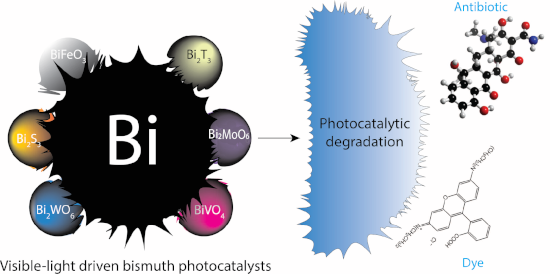
- static electric field, which effectively aids in the separation and transfer of photogenerated carriers. Bulk Bi and Bi-based nanostructure morphologies can also be easily altered using a variety of synthesis techniques due to their unique electrical and optical properties, which are directly tied to the
- mechanical stability against photocorrosion; (c) high efficiency in quantum conversion; (d) fast generation and efficient transfer of photocarriers (e− and h+); and (e) slow recombination rate of photogenerated charge carriers. The nanopowder photocatalysts must also exhibit easy and rapid recovery from the
- semiconductor and a noble metal with an appropriate work function. A unidirectional charge transfer is enabled by the Schottky potential barrier, increasing charge density and separation [72]. Shen et al. [166] created a Schottky junction by synthesising NiSe2 nanosheets on top of BiVO4 nanosheets using a


Spin dynamics in superconductor/ferromagnetic insulator hybrid structures with precessing magnetization
Beilstein J. Nanotechnol. 2023, 14, 233–239, doi:10.3762/bjnano.14.22
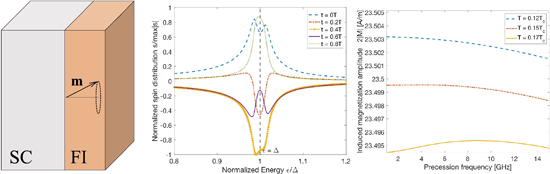
- superconductor/ferromagnetic insulator hybrid structures was applied to describe nonstationary phenomena, such as generation of spin transfer torques, nonuniform thermoelectric effects, and domain wall movement. The theoretical description of the dynamic proximity effect is the more complex task because of the


Concentration-dependent photothermal conversion efficiency of gold nanoparticles under near-infrared laser and broadband irradiation
Beilstein J. Nanotechnol. 2023, 14, 205–217, doi:10.3762/bjnano.14.20
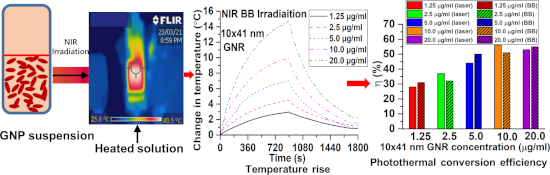
- dissipated to the surrounding medium is defined as: where S is the surface area of the cuvette exposed to the surrounding environment, h is the heat transfer coefficient, Tmax is the maximum temperature attained on irradiating the suspension for time t, and T0 is temperature of the surrounding environment




High–low Kelvin probe force spectroscopy for measuring the interface state density
Beilstein J. Nanotechnol. 2023, 14, 175–189, doi:10.3762/bjnano.14.18
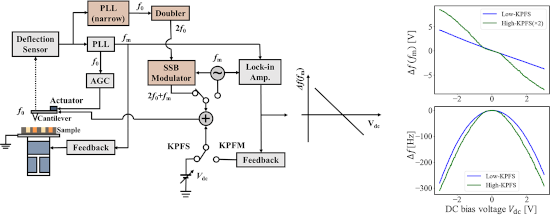
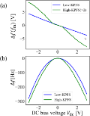
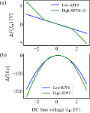
- of the effects of semiconductor interface states with high spatial resolution using high and low AC bias frequencies compared with the cutoff frequency of the carrier transfer between the interface and bulk states. Information on the energy spectrum of the interface state density is important for
- interface state density inside semiconductors. We derive an analytical expression for the electrostatic forces between a tip and a semiconductor sample in the accumulation, depletion, and inversion regions, taking into account the charge transfer between the bulk and interface states in semiconductors. We
- -low KPFS using high- and low-frequency AC bias voltages to measure the interface state density inside semiconductors. We derive an analytical expression for the electrostatic force between the tip and the sample that takes into account the charge transfer between the bulk and interface states in the



Structural, optical, and bioimaging characterization of carbon quantum dots solvothermally synthesized from o-phenylenediamine
Beilstein J. Nanotechnol. 2023, 14, 165–174, doi:10.3762/bjnano.14.17
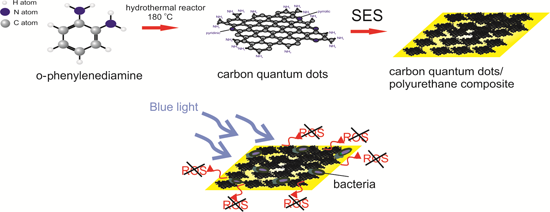
- significantly, especially, by the presence and distribution of various functional groups on the basal plane and edges of carbon network, affecting, in turn, the CQD properties. Doping of CQDs with nitrogen, chlorine, or fluorine heteroatoms induces larger a transport bandgap, increased charge transfer
- resistance, and better antioxidant properties compared to pristine CQDs [5]. Functionalization of CQDs with amino groups (NH2 groups) induces a redshift of the photoluminescence because of the charge transfer from the amino groups to the carbon honeycomb core [6]. Also, grafting with NH2 groups, by means of
- through energy transfer to molecular oxygen [21]. Chong et al. claimed that superoxide anions are involved in the generation of singlet oxygen, implying that electron transfer is an intermediate step for the generation of singlet oxygen by photoexcited graphene quantum dots [20]. In nitrogen-doped


Intermodal coupling spectroscopy of mechanical modes in microcantilevers
Beilstein J. Nanotechnol. 2023, 14, 123–132, doi:10.3762/bjnano.14.13
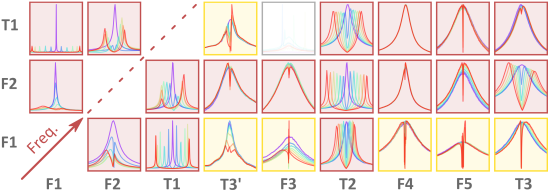
- asymmetrical coupling. This refers to an energy transfer either easier or harder from the first mode to the second compared to a transfer from second to first. Two directional coupling terms were introduced to account for this possibility, later to be investigated in detail. Equation 1 only shows the energy of


Cooper pair splitting controlled by a temperature gradient
Beilstein J. Nanotechnol. 2023, 14, 61–67, doi:10.3762/bjnano.14.7
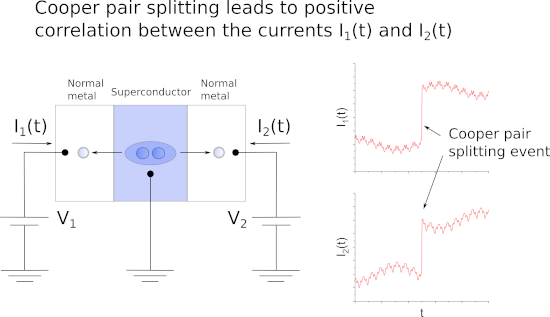
- projection α at a point x, m is the electron mass, and μ is the chemical potential, is the Hamiltonian of a superconducting electrode with the order parameter Δ and the terms account for electron transfer through the junctions between the superconductor and the normal leads. In Equation 4, the surface


Gap-directed chemical lift-off lithographic nanoarchitectonics for arbitrary sub-micrometer patterning
Beilstein J. Nanotechnol. 2023, 14, 34–44, doi:10.3762/bjnano.14.4
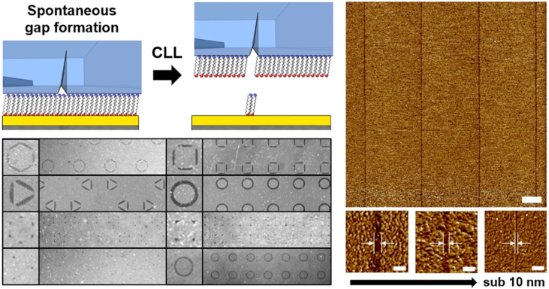
- lithography operations and could severely limit the obtainable feature resolution if neglected. Chemical lift-off lithography (CLL) is a rapidly emerging subtractive lithographic technique that aims to overcome the lateral diffusion and gas phase transfer obstacles present in conventional soft lithography [17
- modulating stamp properties for micrometer-scale features [27]. utilizing different assembled and backfilled species [28][29]. and further substrate processing, e.g., pattern transfer to the underlying material layer [30][31][32][33][34][35][36]. In practice, CLL allows simple and facile fabrication of
- structure characterization To transfer chemical patterns created by CLL to the underneath metal layer, a wet chemical etching process was adopted. After lifting the PDMS stamp from a SAM-modified Au substrate, the Au surface was immersed in an aqueous mixture containing 40 mM iron nitrate and 60 mM thiourea


Induced electric conductivity in organic polymers
Beilstein J. Nanotechnol. 2022, 13, 1551–1557, doi:10.3762/bjnano.13.128
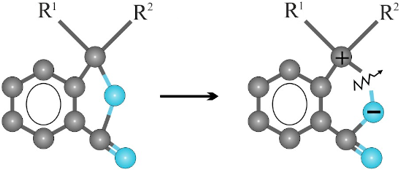
- − ionization of the corresponding atoms, which enables effective charge transfer along the polymer chain [2]. (a) Schematics of a Pb (grey)–PDP (blue)–Pb (grey) three layer heterostructure on insulating substrate (not indicated for simplicity). The layout enables electron transport measurements of each lead



Photoelectrochemical water oxidation over TiO2 nanotubes modified with MoS2 and g-C3N4
Beilstein J. Nanotechnol. 2022, 13, 1541–1550, doi:10.3762/bjnano.13.127
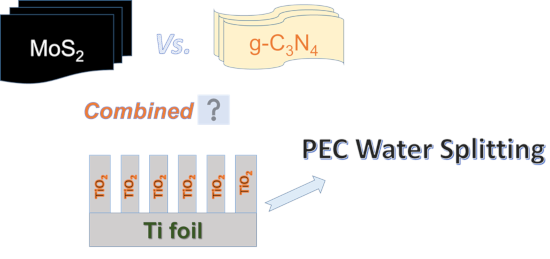
- , which can improve the charge transfer states [33][34]. These two low-bandgap semiconductors improved considerably the PEC water splitting efficiency [35][36]. However, the fabrication of MoS2/TNAs and g-C3N4/TNAs has many disadvantages such as high synthesis temperatures, the requirement of a binder, or
- with previous publications [50][51][52]. Figure 5 shows the results of electrochemical impedance spectroscopy (EIS), that is, Nyquist and Mott–Schottky plots of the materials, which give information about the charge transfer mechanism at the interface. In Figure 5a, the Nyquist plots of the samples all
- exhibit only single semicircular shape, which shows the charge transfer resistance equivalent to the polarization resistance. This result also demonstrates a unique interaction of the electrode surface and the electrolyte solution. Furthermore, the g-C3N4 sample shows the semicircle with the largest


Non-stoichiometric magnetite as catalyst for the photocatalytic degradation of phenol and 2,6-dibromo-4-methylphenol – a new approach in water treatment
Beilstein J. Nanotechnol. 2022, 13, 1531–1540, doi:10.3762/bjnano.13.126
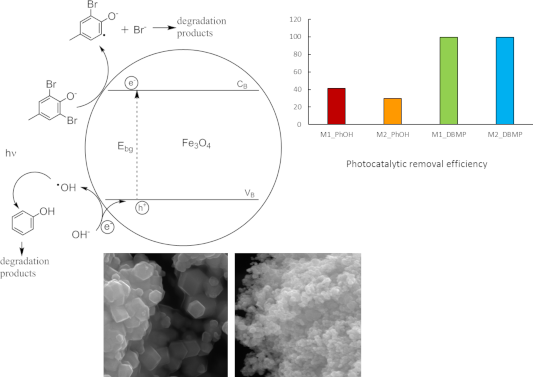
- by Chelkowska et al. [36]. The TFG model includes the following reactions: The reaction in Equation 6 shows that the ozone decomposition process is initiated by hydroxy anions. Two-electron transfer of the oxygen atom produces the –OOH anion, which is necessary for the generation of hydroxyl radicals
- higher than the bandgap energy generates holes and electrons, which, after moving to the catalyst surface, may participate in redox processes. In a basic medium, the photocatalytic process may proceed by oxygen reduction at the surface of the particles (electron transfer only) [37]. A similar electron
- transfer can occur during the adsorption of organic compounds on magnetite. In the presence of adsorbed aryl halogenated compounds on the catalyst surface, the accumulated electrons are available to activate carbon–halogen bonds via dissociative electron transfer [38][39]. The electron from the catalyst


A TiO2@MWCNTs nanocomposite photoanode for solar-driven water splitting
Beilstein J. Nanotechnol. 2022, 13, 1520–1530, doi:10.3762/bjnano.13.125
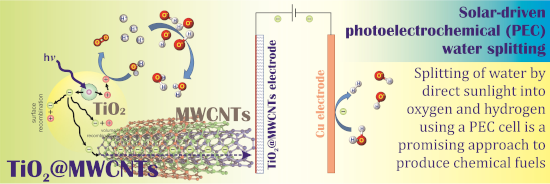
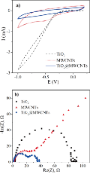
- cyclic voltammograms show that incorporating TiO2 with the MWCNTs leads to a decrease in the electrical double layer, thereby facilitating the electron transfer rate in the TiO2@MWCNTs electrode. Moreover, the current density of the photoelectrochemical electrode formed by TiO2@MWCNTs under solar
- thick electrical double layer (EDL) [33]. However, incorporating TiO2 onto the MWCNTs leads to a decrease of the EDL, increasing the electron transfer rate in the TiO2@MWCNTs electrode [34]. Puthirath et al. proved that the EDL has a significant influence on the hydrogen evolution reaction of the
- electrode [35]. Based on the cyclic voltammetry results, it could be suggested that the TiO2@MWCNTs electrode is superior regarding photoelectrochemical application compared to TiO2 and MWCNTs electrodes. Electrochemical impedance spectroscopy (EIS) is applied to characterize the electron-transfer property