Search results
Search for "vibration" in Full Text gives 337 result(s) in Beilstein Journal of Nanotechnology. Showing first 200.
Quantitative comparison of wideband low-latency phase-locked loop circuit designs for high-speed frequency modulation atomic force microscopy
Beilstein J. Nanotechnol. 2018, 9, 1844–1855, doi:10.3762/bjnano.9.176
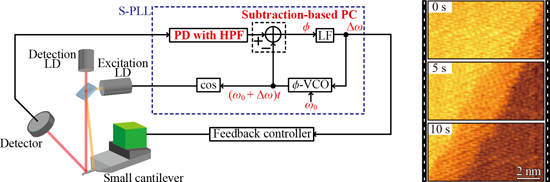
- cantilever thermal vibrations nth. These values were calculated using the following equation [1][33]: where kB, T, k, and A denote Boltzmann's constant, the absolute temperature, the cantilever spring constant, and the cantilever vibration amplitude, respectively. Qd* represents the apparent Q-factor in the
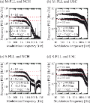
- vibration and that the noise generated inside the PLLs is negligible. The cut-off frequencies of the measured spectra correspond to the bandwidths listed in Table 1 and Table 2, as expected from the basic PLL principle. Overall, these results confirm that the developed PLLs can provide the optimal noise



Uniform cobalt nanoparticles embedded in hexagonal mesoporous nanoplates as a magnetically separable, recyclable adsorbent
Beilstein J. Nanotechnol. 2018, 9, 1770–1781, doi:10.3762/bjnano.9.168
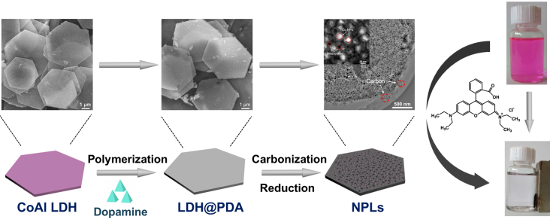
- characteristic adsorption bands at 1355 cm−1 and 790 cm−1 are assigned to the ν3 vibration and bending modes of CO32− within the interlayer of CoAl LDH, respectively (Figure S1a, Supporting Information File 1). The FTIR spectrum of LDH@PDA-2.5 shows two additional adsorption peaks at 1506 cm−1 and 1616 cm−1
- excellent of magnetic separation ability. The properties of carbon generated by carbonization of the surface PDA layer are illustrated in the Raman spectrum. As shown in Figure 6A, the typical D and G bands at around 1355 cm−1 and 1598 cm−1 are observed clearly, corresponding to the in-plane vibration mode


Multimodal noncontact atomic force microscopy and Kelvin probe force microscopy investigations of organolead tribromide perovskite single crystals
Beilstein J. Nanotechnol. 2018, 9, 1695–1704, doi:10.3762/bjnano.9.161
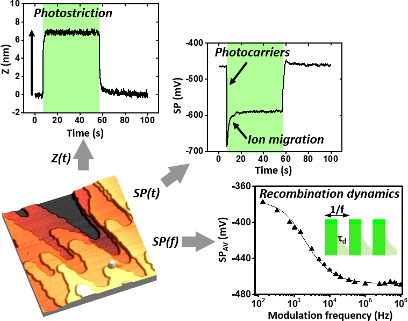
- ) at room temperature (RT) with in situ annealed Pt/Ir-coated silicon cantilevers (EFM, Nanosensors, resonance frequency in the 45–115 kHz range). Topographical imaging was performed in frequency modulation mode (FM-AFM) with negative frequency shifts of a few Hz and vibration amplitudes of a few tens


Toward the use of CVD-grown MoS2 nanosheets as field-emission source
Beilstein J. Nanotechnol. 2018, 9, 1686–1694, doi:10.3762/bjnano.9.160
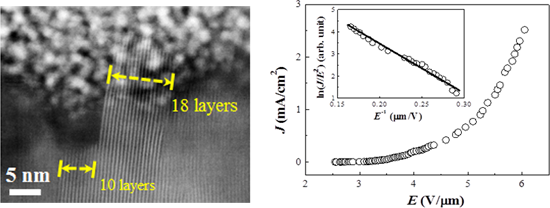
- spectrum of the as-synthesized MoS2 NSs, is shown in Figure 2a, indicating the characteristics of the 2H-MoS2 in-plane vibrational mode (E12g) at 383.1 cm−1 and the out-of-plane vibrational mode (A1g) at 408.3 cm−1 [22]. The difference in frequency between the two vibration modes is 25.2 cm−1, which



Nanocomposites comprised of homogeneously dispersed magnetic iron-oxide nanoparticles and poly(methyl methacrylate)
Beilstein J. Nanotechnol. 2018, 9, 1613–1622, doi:10.3762/bjnano.9.153
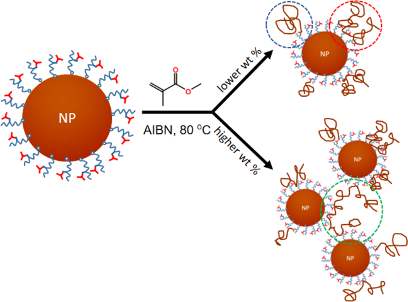
- used with the nanoparticles. It is worth mentioning that a part of the hydroxyl groups in the original RA of technical grade (80% purity) was already esterified, as indicated by a small intensity peak at 4.88 ppm and a shoulder on the left-hand side of the vibration band of the carbonyl group in its 1H
- of the left-hand side of the vibration band of the carbonyl group confirm the formation of the methacrylic ester of RA (Supporting Information File 1, Figures S3, S4 and S5). The disappearance of the peak representing the MMA double bond in the 1H NMR spectrum of the RA-PMMA reveals the successful
- the carbon–oxygen stretching vibration and the difference between the asymmetric and symmetric stretching-vibration frequencies relative to the free carboxylate ion are indicative of a mononuclear bidentate complex. The absorption peak at 1736 cm−1, indicative of ester groups, is significantly


Closed polymer containers based on phenylboronic esters of resorcinarenes
Beilstein J. Nanotechnol. 2018, 9, 1594–1601, doi:10.3762/bjnano.9.151
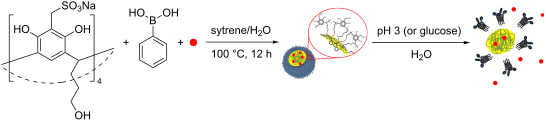
- attributed to the vibration of B–O ester bond at 1365 cm−1 confirms the boronate bonding between BA and SRA (see Supporting Information File 1, Figure S3). Besides, the stretching vibrations of C–H bonds at 3000–2800 cm−1 and the C–C aromatic bonds at 1525–1475 cm−1 as well as the deformational vibrations of


Electronic conduction during the formation stages of a single-molecule junction
Beilstein J. Nanotechnol. 2018, 9, 1471–1477, doi:10.3762/bjnano.9.138
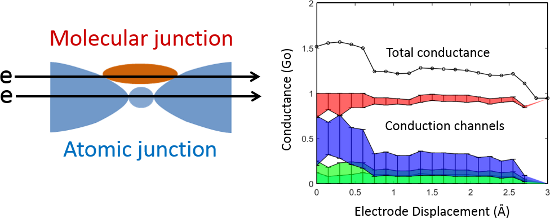
- scenarios in which a single-molecule junction is formed. Future control over such processes may pave the way for directed formation of preferred junction structures. Keywords: break junction; electron–vibration interactions; electronic transport; inelastic electron tunneling spectroscopy; molecular
- junction; molecular vibration; quantum interference; shot noise; Introduction Single-molecule junctions serve as a versatile atomic-scale laboratory for quantum electronic transport [1][2]. The formation of such molecular junctions, where a molecule is suspended as a bridge between two metallic electrodes
- spectroscopy [11][12][13][14] can offer valuable information about the structure of the combined metallic and molecular junctions. When an applied voltage (V) across a molecular junction exceeds the energy (in eV) of a certain molecular vibration mode, some of the transmitted electrons lose energy to excite


Electrostatically actuated encased cantilevers
Beilstein J. Nanotechnol. 2018, 9, 1381–1389, doi:10.3762/bjnano.9.130
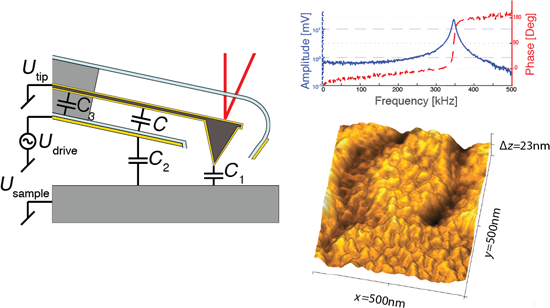
- resonances of the chip, chip holder, or dither piezo [1] along with modes of fluid vibration when working in liquids [2]. The problem is accentuated at high frequencies when operating in high-viscosity liquids. A user can easily select the wrong peak resulting in increased tip–sample interaction forces or




Induced smectic phase in binary mixtures of twist-bend nematogens
Beilstein J. Nanotechnol. 2018, 9, 1297–1307, doi:10.3762/bjnano.9.122
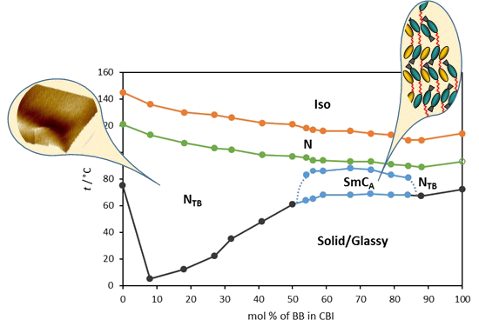
- be involved in interaction with BB in the mixture, we focused our attention on the IR band related to the stretching of the C≡N bond. Comparison of the spectra of pure compounds and 73 mol % BB mixture at room temperature reveals that shift of C≡N stretching vibration is negligible (Figure 7). The




Computational exploration of two-dimensional silicon diarsenide and germanium arsenide for photovoltaic applications
Beilstein J. Nanotechnol. 2018, 9, 1247–1253, doi:10.3762/bjnano.9.116
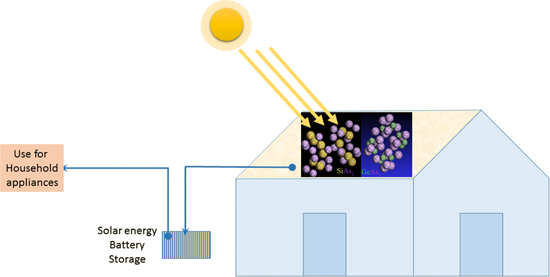
- the same IV–V group combination, we focus our study on two-dimensional SiAs2 and GeAs2 and compare them with their bulk counter parts with regard to electronic band structure, phonon-vibration frequencies, optical properties, band gap modulation behavior and predict their potential applications


Automated image segmentation-assisted flattening of atomic force microscopy images
Beilstein J. Nanotechnol. 2018, 9, 975–985, doi:10.3762/bjnano.9.91
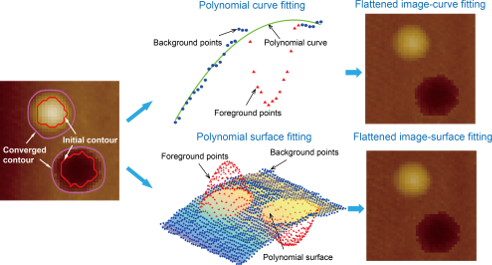
- exhibited in AFM images. Additionally, some other factors, such as hysteresis (Figure 1c), creep (Figure 1d), and nonlinearity (Figure 1e) of x–y and z-scanners and vibration from the environment can also cause distortion and artifacts in AFM images [20][22][23][24]. AFM images generally display a tilting


Facile synthesis of a ZnO–BiOI p–n nano-heterojunction with excellent visible-light photocatalytic activity
Beilstein J. Nanotechnol. 2018, 9, 789–800, doi:10.3762/bjnano.9.72
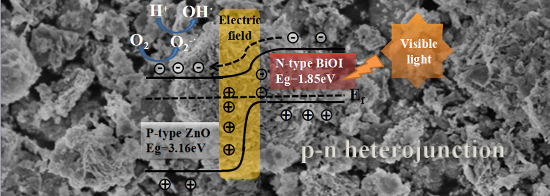
- : where h is Plank’s constant, ν is the frequency of vibration, α is the adsorption coefficient, Eg is the optical band gap and A is a proportionality constant [51][52]. The value of the constant n denotes the characteristics in the transition of a semiconductor. For the case that both ZnO and BiOI


Cyclodextrin-assisted synthesis of tailored mesoporous silica nanoparticles
Beilstein J. Nanotechnol. 2018, 9, 693–703, doi:10.3762/bjnano.9.64
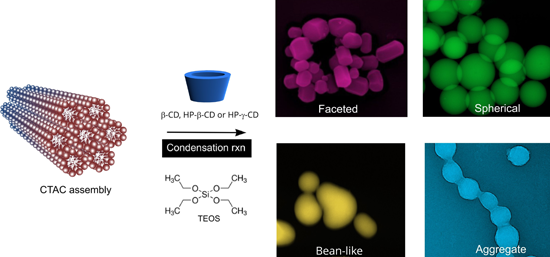
- –H stretching of CTAC molecules, while the peak at 460 cm−1 is assigned to the asymmetric vibration of Si–O–Si. The Si–OH bond vibration can be seen at 802 cm−1. The presence of CD moieties is confirmed by the peaks at 1030, 1080 and 1155 cm−1 for the stretching vibration of C–C and C–O bonds and the
- asymmetric stretching of C–O–C [30]. But, these peaks are overlapped by a broad stretching vibration peak of Si–O–Si at 1100 cm−1. Comparable FTIR spectra were observed for the CD-functionalized silica particles, suggesting a physical adsorption of CDs at the particle surface [21]. Thermogravimetric analysis


Combined pulsed laser deposition and non-contact atomic force microscopy system for studies of insulator metal oxide thin films
Beilstein J. Nanotechnol. 2018, 9, 686–692, doi:10.3762/bjnano.9.63
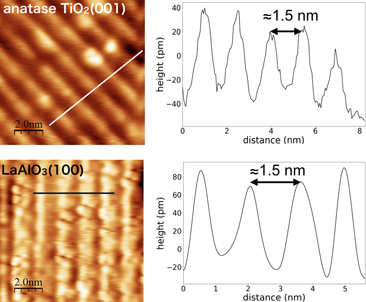
- same as in our previous studies [29][37][41][44][45][46][47][48]. To perform stable atomic resolution imaging in this chamber, a mechanism to fix the unit by double spring vibration isolation and eddy current damping [49] is provided, to prevent vibration noise. Therefore, it is possible to obtain
- atomic resolution images with the same performance as in our previous study [48]. We are able to perform NC-AFM measurements without the influence of vibration noise caused by the linkage to the PLD chamber. An optical interferometer [50] was used for deflection detection of the probe used for the NC-AFM


Perovskite-structured CaTiO3 coupled with g-C3N4 as a heterojunction photocatalyst for organic pollutant degradation
Beilstein J. Nanotechnol. 2018, 9, 671–685, doi:10.3762/bjnano.9.62
- –C units. The peaks at 1398 cm−1, 1540 cm−1 and 1636 cm−1 correspond to the stretching vibration of aromatic C–N bonds [16][34]. The broad peak from 3000–3600 cm−1 can be assigned to the terminal NH or NH2 groups of the aromatic rings and O–H stretching of surface hydroxyl groups [20]. The FTIR
- spectrum of CT nanoflakes shows three distinct peaks at 435 cm−1, 540 cm−1 and 1420 cm−1 corresponding to the stretching vibrations of Ti–O, bridging stretching modes of Ti–O–Ti and bending vibration of CO32− ions which is consistent with the literature [43]. The FTIR spectrum of the CTCN heterojunction


Ultralight super-hydrophobic carbon aerogels based on cellulose nanofibers/poly(vinyl alcohol)/graphene oxide (CNFs/PVA/GO) for highly effective oil–water separation
Beilstein J. Nanotechnol. 2018, 9, 508–519, doi:10.3762/bjnano.9.49
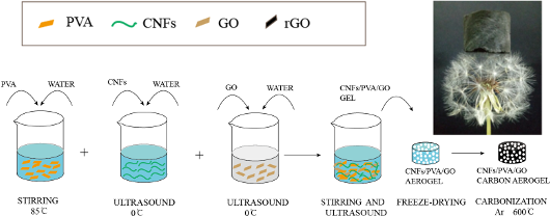
- of hydroxy groups), 2893 cm−1 (C–H stretching), 1640 cm−1 (H–O–H bending of the absorbed water), 1431 cm−1 (–CH2 bending), 1369 cm−1 (O–H bending) and 1029 cm−1 (C–O–C stretching vibrations) [27]. In Figure 3b, pure PVA showed peaks at 3280 cm−1 (O–H stretching vibration of hydroxy group), 2914 cm−1
- (saturated CH2/CH3 groups, stretching vibration), 1714 cm−1 (C=O stretching), 1425 cm−1 (CH stretching) and 1083 cm−1 (C–O–C stretching vibrations) [28]. In Figure 3c, the characteristic peaks of GO, which are located at 1714 cm−1, 1586 cm−1 and 1031 cm−1, are due to C=O in carboxylic acid and carbonyl
- previous studies [19][29], which is in agreement with the SEM results. FTIR can only be used to detect signals from molecules with infrared activity. Therefore, Raman spectroscopy analysis was studied to detect the stretching vibration characteristic peak of homonuclear diatomic pairs. The Raman spectrum


Facile synthesis of ZnFe2O4 photocatalysts for decolourization of organic dyes under solar irradiation
Beilstein J. Nanotechnol. 2018, 9, 436–446, doi:10.3762/bjnano.9.42
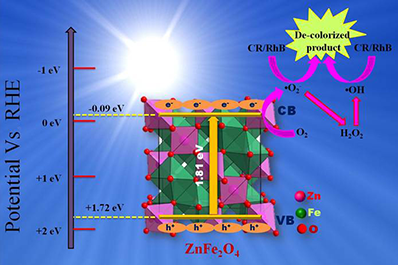
- in the region of 1650–1550 cm−1 (red lines) represent the stretching vibration and deformation vibration of surface-adsorbed hydroxy groups. The peak centred at 2350 cm−1 is characteristic for anti-symmetrical stretching mode of dissolved carbon dioxide [32]. The stretching band in the region of 590


Sugarcane juice derived carbon dot–graphitic carbon nitride composites for bisphenol A degradation under sunlight irradiation
Beilstein J. Nanotechnol. 2018, 9, 353–363, doi:10.3762/bjnano.9.35
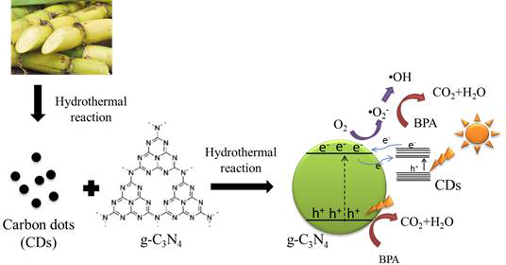
- –H stretch, respectively. The presence of N–H stretching vibration modes is due to some uncondensed amine functional groups in the carbon nitride layer [51]. The band in the range of 1230–1650 cm−1 corresponded to the stretching of sp3 C–N and sp2 C=N in CN heterocycles that exists within the g-C3N4
- File 1), the CDs show the obvious absorption peaks at 2925 cm−1, 1608 cm−1 and 670 cm−1 which are correlated to the stretching vibrations of C–H, stretching vibrations of C=O, and bending vibration of =C–H, respectively. The three obvious absorption peaks at 2368 cm−1, 1409 cm−1 and 1095 cm−1 are


Synthesis and characterization of electrospun molybdenum dioxide–carbon nanofibers as sulfur matrix additives for rechargeable lithium–sulfur battery applications
Beilstein J. Nanotechnol. 2018, 9, 262–270, doi:10.3762/bjnano.9.28
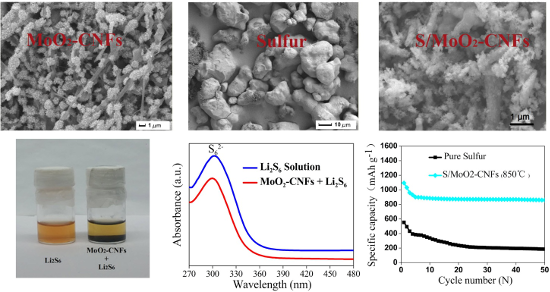
- 500–850 cm−1 were attributed to Mo–O–Mo, indicating the occurrence of crystallization [28]. Both the Raman spectra and XRD results suggested that MoO2–CNFs were formed through a subsequent annealing process. The broad band at 3400 cm−1 was attributed to the O–H stretching vibration due to absorbed H2O


Bombyx mori silk/titania/gold hybrid materials for photocatalytic water splitting: combining renewable raw materials with clean fuels
Beilstein J. Nanotechnol. 2018, 9, 187–204, doi:10.3762/bjnano.9.21
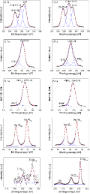
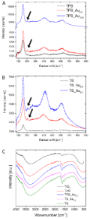
- band intensities compared to the Au-free samples. As a result, the Raman spectra of TPS_Aux and TS_Aux can be analyzed in detail. The Raman spectra obtained for “bulk” anatase typically show O–Ti–O vibration bands at 144, 197, and 640 cm−1 from the Eg symmetric stretching vibration, at 400 and 519 cm−1
- from the B1g, symmetric bending vibration, and at 513 cm−1 from the A1g asymmetric bending vibration [63][74]. The bands at 519 and 513 cm−1 overlap in the current spectra although they are known to be separated below 73 K [63][74]. In the case of nanoparticles (vs bulk TiO2), broader signals and a red
- or blue shift in the Raman bands are observed [75]. The O–Ti–O vibration bands observed in Figure 6 are located at 626, 509, 409, 209, and 151 cm−1. The band at 151 cm−1 is the most intense and sharpest signal. The 209 cm−1 band is very weak and its intensity increases in the presence of Au. The




Co-reductive fabrication of carbon nanodots with high quantum yield for bioimaging of bacteria
Beilstein J. Nanotechnol. 2018, 9, 137–145, doi:10.3762/bjnano.9.16
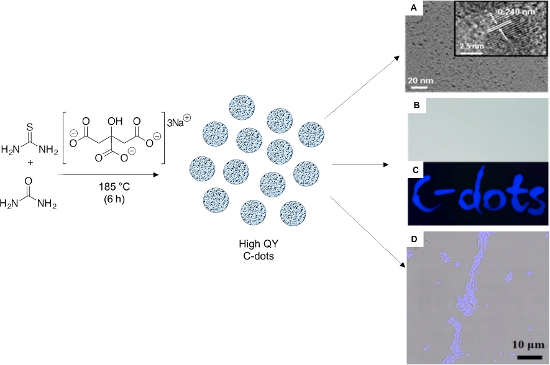
- carbon can be clearly detected for Sa, Sb and Se. The D-band, located at 1387 cm−1, correlates to the disorder or defects in the graphitized structure (sp3-hybridized carbon), while the G-band (1540 cm−1) is assigned to the E2g mode of graphite and corresponds to the vibration of sp2-bonded carbon atoms


L-Lysine-grafted graphene oxide as an effective adsorbent for the removal of methylene blue and metal ions
Beilstein J. Nanotechnol. 2017, 8, 2680–2688, doi:10.3762/bjnano.8.268
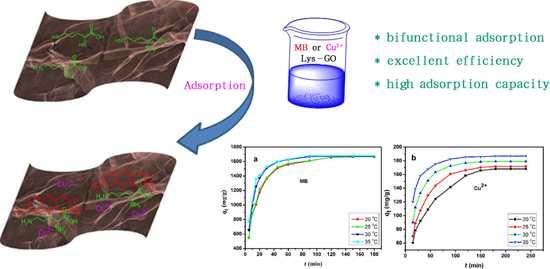
- materials were characterized by FTIR analysis (Figure 1). For GO, aromatic C=C and C=O stretching vibrations can be clearly seen at ca. 1630 and 1743 cm−1. The strong peaks around 3438 and 1400 cm−1 are ascribed to absorbed water. After L-lysine was grafted onto GO, the CH/CH2 stretching vibration of the


Synthesis of [{AgO2CCH2OMe(PPh3)}n] and theoretical study of its use in focused electron beam induced deposition
Beilstein J. Nanotechnol. 2017, 8, 2615–2624, doi:10.3762/bjnano.8.262
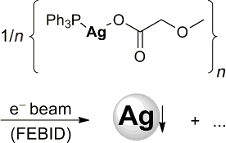
- ]. This study was performed with 3-21G for Ag and 6-31++G** for the other atoms to satisfy both accuracy of the investigations and appropriate computing time and resources. The structure parameters of [AgO2CCH2OMe(PPh3)] and fragments thereof have been optimized with no symmetry constraint. The vibration


Inelastic electron tunneling spectroscopy of difurylethene-based photochromic single-molecule junctions
Beilstein J. Nanotechnol. 2017, 8, 2606–2614, doi:10.3762/bjnano.8.261
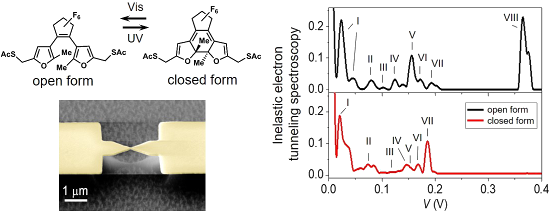
- closed forms of the photochromic molecule. For both isomeric molecular states, the features observed in the IET spectra are assigned with the help of computations that take the electron-vibration (EV) coupling into account. Results and Discussion The C5F-ThM photochromic molecule, used in this work, is


Numerical investigation of the tribological performance of micro-dimple textured surfaces under hydrodynamic lubrication
Beilstein J. Nanotechnol. 2017, 8, 2324–2338, doi:10.3762/bjnano.8.232
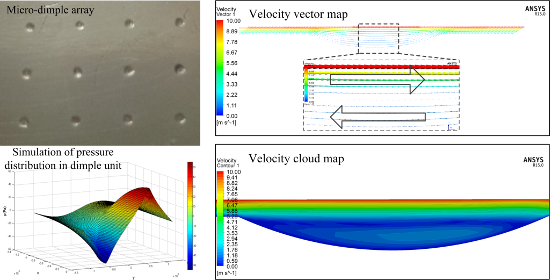
- Laboratory of Mechanical System and Vibration, Shanghai Jiao Tong University, 800 Dongchuan Road, Shanghai, 200240, China, School of Mechanical Engineering, Shanghai Jiao Tong University, 800 Dongchuan Road, Shanghai, 200240, China 10.3762/bjnano.8.232 Abstract Surface texturing is an important approach for