


Search results
Search for "X-ray photoelectron spectroscopy" in Full Text gives 323 result(s) in Beilstein Journal of Nanotechnology. Showing first 200.
Tuning the electronic properties of defect-rich MoS2
Beilstein J. Nanotechnol. 2026, 17, 796–805, doi:10.3762/bjnano.17.56
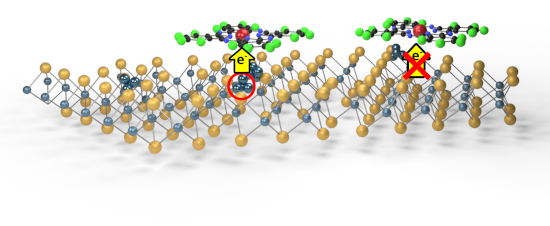
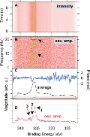
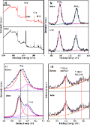
- . Keywords: angle-resolved photoelectron spectroscopy (ARPES); MoS2; phthalocyanine; X-ray absorption spectroscopy (XAS); X-ray photoelectron spectroscopy (XPS); Introduction In the pursuit for novel semiconducting materials, the group of transition metal dichalcogenides (TMDCs), including molybdenum


Tailoring Ag–Pt nanoalloys through solid-state dewetting: structural and optical insights
Beilstein J. Nanotechnol. 2026, 17, 748–759, doi:10.3762/bjnano.17.52

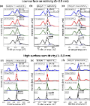
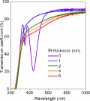
- homogeneous elemental distribution, as measured by energy dispersive spectroscopy. Additionally, X-ray photoelectron spectroscopy measurements confirmed the coexistence of both metals in metallic states, with a slight Ag deficiency attributed to its higher instability and desorption during the annealing
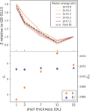
- selection of a series with a total bilayer thickness of 8 nm, fabricated at 650 °C, for further investigations. A detailed chemical composition analysis of pure Ag and Pt nanostructures, as well as those synthesized with various Ag–Pt ratios, was performed using X-ray photoelectron spectroscopy (XPS) and is




Oxidative atmosphere-driven formation of single-phase spinel CuRh2O4 nanofibers for alkaline water oxidation
Beilstein J. Nanotechnol. 2026, 17, 737–743, doi:10.3762/bjnano.17.50
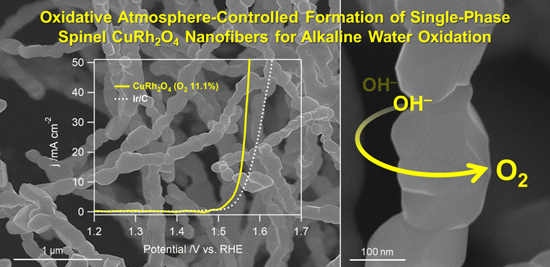
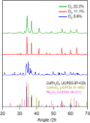
- oxygen-atmosphere engineering during annealing is critical for suppressing undesired phase segregation and achieving phase-pure CuRh2O4 nanofibers. Angle-resolved X-ray photoelectron spectroscopy (AR-XPS) was performed to clarify the surface chemical states of Cu and Rh in Cu–Rh bimetallic oxides
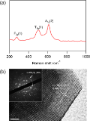
- analyzed by X-ray diffraction (MP-XRD; Malvern Panalytical X-ray diffractometer using Cu Kα radiation), Raman spectroscopy (HORIBA, LabRAM HR Evo 800), and angle-resolved X-ray photoelectron spectroscopy (AR-XPS; Thermo Fisher Scientific K-ALPHA XPS, Al Kα radiation at 12 kV). Electrochemical measurements




Environmental applications of silver nanoparticles: state-of-the-art review and emerging trends
Beilstein J. Nanotechnol. 2026, 17, 697–736, doi:10.3762/bjnano.17.49
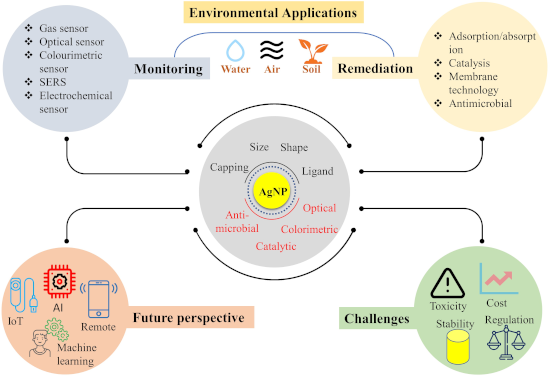
- spectroscopy (SERS) using AgNP nanocomposites could selectively detect polystyrene nanoparticles with a detection limit of 14 μg/mL [55]. X-ray photoelectron spectroscopy (XPS) provides information on the elemental composition, surface oxidation states, and electronic configuration of AgNPs [56]. This


Decontamination from water pollutants and pathogens by electrospun nanofibers doped with heavy-atom-free borafluorene-BODIPY photosensitizers
Beilstein J. Nanotechnol. 2026, 17, 668–682, doi:10.3762/bjnano.17.46
- measurements, the samples were sputtered with 10 nm of gold using a CCU-010 Compact Coating Unit (Safematic). The ToF SIMS maps were acquired in the positive ion mode spectrum using 8 kV accelerating voltage and 10 nA beam current. X-ray photoelectron spectroscopy X-ray photoelectron spectroscopy (XPS
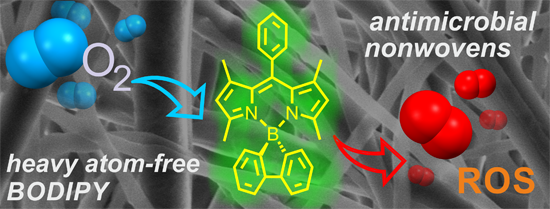
- resulting from hydrogen and dipole–dipole interactions, as well as the dispersive component associated with London and van der Waals forces [56]. The study was complemented with X-ray photoelectron spectroscopy (XPS) for the sample with the highest BODIPY concentration, 1(1.00 wt %)@PCL. The analysis of SEM



Electrochemical determination of ciprofloxacin using a MIL-101/reduced graphene oxide-modified electrode
Beilstein J. Nanotechnol. 2026, 17, 541–554, doi:10.3762/bjnano.17.35
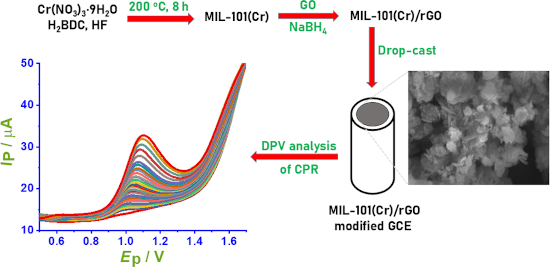
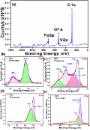
- by X-ray photoelectron spectroscopy (XPS). The survey spectrum (Figure 3a) confirms the presence of Cr, C, and O, which is consistent with the expected composition of MIL-101(Cr) integrated with reduced graphene oxide (rGO). No obvious extraneous elemental signals were observed in the survey spectrum


Probing internal continua and atomic ultrafast charge transfer within size-controlled nanoparticles by post-collision interaction in core-hole clock spectroscopy
Beilstein J. Nanotechnol. 2026, 17, 505–514, doi:10.3762/bjnano.17.33
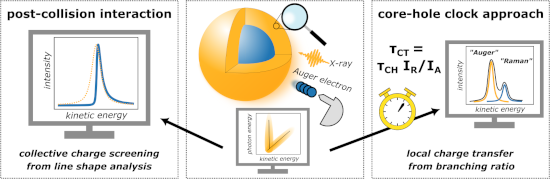
- characterization of the QDs with UV–vis absorption spectroscopy, hard X-ray photoelectron spectroscopy (HAXPES), and near-edge X-ray absorption fine structure (NEXAFS) spectroscopy has been performed by us to verify the size-dependence of quantum confinement (see further details in Supporting Information File 1



Upcycling agroindustrial waste into graphene oxide supports for gold nanoparticles: toward sustainable nanomaterials
Beilstein J. Nanotechnol. 2026, 17, 489–504, doi:10.3762/bjnano.17.32
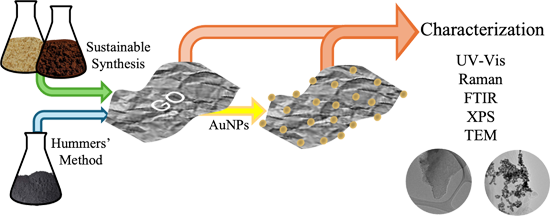
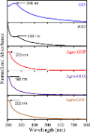
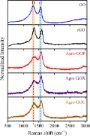
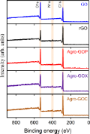
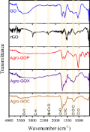
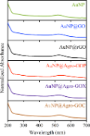
- room temperature in the 4000–540 cm−1 range with a spectral resolution of 4 cm−1, averaging 80 scans per sample. The surface chemical composition was assessed by X-ray photoelectron spectroscopy (XPS) using a SPECS spectrometer equipped with a PHOIBOS 100 energy analyzer and an Al Kα X-ray source (hν



Defects and defect-mediated engineering of two-dimensional materials: challenges and open questions
Beilstein J. Nanotechnol. 2026, 17, 454–488, doi:10.3762/bjnano.17.31
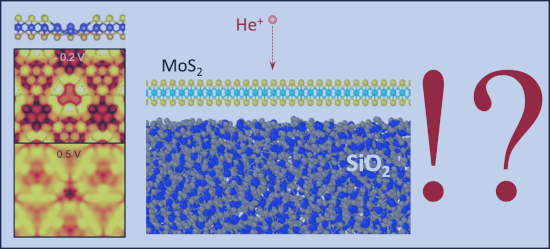
- control over defect positioning, uniformity (only one and the same defect present), and scalability, which ultimately will lead to useful technological applications. What are the limitations of X-ray photoelectron spectroscopy in identifying and quantifying defect concentrations in 2D materials, and how
- can these limitations be addressed? X-ray photoelectron spectroscopy (XPS) is a powerful tool for identifying and quantifying defects in 2D materials, offering unique advantages in surface sensitivity, chemical state analysis, and real-time monitoring of defect evolution. While challenges such as





Interconnection morphology effects on the radio frequency response of carbon nanotube sponges
Beilstein J. Nanotechnol. 2026, 17, 343–351, doi:10.3762/bjnano.17.23
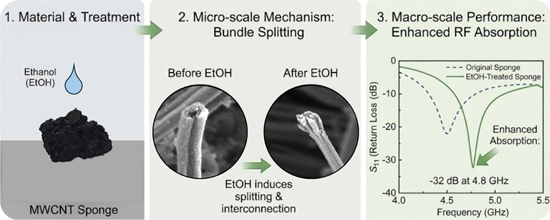
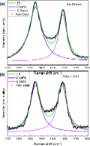
- treatment. We also investigated the chemical state of the carbon atoms by acquiring X-ray photoelectron spectroscopy (XPS) spectra from the as-grown and ethanol-treated CNS samples. The survey spectra are reported in Supporting Information File 1 (Figure S2). Figure 5 shows that the C1 s spectra are



Gold nanoparticle-decorated reduced graphene oxide as a highly effective catalyst for the selective α,β-dehydrogenation of N-alkyl-4-piperidones
Beilstein J. Nanotechnol. 2026, 17, 218–238, doi:10.3762/bjnano.17.15
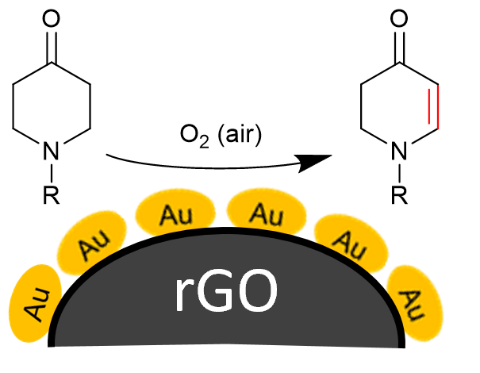
- functionalities of rGO were investigated by X-ray photoelectron spectroscopy (XPS) in the composite Au-SiW9/rGO. The Au 4f region (Figure 11a) shows two dominant peaks at 84.1 eV (Au 4f7/2) and 87.8 eV (Au 4f5/2), which correspond to metallic Au0, which is the initial catalytically active form in oxidative


Time of flight secondary ion mass spectrometry imaging of contaminant species in chemical vapour deposited graphene on copper
Beilstein J. Nanotechnol. 2026, 17, 200–213, doi:10.3762/bjnano.17.13
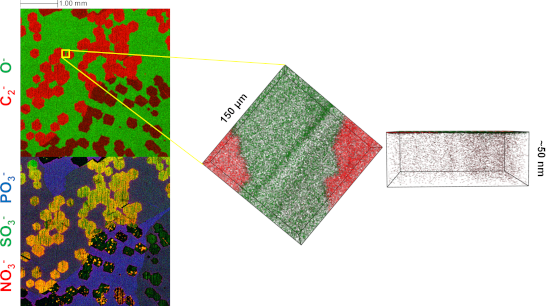
- single crystals [3][20][21][22][23], utilising Raman spectroscopy to confirm the physical structure of the graphene [24][25][26] and X-ray photoelectron spectroscopy (XPS) to confirm the sp2 bonding configuration [27][28]. However, there is typically little consideration given to possible chemical





Reduced graphene oxide paper electrode for lithium-ion cells – towards optimized thermal reduction
Beilstein J. Nanotechnol. 2026, 17, 24–37, doi:10.3762/bjnano.17.3
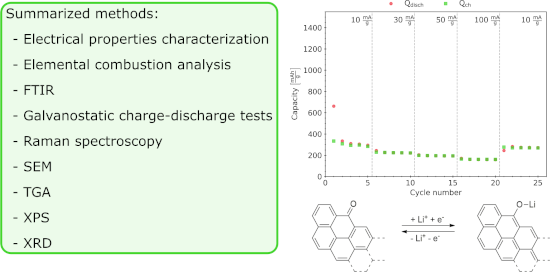
- 100). XPS X-ray photoelectron spectroscopy was applied to determine the surface concentrations of chemical bonds. The equipment applied was a PHI VersaProbeII Scanning XPS system with monochromatic Al Kα (1486.6 eV) X-rays (100 μm spot focused). High-energy-resolution spectra were obtained with 46.95



Current status of using adsorbent nanomaterials for removing microplastics from water supply systems: a mini review
Beilstein J. Nanotechnol. 2025, 16, 1837–1850, doi:10.3762/bjnano.16.127
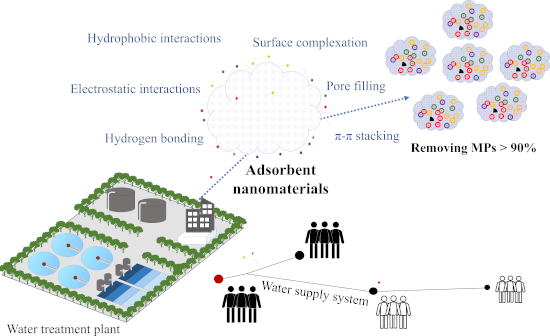
- . also confirmed that the reaction mechanisms of MPs and graphene oxide–chitosan sponges were electrostatic interactions, hydrogen bonding, and π–π interactions through Fourier-transform infrared spectroscopy and X-ray photoelectron spectroscopy measurements [69]. Integrating different types of


Electrical, photocatalytic, and sensory properties of graphene oxide and polyimide implanted with low- and medium-energy silver ions
Beilstein J. Nanotechnol. 2025, 16, 1794–1811, doi:10.3762/bjnano.16.123
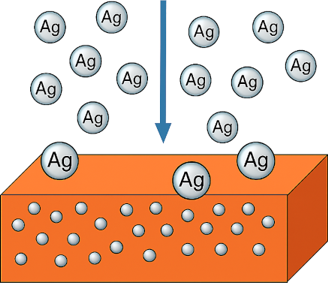
- of GO and PI. Elemental and structural changes induced by implantation were analyzed using Rutherford backscattering spectroscopy, elastic recoil detection analysis, Raman spectroscopy, Fourier-transform infrared spectroscopy, and X-ray photoelectron spectroscopy. Surface morphology was assessed via
- detected profile. Surface chemical analysis by XPS Chemical groups and the concentration of chemical elements on the surfaces of GO and PI before and after 20 keV and 1.5 MeV Ag ion implantation were analyzed by X-ray photoelectron spectroscopy (XPS). The XPS method specifically provides information from a
- implantation energy. The deconvolution of the C 1s region in high-resolution X-ray photoelectron spectroscopy (XPS) spectra of pristine PI is depicted in Figure 6a, illustrating four distinct carbon components. These components include C–C carbons originating from the aromatic rings of the oxydianiline portion


Ambient pressure XPS at MAX IV
Beilstein J. Nanotechnol. 2025, 16, 1677–1694, doi:10.3762/bjnano.16.118

- , Lund University, Box 118, SE-221 00, Lund, Sweden 10.3762/bjnano.16.118 Abstract Ambient pressure X-ray photoelectron spectroscopy (APXPS) has emerged as an important technique for investigating surface and interface chemistry under realistic conditions, overcoming the limitations of conventional XPS
- have been performed on sputtered LiCoO2 cathodes, demonstrating the broader applicability of this technique to conventional battery materials [10]. Conclusion and Perspectives Ambient pressure X-ray photoelectron spectroscopy has emerged as a powerful and versatile technique for probing surface and
- reproduced from [45] (“Solar light driven atomic and electronic transformations in a plasmonic Ni@NiO/NiCO3 photocatalyst revealed by ambient pressure X-ray photoelectron spectroscopy“, © 2024 M. K. Ghosalya et al., published by The Royal Society of Chemistry, distributed under the terms of the Creative





Photocatalytic degradation of ofloxacin in water assisted by TiO2 nanowires on carbon cloth: contributions of H2O2 addition and substrate absorbability
Beilstein J. Nanotechnol. 2025, 16, 1567–1579, doi:10.3762/bjnano.16.111
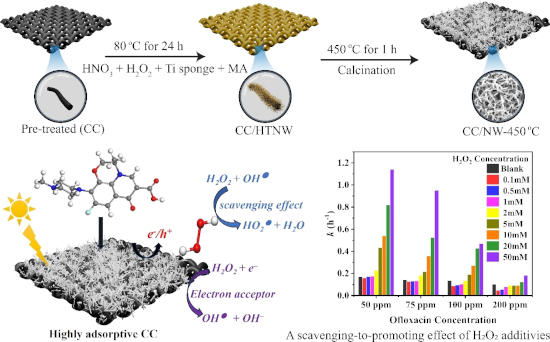
- diffractometer (Rigaku Corporation) with Cu Kα radiation, operating at 40 kV and 35 mA. Raman spectra were obtained using an Alpha300R UV system (WITec, Germany) equipped with a TEM00 laser at a wavelength of 532 nm. X-ray photoelectron spectroscopy (XPS) characterizations were conducted using a Kratos AXIS


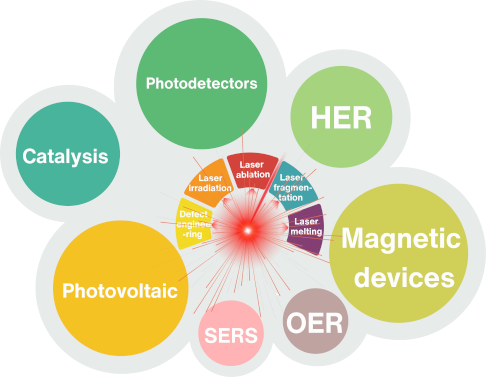
Laser processing in liquids: insights into nanocolloid generation and thin film integration for energy, photonic, and sensing applications
Beilstein J. Nanotechnol. 2025, 16, 1428–1498, doi:10.3762/bjnano.16.104




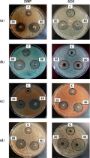


Synthesis and antibacterial properties of nanosilver-modified cellulose triacetate membranes for seawater desalination
Beilstein J. Nanotechnol. 2025, 16, 1380–1391, doi:10.3762/bjnano.16.100
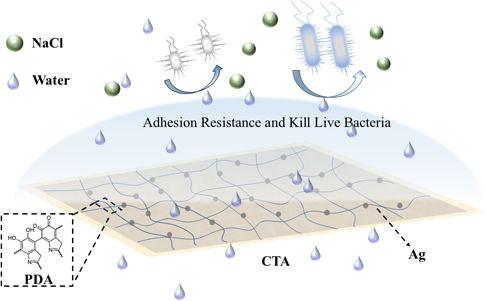
- result cannot exclude the possibility of instrumental error. X-ray photoelectron spectroscopy (XPS) is utilized to analyze the surface chemical compositions of Ag@PCTA, PCTA, and CTA. Figure 3a shows the XPS wide scan spectrum of CTA, PCTA, and Ag@PCTA. The C 1s peak at a binding energy (BE) of 284.94 eV


Enhancing the photoelectrochemical performance of BiOI-derived BiVO4 films by controlled-intensity current electrodeposition
Beilstein J. Nanotechnol. 2025, 16, 1289–1301, doi:10.3762/bjnano.16.94
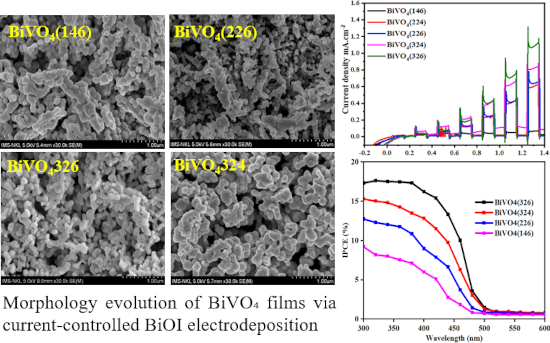
- . Characteristics of materials X-ray diffraction (XRD, Bruker D8 Advance) and Raman spectroscopy (LabRAM Odyssey Semiconductor) were used to analyze the crystal structures of photoanodes. UV–vis absorption spectra were obtained using a Cary 60 spectrophotometer. X-ray photoelectron spectroscopy (XPS, VG ESCALAB250
- , controlled crystallinity, and superior film uniformity achieved via the controlled-intensity current electrodeposition of BiOI. Surface chemical composition (XPS) X-ray photoelectron spectroscopy (XPS) was employed to investigate the surface chemical states and composition of the BiVO4 photoanodes, focusing
- 600 min. X-ray photoelectron spectroscopy (XPS) analysis of the BiVO4(326) photoanode before and after PEC stability testing in 30 min (0.5 M Na2SO4). (a) XPS view scans of survey spectrum and high-resolution spectra of (b) Bi 4f, (c) O 1s, and (d) V 2p. Estimated crystallite sizes of BiVO4



Single-layer graphene oxide film grown on α-Al2O3(0001) for use as an adsorbent
Beilstein J. Nanotechnol. 2025, 16, 1082–1087, doi:10.3762/bjnano.16.79
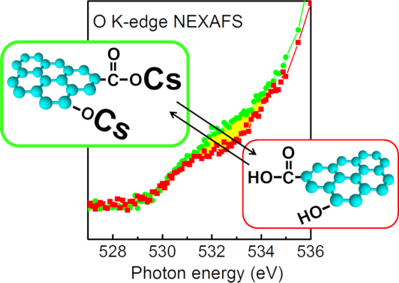
- Figure 1 shows an atomic force microscopy (AFM) image of SLG and SLGO on α-Al2O3(0001) substrates. The as-grown SLG film has an atomically flat surface and wrinkles with its height less than 0.4 nm [18]. The single layer of graphene was confirmed through X-ray photoelectron spectroscopy (XPS) peak


Structural and magnetic properties of microwave-synthesized reduced graphene oxide/VO2/Fe2O3 nanocomposite
Beilstein J. Nanotechnol. 2025, 16, 921–932, doi:10.3762/bjnano.16.70
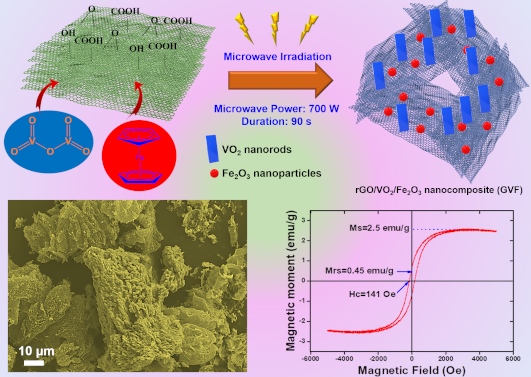
- graphite oxide to form rGO, the reduction of V2O5 to form VO2, and the formation of Fe2O3 from ferrocene. X-ray diffraction and X-ray photoelectron spectroscopy analyses confirm the formation of distinct metal oxides in the presence of rGO. Furthermore, the morphological analysis reveals the deposition of
- the NCs. The Raman spectra of rGO and the related NCs were recorded through the “XploRA plus HORIBA” instrument with a laser excitation of 532 nm. Additionally, the surface analysis was performed using X-ray photoelectron spectroscopy measurements (XPS, Thermofisher Scientific) functioning at 12 kV


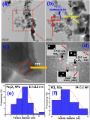

Heat-induced transformation of nickel-coated polycrystalline diamond film studied in situ by XPS and NEXAFS
Beilstein J. Nanotechnol. 2025, 16, 887–898, doi:10.3762/bjnano.16.67
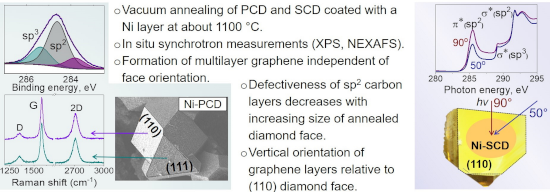
- thin nickel film deposited by thermal evaporation. The graphitization of diamond with and without a nickel coating as a result of high-vacuum annealing at a temperature of about 1100 °C was studied in situ using synchrotron-based X-ray photoelectron spectroscopy (XPS) and near-edge X-ray absorption
- . Keywords: graphitization; near-edge X-ray absorption fine structure spectroscopy; nickel coating; polycrystalline diamond film; single-crystal diamond; X-ray photoelectron spectroscopy; Introduction Diamond and graphite, both composed entirely of carbon atoms, exhibit vastly different properties due to
- requires a detailed study. HRTEM has proven very useful for investigating the graphite–diamond interface [19][24]. However, it provides information about local morphology and ordering of diamond surface and graphite layers. X-ray photoelectron spectroscopy (XPS) and near-edge X-ray absorption fine


Insights into the electronic and atomic structures of cerium oxide-based ultrathin films and nanostructures using high-brilliance light sources
Beilstein J. Nanotechnol. 2025, 16, 860–871, doi:10.3762/bjnano.16.65

- light sources, such as synchrotrons and free-electron lasers, allow researchers to probe the structural, electronic, and dynamic properties of functional materials at an unprecedented level of detail. Techniques like X-ray photoelectron spectroscopy and X-ray absorption spectroscopy, can reveal atomic
- applications, examining the application of high-brilliance light sources on model systems such as supported thin films and epitaxial nanostructures. We review selected studies exploiting the high energy resolution and sensitivity of synchrotron radiation-based X-ray photoelectron spectroscopy and X-ray
- perspectives offered by the ultrahigh brilliance and ultrashort free-electron laser pulses for dynamic studies of the processes that take place upon photoexcitation are discussed. Keywords: cerium oxide; free-electron lasers; thin films; X-ray absorption spectroscopy; X-ray photoelectron spectroscopy


Synchrotron X-ray photoelectron spectroscopy study of sodium adsorption on vertically arranged MoS2 layers coated with pyrolytic carbon
Beilstein J. Nanotechnol. 2025, 16, 847–859, doi:10.3762/bjnano.16.64
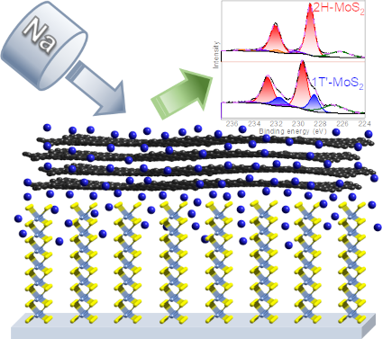
- . In this work, to reveal the effect of carbon coating on the interaction of sodium with the MoS2 layers located vertically relative to the substrate, model experiments were carried out using synchrotron-radiation-induced X-ray photoelectron spectroscopy (XPS). Sodium vapor obtained by heating a sodium





