Search results
Search for "UV–vis" in Full Text gives 651 result(s) in Beilstein Journal of Organic Chemistry. Showing first 200.
Discovery of sugarnitriles A and B, and structural reassignment of SF-2140, from a sugarcane endophytic actinomycete Amycolatopsis sp. JS-O27
Beilstein J. Org. Chem. 2026, 22, 1114–1121, doi:10.3762/bjoc.22.90
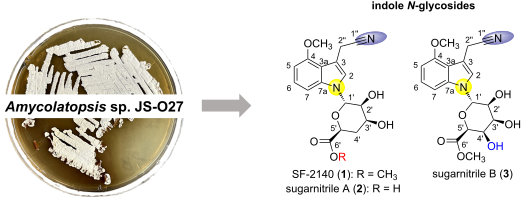
- . revealed three metabolites 1–3 with similar UV–vis absorption. Through a large-scale fermentation (4 kg rice medium) and LCMS-guided isolation by tracing the characteristic UV absorption, compounds 1 (11.5 mg), 2 (7.5 mg), and 3 (10.0 mg) were finally obtained. Compound 1 was isolated as a colorless
- . Optical rotations were measured at 20 °C on an INESA WZZ-2B polarimeter. UV–vis spectra were acquired in MeOH on a METASH UV-8000 spectrophotometer. Analytical and preparative reversed-phase HPLC (RPLC) was conducted on a Shimadzu Prominence HPLC system using a YMC Hydrosphere C18 analytical column (3 μm


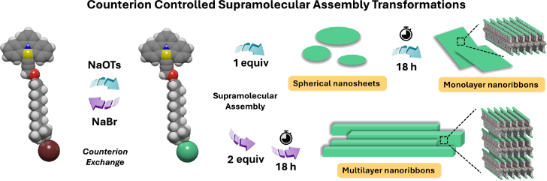
Controlled supramolecular assemblies of luminescent tridentate cyclometalated alkynylgold(III) amphiphiles in aqueous media
Beilstein J. Org. Chem. 2026, 22, 1097–1106, doi:10.3762/bjoc.22.88
- rate of 1.0 °C/min. The UV–vis absorption spectrum of the solution shows an intense absorption band at 304–318 nm and a moderately intense vibronic-structured absorption band at 360–405 nm at 20.0 °C (Figure 1a, black line). The vibrational progressional spacings of 1300–1310 cm−1 in the lower energy
- the vibronic-structured emission band was gradually decreased along with the subtly decreased structureless emission band at 428 nm (Figure 1b), possibly due to emissions from the GA assemblies. Upon increasing the water content in methanol, the UV–vis absorption spectra of GA show a progressive
- tosylate (1.0, 2.0, and 4.0 equiv), and subsequently heated to 50.0 °C and slowly cooled to 20.0 °C at a rate of 1.0 °C/min. The UV–vis absorption spectra of the solution show a progressive bathochromic shift with increasing sodium tosylate equivalents (Figure 2b). The presence of isosbestic points at 359


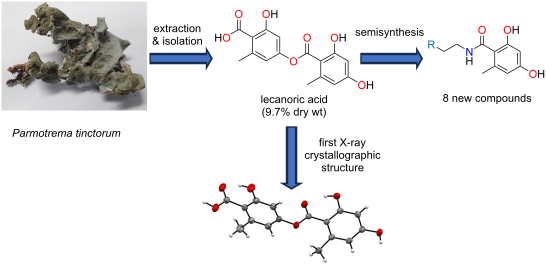
Semisynthesis, characterisation, and antibacterial evaluation of a novel lecanoric acid-derived amide library
Beilstein J. Org. Chem. 2026, 22, 1023–1032, doi:10.3762/bjoc.22.81
- Spectrometer coupled to a USB-ISS-UV–vis integrated sampling system. FTIR spectra were recorded on a Perkin Elmer Spectrum Two FTIR spectrophotometer equipped with Perkin Elmer’s UATR-TWO diamond ATR. Isolute® silica SPE columns (5 g or 10 g; 50 µm, 60 Å) were utilised for flash-column chromatography. Alltech


Electrochemical reduction of unsaturated carbon–carbon bonds via 3d transition-metal catalysis
Beilstein J. Org. Chem. 2026, 22, 955–981, doi:10.3762/bjoc.22.75
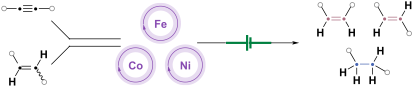
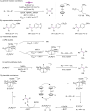
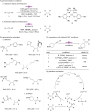
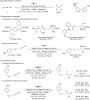
- tandem electrocatalysis essential for productive reactivity. During controlled-potential electrolysis, a characteristic color change of the solution was observed, and formation of an electrogenerated Fe(I) species was unambiguously confirmed by X-ray diffraction analysis and UV–vis spectroscopy in the
- studies revealed that cathodic reduction of Co(II) generates a Co(I) species, which is subsequently protonated by HFIP to form a cobalt hydride intermediate that engages with the alkyne substrate. Cyclic voltammetry supports the generation of Co–H species [60], while UV–vis spectroelectrochemical analysis








Knoevenagel condensation of 4,5- and 1,8-diazafluorenes
Beilstein J. Org. Chem. 2026, 22, 803–812, doi:10.3762/bjoc.22.62
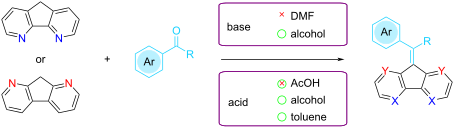
- diazafluorenylidenes were characterized by NMR, HRMS, elemental analysis, cyclic voltammetry (CV), UV–vis spectroscopy (Figure 1) and X-ray data (Figure 2 and Figure S4 in Supporting Information File 1). Figure 1a demonstrates the cyclic voltammograms of DPDAFs in CH2Cl2 solution. Both compounds demonstrated
- molecular ions were performed with respect to the standard lines of perfluorokerosene (PFK). Elemental analyses were performed for C, H, and N with a CHN-Analyzer Euro EA 300. Melting points were determined with a Thermosystem FP 900 instrument (Mettler Toledo). UV–vis spectra were recorded in diluted (10−5
- M) THF in 1 × 1 cm quartz cuvettes using a Varian Cary 5000 UV-VIS-NIR spectrometer. Cyclic voltammetry measurements were performed in CH2Cl2 solution by computer-controlled P-20x potentiostat (SmartStat, Russia) in combination with a three-electrode cell (Gamry); 0.1 M tetrabutylammonium




Halogenated azobenzene acrylates: from efficient solution photoswitching to stable solid-state photochromic materials
Beilstein J. Org. Chem. 2026, 22, 782–794, doi:10.3762/bjoc.22.60
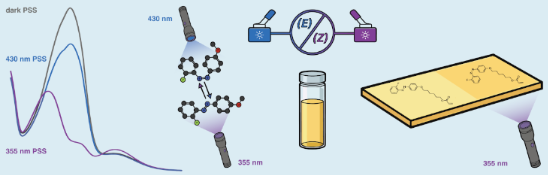
- calorimetry (DSC), thermogravimetric analysis (TGA), cyclic voltammetry (CV), UV–vis absorption spectroscopy, 1H and 13C NMR, and theoretical DFT calculations were employed. Furthermore, the target compounds are designed for incorporation as photoactive copolymers into the structure of functionalized
- calculated spectra of the pure Z-isomers are depicted in Figure 4B. Complete listing of all UV–vis absorption spectra can be found in Supporting Information File 1, Figures S19–23. The spectra of the pure Z-isomers were calculated using the method by Fischer [32]. Whereas Figure 4 demonstrates a minor effect
- absorption maxima of the disubstituted Z-isomers are red-shifted by ≈5 nm. Considering very similar ϕZ values for all three investigated pairs, λZmax is influenced rather electronically via the second halogen atom. The UV–vis absorption spectra were further predicted via TD-DFT and using B3LYP and CAM-B3LYP


Anti-invasive and cytotoxic evaluation of a (+)-pinoresinol-based semisynthetic library against glioblastoma
Beilstein J. Org. Chem. 2026, 22, 691–704, doi:10.3762/bjoc.22.54
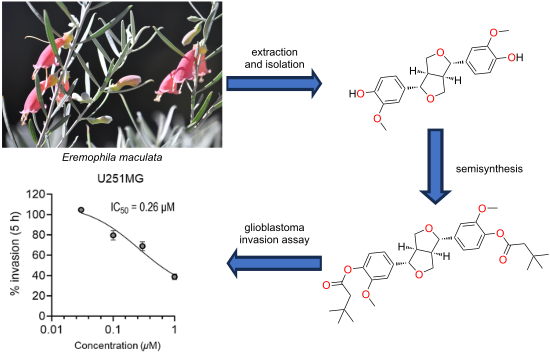
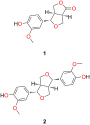
- and were also fully characterized following NMR, UV–vis, [α]D, ECD, and ESIMS data analyses. An example of our structure elucidation studies is described below, which focuses on the brominated pinoresinol enantiomer (+)-5,5'-dibromopinoresinol (5). HRESIMS data revealed an ion at m/z 536.9519 [M + Na
- melting point apparatus and are uncorrected. Specific rotations were determined on a JASCO P-2000 polarimeter. UV–vis spectra were recorded using a CAMSPEC M501 UV–vis spectrophotometer. ECD spectra were obtained on a JASCO J-1500 spectropolarimeter and processed using the software SDAR [31]. NMR spectra
- -Aldrich. All solvents used for chromatography, UV–vis, ECD, [α]D, and MS were Honeywell Burdick & Jackson brand or Lab-Scan HPLC grade. H2O was filtered using a Sartorius Stedium Arium Pro VF ultrapure H2O system. Plant material E. maculata seeds used in these studies were obtained from the NatureBank



Synthesis of a HDAC inhibitor–nanogold probe for cryo-EM visualization in class I HDAC co-repressor complexes
Beilstein J. Org. Chem. 2026, 22, 480–485, doi:10.3762/bjoc.22.35
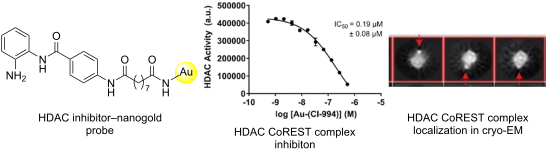
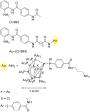
- , followed by centrifugation (see Supporting Information File 1 for full details). The resulting Au–(CI-994) conjugate was concentrated to a final volume of 1 mL. The concentration of Au–(CI-994) was determined by UV–vis spectroscopy, using absorbance at 420 nm – a characteristic wavelength for nanogold [19



Electrosynthetic access to unsymmetrical oxaza[8]helicenes with high chiral stability and strong circularly polarized luminescence (CPL)
Beilstein J. Org. Chem. 2026, 22, 372–382, doi:10.3762/bjoc.22.25
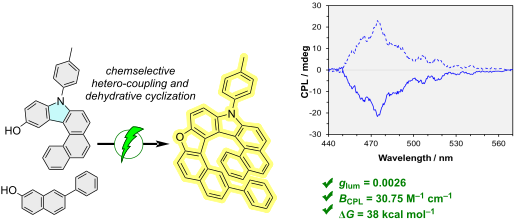
- ), and 6b (D); relative Gibbs free energies were calculated in (kcal mol−1) at the MN15/6-31G(2d,p)/SMD=chloroform level of theory. Photophysical characters of oxaza[n]helicenes: (A) and (B) UV–vis absorption and PL spectra; (C) Frontier Kohn–Sham molecular orbitals (HOMO and LUMO) optimized in the




Configuration–packing synergy enabling integrated crystalline-state RTP and amorphous-state TADF
Beilstein J. Org. Chem. 2026, 22, 224–236, doi:10.3762/bjoc.22.16
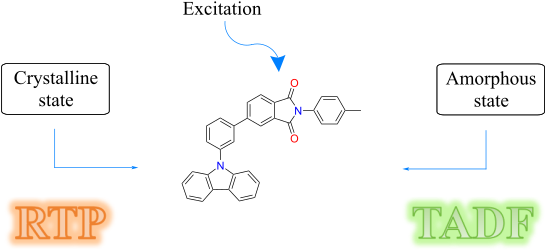
- , making it a suitable candidate for use in advanced optoelectronic devices, such as organic light-emitting diodes (OLEDs), where efficient triplet-state management and delayed fluorescence are highly desired. In different solvents, the UV–vis absorption maxima and band profiles of the compound remain
- emission energy. Consistent with these trends (Figure 2), compound 1 exhibits nearly identical UV–vis absorption across solvents, while its emission shifts bathochromically with increasing polarity, indicating that the luminescence of 1 arises predominantly from intramolecular charge transfer. In a dilute
- Bruker SMART 1000 CCD system and structures were solved using Olex software. UV–vis absorption spectra of dilute solutions were measured on a Hitachi U-3900 UV–vis spectrophotometer with the corresponding solvent as the blank. Solution-state photoluminescence spectra were recorded on a Shimadzu RF-5301PC


Base-promoted deacylation of 2-acetyl-2,5-dihydrothiophenes and their oxygen-mediated hydroxylation
Beilstein J. Org. Chem. 2026, 22, 192–204, doi:10.3762/bjoc.22.13
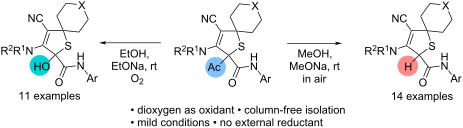
- presented in Figure 2. The formation of product 2a before water and acid were added also follows from the comparison of UV–vis spectra of crude mixture (a) and product 2a (b). According to the previously reported data [51], the absorption maximum in spectrum (a) at 220 nm is caused by the presence of
- )) and R1 = 0.0837, wR2 = 0.1768 (all data). Largest diff. peak/hole 0.29/−0.55 e−Å−3. HRMS analysis of the crude product. UV–vis spectra of the crude mixture (5.6 mg of the crude mixture was dissolved in 15 mL of methanol and the aliquot (100 µL) was diluted in 900 µL of methanol) (a) and purified




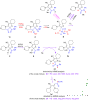
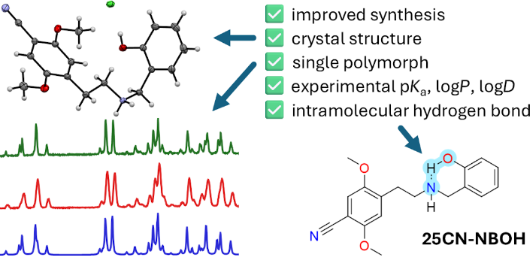
Improved synthesis and physicochemical characterization of the selective serotonin 2A receptor agonist 25CN-NBOH
Beilstein J. Org. Chem. 2026, 22, 175–184, doi:10.3762/bjoc.22.11
- through a 0.45 µm PVDF filter (Ø = 4 mm, Phenomenex) with the first 400 µL being discarded. Samples were diluted with ultrapure water before measurement by a UV spectrophotometry at 241 nm using 10 mm micro quartz cuvettes (Hellma GmbH & Co. KG, Müllheim, Germany) and a Cary 60 UV–vis spectrophotometer
- , respectively, while UV–vis spectra were recorded using the fiber optic probe (10 mm light path) of the inForm diode array spectrometer. The instrument control and data analysis were performed using the inForm software Version 1.1.3.6 (Sirius Analytical, Forest Row, UK). HPLC Samples from distribution


A new synthesis of Tyrian purple (6,6’-dibromoindigo) and its corresponding sulfonate salts
Beilstein J. Org. Chem. 2026, 22, 167–174, doi:10.3762/bjoc.22.10
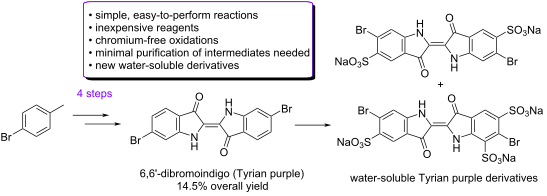
- deprotonation. Examining the absorbance at 755 nm versus pH yields a second pKa value at 13.0 ± 0.11 (Supporting Information File 1, Figure S26). As shown in Figure 1B, the corresponding disulfonate of 6,6’-dibromoindigo, 9, shows similar UV–vis spectra to compound 10. Specifically, 9 shows a λmax at 606 nm and
- ) [26]. The UV–vis spectra of both 9 and 10 are similar to those of 5,5’-indigodisulfonic acid disodium salt (indigo carmine) and 5,5’,7-indigotrisulfonic acid trisodium salt, as shown in Table 1 [27][28]. When compared to the absorption maximum of 6,6’-dibromoindigo (1), di- and trisulfonation causes a
- , thereby creating water-soluble derivatives of this ancient dye. A) UV–vis spectra of 6,6’-dibromo-5,5’,7-indigotrisulfonic acid trisodium salt (10) (10 μM) in aqueous solution at different pH values. B) UV–vis spectra of 6,6’-dibromo-5,5’-indigodisulfonic acid disodium salt (9) (10 μM) in aqueous solution


Design and synthesis of an axially chiral platinum(II) complex and its CPL properties in PMMA matrix
Beilstein J. Org. Chem. 2026, 22, 143–150, doi:10.3762/bjoc.22.7
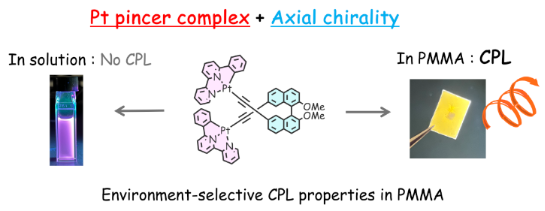
- chiral platinum(II) complex was synthesized via Sonogashira coupling and subsequent coordination of a pincer ligand to a precursor. The complex exhibited a broad absorption band ranging from 250 to 550 nm in the UV–vis spectrum, with TD-DFT calculations indicating mixed ligand-to-ligand charge transfer
- behavior, through a combination of experimental measurements and density functional theory (DFT) calculations. The experimental UV–vis spectrum was in good agreement with the DFT calculations, revealing that the electronic transitions originate from both ligand-to-ligand charge transfer (LL’CT) and metal
- spectroscopy, as well as high-resolution mass spectrometry (HRMS). Due to its low solubility, single crystals suitable for X-ray crystallographic analysis could not be obtained. Spectroscopic analysis and DFT calculations To elucidate the electronic structure of the platinum(II) complex, UV–vis absorption


Symmetrical D–π–A–π–D indanone dyes: a new design for nonlinear optics and cyanide detection
Beilstein J. Org. Chem. 2026, 22, 131–142, doi:10.3762/bjoc.22.6
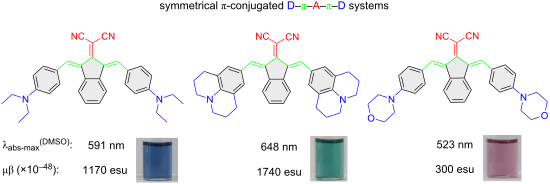
- Supporting Information File 16: Synthesis of compounds, copies of NMR, HRMS and UV–vis spectra and DFT results. Acknowledgements The numerical calculations reported in this paper were fully performed at TUBITAK ULAKBIM, High Performance and Grid Computing Center (TRUBA resources). This study constitutes


Thiazolidinones: novel insights from microwave synthesis, computational studies, and potentially bioactive hybrids
Beilstein J. Org. Chem. 2025, 21, 2618–2636, doi:10.3762/bjoc.21.203
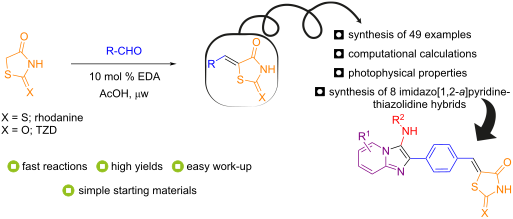
- = 0.546), with an excitation wavelength of 366 nm [83][84][85]. Nevertheless, no measurable quantum yield was observed for the fluorescence process. A solvatochromic study was conducted by measuring the UV–vis absorption and fluorescence spectra of compounds 3n (Figure 7) and 4n (Supporting Information
- quantitatively using UV–vis absorption spectroscopy. At acidic pH, only broad absorption bands at 370 nm and 325 nm were detected for compounds 3n and 4n, respectively. These results can be attributed to a phototautomerism effect in both the ground and excited states [97]. Additionally, fluorescence spectra
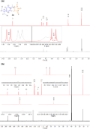
- experimental spectrum. In blue, suppressed or absent carbon atoms bound to hydrogen atoms. a) Visual impressions of the solvatochromic study in various solvents (10−5 M) after excitation with a natural light. b) UV–vis absorption spectra of 3n in different solvents (10−5 M) at room temperature. c) Normalized






Silica gel with covalently attached bambusuril macrocycle for dicyanoaurate sorption from water
Beilstein J. Org. Chem. 2025, 21, 2604–2611, doi:10.3762/bjoc.21.201
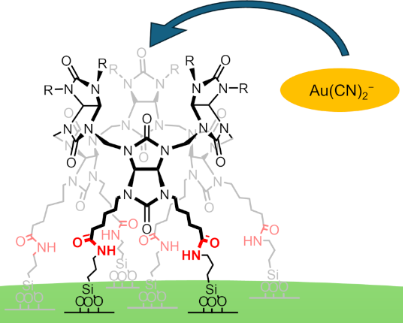
- in the same way. After the treatment of the SG-NHCO-BU1 material with 1 M KOH, the supernatant was analyzed in the presence of 1 mM dicyanoaurate by UV–vis spectroscopy (Figure 1C). The measured spectra were identical with the spectrum of pure dicyanoaurate solution revealing that SG-NHCO-BU1 did not
- gel modified either with covalently or noncovalently immobilized BU1 was further investigated for its ability to sorb anions from water and in terms of recyclability. For this purpose, dicyanoaurate ([Au(CN)2]−) was selected as this anion can be monitored by UV–vis spectroscopy (Figure 2) and plays a
- carried out in nitrogen atmosphere. The dicyanoaurate concentration in solution was determined according to UV–vis spectra recorded with a CARY 60 spectrophotometer (Agilent Technologies). NMR spectra were recorded on a Bruker Avance III 300 spectrometer (300.15 Hz, 298.15 K). Preparation of SG-NHCO-BU1


Pentacyclic aromatic heterocycles from Pd-catalyzed annulation of 1,5-diaryl-1,2,3-triazoles
Beilstein J. Org. Chem. 2025, 21, 2524–2534, doi:10.3762/bjoc.21.194
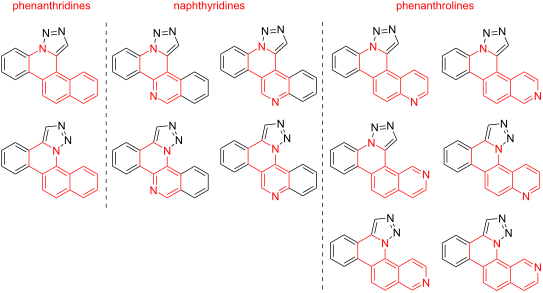
- observed for these annulated molecules, while their analogous non-annulated control compounds were not bioactive. Keywords: annulation; arenes; antimicrobials; fused-ring systems; UV–vis spectroscopy; Introduction Polycyclic aromatic heterocycles are a diverse class of small molecules with utility in a
- control compounds 37–42 (blue lines) in acetonitrile solvent. Synthesis of pentacyclic aromatic heterocycles from varying alkynes.a Synthesis of pentacyclic aromatic heterocycles from varying azides.a Summary of UV–vis absorbance/emission signals. Minimum inhibitory concentration assay results.a


Effect of a photoswitchable rotaxane on membrane permeabilization across lipid compositions
Beilstein J. Org. Chem. 2025, 21, 2498–2512, doi:10.3762/bjoc.21.192
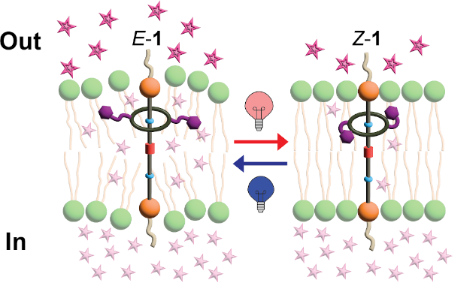
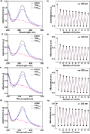
- membrane composition on azobenzene photoswitching We investigated the photoisomerization behavior of rotaxane 1 (Figure 2) over ten irradiation cycles in large unilamellar vesicles (LUVs) with varying lipid compositions using UV–vis spectroscopy. Specifically, we prepared vesicles composed of pure EYPC
- the LUVs at 10 mol % relative to the total lipid content. UV–vis spectra recorded before irradiation showed an absorption band around 372 nm, corresponding to the π→π* transition of the E isomer (Figure 3, left column, black trace). Upon irradiation at 370 nm for 1 minute, two new peaks appeared at
- rotaxane 1. LUVs containing rotaxane 1 were subjected to ten cycles of alternating irradiation at 370 nm and 467 nm, with UV–vis spectra recorded after each exposure. Figure 3 (right column) shows the changes in absorption at 365 nm, reflecting the photoswitching and photoreversibility of rotaxane 1 across




Conformational effects on iodide binding: a comparative study of flexible and rigid carbazole macrocyclic analogs
Beilstein J. Org. Chem. 2025, 21, 2369–2375, doi:10.3762/bjoc.21.181
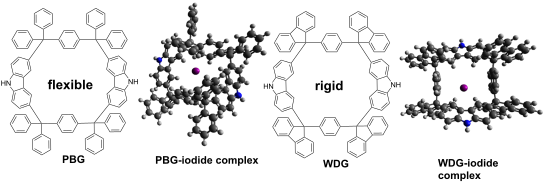
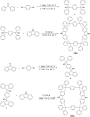
- ) and WDG (rigid fluorene backbone), were synthesized via Friedel–Crafts reactions. Their iodide (I−) recognition properties were systematically explored using 1H NMR, UV–vis absorption, and fluorescence spectroscopy. Quantitative analysis via the Benesi–Hildebrand equation and nonlinear fitting
- by the two structural analogs, we added a commercially available tetrabutylammonium salt (TBAI) to the body dissolved in CDCl3 (TBAI has a good solubility in CDCl3) and studied the interaction between the receptor and iodide ion by 1H NMR titration, UV–vis absorption spectroscopy and fluorescence
- . Additionally, as a control experiment, the interaction between carbazole molecules and iodide ions via UV–vis and PL spectroscopy (Figures S14 and S15 in Supporting Information File 1) were investigated. The results revealed no analogous regular trends, and the interactions could not be effectively modeled



Recent advances in Norrish–Yang cyclization and dicarbonyl photoredox reactions for natural product synthesis
Beilstein J. Org. Chem. 2025, 21, 2315–2333, doi:10.3762/bjoc.21.177
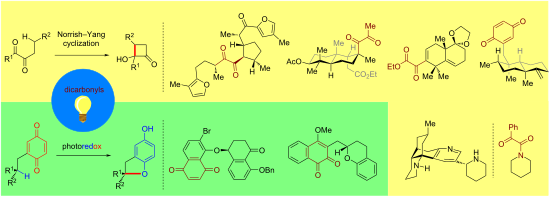
- , 108d) underwent the desired photochemical reaction (Scheme 13b), yielding spiroacetals 109a, 109b, and 109d following CAN (cerium(IV) ammonium nitrate) oxidation. In contrast, C7-methoxy-substituted analogs (108c, 108e) remained unreactive. Reactivity correlated with UV–vis absorption profiles




Insoluble methylene-bridged glycoluril dimers as sequestrants for dyes
Beilstein J. Org. Chem. 2025, 21, 2302–2314, doi:10.3762/bjoc.21.176
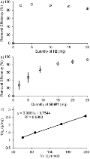
- , rhodamine 6G, methyl violet 6B; 7500 rpm, 5 min for acridine orange and methylene violet), and the supernatants were analyzed by UV–vis spectroscopy. To determine the dye concentration remaining in the aqueous solutions, appropriate calibration curves were employed (Figure S12 in Supporting Information File
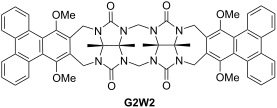
- , for 1 hour at 25 °C using a ThermoMixer™. The samples were centrifuged, and the supernatants were analyzed by UV–vis spectroscopy. The removal efficiency for each experiment was calculated by using Equation 1. Figure 7a,b shows a plot of removal efficiency versus the quantity of H2 or G2W1 used. The
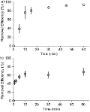
- the supernatants were analyzed by UV–vis spectroscopy. The removal efficiency values were calculated using Equation 1 and the results are shown in Figure 8. Figure 8 shows that the removal efficiency increases as the initial dye concentration increases. Specifically, we see that at [methylene blue



Solar thermal fuels: azobenzene as a cyclic photon–heat transduction platform
Beilstein J. Org. Chem. 2025, 21, 2036–2047, doi:10.3762/bjoc.21.159
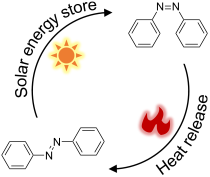
- Wiley and Sons. Copyright © 2015 WILEY-VCH Verlag GmbH & Co. KGaA, Weinheim. This content is not subject to CC BY 4.0. (b) Structure of the UV–vis solar-thermal cell. Figure 5b was adapted from [59], A. K. Saydjari et al., “Spanning the Solar Spectrum: Azopolymer Solar Thermal Fuels for Simultaneous UV




Photochemical reduction of acylimidazolium salts
Beilstein J. Org. Chem. 2025, 21, 1973–1983, doi:10.3762/bjoc.21.153
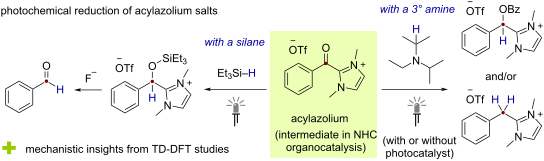
- identity of the active light-absorbing species in the reaction mixture. UV–vis spectra of the benzoylazolium starting material 1 at different concentrations in the acetonitrile reaction solvent were accordingly measured. Although exhibiting maximum absorption at wavelengths significantly shorter than that
- efficiency observed upon switching from blue to UV-A light irradiation. Nevertheless, alternative scenarios involving the potential formation of excited donor–acceptor (EDA) complexes between benzoylazolium species 1 and DIPEA were considered. Measurements of the UV–vis spectra in the presence of the amine
- , however, did not reveal any significant change in the absorption profile. To gain further insight, time-dependent density functional theory (TD-DFT) calculations were carried out (for details of the computational studies, see Supporting Information File 1). In line with the UV–vis studies, comparison of


Photoswitches beyond azobenzene: a beginner’s guide
Beilstein J. Org. Chem. 2025, 21, 1808–1853, doi:10.3762/bjoc.21.143
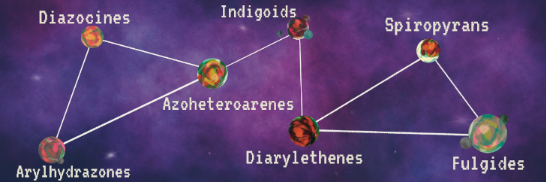
- of the metastable isomer [5][6][7], thus they are also important factors to consider when choosing the solvent and the concentration of the solution. The half-life can be extrapolated by monitoring the photoswitch in the metastable form over time by various spectroscopic methods (UV–vis, NMR) in the
- overlapping with the Z-boat conformer, making it impossible to switch it any further (42% E in H2O/MeCN 9:1). A diazonine was also synthesised, which exhibits a UV–vis spectrum of the E-isomer very similar to that of E-azobenzene and an unusually long E–Z thermal half-life [54]. Synthesis The synthesis of