


Search results
Search for "aniline" in Full Text gives 365 result(s) in Beilstein Journal of Organic Chemistry. Showing first 200.
One-pot four-component sequential synthesis of S-alkyl dithiocarbamates using lipase as a biocatalyst
Beilstein J. Org. Chem. 2026, 22, 1048–1056, doi:10.3762/bjoc.22.83
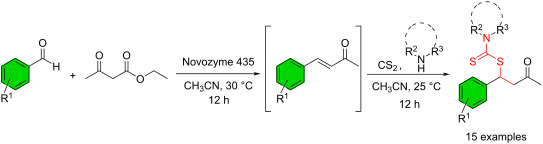
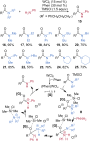
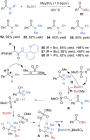
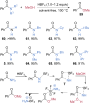
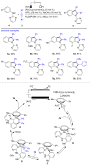
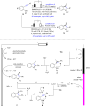
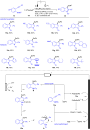
- , the first step of the selected model reaction, involving the condensation of 0.1 mmol benzaldehyde (1a) with 0.15 mmol of ethyl acetoacetate (2a), followed by decarboxylation was conducted based on previous studies [35][36]. Acetonitrile was selected as the solvent, and aniline was used as an additive
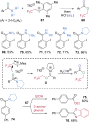
- as a thiourea derivative (Scheme 2) resulting from the reaction between aniline, carbon disulfide (4), and amine 5a. To optimize the reaction and minimize side-product formation, after confirming the formation of 3a at 30 °C, the amine 5a and carbon disulfide (4) were added to the reaction mixture
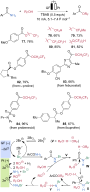
- the aldehyde, resulting in the formation of the intermediate 8a. Next, the ester portion of the ketoester is hydrolyzed through the serine amino acid, leading to the formation of the intermediate 9a. This intermediate then undergoes decarboxylation, which can be assisted by histidine or aniline


Recent advances in copper-catalyzed direct hydroamination of alkenes with (hetero)aromatic amines
Beilstein J. Org. Chem. 2026, 22, 925–947, doi:10.3762/bjoc.22.73
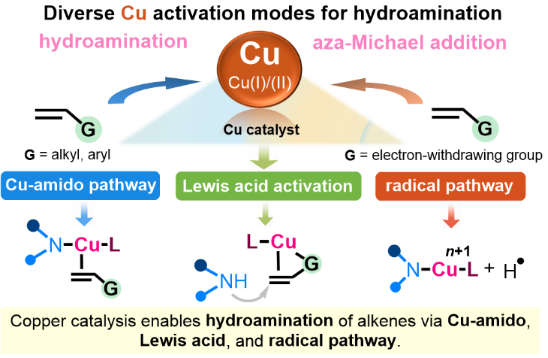
- ) with LiNHPh, while the NHC-based complex II was generated by the reaction of IPrCu-Me or IPrCu-Et (IPr = 1,3-bis(2,6-diisopropylphenyl)imidazol-2-ylidene) with aniline. These well-defined copper–amido complexes serve as important model systems for elucidating the role of Cu–N species in catalytic C–N
- ) were subsequently evaluated by adding aniline to activated olefins (Scheme 3) [35][36]. Using 5 mol % of the copper–amido catalyst at room temperature, the α,β-unsaturated substrates including acrylonitrile, methyl vinyl ketone, methyl acrylate, and cyclic enones were converted to the corresponding β
- -amino products 1a–d with excellent regioselectivity. These reactions proceeded exclusively in an anti-Markovnikov manner with high efficiency. For example, the addition of aniline to acrylonitrile afforded 1a with >95% conversion after 12 h using IPrCu–NHPh (II), whereas methyl vinyl ketone was rapidly






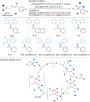

Palladium-catalyzed benzocyclization reactions of quinoline-2-carboxamides via sequential C–H/N–H functionalization
Beilstein J. Org. Chem. 2026, 22, 905–914, doi:10.3762/bjoc.22.71
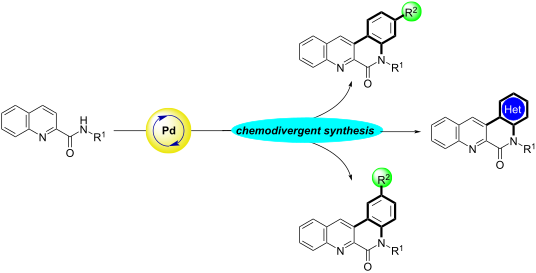
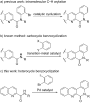
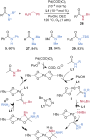
- preparation of annulation precursors through o-brominated aniline derivatives [36][37][38][39][40][41]. Furthermore, the reported methodologies for synthesizing N-heterocycle-fused lactams are characterized by either low efficiency or protracted processes [42][43]. On the other hand, benzocyclization




Cascade transformation of 2-(diazoacetyl)-2H-azirines to 2-aroyl-3-hydroxy-1H-pyrroles via condensation with aromatic aldehydes
Beilstein J. Org. Chem. 2026, 22, 897–904, doi:10.3762/bjoc.22.70
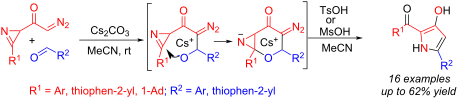
- -tetramethyl-1,3,2-dioxaborolan-2-yl)aniline as well as in the Sonogashira reaction with phenylacetylene. Conclusion The Cs2CO3-induced condensation of 2-(diazoacetyl)-2H-azirines with aromatic aldehydes affords 2-aroyl-3-hydroxy-1H-pyrroles in moderate to good yields on two synthetic steps. The reaction


Hydrogen production from formic acid catalyzed by NHC–Cu complexes
Beilstein J. Org. Chem. 2026, 22, 620–627, doi:10.3762/bjoc.22.48
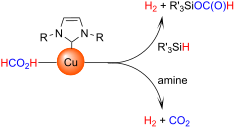
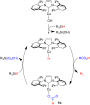
- those previously reported for other Cu/amine systems under similar reaction conditions [44][45][46][47]. The influence of the nature of the amine was next studied (Table 2). In the absence of the amine, no conversion was observed (Table 2, entry 1). When aniline was used, a slight improvement of the
- other catalytic systems [16][17][44]. It is important to note that aniline, albeit being less sterically demanding than other amines (Θ = 111°), importantly deviates from this trend, allegedly because of its aromaticity. It is reasonable to assume that the role of the amine is not only limited to the
- that the reaction mixture is composed of more than one species presenting different ammonium/formato ratios [63]. Compared to other Cu-based catalysts employed in FA dehydrogenation, the complex 5/aniline system exhibited higher activity (TOF 14 h−1) than monomeric formate species bearing bulky



Electrosynthetic access to unsymmetrical oxaza[8]helicenes with high chiral stability and strong circularly polarized luminescence (CPL)
Beilstein J. Org. Chem. 2026, 22, 372–382, doi:10.3762/bjoc.22.25
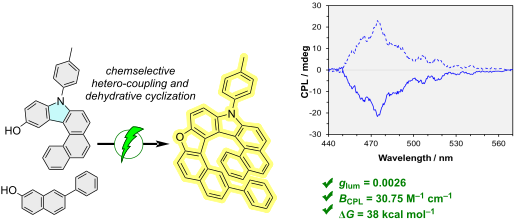
- unsymmetrical oxaza[8]helicenes Building on Zhang’s facile acid-mediated carbazole synthesis [53], in which aniline derivatives react with p-benzoquinone to afford 3-hydroxycarbazoles [54], we employed a closely related substrate. Specifically, N-(p-tolyl)phenanthren-3-amine (2) – prepared from 3




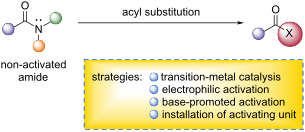
Recent advances in the cleavage of non-activated amides
Beilstein J. Org. Chem. 2026, 22, 352–369, doi:10.3762/bjoc.22.23
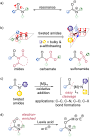
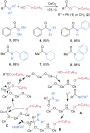
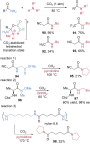
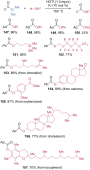
- , completing the electrochemical cycle. Transamidation The Karpoormath group discovered that ammonium salts can serve as nucleophiles for the transamidation of amides without the need for any catalyst, base, or additional reagent (Scheme 15) [63]. Aniline hydrochloride efficiently underwent transamidation with
- corresponding amides 108–115 in excellent yields. Beyond benzamides, a variety of α-alkylamides possessing primary, secondary, and tertiary moieties also underwent efficient transamidation with aniline, furnishing the amide products 116–120 in excellent yields. This transformation proceeds through a mechanism
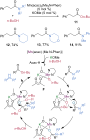
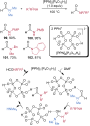
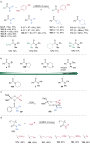
- equivalent of HOTf, N,N-dimethylbenzamide 3 was smoothly converted into a benzoyl iodide intermediate, which underwent nucleophilic acyl substitution with aniline to give benzanilide 5 in 67% yield. Substrate screening demonstrated the broad applicability of this protocol. Various arylamides possessing










Competitive cyclization of ethyl trifluoroacetoacetate and methyl ketones with 1,3-diamino-2-propanol into hydrogenated oxazolo- and pyrimido-condensed pyridones
Beilstein J. Org. Chem. 2025, 21, 2716–2729, doi:10.3762/bjoc.21.209
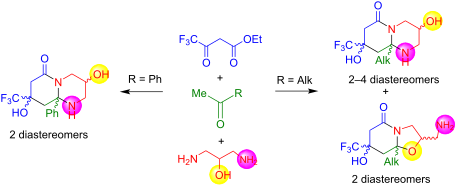
- ethylenediamine [27] as well as with 2-(aminomethyl)aniline and 1,3-diaminopropane [28]. In addition, we have found another route for the three-component cyclization of 3-polyfluoroalkyl-3-oxo esters with α-methylene ketones involving mono- and dialkylamines, leading to 5-polyfluoroalkylaminocyclohexen-2-ones [29


Isoorotamide-based peptide nucleic acid nucleobases with extended linkers aimed at distal base recognition of adenosine in double helical RNA
Beilstein J. Org. Chem. 2025, 21, 2513–2523, doi:10.3762/bjoc.21.193
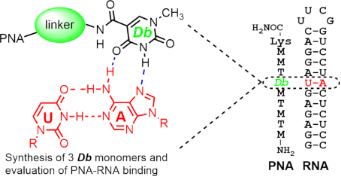
- containing functional groups in the linker including an amine (Db1), an amide based on the V linker (Db2), and an aniline (Db3). In the case of Db1, physiological conditions would afford a protonated amine functionality that may allow for stabilization of the triplex through electrostatic interactions
- corresponding aniline with iron metal. Notably, the use of HCl as a proton source in the reduction led to significant removal of the Boc group necessitating the use of ammonium chloride as the proton source. The crude aniline was coupled to N-methylisoorotic acid 6 [37] to afford 7 in 50% yield. Surprisingly 10
- synthesis of aniline 10 and carboxylic acid 13. To access 10, the isoorotic acid derivative 6 was treated with oxalyl chloride to form the corresponding acyl chloride in situ which was then slowly added to a solution of m-phenylenediamine (9) to afford the target aniline in 62% yield (Scheme 2). Slow


Pd-catalyzed dehydrogenative arylation of arylhydrazines to access non-symmetric azobenzenes, including tetra-ortho derivatives
Beilstein J. Org. Chem. 2025, 21, 2234–2242, doi:10.3762/bjoc.21.170
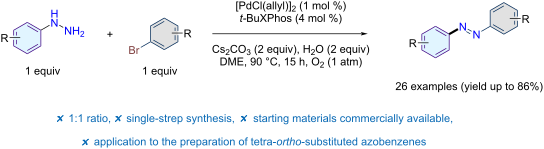
- rely on nitroso-aniline couplings, provide a route for the synthesis of non-symmetric azobenzenes, but their substrate specificity and use of hazardous precursors limit their practical applicability [25][26][27][28]. An alternative approach involves the SEAr reaction, which utilizes potentially
- were consumed, various impurities, including biphenyls, diarylamines, aniline, and toluidine, were formed in varying amounts. Since a final dehydrogenation step is required to complete the reaction, the experiment was repeated with various oxidants tested as additives. The use of di-tert-butyl peroxide
- formed, minimizing the disproportionation side-reaction [61] becomes crucial, as this reaction produces the desired azobenzene along with equimolar amounts of aniline partners. These aniline derivatives can further participate in Pd-catalyzed cross-coupling, generating a range of diarylamines as side


Electrochemical cyclization of alkynes to construct five-membered nitrogen-heterocyclic rings
Beilstein J. Org. Chem. 2025, 21, 2173–2201, doi:10.3762/bjoc.21.166
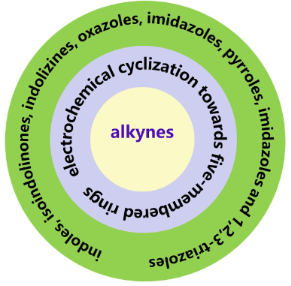
- -metal catalyst and oxidant, was an economic and efficient protocol compared with the previous method [174][175][176][177][178][179][180][181][182][183][184]. The ruthenium-accelerated electrochemical dehydrogenative annulation of alkyne with an aniline derivative was also an efficient method to build
- the indole frame (Scheme 2) [185]. In the presence of KPF6 and NaOAc, subjection of alkyne 3 and aniline 4 to [RuCl2(p-cyneme)]2-catalyzed electrochemical annulation formed the titled indole 5 successfully. After studying the reaction in details, the best reaction conditions were acquired as following
- : a mixture of aniline 4 (0.3 mmol), alkyne 3 (0.6 mmol), [RuCl2(p-cymene)]2 (0.03 mmol), KPF6 (0.06 mmol) and NaOAc (0.06 mmol) in H2O/iPrOH (1:1, 6 mL), refluxing under electrolysis (RVC anode, Pt cathode, 10 mA) for 1.8–3.9 h. This reaction was compatible with anilines with either electron-donating







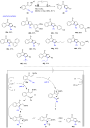


Aryl iodane-induced cascade arylation–1,2-silyl shift–heterocyclization of propargylsilanes under copper catalysis
Beilstein J. Org. Chem. 2025, 21, 1984–1994, doi:10.3762/bjoc.21.154
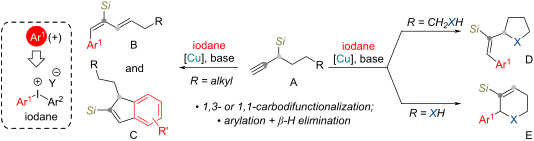
- selectively degraded and the pure product (E)-8v could be isolated with 47% yield. On the other hand, if the amine group was too nucleophilic, as in the case of N-(4-(tert-butyldimethylsilyl)hex-5-yn-1-yl)aniline (7h), the amine N–H was arylated instead of the alkyne, resulting in the formation of N-(4-(tert


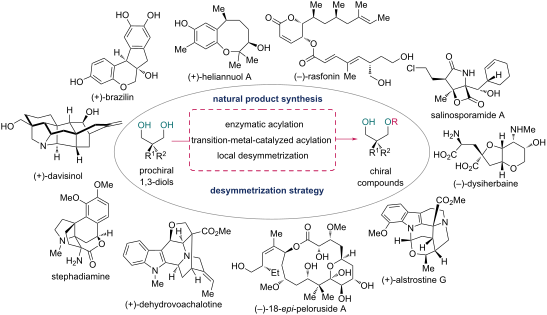
Enantioselective desymmetrization strategy of prochiral 1,3-diols in natural product synthesis
Beilstein J. Org. Chem. 2025, 21, 1932–1963, doi:10.3762/bjoc.21.151
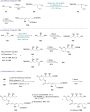
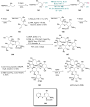
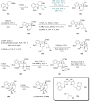
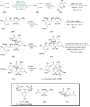
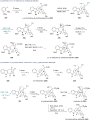
- synthesis of (−)-12-methoxy-Nb-methylvoachalotine (Scheme 31a) [78], (+)-12-methoxy-Na-methylvellosimine (252) was first prepared in ten steps from aniline 251, including a Larock indolization, Pictet–Spengler reaction, and Pd-catalyzed intramolecular cyclization. Tollens reaction of 252 gave diol 253










Chiral phosphoric acid-catalyzed asymmetric synthesis of helically chiral, planarly chiral and inherently chiral molecules
Beilstein J. Org. Chem. 2025, 21, 1864–1889, doi:10.3762/bjoc.21.145
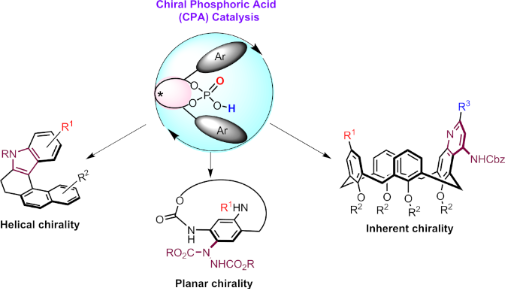
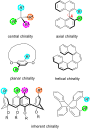
- electrophilic amination reaction of the aniline moiety with azodicarboxylates [37][38], the introduction of a bulky hydrazine group restricted the free flipping of the benzene ring, leading to the formation of planar chiral macrocycle 33 with high enantioselectivity (Scheme 9). Substrate scope studies
- [49] and the Liu group [50] independently reported the asymmetric synthesis of inherently chiral calix[4]arenes through an enantioselective desymmetrization strategy. Starting from the achiral aniline-containing calix[4]arenes 52, we employed the CPA 11-catalyzed asymmetric Povarov reaction [51] with
- calix[4]arenes have also been showcased. For instance, facile derivatizations of 57a afforded the inherently chiral meta-amino-substituted calix[4]arene 58 and the corresponding aniline N-oxide 59. Our study suggested that inherently chiral calix[4]arene 58 could successfully be used as a chiral









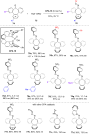
Fe-catalyzed efficient synthesis of 2,4- and 4-substituted quinolines via C(sp2)–C(sp2) bond scission of styrenes
Beilstein J. Org. Chem. 2025, 21, 1799–1807, doi:10.3762/bjoc.21.142
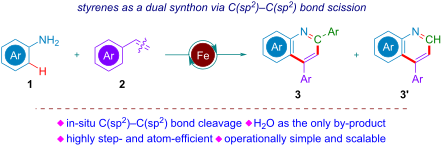
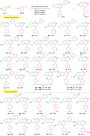
- , the present C–H annulation reaction of aniline (1a) with styrene (2a) was initially carried out in TFE (trifluoroethanol) as solvent in the presence of 25 mol % FeCl3·6H2O as a catalyst and 1.5 equiv of TFA (trifluoroacetic acid) as an additive (Table 1, entry 1). For this reaction, 12% of 2,4
- consistently high combined yields, ranging from 92% to 95%. Probably due to steric hindrance, when the phenyl group was attached to the para-position of the aniline (1e), the corresponding products 3e along with 3e′ could be obtained in 75% yields. Electron-deficient groups at the para-position, such as -Cl




[3 + 2] Cycloaddition of thioformylium methylide with various arylidene-azolones in the synthesis of 7-thia-3-azaspiro[4.4]nonan-4-ones
Beilstein J. Org. Chem. 2025, 21, 1791–1798, doi:10.3762/bjoc.21.141
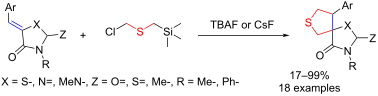
- imidazolone derivatives and 4b–d,f,g for which we were also unable to obtain the corresponding spirocyclic products. Also, rate of the reaction for aniline derivatives 1,3 and 4d was too slow, and therefore, we were able to obtain only the corresponding derivative of thiohydantoin 7d. In case of thiophene



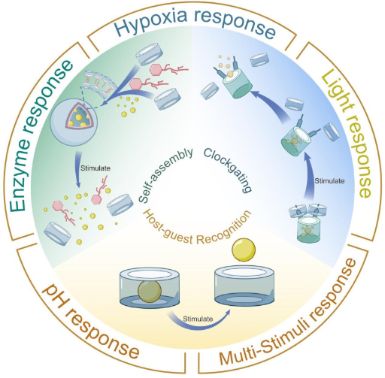
Research progress on calixarene/pillararene-based controlled drug release systems
Beilstein J. Org. Chem. 2025, 21, 1757–1785, doi:10.3762/bjoc.21.139
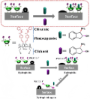
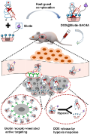
- molecular recognition responses, provides important ideas for the development of new cancer treatment strategies. In 2021, Han et al. explored the interactions WP5 and aniline tetramer (TANI) as host and guest molecules (Figure 19) [128]. The WP5⊃TANI complex is capable of self-assembling into






Tautomerism and switching in 7-hydroxy-8-(azophenyl)quinoline and similar compounds
Beilstein J. Org. Chem. 2025, 21, 1404–1421, doi:10.3762/bjoc.21.105
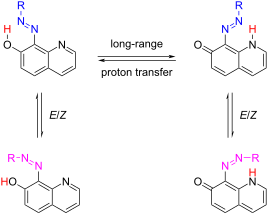
- magnet was charged with aniline (0.33 g, 3.5 mmol) and 1 N aqueous HCl (12 mL), and stirred at 0 °C for 30 min. A cold solution of sodium nitrite (0.38 g, 5.5 mmol, dissolved in 4.0 mL H2O) was added dropwise during 10 min and the resulting mixture was stirred at 0 °C for 2 h. The mixture was diluted by




High-pressure activation for the solvent- and catalyst-free syntheses of heterocycles, pharmaceuticals and esters
Beilstein J. Org. Chem. 2025, 21, 1374–1387, doi:10.3762/bjoc.21.102
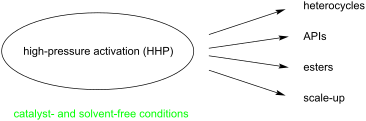
- reaction time. Even the less reactive aniline gave nearly quantitative isolated yields in less than an hour, while the 1 bar control reaction yielded no detectable products. In addition to the excellent yields, the products were isolated without any purification, using a simple air-drying process to remove
- , salicylic acid, acetic anhydride, acetic acid, hexan-2,5-dione, aniline, hexylamine and 2-phenylethylamine) were purchased from Aldrich and used without any purification. Ethyl acetate, used to dissolve the products for GC–MS analysis (minimum purity of 99.5%) was purchased from ThermoFisher Scientific. The
- and solvent-free large-scale reaction of hexan-2,5-dione and aniline under high hydrostatic pressure To a 100 mL low-density polyethylene (LDPE) bottle was added hexan-2,5-dione (65.14 g, 0.57 mol) and 1.0 equiv aniline (59.27 g, 0.57 mol) to fill up the entire reaction vessel, then the bottle was


Synthesis of pyrrolo[3,2-d]pyrimidine-2,4(3H)-diones by domino C–N coupling/hydroamination reactions
Beilstein J. Org. Chem. 2025, 21, 1010–1017, doi:10.3762/bjoc.21.82
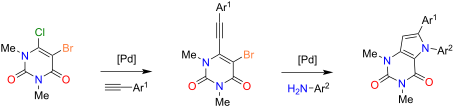
- groups attached to the aniline, such as OMe, F, CF3, Me, and Br, were tolerated and did not greatly differ in terms of yield. With respect to substituents located at the alkynyl moiety, diminished yields were obtained for N,N-dimethylaminophenyl-substituted derivatives 4k and 4l and for m-tolyl



Silver(I) triflate-catalyzed post-Ugi synthesis of pyrazolodiazepines
Beilstein J. Org. Chem. 2025, 21, 915–925, doi:10.3762/bjoc.21.74
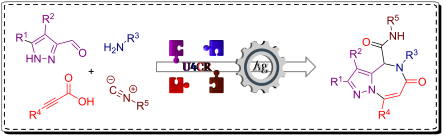
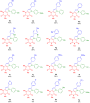
- pyrazolodiazepines 16a–d were obtained in consistently high yields of 84–96%. Notably, the synthesis of the parent pyrazolodiazepine 16a was scaled up to 3.5 mmol without a substantial decrease in isolated yield. To explore the influence of the amine component on the process, an extensive subset of aniline-derived
- substrates 15e–l was tested. The process proceeded efficiently in all cases, yielding pyrazolodiazepines 16e–l and demonstrating tolerance for various substituents on the aniline-derived aromatic fragment, including alkyl, halogens, electron-donating alkoxy groups, as well as electron-withdrawing




Substituent effects in N-acetylated phenylazopyrazole photoswitches
Beilstein J. Org. Chem. 2025, 21, 830–838, doi:10.3762/bjoc.21.66

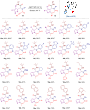
- %). Results and Discussion Synthesis The PAPs in this study were obtained in a straightforward, three-step metal-free synthesis from commercially available aniline derivatives adapting known procedures [31][38]. An overview of the compounds used in this study and their synthesis is displayed in Scheme 1
- . First, a diazotization of a given aniline 1 and reaction with 2,4-pentanedione gave intermediate 2, with yields which strongly depended on the residue in the para-position. Specifically, the residues bearing an electron-donating group (EDG) such as -OMe or -OH showed low yields because of the poor
- reactivity of the diazonium salt. When strong electron-withdrawing groups (EWGs) were introduced, the yield was also reduced, likely due to the low nucleophilicity of the aniline derivative and the ineffective formation of a diazonium salt. An annulation reaction of compound 2 was performed with either


Synthesis and photoinduced switching properties of C7-heteroatom containing push–pull norbornadiene derivatives
Beilstein J. Org. Chem. 2025, 21, 807–816, doi:10.3762/bjoc.21.64
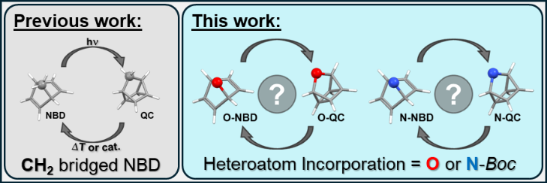
- not be proven. Overview of spectroscopic data of the newly synthesized compounds. The data given for the carbon analogues C-NBD1 (2-bromo-3-tosylbicyclo[2.2.1]hepta-2,5-diene) and C-NBD2 (N,N-diphenyl-4-(3-tosylbicyclo[2.2.1]hepta-2,5-dien-2-yl)aniline) were previously published [40]. Supporting


Recent advances in the electrochemical synthesis of organophosphorus compounds
Beilstein J. Org. Chem. 2025, 21, 770–797, doi:10.3762/bjoc.21.61
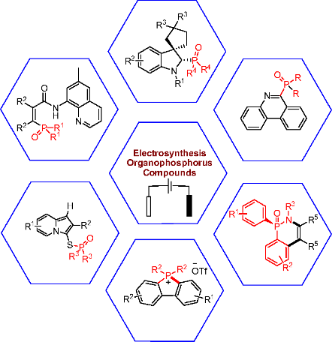
- , and all substituted anilines afforded high yields of phosphoramidates. However, N-methyl- and N-ethylanilines showed lower yields and electron-donating groups led to a reduced yield compared to unsubstituted aniline. Further, KI performed best as the electrolyte and catalyst at 50 °C (Scheme 20). The


Copper-catalyzed domino cyclization of anilines and cyclobutanone oxime: a scalable and versatile route to spirotetrahydroquinoline derivatives
Beilstein J. Org. Chem. 2025, 21, 749–754, doi:10.3762/bjoc.21.58
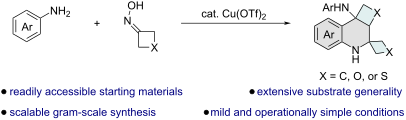
- report the copper-catalyzed synthesis of tetrahydroquinoline derivatives via a domino reaction of aniline with cyclobutanone oxime. This method demonstrates a selective approach for generating bioactive tetrahydroquinoline scaffolds, which have broad applications in pharmaceutical chemistry. The reaction
- conditions were optimized for the effective formation of tetrahydroquinoline derivatives with varying substituents, showing high yields under mild conditions. Mechanistic studies suggest a catalytic cycle involving nucleophilic attack by the aniline on the cyclobutanone oxime, followed by cyclization to form
- under copper catalysis. After extensive optimization of the reaction parameters, the desired product 3aa was obtained in 92% yield under the following optimal conditions: the reaction between aniline (1a) and cyclobutanone oxime (2a) as the model system, hexane as the solvent, and copper(II





