Search results
Search for "azobenzene" in Full Text gives 109 result(s) in Beilstein Journal of Organic Chemistry.
Halogenated azobenzene acrylates: from efficient solution photoswitching to stable solid-state photochromic materials
Beilstein J. Org. Chem. 2026, 22, 782–794, doi:10.3762/bjoc.22.60
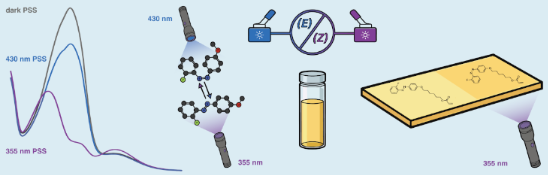
- halogenated azobenzene acrylate monomers bearing fluorine, chlorine or bromine substituents is reported. The monomers were prepared via a facile three-step synthetic route involving azo-coupling, O-alkylation and O-acylation. Apart from the steady electrochemical properties, halogen substitution proved to be
- for over 90 days. These findings demonstrate that ortho-halogenation is a powerful tool for tuning the properties of photoresponsive materials for potential applications in colorimetric thermal sensing and light-controlled functional systems. Keywords: azobenzene; E/Z isomerization; halogen
- ; photoswitch; polymer; thin film; Introduction The azobenzene photoinduced E/Z isomerization represents a well-investigated switching process that found various utilizations [1][2][3][4]. In contrast to the state-of-the-art achieved in solution and despite its perhaps even greater application potential, a


Harnessing light energy with molecules
Beilstein J. Org. Chem. 2026, 22, 680–682, doi:10.3762/bjoc.22.52

- -ray-induced isomerization within micelles generated from two different photosurfactants (containing either an azobenzene or arylazopyrazole photoswitch), thereby creating guidelines for using small-angle X-ray scattering to study photoresponsive materials of potential applications in solar energy
- junction at ambient conditions and hence be used as an 8-bit operation unit. Molecular photoswitches are also interesting for temperature sensing applications. Thus, in their publication, Priimagi and co-workers [14] show a strong temperature-dependence of azobenzene protonation in 1,2-dichloroethane
- study of substituent effects in a large selection of N-acetylated phenylazopyrazole photoswitches. Pittelkow, Antonov, and co-workers [17] present a study on tautomerism and switching in 7-hydroxy-8-(azophenyl)quinoline and similar π-expanded azobenzene compounds. The photoisomerization quantum yield is
Effect of a photoswitchable rotaxane on membrane permeabilization across lipid compositions
Beilstein J. Org. Chem. 2025, 21, 2498–2512, doi:10.3762/bjoc.21.192
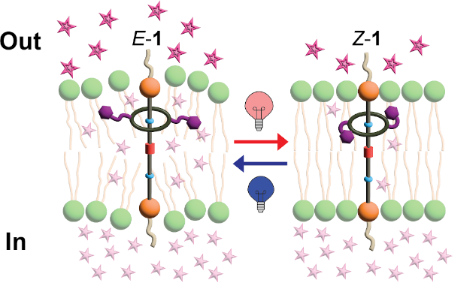
- Udyogi N. K. Conthagamage Lilia Lopez Zuliah A. Abdulsalam Victor Garcia-Lopez Department of Chemistry, Louisiana State University. Baton Rouge, LA 70803, USA 10.3762/bjoc.21.192 Abstract This study investigated a rotaxane featuring azobenzene photoswitches in its macrocycle and its ability to
- first minutes of rotaxane insertion. Likewise, azobenzene photoswitching did not induce permeabilization in the more rigid and thicker EYPC/Chol 6:4 bilayers, which showed minimal release (5%). Furthermore, we discovered that when the unthreaded axle is irradiated with light, an unknown, irreversible
- bilayers through the shuttling of the macrocycle carrying the ions or through a relay mechanism [10][11]. In one example, the isomerization of an azobenzene photoswitch incorporated into the axle was used to modulate the shuttling rate of the macrocycle and, consequently, the efficiency of potassium ion





Rotaxanes with integrated photoswitches: design principles, functional behavior, and emerging applications
Beilstein J. Org. Chem. 2025, 21, 2345–2366, doi:10.3762/bjoc.21.179

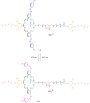
- based on the location of the photoswitch within the rotaxane structure – either integrated into the axle or situated in the macrocycle. Within these categories, we highlight widely used photoswitches, including acridane, anthracene, azobenzene, cycloheptatriene, dithienylethene, fumaramide, hydrazone
- or upon irradiation with light at 280 nm. Azobenzene Azobenzene is one of the most widely utilized photoresponsive units in the design and synthesis of photoswitchable rotaxanes. These photoswitches undergo trans–cis isomerization and are classified as T-type, due to the thermal reversibility of the
- isomerization (Figure 2) [29]. In 1997, Nakashima and co-workers reported the first rotaxane where the azobenzene was located on the axle, acting as a recognition site for a β-cyclodextrin macrocycle. Photoisomerization of the azobenzene controlled the shuttling of the macrocycle [30]. Later, Stoddart and co


Pd-catalyzed dehydrogenative arylation of arylhydrazines to access non-symmetric azobenzenes, including tetra-ortho derivatives
Beilstein J. Org. Chem. 2025, 21, 2234–2242, doi:10.3762/bjoc.21.170
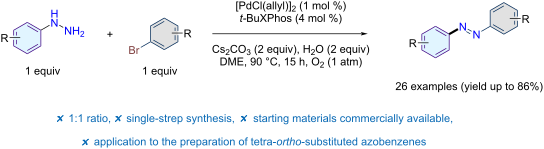
- of applications, including molecular switches, sensors, and light-controlled materials [1][2][3][4][5][6][7][8]. The photoswitching behavior arises from the reversible photoisomerization between the E- and Z-forms of the azobenzene chromophore, driven by the isomerization of the N–N double bond. This
- identical conditions with other aryl bromides like 4-bromotoluene, the reaction failed to form azobenzene 3b, instead yielding 1-phenyl-1-(p-tolyl)hydrazine, resulting from arylation of the central nitrogen (Table 1, entry 4 and Supporting Information File 1). This unexpected result prompted us to further
- reported in Buchwald–Hartwig reactions, enhances yield by facilitating the reduction of Pd(II) to Pd(0) and improving the solubility of the base [56]. To ensure the generality of the conditions, 1-bromo-2-(trifluoromethoxy)benzene was also tested, yielding the desired azobenzene 3c in 69% yield with the


Solar thermal fuels: azobenzene as a cyclic photon–heat transduction platform
Beilstein J. Org. Chem. 2025, 21, 2036–2047, doi:10.3762/bjoc.21.159
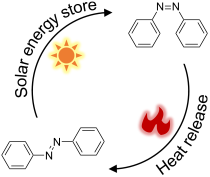
- Center on Advanced Chemical Engineering and Energy Materials, China University of Petroleum (East China), 266580, Qingdao, China School of Public Security and Emergency Management, Anhui University of Science and Technology, 231131, Hefei, China 10.3762/bjoc.21.159 Abstract Azobenzene-based solar
- perspective, we systematically analyze four representative azobenzene-based solar thermal fuel systems including nanocarbon-hybrid, conjugated polymer, linear polymer, and small-molecule derivative formulations to trace their developmental trajectories and identify key limitations. Through this comparative
- analysis, we aim to clarify the current state of azobenzene-based solar thermal fuels, while mapping strategic pathways for future technological advancements in this rapidly evolving research field. Keywords: azobenzene; energy; photoresponsive; solar thermal fuels; Introduction Solar energy occupies a




Photoswitches beyond azobenzene: a beginner’s guide
Beilstein J. Org. Chem. 2025, 21, 1808–1853, doi:10.3762/bjoc.21.143
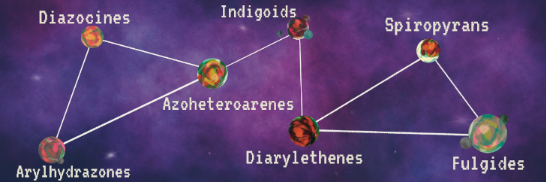
- may be overwhelming: azobenzene is undoubtedly the most famous due to its easy synthesis and the extensively studied properties. However, there are several photoswitch classes beyond azobenzene with interesting properties that can be tailored to meet one’s needs. In this tutorial review, we aim to
- the photoswitch. Examples of photogenerated side reactions can be oxidation or irreversible rearrangements. In the following sections, seven classes of photoswitches beyond the classic azobenzene are introduced and discussed (Scheme 1). Each of them shows unique photophysical behaviour and has
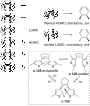
- heat storage (>300 J/g) makes these compounds suitable for molecular solar thermal energy storage (MOST) [47]. Diazocines Diazocines are bridged azobenzenes (Figure 9). The added strain renders the E-isomer metastable, favouring the more stable Z-isomer. In the planar E-azobenzene, the nπ* transition




Research progress on calixarene/pillararene-based controlled drug release systems
Beilstein J. Org. Chem. 2025, 21, 1757–1785, doi:10.3762/bjoc.21.139
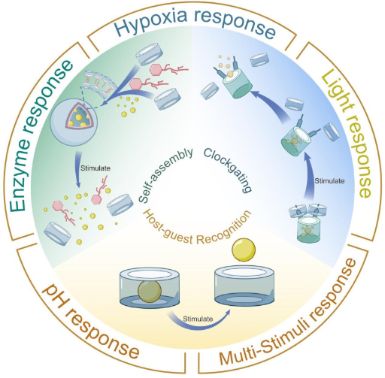
- quaternary ammonium salts [78]. (2) After modification with cationic groups, they can bind with anionic molecules, such as sulfonates [79]. It is worth mentioning that the cavity of PAs can encapsulate photo-responsive guests such as cationic azobenzene derivatives, providing new ideas for the innovation of
- -affinity host–guest interactions between PA5 and these groups (mainly through phosphonate-quaternary ammonium ion pairing) [90]. Azobenzene guest molecules can achieve dual functions (on and off) as ligands through photo-induced cis-trans isomerization. Using pillar[6]arene as the ion channel, the host
- employed as an external trigger for supramolecular systems. Azobenzene can regulate geometry, shape, and interfacial curvature under ultraviolet or visible light irradiation. It undergoes cis–trans isomerization, which can trigger alterations in bioactivity or assembly configurations. Methods for creating






Azobenzene protonation as a tool for temperature sensing
Beilstein J. Org. Chem. 2025, 21, 1528–1534, doi:10.3762/bjoc.21.115
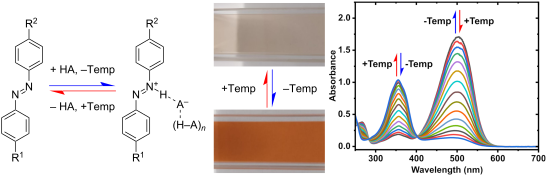
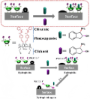
- changes in their absorption and photochemical properties. While azobenzene protonation has been recently used as a tool in photoswitching studies, the factors influencing protonation itself have received little attention. Here, we report a strong temperature dependence of azobenzene protonation in 1,2
- -dichloroethane and highlight its potential for temperature sensing applications. Density functional theory calculations were performed to support our findings and to investigate the mechanisms of azobenzene–acid interactions, aiming to guide the design of azobenzene-based temperature sensors in future research
- . Keywords: azobenzene; protonation; sensing; spectral changes; temperature; Introduction Molecular switches are molecules that can reversibly shift between distinct (meta)stable states in response to external stimuli such as light, pH changes, or electric fields [1]. Over the past decades, they have


Highly distinguishable isomeric states of a tripodal arylazopyrazole derivative on graphite through electron/hole-induced switching at ambient conditions
Beilstein J. Org. Chem. 2025, 21, 1496–1507, doi:10.3762/bjoc.21.112
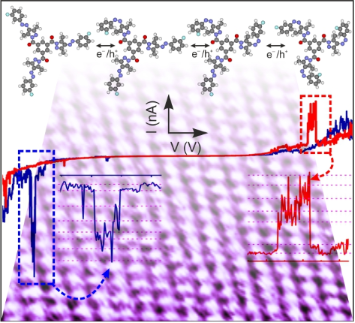
- isomer of azobenzene (AB) is a few days. Arylazopyrazole-based molecular switches are one of the profoundly explored systems in recent times due to their superior bidirectional photoswitching and long half-life (over a thousand days at room temperature) of Z isomers. Herein, we utilize an efficient solid
- triggered through external stimuli to induce the switching and to modulate the function. Photo-triggerable molecular switches like azobenzene (AB) [10][11][12][13], spiropyran [14], diarylethene [15] and multifunctional AB [16] have attracted a lot of interest due to the distinct differences in the
- changes abruptly. In other words, the abrupt change in current is caused by isomerization or geometrical changes in the molecule. The change in tunneling current has been earlier used to identify geometrical changes/isomerization of spin-cross-over molecule [7] and azobenzene derivatives [10][11][12][15




Substituent effects in N-acetylated phenylazopyrazole photoswitches
Beilstein J. Org. Chem. 2025, 21, 830–838, doi:10.3762/bjoc.21.66

- examples. Azobenzene and its derivatives show two characteristic absorption bands, namely a π→π* transition around 330 nm and an n→π* one around 450 nm, respectively [22]. The molecule can populate the thermodynamically metastable Z isomer by addressing these transitions in the thermally stable E form. The
- relative position of the absorption bands in the azobenzene derivatives depends on the substitution pattern on the aromatic rings, which can act as a handle to affect the absorption properties of the compound class [3]. For instance, push–pull systems or the introduction of tetra-ortho substituents were
- reported to either bathochromically shift the UV–vis absorption spectrum or lead to a better separation of the n→π* bands of the two photoisomers and allow for visible-light-responsive switches [23][24][25][26]. In recent years, heteroaryl azobenzene derivatives have revealed superior properties to


Orthogonal photoswitching of heterobivalent azobenzene glycoclusters: the effect of glycoligand orientation in bacterial adhesion
Beilstein J. Org. Chem. 2025, 21, 736–748, doi:10.3762/bjoc.21.57
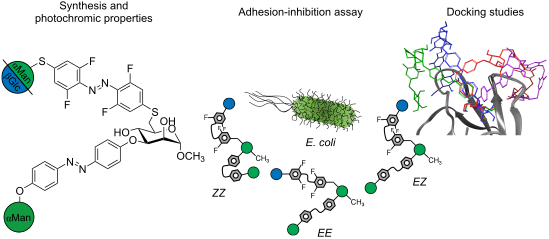
- space and additionally, secondary interactions exerted by multivalent glycoligands have an effect on affinity. A recently introduced orthogonally photoswitchable heterobivalent azobenzene Glc/Man glycocluster was utilized to examine these aspects of carbohydrate recognition in a bacterial adhesion
- glycophotoswitches in their different isomeric states led to new insights into the role of ligand orientation in carbohydrate recognition. The experimental results were underpinned by molecular modeling. Keywords: azobenzene glycoconjugates; carbohydrate recognition; docking; FimH; orthogonal photoswitching
- ]. Specifically, the reversible E/Z isomerization of the azo group in azobenzene glycosides is suited to control the spatial presentation of glycoligands and, for example, switch carbohydrate-specific bacterial adhesion on and off [20][21][22][23]. Indeed, glycoazobenzene derivatives are excellent tools to


Synthesis of N-acetyl diazocine derivatives via cross-coupling reaction
Beilstein J. Org. Chem. 2025, 21, 490–499, doi:10.3762/bjoc.21.36
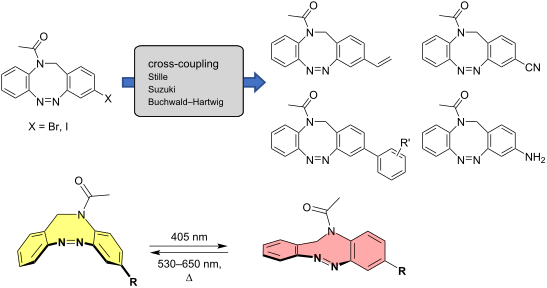
- azobenzene is that the switching efficiency decreases sharply with increasing water content in the solvent. In a recently published paper, we reported that replacing one CH2 group in the bridge with NCOCH3 not only confers intrinsic water solubility, but also largely eliminates the problem of reduced
- spectra [1]. Moreover, the ethylene bridge creates a cyclic 8-membered core, inverting the thermodynamically stability in favor of the Z boat conformation compared to parent azobenzene, which has a stable E configuration [1][2][3][4]. Preceding studies including azobenzene-based photopharmacophores showed
- that, in most cases, the sterically demanding Z configuration is biologically inactive, while the stretched E configuration is biologically active [5][6][7]. Because of the inverted thermodynamic stability compared to azobenzene, the stable Z configuration of the diazocine can be administered and


Cyclodextrin-based rotaxanes for polymer materials: challenge on simultaneous realization of inexpensive production and defined structures
Beilstein J. Org. Chem. 2024, 20, 3026–3049, doi:10.3762/bjoc.20.252
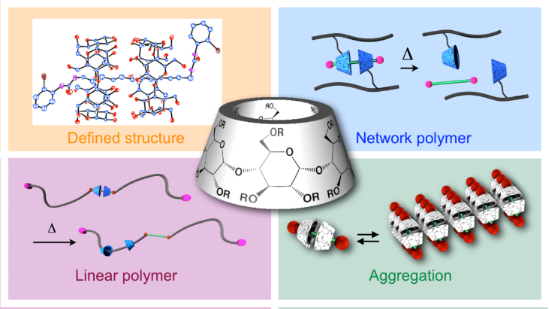
- the relationship between the photoisomerization of azobenzene or stilbene and CD to form the inclusion complex structure. In 1997, [2]rotaxane exhibiting an azobenzene moiety in its axle component was synthesized, and its structural control was achieved via the photoisomerization of the azobenzene
- (Figure 5A) [56]. In the structure, α-CD was located on the trans-azobenzene moiety before ultraviolet (UV) irradiation, after which it moved to the methylene moiety based on the cis-isomerization of the azobenzene by UV irradiation. After the azobenzene moiety was moved back to the trans-isomer via
- visible-light irradiation or heating, CD was moved back to the azobenzene moiety, and the entire process was reversible. This system was further developed in 2005 by introducing bipyridinium moieties to implement the selective transfer of the wheel via heating or light irradiation (Figure 5B) [57]. During






Understanding X-ray-induced isomerisation in photoswitchable surfactant assemblies
Beilstein J. Org. Chem. 2024, 20, 2005–2015, doi:10.3762/bjoc.20.176
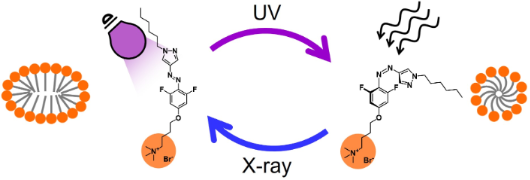
- azobenzene (Azo) or, more recently, arylazopyrazoles (AAPs), which change shape and polarity on photoisomerisation between the E and Z states, thus changing the self-assembled structure. Small-angle X-ray scattering (SAXS) is a powerful technique to probe the morphology of PS and can be used to measure the
- guidelines for future X-ray experiments using photoswitchable molecules, which can aid more accurate understanding of these materials for application in solar energy storage, catalysis or controlled drug delivery. Keywords: arylazopyrazole; azobenzene; micelle; photoswitch; X-ray; Introduction The design
- molecules to create photosurfactants (PS), whose molecular shape and polarity can be modified using light [4][5][6]. Of the PS studied, most use an azobenzene (Azo) photoswitch that undergoes trans-to-cis (E-to-Z) isomerization on irradiation with UV light, typically forming a photostationary state (PSS




A fiber-optic spectroscopic setup for isomerization quantum yield determination
Beilstein J. Org. Chem. 2024, 20, 1684–1692, doi:10.3762/bjoc.20.150

- be obtained from the UV–vis absorption spectra. We show that our results for the prototypical photoswitch azobenzene are in excellent agreement with the literature. The analysis of the errors showed that the quantum yields determined using this method are in the same order of magnitude as when using
- ]. Among the different switches known in the literature, azobenzene is a textbook example of a photoswitch operating via a double bond isomerization mechanism, with the first reports of its trans-to-cis interconversion under direct sunlight dating back to the work of Hartley in 1937 [2]. Over the decades
- , azobenzene and its derivatives [3][4] have found numerous applications in the development of novel materials [5][6], photopharmacology [7][8][9] but also as actinometers [10][11], due to the large geometry changes upon isomerization [12] and easily accessible derivatives [1][7][13][14]. The absorption


Supramolecular assemblies of amphiphilic donor–acceptor Stenhouse adducts as macroscopic soft scaffolds
Beilstein J. Org. Chem. 2024, 20, 1590–1603, doi:10.3762/bjoc.20.142
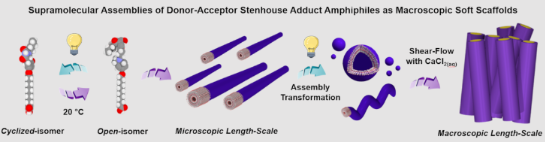
- , stiff-stilbene [26], azobenzene [27][28], molecular motors [19][29][30], spiropyran [31][32][33], indigo [34][35], and donor–acceptor Stenhouse adducts (DASAs) [36][37], have been used in supramolecular systems for photoswitchable smart electronic, optoelectronic, and biomedical materials [30][38][39





Photoswitchable glycoligands targeting Pseudomonas aeruginosa LecA
Beilstein J. Org. Chem. 2024, 20, 1486–1496, doi:10.3762/bjoc.20.132
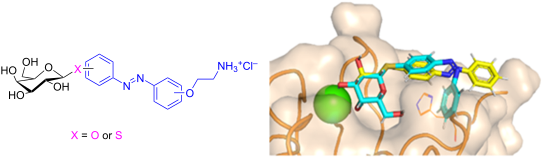
- possess excellent photophysical properties and strong affinity for targeted LecA with Kd values in the micromolar range. Analysis of the thermodynamic contribution indicates that the Z-azobenzene isomers have a systematically stronger favorable enthalpy contribution than the corresponding E-isomers, but
- [11][12][13][14][15][16][17][18]. The group of Lindhorst has reported a series of mannosyl azobenzenes targeting E. coli lectin FimH, demonstrating the possibility to control the type 1 fimbriae-mediated bacterial adhesion to a self-assembled monolayer of mannosyl azobenzene on a gold surface [19][20
- ] or to mannosyl azobenzene-modified human cells [21] through photoswitching the orientation of the attached mannoside [22]. Photoswitchable glycooligomers [23] or glycodendrimers [24] have been investigated for the inhibition of PA lectin PA-IL or LecA and LecB. A variation of the IC50 value by a


Generation of alkyl and acyl radicals by visible-light photoredox catalysis: direct activation of C–O bonds in organic transformations
Beilstein J. Org. Chem. 2024, 20, 1348–1375, doi:10.3762/bjoc.20.119
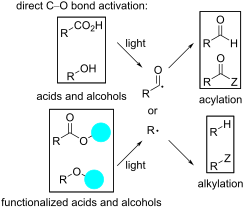
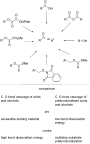
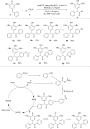
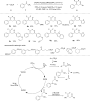
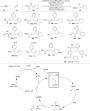
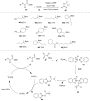
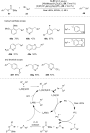
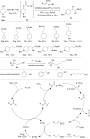
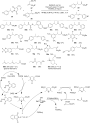
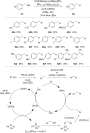
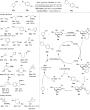
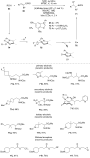
- , the addition of the benzoyl radical to azobenzene results in the generation of a nitrogen-centered radical. This radical is then subjected to reduction by the reduced photocatalyst, producing the nitrogen-centered anion intermediate. Ultimately, the protonation of this anion gives rise to the desired








Switchable molecular tweezers: design and applications
Beilstein J. Org. Chem. 2024, 20, 504–539, doi:10.3762/bjoc.20.45





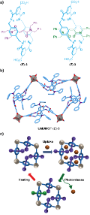
Light-responsive rotaxane-based materials: inducing motion in the solid state
Beilstein J. Org. Chem. 2023, 19, 873–880, doi:10.3762/bjoc.19.64
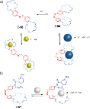
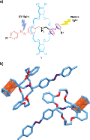
- azobenzene and ferrocene motifs (Figure 1a). The azobenzene scaffolds play a dual role, both as the engine transforming photoenergy into mechanical motion via trans/cis photoisomerization upon UV light input and as a modulator of the crystalline packing by varying the para-substituent R1, which leads to
- , respectively, and a methyl group at the para-position of the ended-aromatic ring of the azobenzene motif (R1), experienced an upward bending using a 360 nm diode pump solid state laser irradiation source. By irradiating crystals of 1a at 445 nm using a power of 4 mW, a reversible curling motion was observed


Dissecting Mechanochemistry III
Beilstein J. Org. Chem. 2022, 18, 1454–1456, doi:10.3762/bjoc.18.150

- were also key reagents to develop the mechanochemical halogenation of azobenzenes as studied by Ćurić and co-workers [4]. They demonstrated how, depending on the azobenzene structure, the halogenation of the C–H bonds with NBX occurred in the presence of Pd(II) catalysts or under metal-free conditions


Reductive opening of a cyclopropane ring in the Ni(II) coordination environment: a route to functionalized dehydroalanine and cysteine derivatives
Beilstein J. Org. Chem. 2022, 18, 1166–1176, doi:10.3762/bjoc.18.121
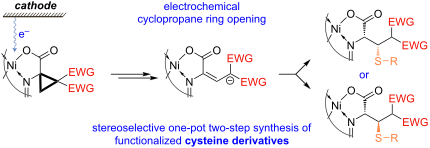
- bioactivity [54][55]. To increase the yield of the alkene complexes, the addition of an external “H-abstractor” may be helpful, to suppress disproportionation. A possible candidate may be a reduced radical form of azobenzene. Indeed, the preparative electrolysis performed in the presence of the equimolar
- Ph2N2 additive changed the relative ratio of alkene to hydrogenated derivatives in favor of the former one (see Table 1). As follows from Table 1, the azobenzene additive allows increasing the yield of the alkene complexes up to 85% suppressing formation of the hydrogenated complexes. Spectral NMR
- due to the bioactivity of such compounds [56][57]; thus, elaboration of new synthetic protocols to these multifunctional molecules is a topical problem. Complex 4 was subjected to reductive ring opening at a potential of −1.5 V (Ag/AgCl, KCl(sat.)) in the presence of an equimolar amount of azobenzene



Continuous flow synthesis of azobenzenes via Baeyer–Mills reaction
Beilstein J. Org. Chem. 2022, 18, 781–787, doi:10.3762/bjoc.18.78
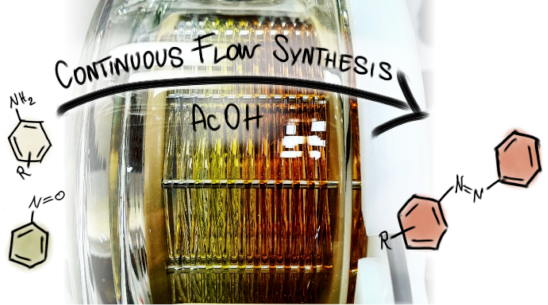
- Azobenzene, as one of the most prominent molecular switches, is featured in many applications ranging from photopharmacology to information or energy storage. In order to easily and reproducibly synthesize non-symmetric substituted azobenzenes in an efficient way, especially on a large scale, the commonly
- used Baeyer–Mills coupling reaction was adopted to a continuous flow setup. The versatility was demonstrated with a scope of 20 substances and the scalability of this method exemplified by the synthesis of >70 g of an azobenzene derivative applied in molecular solar thermal storage (MOST) systems
- was also tested for a large number of other azobenzene derivatives to determine the scope of the method (Table 1). All aniline derivatives 2a–s were commercially available and the corresponding azobenzenes 1a–s were synthesized according to the general procedure in continuous flow as described before


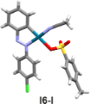
Mechanochemical halogenation of unsymmetrically substituted azobenzenes
Beilstein J. Org. Chem. 2022, 18, 680–687, doi:10.3762/bjoc.18.69
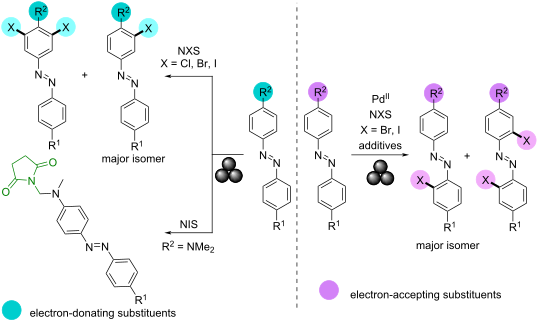
- using N-halosuccinimides as the halogen source under neat grinding or liquid-assisted grinding conditions in a ball mill has been described. Depending on the azobenzene substrate used, halogenation of the C–H bonds occurs in the absence or only in the presence of PdII catalysts. Insight into the
- reaction dynamics and characterization of the products was achieved by in situ Raman and ex situ NMR spectroscopy and PXRD analysis. A strong influence of the different 4,4’-substituents of azobenzene on the halogenation time and mechanism was found. Keywords: azo compounds; halogenation; mechanochemistry
- solvent-free synthesis of phenanthridinones via a cascaded oxidative C–N coupling followed by a halogenation reaction [50]. Only recently, our group carried out a detailed synthetic and mechanistic study of the mechanochemical PdII-catalyzed bromination of unsubstituted azobenzene (L1) by N