


Search results
Search for "binding" in Full Text gives 989 result(s) in Beilstein Journal of Organic Chemistry. Showing first 200.
Amino acid-based surfactants: sustainable synthesis and antimicrobial mechanisms
Beilstein J. Org. Chem. 2026, 22, 1067–1085, doi:10.3762/bjoc.22.85
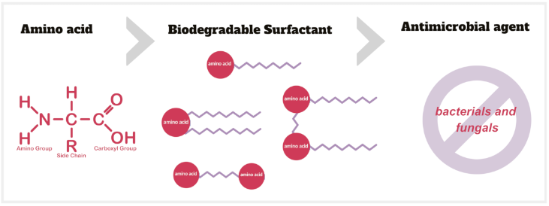
- , such as LAM (Table 1, entry 1), for penetration [81][82]. After binding, the surfactant’s hydrophobic tails insert into the lipid bilayer, destabilizing the membrane structure and causing cellular content leakage, leading to the consequent microbial death [81]. Enhanced solubility and persistent
- revealing specific inhibitory concentrations and binding affinities [16][60]. Molecular docking simulations demonstrated that these compounds bind to enzymes critical for microbial survival, such as DNA gyrase (involved in bacterial replication) and dihydrofolate reductase (DHFR) (key to nucleotide
- binding to dihydrofolate reductase (DHFR) with a dissociation constant (KD) of 2.3 μM, disrupting folate metabolism in MRSA at concentrations as low as 8 μg/mL [60]. Flow cytometric analysis quantifies these effects, showing 78.4% DNA fragmentation in MRSA populations after 2-hour exposure to 16 μg/mL


Synthesis of functionalized, 13-alkyl-substituted coralyne derivatives and investigation of their interactions with duplex and abasic site-containing DNA
Beilstein J. Org. Chem. 2026, 22, 1057–1066, doi:10.3762/bjoc.22.84
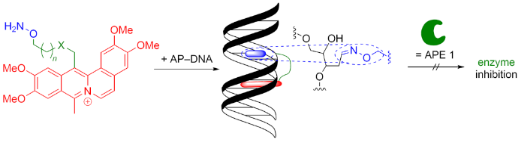
- derivative with an alkoxyamine-functionalized linker attached at position C13. Firstly, it was demonstrated with a resembling model compound that the alkylation of the coralyne scaffold does not influence the DNA-binding properties. Furthermore, it was shown that the alkoxyamine function can be readily
- intensively investigated interdisciplinary research field [2][3][4][5]. In particular, one focus is on external ligands which form complexes with DNA by groove binding or intercalation and thus block the binding sites of the DNA and/or significantly change the helix structure at the binding site [2][3][4][5
- novel DNA-binding N-hetarenes still constitutes a cornerstone in current drug development and in the search for promising drug candidates. Along these lines, the protoberberines, such as, e.g., berberine (1a), palmatine (1b), or jatrorrhizine (1c) (Figure 1), may be considered as privileged structures


Synthesis of novel 1,2,4-oxadiazole-isoxazoline hybrids and their in silico potential with adenosine receptors
Beilstein J. Org. Chem. 2026, 22, 1033–1047, doi:10.3762/bjoc.22.82
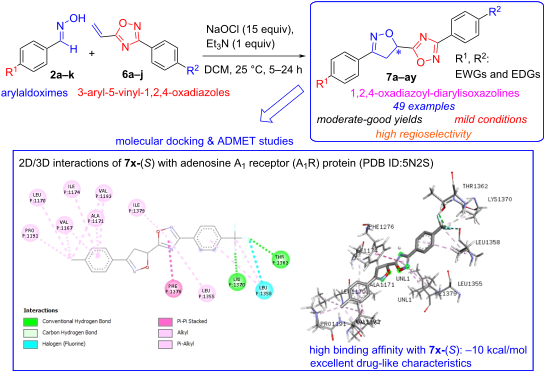
- strong binding affinities toward the adenosine A₁ receptor (−10.0 to −8.3 kcal/mol), surpassing the co-crystallized ligand and engaging in key stabilizing interactions within the binding pocket. Furthermore, ADMET predictions indicated favorable drug-likeness, high gastrointestinal absorption, and
- vinyl-1,2,4-oxadiazole derivatives in the presence of NaOCl/Et3N (Scheme 2). Finally, the binding affinities of these novel molecules were investigated in silico specifically regarding the A1 adenosine receptor. Results and Discussion Chemistry Firstly, a series of electron-rich and electron-poor
- the observed product. In silico studies Molecular docking studies with adenosine receptor A molecular docking study was performed to obtain a comprehensive insight into the binding modes of the 1,2,4-oxadiazole-isoxazoline hybrids (7a–ay) and the co-crystallized reference ligand (1-butyl-3-(3


The role of spacer length and flexibility in peptide self-assembly
Beilstein J. Org. Chem. 2026, 22, 986–996, doi:10.3762/bjoc.22.77
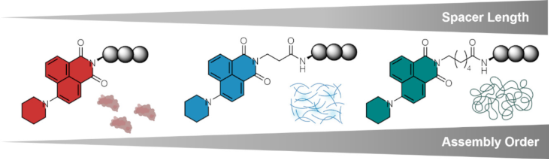
- , having a low assembly conversion rate of (14 ± 6)%, therefore indicating that intermolecular interactions are weaker for the peptide monomers with short spacer lengths. The obtained results were confirmed by the Proteostat® aggregation assay (Figure 1B). Proteostat® fluorescence increases upon binding to


Novel macrocycles: from synthesis to supramolecular function
Beilstein J. Org. Chem. 2026, 22, 982–985, doi:10.3762/bjoc.22.76

- biological receptors. Their well-defined cavities, reminiscent of enzymatic active sites, provide an ideal environment for multiple noncovalent interactions with guest molecules, thereby enhancing binding affinity and recognition selectivity [1][2][3][4]. Between 1980 and 2000, calixarenes [5][6
- to tune binding properties, guest inclusion kinetics, and physical behavior. As a result, modern macrocyclic host–guest systems now operate at the interface of materials science and chemical biology. Given the rapid development of this research area, we organized this thematic issue entitled “Novel
- decreases overall water solubility, it significantly enhances binding toward quaternary ammonium guests relative to primary ammonium ions. Detailed calorimetric and crystallographic data confirm that modifying the outer ionic environment is an effective tool to balance cation–dipole interactions against
Electrochemical reduction of unsaturated carbon–carbon bonds via 3d transition-metal catalysis
Beilstein J. Org. Chem. 2026, 22, 955–981, doi:10.3762/bjoc.22.75
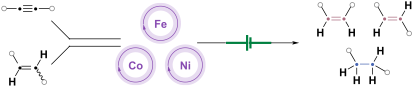
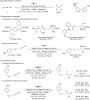
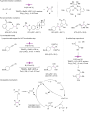
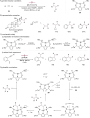
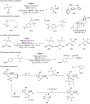
- direct concerted proton–electron transfer (CPET) to the substrate or from substrate binding to electrochemically generated low-valent metal centers prior to protonation, in some cases, leading to metallacyclic intermediates. Subsequent reduction then proceeds through stepwise ET/PT sequences or PCET
- under conditions in which both the redox mediator and the cobalt catalyst are simultaneously operative. Kinetic analysis revealed positive dependence on the concentrations of acid, alkyne, mediator, and cobalt catalyst, supporting a mechanistic regime in which substrate and acid binding equilibria








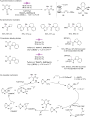
A practical CO2-mediated synthesis of 5,6-carboxylated silicon-rhodamines for targeted probe development
Beilstein J. Org. Chem. 2026, 22, 915–924, doi:10.3762/bjoc.22.72
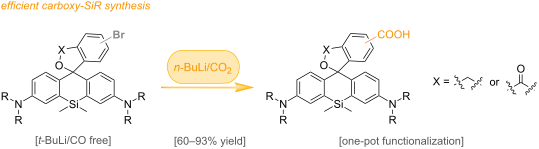
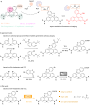
- cell permeability [25][26]. Johnsson and co-workers further showed that SiRs can exist in a nonfluorescent spirolactone form, whereas target binding shifts the equilibrium toward the fluorescent zwitterionic form, thereby generating a strong fluorogenic response (Figure 1a) [27][28][29]. This behavior



Site-specific labelling of native peptides and proteins: chemical and enzymatic strategies
Beilstein J. Org. Chem. 2026, 22, 857–881, doi:10.3762/bjoc.22.67
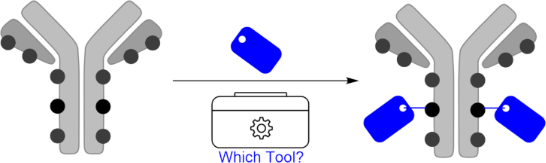
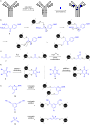
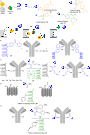
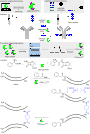
- strategies broadly classified into non-catalytic and catalytic approaches. Non-catalytic approaches often involve tethering a reactive electrophile to a protein-binding ligand, thereby positioning the electrophile near a neighbouring nucleophilic residue. Example electrophiles include 4
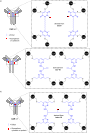
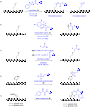
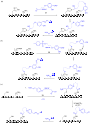
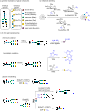
- called (GlycoConnect®) used in ADC manufacturing [138][139]. In summary, glycan-directed labelling excels by omitting engineering or denaturation of the protein substrates. Often, the protein function is mostly preserved, for example, the antigen-binding (Fab) region of antibodies is free of glycan
- variants for antibody conjugation [146]. Exploiting the ability of sortase to accept the ε-amino group of lysine, the enzyme was fused to an antibody Fc-binding domain protein (protein Z/pZ), positioning it near surface-exposed lysine on the target antibody for isopeptide bond modification (Scheme 14b








The trans-influence in gold chemistry from a catalytic perspective
Beilstein J. Org. Chem. 2026, 22, 838–856, doi:10.3762/bjoc.22.66
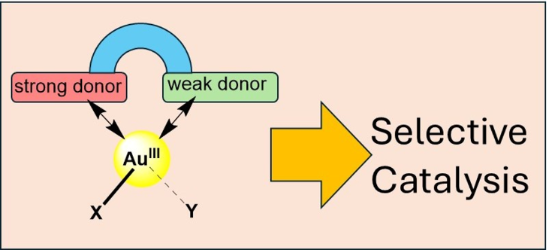
- norbornadiene) are thermally stable and could be crystallographically characterised, while [Me2Au(1,5-COD)]+ decomposes >0 °C [38]. The total binding enthalpies in the [(C^C)AuL2]+ fragments closely resemble those of Me2PtL2, and are significantly lower than those of the Me2Au+ analogues (L = OH2, OMe2, HC≡CH
- of radicals. Also, the reaction was surprisingly accelerated by water. The findings are in agreement with another type of cooperative bimolecular mechanism, where the vacant coordination site required for alkyne binding is generated not by a radical initiator but apparently by the reductive


Design, synthesis, and biological evaluation of FXR/ASK1 dual-target modulators
Beilstein J. Org. Chem. 2026, 22, 771–781, doi:10.3762/bjoc.22.59
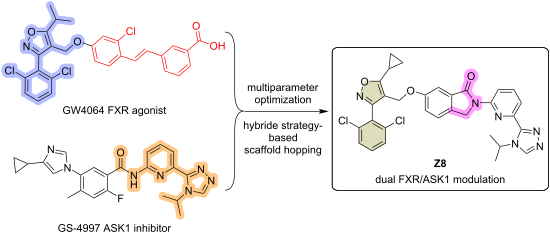
- reported many dual-target drug molecules based on FXR and other relevant therapeutic targets, such as FXR/sEH (soluble epoxide hydrolase), FXR/PPARδ (peroxisome proliferators activated receptor δ), FXR/LTA4H (leukotriene A4 hydrolase), and FXR/FABP 1 (fatty acid binding protein 1) [12][29][30][31]. In this
- under the catalytic conditions of Pd2(dba)3 provided compound Z30. Molecular simulation To elucidate the binding modes of compound Z8 with FXR and ASK1, molecular docking simulations were performed as shown in Scheme 9. The results revealed that within the FXR binding pocket, the isoxazole and triazole
- moieties of Z8 formed hydrogen bonds with the key residues ARG-331 and HIS-447, respectively. Similarly, in the ASK1 binding pocket, the isoxazole, carbonyl, and triazole groups of Z8 engaged in hydrogen bonding with residues GLY-759, VAL-757, and LYS-709, respectively. Notably, the binding sites of Z8


Synthesis and biological evaluation of new brassinosteroid analogs with C-22 benzoate function
Beilstein J. Org. Chem. 2026, 22, 753–762, doi:10.3762/bjoc.22.57
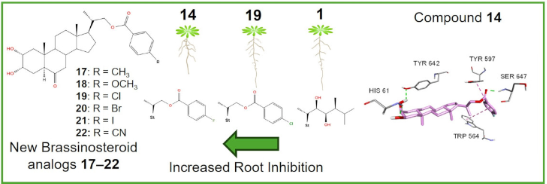
- binding energies obtained from a docking study. In this way, it is intended to assess the effect of chemical structure on the initial and one intermediate step, and on the final plant response. Our results show that the binding of BR analogs to the active site, which initiate the signaling process, and
- growth BRs act as root growth promoter at low concentration and the opposite effect is observed at high concentrations [22]. As sensing of BRs by BRI1 is the starting point of the mechanism by which plant responses are produced, this binding process has been extensively studied and it has been shown that
- bioactivity can be correlated with the binding of BRs to BRI1 [23][24], and some structure–activity relationships (SAR) have been proposed [25][26]. The low abundance of BRs present in plants has prompted the quest of synthetic pathways to obtain these compounds. However, to synthesize molecules with the same


Rongalite addition to dienones: diastereoselectivity in cyclic sulfone synthesis; stereochemical rationalization and prospects as a general conjugate nucleophile
Beilstein J. Org. Chem. 2026, 22, 742–752, doi:10.3762/bjoc.22.56

- product, we used density functional theory (DFT) and conformational search techniques based on tight-binding methods to find the energetically minimized structure of 7 (see Supporting Information File 1 for details on all computations). The lowest energy structure is depicted in Figure 3. It shows a




Using generative AI to transform peptide hits into small molecule leads
Beilstein J. Org. Chem. 2026, 22, 672–679, doi:10.3762/bjoc.22.51
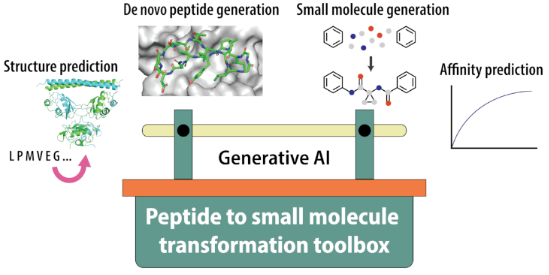
- drug targets, serving as rich inspiration for designing small molecule inhibitors which can recapitulate key binding interactions while improving pharmacokinetic properties. With the rapid advancement of artificial intelligence capabilities including powerful generative models, there is significant
- , de novo peptide binder generation, diffusion models for generating novel small molecule scaffolds, and deep-learning predictors of binding affinity to rapidly triage candidates. Keywords: diffusion models; drug discovery; generative AI; peptides; small molecules; Introduction In drug discovery
- , peptides serve as accessible starting points for designing molecules that bind and inhibit a chosen protein target. Many enzyme targets (e.g., proteases) natively process peptides as their substrates. Peptide domains are also common motifs in protein–protein interactions, mediating the binding between


Advantages of PROTACs in achieving selective degradation of homologous protein families
Beilstein J. Org. Chem. 2026, 22, 628–661, doi:10.3762/bjoc.22.49
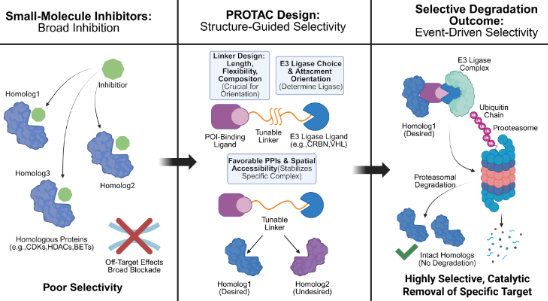
- targeting an E3 ubiquitin ligase and the other binding to a protein of interest (POI), covalently joined by a flexible linker [12]. Upon cellular entry, the PROTAC molecule facilitates the formation of a ternary complex by simultaneously recruiting the POI and the E3 ligase (Figure 1). This proximity
- enables the proteasome to recognize the complex, subsequently degrading the target protein via the endogenous ubiquitin–proteasome system [13][14]. Notably, this mechanism does not necessitate prolonged occupancy of the POI binding site. Instead, the transient formation of the ternary complex is
- inhibitors that rely on sustained occupancy of conserved ATP-binding pockets, PROTACs induce transient yet specific protein–protein interactions that dictate ubiquitination efficiency. By fine-tuning the length and composition of the linker, as well as the choice of E3 ligase and its attachment geometry


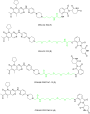

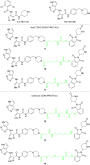


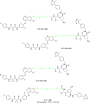
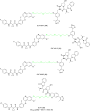


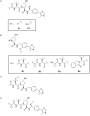


Towards the targeted protein degradation of CK2: design and synthesis of CAM4066-based PROTACs
Beilstein J. Org. Chem. 2026, 22, 611–619, doi:10.3762/bjoc.22.47
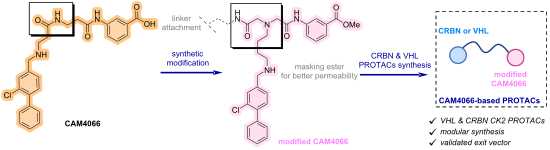
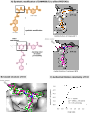
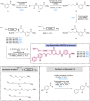
- binding affinity comparable to CAM4066, confirming that linker installation is tolerated and preserves key interactions in the αD and ATP sites. Keywords: CAM4066; casein kinase 2 (CK2); PROTACs; targeted protein degradation; Introduction Protein kinases form a large family of more than 500 enzymes that
- adjacent to the ATP-binding site of CK2α [5][6]. Fragment-based ligand discovery subsequently enabled the development of CAM4066, a selective inhibitor that simultaneously engages the αD and ATP sites. CAM4066 validated the αD region as a tractable and selective binding pocket for CK2 kinase inhibition
- occupancy-driven pharmacology. Proteolysis-targeting chimeras (PROTACs) represent a rapidly advancing strategy for induced protein degradation. By transiently engaging both a target protein and an E3 ubiquitin ligase, PROTACs promote proteasomal elimination of the target rather than sustained binding [8

Computational prediction of C–H hydricities and their use in predicting the regioselectivity of electron-rich C–H functionalisation reactions
Beilstein J. Org. Chem. 2026, 22, 603–610, doi:10.3762/bjoc.22.46
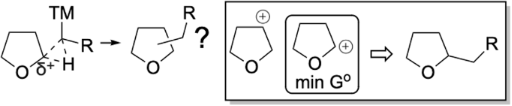
- et al. [24][25], Ree et al. [10] and our previous work [3], we utilise the automated approach to compute CM5 atomic charges from semiempirical tight-binding (GFN1-xTB [32]) calculations. We modify the workflow to enhance the accuracy of the computed CM5 atomic charges. Instead of generating a single
- photoredox activation, followed by anion-binding-catalysed functionalisation to form β-amino esters. Here, the reacting atom is the one with the lowest hydricity and BDE. Compounds 8–10 Schmidt et al. [44] reported the visible light-catalysed bromination of compound 8, Kamon et al. [45] reported the light


![[Graphic 6]](/bjoc/content/inline/1860-5397-22-46-i8.svg?max-width=637&scale=1.18182)


Regioselective approach to 5-arylsulfonylisoxazoles and their antimicrobial activity
Beilstein J. Org. Chem. 2026, 22, 592–602, doi:10.3762/bjoc.22.45
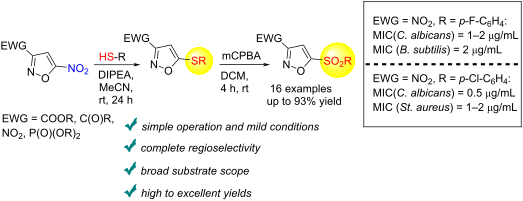
- promising compounds with a wide spectrum of biological activity [1][2][3][4][5]. The attractiveness of isoxazole derivatives for medicinal chemistry is determined by high-affinity binding to many targets, low toxicity of isoxazole-containing compounds and the use of the isoxazole ring as a bioisoster of the


Design and synthesis of an erdafitinib-based selective FGFR2 degrader
Beilstein J. Org. Chem. 2026, 22, 583–591, doi:10.3762/bjoc.22.44
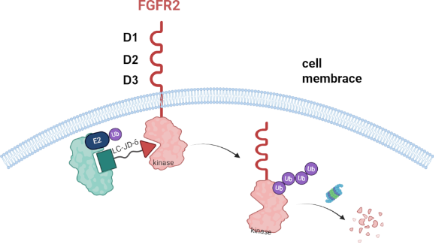
- binding to ligands, which trigger intracellular signaling cascades to activate downstream substrates and pathways [4]. This process involves PLC γ-mediated PKC activation and pFRS2-induced activation of the PI3K/AKT and MAPK/ERK pathways, thereby regulating cell proliferation, differentiation, migration
- proper ligand binding, thus promoting uncontrolled cell proliferation [11][14]. Mutations in FGFR2 may alter its structure, enabling it to bypass normal regulatory mechanisms and activate downstream oncogenic pathways independently of external stimuli, which also contributes to tumor development. Gene

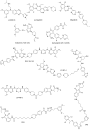

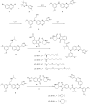
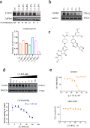

Continuous-flow carbonyl hydrogenation under subatmospheric to atmospheric hydrogen pressure enabled by robust heterogeneous Pt–Fe catalysts
Beilstein J. Org. Chem. 2026, 22, 575–582, doi:10.3762/bjoc.22.43
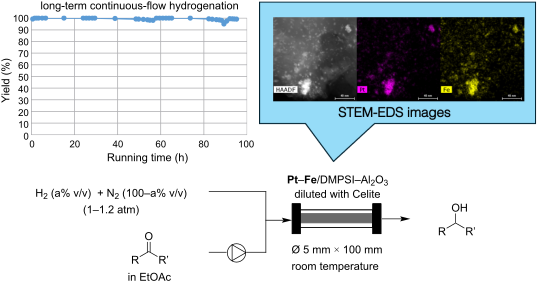
- activity and selectivity. The binding energies of Pt 4d in Pt–Fe/DMPSi‒Al2O3 (332, 315 eV) are lower than those of Pt/DMPSi‒Al2O3 (333, 316 eV) and Pt–Ni/DMPSi‒Al2O3 (334, 317 eV) [30]. Thus, the Pt species in Pt–Fe/DMPSi‒Al2O3 is the most electronically negative among the catalysts, which leads to a


Molecular tweezer–peptide conjugates disrupt the protein–protein interaction between survivin and histone H3 essential in mitosis
Beilstein J. Org. Chem. 2026, 22, 557–567, doi:10.3762/bjoc.22.41
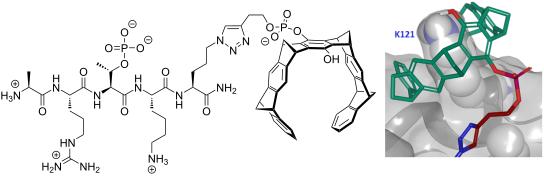
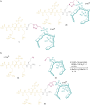
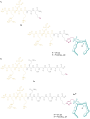
- Pro26, corresponding to a previously unknown binding mode. Guided by the accessibility of survivin’s lysine residues in the CPC, a number of new promising peptide tweezers was synthesized, able to connect both binding sites on the protein. Keywords: click reaction; chromosomal passenger complex
- . demonstrated that survivin contributes most of the binding energy to this critical complex with histone H3 [8]. In 2011, a crystal structure was solved depicting structural details of the H3 N-terminus (1–21) bound by survivin’s BIR domain (Figure 2). Only the first six residues (ARpTKQT) show electron density
- and precisely the natural binding site in the wide 14-3-3-cleft [10]. These examples for designed protein–protein interaction (PPI) inhibitors demonstrated that short but highly flexible linkers are imperative to increase selectivity and minimize entropical penalty. The design was strongly supported




Synthesis and uranyl(VI) extraction performance of a calix[4]pyrrole–tetrahydroxamic acid receptor
Beilstein J. Org. Chem. 2026, 22, 486–494, doi:10.3762/bjoc.22.36
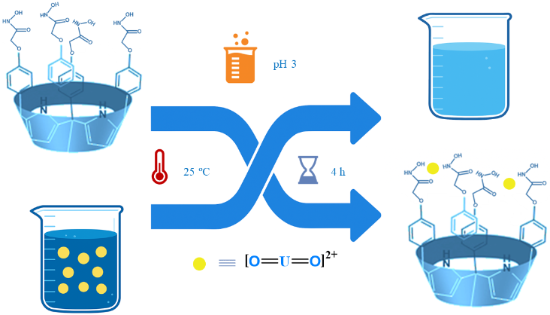
- selective remediation strategies. Supramolecular materials, with their pre-organized structures, offer a promising route for uranium removal. Phenoxycalix[4]pyrroles (PCP) are well-known supramolecular scaffolds capable of selective metal binding, making them attractive candidates for designing uranium
- receptors bearing both anion- and cation-binding sites, as well as systems capable of promoting ion-pair formation [23][24]. As effective chelating agents for a broad range of transition metals, hydroxamic acids constitute an important class of organic compounds that have attracted considerable attention
- [4]resorcinarene hydroxamic acid has also shown a pronounced binding tendency and selectivity for uranyl and proved to be applicable for the determination of uranium in standard and environmental samples [34]. Importantly, more recent studies have demonstrated that pre-organized or cyclic hydroxamate


Synthesis of a HDAC inhibitor–nanogold probe for cryo-EM visualization in class I HDAC co-repressor complexes
Beilstein J. Org. Chem. 2026, 22, 480–485, doi:10.3762/bjoc.22.35
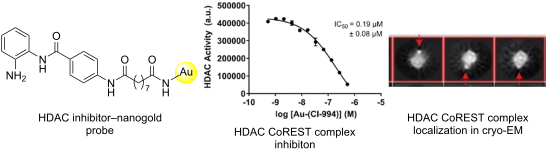
- , like other benzamide HDAC inhibitors, exhibits slow on/off binding kinetics, hence once bound to the HDAC within the complex it should not readily dissociate [16]. A crystal structure of HDAC2 bound to an analogue of CI-994 (PDB: 4LY1) revealed that the acetamide moiety is oriented outside the HDAC
- active site [17]. Hence, we decided to functionalize this position with an alkyl linker consisting of 9 carbon atoms to mitigate any steric clashes between the HDAC inhibitor and the nanogold particle, which could be detrimental to the probe binding affinity (Figure 1). Further to this, we previously
- complex on the EM grid, glutaraldehyde cross-linking was performed, with successful cross-linking confirmed by SDS-PAGE. The cross-linked ternary complex was incubated with the Au–(CI-994) probe for 2 hours in 2:1 molar ratio to minimize non-specific binding. Screening and data collection were carried out



Synthesis and anti-cancer activity of naphthalimide–organylselanyl conjugates
Beilstein J. Org. Chem. 2026, 22, 416–435, doi:10.3762/bjoc.22.29
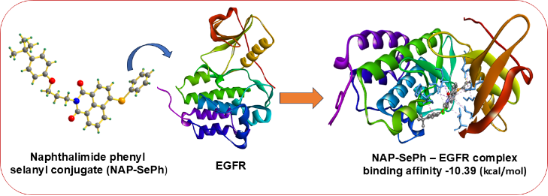
- 27.92 ± 3 µM and 23.06 ± 3 μM, respectively. Molecular docking simulations revealed that NAP-SePh and NAP-Se(n-Oct) show binding affinities of −10.39 and −8.53 kcal/mol for the (1M17) active, and −10.66 and −10.59 kcal/mol for the (4HJO) inactive conformation of the tyrosine kinase domain of the
- binding components, including electron-deficient, electron-rich, and hydrophobic regions, which offer greater affinities towards biological targets. Structures of these compounds were confirmed through various spectroscopic analyses. The structure of compound 7 was confirmed using single-crystal XRD
- cancer cell line. Molecular docking simulation revealed strong binding interaction and affinities towards the tyrosine kinase domain of epidermal growth factor receptor (EGFR), and the protein–ligand interaction resembles the interaction found in the co-crystallised protein–erlotinib complex. Result and




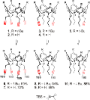
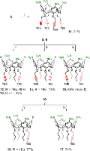
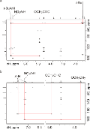
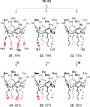
Cone p-aminocalix[4]arenes enriched with ‘clickable’ alkyne or azide functionalities
Beilstein J. Org. Chem. 2026, 22, 399–415, doi:10.3762/bjoc.22.28
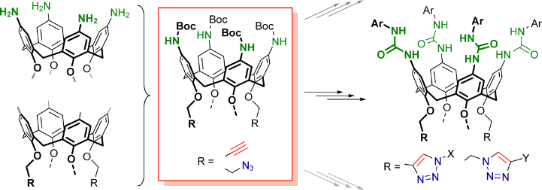
- ]. (Multi)calix[4]arenes having (dialkyl)amino groups at the wide rims are soluble in aqueous media at physiological pHs and may be used in protein sensing [18], DNA binding/recognition [19][20][21][22][23], and cell transfection [24][25][26]. Their water-soluble guanidinium derivatives are also
- affect the cycloaddition by, for instance, binding copper cations or counter anions, and thus their presence in the structures of calixarenes at the CuAAC step must be avoided. On the other hand, the unmodified amines may also contribute to undesired Cu(I) stabilization and complicate the CuAAC work up
- calixarene 37, there were no problems encountered with the copper complex destruction and the yield of the isomeric calixarene 40 having four 2-(4-phenyltriazol-1-yl)ethyl moieties at the narrow rim was much higher, indicating a weaker binding in the 40/Cu+ system than in the 37/Cu+ one, due to the outer






Design, synthesis and biological evaluation of 2,5-diaryloxazolo[4,5-d]pyrimidin-7-ylamines as selective cytotoxic agents against HeLa cells
Beilstein J. Org. Chem. 2026, 22, 390–398, doi:10.3762/bjoc.22.27
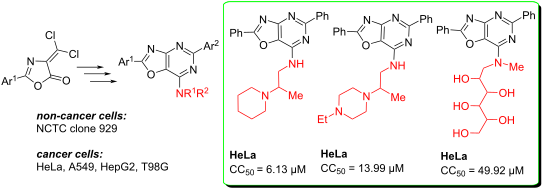
- -mimicking scaffolds are a proven strategy in the design of anticancer drugs. Many cancer-related proteins (e.g., kinases, ATPases, DNA/RNA polymerases) have binding pockets designed for purine nucleotides (ATP, GTP). Oxazolopyrimidines can compete with purines or their analogues, inhibiting enzymatic
- interference with the assay itself, but to binding to possible targets. Conclusion The results of anticancer screening and virtual analysis suggest that among the synthesized derivatives, compounds 1, 7, and 9 showed activity and high relevant selectivity against the HeLa cell line. While compound 1 exhibited





