Search results
Search for "biologically active" in Full Text gives 572 result(s) in Beilstein Journal of Organic Chemistry. Showing first 200.
One-pot four-component sequential synthesis of S-alkyl dithiocarbamates using lipase as a biocatalyst
Beilstein J. Org. Chem. 2026, 22, 1048–1056, doi:10.3762/bjoc.22.83
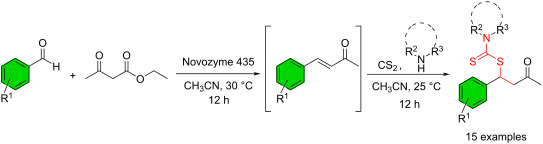
- chromatography (TLC) plates (eluting with n-hexane/ethyl acetate). Biologically active S-alkyl dithiocarbamates. Previous works and this work for the sequential one-pot four-component synthesis of S-alkyl dithiocarbamates. Formation of the thiourea by-product. Scope of reaction with aldehydes and cyclic amines


Synthesis of novel 1,2,4-oxadiazole-isoxazoline hybrids and their in silico potential with adenosine receptors
Beilstein J. Org. Chem. 2026, 22, 1033–1047, doi:10.3762/bjoc.22.82
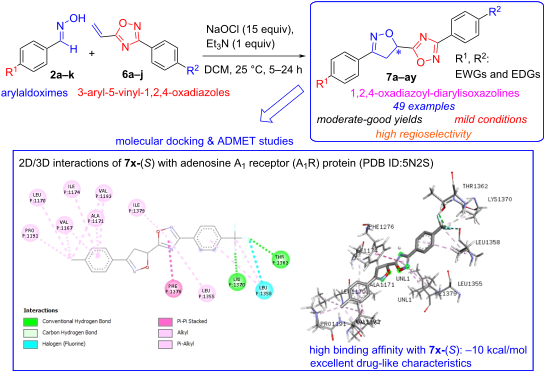
- isoxazoline, 1,2,4-oxadiazole and biologically active 1,2,4-oxadizole, isoxazole and isoxazoline-based molecules or drugs. Various adenosine receptor (AR) antagonists, catechol-O-methyltransferase (COMT) and 1,2,4-oxadiazole type inhibitors in clinical trials. 3D and 2D binding interactions of best scoring


Rh(III)-catalyzed chelation-assisted C–H activation/annulation of 2-arylimidazolines with cyclic diazo-1,3-dicarbonyl compounds: a novel approach to tetracyclic annulated derivatives of 2,3-dihydroimidazo[2,1-a]isoquinoline
Beilstein J. Org. Chem. 2026, 22, 997–1003, doi:10.3762/bjoc.22.78
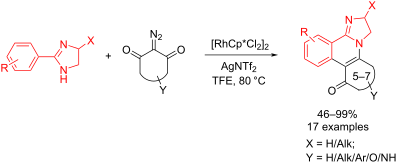
- for the creation of more potent medications and the hunt for novel biologically active compounds. One important group of these are imidazoline derivatives since they are well known as pharmacophores [1] for adrenergic and imidazoline receptors. Imidazolines have found utility in the development of
- biologically active compounds. a,b) Structure of biologically active 2,3-dihydroimidazo[2,1-a]isoquinolines (1) and their published syntheses. c) A novel approach to annulated 2,3-dihydroimidazo[2,1-a]isoquinolines via chelation-assisted C–H activation/annulation of 2-arylimidazolines proposed in this work. d


Electrochemical reduction of unsaturated carbon–carbon bonds via 3d transition-metal catalysis
Beilstein J. Org. Chem. 2026, 22, 955–981, doi:10.3762/bjoc.22.75
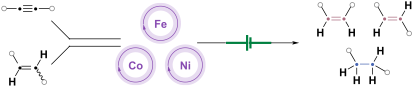
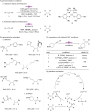
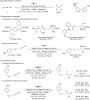
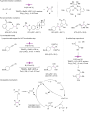
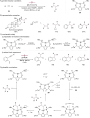
- exhibits a broad substrate scope, high efficiency, excellent functional-group tolerance, and consistently high levels of deuterium incorporation (Scheme 5Bi) [100][101]. Notably, the transformation proceeds efficiently with derivatives of biologically active molecules, such as serine and niflumic acid








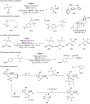
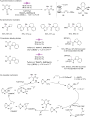
Recent advances in copper-catalyzed direct hydroamination of alkenes with (hetero)aromatic amines
Beilstein J. Org. Chem. 2026, 22, 925–947, doi:10.3762/bjoc.22.73
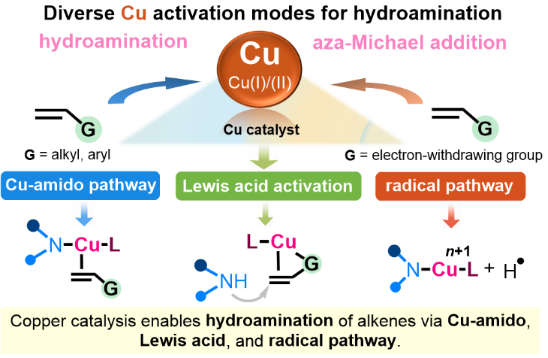
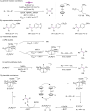
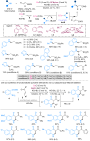
- β-amino nitrile motifs, which are commonly found in biologically active molecules. However, the relatively low nucleophilicity of aromatic amines and N-heteroaromatic substrates often limits their reactivity in conjugate addition reactions. To overcome this limitation, transition metal catalysis has




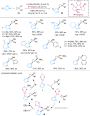


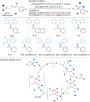

Palladium-catalyzed benzocyclization reactions of quinoline-2-carboxamides via sequential C–H/N–H functionalization
Beilstein J. Org. Chem. 2026, 22, 905–914, doi:10.3762/bjoc.22.71
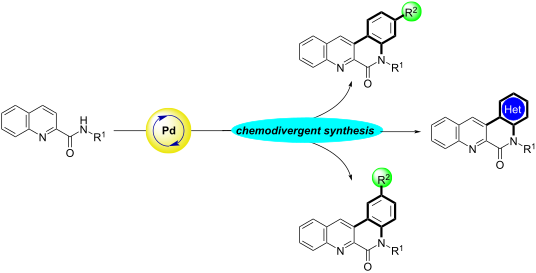
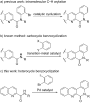
- intriguing moiety in biologically active compounds (e.g., natural products used for medicines, quinine, and quinidine [5][6][7]) and synthesized pharmaceutical agents (e.g., quinolone antibiotics [8]). Moreover, quinoline-2-carboxamide derivatives are used as ligands in organic synthesis owing to their high
- metal affinity [9][10]. It is therefore expected that annulation of the amide moiety in quinoline-2-carboxamides would extend their functionality as biologically active structures, ligands, and extractants. Transition-metal-catalyzed coupling reactions are crucial for constructing carbon–carbon and




Synthesis and structural elucidation of a novel bis-spirooxindole from isatin and ethylenediamine
Beilstein J. Org. Chem. 2026, 22, 813–820, doi:10.3762/bjoc.22.63
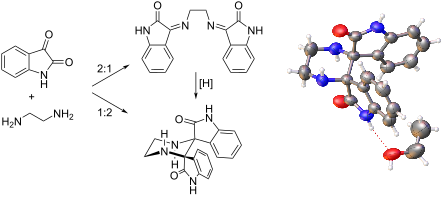
- spirooxindoles include the progesterone receptor modulator 2 [8], the potent MDM2–p53 inhibitor 3 [9], the CRTH2 (DP2) antagonist 4 [10] or the antimalarial agents 5 and 6 [11][12] (Figure 1). Beyond these well-known cases, several additional biologically active spirooxindoles – such as vasopressin-2 receptor


Preparation of 3-(alkylamino)imidazo[1,2-a]pyridine-2-carbaldehydes via Kornblum oxidation and unexpected ring-opening reactions of the corresponding alcohols under oxidative conditions
Beilstein J. Org. Chem. 2026, 22, 763–770, doi:10.3762/bjoc.22.58
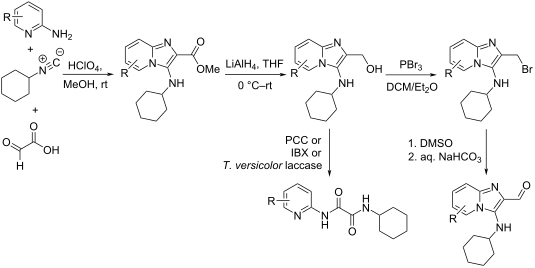
- transcriptase in due course. Examples of biologically active imidazo[1,2-a]pyridines. Compounds envisaged for synthesis. Previously reported 3-amino-2-carboxylic acid derivatives. Single crystal X-ray structure of 18a. ORTEP diagram drawn at 50% probability level. Different oxidative cleavage products obtained


Synthesis of heterocycles based on azomethine ylides from α-amino acids (or amines) and carbonyl compounds
Beilstein J. Org. Chem. 2026, 22, 705–741, doi:10.3762/bjoc.22.55
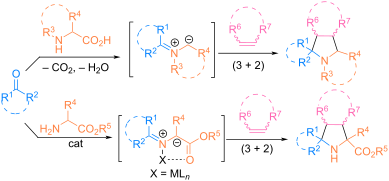
- biologically active oxindoles spiro-fused with pyrrolidines. Naturally, the task arises of developing synthetic methods for the organocatalytic 1,3-dipolar cycloaddition of isatin-derived azomethine ylides and exploring their further application in the enantioselective synthesis of spiro-oxindoles. Azomethine


Experimental and DFT studies on the regioselective methanolysis of 5-azido-9-oxabicyclo[6.1.0]nonan-4-yl 4-nitrobenzoate isomers
Beilstein J. Org. Chem. 2026, 22, 547–556, doi:10.3762/bjoc.22.40
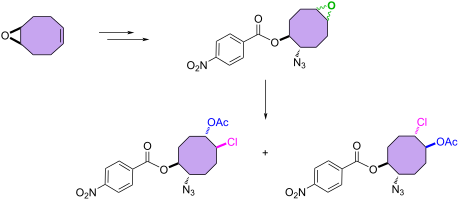
- triazoles and aminocyclitols, which have numerous applications in industry, medicine, and pharmacy [1][2][3][4][5]. They are found in many biologically active compounds. For example, 3’-azido-3’-deoxythymidine (zidovudine, 1) is used in treatment of AIDS, while azapride (2), azidamphenicol (3), and


Spirobarbiturates with a pyrrolizidine moiety: synthesis, structure and biological evaluation
Beilstein J. Org. Chem. 2026, 22, 274–288, doi:10.3762/bjoc.22.20
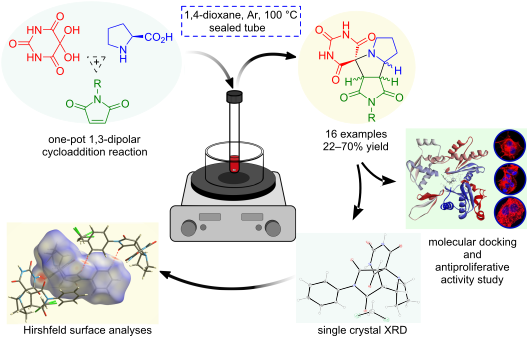
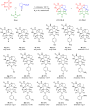
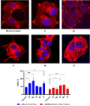
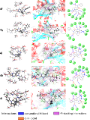
- compounds 4f, 4g, 4i, 4k, and 4l with the target protein (PDB ID: 8DNH). Biologically active compounds with a spirobarbiturate moiety in their structure [7][8][9][10][11][12]. Biologically active alkaloids with a pyrrolizidine moiety. Previous studies on the three-component synthesis of spirobarbiturates




A mild and atom-efficient four-component cascade strategy for the construction of biologically relevant 4-hydroxyquinolin-2(1H)-one derivatives
Beilstein J. Org. Chem. 2026, 22, 244–256, doi:10.3762/bjoc.22.18
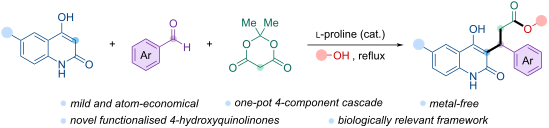
- , offering high atom economy, operational simplicity, and remarkable versatility [9][10][11][12][13]. Owing to their flexibility in combining diverse building blocks, MCRs have found widespread application in the synthesis of biologically active compounds. This versatility significantly shortens synthetic
- demonstrate pronounced antibacterial activity, their low toxicity toward human cells and distinctive molecular scaffold render them promising candidates for further development as biologically active agents. Conclusion In conclusion, we have developed a novel organocatalyzed four-component cascade reaction
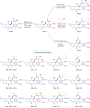
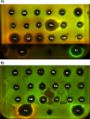
- potential of the 4-hydroxyquinolin-2(1H)-one scaffold as a versatile template for future targeted modifications to develop active derivatives. Examples of biologically active quinolin-2(1H)-ones. Structures obtained via rational design aimed at enhancing antibacterial activity. In vitro antibacterial


Highly electrophilic, gem- and spiro-activated trichloromethylnitrocyclopropanes: synthesis and structure
Beilstein J. Org. Chem. 2026, 22, 123–130, doi:10.3762/bjoc.22.5
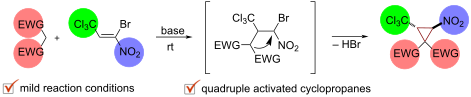
- biologically active properties. Thus, barbamide exhibits molluscicidal activity [7], and sintokamide A is active against prostate cancer [8] (Figure 1). As derivatives of strained and unique structure and properties [9][10] cyclopropanes are of interest for entering into various transformations along the path
- groups seems attractive for both theoretical chemistry and the synthesis of 2-aminocyclopropanecarboxylic acids, of which representatives have biologically active properties against kynurenine-3-monooxygenase [25] and GABA receptors [26]. Such aminocyclopropane derivatives can be classified as donor
- -crystal X-ray diffraction analysis. Experimental Physicochemical studies were performed using the equipment of the Center for Collective Use "Physicochemical methods for the study of nitro compounds, coordination, biologically active substances and nanostructured materials" of the Interdisciplinary


Tandem hydrothiocyanation/cyclization of CF3-iminopropargyl alcohols with NaSCN in the presence of AcOH
Beilstein J. Org. Chem. 2025, 21, 2694–2702, doi:10.3762/bjoc.21.207
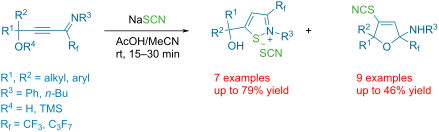
- motif in various biologically active molecules and materials due to its unique physical, chemical, and biological properties [28][29][30]. SCN and trifluoromethyl groups have proved to be versatile moieties in the design and development of numerous active pharmaceutical ingredients, agrochemicals, drugs



Palladium-catalyzed regioselective C1-selective nitration of carbazoles
Beilstein J. Org. Chem. 2025, 21, 2479–2488, doi:10.3762/bjoc.21.190
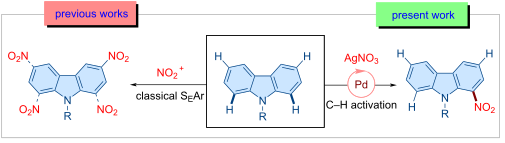
- ; palladium; Introduction Carbazole represents an important heterocyclic scaffold that is broadly present in many natural products, biologically active motifs, as well as optoelectronic and functional materials [1][2][3][4][5][6][7][8]. By virtue of its substantial application in various fields, significant


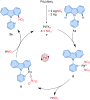
Catalytic enantioselective synthesis of selenium-containing atropisomers via C–Se bond formations
Beilstein J. Org. Chem. 2025, 21, 2447–2455, doi:10.3762/bjoc.21.186
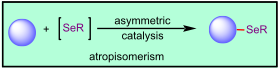
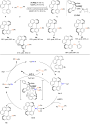
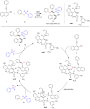
- Atropisomers are not only prevalent in biologically active natural products and pharmaceuticals, but they have also garnered increasing attention for their effectiveness as ligands and catalysts in the field of catalytic asymmetric synthesis. Asymmetric catalysis serves as a key strategy for the
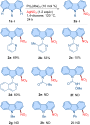
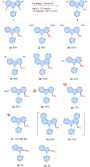
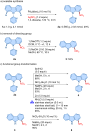
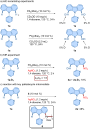
- selenides, recognized as valuable synthetic intermediates and biologically active compounds, have been demonstrated to exhibit a broad spectrum of biological activities. Among them, the synthesis of β-(selenium)vinyl sulfones can be accomplished via selenosulfonylation reactions initiated by free radicals




Transformation of the cyclohexane ring to the cyclopentane fragment of biologically active compounds
Beilstein J. Org. Chem. 2025, 21, 2416–2446, doi:10.3762/bjoc.21.185
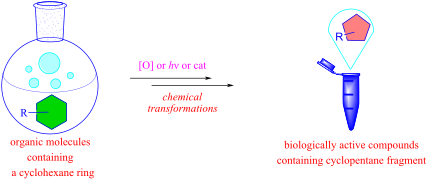
- contraction of six-membered cycles in the synthesis of functionalized cyclopentane/enones, which are biologically active compounds. The main synthetic methods of ring contraction (ozonolysis–aldol condensation, ozonolysis–Dieckmann reaction, Baeyer–Villiger cleavage–Dieckmann reaction) and rearrangements
- information. Keywords: biological activity; cyclopentane/enone; rearrangements; ring/cycle contractions; total synthesis; Introduction The functionalized cyclopentane/enone fragment is part of the structure of a large number of natural and synthetic biologically active compounds, including prostaglandins
- of practical approaches to the synthesis of known compounds and the synthesis of new biologically active functionalized compounds containing a cyclopentane/enone fragment through transformation of a cyclohexane/ene ring is an urgent task for synthetic chemists. This review summarizes information on


The high potential of methyl laurate as a recyclable competitor to conventional toxic solvents in [3 + 2] cycloaddition reactions
Beilstein J. Org. Chem. 2025, 21, 2389–2415, doi:10.3762/bjoc.21.184
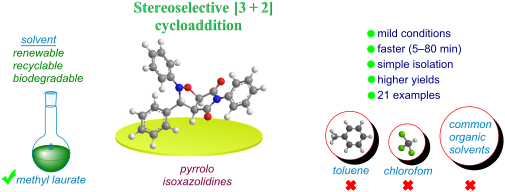
- formation of the five-membered isoxazolidine ring motif, which displays a range of biologically active properties [26][27][28][29][30]. It is notable that the fused pyrrolo-isoxazolidines represent a particularly versatile class of heterocyclic compounds and intermediates, which have been demonstrated to
- consisting of a combination of isoxazolidine rings [36][37][38][39][40][41]. It has been demonstrated that such cycloaddition reactions are also employed in the efficient preparation of biologically active molecules, including nucleosides, β-lactam class antibiotics, peptides, and amino acids, as well as






Discovery of cytotoxic indolo[1,2-c]quinazoline derivatives through scaffold-based design
Beilstein J. Org. Chem. 2025, 21, 2062–2071, doi:10.3762/bjoc.21.161
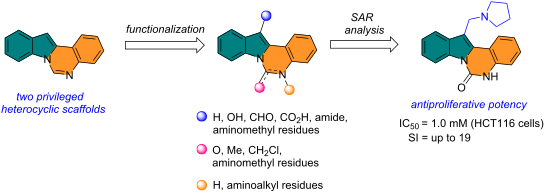
- (5) (Scheme 1), a structural analogue of the biologically active alkaloid tryptanthrin (Figure 1). An alternative scheme to indolo[1,2-c]quinazoline-12-carboxylic acid (3) was based on initial acylation followed by a haloform reaction. Refluxing compound 1 with trifluoroacetic anhydride (TFAA) in


α-Ketoglutaric acid in Ugi reactions and Ugi/aza-Wittig tandem reactions
Beilstein J. Org. Chem. 2025, 21, 2021–2029, doi:10.3762/bjoc.21.157
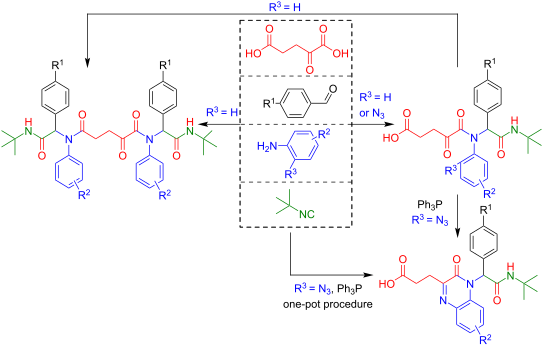
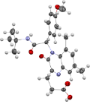
- biologically active quinoxalinone derivatives. Molecular structure of 3-(4-(2-(tert-butylamino)-1-(4-methoxyphenyl)-2-oxoethyl)-5,7-dimethyl-3-oxo-3,4-dihydroquinoxalin-2-yl)propanoic acid (9e) according to X-ray diffraction data. Known multicomponent reactions of KGA. Ugi reaction involving KGA. Tandem Ugi


Enantioselective desymmetrization strategy of prochiral 1,3-diols in natural product synthesis
Beilstein J. Org. Chem. 2025, 21, 1932–1963, doi:10.3762/bjoc.21.151
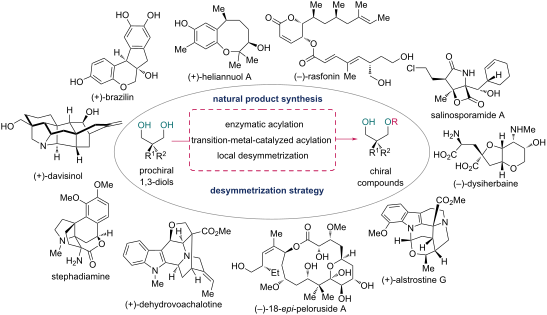
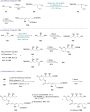
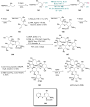
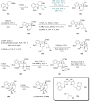
- biologically active molecules. Based on the reaction types, three strategies are discussed: enzymatic acylation, transition-metal-catalyzed acylation, and local desymmetrization. Keywords: asymmetric synthesis; desymmetrization; 1,3-diols; natural product; total synthesis; Introduction Natural products










Approaches to stereoselective 1,1'-glycosylation
Beilstein J. Org. Chem. 2025, 21, 1700–1718, doi:10.3762/bjoc.21.133
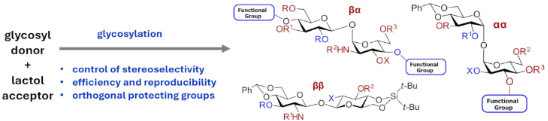
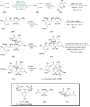
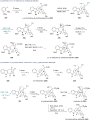
- structural components in mycobacterial glycans, microbial oligosaccharide and nucleoside antibiotics, as well as biologically active mimetics of bacterial pathogen-associated molecular patterns (PAMPs). As integral components of PAMPs, 1,1′-linked disaccharide-containing biomolecules play important roles in
- synthesis of symmetrically functionalized nonreducing disaccharide-based molecules. However, most biologically active molecules that contain nonreducing sugars are characterized by the presence of non-symmetrically distributed functional groups, which requires the use of selectively orthogonally protected


Formal synthesis of a selective estrogen receptor modulator with tetrahydrofluorenone structure using [3 + 2 + 1] cycloaddition of yne-vinylcyclopropanes and CO
Beilstein J. Org. Chem. 2025, 21, 1639–1644, doi:10.3762/bjoc.21.127
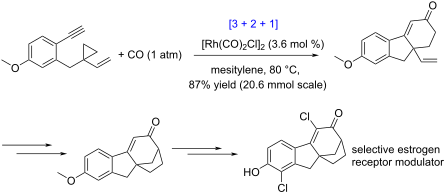
- reaction in synthesis. Reported biologically active tetrahydrofluorenone-SERMs molecules. Reported synthesis routes to SERMs molecule VI. Lei’s synthesis of natural products of ent-kaurane diterpenoids (A), and natural products songorine, beyerene, garryine and steviol (B). Retrosynthetic analysis for the


Azide–alkyne cycloaddition (click) reaction in biomass-derived solvent CyreneTM under one-pot conditions
Beilstein J. Org. Chem. 2025, 21, 1544–1551, doi:10.3762/bjoc.21.117
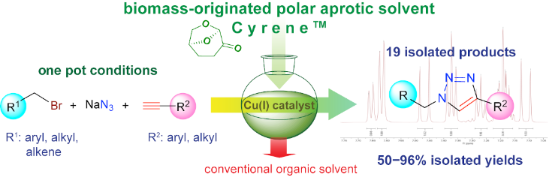
- methods, the copper(I)-catalyzed azide–alkyne cycloaddition (CuAAC) reaction, the so-called click reaction [7], has received substantial attention for the selective synthesis of various 1,2,3-triazoles that are of utmost importance in the synthesis of biologically active compounds such as active


Reactions of acryl thioamides with iminoiodinanes as a one-step synthesis of N-sulfonyl-2,3-dihydro-1,2-thiazoles
Beilstein J. Org. Chem. 2025, 21, 1397–1403, doi:10.3762/bjoc.21.104
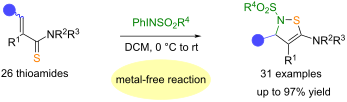
- from the CCDC, 12 Union Road, Cambridge CB2 1EZ, UK; Fax: +44 1223 336033; E-mail: deposit@ccdc.cam.ac.uk). Representatives of biologically active 1,2-thiazoles. Compound 3aa in thermal ellipsoids 50% probability. Synthesis of 2,5-dihydro-1,2-thiazoles. Synthesis of 2,3-dihydro-N-sulfonyl-1,2-thiazoles