


Search results
Search for "flow" in Full Text gives 720 result(s) in Beilstein Journal of Organic Chemistry. Showing first 200.
Amino acid-based surfactants: sustainable synthesis and antimicrobial mechanisms
Beilstein J. Org. Chem. 2026, 22, 1067–1085, doi:10.3762/bjoc.22.85
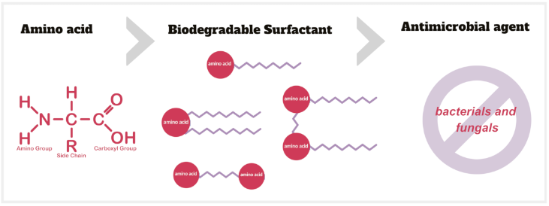
- binding to dihydrofolate reductase (DHFR) with a dissociation constant (KD) of 2.3 μM, disrupting folate metabolism in MRSA at concentrations as low as 8 μg/mL [60]. Flow cytometric analysis quantifies these effects, showing 78.4% DNA fragmentation in MRSA populations after 2-hour exposure to 16 μg/mL


Synthesis of novel 1,2,4-oxadiazole-isoxazoline hybrids and their in silico potential with adenosine receptors
Beilstein J. Org. Chem. 2026, 22, 1033–1047, doi:10.3762/bjoc.22.82
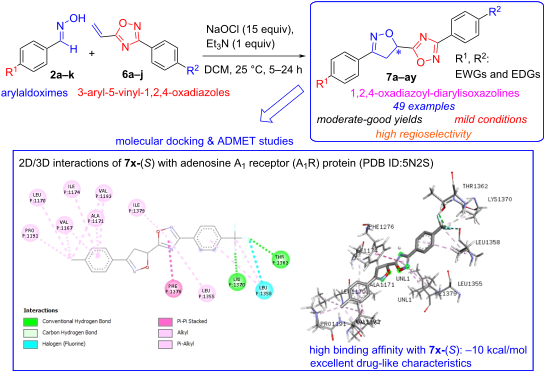
- ][63]. Adenosine receptors are key players in diverse physiological systems. The A1 and A2A subtypes are vital for managing heart function – specifically myocardial oxygen demand and coronary blood flow – and A2A receptors additionally play a crucial role in reducing systemic inflammation [62]. Beyond
- chronic and neuropathic pain, whereas its inhibition (A1 antagonism) leads to increased alertness and modulation of renal blood flow [63][65]. The predicted binding affinities of the 7a–ay derivatives, evaluated in both possible enantiomeric forms (R and S), together with those of the co-crystallized


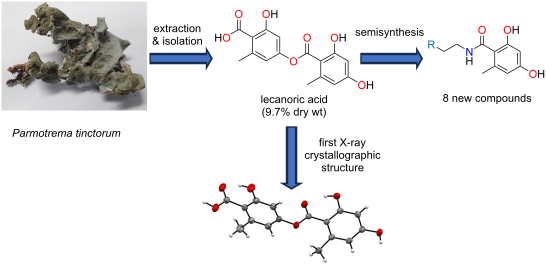
Semisynthesis, characterisation, and antibacterial evaluation of a novel lecanoric acid-derived amide library
Beilstein J. Org. Chem. 2026, 22, 1023–1032, doi:10.3762/bjoc.22.81
- % H2O (0.1% TFA) were initially run for 1 min, followed by a linear gradient to 100% MeOH (0.1% TFA) over 49 min, then isocratic conditions of 100% MeOH (0.1% TFA) were maintained for 10 min, all at a flow rate of 9 mL/min. Sixty fractions (60 × 1 min) were collected from time = 0 min. All resulting
- cartridge, and subjected to phenyl semi-preparative RP-HPLC separation. Isocratic conditions of 20% MeOH (0.1% TFA)/80% H2O (0.1% TFA) were initially run for 1 min, followed by a linear gradient to 90% MeOH (0.1% TFA)/10% H2O (0.1% TFA) for 119 min at a flow rate of 9 mL/min. One hundred and twenty
- (0.1% TFA)/90% H2O (0.1% TFA) were initially run for 10 min, followed by a linear gradient to 50% MeOH (0.1% TFA)/50% H2O (0.1% TFA) over 40 min, and lastly isocratic conditions of 50% MeOH (0.1% TFA)/50% H2O (0.1% TFA) were employed for 10 min, all at a flow rate of 9 mL/min. Sixty fractions (60 × 1


Electrochemical reduction of unsaturated carbon–carbon bonds via 3d transition-metal catalysis
Beilstein J. Org. Chem. 2026, 22, 955–981, doi:10.3762/bjoc.22.75
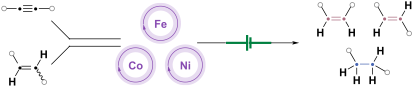
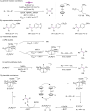
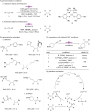
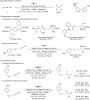
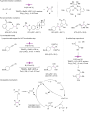
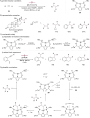
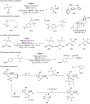
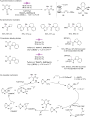
- achievable reactivity and selectivity [29]. A design for electroorganic synthesis Chemical transformations are inherently governed by the movement of electrons. Consequently, electrochemistry offers a platform in which an applied potential directly controls the electron flow, enable redox processes without
- delivery allows these systems to access various distinct mechanistic pathways, thereby enabling reactivity and selectivity patterns that are not readily attainable under conventional thermochemical conditions. Beyond batch electrolysis setups, flow cells [68][69][70][71][72][73][74] and zero-gap








Site-specific labelling of native peptides and proteins: chemical and enzymatic strategies
Beilstein J. Org. Chem. 2026, 22, 857–881, doi:10.3762/bjoc.22.67
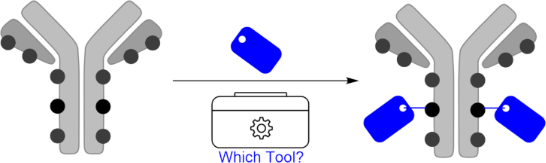
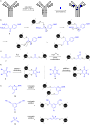
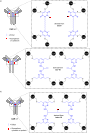
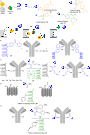
- mass intensity (PMI). Reagents should be near-stoichiometric, purification steps minimal, and catalysts effective in substoichiometric quantities. Compatibility with one-pot system and automation, such as flow chemistry and robotic synthesis, further enhance scalability. Existing tools and techniques









Anti-invasive and cytotoxic evaluation of a (+)-pinoresinol-based semisynthetic library against glioblastoma
Beilstein J. Org. Chem. 2026, 22, 691–704, doi:10.3762/bjoc.22.54
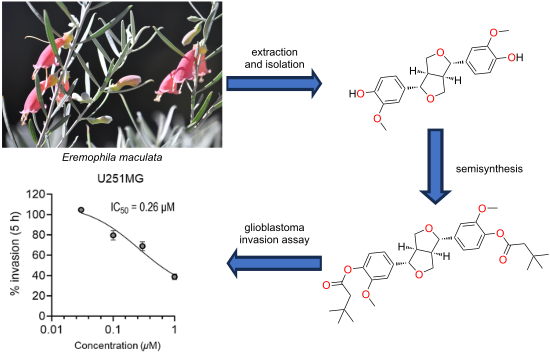
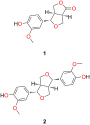
- of 100% MeOH (0.1% TFA) for 10 min, all at a flow rate of 9 mL/min, gave pure (+)-pinoresinol (2, 19.5 mg, tR 13 min, 0.195 dry wt %). The extraction and isolation protocol described above was repeated on an additional 10 g of seeds to provide a sufficient quantity of 2 for the semisynthetic studies
- min, all at a flow rate of 9 mL/min, to give the dimethylated product (+)-eudesmin (3, 4.4 mg, tR 35−36 min, 26% yield) and the monomethylated product (+)-phillygenin (4, 1.7 mg, tR 32−33 min, 10% yield). (+)-Eudesmin (3): clear needles (4.4 mg, 26%); mp 94−96 °C (lit. [35] mp 98−100 °C); [α]D24
- , a linear gradient to 100% MeOH (0.1% TFA) over 35 min, and then isocratic conditions of 100% MeOH (0.1% TFA) for 10 min, all at a flow rate of 9 mL/min, to give (+)-5,5'-dibromopinoresinol (5, 11.0 mg, tR 37−38 min, 77% yield). (+)-5,5'-Dibromopinoresinol (5): clear gum (11.0 mg, 77%); [α]D25 +154.7



Photoorganocatalytic trifluoromethylation of (het)arenes in green conditions
Beilstein J. Org. Chem. 2026, 22, 662–671, doi:10.3762/bjoc.22.50
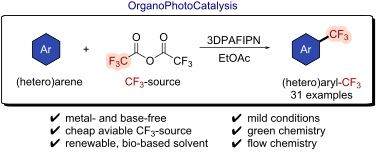
- amenable to scale-up, with continuous-flow operation delivering a significant increase in space–time yield, highlighting its potential for sustainable synthesis of CF3-containing molecules. Keywords: green chemistry; photocatalysis; photochemistry; trifluoromethylation; Introduction Trifluoromethylated
- -catalyzed [8], organic photocatalyst-mediated, or electrochemical transformations [9], and also include continuous-flow processes [6][10][11][12][13]. Given that photocatalytic reactions align with the principles of green chemistry, particularly energy efficiency and the use of catalytic pathways, such
- TMB (Table 3, entry 2), which led to an even lower yield of 51% (isolated yield was 39% for entry 2). Further scale-up to a 1 g level, carried out in a Schlenk flask with a 38 mm inner diameter, afforded a comparable yield. In contrast, implementation of a continuous-flow setup provided a higher yield




Design and synthesis of an erdafitinib-based selective FGFR2 degrader
Beilstein J. Org. Chem. 2026, 22, 583–591, doi:10.3762/bjoc.22.44
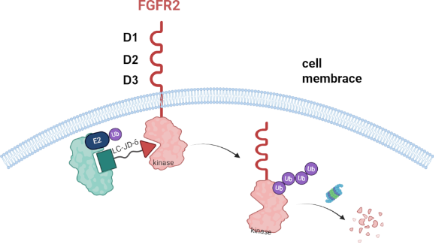
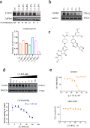
- -JD-6 could directly degrade FGFR2 from the plasma membrane. KATO III gastric cancer cells were incubated with 500 nM LC-JD-6 for 12 hours, followed by flow cytometric quantification of cell surface FGFR2 expression. As shown in Figure 4b and Figure 4c, LC-JD-6 treatment led to a marked decrease in



Continuous-flow carbonyl hydrogenation under subatmospheric to atmospheric hydrogen pressure enabled by robust heterogeneous Pt–Fe catalysts
Beilstein J. Org. Chem. 2026, 22, 575–582, doi:10.3762/bjoc.22.43
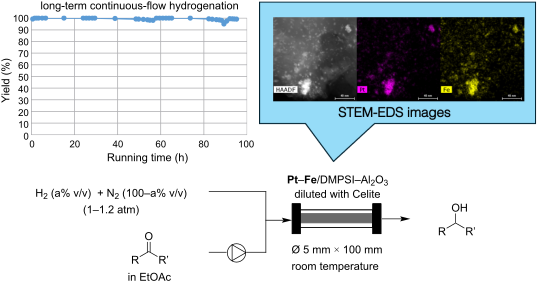
- bimetallic Pt–Fe nanoparticle catalyst immobilized on a composite support of dimethylpolysilane and alumina. Both ketones and aldehydes, including highly bulky and sterically hindered substrates, were smoothly hydrogenated using the newly developed catalysts under continuous-flow conditions at room
- temperature and under subatmospheric to atmospheric hydrogen pressure. High durability of the heterogeneous catalysts was confirmed by a long-term continuous-flow operation. Interestingly, both the combination of metal species and the metal ratio strongly influenced the catalytic performance. Keywords
- : bimetallic nanostructure; carbonyl reduction; continuous-flow reaction; heterogeneous catalyst; subatmospheric hydrogen; Introduction The reduction of carbonyl compounds, ketones and aldehydes to alcohols is a fundamental and important reaction in organic synthesis that can provide valuable chemicals such


Modern synthetic pathways towards eribulin and its subunits
Beilstein J. Org. Chem. 2026, 22, 495–526, doi:10.3762/bjoc.22.37
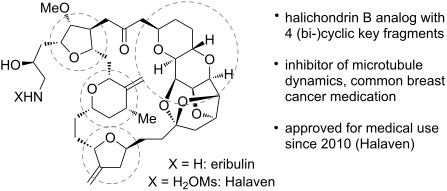
- transformation for the continuous flow production of acetate 121 (C14–C19‘ fragment), which is a starting material needed in large quantities for the total synthesis of 1 (Scheme 12) [88]. Herein, pent-4-en-1-ol (118) was protected with TBDPSCl, before ozonolysis, followed by reduction with PPh3 yielded aldehyde
- 119. The addition of propargyl bromide led to racemic 120. By the use of a flow setup involving a column packed with Amano lipase, an enzyme from the bacterium Pseudomonas fluorescens, a kinetic resolution of 120 was performed leading to the continuous production of acetate 121 and free alcohol 122
- aldehyde 200. Another optimization was achieved during the formation of the central ketal motif of 186 (Scheme 22). Here, the diastereomeric mixture of 183 (see Scheme 19) was exposed to light-mediated DDQ-oxidation within a continuous flow setup, which yielded epimers (R)-184 and (S)-184. This mixture was








Synthesis and uranyl(VI) extraction performance of a calix[4]pyrrole–tetrahydroxamic acid receptor
Beilstein J. Org. Chem. 2026, 22, 486–494, doi:10.3762/bjoc.22.36
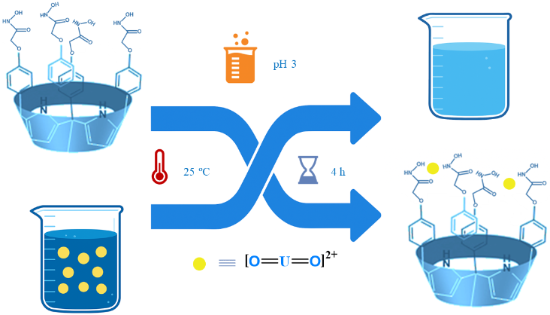
- the remediation of uranium-contaminated environmental samples. Future work will focus on the covalent anchoring of this macrocycle onto solid matrixes (polymer or silica). The development of such functionalized material is intended to allow for implementation in continuous flow filtration systems for


Synthesis and stereochemical analysis of dynamic planar chiral oxa[7]orthocyclophene
Beilstein J. Org. Chem. 2026, 22, 436–442, doi:10.3762/bjoc.22.30

- showed similar sense of CD signals, in which the first eluates were detected as a positive signal, and the second eluates detected as a negative signal using the monitoring wavelength at 254 nm (Figure 7). Moreover, the direct CD spectra measurements in a flow cell showed characteristic Cotton effects
- compounds 1ab and 1ad using an OJ-H column at 25 °C (OJ-H column, 4.6 mm × 250 mm, eluent: hexane/iPrOH 95:5, flow rate: 0.5 mL/min, monitoring wavelength: 220 nm). Chromatograms of HPLC analysis of 1ac (IE column, 4.6 mm × 250 mm, eluent: hexane/iPrOH 95:5, flow rate: 1.0 mL/min, monitoring wavelength: 254
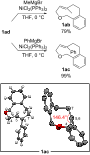
- nm). Plausible phenyl-substituent effect on the stereochemical stability of 1ac. Kinetic measurements for the racemization of 1ab and 1ad. HPLC analysis of 1ab and 1ad using a CD detector at 5 °C (OJ-H column, 4.6 mm × 250 mm, eluent: hexane/iPrOH 95:5, flow rate: 0.5 mL/min, monitoring wavelength




Synthesis of diaryl phosphates using phytic acid as a phosphorus source
Beilstein J. Org. Chem. 2026, 22, 213–223, doi:10.3762/bjoc.22.15
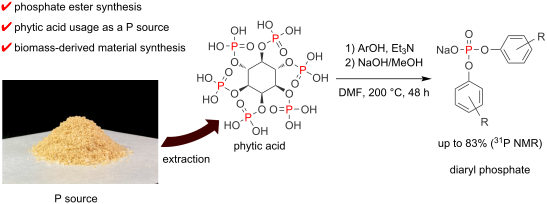
- , commercially available phytic acid was used instead of phosphoric acid for the syntheses of diaryl phosphates (Figure 3). Phosphate esters were synthesized using the glass apparatus depicted in Figure S1 of Supporting Information File 1. All reactions were performed under a N2 flow (0.1 L/min) from a three-way
- from rice bran. Structure of phytic acid. Phosphoric acid diesterification reaction conducted in a previous study. Scale-up reaction conducted for the time-course analysis of phosphate esterification. The reaction apparatus included an oil bath, and the N2 flow was set to 0.1 L/min. Phytic acid (7.0




Streptoquinolines A and B, new antibacterial meroterpenoids produced by Streptomyces sp. TMPU-A0679
Beilstein J. Org. Chem. 2026, 22, 185–191, doi:10.3762/bjoc.22.12
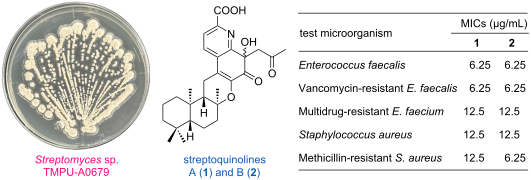
- crude materials containing 1 and 2 (23.5 mg). These materials were finally purified by preparative HPLC: column, Develosil C30-UG (Nomura Chemical Co., Ltd., Aichi, Japan), i.d. 10 × 250 mm; mobile phase, 55% MeCN aq. isocratic; detection, UV at 210 nm; flow rate, 3.0 mL /min. Under these conditions


Improved synthesis and physicochemical characterization of the selective serotonin 2A receptor agonist 25CN-NBOH
Beilstein J. Org. Chem. 2026, 22, 175–184, doi:10.3762/bjoc.22.11
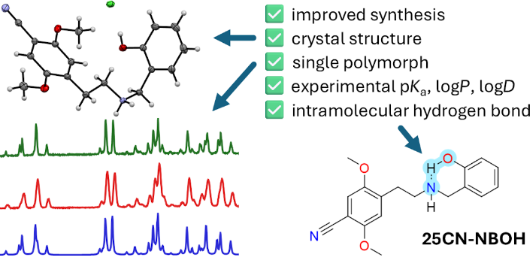
- Instruments, New Castle, DE, USA) with a nitrogen gas flow of 50 mL/min. The sample (5 mg) was heated from 25–300 °C at 10 °C/min. Melting points were determined by DSC using a Discovery DSC 25 (TA Instruments) with a nitrogen gas flow of 50 mL/min. Samples of 2–3 mg were placed in aluminium pans closed with
- performed using a Gemini C18 column (150 × 4.60 mm, 5 µm) with a Gemini C18 precolumn (4 × 3.00 mm, Phenomenex, Torrance, CA, USA). Detection was performed at 241 nm, the column temperature was 30 °C, the injection volume was 10 µL, and the flow rate was 1 mL/min. The mobile phase consisted of acetonitrile


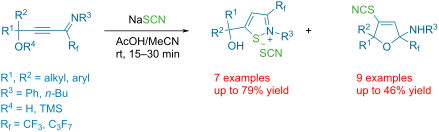
Tandem hydrothiocyanation/cyclization of CF3-iminopropargyl alcohols with NaSCN in the presence of AcOH
Beilstein J. Org. Chem. 2025, 21, 2694–2702, doi:10.3762/bjoc.21.207
- spectrometer made by Shimadzu Company. Chromatographic column parameters were as follows: SPBТМ-5, length 60 m, internal diameter 0.25 mm, thickness of stationary phase film 0.25 μm; injector temperature 250 °C; gas carrier helium; flow rate 0.7 mL/min; detector temperature 250 °C; mass analyzer: quadrupole



Recent advancements in the synthesis of Veratrum alkaloids
Beilstein J. Org. Chem. 2025, 21, 2657–2693, doi:10.3762/bjoc.21.206
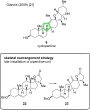
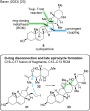
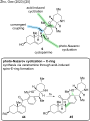
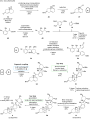
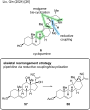
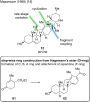
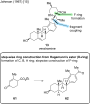
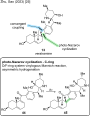
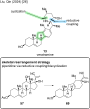
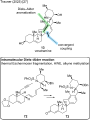
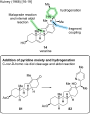
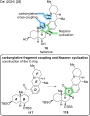
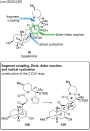
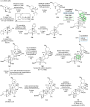
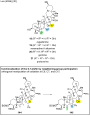
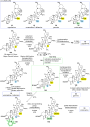
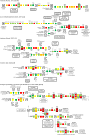
- visual comparison, we decided to implement flow charts with colored boxes and reaction classifications as suggested by Schwan and Christmann [10]. In their publication, reaction steps are ranked by a color scheme resembling a traffic light, depending on their strategic value in the synthesis: two shades
















The high potential of methyl laurate as a recyclable competitor to conventional toxic solvents in [3 + 2] cycloaddition reactions
Beilstein J. Org. Chem. 2025, 21, 2389–2415, doi:10.3762/bjoc.21.184
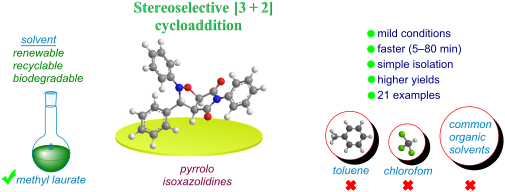
- (99.999%) was used as carrier gas with a constant flow rate of 1.0 mL min−1. Representative procedure for cycloaddition reactions To a 50 mL single-necked flask, (0.1 g, 0.51 mmol) of C,N-diphenylnitrone, (0.09 g, 0.52 mmol) of N-phenylmaleimide and 1 mL of methyl laurate were added. The flask was






Adaptive experimentation and optimization in organic chemistry
Beilstein J. Org. Chem. 2025, 21, 2367–2368, doi:10.3762/bjoc.21.180
- . provide a comprehensive review of machine learning applications in enantioselective organocatalysis, highlighting both achievements and remaining challenges [10]. Guo et al. present an automated flow chemistry system for nitration reactions, combining kinetic modeling with experimental optimization [11
Recent advances in Norrish–Yang cyclization and dicarbonyl photoredox reactions for natural product synthesis
Beilstein J. Org. Chem. 2025, 21, 2315–2333, doi:10.3762/bjoc.21.177
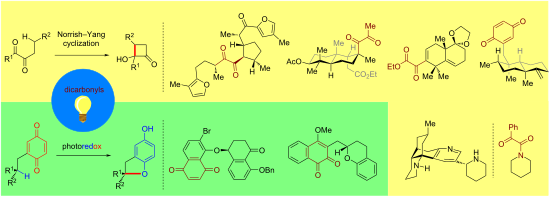
- under catalytic conditions – may lead to novel strategies for C–H functionalization and fragment coupling, ultimately advancing the field of target-oriented synthesis. Combining Norrish–Yang reaction with flow chemistry technology to realize the continuous operation of the reaction can improve the




Enantioselective radical chemistry: a bright future ahead
Beilstein J. Org. Chem. 2025, 21, 2283–2296, doi:10.3762/bjoc.21.174
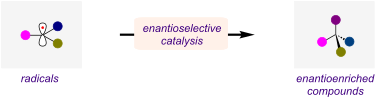
- provides a way to avoid the use of stoichiometric chemical oxidants or reductants and to achieve new transformations that are highly regio- and stereoselective. Though not covered in this perspective, flow chemistry and mechanochemistry are also increasingly popular areas that hold significant potential
- for applications in radical chemistry. Compared with conventional batch synthesis, flow chemistry can improve efficiency and facilitate reaction scale-up [87][88][89][90]. Mechanochemistry allows reactions to be conducted with no solvent or with only a small volume of added liquid, thus providing a


A chiral LC–MS strategy for stereochemical assignment of natural products sharing a 3-methylpent-4-en-2-ol moiety in their terminal structures
Beilstein J. Org. Chem. 2025, 21, 2243–2249, doi:10.3762/bjoc.21.171
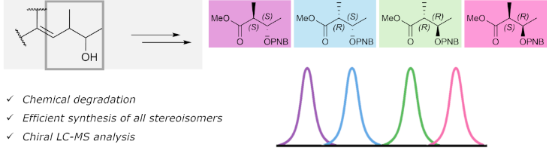
- configuration). Methods for absolute configuration determination indicated. Extracted LC–MS chromatograms (m/z 304.1) of 4-methoxy-3-methyl-4-oxobutan-2-yl 4-nitrobenzoates. Conditions: CHIRALPAK ID-3 (4.6 × 250 mm, 3 μm) at a flow rate of 0.6 mL/min at 40 °C, with gradient elution from 50% MeOH to 100% MeOH


Thiadiazino-indole, thiadiazino-carbazole and benzothiadiazino-carbazole dioxides: synthesis, physicochemical and early ADME characterization of representatives of new tri-, tetra- and pentacyclic ring systems and their intermediates
Beilstein J. Org. Chem. 2025, 21, 2220–2233, doi:10.3762/bjoc.21.169
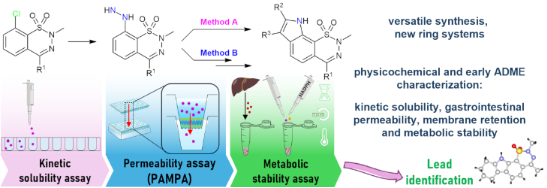
- ). Analytical methods. All samples of the kinetic solubility and in vitro permeability assays were analyzed on a Waters Alliance 2695 Separations Module equipped with a 2996 PDA detector, using a Water Xterra RP 18 chromatographic column (100 × 4.6 mm, 3.5 µm) at 45 °C, applying 1.2 mL/min flow rate. For a 7
- 4 was applied at a constant flow rate of 1.0 mL/min. The mass spectrometer operated in sensitivity mode with a capillary voltage of 3.0 kV, source temperature was 100 °C, and desolvation temperature was 350 °C. The cone gas flow was set to 0 L/h and desolvation gas flow to 800 L/h. LockSpray


C2 to C6 biobased carbonyl platforms for fine chemistry
Beilstein J. Org. Chem. 2025, 21, 2103–2172, doi:10.3762/bjoc.21.165
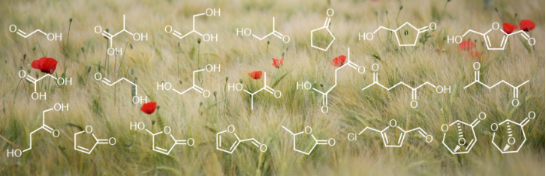
- presence of the photocatalyst provokes an impressive five-fold rise in the conversion rate (3.81 mmol/g) without compromising the high selectivity towards the two trioses (glyceraldehyde, 46.4%, and dihydroxyacetone, 32.9%). Okamoto and co-workers developed a new hydroxyapatite (HAp)-loaded flow system for
- flow reactor. The moderate acidity and the hierarchical tube-type porous nature of SBA-15, as well as the adsorption energy on the surface of 10Cu–5Ni/SBA-15 catalyst, are the key parameters for giving 2-pentanone with high selectivity (78%) (Scheme 52) [180]. Wang developed a new route for the
- trans-4,5-diaminocyclopent-2-enones in hexane/isopropanol solvent mixture under continuous flow conditions (Scheme 56). The scope could be extended to 2-substituted trans-4,5-diaminocyclopent-2-enones by using 3-substituted furfurals [187]. A copper triflate-based analogous strategy was also reported


Synthesis, biological and electrochemical evaluation of glycidyl esters of phosphorus acids as potential anticancer drugs
Beilstein J. Org. Chem. 2025, 21, 1909–1916, doi:10.3762/bjoc.21.148
- voltammetric wave, the aqueous solution was actively stirred with a magnetic stirrer in an atmosphere of constant inert gas flow. Starting materials. Methylphosphonic dichloride MeP(O)Cl2 and methyl dichlorophosphate (MeO)P(O)Cl2) [30] were prepared according to literature procedures. Phosphorus oxychloride P





