Search results
Search for "quenching" in Full Text gives 421 result(s) in Beilstein Journal of Organic Chemistry. Showing first 200.
Construction of CF2 moieties in FDA-approved drugs (2016–2025): industrial routes, mechanisms, and scale-up considerations
Beilstein J. Org. Chem. 2026, 22, 1122–1150, doi:10.3762/bjoc.22.91
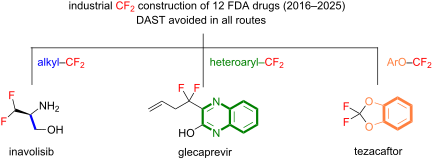
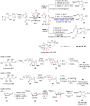
- the CF2-introduction reaction for lenacapavir (8), several key process points merit attention and provide general guidance for the construction of CF2 groups in similar structures: 1) The quenching step in the fluorination process is highly exothermic; adequate cooling measures must be implemented (in






Amino acid-based surfactants: sustainable synthesis and antimicrobial mechanisms
Beilstein J. Org. Chem. 2026, 22, 1067–1085, doi:10.3762/bjoc.22.85
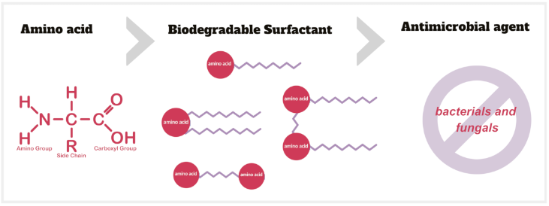
- mechanisms [28]. Surfactants incorporating phenylalanine (Table 1, entry 22) demonstrate significantly deeper insertion into lipid bilayers, as measured by fluorescence quenching studies, an effect attributed to the aromatic side chain [52], while tryptophan derivatives (Table 1, entry 23) show exceptional


Synthesis of functionalized, 13-alkyl-substituted coralyne derivatives and investigation of their interactions with duplex and abasic site-containing DNA
Beilstein J. Org. Chem. 2026, 22, 1057–1066, doi:10.3762/bjoc.22.84
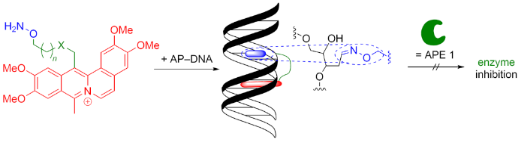
- and a fluorescence quantum yield of Φfl = 0.40. The titration of 2e with ct DNA led to strong quenching of the fluorescence by up to 82% at saturation (Figure 2B). CD-spectroscopic analysis of the ligand–DNA complexes revealed slight pertubation of the characteristic band of the DNA at 285 nm. At the
- spectrometric titrations of coralyne derivative 2e with ct DNA clearly indicate the complex formation. In particular, the hypochromism and the bathochromic shift of the absorption maxima, the fluorescence quenching, and the formation of clear ICD signals upon addition of DNA are characteristic features of a DNA


The role of spacer length and flexibility in peptide self-assembly
Beilstein J. Org. Chem. 2026, 22, 986–996, doi:10.3762/bjoc.22.77
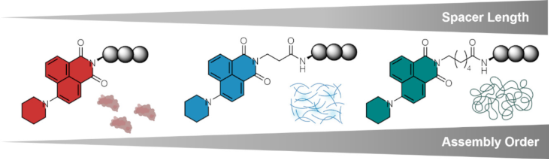
- , the fluorescence intensities follow the trend C6 > C3 > C0. While ideal H-aggregates are often associated with fluorescence quenching due to exciton splitting and forbidden lowest-energy transitions, the increased emission intensity observed for 6 and 7 suggests deviation from the idealized limit. The


Synthesis of sterically shielded piperidine nitroxides via acid-catalyzed heterocyclization of β-aminoketone derivatives with ketones
Beilstein J. Org. Chem. 2026, 22, 948–954, doi:10.3762/bjoc.22.74
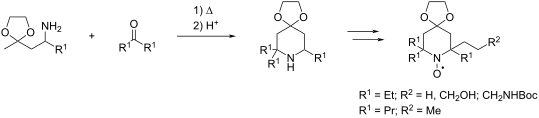
- , generated by deprotonation of acetylene, propargyl alcohol, or N-Boc-protected propargylamine with ethylmagnesium bromide, whereas nitrone 6b was treated with allylmagnesium bromide. Subsequent quenching of the reaction mixtures with water, followed by oxidation with MnO2, afforded the corresponding


A practical CO2-mediated synthesis of 5,6-carboxylated silicon-rhodamines for targeted probe development
Beilstein J. Org. Chem. 2026, 22, 915–924, doi:10.3762/bjoc.22.72
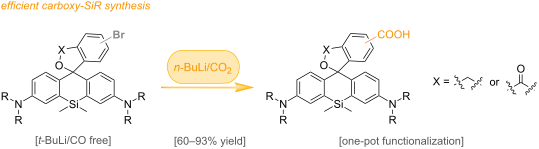
- complete trapping of the aryllithium intermediates by CO2. After aqueous quenching and extraction, the crude products were directly subjected to HPLC analysis. To evaluate the generality of this strategy, three brominated SiR precursors 1a–c, all accessible by reported procedures, were selected as model



Photoorganocatalytic trifluoromethylation of (het)arenes in green conditions
Beilstein J. Org. Chem. 2026, 22, 662–671, doi:10.3762/bjoc.22.50
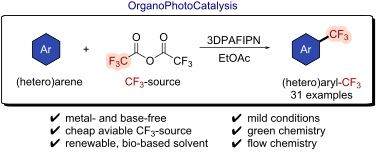
- reaction displays pronounced sensitivity to substituent patterns rather than electronic effects. Mechanistic investigations, including radical trapping, Stern–Volmer analysis, and DFT calculations, support a reductive quenching pathway involving photocatalyst-mediated reduction of TFAA. The protocol is
- analyzed by q19F NMR spectroscopy. Only trace amounts of the trifluoromethylated product were detected, whereas the TEMPO adducts of the trifluoromethyl and trifluoroacetyl radicals were observed in 16% and 22% yield, respectively (Scheme 3). Stern–Volmer studies of the quenching of the photocatalyst
- excited state by both TFAA and TMB revealed very similar quenching constants: Kq(TFAA) = 6.07 × 10⁹ M−1·s−1 and Kq(TMB) = 5.37 × 10⁹ M−1·s−1 (Figure S16; for further details, see Supporting Information File 1). These results indicate that either initial interaction is feasible under the reaction




Synthesis of tricyclic fused pyrrolidine nitroxides from 2-alkynylpyrrolidine-1-oxyls
Beilstein J. Org. Chem. 2026, 22, 344–351, doi:10.3762/bjoc.22.22

- metalation of trimethylsilylacetylene or benzyl propargyl ether with ethylmagnesium bromide. After quenching, removal of the MOP protecting group, and oxidation by atmospheric oxygen the nitroxides 2d and 2e were isolated in 64% and 66% yields, respectively. Terminal alkynes can be converted into




Ring contraction and ring expansion reactions in terpenoid biosynthesis and their application to total synthesis
Beilstein J. Org. Chem. 2026, 22, 289–343, doi:10.3762/bjoc.22.21
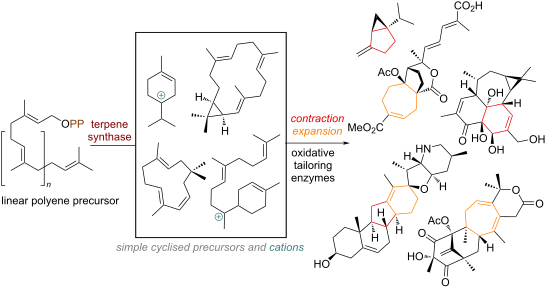
- of further cyclisation (26e) and crucial ring contraction via 1,2-alkyl shift to 26f. Methyl migration and quenching by elimination finally afford epi-isozizaene (26). Investigative efforts into actinomycetes biosynthesis by Dickschat et al. through deuterium labelling revealed another example for a






Configuration–packing synergy enabling integrated crystalline-state RTP and amorphous-state TADF
Beilstein J. Org. Chem. 2026, 22, 224–236, doi:10.3762/bjoc.22.16
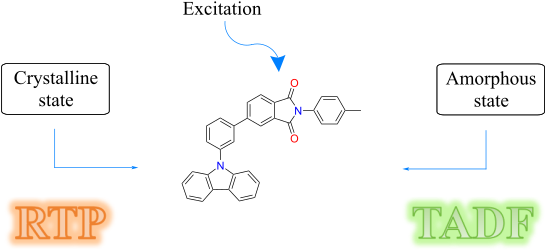
- at 550/600 nm and a lifetime of ≈0.39 s that undergoes strong thermal quenching, diagnostic of room-temperature phosphorescence. In contrast, amorphous films show no RTP; their delayed component grows with temperature and shares the same peak position as the prompt emission, consistent with thermally
- a result of RTP, as the sub-second lifetime and the pronounced thermal quenching behavior are characteristic features of RTP. Additionally, the red shift observed in the delayed emission spectrum compared to the steady-state emission is consistent with the behavior of lower-energy emissions that are
- phosphorescence emission at room temperature. To further explore this hypothesis, the powder was subjected to heating to its melting point followed by rapid quenching with liquid nitrogen. The resulting solid, after this treatment, was found to show no RTP when examined at room temperature, as demonstrated in


Base-promoted deacylation of 2-acetyl-2,5-dihydrothiophenes and their oxygen-mediated hydroxylation
Beilstein J. Org. Chem. 2026, 22, 192–204, doi:10.3762/bjoc.22.13
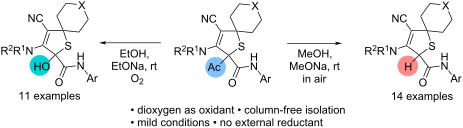
- yield (21%, Table 1, entry 2). When acid (HCl) was added after quenching the residue with water, the yields of products 2a and 3a were increased (30 and 35%, Table 1, entry 3). The selective formation of 2-hydroxy-2,5-dihydrothiophene 2a in 41% yield was achieved when using 5 equiv of sodium and 0.25 mL
- % (Table 2, entry 2). In a more concentrated ethanol solution (1 mL) the product was obtained in 70% yield (Table 2, entry 3). When the residue was quenched with concentrated HCl (1 mL), the product was isolated in reduced yield (58%, Table 2, entry 4). Adding 0.25 mL of acid (HCl) after quenching the




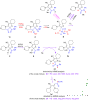
Improved synthesis and physicochemical characterization of the selective serotonin 2A receptor agonist 25CN-NBOH
Beilstein J. Org. Chem. 2026, 22, 175–184, doi:10.3762/bjoc.22.11
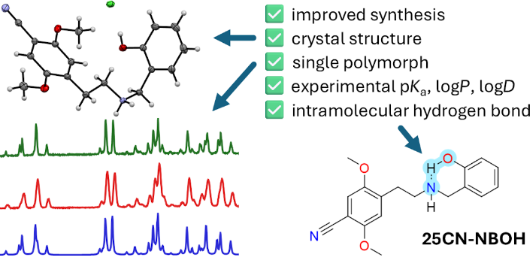
- minutes. Finally, quenching was done by careful addition of aqueous citric acid (12.5 mL, 1 M) while cooling in an ice bath. The resulting mixture was filtered through a pad of Celite and diluted with dichloromethane (75 mL) and water (75 mL), and the aqueous phase was adjusted to pH 8–9 using saturated


Total synthesis of asperdinones B, C, D, E and terezine D
Beilstein J. Org. Chem. 2025, 21, 2730–2738, doi:10.3762/bjoc.21.210
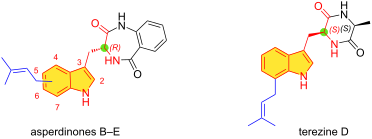
- methyl ester who observed intramolecular proton transfer with partial incorporation of deuterium upon quenching with deuterium oxide. In a different context, the role of the Pd catalyst and the associated ligand was studied in the cross-coupling of the organozinc reagent ent-35 with 3-iodomethylfuran


Synthesis of the tetracyclic skeleton of Aspidosperma alkaloids via PET-initiated cationic radical-derived interrupted [2 + 2]/retro-Mannich reaction
Beilstein J. Org. Chem. 2025, 21, 2470–2478, doi:10.3762/bjoc.21.189
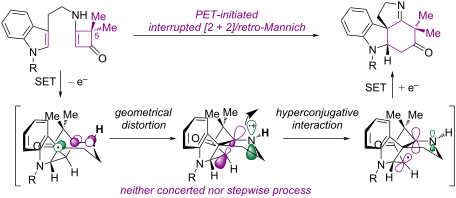
- generates the cationic radical G, which initiates formation of H, which has a strained bicyclo [3.2.0]heptane core. Strain release of H triggers a downstream radical-driven retro-Mannich reaction, which ultimately results in the formation of J via reductive quenching of intermediate I. As part of our
- -initiated [2 + 2] cyclization of the tryptamine-substituted cyclobutenone K to form the radical cation L, which has a highly functionalized and rigid bicyclo[2.2.0]hexane core. Fragmentation of the C3–C19 bond would afford a redox-active intermediate which upon further reductive quenching would lead to the


Conformational effects on iodide binding: a comparative study of flexible and rigid carbazole macrocyclic analogs
Beilstein J. Org. Chem. 2025, 21, 2369–2375, doi:10.3762/bjoc.21.181
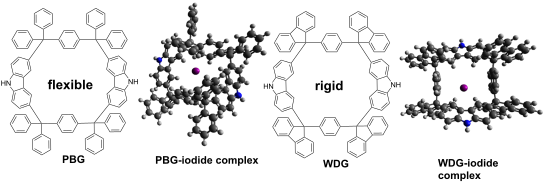
- fluorescence quenching efficiency upon iodide binding compared to the rigid WDG (KPBG/KWDG = 22.78), demonstrating its potential as a highly sensitive optical probe and offering a novel strategy for engineering dynamic supramolecular receptors. Two carbazole-based macrocyclic probes, PBG (flexible benzene ring
- binding ability to iodide ions in chloroform solution. It should be noted that the titration curve did not approach saturation, which may be attributed to conformational changes occurring during the quenching process. At high quencher concentrations, structural alterations in fluorophores could induce
- variations in fluorescence properties, leading to deviations from the linear Stern–Volmer relationship governing the quenching mechanism. The flexible benzene ring of the PBG allows the cavity to be conformationally adjusted to fit the size of I−, while the rigid fluorenyl group of the WDG results in steric



Rotaxanes with integrated photoswitches: design principles, functional behavior, and emerging applications
Beilstein J. Org. Chem. 2025, 21, 2345–2366, doi:10.3762/bjoc.21.179

- , electron transfer from the pyrene to the dithienylethene acceptor occurs, quenching its fluorescence. Moreover, faster quenching was observed when the macrocycles were closer to the dithienylethene unit [59]. Considering the discoveries on tunable fluorescence, Alene and co-workers combined the
- fluorescence quenching phenomena with aggregate-induced emission (AIE) in aqueous media. They synthesized a [2]rotaxane with one dithienylethene unit as a stopper, and one BAA and one urea binding site, as well as one DB24C8 macrocycle with a tetraphenylethene (TPE) fluorophore [16] (Figure 7). Addition of
- ][92]. The systems consist of [2]- and [3]rotaxanes where the dithienylethene units are directly attached to either N-hetero crown ether or DB24C8 macrocycles. BAA and MTA units served as recognition sites for the macrocycles. Notably, Tian’s rotaxane showed fluorescence quenching when the


Enantioselective radical chemistry: a bright future ahead
Beilstein J. Org. Chem. 2025, 21, 2283–2296, doi:10.3762/bjoc.21.174
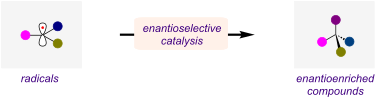
- quenching, in some cases involving radical–polar crossover processes. The photoredox catalysts used in most of the synergistic catalysis are Ir and Ru-based systems that are expensive and less readily available. This limitation can be overcome by developing green and sustainable organophotoredox systems


A chiral LC–MS strategy for stereochemical assignment of natural products sharing a 3-methylpent-4-en-2-ol moiety in their terminal structures
Beilstein J. Org. Chem. 2025, 21, 2243–2249, doi:10.3762/bjoc.21.171
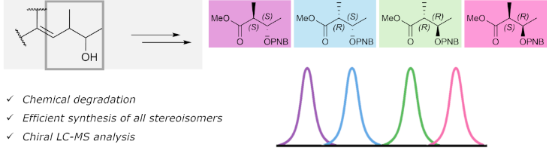
- the volatility of 13, the crude solution obtained after the workup (quenching and phase separation) was directly used in the subsequent reaction without purification. Esterification of (2S,3S)-13 with p-nitrobenzoyl chloride (PNBCl) afforded PNB ester (2S,3S)-8 in 45% yield for two steps


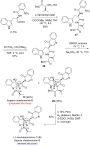
Further elaboration of the stereodivergent approach to chaetominine-type alkaloids: synthesis of the reported structures of aspera chaetominines A and B and revised structure of aspera chaetominine B
Beilstein J. Org. Chem. 2025, 21, 2072–2081, doi:10.3762/bjoc.21.162
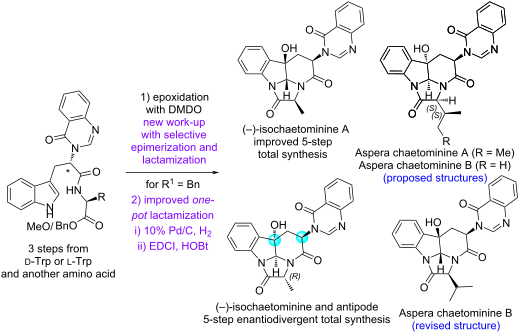
- diastereomers 18 followed by quenching the reaction with an aged solution of K2CO3/MeOH resulted in the formation of the same diastereomeric mixture 19 and 20 (dr = ca. 1:1) as that obtained from 17. Enantiodivergent syntheses of chaetominine-type alkaloids and antipodes in racemic or enantiomeric forms
- Applying the newly developed quenching protocol featuring the use of an aged K2CO3/MeOH solution to the known compound 21 [63] resulted in the formation of an indistinguishable mixture of two double cyclization products (+)-14-epi-isochaetominine C (7) and its antipode (–)-7 (ratio = ca. 1:1) in 75% yield
- steps with higher yields. On the other hand, we have demonstrated that by simply alternating the quenching conditions for the key DMDO-epoxidation triggered double cyclization, one can realize: 1) a diastereoconvergent synthesis of two diastereomers of versiquinazoline H; 2) the enantiodivergent




Discovery of cytotoxic indolo[1,2-c]quinazoline derivatives through scaffold-based design
Beilstein J. Org. Chem. 2025, 21, 2062–2071, doi:10.3762/bjoc.21.161
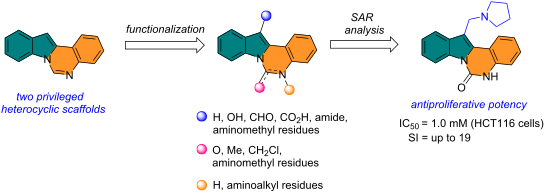
- (Figure S1 in Supporting Information File 1). The interaction of compounds 7a–c with duplex DNA was then investigated by fluorescence titration, measuring the quenching of ligand fluorescence upon binding to the nucleic acid. Fluorimetric titration studies confirmed the interaction of 7a–c with double
- -stranded calf thymus DNA, as evidenced by ligand fluorescence quenching (Figure 2). Elongation of the linker in the carboxamide residue is accompanied by weaker DNA complexation (Table 4). The interaction of the compounds with DNA was found to be largely dependent on electrostatic forces. Reducing the
- development. Further investigations are warranted to elucidate their precise mechanism of action and optimize their therapeutic profile. Structure of indolo[1,2-c]quinazoline, its selected derivatives, and related structures with biological activity. Fluorescence quenching of compounds 7a–c (2 μM) upon


Photochemical reduction of acylimidazolium salts
Beilstein J. Org. Chem. 2025, 21, 1973–1983, doi:10.3762/bjoc.21.153
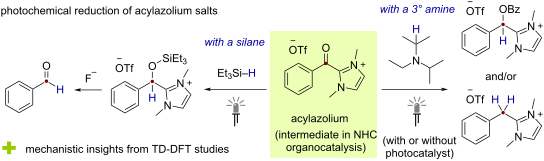
- attention turned to a consideration of the reaction mechanism. As has been well documented in the photoredox literature [47][48][49][50][51][52][53], excitation of a photocatalyst ([PC]) in the presence of DIPEA can result in reductive quenching of the excited state, affording the corresponding
- Information File 1 for details). Finally, E could react in an addition/elimination process with a second molecule of the benzoylazolium starting material 1 to afford the observed O-benzoylated species 3. An analogous reductive quenching cycle where the reduced photocatalyst [PC]·− instead transfers an


Research progress on calixarene/pillararene-based controlled drug release systems
Beilstein J. Org. Chem. 2025, 21, 1757–1785, doi:10.3762/bjoc.21.139
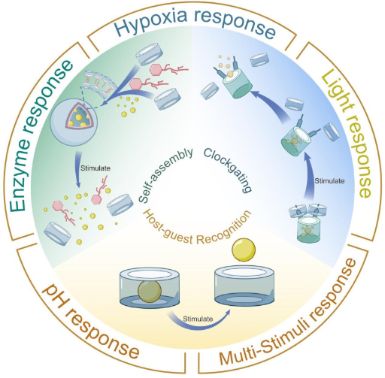
- maintain water solubility. This assembly approach not only suppresses the fluorescence self-quenching of AnPy in the aggregated state (enhancing the yield of singlet oxygen) [115], but also boosts its photo-sensitivity – under light irradiation, the anthracene in the complex can be efficiently converted to






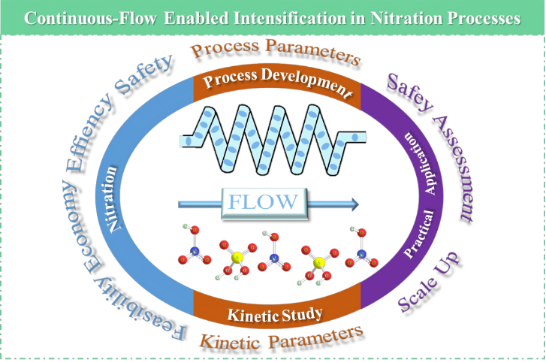
Continuous-flow-enabled intensification in nitration processes: a review of technological developments and practical applications over the past decade
Beilstein J. Org. Chem. 2025, 21, 1678–1699, doi:10.3762/bjoc.21.132
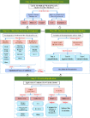
- schematic diagram of a generic continuous-flow system for nitration reactions. Continuous-flow nitration systems are typically divided into several regions: the feed zone, the mixing zone, the reaction zone, the quenching zone, and the work-up zone. When constructing a continuous-flow nitration system, the
- including but not limited to exothermicity profiles, intrinsic reaction rates, and phase behavior. The quenching zone of a continuous-flow nitration system can achieve termination of the nitration reaction through dilution, reaction, and other methods. Without a reasonable quenching method, it is difficult



Photocatalysis and photochemistry in organic synthesis
Beilstein J. Org. Chem. 2025, 21, 1645–1647, doi:10.3762/bjoc.21.128
- ) transition, resulting in a long-lived charge-separated species. In this excited state, [Ru(bpy)3]Cl2 is both a more potent oxidant and reductant than in its ground state. This reactivity, in combination with the reversible redox behavior of the metal complex, enables reductive or oxidative quenching cycles

Synthesis of optically active folded cyclic dimers and trimers
Beilstein J. Org. Chem. 2025, 21, 1603–1612, doi:10.3762/bjoc.21.124

- to be 0.65. Their PL of the cast films fabricated from the toluene solutions were also measured, and weak and inefficient luminescence were observed because of the aggregation-caused PL quenching. The PL lifetimes of (Sp)-6 and (Sp)-7 in the CHCl3 solutions were measured at each PL peak maximum; and