


Search results
Search for "stereoisomers" in Full Text gives 242 result(s) in Beilstein Journal of Organic Chemistry. Showing first 200.
Recent advances in the stereoselective synthesis of distal biaxially chiral molecules
Beilstein J. Org. Chem. 2026, 22, 461–479, doi:10.3762/bjoc.22.34
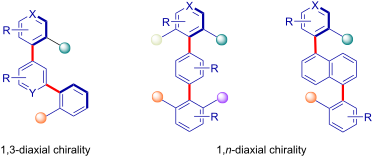
- conjugated 1,3-diene scaffold though a Pd(II)-catalyzed strategy involving a thioether-directed alkenyl C–H olefination (Scheme 21) [60]. Pleasingly, the strategy also enabled the synthesis of stereoisomers having two stereogenic axes with high enantioselectivity. The axially chiral styrenes produced in this


Synthesis and applications of alkenyl chlorides (vinyl chlorides): a review
Beilstein J. Org. Chem. 2026, 22, 1–63, doi:10.3762/bjoc.22.1
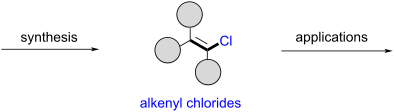
- benzophenone or benzaldehyde to obtain the corresponding alkenyl chlorides 344 and 135. In 1978, Miyano reported an improved procedure that prepares the phosphonium salt in one step from chloroiodomethane and typically the products are obtained as mixtures of stereoisomers (Scheme 61B) [195]. Today, the





















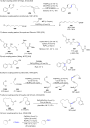


Competitive cyclization of ethyl trifluoroacetoacetate and methyl ketones with 1,3-diamino-2-propanol into hydrogenated oxazolo- and pyrimido-condensed pyridones
Beilstein J. Org. Chem. 2025, 21, 2716–2729, doi:10.3762/bjoc.21.209
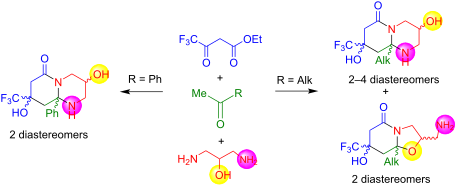
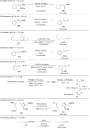
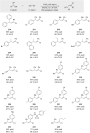
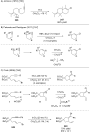
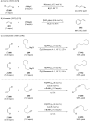
- –1628 cm−1 and NH2 groups at ν 3376–3272 cm−1. The structures of the obtained heterocycles 4 and 5 contain three stereocenters, so one could expect the formation of up to 8 stereoisomers in each case. Analysis of the 19F NMR spectra showed that from two to four diastereomers of


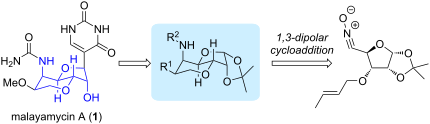
Rapid access to the core of malayamycin A by intramolecular dipolar cycloaddition
Beilstein J. Org. Chem. 2025, 21, 2542–2547, doi:10.3762/bjoc.21.196
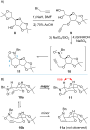
- the above two-step sequence, yielding a product identical to 20 (the synthetic route is not shown). This indicates that the pair of diastereomers essentially differs only at the C2’ position arised from the isomeric mixture of crotyl bromide 15. It is also worth noting that both stereoisomers derived




Comparative analysis of complanadine A total syntheses
Beilstein J. Org. Chem. 2025, 21, 2334–2344, doi:10.3762/bjoc.21.178
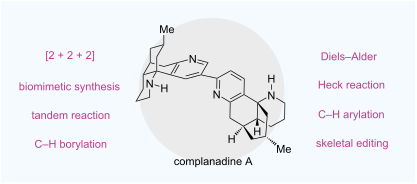
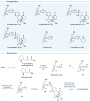
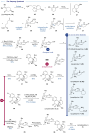
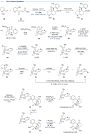
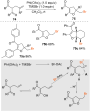
- TMSN3 recently developed by Xu and co-workers [34]. Mukaiyama conjugate addition between 60 and 61 promoted by Tf2NH followed by a one-pot enol ether hydrolysis gave 62 as a mixture of inconsequential stereoisomers. Subsequent oxidative cleavage of the terminal olefin of 62 using ozonolysis followed by



A chiral LC–MS strategy for stereochemical assignment of natural products sharing a 3-methylpent-4-en-2-ol moiety in their terminal structures
Beilstein J. Org. Chem. 2025, 21, 2243–2249, doi:10.3762/bjoc.21.171
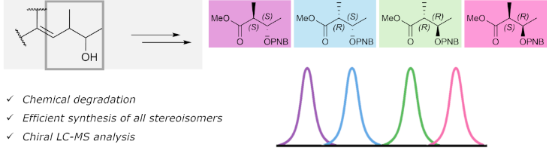
- –MS detection of the MPO-derived fragment and to achieve a separation of four candidate stereoisomers. To this end, methylation of commercially available methyl acetoacetate (2) and subsequent reduction of the ketone carbonyl group was carried out to prepare a mixture of four stereoisomers of methyl 3
- complete separation of the stereoisomers was not achieved, the corresponding peaks exhibited improved resolution compared to those of 4 (Figure S2, Supporting Information File 1). To further enhance separation, the p-nitrobenzoyl (PNB) ester 6 was prepared (Scheme 1B). After repeated trials with several
- chiral HPLC columns and with various elution profiles, the four stereoisomers of 6 were successfully separated on a CHIRALPAK ID-3 column at 40 °C with aqueous MeOH gradient elution (Figure S3, Supporting Information File 1). The developed method for absolute configuration assignment of MPO was applied


Further elaboration of the stereodivergent approach to chaetominine-type alkaloids: synthesis of the reported structures of aspera chaetominines A and B and revised structure of aspera chaetominine B
Beilstein J. Org. Chem. 2025, 21, 2072–2081, doi:10.3762/bjoc.21.162
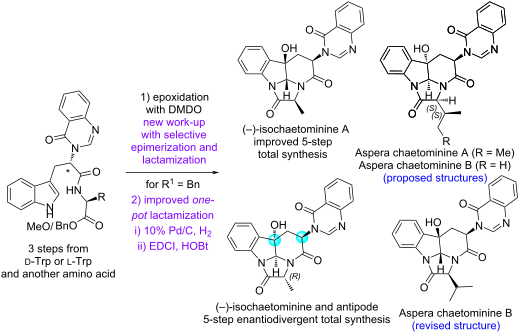
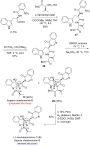
- (–)-isochaetominine A (4) and a diastereomer; 2) the diastereo- or enantiodivergent syntheses of chaetominine-family alkaloids and stereoisomers, and 3) the reported structures of aspera chaetominines A and B (12 and 13) and revised structure of aspera chaetominine B: 6 [(–)-isochaetominine C]. Results and Discussion




Asymmetric total synthesis of tricyclic prostaglandin D2 metabolite methyl ester via oxidative radical cyclization
Beilstein J. Org. Chem. 2025, 21, 1964–1972, doi:10.3762/bjoc.21.152
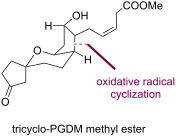
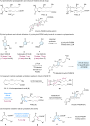
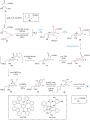
- methods for sensitive detection of endogenous PGD2 production and its stereoisomers are clinically important [5]. However, PGD2 is rapidly metabolized with a short half-life, making the identification and quantification of its downstream metabolites a promising and reliable diagnostic tool. Tricyclic



Preparation of spirocyclic oxindoles by cyclisation of an oxime to a nitrone and dipolar cycloaddition
Beilstein J. Org. Chem. 2025, 21, 1890–1896, doi:10.3762/bjoc.21.146
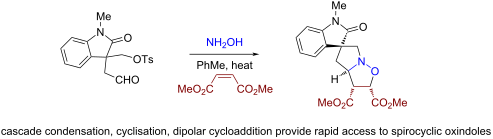
- -methylmaleimide with the mixture being heated under reflux for 3–4 h, we were pleased to obtain the spirooxindole product 5, which was formed as a mixture of stereoisomers (Scheme 3). The ratio of isomers was determined by 1H NMR spectroscopy and the major isomer could be isolated after careful column
- -phenyl cycloadduct 6 (Scheme 4). The yield of cycloadduct 6 was good and there were only two stereoisomers obtained that were inseparable. Based on the result with the N-methyl analogue, we predict that the major isomer has the same stereochemistry as that of compound 5a. The dipolarophile dimethyl
- fumarate was also successful and gave a mixture of the stereoisomeric cycloadducts 7 (Scheme 5). The yield was high and three inseparable stereoisomers could be detected by 1H NMR spectroscopy. In each case we assume that the methyl ester groups are trans to one another due to the expected concerted nature


[3 + 2] Cycloaddition of thioformylium methylide with various arylidene-azolones in the synthesis of 7-thia-3-azaspiro[4.4]nonan-4-ones
Beilstein J. Org. Chem. 2025, 21, 1791–1798, doi:10.3762/bjoc.21.141
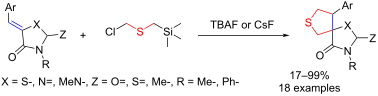
- single either cis or trans stereoisomers, dependent on the heterocycle core used. Keywords: arylidene-azolones; cycloaddition; nitrogen heterocycles; sulfur heterocycles; thioformylium methylide; Introduction Spirocyclic derivatives of heterocycles occupy an important place in modern organic and



Structural analysis of stereoselective galactose pyruvylation toward the synthesis of bacterial capsular polysaccharides
Beilstein J. Org. Chem. 2025, 21, 1671–1677, doi:10.3762/bjoc.21.131

- undesired anomeric epimerization, leading to the production of two stereoisomers in a ratio of α/β = 1:1.6 [28][29]. To increase the yield and minimize anomeric epimerization, we employed the more reactive reagent, methyl 2,2-dimethoxypropanoate, which contains a hemiketal moiety. As expected, the reaction


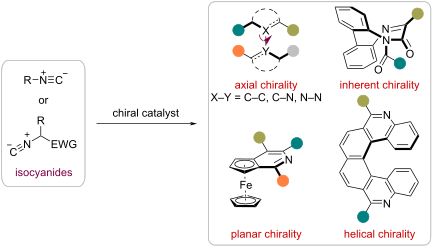
Catalytic asymmetric reactions of isocyanides for constructing non-central chirality
Beilstein J. Org. Chem. 2025, 21, 1648–1660, doi:10.3762/bjoc.21.129
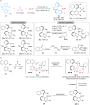
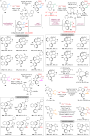
- issues of diastereo- and enantioselectivity are required to be addressed appropriately to prevent forming a complex mixture of stereoisomers. In 2022, our group developed a silver-catalyzed desymmetric [3 + 2] cycloaddition between prochiral N-aryl maleimides 57 and α-substituted α-acidic isocyanides




pH-Controlled isomerization kinetics of ortho-disubstituted benzamidines: E/Z isomerism and axial chirality
Beilstein J. Org. Chem. 2025, 21, 1568–1576, doi:10.3762/bjoc.21.120
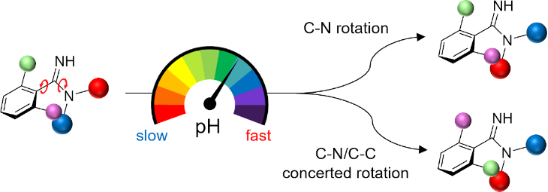
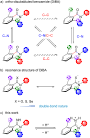
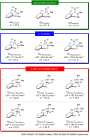
- –N rotation and C–N/C–C rotation by adjusting the pH of the solvent and the pKa of the amidine. Herein, we report our findings on the structural properties of an ortho-disubstituted benzamidine. Similar to DiBA, an ortho-disubstituted benzamidine has two types of stereoisomers: E/Z isomers arising



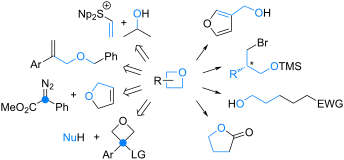
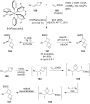
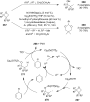
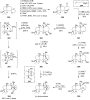
Oxetanes: formation, reactivity and total syntheses of natural products
Beilstein J. Org. Chem. 2025, 21, 1324–1373, doi:10.3762/bjoc.21.101








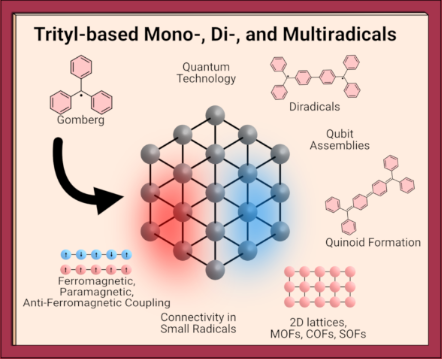
On the photoluminescence in triarylmethyl-centered mono-, di-, and multiradicals
Beilstein J. Org. Chem. 2025, 21, 964–998, doi:10.3762/bjoc.21.80
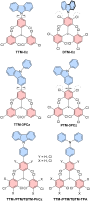
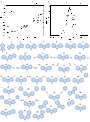
- donor unit (see Figure 11). Chiral chromatography provides access to all four stereoisomers, as both, the helicene and the TTM unit, are chiral (as discussed above). However, the TTM propellers racemize quickly so that effectively one receives the diastereomers with the respective helicene chirality









Recent advances in controllable/divergent synthesis
Beilstein J. Org. Chem. 2025, 21, 890–914, doi:10.3762/bjoc.21.73

- ][3][4] and regiodivergence [5][6]. In both cases, starting from the same substrate, different stereoisomers (diastereomers and enantiomers) or regioisomers can be obtained under different reaction conditions. Over the past two decades, researchers have found that by changing reaction conditions and
- modifying the substrate, two structurally distinct products that are neither stereoisomers nor regioisomers can be obtained from the same starting material (using the same reagents, if necessary), and significant progress has been made in recent years. Controllable/divergent synthetic strategies have


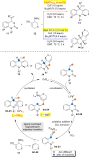


Development and mechanistic studies of calcium–BINOL phosphate-catalyzed hydrocyanation of hydrazones
Beilstein J. Org. Chem. 2025, 21, 755–765, doi:10.3762/bjoc.21.59
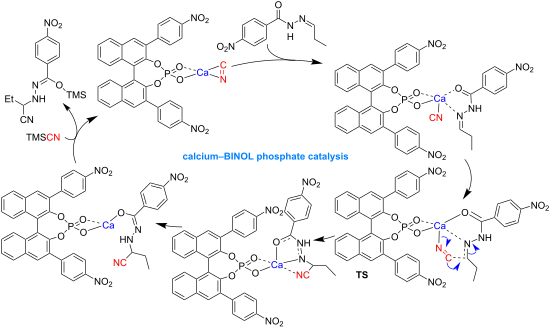
- attack from the Si side is favored. Formation of hydrazone complex 9 is strongly exothermic (Figure 3), rendering this reaction step effectively irreversible. Relative stabilities of diastereomers for Z- and E-hydrazones play therefore a minor role, as relative amounts of the four possible stereoisomers
- for the S- and R-forming stereoisomers of 9. The final step in the catalytic cycle (Figure 5), i.e., replacement step 13 → 7, is rate limiting in calcium–BINOL phosphate-catalyzed asymmetric hydrocyanation of hydrazones and proceeds via a transition-state structure TS 11-12, 1.5 kcal·mol−1 higher in


Origami with small molecules: exploiting the C–F bond as a conformational tool
Beilstein J. Org. Chem. 2025, 21, 680–716, doi:10.3762/bjoc.21.54
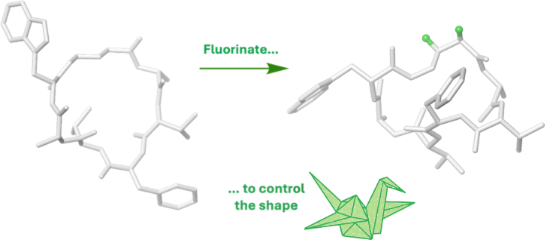
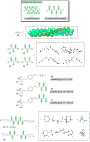
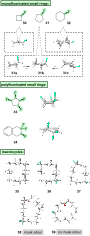
- -tetrafluorocyclohexane [55][56][57][58][59][60][61], and various stereoisomers of 1,2,3,4,5,6-hexafluorocyclohexane [62] including the iconic all-syn-isomer [63][64][65][66][67][68][69][70][71]. These molecules have been shown to have a variety of fascinating properties and applications, mostly associated with their
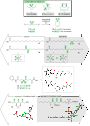
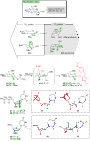
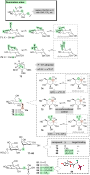
- , dramatic differences in biological activity are sometimes seen between the fluorinated stereoisomers (e.g., 111 and 112) [189]. This difference can be attributed to a conformational effect, whereby fluorine controls the pucker of the 5-membered ring through σC–H → σ*C–F hyperconjugation. Further examples


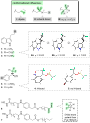






Synthesis of the aggregation pheromone of Tribolium castaneum
Beilstein J. Org. Chem. 2025, 21, 510–514, doi:10.3762/bjoc.21.38
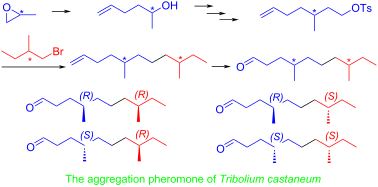
- male, is attractive to both sexes [12]. Later, Suzuki identified the compound as 4,8-dimethyldecanal [13]. Mori synthesized four possible stereoisomers of 4,8-dimethyldecanal, and found that the response of T. castaneum to the (4R,8R)-isomer was identical to the natural pheromone [14][15]. In 2011
- , Mori and Phillips achieved the complete separation of the derivatives from the four stereoisomers by reversed-phase HPLC at −54 °C, and revealed that the natural pheromone consists of four stereoisomers of 4,8-dimethyldecanal (Figure 1) [16][17]. Previous syntheses mainly focused on chiral sources of


New tandem Ugi/intramolecular Diels–Alder reaction based on vinylfuran and 1,3-butadienylfuran derivatives
Beilstein J. Org. Chem. 2025, 21, 444–450, doi:10.3762/bjoc.21.31
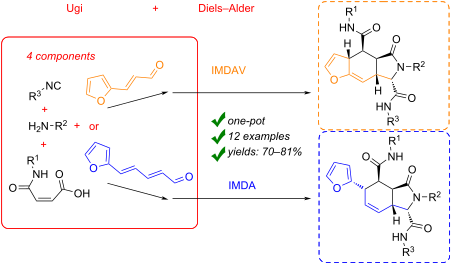
- agree with our previous results on tandem acylation/Diels–Alder reactions [31][32][33] and lead us to conclude that the final Diels–Alder reaction products are formed as the exo-adducts. Moreover, since we do not observe other stereoisomers we speculate that the Ugi and Diels–Alder reactions occur under




Three-component reactions of conjugated dienes, CH acids and formaldehyde under diffusion mixing conditions
Beilstein J. Org. Chem. 2025, 21, 262–269, doi:10.3762/bjoc.21.18
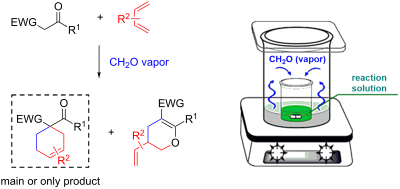
- cyanoacetic ester and acetylacetone. The configuration of the products 4 and 5 was established by bromination of a small amount of these isomeric compounds in CDCl3 (Scheme 6) and subsequent analysis of the mixture by 1H NMR spectroscopy. For the stereoisomers 4, the main product was lactone 22, identified by


Recent advances in electrochemical copper catalysis for modern organic synthesis
Beilstein J. Org. Chem. 2025, 21, 155–178, doi:10.3762/bjoc.21.9

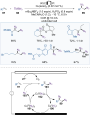
- standard conditions. Subsequently, radical-polar coupling between electrophilic Ni-bound α-carbonyl radical intermediate 45 and remaining nucleophilic Cu-enolate 44 provides a chiral product 42 containing vicinal quaternary stereocenters with high stereoselectivity, and all three possible stereoisomers of








Synthesis of extended fluorinated tripeptides based on the tetrahydropyridazine scaffold
Beilstein J. Org. Chem. 2024, 20, 3174–3181, doi:10.3762/bjoc.20.262
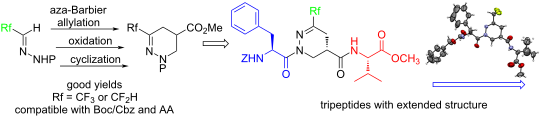
- the two conformers of hydrazones 3e and 3f (see Supporting Information File 1) is in accordance with the E stereoisomers. Furthermore, another correlation is observed for one conformer involving the NH of the imine on one side and the α-proton and the CH2 of the Cbz of the phenylalanine on the other


Hypervalent iodine-mediated intramolecular alkene halocyclisation
Beilstein J. Org. Chem. 2024, 20, 3113–3133, doi:10.3762/bjoc.20.258
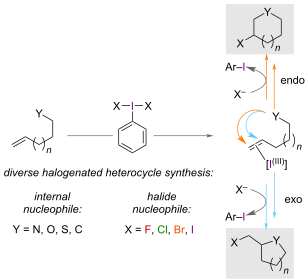
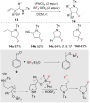
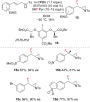
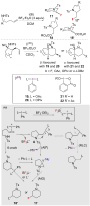
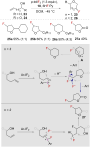
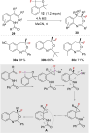
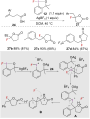
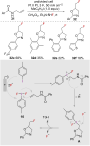
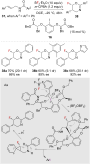
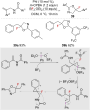
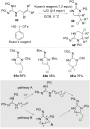
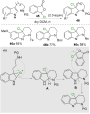
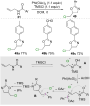
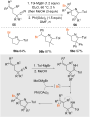
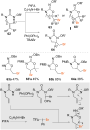
- of unsaturated alcohols and carboxylic acids to make tetrahydrofurans, fluoromethyl-γ-lactones and tetrahydropyrans. The ratio of stereoisomers is shown in parentheses. Oxyfluorination of unsaturated alcohols. Synthesis and mechanism of fluoro-benzoxazepines. Intramolecular fluorocyclisation of



















HFIP as a versatile solvent in resorcin[n]arene synthesis
Beilstein J. Org. Chem. 2024, 20, 2469–2475, doi:10.3762/bjoc.20.211
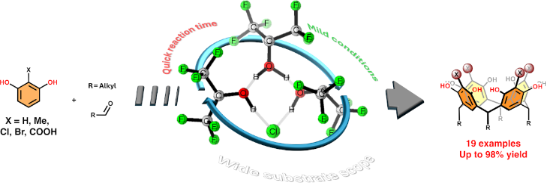
- from intermolecular dehydration, nowadays known as alkyl resorcin[4]arene. Forty years later in 1980, Höegberg noticed that short alkyl chain resorcin[n]arenes develop stereoisomers in the reaction mixture; however, since the condensation reaction is reversible, once the macrocycle adopts the bowl





