Search results
Search for "H-bonding" in Full Text gives 129 result(s) in Beilstein Journal of Organic Chemistry.
Effects of the aldehyde-derived ring substituent on the properties of two new bioinspired trimethoxybenzoylhydrazones: methyl vs nitro groups
Beilstein J. Org. Chem. 2023, 19, 1713–1727, doi:10.3762/bjoc.19.125
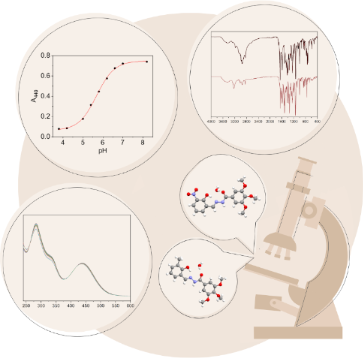
- studied hydrazones. Crystal, data collection and refinement parameters for hdz-CH3 and hdz-NO2.a H-bonding parameters for hdz-CH3 and hdz-NO2. Supporting Information Supporting Information contains Fourier difference maps (Figure S1), Hirshfeld surface analyses (Figures S2 and S3), optimized calculated




A series of perylene diimide cathode interlayer materials for green solvent processing in conventional organic photovoltaics
Beilstein J. Org. Chem. 2023, 19, 1620–1629, doi:10.3762/bjoc.19.119
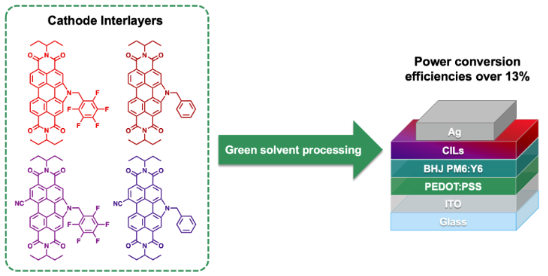
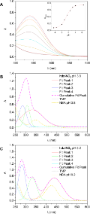
- and acceptor molecules (N···F and N···H bonding when using the acceptor Y6), as well as an induced dipole moment in the molecule for increased work function tuning of the cathode. The use of benzyl and pentafluorobenzyl substituents was to evaluate the impact of H vs F on the electrochemical


Aromatic C–H bond functionalization through organocatalyzed asymmetric intermolecular aza-Friedel–Crafts reaction: a recent update
Beilstein J. Org. Chem. 2023, 19, 956–981, doi:10.3762/bjoc.19.72

- stereoselectivity is also explained. Keywords: asymmetric; aza-Friedel–Crafts reaction; H-bonding; organocatalysis; stereoselectivity; Introduction The ease of a chemical transformation depends on the thermodynamic instability of a chemical bond owing to its fast cleavage under mild reaction conditions. A C–H
- the reaction partners in a highly ordered three dimensional transition state through noncovalent interactions (like H-bonding, π–π interactions) thus promoting the stereoselective reaction. Examples of covalent bonding organocatalysts are amines [6][7], N-heterocyclic carbenes [8][9], phosphines [10
- –Crafts reaction has also been explored under the influence of organocatalysis. However, here organocatalysts act as Brønsted acids which form noncovalent interactions (H-bonding) with the imine nitrogen to enhance the electrophilicity of the imine component. In addition, by selecting suitable imine




Functionalization of imidazole N-oxide: a recent discovery in organic transformations
Beilstein J. Org. Chem. 2022, 18, 1575–1588, doi:10.3762/bjoc.18.168
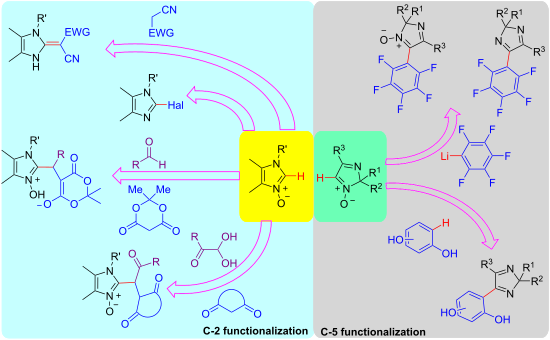
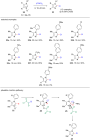
- , the authors revealed the product 4a as E-isomer due to the strong intramolecular H-bonding. It was also observed that the labile acetal group in the product 4g remained unaffected during the reaction process under the standard conditions. Imidazole N-oxides reacted with ethyl cyanoacetate to produce







Heteroleptic metallosupramolecular aggregates/complexation for supramolecular catalysis
Beilstein J. Org. Chem. 2022, 18, 597–630, doi:10.3762/bjoc.18.62
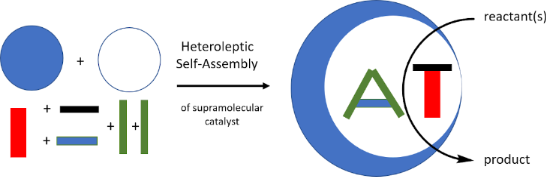
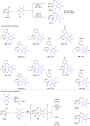
- , which entailed the quantitative formation of the edge-directed molecular prism 15 (Figure 3). The adequate length of the ditopic clip 13 constrained the urea triangle from intersupramolecular H-bonding. Thus, the urea moieties in this newly assembled 3D architecture were freely available for
- interactions with appropriate guest molecules through H-bonding. Different organic molecules, such as nitroolefins, capable of forming H-bonding with the urea moieties inside the cavity were investigated in water for their ability to encapsulate in the cavity under heterogeneous conditions. Successful binding
- . For this purpose, they have chosen the ditopic bisurea “strut” 12 (Figure 3), which generated a 2D discrete molecular triangle 14 in the presence of an equimolar amount of the cis-(tmen)Pd(NO3)2 acceptor 5 [59]. In order to prevent the urea moieties on the triangle to get engaged in intermolecular H


A resorcin[4]arene hexameric capsule as a supramolecular catalyst in elimination and isomerization reactions
Beilstein J. Org. Chem. 2022, 18, 337–349, doi:10.3762/bjoc.18.38
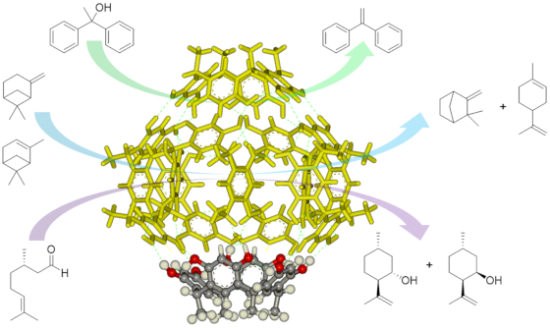
- series of control experiments supported in all cases the evidence that the reaction is not just promoted by the acidity of 16 or its H-bonding properties, but that a combination of weak Brønsted acidity together with the presence of an accessible electron-rich cavity that favors the stabilization of the
- recorded after 64 h at room temperature, while A and B were recorder right after sample preparation. Resorcin[4]arene 1 forming the corresponding hexameric capsule 16 and the species used for control experiments like 4-n-hexylresorcinol (2) to mimic the H-bonding properties of the capsule


Organocatalytic asymmetric nitroso aldol reaction of α-substituted malonamates
Beilstein J. Org. Chem. 2022, 18, 217–224, doi:10.3762/bjoc.18.25

- on the screening of various bifunctional H-bonding catalysts, and in this regard, the reaction catalyzed by quinine-derived thiourea catalyst 3b furnished the product 4a in 55% yield and 71% ee (Table 1, entry 5). The other enantiomer was obtained when the reaction was carried out using the


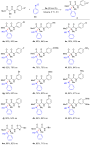


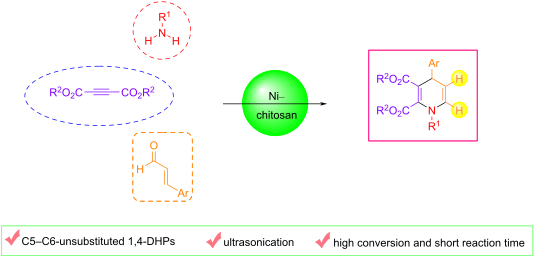
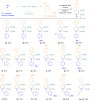
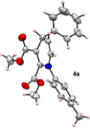
Green synthesis of C5–C6-unsubstituted 1,4-DHP scaffolds using an efficient Ni–chitosan nanocatalyst under ultrasonic conditions
Beilstein J. Org. Chem. 2022, 18, 133–142, doi:10.3762/bjoc.18.14
- H-bonding. The presence of diffraction peaks at 2Θ 9.2 and 19.7 (in degree) indicated the presence of a chitosan framework [28], whereas the other minor diffraction peaks were observed due to the presence of Ni(II). From the SEM and TEM images of the catalyst, we confirmed the morphological features




N-Sulfinylpyrrolidine-containing ureas and thioureas as bifunctional organocatalysts
Beilstein J. Org. Chem. 2021, 17, 2629–2641, doi:10.3762/bjoc.17.176
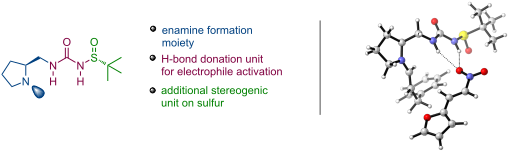
- , including enantioselective H-bonding-catalyzed additions to aliphatic N-Boc-imines with high stereoselectivity [22]. A broad range of β-aminonitroolefins were reduced to chiral β-aminonitroalkanes in high yields and excellent enantioselectivities using trichlorosilane as a reducing agent and an N


Halides as versatile anions in asymmetric anion-binding organocatalysis
Beilstein J. Org. Chem. 2021, 17, 2270–2286, doi:10.3762/bjoc.17.145
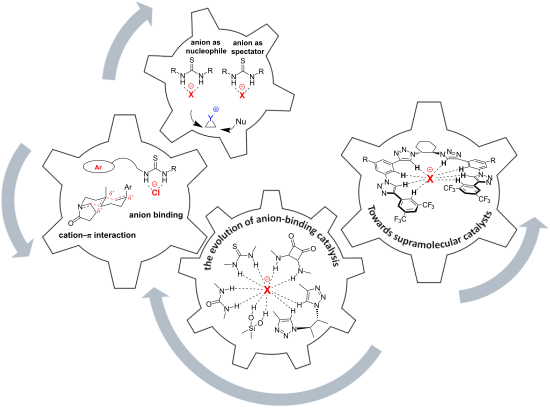
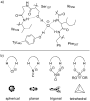
- reported a family of chiral helical tetratriazoles 82 as a new class of anion-binding catalysts, which can be considered as supramolecular anion-binding catalysts (Scheme 18) [22]. Not only is the increased H-bonding network in multidentate 82 beneficial for giving a firm control over both regio- and
- examples, and the advance of anion-binding-catalyzed strategies involving more complex H-bonding networks clearly highlight that it is indeed possible to mimic enzyme-like structures with small-molecule catalysts for asymmetric synthesis. Conclusion In the past two decades, tremendous advances in the field
- , in which differentiation between classical H-bonding to neutral substrates and the binding to anionic species was delineated, anion-binding interactions became more prominent and started being considered in the design of new syntheses and catalytic approaches. In this context, the emphasis was to



Enantioenriched α-substituted glutamates/pyroglutamates via enantioselective cyclopropenimine-catalyzed Michael addition of amino ester imines
Beilstein J. Org. Chem. 2021, 17, 2077–2084, doi:10.3762/bjoc.17.134
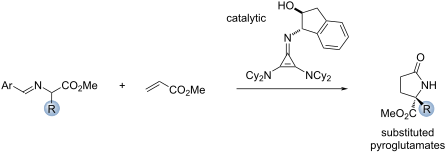
- reported [45], for which a detailed transition state model was developed. In that study, it was determined that the reaction proceeds via several competing low-energy transition states involving both O–H and N–H enolate binding modes, E and Z enolate isomers, and a range of H-bonding and other noncovalent


A study on selective transformation of norbornadiene into fluorinated cyclopentane-fused isoxazolines
Beilstein J. Org. Chem. 2021, 17, 2051–2066, doi:10.3762/bjoc.17.132
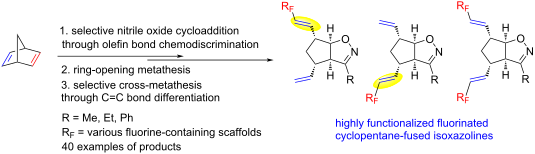
- observed selectivities in metathesis reactions, H-bonding interactions between chloride ligands as H-bond acceptors and OH or NH functions in the metathesis intermediate appear to be determining [35][36]. Selectivity derived from chelation is considered to be an another important contributor. Through the




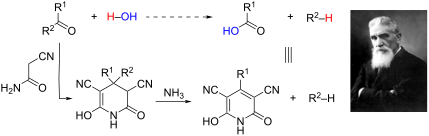
Icilio Guareschi and his amazing “1897 reaction”
Beilstein J. Org. Chem. 2021, 17, 1335–1351, doi:10.3762/bjoc.17.93
- ⋅mol−1) and favored over abstraction by a hydroperoxy radical, which would be only exothermic by 2 kcal⋅mol−1. The exothermicity of the hydrogen abstraction reaction is reduced with stabilized radicals, which have weaker C–H bonding. In this case, trapping by dissolved oxygen competes, generating a








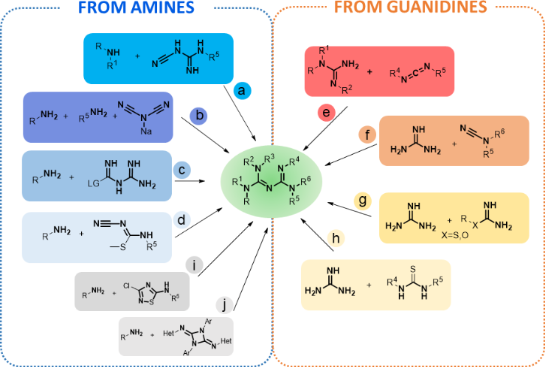
Synthetic accesses to biguanide compounds
Beilstein J. Org. Chem. 2021, 17, 1001–1040, doi:10.3762/bjoc.17.82
- intramolecular H-bond character. The second protonation rather takes place on the N3 nitrogen atom, causing planar character disruption and preventing H-bonding (Figure 2) [1]. Biguanide derivatives often display low melting points (mp = 136 °C for simple biguanide). However, above 130 °C, a concomitant thermal


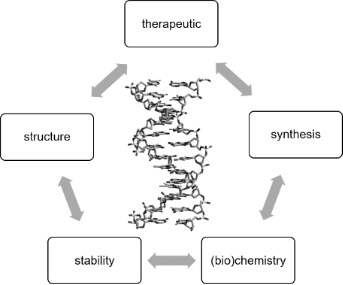
Beyond ribose and phosphate: Selected nucleic acid modifications for structure–function investigations and therapeutic applications
Beilstein J. Org. Chem. 2021, 17, 908–931, doi:10.3762/bjoc.17.76




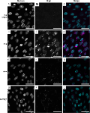
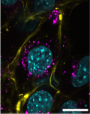
DNA with zwitterionic and negatively charged phosphate modifications: Formation of DNA triplexes, duplexes and cell uptake studies
Beilstein J. Org. Chem. 2021, 17, 749–761, doi:10.3762/bjoc.17.65
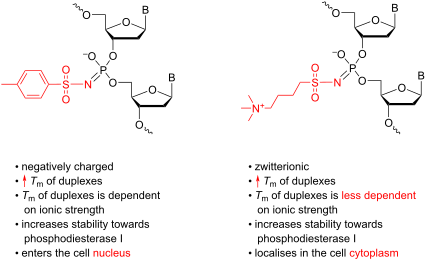
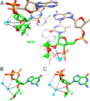
- cell-based applications. Illustration of H-bonding in a DNA duplex and a parallel triplex. A) Depiction of Watson–Crick base-paring (left: T-A and right: C-G); B) parallel triple helices: pyrimidine-rich third strand interactions are stabilised by Hoogsteen hydrogen bonds (the duplex is in black, TFO


Selected peptide-based fluorescent probes for biological applications
Beilstein J. Org. Chem. 2020, 16, 2971–2982, doi:10.3762/bjoc.16.247

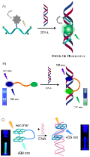
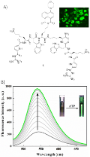
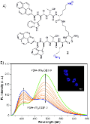
- -aminobutyric acid associate with membrane-bound protein receptors and trigger changes in receptor shape and activity with subsequent signaling across the membrane. Noncovalent H-bonding and van der Waals interactions are the basis for the selective molecular recognition between a G-coupled protein receptor and



Using multiple self-sorting for switching functions in discrete multicomponent systems
Beilstein J. Org. Chem. 2020, 16, 2831–2853, doi:10.3762/bjoc.16.233
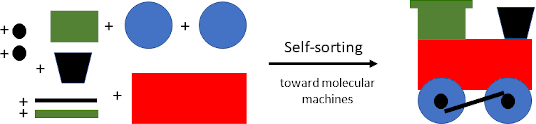
- undemanding building blocks. The plethora of self-sorting systems depends on either the geometric fit of their global shapes and/or matching of their local interactions. Various noncovalent interactions, such as H‐bonding [8][9], metal–ligand coordination [10][11][12][13], electrostatic interactions [14], π
- . Some selected self-sorting outcomes and their qualitative and quantitative assessment. Illustration of an integrative vs a non-integrative self-sorting. The pH-driven four-component 2-fold completive self-sorting based on host–guest chemistry. (a) The monomers 5 and 6 and their H-bonding array. (b) The







Selective recognition of ATP by multivalent nano-assemblies of bisimidazolium amphiphiles through “turn-on” fluorescence response
Beilstein J. Org. Chem. 2020, 16, 2728–2738, doi:10.3762/bjoc.16.223
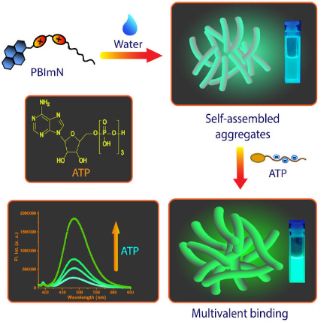
- . One of the challenges in the bio-anion detection is that the sensory probes have to be effective under physiological conditions. The highly polar nature of the aqueous media considerably weakens supramolecular interactions such as H-bonding and electrostatic interactions and as a result, it is in


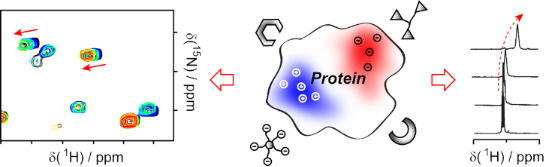
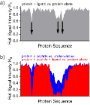
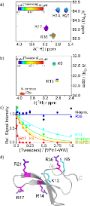
NMR Spectroscopy of supramolecular chemistry on protein surfaces
Beilstein J. Org. Chem. 2020, 16, 2505–2522, doi:10.3762/bjoc.16.203



pH- and concentration-dependent supramolecular self-assembly of a naturally occurring octapeptide
Beilstein J. Org. Chem. 2020, 16, 2017–2025, doi:10.3762/bjoc.16.168
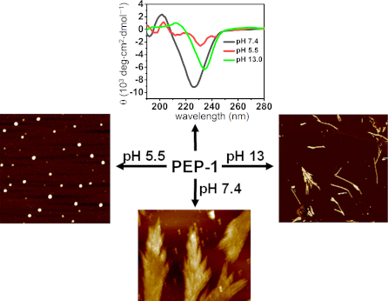
- two peptides increases in twisted β-sheets, the H-bonding distances increase, weakening the intermolecular forces. At basic pH values, the carboxyl group of Glu is present as a negatively charged carboxylate species, thereby inducing weak electrostatic repulsions between Glu− residues, which may be


A dynamic combinatorial library for biomimetic recognition of dipeptides in water
Beilstein J. Org. Chem. 2020, 16, 1588–1595, doi:10.3762/bjoc.16.131
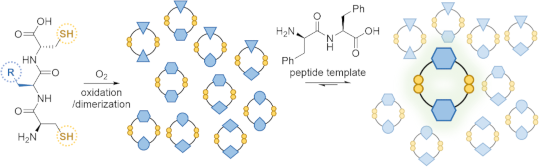
- (Figure S10, Supporting Information File 1). This behavior does not contradict the ITC measurements and can be attributed to the kinetic isotope effect. Although, D-bonding is generally stronger than H-bonding, its contribution to the peptide–peptide binding can be weakened by even stronger competitive


Five-component, one-pot synthesis of an electroactive rotaxane comprising a bisferrocene macrocycle
Beilstein J. Org. Chem. 2020, 16, 1564–1571, doi:10.3762/bjoc.16.128
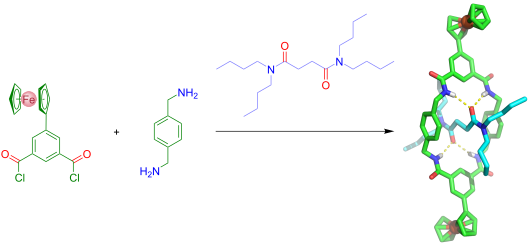
- prove a valuable component for the construction of novel redox-active supramolecular systems, such as rotaxanes with strongly binding H-bonding templating sites, or indeed juxtaposed into existing functional architectures and benchmark variants. Results and Discussion Synthesis Our first approach to the




An overview on disulfide-catalyzed and -cocatalyzed photoreactions
Beilstein J. Org. Chem. 2020, 16, 1418–1435, doi:10.3762/bjoc.16.118
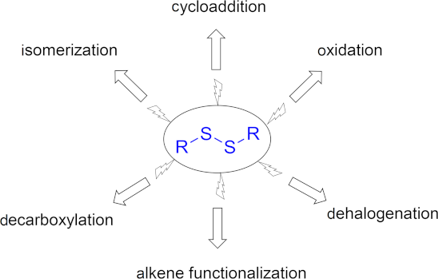
- engage with the peptide backbone via an H-bonding interaction, and in order to achieve a high enantioselectivity, the amide functionalization of the peptide at the 4-proline position is essential. Amide-substituted vinylcyclopropanes have a relatively good H-bond-donating ability, so they are more






Copper catalysis with redox-active ligands
Beilstein J. Org. Chem. 2020, 16, 858–870, doi:10.3762/bjoc.16.77
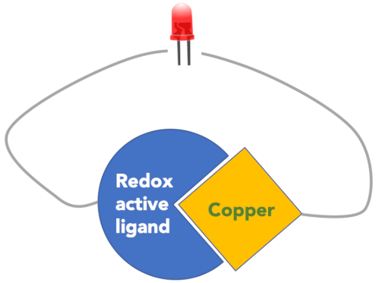
- large number of alcohols (5a–e) in the presence of base (KOH 1 mol %). An interesting strategy aiming to explore the possibility of interfacing the redox-activity with H-bonding ability inside the ligand coordination sphere has been disclosed by Swart and Garcia-Bosch [16], and relies on the design and
- study of a new copper(II) complex. A family of o-phenylenediamido ligands was synthesized through the introduction of ureanyl groups, using a synthetic approach developed by Borovik [17][18] for the stabilization of metal–oxo and metal–hydroxo complexes via intramolecular H-bonding interactions. The
- resulting copper complexes were synthesized and single crystal X-ray diffraction analysis evidenced the existence of H-bonding inside the coordination sphere of 6 (Scheme 3). The authors reported that the influence of the geometry of the complex on the H-bonding interactions as well as the nature of this