Search results
Search for "assembly" in Full Text gives 648 result(s) in Beilstein Journal of Organic Chemistry. Showing first 200.
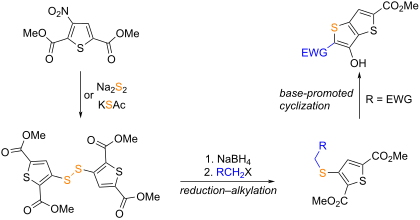
Assembly strategy for thieno[3,2-b]thiophenes via a disulfide intermediate derived from 3-nitrothiophene-2,5-dicarboxylate
Beilstein J. Org. Chem. 2025, 21, 2489–2497, doi:10.3762/bjoc.21.191



An Fe(II)-catalyzed synthesis of spiro[indoline-3,2'-pyrrolidine] derivatives
Beilstein J. Org. Chem. 2025, 21, 2383–2388, doi:10.3762/bjoc.21.183
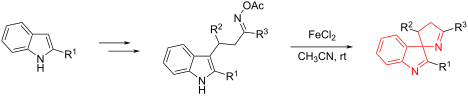
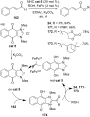
- e) [12]. The second category of synthetic methods relies on more accessible, non-pre-functionalized starting materials and stepwise assembly of the spirocyclic core. This strategy enables the synthesis of functionalized 3H-indoles, which can be further elaborated into structurally diverse products


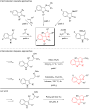


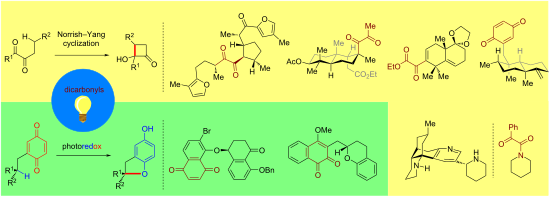
Recent advances in Norrish–Yang cyclization and dicarbonyl photoredox reactions for natural product synthesis
Beilstein J. Org. Chem. 2025, 21, 2315–2333, doi:10.3762/bjoc.21.177
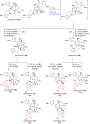
- unprecedented 4,5-spirocyclic B/C ring system and a [4,3,1]propellane F/G/H ring fragment. In 2024, Yang's group achieved the construction of the ABCDE pentacyclic skeleton of phainanoids, leveraging Norrish–Yang cyclization to accomplish the regio- and stereoselective assembly of the rigid, sterically




Pathway economy in cyclization of 1,n-enynes
Beilstein J. Org. Chem. 2025, 21, 2260–2282, doi:10.3762/bjoc.21.173
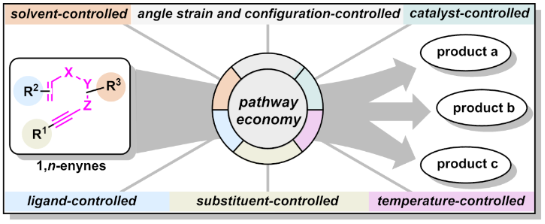
- substituents serve as critical switches for determining reaction pathway selection. Chemists have developed sophisticated synthetic strategies for programmable assembly of complex small molecular framework by leveraging substituent electronic and steric effects. In 2006, the Shibata group reported a gold
- nitrogen was strategically functionalized with an electron-withdrawing groups (EWGs) and the alkyne of propiolamide was modified with a less bulky substituent. A 6-exo-dig cyclization yielded intermediate 45. Finally, a tandem 6-endo-dig cyclization enabled the successful assembly of the indolo[2,3-a
- nexus for the rational design and optimization of highly effective, selective homogeneous catalytic systems. In 2013, Barriault and co-workers demonstrated that strategic modulation of steric and electronic ligand parameters within gold(I)-catalyzed cyclization pathways enables the selective assembly of


Bioinspired total syntheses of natural products: a personal adventure
Beilstein J. Org. Chem. 2025, 21, 2048–2061, doi:10.3762/bjoc.21.160
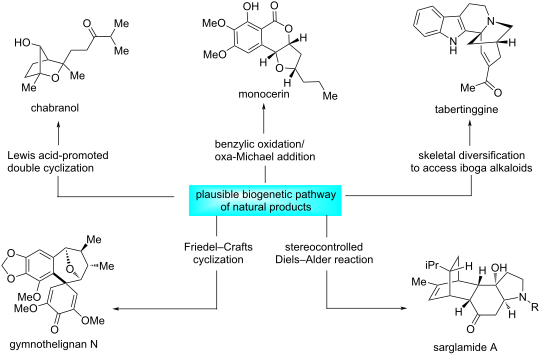
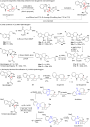
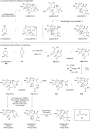
- assembly of a complex natural product with a three-dimensional framework in a cascade way. Later, this was regarded as an artificial mimic in laboratory of the biochemical transformations in nature. In the 20th century, Woodward elevated the field of natural product total synthesis to the artistic status




Solar thermal fuels: azobenzene as a cyclic photon–heat transduction platform
Beilstein J. Org. Chem. 2025, 21, 2036–2047, doi:10.3762/bjoc.21.159
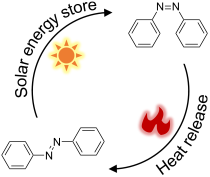
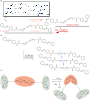
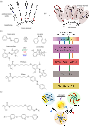
- system. Photoisomerization of different types of molecular optical switches. Figure 2 was redrawn from [8]. Nanocarbon-based azobenzene polymer solar thermal fuels: (a) SWCNT templating. Figure 3a is from [43] (T. J. Kucharski et al., “Templated assembly of photoswitches significantly increases the




Asymmetric total synthesis of tricyclic prostaglandin D2 metabolite methyl ester via oxidative radical cyclization
Beilstein J. Org. Chem. 2025, 21, 1964–1972, doi:10.3762/bjoc.21.152
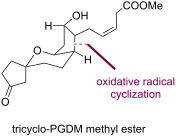
- ester Although the efficiency of the first-generation asymmetric total synthesis strategy was limited, the development of synthetic methods during this work, particularly the transition-metal-mediated oxidative radical cyclization for stereoselective assembly of the cyclopentanol scaffold bearing the C8



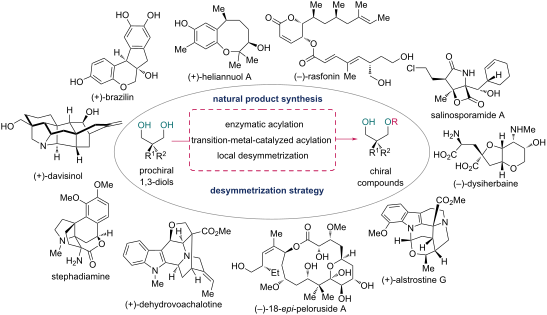
Enantioselective desymmetrization strategy of prochiral 1,3-diols in natural product synthesis
Beilstein J. Org. Chem. 2025, 21, 1932–1963, doi:10.3762/bjoc.21.151
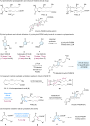
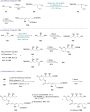
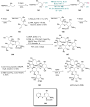
- excellent site selectivity during the Bz protection. The assembly of the azabicyclic core was achieved in two steps from 291 via reductive amination followed by oxidative removal of the p-methoxybenzyl (PMB) group, giving heptacyclic compound 292. Finally, (+)-18-benzoyldavisinol (293) was synthesized in










Systematic pore lipophilization to enhance the efficiency of an amine-based MOF catalyst in the solvent-free Knoevenagel reaction
Beilstein J. Org. Chem. 2025, 21, 1854–1863, doi:10.3762/bjoc.21.144
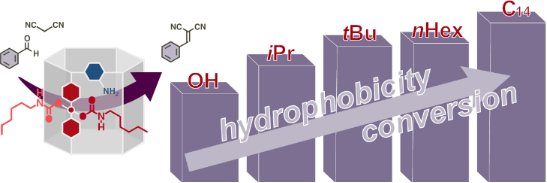
- , the researchers tailored their catalyst via de novo solvothermal synthesis of their MOFs using differently substituted auxiliary linkers; a non-trivial effort which involves the synthesis of several new organic linkers and their subsequent assembly into completely new frameworks (Figure 1A). In this
- -inspired materials, PSM allows us to incorporate functionalities that are pertinent to catalysis but that would normally interfere with MOF assembly, e.g. hydrogen bonding groups like –OH and –COOH that are difficult to obtain as free uncoordinated moieties within MOF pores [28][29]. Given these benefits


Research progress on calixarene/pillararene-based controlled drug release systems
Beilstein J. Org. Chem. 2025, 21, 1757–1785, doi:10.3762/bjoc.21.139
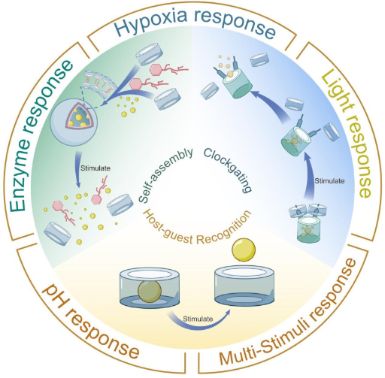
- release systems based on host–guest selective recognition, self-assembly, and nano-valves by the use of of calixarenes and pillararenes from five perspectives: pH, light, enzyme, hypoxia, and multi-stimuli combination responses. Furthermore, the article projects the future clinical application prospects
- or guest molecules are altered upon exposure to specific stimuli, such as light, pH changes, or enzymes. This modification induces the disassembly of the host–guest complex, thereby releasing the encapsulated drugs. Fundamentally, this mechanism relies on controlling the assembly and disassembly
- processes. For example, supramolecular self-assembly technology enhances the targeting of chemotherapeutic drugs to tumor tissues, reducing systemic adverse reactions. (3) Macrocyclic aromatic supramolecular nano-valves have a pseudo-rotaxane structure with host–guest coordination and the kinetic properties






Approaches to stereoselective 1,1'-glycosylation
Beilstein J. Org. Chem. 2025, 21, 1700–1718, doi:10.3762/bjoc.21.133
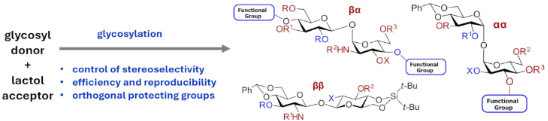
- applications. The assembly of nonreducing 1,1′-linked disaccharides presents greater challenges than conventional chemical glycosylation due to the need for simultaneous control of stereochemistry at two anomeric centers. The structural complexity of natural biomolecules entailing 1,1′-disaccharides, which
- reactivity of the donor molecules [45][46][47][48]. Review Synthesis of β,α-1,1'-linked disaccharides The assembly of β,α-1,1'-linked disaccharides has traditionally been carried out using perbenzylated monosaccharide building blocks and various types of glycosyl donors, including chlorides [49], bromides
- trichloroacetimidates to the assembly of 1,1'-disaccharides was demonstrated in the synthesis of ʟ-lyxopyranosyl-β-ᴅ-glucopyranoside, a biosynthetic precursor of the FG ring system of avilamycin [52]. Peracetylated ᴅ-glucosyl trichloroacetimidate 10 was reacted with triacetylated ʟ-lyxose lactol acceptor 11 in the


Chemical synthesis of glycan motifs from the antitumor agent PI-88 through an orthogonal one-pot glycosylation strategy
Beilstein J. Org. Chem. 2025, 21, 1587–1594, doi:10.3762/bjoc.21.122

- accelerated synthesis, but also precluded the potential issues inherent to one-pot glycan assembly associated with thioglycosides. The following aspects were featured in synthetic approaches: 1) synthesis of trisaccharide and tetrasaccharide PI-88 glycans via [1 + 1 + 1] and [1 + 1 + 1 + 1] one-pot orthogonal
- glycosylation, respectively; 2) synthesis of PI-88 glycan motif pentasaccharide via [1 + 1 + 1] and [1 + 1 + 3] one-pot orthogonal glycosylation; 3) synthesis of hexasaccharide via [1 + 1 + 1] and [1 + 1 + 1 + 3] one-pot assembly. Keywords: carbohydrates; chemical synthesis; glycosyl ortho-(1-phenylvinyl
- comparison with previous, traditional, and time-consuming synthesis of PI-88 glycan components, the one-pot glycan assembly strategy has some advantages, including: 1) acceleration of glycan synthesis, 2) avoidance of purification of intermediates during glycosylation intervals, and 3) reduction of chemical



Highly distinguishable isomeric states of a tripodal arylazopyrazole derivative on graphite through electron/hole-induced switching at ambient conditions
Beilstein J. Org. Chem. 2025, 21, 1496–1507, doi:10.3762/bjoc.21.112
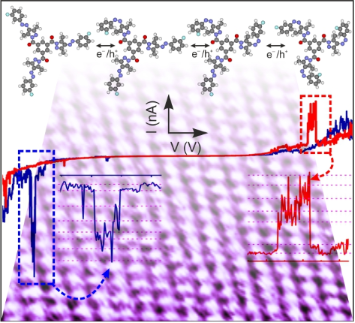
- well-ordered large domains on graphite and are revealed by atomic force microscopy (AFM) and scanning tunneling microscopy (STM) studies. The molecular level arrangement in the assembly reveals a hexagonal packing through weak non-bonding interactions between the carbonyl and aromatic hydrogen, and is
- indicated by green double-headed arrows and are separated by 6.3 ± 0.1 nm. The magnitude of the spacing suggests that the line-like features are originating due to a super-periodic pattern of molecular assembly, namely a moiré pattern [33][34][35]. This further suggests that the molecular adlayer is forming
- originating from a hexagonal type of lattice. To further understand the microscopic structure of the assembly, we have performed STM experiments on ultra-thin films of FNAAP. Figure 3a,b shows constant current STM topographs of ultra-thin films of an FNAAP adlayer on HOPG (0001) at different resolutions



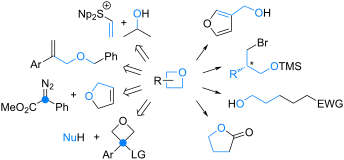
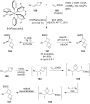
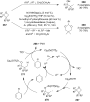
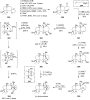
Oxetanes: formation, reactivity and total syntheses of natural products
Beilstein J. Org. Chem. 2025, 21, 1324–1373, doi:10.3762/bjoc.21.101








Gold extraction at the molecular level using α- and β-cyclodextrins
Beilstein J. Org. Chem. 2025, 21, 1116–1125, doi:10.3762/bjoc.21.89
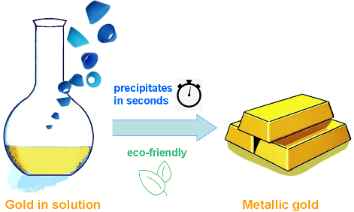
- the inclusion of complex aurate ions such as tetrabromoaurate, dicyanoaurate and a few other tetrahaloaurates. The review describes the properties of self-assembly of cyclodextrins with these ions, with highlight to α-CD and, more recently, β-CD, requiring the use of a co-former/precipitating agent
- spontaneous complex formation between α-CD and tetrabromoaurate and its current status of use in a few mining sites in the United States. Keywords: bromoaurate; cyanoaurate; cyclodextrin inclusion; self-assembly; supramolecular interactions; Introduction Gold has allured and captivated humankind ever since
- complex matrices such as ores and industrial waste. Review Isolating gold with α-cyclodextrin Process discovery and the role of self-assembly The discovery that α-CD could be used to isolate gold was made serendipitously [37]. A young researcher of the Stoddart group, Zhichang Liu, was trying to prepare


Supramolecular assembly of hypervalent iodine macrocycles and alkali metals
Beilstein J. Org. Chem. 2025, 21, 1095–1103, doi:10.3762/bjoc.21.87
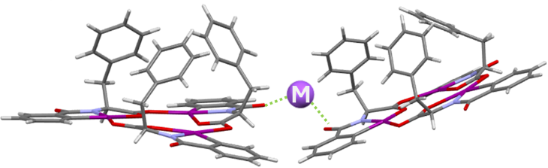
- at Urbana-Champaign, Urbana, IL, 61801, United States 10.3762/bjoc.21.87 Abstract This study explores the solution- and solid-state assembly of phenylalanine-based hypervalent iodine macrocycles (HIMs) with lithium and sodium cations. The metal cation binding of HIMs was evaluated by addition of
- pattern of assembly between HIM and metal cation in 2:1 ratio. While association with sodium leads to a polymer-like network, the lithium crystal structure was limited to dimeric assemblies of HIM. In the lithium-coordinating complex, the oxygen–lithium–oxygen bond angle is approximately 98.83
- the assembly of HIM is attributed to the weak, yet additive, secondary bonding interactions between electron-deficient iodine atoms and electron-rich oxygen atoms. These examples highlight new possibilities in materials science owing to their unique assembly via secondary bonding as well as their


Recent advances in synthetic approaches for bioactive cinnamic acid derivatives
Beilstein J. Org. Chem. 2025, 21, 1031–1086, doi:10.3762/bjoc.21.85
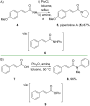
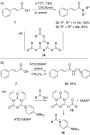
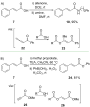
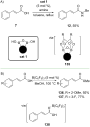
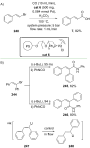
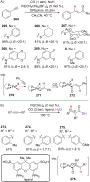
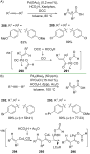
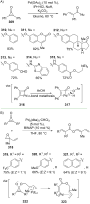
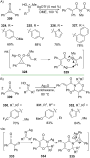
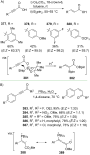
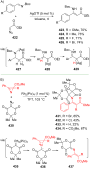
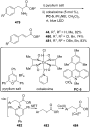
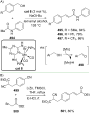
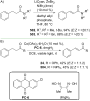
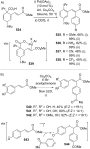
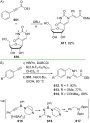
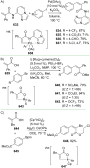
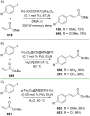
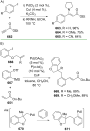
- to 429 (Scheme 88A) [149]. On the other hand, Novikov and co-workers (2019) utilized Rh(II) to catalyze the [2 + 1 + 1] assembly of spiro β-lactams 431–434 from diazocarbonyl compound 430 and azirines via Rh carbenoid 435 followed by aziridine ring-opening (436 and 437) (Scheme 88B) [150]. Lv and co


































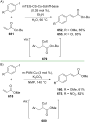


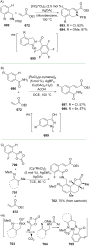


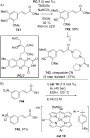


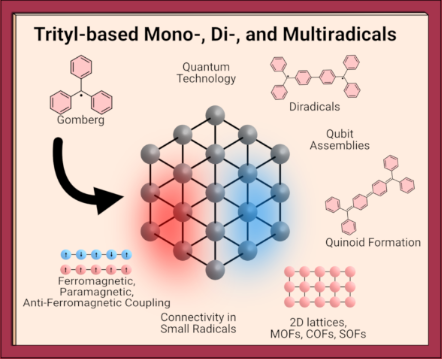
On the photoluminescence in triarylmethyl-centered mono-, di-, and multiradicals
Beilstein J. Org. Chem. 2025, 21, 964–998, doi:10.3762/bjoc.21.80


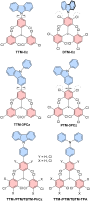

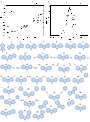


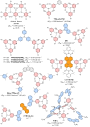


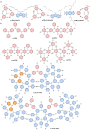


A convergent synthetic approach to the tetracyclic core framework of khayanolide-type limonoids
Beilstein J. Org. Chem. 2025, 21, 926–934, doi:10.3762/bjoc.21.75
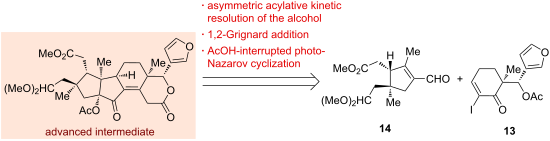
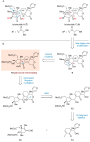
- ]). Conclusion In conclusion, we have developed a convergent approach for the enantioselective assembly of an advanced intermediate en route to krishnolides A and C. Key steps of our strategy entail an acylative kinetic resolution of the alcohol, a 1,2-Grignard addition and an AcOH-interrupted Nazarov




Silver(I) triflate-catalyzed post-Ugi synthesis of pyrazolodiazepines
Beilstein J. Org. Chem. 2025, 21, 915–925, doi:10.3762/bjoc.21.74
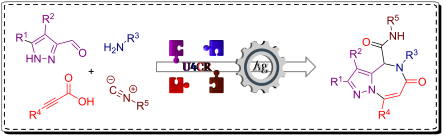
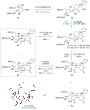
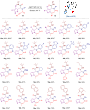
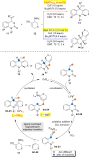
- ) triflate-catalyzed post-Ugi assembly of novel pyrazolo[1,5-a][1,4]diazepine scaffolds is reported offering high yields (up to 98%) under mild conditions. The synthetic sequence involves the Ugi four-component reaction (U4CR) of pyrazole-3-carbaldehydes, primary amines, 3-substituted propiolic acids, and
- intramolecular condensation with the arylglyoxal-derived keto-carbonyl group [37]. In 2024, the same group streamlined this strategy by utilizing unprotected anthranilic acids, enabling the assembly of benzo[e][1,4]diazepines 6 directly during the Ugi reaction step [38]. In 2013, Van der Eycken and co-workers
- formation of the tricyclic triazolo[1,5-a][1,4]benzodiazepine scaffold 10 (Scheme 1b) [39]. Triple bond-containing Ugi adducts showed a great promise for the assembly of various seven-membered nitrogen-containing heterocyclic cores through transition-metal-catalyzed alkyne hydroarylations [40][41][42][43




Recent advances in controllable/divergent synthesis
Beilstein J. Org. Chem. 2025, 21, 890–914, doi:10.3762/bjoc.21.73

- , Shanghai 200032, PR China 10.3762/bjoc.21.73 Abstract The development of streamlined methodologies for the expeditious assembly of structurally diverse organic architectures represents a paramount objective in contemporary synthetic chemistry, with far-reaching implications across pharmaceutical
- structurally diverse macrocycles through the dynamic self-assembly of α,α’-linked oligopyrrolic dialdehydes and alkyldiamines (Scheme 10) [39]. Their investigation revealed distinct solvent-mediated selectivity in product formation. Condensation of the pyridine-bridged oligopyrrolic dialdehyde 37 with simple
- , leading to the synthesis of differently substituted protonitidine alkaloids and protoberberine alkaloids (Scheme 25) [56]. Conclusion Developing streamlined and versatile approaches for the rapid assembly of structurally diverse organic molecules represents a pivotal challenge in organic synthesis




Dicarboxylate recognition based on ultracycle hosts through cooperative hydrogen bonding and anion–π interactions
Beilstein J. Org. Chem. 2025, 21, 884–889, doi:10.3762/bjoc.21.72
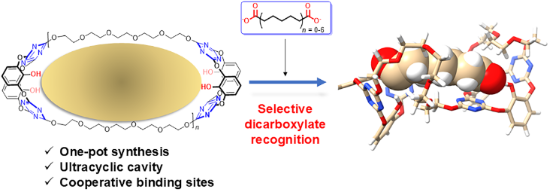
- , while the glycol chains are oriented along the long axis in the opposite orientations. In packing mode, the submacrocycle units form close contacts through intermolecular hydrogen bonding, C–H···π, and lone pair–π interactions, resulting in a 1D linear assembly. Anion recognition With the functional


Acyclic cucurbit[n]uril bearing alkyl sulfate ionic groups
Beilstein J. Org. Chem. 2025, 21, 717–726, doi:10.3762/bjoc.21.55
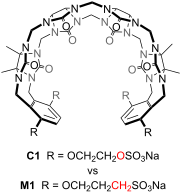
- [n])), and those prepared by metal ligands and H-bonding self-assembly processes [1][2][10][11][12][13][14][15][16][17][18][19][20]. Macrocycles have played key roles in important real-world products including the household deodorizer FebreezeTM, glucose monitors, and as solubilizing excipients [21




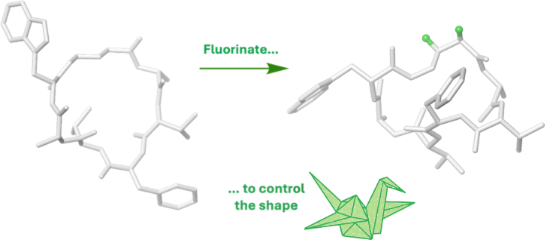
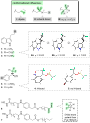
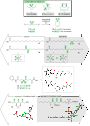
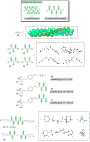
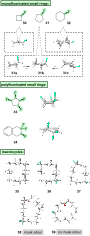
Origami with small molecules: exploiting the C–F bond as a conformational tool
Beilstein J. Org. Chem. 2025, 21, 680–716, doi:10.3762/bjoc.21.54




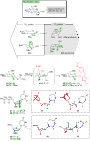
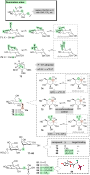
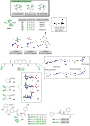
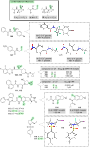


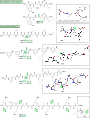


Cryptophycin unit B analogues
Beilstein J. Org. Chem. 2025, 21, 526–532, doi:10.3762/bjoc.21.40
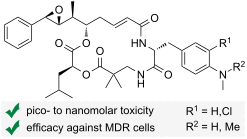
- ] to obtain free acid 11. Exchange of the Boc protecting group of dimethylaniline 8 to an acryloyl substituent and subsequent saponification furnished dimethylamine building block 13. For the macrocycle assembly, especially the ring closure, we decided on two different routes. While the cryptophycin