


Search results
Search for "chemical structures" in Full Text gives 262 result(s) in Beilstein Journal of Organic Chemistry. Showing first 200.
Effect of substitution position of aryl groups on the thermal back reactivity of aza-diarylethene photoswitches and prediction by density functional theory
Beilstein J. Org. Chem. 2025, 21, 242–252, doi:10.3762/bjoc.21.16
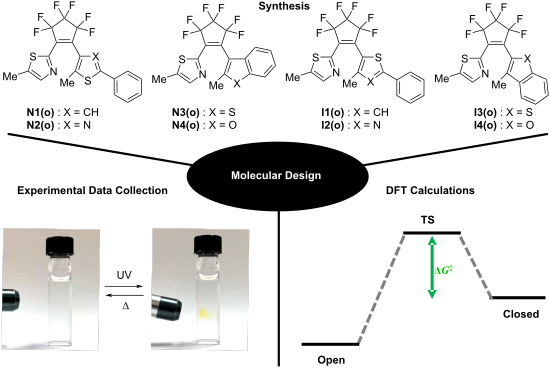
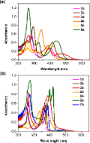
- previous work [56][57], whereas compounds N4 and I1–I4 were synthesized according to Scheme 2 in the Experimental section. The chemical structures of all compounds were confirmed by 1H NMR and 13C NMR spectroscopy and high-resolution mass spectrometry. 1H NMR and 13C NMR spectra are shown in Supporting


Hydrogen-bonded macrocycle-mediated dimerization for orthogonal supramolecular polymerization
Beilstein J. Org. Chem. 2025, 21, 179–188, doi:10.3762/bjoc.21.10
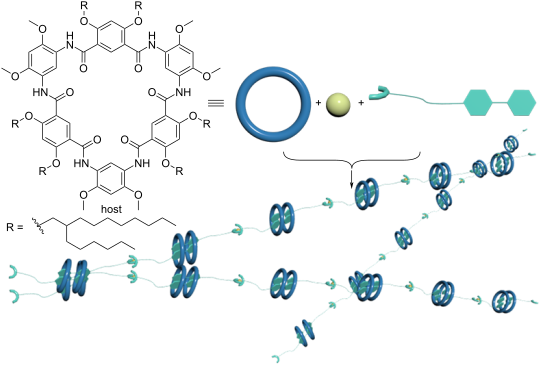
- supramolecular polymer in CHCl3/CH3CN (1:1, v/v, 298 K) at variable concentration. Variable-concentration 1H NMR spectra of the supramolecular polymer: (a) 2.0 mM, (b) 4.0 mM, (c) 6.0 mM, (d) 8.0 mM, and (e) 10 mM. a) Chemical structures of H-bonded macrocycles H1, H2, and guest G1, and schematic representation



Discovery of ianthelliformisamines D–G from the sponge Suberea ianthelliformis and the total synthesis of ianthelliformisamine D
Beilstein J. Org. Chem. 2024, 20, 3205–3214, doi:10.3762/bjoc.20.266
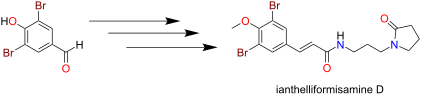
- , emission 590 nm). Chemical structures of ianthelliformisamines A–G (1–7) and aplysterol (8). Key COSY (), HMBC () and ROESY () correlations for ianthelliformisamines D (4) and E (5). Key COSY () and HMBC () correlations for ianthelliformisamines F (6) and G (7). Total synthesis of ianthelliformisamine D (4


![[Graphic 1]](/bjoc/content/inline/1860-5397-20-266-i2.svg?max-width=637&scale=1.18182)
![[Graphic 2]](/bjoc/content/inline/1860-5397-20-266-i3.svg?max-width=637&scale=1.18182)
![[Graphic 3]](/bjoc/content/inline/1860-5397-20-266-i4.svg?max-width=637&scale=1.18182)

![[Graphic 4]](/bjoc/content/inline/1860-5397-20-266-i5.svg?max-width=637&scale=1.18182)
![[Graphic 5]](/bjoc/content/inline/1860-5397-20-266-i6.svg?max-width=637&scale=1.18182)

Hypervalent iodine-mediated intramolecular alkene halocyclisation
Beilstein J. Org. Chem. 2024, 20, 3113–3133, doi:10.3762/bjoc.20.258
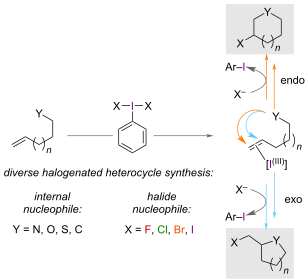
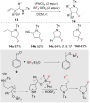
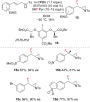
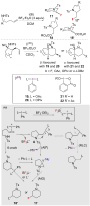
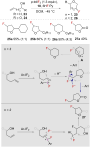
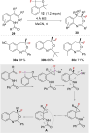
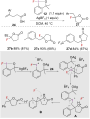
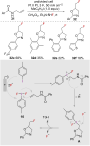
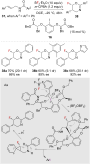
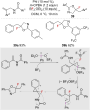
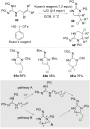
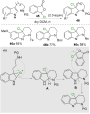
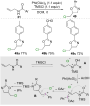
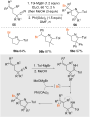
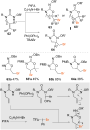
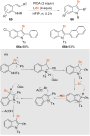
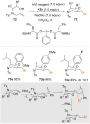
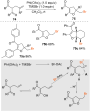
- Charu Bansal Oliver Ruggles Albert C. Rowett Alastair J. J. Lennox University of Bristol, School of Chemistry, Bristol, BS8 1TS, UK 10.3762/bjoc.20.258 Abstract The chemistry of hypervalent iodine (HVI) reagents has gathered increased attention towards the synthesis of a wide range of chemical
- structures. HVI reagents are characterized by their diverse reactivity as oxidants and electrophilic reagents. In addition, they are inexpensive, non-toxic and considered to be environmentally friendly. An important application of HVI reagents is the synthesis of halogenated cyclic compounds, in particular



















Advances in the use of metal-free tetrapyrrolic macrocycles as catalysts
Beilstein J. Org. Chem. 2024, 20, 3085–3112, doi:10.3762/bjoc.20.257


Chemical structure metagenomics of microbial natural products: surveying nonribosomal peptides and beyond
Beilstein J. Org. Chem. 2024, 20, 3050–3060, doi:10.3762/bjoc.20.253

- vocabulary for this molecular language, and knowing their chemical structures is key to understanding this form of information exchange [38]. It is worth pointing out that chemical structure, but not bioactivity, is the unique descriptor of a molecule. Molecules with the same chemical structures are (by
- corresponding nucleic acid sequence. Proteinaceous enzymes then go on to catalyze biosynthetic reactions that put together small molecule building blocks (BB) to generate natural products with extremely diverse chemical structures. Because the intricacy of this process is not fully understood, scientists still
- underexplored by two-fold a particular BB (or a group of BBs with similar chemical structures), respectively (Figure 3c). Phenylglycine and its derivatives (the sp2 group of BBs, Figure 3d) turned out to be the most oversampled group of BBs. This group of BBs included noncanonical amino acids characteristic of


Cyclodextrin-based rotaxanes for polymer materials: challenge on simultaneous realization of inexpensive production and defined structures
Beilstein J. Org. Chem. 2024, 20, 3026–3049, doi:10.3762/bjoc.20.252






The charge transport properties of dicyanomethylene-functionalised violanthrone derivatives
Beilstein J. Org. Chem. 2024, 20, 2921–2930, doi:10.3762/bjoc.20.244
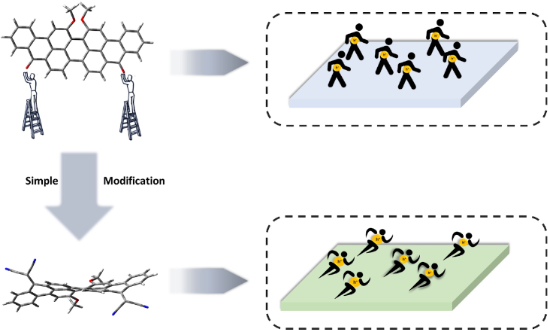
- , 134.5, 133.2, 131.1, 129.5, 128.6, 128.3, 127.8, 127.5, 127.2, 123.7, 123.2, 122.8, 117.3, 113.6, 69.8, 63.2, 32.9, 32.0, 29.9, 29.7, 29.5, 29.4, 26.2, 25.8, 22.8, 14.2; ASAP–HRMS (m/z): [M + H]+ calcd for C64H65N4O2, 921.5107; found, 921.5108. Chemical structures of violanthrone and
- dihydroxyviolanthrone. Chemical structures of 2b and 3b. Optimised ground state geometries of compounds 2 and 3 calculated using B3LYP/6-311G(d,p) in the gas phase. Views of the crystal structure of 3b (left, shows displacement ellipsoids drawn at 50% probability level, right showing the twisted conformation


Interaction of a pyrene derivative with cationic [60]fullerene in phospholipid membranes and its effects on photodynamic actions
Beilstein J. Org. Chem. 2024, 20, 2732–2738, doi:10.3762/bjoc.20.231

- present study for controlling both the location and photodynamic actions of a cationic derivative of C60 (catC60), a simple model compound of the triad molecules, in a membrane via π–π interactions with 1-pyrenebutyric acid (PyBA). (d–f) Chemical structures of 1,2-dimyristoyl-sn-glycero-3-phosphocholine


Young investigators in natural products chemistry, biosynthesis, and enzymology
Beilstein J. Org. Chem. 2024, 20, 2720–2721, doi:10.3762/bjoc.20.229
- clusters, and enzymes, development of chemical probes, biocatalysis and chemoenzymatic total synthesis, enzymatic mechanisms, and computational investigations of chemical structures and reactions. All of the major classes of natural products are represented here: nonribosomal peptides, ribosomally
Applications of microscopy and small angle scattering techniques for the characterisation of supramolecular gels
Beilstein J. Org. Chem. 2024, 20, 2608–2634, doi:10.3762/bjoc.20.220


Catalysing (organo-)catalysis: Trends in the application of machine learning to enantioselective organocatalysis
Beilstein J. Org. Chem. 2024, 20, 2280–2304, doi:10.3762/bjoc.20.196
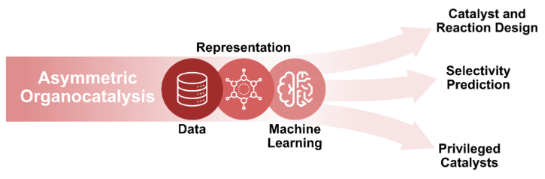
- , the interest to describe the influence of substrate or catalyst structures on the rate or selectivity of a reaction is well-established and led among others to the introduction of Hammett parameters to relate chemical structures to both kinetic and thermodynamic reaction properties [28] (Figure 4). As


Finding the most potent compounds using active learning on molecular pairs
Beilstein J. Org. Chem. 2024, 20, 2152–2162, doi:10.3762/bjoc.20.185

- properties (‘exploitative’) [18], or a combination of both (‘balanced’) [8]. Explorative active learning provides diverse chemical structures to support model learning while exploitative approaches instead bias towards rapid identification of favorable compounds. As such, explorative strategies may not
- transformation of chemical space. The deep models using this approach also more accurately identified hits in external test sets generated through simulated temporal splits, indicating the ActiveDelta approach’s applicability and generalizability to novel chemical structures that would likely be encountered


Discovery of antimicrobial peptides clostrisin and cellulosin from Clostridium: insights into their structures, co-localized biosynthetic gene clusters, and antibiotic activity
Beilstein J. Org. Chem. 2024, 20, 1800–1816, doi:10.3762/bjoc.20.159

- chemical structures of these lantibiotics make them promising candidates for treating drug-resistant pathogens, and the characterization of these compounds from Clostridium provides an opportunity to develop new antibiotics. Results and Discussion Genome mining of LanM enzymes’ sequence diversity to




Methyltransferases from RiPP pathways: shaping the landscape of natural product chemistry
Beilstein J. Org. Chem. 2024, 20, 1652–1670, doi:10.3762/bjoc.20.147
- within the context of ribosomally synthesised and post-translationally modified peptide (RiPP) natural products. Methyltransferases play a pivotal role in the biosynthesis of diverse natural products with unique chemical structures and bioactivities. They are highly chemo-, regio-, and stereoselective
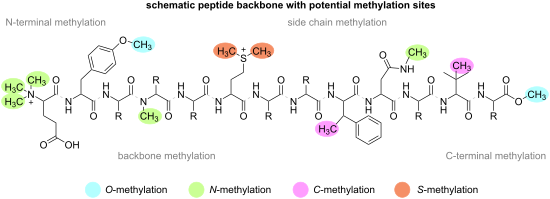
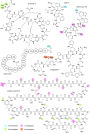
- biological systems. The transferred methyl group is highlighted in grey. B) General reaction schemes of biological methylation reactions. Chemical structures of RiPPs with diverse O-, N-, C-, and S-methylations. Amino acids of lassomycin are shown in the three-letter code. For longipeptin A, the




Polymer degrading marine Microbulbifer bacteria: an un(der)utilized source of chemical and biocatalytic novelty
Beilstein J. Org. Chem. 2024, 20, 1635–1651, doi:10.3762/bjoc.20.146
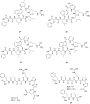
- distributions and origins of Microbulbifer bacteria strains, degradation enzymes, and secondary metabolite discoveries. A focus is placed on the novel chemical structures reported with reference to their biological activities and the biosynthetic studies they have inspired. Review Biopolymer degrading enzymes
- structures of sulfated polysaccharides κ-, ι-, and λ-carrageenans. Chemical structures of 4HBA (1) and parabens (2–14) isolated from Microbulbifer strains, and synthetic analogus (15–17). Chemical structures of nucleosides 18–20 isolated from Microbulbifer strains. Chemical structures of alkaloids 21–24
- isolated from Microbulbifer strains. Chemical structures of (2Z,4E)-3-methyl-2,4-decadienoic acid (25) and 4-BP (26) natural products isolated from Microbulbifer strains. Chemical structures of bulbiferamides 27–30 and pseudobulbiferamides 31–35. Proposed NRPS assembly lines for the biosynthesis of (A




Diameter-selective extraction of single-walled carbon nanotubes by interlocking with Cu-tethered square nanobrackets
Beilstein J. Org. Chem. 2024, 20, 1298–1307, doi:10.3762/bjoc.20.113
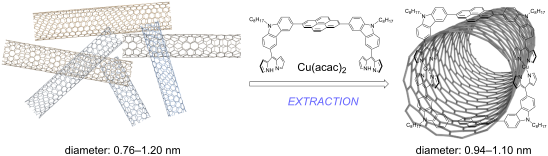
- @(12,2)-SWNT complexes. Chemical structures of Cu-tethered tetragonal nanobrackets 1a and 1b. Synthesis of nanobracket 4. Reaction conditions: i) XPhos Pd G2, XPhos, B2(OH)4, KOAc, EtOH, 80 °C, 2 h; ii) Br-Ar-Br, K2CO3, tetrahydrofuran (THF)/toluene, 80 °C, 16 h; iii) trifluoroacetic acid (TFA), pyrrole




Cofactor-independent C–C bond cleavage reactions catalyzed by the AlpJ family of oxygenases in atypical angucycline biosynthesis
Beilstein J. Org. Chem. 2024, 20, 1198–1206, doi:10.3762/bjoc.20.102
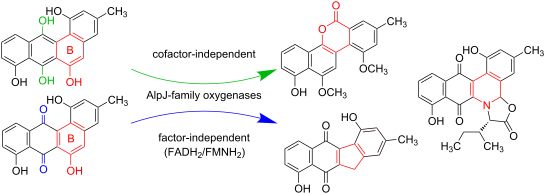
- distinctive subset of compounds, including jadomycin, gilvocarcin, kinamycin, fluostatin, and lomaiviticin, arises from typical angucycline intermediates via oxidative C–C bond cleavage and subsequent ring rearrangement reactions. These atypical angucyclines exhibit intriguing chemical structures and various




Structure–property relationships in dicyanopyrazinoquinoxalines and their hydrogen-bonding-capable dihydropyrazinoquinoxalinedione derivatives
Beilstein J. Org. Chem. 2024, 20, 1037–1052, doi:10.3762/bjoc.20.92
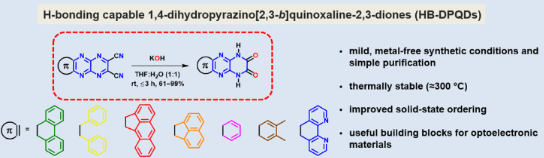
- , 2H), 9.34–9.36 (d, J = 8 Hz, 2H); 13C NMR (125 MHz, DMSO-d6 + TFA) δ 126.8, 127.8, 136.8, 138.3, 139.0, 147.9, 155.8; HRESIMS: [M + H]+ calcd for C16H8N6O2, 317.0787; found, 317.0776. Chemical structures of H-bonding N-heteroacenes synthesized by Miao et al. and Bunz et al. (a) [22][23]. Preparation




Discovery and biosynthesis of bacterial drimane-type sesquiterpenoids from Streptomyces clavuligerus
Beilstein J. Org. Chem. 2024, 20, 815–822, doi:10.3762/bjoc.20.73
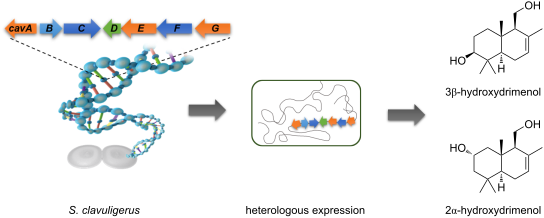
- these, drimane-type sesquiterpenoids (DMTs) are distinct due to their chemical structures, which feature a decahydronaphthalene core adorned with methyl groups, mirroring the A/B rings found in labdane-derived diterpenoids [5][6] (Figure 1a). DMTs exhibit significant biological activities, such as those
- significant in industrial applications, renowned for its production of diverse natural products with chemical structures and bioactivities, such as cephamycin C, clavulanic acid, and isopenicillin N [22][23][24]. Genomic sequencing of S. clavuligerus has revealed 48 potential secondary metabolite BGCs, and
- ), 2α-hydroxydrimenol (3), and 3-ketodrimenol (4) (Figure 2a). HPLC analysis of metabolites from different culture media showed that YMS medium was more conducive to produce compound 3 (Figure 2b and Table S1 in Supporting Information File 1). The chemical structures of these isolated compounds were


Genome mining of labdane-related diterpenoids: Discovery of the two-enzyme pathway leading to (−)-sandaracopimaradiene in the fungus Arthrinium sacchari
Beilstein J. Org. Chem. 2024, 20, 714–720, doi:10.3762/bjoc.20.65
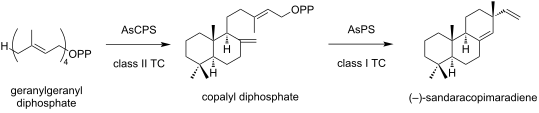
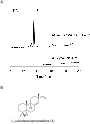
- organizations were discovered, these enzymes would be useful to discuss and further analyze the evolution of TCs in fungi. LRDs in fungi. A) Chemical structures of representative fungal LRDs. B) Reactions catalyzed by selected fungal bifunctional TCs. Sequence analysis of AsPS and AsCPS. A) Biosynthetic gene



New variochelins from soil-isolated Variovorax sp. H002
Beilstein J. Org. Chem. 2024, 20, 692–700, doi:10.3762/bjoc.20.63
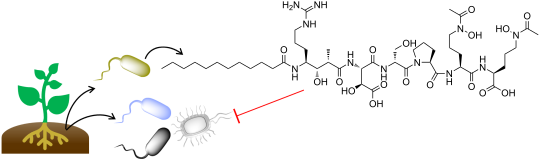
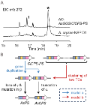
- percent growth inhibition. (a) Chemical structures and (b) ESIMS/MS of variochelins A–E (1–5) isolated from Variovorax sp. H002. Parent ions are m/z 1075.08 [M + H]+ (1), m/z 1103.18 [M + H]+ (2), m/z 1047.06 [M + H]+ (3), m/z 1072.95 [M + H]+ (4), and m/z 1101.14 [M + H]+ (5). Parent ions are represented


Chemical and biosynthetic potential of Penicillium shentong XL-F41
Beilstein J. Org. Chem. 2024, 20, 597–606, doi:10.3762/bjoc.20.52
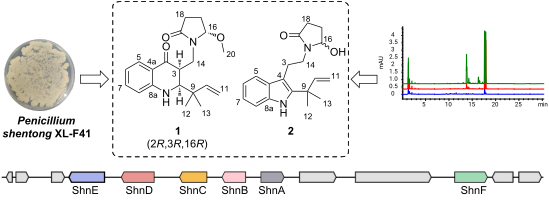
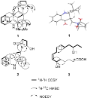
- found in the methods section. Chemical structures of compounds 1–12. Key 2D NMR correlations of compounds 1–3. Experimental and calculated ECD spectra at the CAM-B3LYP/6-311G(d,p) level of theory for compound 1. Biosynthetic exploration of compounds 1 and 2. A: The schematic presents the biosynthetic




Recent developments in the engineered biosynthesis of fungal meroterpenoids
Beilstein J. Org. Chem. 2024, 20, 578–588, doi:10.3762/bjoc.20.50
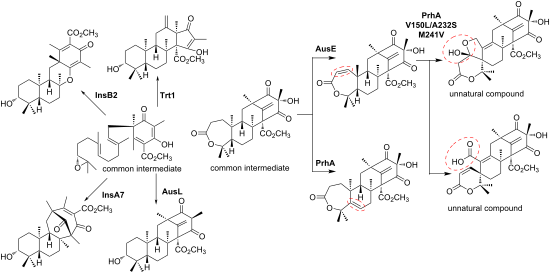
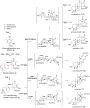
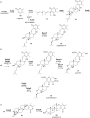
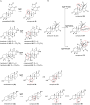
- molecular species withdraws a hydrogen atom, and the generated radical induces various reactions such as hydroxylation, unsaturation, epoxidation, halogenation, endoperoxidation, and C–C bond reconstruction, leading to the formation of diverse chemical structures [22][26][27][28][29][30][31]. Structure






Pseudallenes A and B, new sulfur-containing ovalicin sesquiterpenoid derivatives with antimicrobial activity from the deep-sea cold seep sediment-derived fungus Pseudallescheria boydii CS-793
Beilstein J. Org. Chem. 2024, 20, 470–478, doi:10.3762/bjoc.20.42
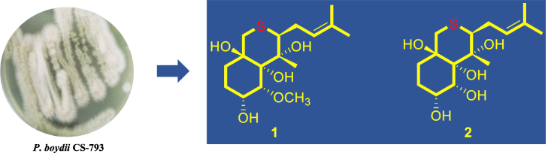
- . Optical density at 600 nm was read by a multi-detection microplate reader (Infinite M1000 Pro, Tecan). The human pathogenic bacteria and aquatic pathogenic strains were offered by the Institute of Oceanology, Chinese Academy of Sciences. Chemical structures of compounds 1–5 isolated from P. boydii CS-793





