Search results
Search for "decomposition" in Full Text gives 826 result(s) in Beilstein Journal of Organic Chemistry. Showing first 200.
Ex-situ generation of gaseous nitriles in two-chamber glassware for facile haloacetimidate synthesis
Beilstein J. Org. Chem. 2025, 21, 2465–2469, doi:10.3762/bjoc.21.188
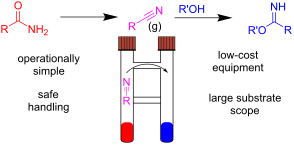
- of difluoroacetimidates was therefore attempted, but in our hands, these proved even more unstable than the trifluoroacetimidates and were not possible to isolate by chromatography due to decomposition. However, the purity of these compounds, after filtration through a block of silica gel, was
- was the p-methoxy derivative 11 which, as expected, was more reactive and hence more difficult to purify due to decomposition on silica gel. The p-methoxybenzyl trifluoroacetimidate (9) has been shown to be an effective regent for the acid-catalyzed benzylation of alcohols [12][30]. Conclusion In


An Fe(II)-catalyzed synthesis of spiro[indoline-3,2'-pyrrolidine] derivatives
Beilstein J. Org. Chem. 2025, 21, 2383–2388, doi:10.3762/bjoc.21.183
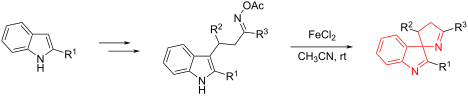
- resulted in extensive decomposition and tarring, a common issue with α-unsubstituted pyrroles under acidic conditions. These results indicate that substrates featuring strongly electron-withdrawing groups or acid-sensitive motifs are not compatible with the developed protocol. Next, we synthesized the




Synthetic study toward vibralactone
Beilstein J. Org. Chem. 2025, 21, 2376–2382, doi:10.3762/bjoc.21.182

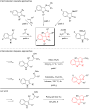
- deprotection followed by C–H insertion. However, when attempting to remove the ketal protecting group, only decomposition of the starting material was observed. A plausible explanation for this outcome is that the β-lactone ring, located at the β-position of the methyl ketone, may undergo facile β-elimination
- not proceed to form the all-carbon quaternary center and only decomposition of 21 was observed. The failure is likely due to the sterically hindered environment of the substituted β-lactone ring which precludes the C–H insertion or deprotonation of the β-lactone and interrupted the generation of the


Halogenated butyrolactones from the biomass-derived synthon levoglucosenone
Beilstein J. Org. Chem. 2025, 21, 2297–2301, doi:10.3762/bjoc.21.175
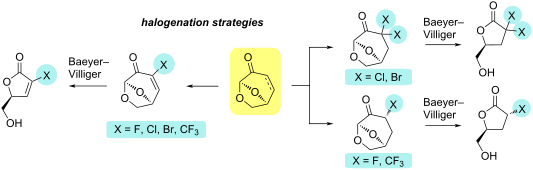
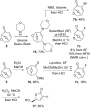
- converted into the silyl enol ether 12 and treated with Selectfluor, fluorinated ketone 13 was formed as the major product after aqueous workup (Scheme 2). When the solution of 13 was concentrated following flash column chromatography, rapid decomposition was observed, which may explain failures with many



Enantioselective radical chemistry: a bright future ahead
Beilstein J. Org. Chem. 2025, 21, 2283–2296, doi:10.3762/bjoc.21.174
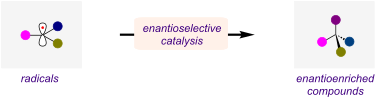
- for the construction of carbon–carbon and carbon–heteroatom bonds. Unlike many ionic reactions, radical reactions are often functional group tolerant and carried out under mild, neutral conditions, avoiding harsh acidic or basic conditions that can promote epimerization or decomposition of the product
- was the use of ferrocene as a redox mediator, which played an important role in preventing substrate decomposition under the electrochemical conditions. An electrochemical method enabled regio- and enantioselective radical reactions of silyl polyenolates with racemic α-branched esters, yielding


Pathway economy in cyclization of 1,n-enynes
Beilstein J. Org. Chem. 2025, 21, 2260–2282, doi:10.3762/bjoc.21.173
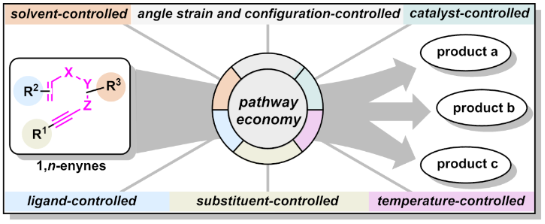
- /cycloisomerization sequences. In 2019 and 2020, Liu and co-workers achieved pathway-controlled cyclization–isomerization of tryptamine-ynamides using ligand-influenced silver catalytic systems (Scheme 19) [27][28][29]. To circumvent decomposition caused by the inherent high reactivity of ynamides under catalytic


C2 to C6 biobased carbonyl platforms for fine chemistry
Beilstein J. Org. Chem. 2025, 21, 2103–2172, doi:10.3762/bjoc.21.165


Understanding the origin of stereoselectivity in the photochemical denitrogenation of 2,3-diazabicyclo[2.2.1]heptene and its derivatives with non-adiabatic molecular dynamics
Beilstein J. Org. Chem. 2025, 21, 2007–2020, doi:10.3762/bjoc.21.156
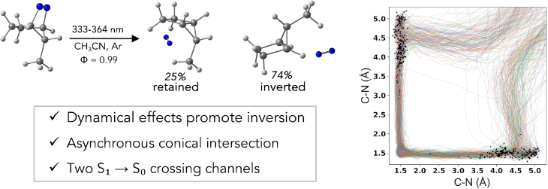
- to experimentally measure the stereoselectivity of the reaction. In 1965, Crawford and co-workers experimentally found kinetic evidence for a 1,3-diradical from the thermal decomposition of 1 [56]. In 1963, Steel investigated the photolysis of diazabicyclo[2.1.1]hep-2-ene in solution, and the
- diradical pathways resulting from thermal decomposition using UM06-2X/6-31G(d,p) with quasiclassical trajectories and machine-learning analysis [83]. The results suggested a correlation between the out-of-plane bending of the methylene bridge and the stereoselectivity of the formation of retained and


Asymmetric total synthesis of tricyclic prostaglandin D2 metabolite methyl ester via oxidative radical cyclization
Beilstein J. Org. Chem. 2025, 21, 1964–1972, doi:10.3762/bjoc.21.152
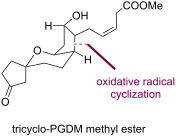
- reaction at 50 °C for 36 h, and extensive decomposition of the starting material β-keto ester 15 occurred (Table 1, entry 1). Solvent screening of EtOH [26], acetic acid [26], and hexafluoroisopropanol (HFIP) [27] demonstrated that HFIP afforded optimal results, delivering cyclopentanone 14 in 63% yield as



Systematic pore lipophilization to enhance the efficiency of an amine-based MOF catalyst in the solvent-free Knoevenagel reaction
Beilstein J. Org. Chem. 2025, 21, 1854–1863, doi:10.3762/bjoc.21.144
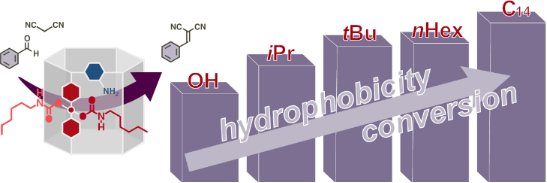
- catalysis have focused on lipophilization to prevent water-based catalyst decomposition, with only a few investigating how lipophilic pores surfaces can increase catalyst efficiency [32][33], despite enzymes employing such a strategy. The lipophilicity of enzyme active sites tends to improve reaction rates


Continuous-flow-enabled intensification in nitration processes: a review of technological developments and practical applications over the past decade
Beilstein J. Org. Chem. 2025, 21, 1678–1699, doi:10.3762/bjoc.21.132
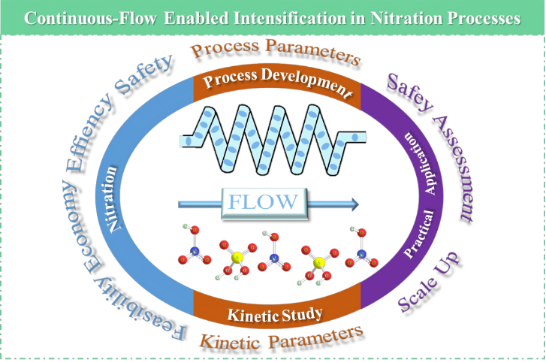
- (per Arrhenius kinetics) enhances reaction rates, practical implementation remains constrained by critical temperature thresholds dictated by reactant/solvent system volatility and thermal decomposition limits. For elevated-temperature nitration processes requiring superheated conditions, implementing
- nominal operating parameters (e.g., elevated temperatures approaching the decomposition threshold of nitro compounds, prolonged residence times that may promote polynitration, or extreme reagent stoichiometries that could generate unstable intermediates) while monitoring key performance indicators such as
- safety risks associated with traditional batch nitrations, the following criteria (Figure 5) could be applied [71]: I Evaluate the explosive hazard of materials based on their heat of decomposition. II Evaluate the severity of runaway reactions based on adiabatic temperature rise. III Evaluate the



Transition-state aromaticity and its relationship with reactivity in pericyclic reactions
Beilstein J. Org. Chem. 2025, 21, 1613–1626, doi:10.3762/bjoc.21.125
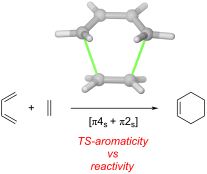
- aromatic character in their transition states, this increased aromaticity does not necessarily correlate with lower activation barriers. State-of-the-art computational methods on reactivity, such as the combined activation strain model (ASM)–energy decomposition analysis (EDA) method, reveal that factors
- energy decomposition analysis (EDA) method [49][50], which further decomposes the crucial ΔEint term into three physically meaningful energy terms, namely the classical electrostatic interaction (ΔVelstat), the Pauli repulsion (ΔEPauli) arising from the repulsion between occupied closed-shell orbitals of
- for the Diels–Alder cycloaddition reaction between isoprene and methyl acrylate catalyzed by Lewis acids. Bond distances are given in angstroms and NICS(3, +1) values in ppm. Comparative activation strain analyses (a) and energy decomposition analysis (b) of the Diels–Alder cycloaddition reaction


Thermodynamic equilibrium between locally excited and charge transfer states in perylene–phenothiazine dyads
Beilstein J. Org. Chem. 2025, 21, 1577–1586, doi:10.3762/bjoc.21.121
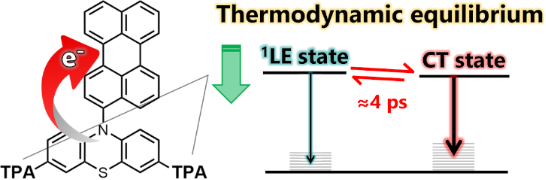
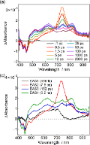
- of Pe–PTZ have been studied in a previous study [15], this study focused first on a detailed analysis of Pe–PTZ(TPA)2, followed by a comparison with other derivatives. The transient absorption spectra were analyzed using global analysis based on singular value decomposition with the Glotaran program




Facile synthesis of hydantoin/1,2,4-oxadiazoline spiro-compounds via 1,3-dipolar cycloaddition of nitrile oxides to 5-iminohydantoins
Beilstein J. Org. Chem. 2025, 21, 1552–1560, doi:10.3762/bjoc.21.118

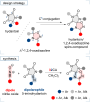
- the product of decomposition of the initial imine 2f. No other substances could be identified in this case. In all cases, the 32CA reactions occurred regiospecifically, forming a 1,2,4-oxadiazoline ring, which is consistent with the results of the reactions for similar substrates [36][38]. The
- known that nitrile oxides are capable of reacting with various multiple carbon–heteroatom bonds [28]. In contrast to the products of nitrile oxide cycloaddition to imino groups, 1,4,2-oxathiazoles, formed by addition to C=S bonds, are unstable and undergo decomposition into isothiocyanate and a carbonyl



Calcium waste as a catalyst in the transesterification for demanding esters: scalability perspective
Beilstein J. Org. Chem. 2025, 21, 1520–1527, doi:10.3762/bjoc.21.114
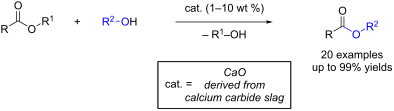
- phase (with reflections at 2θ = 32.4, 37.5, 54.0, 64.3, 67.5) to 73.5 wt % was detected due to the decomposition of the Ca(OH)2 phase; the amount of the Ca(OH)2 phase after calcination was 2.4 wt %. The amount of the CaCO3 phase increased to 17.6 wt %, probably due to the sorption of carbon dioxide or
- the decomposition of organic impurities (Figure 3B). Thus, using 4a as an example, the possibility of reusing the CS600 catalyst in transesterification was successfully demonstrated. Conclusion Currently, the transesterification reaction of esters is a well-established procedure. The simple reaction


Ambident reactivity of enolizable 5-mercapto-1H-tetrazoles in trapping reactions with in situ-generated thiocarbonyl S-methanides derived from sterically crowded cycloaliphatic thioketones
Beilstein J. Org. Chem. 2025, 21, 1508–1519, doi:10.3762/bjoc.21.113
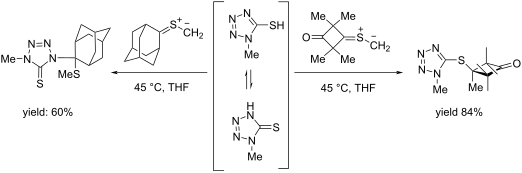
- but also for the synthesis of sulfur-containing organic compounds in general [2][5][6]. Thiocarbonyl S-methanides 1 belong to the class of so-called S-centered, electron-rich 1,3-dipoles and in numerous studies, thermal decomposition of 1,3,4-thiadiazolines 2, which are easily accessible via [3 + 2
- -established methodology, transient thiocarbonyl S-methanides 1 should be generated in situ by thermal decomposition of their precursors, i.e., spiro-1,3,4-thiadiazolines 2 [5][6]. In contrast to adamantanethione (7a), which reacts with diazomethane (CH2N2) yielding a mixture of regioisomeric 1,3,4- and 1,2,3
- ], were analogously treated with CH2N2 at ca. 0 °C and the expected cycloadducts 2c and 2d were formed with complete regioselectivity, and subsequently could be isolated in good yields without a remarkable decomposition (Scheme 3). Thermal decomposition of 2a and 2b, and the behavior of the corresponding


Photoredox-catalyzed arylation of isonitriles by diaryliodonium salts towards benzamides
Beilstein J. Org. Chem. 2025, 21, 1480–1488, doi:10.3762/bjoc.21.110
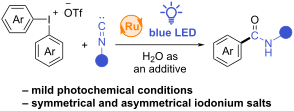
- -water ratios to establish initial conditions (Supporting Information File 1, 2.1 Solvent screening). Diphenyliodonium triflate (1a) and 1-isocyano-4-methylbenzene were used as model substrates. Taking into account the possibility of iodonium salt decomposition under irradiation we carried out an initial
- as Cs2CO3 (Table 1, entry 10) and KOH (Table 1, entry 11) led to diminished yields, reducing the product formation to 30% and 11%, respectively. In both cases we observed substantial decomposition of the iodonium salt affecting the yield of the desired product. We also performed the reaction with


High-pressure activation for the solvent- and catalyst-free syntheses of heterocycles, pharmaceuticals and esters
Beilstein J. Org. Chem. 2025, 21, 1374–1387, doi:10.3762/bjoc.21.102
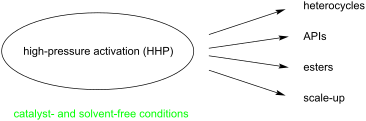
- appears to be applicable for other substrates as well, although the yields were lower, which is mainly due to the decomposition of the products (Scheme 1). HHP-assisted cyclization of chalcones with hydrazines for the synthesis of pyrazoles The cyclization of 1,3-bifunctional compounds, such chalcones


Selective monoformylation of naphthalene-fused propellanes for methylene-alternating copolymers
Beilstein J. Org. Chem. 2025, 21, 1183–1191, doi:10.3762/bjoc.21.95
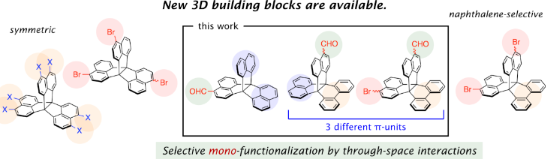
- Supporting Information File 1). Despite several trials, the reactions led to complicated mixtures owing to decomposition and debromination or predominant recovery of the starting material, respectively. Then, we turned our attention to electrophilic formylation. Vilsmeier–Haack [61] and Duff [62] reactions
- ) [55][56][63][64][65][66] yielded the monoformyl product [4.3.3]_CHO, in a selective manner (Table 1, entry 1). To suppress decomposition in the overnight reaction at room temperature, the reaction time was reduced to 1.5 h, which afforded [4.3.3]_CHO in an isolated yield of 80% (Table 1, entry 2). The
- [3.3.3]_CHO (61%). Although further increase of the equivalents and prolonged reaction time may potentially provide better results for [3.3.3]_2CHO, we gave up such attempts because of the competing decomposition in these strongly acidic conditions. In the case of [4.3.3], diformylation gave only 1.8% of


Synthetic approach to borrelidin fragments: focus on key intermediates
Beilstein J. Org. Chem. 2025, 21, 1135–1160, doi:10.3762/bjoc.21.91
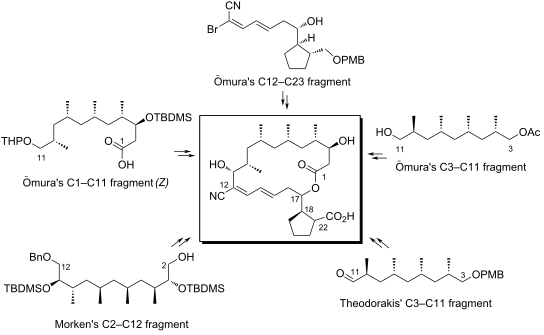
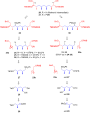
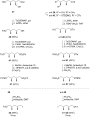
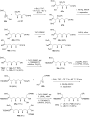
- these sulfones with epoxides 23b and 23a, respectively. Following the literature procedure for a similar reaction, using n-butyllithium in the presence of BF3·Et2O at −78 °C, the coupling reaction unfortunately resulted in the decomposition of the reactants (Scheme 4). The authors hypothesized that the
- results, with reactant decomposition observed. Similarly, when the lithium derivative was reacted with CuSPh to form the corresponding heterocuprate species prior to reacting with the epoxide, the same decomposition occurred, despite this strategy being successful in a related case. Finally, replacing the
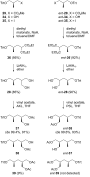
- epoxides 23b and 23a with the non-protected variant 23c, and reacting it with sulfone 27 after pre-complexation with Ti(OiPr)4, again led only to decomposition. Given the unsatisfying results, Uguen and co-workers replaced the epoxides 23a–c to monoethers 46a and 46b, derived from trans-2,3-epoxy-1,4








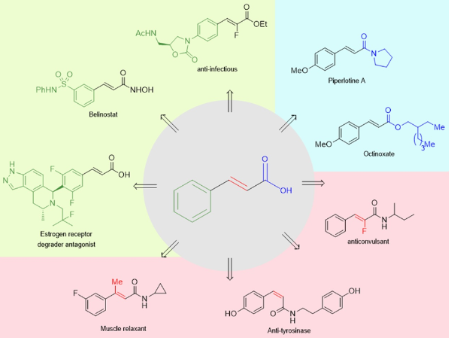
Recent advances in synthetic approaches for bioactive cinnamic acid derivatives
Beilstein J. Org. Chem. 2025, 21, 1031–1086, doi:10.3762/bjoc.21.85
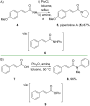
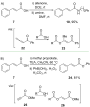
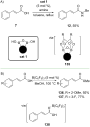
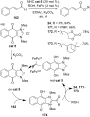
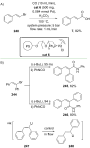
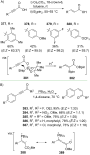
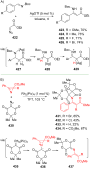
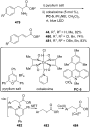
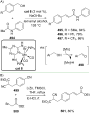
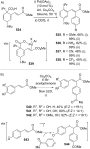
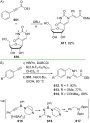
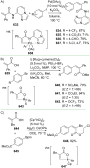
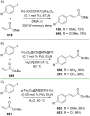
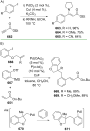
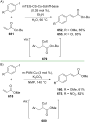
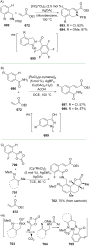
- other hand, Fan and co-workers (2020) prepared α-amidoketone 71 by employing vinyl azide and cinnamic acid (7) in good yield via cascade reaction (Scheme 23B) [58]. The thermal decomposition of the azide led to the generation of the reactive azirine intermediate 72. Moreover, Li and co-workers (2020








































Biobased carbon dots as photoreductants – an investigation by using triarylsulfonium salts
Beilstein J. Org. Chem. 2025, 21, 1024–1030, doi:10.3762/bjoc.21.84
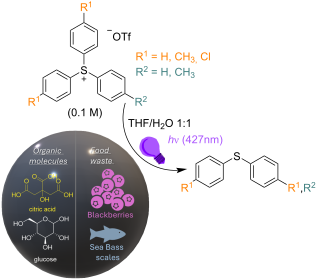
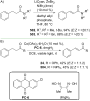
- approach, CDs arise from the decomposition of large carbogenic structures (including graphite, graphite sheets and carbon nanotubes), whereas in the bottom-up approach such materials are obtained by carbonization of small organic molecules and biowastes (carbohydrates, polymers, bioorganic compounds


Synthesis of pyrrolo[3,2-d]pyrimidine-2,4(3H)-diones by domino C–N coupling/hydroamination reactions
Beilstein J. Org. Chem. 2025, 21, 1010–1017, doi:10.3762/bjoc.21.82
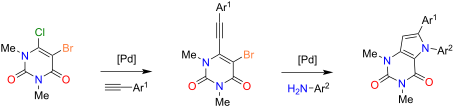
- , leading to 43% isolated yield with full conversion of starting material and different byproducts derived from decomposition. Interestingly, no conversion of the starting material could be observed with the other ligands. In the following, different solvents, temperatures and bases were tested, but did not



Harnessing tethered nitreniums for diastereoselective amino-sulfonoxylation of alkenes
Beilstein J. Org. Chem. 2025, 21, 947–954, doi:10.3762/bjoc.21.78

- equivalent of commercial iodomesitylene diacetate (CAS [33035-41-5]) and 1 equivalent of MsOH (Table 1, entry 4). Here, it was necessary to maintain a temperature of 0 °C, as vigorous bubbling and rapid decomposition occurred when the reaction was initiated at room temperature. In all cases (Table 1), only a
- compatible with our optimized conditions (Table 2, poor performers). In many cases, complex mixtures of recovered starting material and multiple products were observed. Carbamate tethers with N-alkoxy substituents were essential for clean reactions; indeed, extensive decomposition was observed with N-ethyl
- unpurified reaction residues showed a complex mixture of products. There were some signals suggestive of terminal alkenes, implying that olefin transposition was a competing pathway. With alkyne substrate 59, decomposition occurred, and the 1H NMR of the unpurified reaction mixture was illegible. With


A convergent synthetic approach to the tetracyclic core framework of khayanolide-type limonoids
Beilstein J. Org. Chem. 2025, 21, 926–934, doi:10.3762/bjoc.21.75
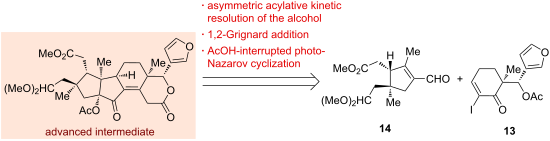
- .) of 24 led only to epimerization at C10 or slow decomposition of the starting material (see Supporting Information File 1, Table S1). Pleasingly, treating 24 with HMDS and TMSI regioselectively generated the expected TMS enol ether [46], which underwent a Li/Si exchange in the presence of MeLi
- stage was set for the construction of the target skeleton through a 1,2-addition (Scheme 4). Preliminary trials to generate organometallic species via Li/I exchange under various conditions (n-BuLi, t-BuLi, or t-BuLi in combination with CeCl3 or MgBr2) led to rapid decomposition, likely due to inherent
- Nazarov cyclization under a variety of conditions (Table 1). Initial trials under acid-mediated Nazarov conditions (AlCl3, BF3·Et2O and Me2AlCl) led to complete decomposition, while the exposure to AcOH resulted in recovery of the starting material (Table 1, entries 1–4). Recognizing the limitations of