


Search results
Search for "direct functionalization" in Full Text gives 40 result(s) in Beilstein Journal of Organic Chemistry.
One hundred years of benzotropone chemistry
- Arif Dastan,
- Haydar Kilic and
- Nurullah Saracoglu
Beilstein J. Org. Chem. 2018, 14, 1120–1180, doi:10.3762/bjoc.14.98

Graphical Abstract

Scheme 1: Tropone (1), tropolone (2) and their resonance structures.

Figure 1: Natural products containing a tropone nucleus.

Figure 2: Possible isomers 11–13 of benzotropone.

Scheme 2: Synthesis of benzotropones 11 and 12.

Scheme 3: Oxidation products of benzotropylium fluoroborate (16).

Scheme 4: Oxidation of 7-bromo-5H-benzo[7]annulene (22).

Scheme 5: Synthesis of 4,5-benzotropone (11) using o-phthalaldehyde (27).

Scheme 6: Synthesis of 4,5-benzotropone (11) starting from oxobenzonorbornadiene 31.

Scheme 7: Acid-catalyzed cleavage of oxo-bridge of 34.

Scheme 8: Synthesis of 4,5-benzotropone (11) from o-xylylene dibromide (38).

Scheme 9: Synthesis of 4,5-benzotropone (11) via the carbene adduct 41.

Scheme 10: Heck coupling strategy for the synthesis of 11.

Scheme 11: Synthesis of benzofulvalenes via carbonyl group of 4,5-benzotropone (11).

Figure 3: Some cycloheptatrienylium cations.

Scheme 12: Synthesis of condensation product 63 and its subsequent oxidative cyclization products.

Figure 4: A novel series of benzo[7]annulenes prepared from 4,5-benzotropone (11).

Scheme 13: Preparation of substituted benzo[7]annulene 72 using the Mukaiyama-Michael reaction.

Figure 5: Possible benzo[7]annulenylidenes 73–75.

Scheme 14: Thermal and photochemical decomposition of 7-diazo-7H-benzo[7]annulene (76) and the trapping of int...

Scheme 15: Synthesis of benzoheptafulvalene 86.

Scheme 16: Synthesis of 7-(diphenylmethylene)-7H-benzo[7]annulene (89).

Scheme 17: Reaction of 4,5-benzotropone (11) with dimethyl diazomethane.

Scheme 18: Synthesis of dihydrobenzomethoxyazocine 103.

Scheme 19: Synthesis and reducibility of benzo-homo-2-methoxyazocines.

Scheme 20: Synthesis of 4,5-benzohomotropones 104 and 115 from 4,5-benzotropones 11 and 113.

Scheme 21: A catalytic deuterogenation of 4,5-benzotropone (11) and synthesis of 5-monosubstituted benzo[7]ann...

Scheme 22: Synthesis of methyl benzo[7]annulenes 131 and 132.

Scheme 23: Ambident reactivity of halobenzo[7]annulenylium cations 133a/b.

Scheme 24: Preparation of benzo[7]annulenylidene–iron complexes 147.

Scheme 25: Synthesis of 1-ethynylbenzotropone (150) and the etheric compound 152 from 4,5-benzotropone (11) wi...

Scheme 26: Thermal decomposition of 4,5-benzotropone (11).

Scheme 27: Reaction of 4,5-benzotropone (11) with 1,2-ethanediol and 1,2-ethanedithiol.

Scheme 28: Conversions of 1-benzosuberone (162) to 2,3-benzotropone (12).

Scheme 29: Synthesis strategies for 2,3-bezotropone (12) using 1-benzosuberones.

Scheme 30: Oxidation-based synthesis of 2,3-benzotropone (12) via 1-benzosuberone (162).

Scheme 31: Synthesis of 2,3-benzotropone (12) from α-tetralone (171) via ring-expansion.

Scheme 32: Preparation of 2,3-benzotropone (12) by using of benzotropolone 174.

Figure 6: Benzoheptafulvenes as condensation products of 2,3-benzotropone (12).

Scheme 33: Conversion of 2,3-benzotropone (12) to tosylhydrazone salt 182 and gem-dichloride 187.

Figure 7: Benzohomoazocines 191–193 and benzoazocines 194–197.

Scheme 34: From 2,3-benzotropone (12) to carbonium ions 198–201.

Scheme 35: Cycloaddition reactions of 2,3-benzotropone (12).
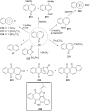
Scheme 36: Reaction of 2,3-benzotropone (12) with various reagents and compounds.

Figure 8: 3,4-Benzotropone (13) and its resonance structure.

Scheme 37: Synthesis of 6,7-benzobicyclo[3.2.0]hepta-3,6-dien-2-one (230).

Figure 9: Photolysis and thermolysis products of 230.

Figure 10: Benzotropolones and their tautomeric structures.

Scheme 38: Synthesis strategies of 4,5-benzotropolone (238).

Scheme 39: Synthesis protocol for 2-hydroxy-4,5-benzotropone (238) using oxazole-benzo[7]annulene 247.

Figure 11: Some quinoxaline and pyrazine derivatives 254–256 prepared from 4,5-benzotropolone (238).

Scheme 40: Nitration product of 4,5-benzotropolone (238) and its isomerization to 1-nitro-naphthoic acid (259)....

Scheme 41: Synthesis protocol for 6-hydroxy-2,3-benzotropone (239) from benzosuberone (162).
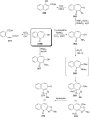
Scheme 42: Various reactions via 6-hydroxy-2,3-benzotropone (239).

Scheme 43: Photoreaction of 6-hydroxy-2,3-benzotropone (239).

Scheme 44: Synthesis of 7-hydroxy-2,3-benzotropone (241) from benzosuberone (162).

Scheme 45: Synthesis strategy for 7-hydroxy-2,3-benzotropone (241) from ketone 276.

Scheme 46: Synthesis of 7-hydroxy-2,3-benzotropone (241) from β-naphthoquinone (280).

Scheme 47: Synthesis of 7-hydroxy-2,3-benzotropone (241) from bicyclic endoperoxide 213.

Scheme 48: Synthesis of 7-hydroxy-2,3-benzotropone (241) by ring-closing metathesis.

Figure 12: Various monosubstitution products 289–291 of 7-hydroxy-2,3-benzotropone (241).

Scheme 49: Reaction of 7-hydroxy-2,3-benzotropone (241) with various reagents.

Scheme 50: Synthesis of 4-hydroxy-2,3-benzotropones 174 and 304 from diketones 300/301.

Scheme 51: Catalytic hydrogenation of diketones 300 and 174.

Scheme 52: Synthesis of halo-benzotropones from alkoxy-naphthalenes 306, 307 and 310.

Figure 13: Unexpected byproducts 313–315 during synthesis of chlorobenzotropone 309.

Figure 14: Some halobenzotropones and their cycloadducts.

Scheme 53: Multisep synthesis of 2-chlorobenzotropone 309.

Scheme 54: A multistep synthesis of 2-bromo-benzotropone 26.

Scheme 55: A multistep synthesis of bromo-2,3-benzotropones 311 and 316.

Scheme 56: Oxidation reactions of 8-bromo-5H-benzo[7]annulene (329) with some oxidants.

Scheme 57: Synthesis of 2-bromo-4,5-benzotropone (26).

Scheme 58: Synthesis of 6-chloro-2,3-benzotropone (335) using LiCl and proposed intermediate 336.

Scheme 59: Reaction of 7-bromo-2,3-benzotropone (316) with methylamine.

Scheme 60: Reactions of bromo-2,3-benzotropones 26 and 311 with dimethylamine.

Scheme 61: Reactions of bromobenzotropones 311 and 26 with NaOMe.

Scheme 62: Reactions of bromobenzotropones 26 and 312 with t-BuOK in the presence of DPIBF.

Scheme 63: Cobalt-catalyzed reductive cross-couplings of 7-bromo-2,3-benzotropone (316) with cyclic α-bromo en...

Figure 15: Cycloadduct 357 and its di-π-methane rearrangement product 358.

Scheme 64: Catalytic hydrogenation of 2-chloro-4,5-benzotropone (311).

Scheme 65: Synthesis of dibromo-benzotropones from benzotropones.

Scheme 66: Bromination/dehydrobromination of benzosuberone (162).

Scheme 67: Some transformations of isomeric dibromo-benzotropones 261A/B.

Scheme 68: Transformations of benzotropolone 239B to halobenzotropolones 369–371.

Figure 16: Bromobenzotropolones 372–376 and 290 prepared via bromination/dehydrobromination strategy.

Scheme 69: Synthesis of some halobenzotropolones 289, 377 and 378.

Figure 17: Bromo-chloro-derivatives 379–381 prepared via chlorination.

Scheme 70: Synthesis of 7-iodo-3,4-benzotropolone (382).

Scheme 71: Hydrogenation of bromobenzotropolones 369 and 370.

Scheme 72: Debromination reactions of mono- and dibromides 290 and 375.

Figure 18: Nitratation and oxidation products of some halobenzotropolenes.
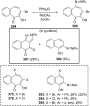
Scheme 73: Azo-coupling reactions of some halobenzotropolones 294, 375 and 378.

Figure 19: Four possible isomers of dibenzotropones 396–399.

Figure 20: Resonance structures of tribenzotropone (400).

Scheme 74: Two synthetic pathways for tribenzotropone (400).

Scheme 75: Synthesis of tribenzotropone (400) from dibenzotropone 399.

Scheme 76: Synthesis of tribenzotropone (400) from 9,10-phenanthraquinone (406).

Scheme 77: Synthesis of tribenzotropone (400) from trifluoromethyl-substituted arene 411.

Figure 21: Dibenzosuberone (414).

Figure 22: Reduction products 415 and 416 of tribenzotropone (400).

Figure 23: Structures of tribenzotropone dimethyl ketal 417 and 4-phenylfluorenone (412) and proposed intermed...

Figure 24: Structures of benzylidene- and methylene-9H-tribenzo[a,c,e][7]annulenes 419 and 420 and chiral phos...

Figure 25: Structures of tetracyclic alcohol 422, p-quinone methide 423 and cation 424.

Figure 26: Structures of host molecules 425–427.

Scheme 78: Synthesis of non-helical overcrowded derivatives syn/anti-431.

Figure 27: Hexabenzooctalene 432.

Figure 28: Structures of possible eight isomers 433–440 of naphthotropone.

Scheme 79: Synthesis of naphthotropone 437 starting from 1-phenylcycloheptene (441).

Scheme 80: Synthesis of 10-hydroxy-11H-cyclohepta[a]naphthalen-11-one (448) from diester 445.

Scheme 81: Synthesis of naphthotropone 433.

Scheme 82: Synthesis of naphthotropones 433 and 434 via cycloaddition reaction.

Scheme 83: Synthesis of naphthotropone 434 starting from 452.

Figure 29: Structures of tricarbonyl(tropone)irons 458, and possible cycloadducts 459.

Scheme 84: Synthesis of naphthotropone 436.

Scheme 85: Synthesis of precursor 465 for naphthotropone 435.

Scheme 86: Generation of naphthotropone 435 from 465.

Figure 30: Structures of tropylium cations 469 and 470.

Figure 31: Structures of tropylium ions 471+.BF4−, 472+.BF4−, and 473+.BF4−.

Scheme 87: Synthesis of tropylium ions 471+.BF4− and 479+.ClO4−.

Scheme 88: Synthesis of 1- and 2-methylanthracene (481 and 482) via carbene–carbene rearrangement.

Figure 32: Trapping products 488–490.

Scheme 89: Generation and chemistry of a naphthoannelated cycloheptatrienylidene-cycloheptatetraene intermedia...

Scheme 90: Proposed intermediates and reaction pathways for adduct 498.

Scheme 91: Exited-state intramolecular proton transfer of 505.

Figure 33: Benzoditropones 506 and 507.

Scheme 92: Synthesis of benzoditropone 506e.

Scheme 93: Synthetic approaches for dibenzotropone 507 via tropone (1).

Scheme 94: Formation mechanisms of benzoditropone 507 and 516 via 515.

Scheme 95: Synthesis of benzoditropones 525 and 526 from pyromellitic dianhydride (527).

Figure 34: Possible three benzocyclobutatropones 534–536.

Scheme 96: Synthesis of benzocyclobutatropones 534 and 539.

Scheme 97: Synthesis attempts for benzocyclobutatropone 545.

Scheme 98: Generation and trapping of symmetric benzocyclobutatropone 536.

Scheme 99: Synthesis of chloro-benzocyclobutatropone 552 and proposed mechanism of fluorenone derivatives.

Scheme 100: Synthesis of tropolone analogue 559.

Scheme 101: Synthesis of tropolones 561 and 562.

Figure 35: o/p-Tropoquinone rings (563 and 564) and benzotropoquinones (565–567).

Scheme 102: Synthesis of benzotropoquinone 566.

Scheme 103: Synthesis of benzotropoquinone 567 via a Diels–Alder reaction.

Figure 36: Products 575–577 through 1,2,3-benzotropoquinone hydrate 569.

Scheme 104: Structures 578–582 prepared from tropoquinone 567.

Figure 37: Two possible structures 583 and 584 for dibenzotropoquinone, and precursor compound 585 for 583.
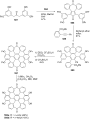
Scheme 105: Synthesis of saddle-shaped ketone 592 using dibenzotropoquinone 584.
Regioselective (thio)carbamoylation of 2,7-di-tert-butylpyrene at the 1-position with iso(thio)cyanates
- Anna Wrona-Piotrowicz,
- Marzena Witalewska,
- Janusz Zakrzewski and
- Anna Makal
Beilstein J. Org. Chem. 2017, 13, 1032–1038, doi:10.3762/bjoc.13.102
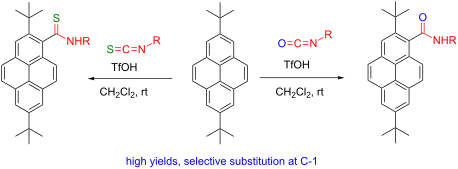
- ; pyrene; thioamide; Introduction Direct functionalization of pyrene 1 has attracted a great deal of attention in recent years because it is the most straightforward route to novel organic molecular materials for optoelectronic devices (OLEDs, field-effect transistors, fluorescent sensors, dye lasers, etc

Graphical Abstract

Figure 1: Sites of electrophilic attack in 1 and 2.
Scheme 1: Triflic acid promoted reaction of 2 with iso(thio)cyanates.

Scheme 2: Triflic acid promoted reaction of 2 with ethoxycarbonyl isothiocyanate.

Figure 2: Molecular structure of 4.

Scheme 3: Friedel–Crafts acylation of 2.
Cationic Pd(II)-catalyzed C–H activation/cross-coupling reactions at room temperature: synthetic and mechanistic studies
- Takashi Nishikata,
- Alexander R. Abela,
- Shenlin Huang and
- Bruce H. Lipshutz
Beilstein J. Org. Chem. 2016, 12, 1040–1064, doi:10.3762/bjoc.12.99
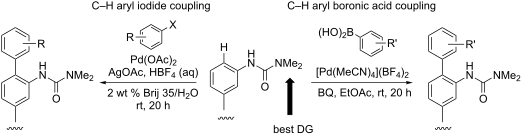
- intermediate, characterized by X-ray analysis. Roles of various additives in the stepwise process have also been studied. Keywords: arylation; cationic palladium; C–H functionalization; green chemistry; olefination; Introduction Transition metal-catalyzed, direct functionalization of aryl C–H bonds has made

Graphical Abstract

Figure 1: Road map to enhanced C–H activation reactivity.

Scheme 1: Concerted metalation–deprotonation and elelectrophilic palladation pathways for C–H activation.

Scheme 2: Routes for generation of cationic palladium(II) species.

Scheme 3: Optimized conditions for C–H arylations at room temperature.

Scheme 4: Biaryl formation catalyzed by Pd(OAc)2.
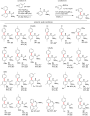
Figure 2: C–H arylation results. Conditions A: Conducted at rt for 20 h in 2 wt % Brij 35/water (1 mL) with 1...

Figure 3: Monoarylations in water at rt. Conditions A: Conducted at rt for 20 h in 2 wt % Brij 35/water with ...

Scheme 5: Selective arylation of a 1-naphthylurea derivative.

Figure 4: Fujiwara–Moritani coupling rreactions in water. Conditions A: 10 mol % [Pd(MeCN)4](BF4)2, 1 equiv B...

Figure 5: Optimization. Conducted at rt for 8 h or as otherwise noted in EtOAc with 10 mol % Pd catalyst, AgO...

Figure 6: Representative results in EtOAc. Conducted at rt in EtOAc with 10 mol % Pd(OAc)2, HBF4 (1 equiv), a...
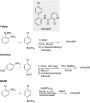
Scheme 6: Previous syntheses of boscalid®.

Scheme 7: Synthesis of boscalid®. aConducted at rt for 20 h in EtOAc with 10 mol % [Pd(MeCN)4](BF4)2, BQ (5 e...

Scheme 8: Hypothetical reaction sequence for cationic Pd(II)-catalyzed aromatic C–H activation reactions.

Scheme 9: Palladacycle formation.

Figure 7: X-ray structure of palladacycle 6 with thermal ellipsoids at the 50% probability level. BF4 and hyd...

Figure 8: NMR studies. A: The reaction of [Pd(MeCN)4](BF4)2 and 3-MeOC6H4NHCONMe2 in acetone-d6. B: The react...

Scheme 10: The generation of cationic Pd(II) from Pd(OAc)2.

Scheme 11: Electrophilic substitution of aromatic hydrogen by cationic palladium(II) species.

Scheme 12: Attempted reactions of palladacycle 6.

Scheme 13: The impact of MeCN on C-H activation/coupling reactions.

Scheme 14: Stoichiometric MeCN-free reactions. a2% Brij 35 was used instead of EtOAc.

Scheme 15: The reactions of divalent palladacycles.

Scheme 16: Role of BQ in stoichiometric Fujiwara–Moritani and Suzuki–Miyaura coupling reactions. aYields based...

Scheme 17: Proposed role of BQ in Fujiwara–Moritani reactions.

Scheme 18: Proposed role of BQ in Suzuki–Miyaura coupling reactions.

Scheme 19: Stoichiometric C–H arylation of iodobenzene. aYields based on Pd.

Scheme 20: Impact of acetate on the cationicity of Pd.

Scheme 21: Roles of additives in C–H arylation.

Scheme 22: Cross-coupling in the presence of AgBF4.

Scheme 23: A proposed catalytic cycle for Fujiwara–Moritani reactions.

Scheme 24: Proposed catalytic cycle of C–H activation/Suzuki–Miyaura coupling reactions.

Scheme 25: A proposed catalytic cycle for C–H arylation involving a Pd(IV) intermediate.
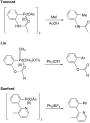
Scheme 26: Selected reactions of divalent palladacycles.
Recent advances in C(sp3)–H bond functionalization via metal–carbene insertions
- Bo Wang,
- Di Qiu,
- Yan Zhang and
- Jianbo Wang
Beilstein J. Org. Chem. 2016, 12, 796–804, doi:10.3762/bjoc.12.78

- –carbene; site-selectivity; Introduction Direct functionalization of inactivated C–H bonds, especially C(sp3)–H bonds, have attracted significant attentions in recent years. The C(sp3)–H bond activation strategies based on radical reactions and transition metal catalysis have been explored, alongside the

Graphical Abstract

Scheme 1: Pathway for transition-metal-catalyzed carbene insertion into C(sp3)–H bonds.

Scheme 2: Rh(II)-catalyzed site-selective and enantioselective C–H functionalization of methyl ether.

Scheme 3: Late-stage C–H functionalization with Rh(II)-catalyzed carbene C(sp3)–H insertion.

Scheme 4: The Rh(II)-catalyzed selective carbene insertion into benzylic C–H bonds.

Scheme 5: The structure–selectivity relationship.

Scheme 6: Rh-porphyrin complexes for catalytic intermolecular C–H insertions.

Scheme 7: Asymmetric intermolecular C(sp3)–H insertion with chiral Rh-porphyrin catalyst.

Figure 1: The structure of TpM catalysts.

Scheme 8: Ag-Tpx-catalyzed intermolecular C–H insertion between EDA and alkanes.

Scheme 9: Ag-Tpx-catalyzed C–H insertion of methane with EDA in scCO2.

Figure 2: Structure of TpM-type catalysts.

Scheme 10: Comparison of site-selectivities of C–H insertion in different reaction media.

Scheme 11: C(sp3)–H bond insertion catalyzed by trinuclear cluster Ag.

Scheme 12: Zn(II)-catalyzed C(sp3)–H bond insertion.
Iridium/N-heterocyclic carbene-catalyzed C–H borylation of arenes by diisopropylaminoborane
- Mamoru Tobisu,
- Takuya Igarashi and
- Naoto Chatani
Beilstein J. Org. Chem. 2016, 12, 654–661, doi:10.3762/bjoc.12.65

- borylation; iridium; N-heterocyclic carbene; Introduction Catalytic C–H borylation of arenes has become an essential tool in organic synthesis [1]. The eminent features of this methodology include 1) no directing group is needed, allowing the direct functionalization of simple arenes; 2) the

Graphical Abstract

Scheme 1: Catalytic C–H borylation of arenes and related reported boron sources.

Scheme 2: Scalability and derivatization.
Recent advances in copper-catalyzed C–H bond amidation
- Jie-Ping Wan and
- Yanfeng Jing
Beilstein J. Org. Chem. 2015, 11, 2209–2222, doi:10.3762/bjoc.11.240

- ideal model of modern organic synthesis, the direct functionalization of inactivated C–H bonds has been proved to be a promising tool to enable atom and step economical synthesis. Inspired by the splendid advances that have taken place in the chemistry of C–H activation, the synthesis of amides has

Graphical Abstract

Scheme 1: Copper-catalyzed C–H amidation of tertiary amines.

Scheme 2: Copper-catalyzed C–H amidation and sulfonamidation of tertiary amines.

Scheme 3: Copper-catalyzed sulfonamidation of allylic C–H bonds.

Scheme 4: Copper-catalyzed sulfonamidation of benzylic C–H bonds.

Scheme 5: Copper-catalyzed sulfonamidation of C–H bonds adjacent to oxygen.

Scheme 6: Copper-catalyzed amidation and sulfonamidation of inactivated alkyl C–H bonds.

Scheme 7: Copper-catalyzed amidation and sulfonamidation of inactivated alkanes.

Scheme 8: Copper-catalyzed intramolecular C–H amidation for lactam synthesis.

Scheme 9: Copper-catalyzed intramolecular C–H amidation for lactam synthesis.

Scheme 10: Copper-catalyzed amidation/sulfonamidation of aryl C–H bonds.

Scheme 11: C–H amidation of pyridinylbenzenes and indoles.

Scheme 12: Mechanism of the Cu-catalyzed C2-amidation of indoles.

Scheme 13: Copper-catalyzed, 2-phenyl oxazole-assisted C–H amidation of benzamides.

Scheme 14: DG-assisted amidation/imidation of indole and benzene C–H bonds.

Scheme 15: Copper-catalyzed C–H amination/amidation of quinoline N-oxides.

Scheme 16: Copper-catalyzed aldehyde formyl C–H amidation.

Scheme 17: Copper-catalyzed formamide C–H amidation.

Scheme 18: Copper-catalyzed sulfonamidation of vinyl C–H bonds.

Scheme 19: CuCl2-catalyzed amidation/sulfonamidation of alkynyl C–H bonds.

Scheme 20: Cu(OH)2-catalyzed amidation/sulfonamidation of alkynyl C–H bonds.

Scheme 21: Sulfonamidation-based cascade reaction for the synthesis of tetrahydrotriazines.

Scheme 22: Copper-catalyzed cascade reaction for the synthesis of quinazolinones.
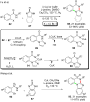
Scheme 23: Copper-catalyzed cascade reactions for the synthesis of fused quinazolinones.

Scheme 24: Copper-catalyzed synthesis of quinazolinones via methyl C–H bond amidation.

Scheme 25: Dicumyl peroxide-based cascade synthesis of quinazolinones.

Scheme 26: Copper-catalyzed cascade reactions for the synthesis of indolinones.
Lewis acid-catalyzed redox-neutral amination of 2-(3-pyrroline-1-yl)benzaldehydes via intramolecular [1,5]-hydride shift/isomerization reaction
- Chun-Huan Jiang,
- Xiantao Lei,
- Le Zhen,
- Hong-Jin Du,
- Xiaoan Wen,
- Qing-Long Xu and
- Hongbin Sun
Beilstein J. Org. Chem. 2014, 10, 2892–2896, doi:10.3762/bjoc.10.306
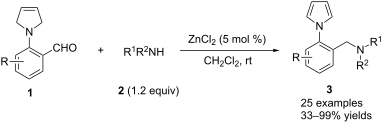
- used for the activation of C–H bonds [11][12][13][14][15][16][17][18]. Among the reported transformations, intramolecular redox processes based on direct functionalization of C(sp3)–H bonds linking with α heteroatoms are useful for the synthesis of structurally diverse amines and ether derivatives [19

Graphical Abstract

Scheme 1: Synthesis of N-substituted pyrroles via redox-neutral reaction.

Scheme 2: Substrate scope of aryl aldehydes 1. Reagents and conditions: 1 (0.3 mmol), 2a (1.2 equiv), ZnCl2 (...

Scheme 3: Substrate scope of amines 2. Reagents and conditions: 1a (0.5 mmol), 2 (1.2 equiv), ZnCl2 (5 mol %)...
Exploration of C–H and N–H-bond functionalization towards 1-(1,2-diarylindol-3-yl)tetrahydroisoquinolines
- Michael Ghobrial,
- Marko D. Mihovilovic and
- Michael Schnürch
Beilstein J. Org. Chem. 2014, 10, 2186–2199, doi:10.3762/bjoc.10.226
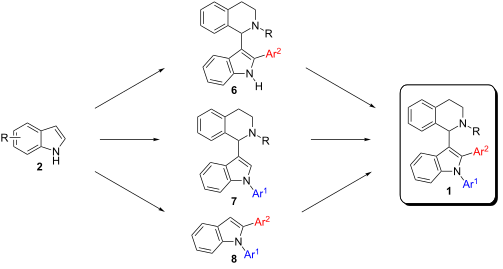
- wanted to use direct functionalization either via C–H activation or cross dehydrogenative coupling for C–C-bond-forming reactions avoiding the use of two prefunctionalized building blocks. Naturally, C–N-bond formation should proceed via Buchwald–Hartwig coupling. The target molecules can be considered

Graphical Abstract

Figure 1: General structures of biologically active dihydroisoquinolines, THIQs and 1,2-diarylindoles.

Scheme 1: Li’s THIQ indolation protocol.

Scheme 2: Possible strategies for the synthesis of target structure 1. Dashed arrows indicate literature-know...

Scheme 3: Nucleophilic substitution of DMEDA with 2-fluoro-3-iodopyridine (10).

Scheme 4: Decomposition of 1-(indol-3-yl)-THIQ 4d during N-arylation (monitored by GC–MS).

Scheme 5: Formation of byproduct 13 via benzylic oxidation.

Scheme 6: Routes towards 1,2-diarylindoles starting from indole; a: PhB(OH)2 (3 equiv), Pd(OAc)2 (5 mol %), A...

Scheme 7: Palladium-catalyzed C2-arylation attempt of 1-(1-phenylindol-3-yl)-N-Boc-THIQ.
Zinc–gold cooperative catalysis for the direct alkynylation of benzofurans
- Yifan Li and
- Jérôme Waser
Beilstein J. Org. Chem. 2013, 9, 1763–1767, doi:10.3762/bjoc.9.204
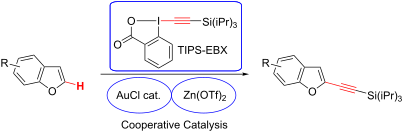
- successful in the case of the more complex drug 8-methoxypsoralen (8-MOP). Keywords: alkynylation; benzofurans; cooperative catalysis; direct functionalization; gold catalysis; hypervalent iodine; Introduction Benzofurans are important heterocycles frequently encountered in both bioactive compounds and

Graphical Abstract

Figure 1: Benzofurans in bioactive compounds and materials.

Scheme 1: Zinc–gold catalyzed C2-alkynylation of benzofurans.

Scheme 2: Scope of the reaction.

Scheme 3: Alkynylation of 7-methoxybenzofuran (7j) [31].

Scheme 4: Alkynylation of 8-methoxypsoralen (2).
Aerobic radical multifunctionalization of alkenes using tert-butyl nitrite and water
- Daisuke Hirose and
- Tsuyoshi Taniguchi
Beilstein J. Org. Chem. 2013, 9, 1713–1717, doi:10.3762/bjoc.9.196

- useful methods because they can provide a shortcut to desired products. Various methods used widely, such as organometallic reactions, cycloaddition reactions and multicomponent reactions, are utilized for multifunctionalization [1][2][3][4][5]. If direct functionalization reactions of inactivated bonds

Graphical Abstract

Scheme 1: The effect of water in radical multifunctionalization reactions.

Scheme 2: Transformation of 3 into 5-amino-1,4-diol derivative 25.

Scheme 3: Proposed reaction mechanism.
Arylglycine-derivative synthesis via oxidative sp3 C–H functionalization of α-amino esters
- Zhanwei Xu,
- Xiaoqiang Yu,
- Xiujuan Feng and
- Ming Bao
Beilstein J. Org. Chem. 2012, 8, 1564–1568, doi:10.3762/bjoc.8.178
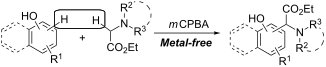
- reported the copper-catalyzed oxidative coupling reaction of alkynes with tertiary amine N-oxides [15]. This new strategy for the direct functionalization of sp3 C–H bonds adjacent to a nitrogen atom, via tertiary amine N-oxide intermediates, was successfully applied to the coupling reaction of ethyl 2
- -(disubstituted amino)acetates with indoles to achieve indolylglycine derivatives (Scheme 2, reaction 1) [16]. In the course of our continuous research on the direct functionalization of sp3 C–H bonds, we found that this new strategy could also be applied to the coupling reaction of naphthols and phenols with

Graphical Abstract

Scheme 1: Synthesis of arylglycine derivatives.

Scheme 2: Oxidative sp3 C–H functionalization of α-amino esters.

Scheme 3: Proposed mechanism.
C2-Alkylation of N-pyrimidylindole with vinylsilane via cobalt-catalyzed C–H bond activation
- Zhenhua Ding and
- Naohiko Yoshikai
Beilstein J. Org. Chem. 2012, 8, 1536–1542, doi:10.3762/bjoc.8.174
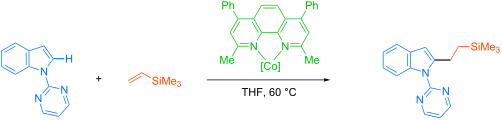
- efficient and regioselective functionalization of indole derivatives [4][5][6]. Over the past decade, transition-metal-catalyzed direct functionalization has emerged as a powerful strategy for the direct introduction of aryl and alkenyl groups to the C2 and C3 positions of indole [7][8][9]. The situation is

Graphical Abstract

Scheme 1: (a) Cobalt-catalyzed C2-alkenylation of N-pyrimidylindole, (b) ortho-alkylation of aryl imine, and ...
Scheme 2: Addition of N-pyrimidylindoles to vinylsilanes.

Scheme 3: Addition of N-pyrimidylindole to norbornene (a) and 1-octene (b).

Scheme 4: Gram-scale reaction and deprotection of N-pyrimidyl group.
Directed ortho,ortho'-dimetalation of hydrobenzoin: Rapid access to hydrobenzoin derivatives useful for asymmetric synthesis
- Inhee Cho,
- Labros Meimetis,
- Lee Belding,
- Michael J. Katz,
- Travis Dudding and
- Robert Britton
Beilstein J. Org. Chem. 2011, 7, 1315–1322, doi:10.3762/bjoc.7.154
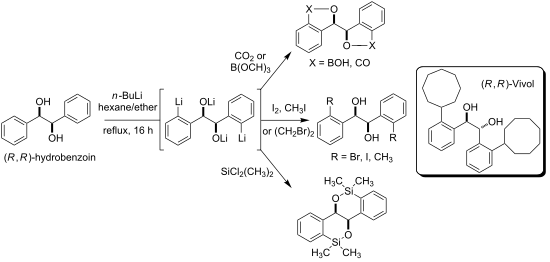
- associated with their optical enrichment [6], and the necessary determination of optical purity for each derivative, all complicate the rapid preparation of congeneric libraries. To address these issues, we recently reported a new process for the direct functionalization of (R,R)-hydrobenzoin (3) [23
- with the reported synthesis and should be effective for the rapid production of new ligands for asymmetric synthesis. Conclusion In conclusion, an efficient and economical process was developed for the direct functionalization of hydrobenzoin that relies on a directed ortho,ortho'-dimetalation strategy

Graphical Abstract

Figure 1: Chiral diols useful for asymmetric synthesis and the tetralithio intermediate 8.

Scheme 1: Directed ortho,ortho'-dimetalation of (R,R)-hydrobenzoin (3).

Figure 2: Percentage of (R,R)-hydrobenzoin (3) (○), monodeuterohydrobenzoin (13) (■), and dideuterohydrobenzo...

Figure 3: Percentage of methylhydrobenzoin (14) (■), and dimethylhydrobenzoin (15) (Δ) as determined by 1H NM...

Scheme 2: Formation of the tetralithio intermediate 8 and the X-ray crystal structure of the bis(siloxane) 19....

Scheme 3: Reaction of the tetralithio intermediate 8 with various electrophiles.

Scheme 4: Reactions of the diiodohydrobenzoin 12 and X-ray crystal structure of the dihydrosilepin 31.

Scheme 5: Cross coupling reactions of the bis(benzoxaborol) 20 and a short formal synthesis of (R,R)-Vivol (4...
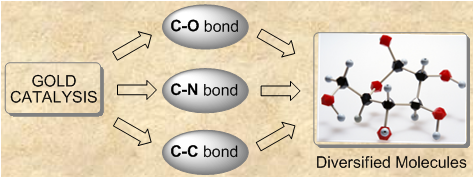
Recent advances in the gold-catalyzed additions to C–C multiple bonds
- He Huang,
- Yu Zhou and
- Hong Liu
Beilstein J. Org. Chem. 2011, 7, 897–936, doi:10.3762/bjoc.7.103

Graphical Abstract

Scheme 1: Gold-catalyzed addition of alcohols.
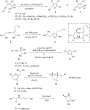
Scheme 2: Gold-catalyzed cycloaddition of alcohols.

Scheme 3: Ionic liquids as the solvent in gold-catalyzed cycloaddition.

Scheme 4: Gold-catalyzed cycloaddition of diynes.

Scheme 5: Gold(I) chloride catalyzed cycloisomerization of 2-alkynyl-1,5-diols.

Scheme 6: Gold-catalyzed cycloaddition of glycols and dihydroxy compounds.

Scheme 7: Gold-catalyzed ring-opening of cyclopropenes.

Scheme 8: Gold-catalyzed intermolecular hydroalkoxylation of alkynes. PR3 = 41–45.

Scheme 9: Gold-catalyzed intramolecular 6-endo-dig cyclization of β-hydroxy-α,α-difluoroynones.

Scheme 10: Gold-catalyzed intermolecular hydroalkoxylation of non-activated olefins.

Scheme 11: Preparation of unsymmetrical ethers from alcohols.

Scheme 12: Expedient synthesis of dihydrofuran-3-ones.

Scheme 13: Catalytic approach to functionalized divinyl ketones.
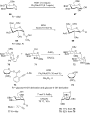
Scheme 14: Gold-catalyzed glycosylation.

Scheme 15: Gold-catalyzed cycloaddition of aldehydes and ketones.

Scheme 16: Gold-catalyzed annulations of 2-(ynol)aryl aldehydes and o-alkynyl benzaldehydes.

Scheme 17: Gold-catalyzed addition of carboxylates.

Scheme 18: Dual-catalyzed rearrangement reaction of allenoates.

Scheme 19: Meyer–Schuster rearrangement of propargylic alcohols.

Scheme 20: Propargylic alcohol rearrangements.

Scheme 21: Gold-catalyzed synthesis of imines and amine alkylation.

Scheme 22: Hydroamination of allenes and allenamides.

Scheme 23: Gold-catalyzed inter- and intramolecular amination of alkynes and alkenes.

Scheme 24: Gold-catalyzed cycloisomerization of O-propioloyl oximes and β-allenylhydrazones.

Scheme 25: Intra- and intermolecular amination with ureas.

Scheme 26: Gold-catalyzed cyclization of ortho-alkynyl-N-sulfonylanilines and but-3-yn-1-amines.

Scheme 27: Gold-catalyzed piperidine ring synthesis.

Scheme 28: Ring expansion of alkylnyl cyclopropanes.

Scheme 29: Gold-catalyzed annulations of N-propargyl-β-enaminones and azomethine imines.
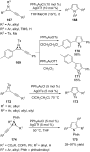
Scheme 30: Gold(I)-catalyzed cycloisomerization of aziridines.

Scheme 31: AuCl3/AgSbF6-catalyzed intramolecular amination of 2-(tosylamino)phenylprop-1-en-3-ols.

Scheme 32: Gold-catalyzed cyclization via a 7-endo-dig pathway.

Scheme 33: Gold-catalyzed synthesis of fused xanthines.

Scheme 34: Gold-catalyzed synthesis of amides and isoquinolines.

Scheme 35: Gold-catalyzed oxidative cross-coupling reactions of propargylic acetates.

Scheme 36: Gold-catalyzed nucleophilic addition to allenamides.

Scheme 37: Gold-catalyzed direct carbon–carbon bond coupling reactions.

Scheme 38: Gold-catalyzed C−H functionalization of indole/pyrrole heterocycles and non-activated arenes.

Scheme 39: Gold-catalyzed cycloisomerization of cyclic compounds.

Scheme 40: Gold-catalyzed cycloaddition of 1-aryl-1-allen-6-enes and propargyl acetates.

Scheme 41: Gold(I)-catalyzed cycloaddition with ligand-controlled regiochemistry.

Scheme 42: Gold(I)-catalyzed cycloaddition of dienes and enynes.

Scheme 43: Gold-catalyzed intramolecular cycloaddition of 3-alkoxy-1,5-enynes and 2,2-dipropargylmalonates.

Scheme 44: Gold-catalyzed intramolecular cycloaddition of 1,5-allenynes.

Scheme 45: Gold(I)-catalyzed cycloaddition of indoles.

Scheme 46: Gold-catalyzed annulation reactions.

Scheme 47: Gold–carbenoid induced cleavage of a sp3-hybridized C−H bond.

Scheme 48: Furan- and indole-based cascade reactions.

Scheme 49: Tandem process using aromatic alkynes.

Scheme 50: Gold-catalyzed cycloaddition of 1,3-dien-5-ynes.

Scheme 51: Gold-catalyzed cascade cyclization of diynes, propargylic esters, and 1,3-enynyl ketones.

Scheme 52: Tandem reaction of β-phenoxyimino ketones and alkynyl oxime ethers.

Scheme 53: Gold-catalyzed tandem cyclization of enynes, 2-(tosylamino)phenylprop-1-yn-3-ols, and allenoates.

Scheme 54: Cyclization of 2,4-dien-6-yne carboxylic acids.

Scheme 55: Gold(I)-catalyzed tandem cyclization approach to tetracyclic indolines.

Scheme 56: Gold-catalyzed tandem reactions of alkynes.

Scheme 57: Aminoarylation and oxyarylation of alkenes.

Scheme 58: Cycloaddition of 2-ethynylnitrobenzene with various alkenes.

Scheme 59: Gold-catalyzed tandem reactions of allenoates and alkynes.

Scheme 60: Gold-catalyzed asymmetric synthesis of 2,3-dihydropyrroles.

Scheme 61: Chiral [NHC–Au(I)]-catalyzed cyclization of enyne.

Scheme 62: Gold-catalyzed hydroaminations and hydroalkoxylations.

Scheme 63: Gold(I)-catalyzed asymmetric hydroalkoxylation of 1,3-dihydroxymethyl-2-alkynylbenzene chromium com...

Scheme 64: Gold-catalyzed synthesis of julolidine derivatives.

Scheme 65: Gold-catalyzed the synthesis of chiral fused heterocycles.

Scheme 66: Gold-catalyzed asymmetric reactions with 3,5-(t-Bu)2-4-MeO-MeOBIPHEP.

Scheme 67: Gold-catalyzed cyclization of o-(alkynyl) styrenes.

Scheme 68: Asymmetric gold(I)-catalyzed redox-neutral domino reactions of enynes.

Scheme 69: Gold(I)-catalyzed enantioselective polyene cyclization reaction.

Scheme 70: Gold(I)-catalyzed enantioselective synthesis of benzopyrans.

Scheme 71: Gold(I)-catalyzed enantioselective ring expansion of allenylcyclopropanols.
One-pot gold-catalyzed synthesis of 3-silylethynyl indoles from unprotected o-alkynylanilines
- Jonathan P. Brand,
- Clara Chevalley and
- Jérôme Waser
Beilstein J. Org. Chem. 2011, 7, 565–569, doi:10.3762/bjoc.7.65
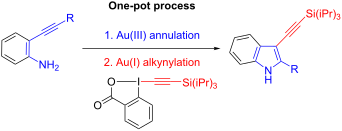
- to carry out (RT, and requires neither an inert atmosphere nor special solvents). Keywords: alkynylation; direct functionalization; gold; hypervalent iodine; indoles; Introduction Indoles are widespread in both natural products and synthetic drugs [1][2] and as a result, their synthesis and

Graphical Abstract

Scheme 1: Domino cyclization–substitution reactions of 2-alkynylanilines.

Scheme 2: Gold-catalyzed direct alkynylation of indoles with TIPS-EBX (1).

Scheme 3: One-pot alkynylaniline cyclization/direct alkynylation.

Scheme 4: Synthesis of 2-alkynylanilines 2.

Scheme 5: Domino cyclization–alkynylation of aniline 2a.

Scheme 6: Scope of the reaction.



