


Search results
Search for "donor–acceptor" in Full Text gives 206 result(s) in Beilstein Journal of Organic Chemistry. Showing first 200.
Red light excitation: illuminating photocatalysis in a new spectrum
Beilstein J. Org. Chem. 2025, 21, 296–326, doi:10.3762/bjoc.21.22

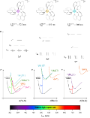
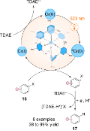
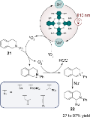
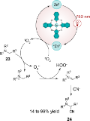
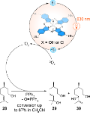
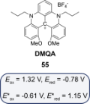
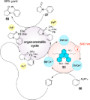
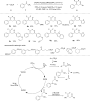
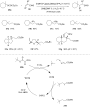
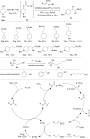
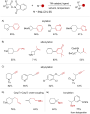
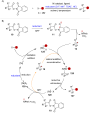
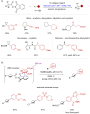
- of the DCA, photodegraded species issued from DCA or DCA•−/substract donor–acceptor complex is debated (Scheme 4b). Nevertheless, the authors underline that the key feature of these transformations is going through the consecutive absorption of two red-light photons which enhances the photoredox















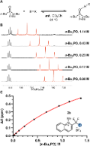
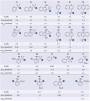
Quantifying the ability of the CF2H group as a hydrogen bond donor
Beilstein J. Org. Chem. 2025, 21, 189–199, doi:10.3762/bjoc.21.11
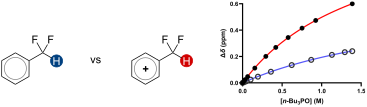
- (CF2H); fluorine; hydrogen bond donors; hydrogen bond strength; Introduction Hydrogen bonding interactions are ubiquitous non-covalent forces in chemistry and biology [1][2][3][4]. In canonical hydrogen bond (HB) donor–acceptor pairs, the donor typically comprises an electronegative heteroatom, such as



Synthesis of acenaphthylene-fused heteroarenes and polyoxygenated benzo[j]fluoranthenes via a Pd-catalyzed Suzuki–Miyaura/C–H arylation cascade
Beilstein J. Org. Chem. 2024, 20, 3290–3298, doi:10.3762/bjoc.20.273
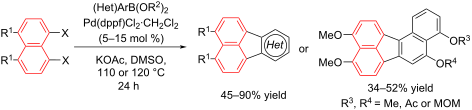
- -catalyzed annulation reaction between bromo-chloronaphthalene dicarboximides 6 and heteroarylboronic esters that enabled the syntheses of acenaphthylene-fused thiophene and indole derivatives 7 having donor-acceptor units (Scheme 1a) [40]. In 2021, Jin and co-workers developed an elegant Pd-catalyzed


Giese-type alkylation of dehydroalanine derivatives via silane-mediated alkyl bromide activation
Beilstein J. Org. Chem. 2024, 20, 3274–3280, doi:10.3762/bjoc.20.271
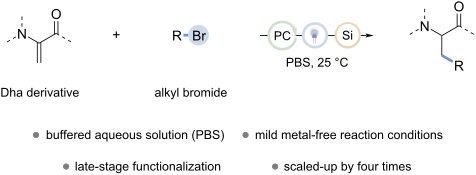
- photochemistry has introduced new ways of generating radicals like photoredox catalysis and via electron donor–acceptor (EDA) complexes [10][11][12][13]. These advances, coupled with modern electrochemical methods, chemical reactor engineering and light emitting diodes (LED), have eliminated the need for thermal



Extension of the π-system of monoaryl-substituted norbornadienes with acetylene bridges: influence on the photochemical conversion and storage of light energy
Beilstein J. Org. Chem. 2024, 20, 3061–3068, doi:10.3762/bjoc.20.254
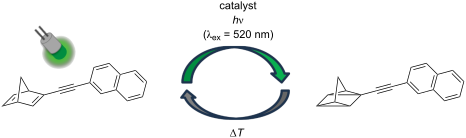
- sunlight. Furthermore, the photoisomerization quantum yield is very low and therefore not suitable for an application [7][8][14]. One promising way to overcome these disadvantages is the introduction of a donor–acceptor system at the norbornadiene double bonds, which has resulted in the development of new


Tunable full-color dual-state (solution and solid) emission of push–pull molecules containing the 1-pyrindane moiety
Beilstein J. Org. Chem. 2024, 20, 3016–3025, doi:10.3762/bjoc.20.251

- solutions of compounds 1a–i in toluene (top) and DMSO (bottom) taken under a 365 nm UV lamp. Normalized solid-state emission spectra of compounds 1a–i (bottom) and photos of powders taken under a 365 nm UV lamp (top). Synthesis of donor–acceptor 1-pyrindane derivatives 1. Plausible equilibrium of compounds


The charge transport properties of dicyanomethylene-functionalised violanthrone derivatives
Beilstein J. Org. Chem. 2024, 20, 2921–2930, doi:10.3762/bjoc.20.244
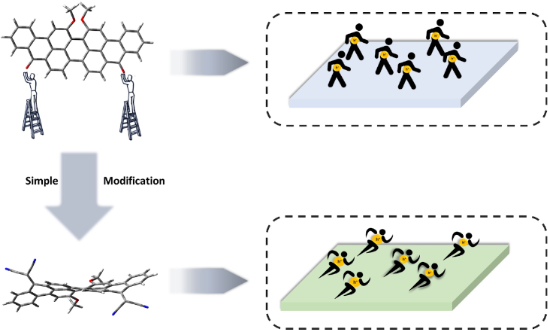
- leads to the formation of large crystalline domains which influence charge transport. However, the microscale domains reduce the donor–acceptor interface which ultimately impacts on efficient exciton dissociation in OPV devices [12]. Therefore, it is important to further investigate other fused π


Recent advances in transition-metal-free arylation reactions involving hypervalent iodine salts
Beilstein J. Org. Chem. 2024, 20, 2891–2920, doi:10.3762/bjoc.20.243

- assist in the deprotonation of intermediate II to produce final products 27, while K2S2O8 aids in the oxidation of the photocatalyst in the case of pyridine N-oxide. In another photoinduced reaction procedure, Murarka et al. reported the formation of aryl radicals from a tetrameric electron donor
- –acceptor (EDA) complex. The complex is formed of triphenylphosphine, sodium iodide and N,N,N,N-tetramethylethylenediamine (TMEDA) with diaryliodonium reagents (DAIRs) [64]. This activates DAIRs 16 to generate an aryl radical which is utilized in the C–H arylation of various heterocycles 31 to yield the


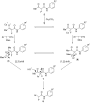


Synthesis of spiroindolenines through a one-pot multistep process mediated by visible light
Beilstein J. Org. Chem. 2024, 20, 2722–2731, doi:10.3762/bjoc.20.230
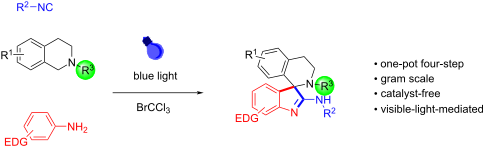
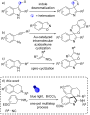
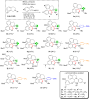
- optimized conditions. Based on the literature [28], the formation of an electron donor–acceptor complex between bromochloroform and N-Ar-THIQ seems essential for the reaction to occur. Since we did not observe the formation of any color during the irradiation of the solution of BrCCl3 and this specific THIQ
- Scheme 6. Based on the results reported by Zeitler [28], several mechanisms are involved in the oxidation of N-Ph-THIQ. The most probable involves the photoexcitation of the EDA (Electron Donor-Acceptor) complex promoting an electron transfer from N-Ph-THIQ to BrCCl3 to afford the amine radical cation





Novel truxene-based dipyrromethanes (DPMs): synthesis, spectroscopic characterization and photophysical properties
Beilstein J. Org. Chem. 2024, 20, 2163–2170, doi:10.3762/bjoc.20.186
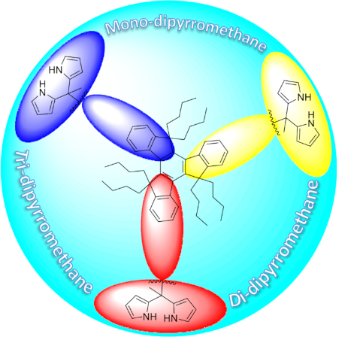
- ), organogels, molecular wires, self-assembly and so forth [14][15][16][17][18][19][20][21][22][23][24][25]. Moreover, nowadays these invaluable compounds have also received great attention of supramolecular chemists, and finds applications in sensing, catalysis, donor–acceptor systems, energy transfer and


Multicomponent syntheses of pyrazoles via (3 + 2)-cyclocondensation and (3 + 2)-cycloaddition key steps
Beilstein J. Org. Chem. 2024, 20, 2024–2077, doi:10.3762/bjoc.20.178

- coordination of the magnesium ions and subsequent hydrazine inactivation. The diversity-oriented nature of this consecutive four-component synthesis was used to synthesize 17 different donor/acceptor-substituted pyrazoles 108 in moderate to good yields (Scheme 39) [136]. The synthesis of bispyrazoles was also




Diastereoselective synthesis of highly substituted cyclohexanones and tetrahydrochromene-4-ones via conjugate addition of curcumins to arylidenemalonates
Beilstein J. Org. Chem. 2024, 20, 2016–2023, doi:10.3762/bjoc.20.177
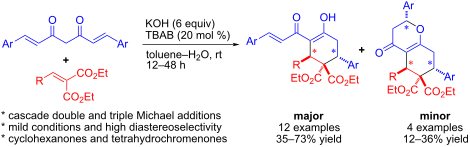
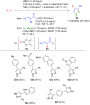
- , curcumin showcases its Michael donor–acceptor ability in different ways, such as simple Michael addition, [4 + 2] annulation, Michael addition followed by cyclization or one-pot multicomponent reactions (MCR), etc. (Scheme 1) [25]. In 2011, our group reported the reactivity of curcumin as a Michael donor
- ]. Other groups have also investigated the Michael donor–acceptor reactivity of curcumins [25]. For instance, a quinine-thiourea catalyzed Michael addition of curcumins to nitroalkenes reported by Ye et al. stopped at the single Michael addition stage [35]. In the subsequent year, Yan et al. demonstrated a
- reported in due course. Biologically active derivatives of cyclohexanones. X-ray structure of 4a (CCDC 2351387). Origin of stereoselectivity in the double Michael addition. The Michael donor–acceptor reactivity of curcumin: previous vs present work. A plausible reaction mechanism. Scale-up reaction


Supramolecular assemblies of amphiphilic donor–acceptor Stenhouse adducts as macroscopic soft scaffolds
Beilstein J. Org. Chem. 2024, 20, 1590–1603, doi:10.3762/bjoc.20.142
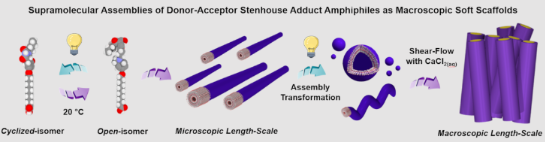
- UV light, we have previously reported a design of amphiphilic donor–acceptor Stenhouse adducts (DASAs) controlled by white light. Herein, we present a series of DASA amphiphiles (DAs) with minor structural modifications on the alkyl linker chain length connecting the DASA motif with the hydrophilic
- fabrication of visible-light-controlled macroscopic scaffolds, offering the next generation of biomedical materials with visible-light-controlled microenvironments and future soft-robotic systems. Keywords: donor–acceptor Stenhouse adduct; photoresponsive molecular amphiphile; supramolecular transformation
- , stiff-stilbene [26], azobenzene [27][28], molecular motors [19][29][30], spiropyran [31][32][33], indigo [34][35], and donor–acceptor Stenhouse adducts (DASAs) [36][37], have been used in supramolecular systems for photoswitchable smart electronic, optoelectronic, and biomedical materials [30][38][39




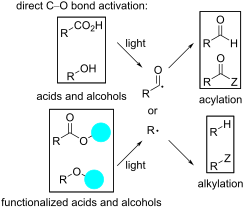
Generation of alkyl and acyl radicals by visible-light photoredox catalysis: direct activation of C–O bonds in organic transformations
Beilstein J. Org. Chem. 2024, 20, 1348–1375, doi:10.3762/bjoc.20.119
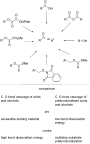
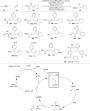
- electron density, which facilitates a π–π interactions with the aryl iodide system and ultimately results in the production of an electron donor–acceptor (EDA) complex 21. Photoexcitation of this EDA complex furnishes an aryl iodide radical anion and a radical cation complex 22. Then, the elimination of



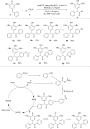





Competing electrophilic substitution and oxidative polymerization of arylamines with selenium dioxide
Beilstein J. Org. Chem. 2024, 20, 1221–1235, doi:10.3762/bjoc.20.105
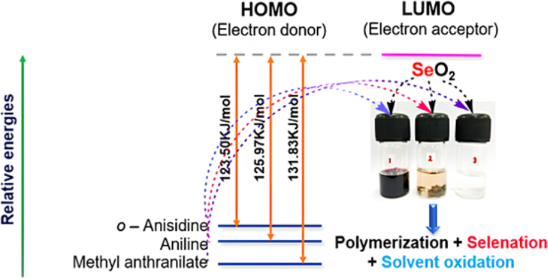
- arylamine reactivity. The NBO analysis was carried out using the same basis set, B3LYP/6-31G(d,p). The natural charge (q) of the nitrogen atom, occupancy of the nitrogen lone pair orbital, second-order perturbation energy (E) for intramolecular donor–acceptor interactions, and the donation of electron


Two-fold addition reaction of silylene to C60: structural and electronic properties of a bis-adduct
Beilstein J. Org. Chem. 2024, 20, 1179–1188, doi:10.3762/bjoc.20.100
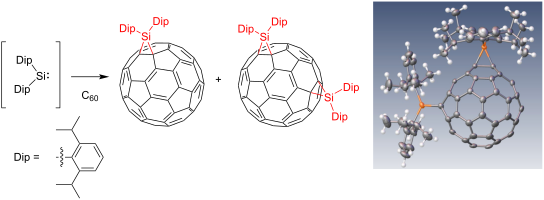
- the transition state was ascribed to the donor–acceptor interactions between the HOMO of the silylene and the LUMO of ethylene, and vice versa [42]. For 2a, the LUMO is largely distributed at the e' bonds, followed by the cis-2 and trans-3 bonds (Figure 8). These results suggest that the formation of


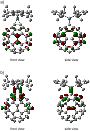
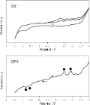
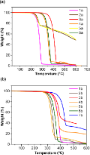
Structure–property relationships in dicyanopyrazinoquinoxalines and their hydrogen-bonding-capable dihydropyrazinoquinoxalinedione derivatives
Beilstein J. Org. Chem. 2024, 20, 1037–1052, doi:10.3762/bjoc.20.92
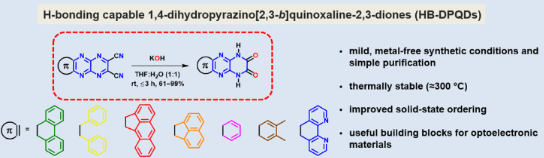
- 3a in comparison to other compounds within the DCPQ family of compounds. As shown in Figure 5 and Table 1, the donor–acceptor character of the H-bonding counterparts is considerably muted and the HOMO and LUMO in these cases are both relatively delocalized. The HOMO energies of DPQD 1b–7b are also


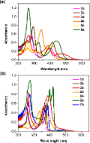


Palladium-catalyzed three-component radical-polar crossover carboamination of 1,3-dienes or allenes with diazo esters and amines
Beilstein J. Org. Chem. 2024, 20, 661–671, doi:10.3762/bjoc.20.59
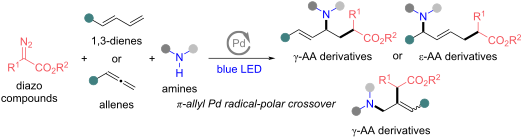
- yields (4v–ab, 51–77%). α-Diazo esters with benzyl, cyclobutanemethyl, and adamantyl groups could be transformed smoothly to the products 4v, 4w, and 4x in 64%, 69% and 77% yields, respectively. Gratifyingly, except for acceptor-substituted diazo esters, donor/acceptor-substituted diazo compounds were
- . 1,2-Adducts could be produced fluently with diazo substrates containing alkyl-substituted esters. Benzyl- (6r, 57%), cyclobutanemethyl- (6s, 81%), methoxyethyl- (6t, 66%), and adamantyl- (6u, 82%) substituted diazo esters underwent this photoinitiated radical reaction well. The donor/acceptor

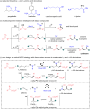
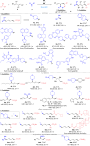


Mechanisms for radical reactions initiating from N-hydroxyphthalimide esters
Beilstein J. Org. Chem. 2024, 20, 346–378, doi:10.3762/bjoc.20.35
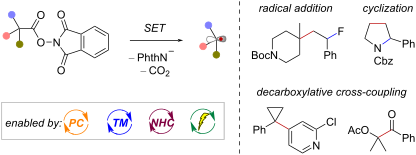
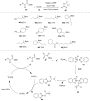
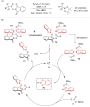
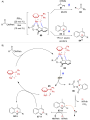
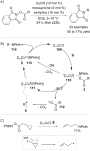
- oxidation of 35 to 36, the photocatalyst is regenerated and product 37 is formed through intramolecular nucleophilic cyclization facilitated by the phosphate base. Importantly, the activation of NHPI esters through PCET may also play a role in transformations mediated by the cyanoarene-based donor–acceptor
- in the visible region. These species are referred to in the literature as electron donor–acceptor (EDA) complexes [58][59] and undergo photoexcitation in the absence of an exogenous photoredox catalyst. When excited by visible light, an intra-complex SET from the donor substrate D to the NHPI ester








Perspectives on push–pull chromophores derived from click-type [2 + 2] cycloaddition–retroelectrocyclization reactions of electron-rich alkynes and electron-deficient alkenes
Beilstein J. Org. Chem. 2024, 20, 125–154, doi:10.3762/bjoc.20.13
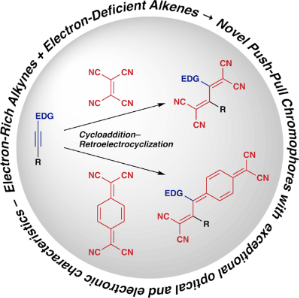
- physicochemical properties of the family of these compounds that have been investigated is provided to clarify their potential for future applications. Keywords: click chemistry; donor–acceptor conjugate; intramolecular charge transfer; photoluminescence; photoinduced electron transfer; Introduction Push–pull
- TCBD, donor–acceptor conjugated systems have been systematically developed by coupling the TCBD motif with an electron donor, resulting in the experimental observation of photoinduced electron- and energy-transfer events. In 2014, comprehensive investigations on the photophysical properties of
- guaranteeing long-lived CS states. Guldi et al. synthesized 16 distinct donor–acceptor conjugated molecules, denoted as 89–104 (Figure 11). These molecules comprised ZnP as an electron donor and push–pull chromophores with varying reduction potentials as electron acceptors interconnected by various rigid


Visible-light-induced radical cascade cyclization: a catalyst-free synthetic approach to trifluoromethylated heterocycles
Beilstein J. Org. Chem. 2024, 20, 118–124, doi:10.3762/bjoc.20.12
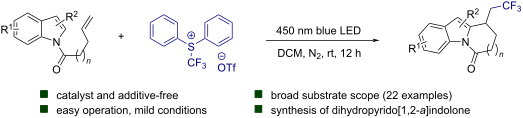
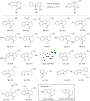
- NMR (Figure S3 in Supporting Information File 1) [30] and high-resolution mass spectrometry. You and co-workers proposed a reaction pathway involving the combination of the indole substrate and Umemoto’s reagent to form an electron donor–acceptor (EDA) complex [31]. We excluded the possibility of an




Multi-redox indenofluorene chromophores incorporating dithiafulvene donor and ene/enediyne acceptor units
Beilstein J. Org. Chem. 2024, 20, 59–73, doi:10.3762/bjoc.20.8
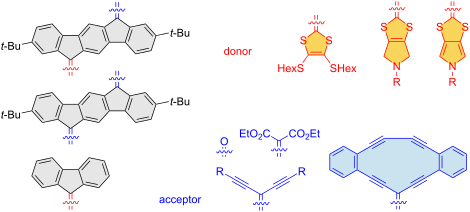
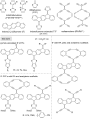
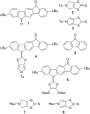
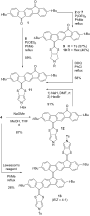
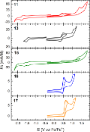
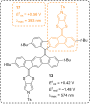
- Sciences, Beijing, China 10.3762/bjoc.20.8 Abstract Large donor–acceptor scaffolds derived from polycyclic aromatic hydrocarbons (PAHs) with tunable HOMO and LUMO energies are important for several applications, such as organic photovoltaics. Here, we present a large selection of PAHs based on central
- a subsequent Glaser–Hay coupling reaction, a RA acceptor unit was introduced to provide a DTF-IF-RA donor–acceptor scaffold with a low-energy charge-transfer absorption and multi-redox behavior. Keywords: alkynes; chromophores; fused-ring systems; heterocycles; redox chemistry; Introduction
- pyrrole unit to one of the dithiole rings of an IF-TTF, allowing for dimerization of extended TTFs via the nitrogen atom by different linkers [14]. Donor–acceptor chromophores can be obtained by replacing one of the dithiafulvene (DTF) rings of the IF-TTF by an electron acceptor. Cyclic and acyclic





Thienothiophene-based organic light-emitting diode: synthesis, photophysical properties and application
Beilstein J. Org. Chem. 2023, 19, 1849–1857, doi:10.3762/bjoc.19.137
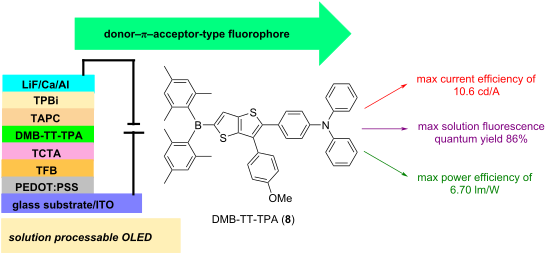
- for organic electronic applications [12][35]. Dimesitylboron (DMB), with its unoccupied p-orbital, is an electron-acceptor organoboron compound used in several donor–acceptor systems to provide the system with pull–push interaction [36][37]. In this work, we have designed and synthesized a D–π–A model
- characteristic of DMB-TT-TPA (8). Additionally, OLED performances were significantly increased compared to the previous study [23]. In terms of the TT chemistry, the device results reached remarkable values for donor–π–acceptor-type solution processable emitters within the donor–acceptor family [39][40][41][42


Recent advancements in iodide/phosphine-mediated photoredox radical reactions
Beilstein J. Org. Chem. 2023, 19, 1785–1803, doi:10.3762/bjoc.19.131
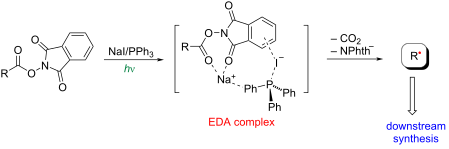
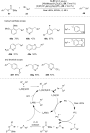
- smoothly delivered an electron donor–acceptor (EDA) complex II via coulombic interactions. Upon 456 nm blue LED light irradiation, the EDA complex II underwent a single electron transfer (SET) process, followed by subsequent decarboxylation to produce the alkyl radical intermediate A, accompanied by
- amount of ammonium iodide under irradiation in the absence of triphenylphosphine (Scheme 12). The generation of alkyl radicals was attributed to the photoactivation of a transient electron donor–acceptor complex formed between iodide and N-(acyloxy)phthalimide, in line with earlier findings. These




Active-metal template clipping synthesis of novel [2]rotaxanes
Beilstein J. Org. Chem. 2023, 19, 1776–1784, doi:10.3762/bjoc.19.130
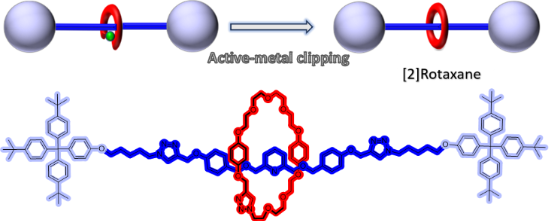
- ) [30][31], metal-ion template (coordination bonds [22][32], ion-dipol [16], donor–acceptor (charge transfer, π–π stacking) [30][33], and oligoamide macrocycle-hydrogen acceptors (hydrogen bonding) [20][34]. In active-metal template methods (Figure 1) the metal ion acts both as template and catalyst for





