


Search results
Search for "grinding" in Full Text gives 84 result(s) in Beilstein Journal of Organic Chemistry.
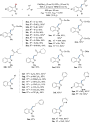
Multi-faceted reactivity of N-fluorobenzenesulfonimide (NFSI) under mechanochemical conditions: fluorination, fluorodemethylation, sulfonylation, and amidation reactions
Beilstein J. Org. Chem. 2022, 18, 182–189, doi:10.3762/bjoc.18.20
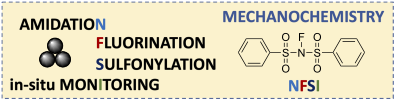
- ; sulfonylation; Introduction Mechanosynthesis of organic molecules and materials using mechanochemical techniques such as ball milling, extrusion, grinding, etc. [1][2][3] have enabled the development of known and new chemical transformations in a more sustainable fashion [4]. Commonly, mechanochemical


In-depth characterization of self-healing polymers based on π–π interactions
Beilstein J. Org. Chem. 2021, 17, 2496–2504, doi:10.3762/bjoc.17.166
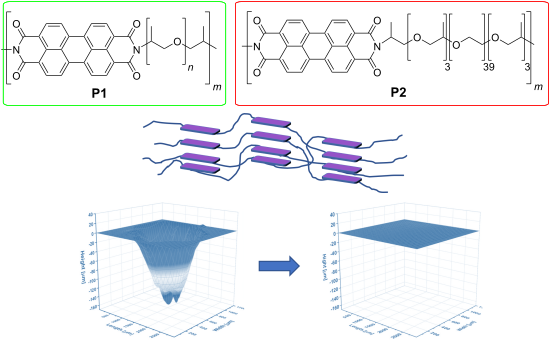
- literature [31]. In the first step, the sample was hot pressed (at 150 °C, at about 2 t for 3 minutes) in a special manufactured mold. The pressed polymer samples were embedded in epoxy resin consisting of Epoxy Resin L and Hardener CL from R&G Faserverbundstoffe GmbH, followed by grinding of the sample with


Particle size effect in the mechanically assisted synthesis of β-cyclodextrin mesitylene sulfonate
Beilstein J. Org. Chem. 2020, 16, 2598–2606, doi:10.3762/bjoc.16.211
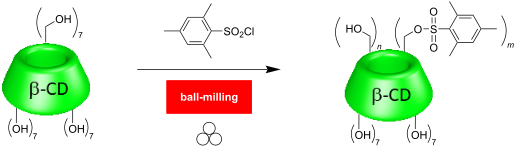
- considerable attention as it may be unique in features to selectively direct the reaction pathway. In the continuation of our work on the synthesis of modified cyclodextrins (CDs) via mechanochemical activation, we sought to discriminate the contribution of supramolecular effects and grinding during the course
- the reaction. In this study, we show that grinding β-CD reduces the particles size over time down to a limit of 167 nm. The granulometric composition remains rather invariant for grinding times over 1 h. Each type of β-CD particles reacted with mesitylenesulfonyl chloride (MtsCl) to produce β-CDMts
- . Contrary to what could be intuitively anticipated, smaller particles did not lead to the highest conversions. The impact of grinding on the conversion was limited. Interestingly, the proportion of β-CDMts mono-substituted on the primary face significantly increased over time when the reaction was carried




The B & B approach: Ball-milling conjugation of dextran with phenylboronic acid (PBA)-functionalized BODIPY
Beilstein J. Org. Chem. 2020, 16, 2272–2281, doi:10.3762/bjoc.16.188
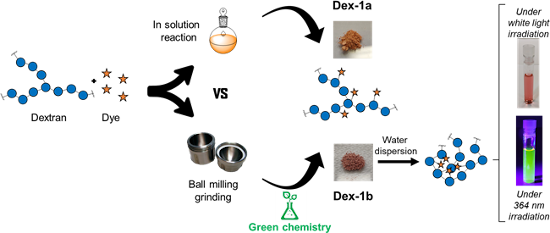
- reactions, and even in nanomaterials preparation [1][2][3][4][5]. Indeed, solid-state mechanochemical methodologies are a viable alternative to traditional syntheses in solution [4] for the preparation of complex molecules, either under solvent-free conditions, named ‘neat grinding’, or in nearly solvent
- -free conditions, e.g., liquid-assisted grinding (LAG), slurries, and homogenous solutions. Although there are compounds that can only be achieved by conventional solution-based methods, mechanochemistry offers some important advantages over conventional bulk synthesis. These advantages have become more
- by grinding Dex and 1 (in roughly equimolar amounts) at 25 Hz for 90 minutes, in a 10 mL mixer mills using one stainless-steel ball (∅ = 1.0 cm). The product, a red powder (Dex-1b, Scheme 1, route B), was easily recovered from the jar and solubilized in DMSO. Then, the conjugate (Dex-1b, Scheme 1


Mechanochemical green synthesis of hyper-crosslinked cyclodextrin polymers
Beilstein J. Org. Chem. 2020, 16, 1554–1563, doi:10.3762/bjoc.16.127
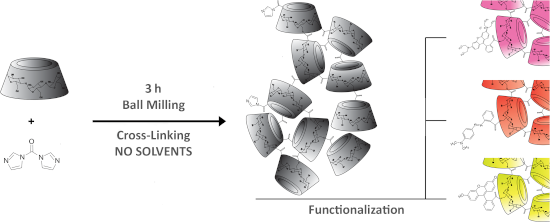
- drive and control chemical reactions, for example, using grinding or milling to transfer energy to chemical bonds [11]. Mechanochemical transformations are well established in inorganic chemistry and they are easily transferable to an industrial scale [12][13]. Mechanochemistry in organic chemistry




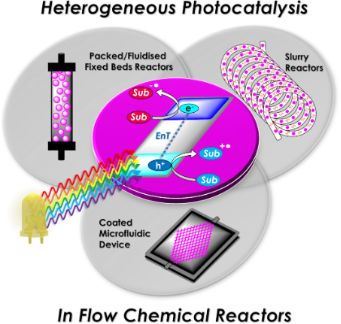
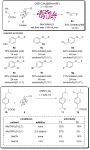
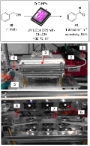
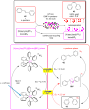
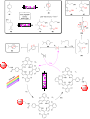
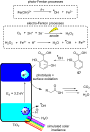
Heterogeneous photocatalysis in flow chemical reactors
Beilstein J. Org. Chem. 2020, 16, 1495–1549, doi:10.3762/bjoc.16.125










Halide metathesis in overdrive: mechanochemical synthesis of a heterometallic group 1 allyl complex
Beilstein J. Org. Chem. 2019, 15, 1856–1863, doi:10.3762/bjoc.15.181
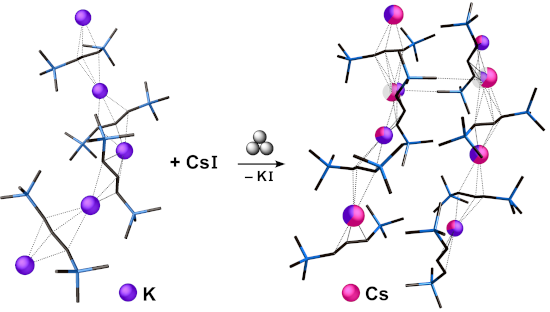
- thermodynamic driving forces, intra-alkali metal exchange is one of the most challenging metathetical exchanges to attempt, especially when conducted without solvent. Nevertheless, grinding together the bulky potassium allyl [KA']∞ (A' = [1,3-(SiMe3)2C3H3]–) and CsI produces the heterometallic complex [CsKA'2
- , which promotes reactions through grinding or milling with no, or minimal, use of solvents, has been used in conjunction with halide metathesis to form organometallic compounds of the transition metals [3][4][5][6][7] and both s- [8][9] and p-block [10][11] main group elements. The extent to which the
- coordination polymer. Within these experimental parameters, the general reaction in Equation 5 was examined. When n = 1, a reaction carried to completion would result in full metal exchange, with partial exchange the outcome for any larger values of n. The experimental protocol involved grinding various ratios


Metal-free mechanochemical oxidations in Ertalyte® jars
Beilstein J. Org. Chem. 2019, 15, 1786–1794, doi:10.3762/bjoc.15.172
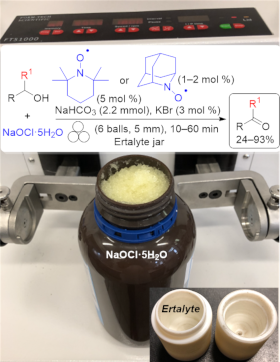
- grinding mixture [51]. Two different mechanisms have been postulated for similar reactions in homogeneous phase: one occurs under acidic conditions, while the other works better in a basic medium through a cyclic dipolar mechanism (Scheme 2) [52][53]. On the contrary, under ball-milling conditions, it is
- reactions of hydantoins [41][59]. However, also using this oxidant, we observed low conversions (31%) and the formation of significant amounts of byproducts, mainly halides and olefins (elimination byproducts). The use of liquid-assisted grinding (LAG) procedures [60][61][62] by adding small quantities of


Mechanochemical Friedel–Crafts acylations
Beilstein J. Org. Chem. 2019, 15, 1313–1320, doi:10.3762/bjoc.15.130
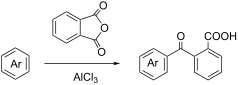
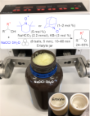
- a few examples of FCRs employing manual grinding: reserpine acylation with AlCl3 [6] and acylation reaction of aromatics [7]. One of the reasons for this scarcity is the hygroscopic nature of the aluminum trichloride catalyst [8][9][10][11][12] when exposed to air humidity. This problem could be
- grinding additives to improve mass transfer and prevent pasting of the reaction mixture [26][27][28] (Table 1, entries 5–8) was detrimental to reaction yields. The addition of a small amount of solvents which was reported to facilitate several ball milling reactions (liquid assisted grinding, LAG) [29][30
- , in which acylation was accompanied with the cleavage of the methoxy group [43][44][45]. A striking advantage of the automated ball milling over manual grinding [46] is evident in the reaction of anthracene with phthalic anhydride which gave no product by manual grinding and the yield of the toluene


Understanding the unexpected effect of frequency on the kinetics of a covalent reaction under ball-milling conditions
Beilstein J. Org. Chem. 2019, 15, 1226–1235, doi:10.3762/bjoc.15.120
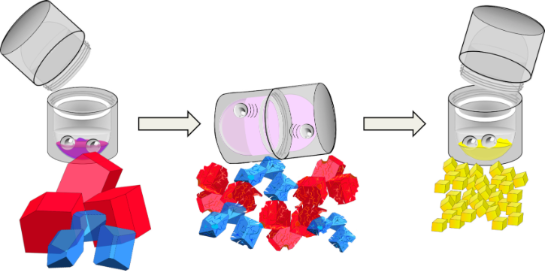
- Sciences, University of Cambridge, Downing Street, Cambridge CB2 3EQ, UK 10.3762/bjoc.15.120 Abstract We here explore how ball-mill-grinding frequency affects the kinetics of a disulfide exchange reaction. Our kinetic data show that the reaction progress is similar at all the frequencies studied (15–30 Hz
- grinding; grinding frequency; kinetics; mechanism; mechanochemistry; Introduction We describe here an unusual frequency-dependence in the induction period of a covalent reaction carried out using ball-mill grinding. We present a kinetic analysis indicating that this is due to the successive fracture of
- crystals into smaller particles followed by the accumulation of energy in crystal defects. In recent years, manual and ball-mill grinding have become increasingly routine solid-state synthesis tools [1]. Generally referred to as mechanochemistry, these methods are more environmentally friendly and usually


Mechanochemical synthesis of hyper-crosslinked polymers: influences on their pore structure and adsorption behaviour for organic vapors
Beilstein J. Org. Chem. 2019, 15, 1154–1161, doi:10.3762/bjoc.15.112
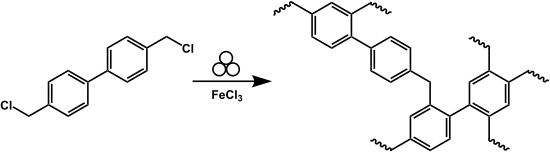
- polymer with surface areas of up to 1720 m2g−1 and pore volumes of up to 1.55 cm3g−1. The application of LAG (liquid-assisted grinding) revealed a profound impact of the liquid´s boiling point on the textural properties of the obtained polymer materials. Finally, the materials are characterized by vapour
- 35 minutes. After the synthesis, the resulting polymers were washed with 200 mL of water and 100 mL of ethanol and dried at 80 °C for 12 hours to yield a beige powder (denoted NG-HCP (neat grinding-HCP)). For more details on the experimental procedure see Supporting Information File 1. After


Extending mechanochemical porphyrin synthesis to bulkier aromatics: tetramesitylporphyrin
Beilstein J. Org. Chem. 2019, 15, 1149–1153, doi:10.3762/bjoc.15.111
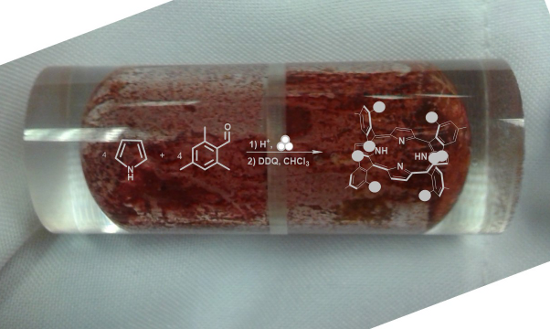
- , simple, room-temperature method for producing tetra-meso-substituted porphyrins with bulky substituents. Keywords: condensation; grinding; mechanochemistry; milling; porphyrin; sterically-hindered; Introduction Porphyrins and related macrocycles such as chlorins, corroles, and bacteriochlorins carry
- work on mechanochemical porphyrin synthesis has demonstrated that it is possible to synthesize tetraphenylporphyrin (TPP) by grinding benzaldehyde and pyrrole (two liquids) in the presence of an acid catalyst, followed by oxidation with DDQ in minimal amounts of solvent [19]. TPP was produced in a
- even when grinding is carried out manually and open to air using a mortar and pestle, no Soret band is observed in the spectrum of the freshly-ground powder [19]. Also in the case of benzaldehyde, it was found that allowing the mechanochemically-generated powder to sit on a benchtop open to air for


Unexpected polymorphism during a catalyzed mechanochemical Knoevenagel condensation
Beilstein J. Org. Chem. 2019, 15, 1141–1148, doi:10.3762/bjoc.15.110
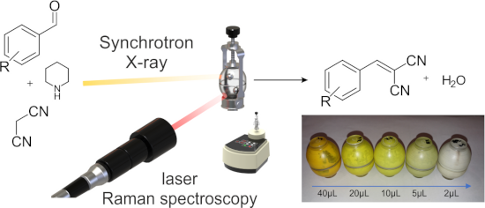
- polymorphic forms, depending on the quantity of catalyst used. For low catalyst concentrations, a mechanically metastable phase (monoclinic) was initially formed, converting to the mechanically stable phase (triclinic) upon further grinding. Instead, higher catalyst concentrations crystallize directly as the


Mechanochemical synthesis of poly(trimethylene carbonate)s: an example of rate acceleration
Beilstein J. Org. Chem. 2019, 15, 963–970, doi:10.3762/bjoc.15.93
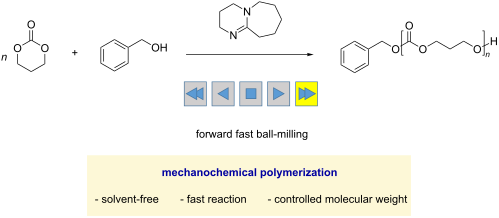
- important for chain-length control. Liquid-assisted grinding was applied for the synthesis of high molecular weight polymers, but it failed to protect the polymer chain from mechanical degradation. Keywords: aliphatic polycarbonate; green polymerization; mechanochemistry; organocatalyst; poly(trimethylene
- , liquid-assisted grinding (LAG), the addition of a very small amount of a liquid, prevented chain-degradation from high impact collisions, and afforded PLA with over 100,000 g/mol. Thus, LAG was also tested in the PTMC synthesis [13][14] with toluene and THF as liquids. A catalytic amount of liquid (10 or
- polymerizations reached completion within 5 min, despite physical mixing limitations. However, the mechanochemical polymerization was accompanied by degradation processes, which limited the molecular weight to 10,000 g/mol. Liquid-assisted grinding did not show any protective effect, and the search for other


Mechanochemistry of supramolecules
Beilstein J. Org. Chem. 2019, 15, 881–900, doi:10.3762/bjoc.15.86
- the formation of a Pt-based supramolecular square took more than four weeks at 100 °C. Using a similar approach, Otera’s group also demonstrated for the formation of a bowl-shaped assembly 9 in 90% yield upon grinding for 10 min 2,4,6-tri(pyridin-3-yl)-1,3,5-triazine and palladium ((en)Pd(NO3)2
- , Figure 4b). Contrastingly, in solution the same synthesis took 4 h at 70 °C to isolate complex 9 in 56% yield. Ćurić and co-workers prepared cyclopalladated complexes such as 10 by a grinding method and were the first to confirm a mechanochemical C–H bond activation of an unsymmetrically substituted
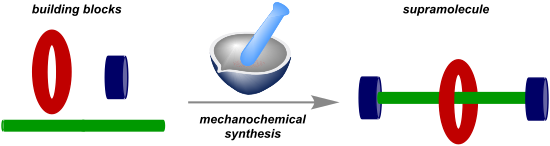
- acetic acid (for liquid-assisted grinding, LAG) led to the regioselective C–H activation (Figure 5) [58]. In 2008, the mechanochemical synthesis of both [2]- and [4]rotaxanes was reported by Chiu and co-workers. The reactions led to high yields of the products 12 and 13 under solvent-free conditions at a


Fabrication of supramolecular cyclodextrin–fullerene nonwovens by electrospinning
Beilstein J. Org. Chem. 2019, 15, 89–95, doi:10.3762/bjoc.15.10
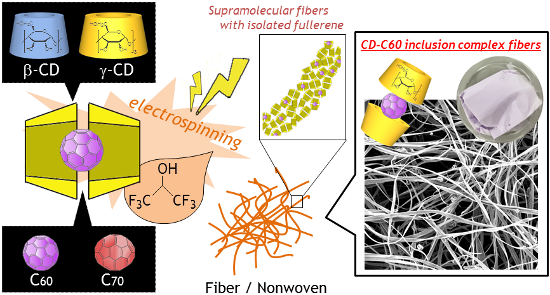
- downsizing C60 with bowl milling [26] and high-speed vibration milling [27]. We confirmed that a simple grinding process by an agate mortar is sufficient for the HFIP system (Figure S2 in Supporting Information File 1). ESI mass spectrometry of the purple solution indicates the presence of the γ-CD–C60 (2:1


Functionalization of graphene: does the organic chemistry matter?
Beilstein J. Org. Chem. 2018, 14, 2018–2026, doi:10.3762/bjoc.14.177
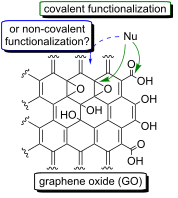
- stability [41][42]. Additionally, some researchers have used the acid catalysis [39] or grinding-induced process [40] for the esterification reaction, and the changes in the spectra (e.g., IR, XPS) were not prominent enough to imply the formation of covalent ester-type linkages. In the grinding-induced case


Recent advances in phosphorescent platinum complexes for organic light-emitting diodes
Beilstein J. Org. Chem. 2018, 14, 1459–1481, doi:10.3762/bjoc.14.124
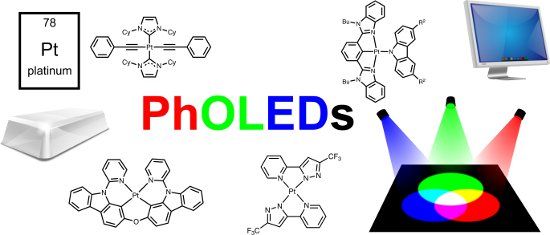
- properties. Indeed, bathochromic shifts in the emission energy were observed upon either grinding or incrementing solvent polarity. This emission was attributed to a radiative transition with triplet metal–metal-to-ligand charge transfer character (3MMLCT), which ultimately strongly depends on the platinum






Spectroelectrochemical studies on the effect of cations in the alkaline glycerol oxidation reaction over carbon nanotube-supported Pd nanoparticles
Beilstein J. Org. Chem. 2018, 14, 1428–1435, doi:10.3762/bjoc.14.120
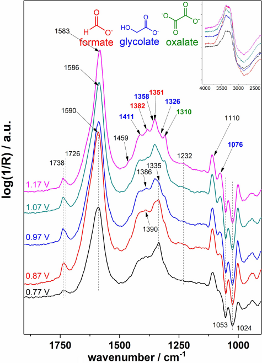
- , a Ag/AgCl/3 M KCl as reference and a Pt mesh as counter electrode. The working electrodes were polished to a mirror finish using grinding papers and alumina suspensions of different grain sizes. Prior to each experiment, the glassy carbon surface was repolished using a 0.05 µm Al2O3 suspension and


Mechanochemistry of nucleosides, nucleotides and related materials
Beilstein J. Org. Chem. 2018, 14, 955–970, doi:10.3762/bjoc.14.81
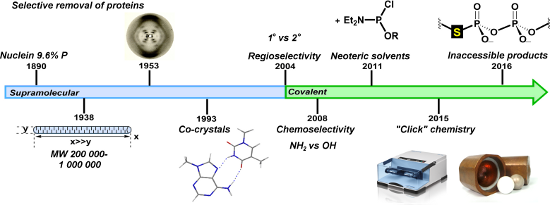
- exploited grinding to facilitate disaggregation of DNA from tightly bound proteins through selective denaturation of the latter. Despite the wide application of ball milling to amino acid chemistry, there have been limited reports of mechanochemical transformations involving nucleoside or nucleotide
- substrates on preparative scales. A survey of these reactions is provided, the majority of which have used a mixer ball mill and display an almost universal requirement for liquid to be present within the grinding vessel. Mechanochemistry of charged nucleotide substrates, in particular, provides considerable
- contribution of mechanochemistry (and specifically, ball milling) to the isolation of biologically active materials derived from nuclei by grinding will also be outlined. Finally non-covalent associative processes involving nucleic acids and related materials using mechanochemistry will be described


Bromide-assisted chemoselective Heck reaction of 3-bromoindazoles under high-speed ball-milling conditions: synthesis of axitinib
Beilstein J. Org. Chem. 2018, 14, 786–795, doi:10.3762/bjoc.14.66
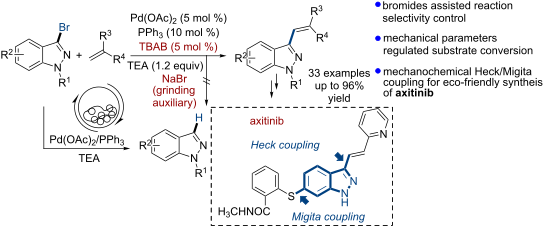
- , PR China 10.3762/bjoc.14.66 Abstract A mechanically-activated chemoselective Heck coupling for the synthesis of 3-vinylindazoles has been developed with the aid of catalytic amounts of TBAB and NaBr as both dehalogenation restrainer and grinding auxiliary. After tuning of the chemical conditions and
- the function of phase-transfer, other kinds of phase-transfer catalysts (SDS = sodium dodecyl sulfate) were also examined, however, this gave rise to a negative effect (Table S1, entry 8). To our delight, when we replaced the grinding auxiliary by sodium bromide, a moderate product yield (69%) and an
- excellent selectivity (trace of 4a) were achieved (Table S1, entry 12). In this way, the amount of TBAB could even be reduced to 5 mol % (Table S1, entry 14). Influence of grinding auxiliary In the process of ball milling, the grinding auxiliary was always found to be an efficient transfer medium between



Liquid-assisted grinding and ion pairing regulates percentage conversion and diastereoselectivity of the Wittig reaction under mechanochemical conditions
Beilstein J. Org. Chem. 2018, 14, 688–696, doi:10.3762/bjoc.14.57
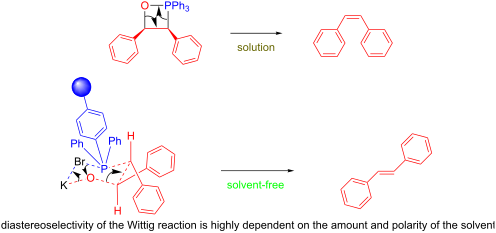
- , so it is important to continue understanding the rules governing the system. In a mechanochemical reaction, the reactants are added into a vessel along with one or more grinding balls and the vessel is shaken at high speeds to facilitate a chemical reaction. The dielectric constant of the solvent
- used in liquid-assisted grinding (LAG) and properly chosen counter-ion pairing increases the percentage conversion of stilbenes in a mechanochemical Wittig reaction. Utilizing stepwise addition/evaporation of ethanol in liquid-assisted grinding also allows for the tuning of the diastereoselectivity in
- the Wittig reaction. Keywords: green chemistry; high-speed ball milling; HSBM; LAG; liquid-assisted grinding; Wittig; Introduction Mechanochemistry is maturing as a discipline and continuing to develop and grow [1][2][3][4][5][6][7][8][9][10][11][12][13][14][15][16]. Thus it is important to continue




5-Aminopyrazole as precursor in design and synthesis of fused pyrazoloazines
Beilstein J. Org. Chem. 2018, 14, 203–242, doi:10.3762/bjoc.14.15
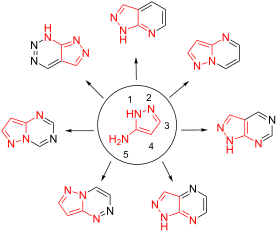
- (147) with 3-oxo-3-arylpropanenitrile 15 under solvent-free grinding conditions. The reaction was proposed to proceed via formation of hydrazine by C–N bond cleavage which under reaction conditions provided 7-aminopyrazolo[1,5-a]pyrimidines 148 on coupling with 3-oxo-3-arylpropanenitrile 15 (Scheme 42


Exploring mechanochemistry to turn organic bio-relevant molecules into metal-organic frameworks: a short review
Beilstein J. Org. Chem. 2017, 13, 2416–2427, doi:10.3762/bjoc.13.239
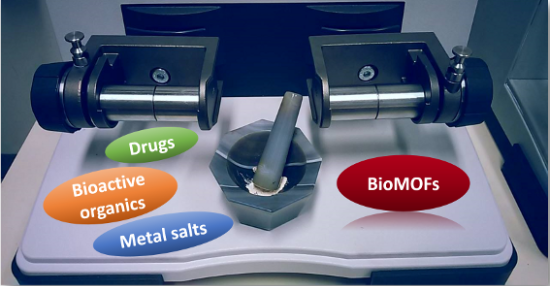
- and solvent. It is an approach to green chemistry, an area devoted to the discovery of environmentally friendly synthetic pathways, eliminating or drastically reducing the amount of solvent necessary to catalytically promote reactions. Mechanochemistry consists of grinding together two or more
- compounds to promote a reaction, by inducing the breaking/forming of covalent or supramolecular bonds [1][2]. There are different approaches towards mechanochemistry. The most direct is neat grinding (NG), in which the reagents are ground together without the addition of any solvent or other additive [3
- ]. NG evolved into liquid-assisted grinding (LAG), also known as solvent-drop grinding or kneading, which includes the addition of catalytic amounts of solvent to facilitate the reaction. This technique proved to be useful for the synthesis of new compounds that could not be obtained by solution or NG




A mechanochemical approach to access the proline–proline diketopiperazine framework
Beilstein J. Org. Chem. 2017, 13, 2169–2178, doi:10.3762/bjoc.13.217
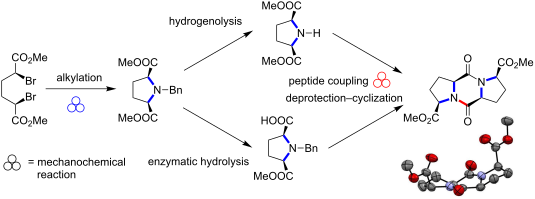
- the presence of EDC (coupling agent), a base and a small amount [29] of EtOAc as liquid grinding assistant. The role of oxyma was mainly to suppress amino acid epimerization during the coupling, a limited problem in the case of proline. Consequently, our first experiments did not involve this reagent
- to Cs2CO3 resulted in an increased conversion of 74% (Table 2, entry 4), further improved to 82% when the milling frequency was adjusted to 30 Hz (Table 2, entry 5). Adding EtOAc as liquid grinding assistant did not improve the conversion, with either K2CO3 or Cs2CO3 (Table 2, entries 6 and 7





