Search results
Search for "intramolecular" in Full Text gives 1424 result(s) in Beilstein Journal of Organic Chemistry. Showing first 200.
Arene activation via π-bond localization: concepts and opportunities
Beilstein J. Org. Chem. 2026, 22, 257–273, doi:10.3762/bjoc.22.19
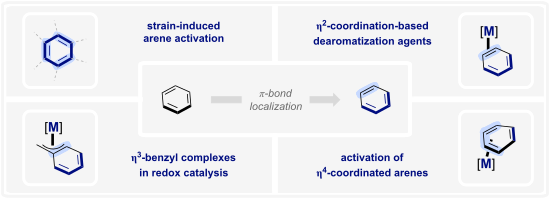
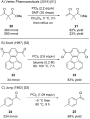
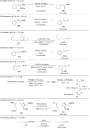
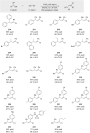
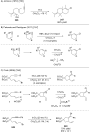
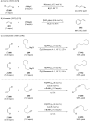
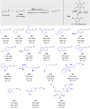
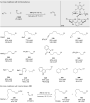
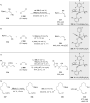
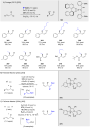
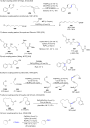
- introduced by Cheong and Altman in 2020 (Figure 10A) [83]. In this study, the authors explored an intramolecular, decarboxylative C–H functionalization of benzylic electrophiles, uncovering a decisive role of the base in governing site selectivity. Computational and mechanistic analyses revealed that only


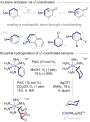


A mild and atom-efficient four-component cascade strategy for the construction of biologically relevant 4-hydroxyquinolin-2(1H)-one derivatives
Beilstein J. Org. Chem. 2026, 22, 244–256, doi:10.3762/bjoc.22.18
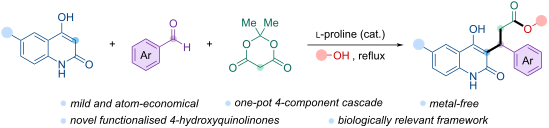
- formation of the cyclic lactone, which predominated under such conditions. These findings suggest that intramolecular attack by the quinolinone OH group, leading to cyclization and formation of pyranoquinolinone, proceeds faster than nucleophilic attack by the external alcohol. Thus, under mild or brief
- efficient reaction progress and facile isolation of pure products, with yields ranging from 65 to 81%. Pyranoquinolines 14a–c can be prepared from acids 11a–c via Fischer–Speier esterification, Steglich esterification, or intramolecular acylation through in situ formation of acyl chlorides. The cyclic


Conformational analysis of difluoromethylornithine: factors influencing its gas-phase and bioactive conformations
Beilstein J. Org. Chem. 2026, 22, 237–243, doi:10.3762/bjoc.22.17
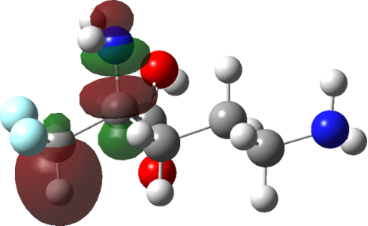
- , the NH₂ group forms a hydrogen bond with ASP183, and the carboxylate interacts with ASN130 (Figure 3), with additional hydrogen bonds to water molecules. Consequently, intermolecular interactions dominate and override the intramolecular forces responsible for the gauche effect in the isolated molecule
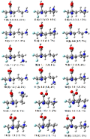
- to negligible Boltzmann populations. Thus, zwitterion formation reinforces the gauche effect, likely through an electrostatic attraction between negatively charged fluorine atoms and the positively charged NH₃+ group, as observed in related systems [25]. Even so, this intramolecular stabilization
- balance shifts, since strong intermolecular interactions – especially hydrogen bonding with amino acid residues – favor a type-II geometry as the predominant bioconformation. Nevertheless, when different conformers engage in comparable intermolecular interactions, intramolecular effects such as the gauche




Configuration–packing synergy enabling integrated crystalline-state RTP and amorphous-state TADF
Beilstein J. Org. Chem. 2026, 22, 224–236, doi:10.3762/bjoc.22.16
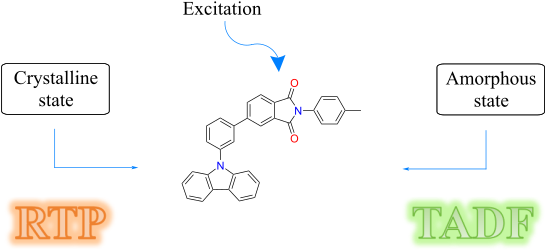
- emission energy. Consistent with these trends (Figure 2), compound 1 exhibits nearly identical UV–vis absorption across solvents, while its emission shifts bathochromically with increasing polarity, indicating that the luminescence of 1 arises predominantly from intramolecular charge transfer. In a dilute


Improved synthesis and physicochemical characterization of the selective serotonin 2A receptor agonist 25CN-NBOH
Beilstein J. Org. Chem. 2026, 22, 175–184, doi:10.3762/bjoc.22.11
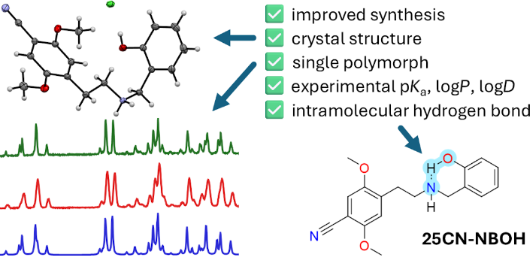
- stable in aqueous solutions at room temperature. Furthermore, we show that an intramolecular hydrogen bond is present in solution, which presumably is a key contributor to the high membrane permeability. Collectively, this physical-chemical profiling of 25CN-NBOH provides guidance to researchers with
- respect to the physiochemical properties and handling of the compound in various research scenarios. Keywords: intramolecular hydrogen bond; membrane permeability; solubility; stability; synthesis; Introduction In recent years, classical psychedelics such as psilocybin and LSD have re-emerged as
- relatively high solubility. Intramolecular hydrogen bonding Previous pharmacokinetic investigations showed that 1 displays high permeability in the MDCK assay (apical–basal 29 × 10−6 cm/s and basal–apical 20 × 10−6 cm/s) [6], a well-established in vitro model for assessing blood–brain barrier (BBB


Design and synthesis of an axially chiral platinum(II) complex and its CPL properties in PMMA matrix
Beilstein J. Org. Chem. 2026, 22, 143–150, doi:10.3762/bjoc.22.7
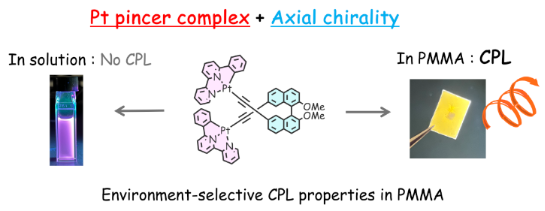
- transition dipole moments caused by intramolecular motions, leading to a cancellation of dipole moment or potentially weak magnetic dipole moment. In contrast, 1 wt % PMMA matrices exhibited distinct CPL activity, with the CPL signal showing the same sign as the first Cotton effect in the CD spectrum (Figure


Symmetrical D–π–A–π–D indanone dyes: a new design for nonlinear optics and cyanide detection
Beilstein J. Org. Chem. 2026, 22, 131–142, doi:10.3762/bjoc.22.6
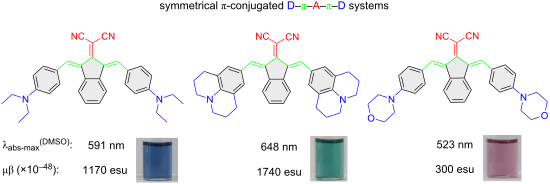
- -order NLO have high hyperpolarizability (β) values through electron-donor (D) and -withdrawing (A) groups linked by π-bridges in their structures [12][13]. Thus, NLO responses can be tunable by adjusting the strength of the donor and acceptor groups based on the intramolecular charge transfer (ICT


Highly electrophilic, gem- and spiro-activated trichloromethylnitrocyclopropanes: synthesis and structure
Beilstein J. Org. Chem. 2026, 22, 123–130, doi:10.3762/bjoc.22.5
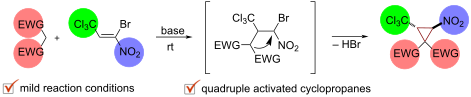
- to the bromonitroalkene afford the intermediate anion II, followed by tautomerization and formation of anion IV, which undergoes intramolecular nucleophilic substitution of the bromide along the C-alkylation pathway [37][38][39] (Scheme 6). The trans-configuration of the methine protons of the


Total synthesis of natural products based on hydrogenation of aromatic rings
Beilstein J. Org. Chem. 2026, 22, 88–122, doi:10.3762/bjoc.22.4
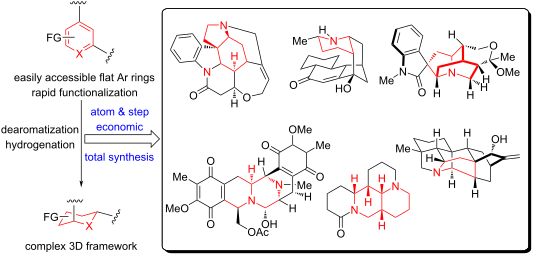
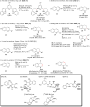
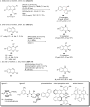
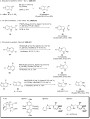
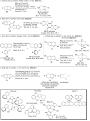
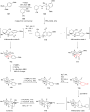
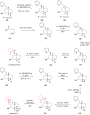
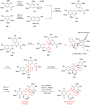
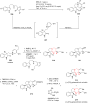
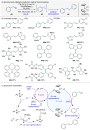
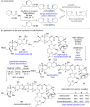
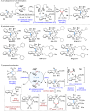
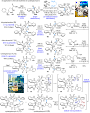
- 81 was prepared via a Polonovski–Polish reaction and isomerization, which, when adopting the proper conformation, spontaneously underwent an intramolecular [4 + 2] cycloaddition to construct the unsaturated bridged ring of (±)-keramaphidin B in a single transformation. Subsequently, the iminium ion
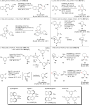
- protonation during reduction or an isomerization event. Kinetic translocation of the double bond to the correct position enabled an intramolecular Heck reaction, a transformation originally developed by Fukuyama (Scheme 12) [78]. Hydrogenation of (−)-tabersonine to (−)-decahydrotabersonine by Catherine
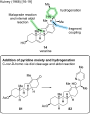
- achieved the first total synthesis of the hepta-ring-containing natural product (±)-nominine applying a palladium-catalyzed intramolecular α-acylation and Birch reduction as key steps (Scheme 14) [81][82]. Starting with a simple trisubstituted benzene 97, they obtained the ketal 98 in 39% yield over six











Advances in Zr-mediated radical transformations and applications to total synthesis
Beilstein J. Org. Chem. 2026, 22, 71–87, doi:10.3762/bjoc.22.3
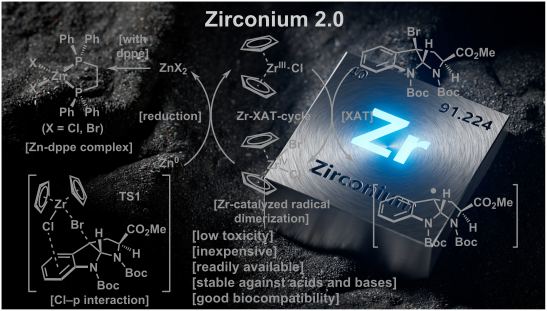
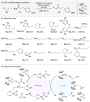
- -mediated stoichiometric radical reactions Traditionally, the use of Zr complexes in organic reactions had been limited to two-electron processes; however, the first example of a Zr-mediated radical reaction was reported by Oshima et al. in 2001. They reported an intramolecular radical cyclization using
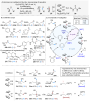
- intramolecular addition to the olefin, affording the cyclized acetal product 4. The reaction proceeded efficiently across a range of substrates bearing various substituents at R¹–R⁴, delivering the desired cyclized products 4a–f in good yields. The proposed mechanism is illustrated in Scheme 1C. Initially
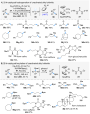
- , affording the corresponding alcohol 28. In contrast, when substrates bearing a benzylic alcohol moiety at the α-position were subjected to the same conditions, the reaction proceeded through radical intermediate 31, which underwent a 1,5-hydrogen atom transfer (1,5-HAT) followed by intramolecular C–O bond








Reactivity umpolung of the cycloheptatriene core in hexa(methoxycarbonyl)cycloheptatriene
Beilstein J. Org. Chem. 2026, 22, 64–70, doi:10.3762/bjoc.22.2
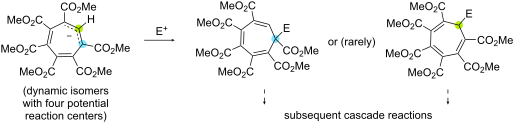
- norcaradiene product in the case of benzylation, unlike in the close analogues, is due to a steric repulsion. The structure of norcaradiene 6f was confirmed through single crystal X-ray analysis (CCDC 2495985). Allylation of anion 2 was followed by intramolecular [4 + 2]-cycloaddition in norcaradiene 6g to


Synthesis and applications of alkenyl chlorides (vinyl chlorides): a review
Beilstein J. Org. Chem. 2026, 22, 1–63, doi:10.3762/bjoc.22.1
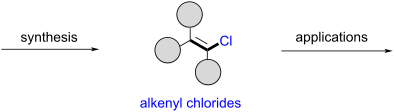
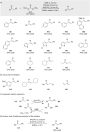
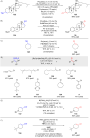
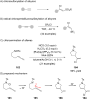
- Scheme 28D, involving initial generation of a nitrogen-centered radical 165, which undergoes intramolecular addition to the pendant allene to form a vinyl radical intermediate 166. Subsequent interception of 166 by an N–Cl bond furnishes alkenyl chloride 164. 1.4 Reaction of alkenyl metals with chlorine
- anion). Generation of tertiary aliphatic cations and intramolecular trapping with alkenes or alkynes is well known in the context of polyene cyclizations [155]. Building on Johnson’s earlier work (Scheme 48A) [156], Fañanás and Rodríguez developed an intramolecular cationic cyclization strategy to
- systems, with no successful extension to other ring sizes. The proposed mechanism involves initial generation of a tertiary or benzylic carbocation, followed by intramolecular cyclization with a pendant alkyne to furnish a vinyl cation intermediate. This species is postulated to be trapped by the solvent























Sustainable electrochemical synthesis of aliphatic nitro-NNO-azoxy compounds employing ammonium dinitramide and their in vitro evaluation as potential nitric oxide donors and fungicides
Beilstein J. Org. Chem. 2025, 21, 2739–2754, doi:10.3762/bjoc.21.211
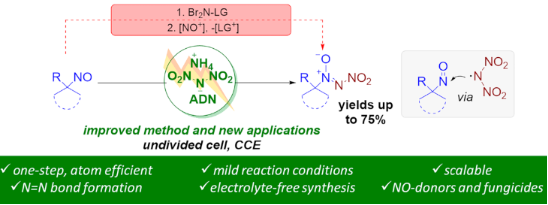
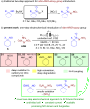
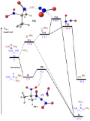
- approaches focus mainly on intramolecular radical cyclizations [42][54][55][56][57][58][59][60][61][62][63], while intermolecular [1][64][65][66][67][68] N–N coupling remains a poorly studied area. In addition to the preparation of azo compounds [69][70], intermolecular N–N coupling reactions are of





Total synthesis of asperdinones B, C, D, E and terezine D
Beilstein J. Org. Chem. 2025, 21, 2730–2738, doi:10.3762/bjoc.21.210
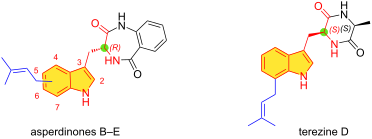
- methyl ester who observed intramolecular proton transfer with partial incorporation of deuterium upon quenching with deuterium oxide. In a different context, the role of the Pd catalyst and the associated ligand was studied in the cross-coupling of the organozinc reagent ent-35 with 3-iodomethylfuran


Competitive cyclization of ethyl trifluoroacetoacetate and methyl ketones with 1,3-diamino-2-propanol into hydrogenated oxazolo- and pyrimido-condensed pyridones
Beilstein J. Org. Chem. 2025, 21, 2716–2729, doi:10.3762/bjoc.21.209
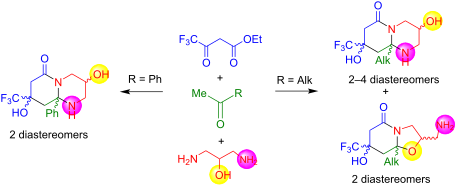
- compositions of antitumor antibiotics of the kigamycin family include the oxazolo[3,2-a]pyridine skeleton [55][56]. To obtain oxazolopyridones containing trifluoromethyl substituents, the syntheses have been proposed, which are based on the intramolecular cyclization of 1-phenyl-2-(4-(trifluoromethyl)piperidin
- at the acyl moiety with the amino group of diamino alcohol 3 to generate a three-component intermediate B (Scheme 4). The latter undergoes intramolecular cyclization involving the C=N bond in two equally probable directions: by adding a free amino group to form a hexahydropyrimidine ring of
- intermediate C (path a), or by adding an OH group to generate an oxazolidine ring of intermediate D (path b). The subsequent intramolecular cyclization of intermediates C and D involving a secondary NH group and an ester substituent yields the bicycles 4 and 5, respectively (Scheme 4). In the reactions with


Tandem hydrothiocyanation/cyclization of CF3-iminopropargyl alcohols with NaSCN in the presence of AcOH
Beilstein J. Org. Chem. 2025, 21, 2694–2702, doi:10.3762/bjoc.21.207
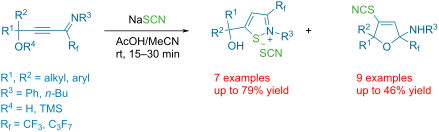
- ][8]. However, this is mainly possible in the case of functionalized alkynes, where these intramolecular reactions usually involve other functional groups that are contained in the same intermediate. Among the numerous hydrofunctionalization reactions, hydrothiocyanation has attracted much attention
- , thioethers, disulfides, phosphonothioates, and trifluoromethyl sulfides. Additionally, due to the presence of two electrophilic sites (the sulfur atom and the carbon of the nitrile function), thiocyanates can readily undergo domino-type intramolecular cyclization reactions to form heterocycles. So, if a
- dihydrofurans 3d,e remained comparable to those of 3a,b. Perhaps the yields of salts 2d,e were affected by steric factors hindering the intramolecular cyclization or their stability under the reaction conditions. Using TMS-protected secondary and primary iminopropargyl alcohols 1f,g (due to their instability



Recent advancements in the synthesis of Veratrum alkaloids
Beilstein J. Org. Chem. 2025, 21, 2657–2693, doi:10.3762/bjoc.21.206
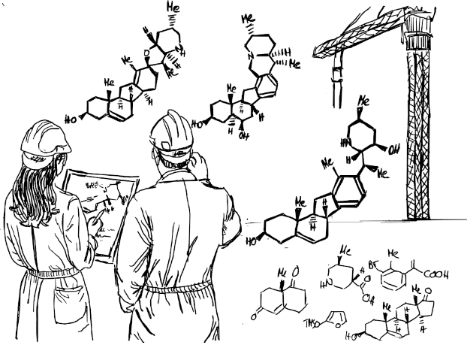
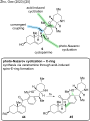
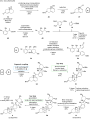
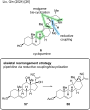
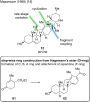
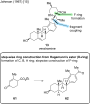
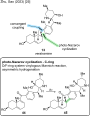
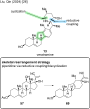
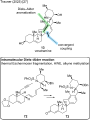
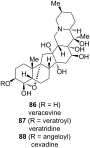
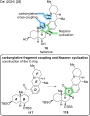
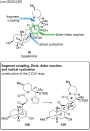
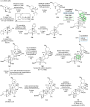
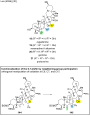
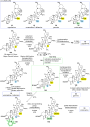
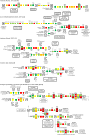
- veratramine in 13 steps LLS (19 steps total, overall yield of 3.7%). Similar Diels–Alder strategies to construct the D-ring, e.g., a Diels–Alder reaction in the synthesis of 4-methylenegermine (Stork, 2017) [22] and an intramolecular Diels–Alder reaction with furan for several congeners (Luo, 2023 and 2024
- ][18][19]. The earlier publications provide an access to the ABCD-skeleton with a C-nor-D-homo motif through a diol cleavage (Malaprade reaction) and intramolecular aldol reaction to furnish the five-membered C-ring. The F-ring is later attached, first as a pyridine, which then gets hydrogenated to a
- piperidine (Scheme 24). This sequence starts from 6-methoxy-2-tetralone (83), which was transformed in seven steps into intermediate 84 (Scheme 25). Important was the double bond at C13–C14, which was then dihydroxylated, the so-obtained diol was cleaved, and an intramolecular aldol reaction furnished the


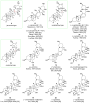
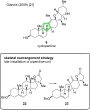

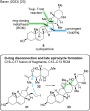













Synthesis of new tetra- and pentacyclic, methylenedioxy- and ethylenedioxy-substituted derivatives of the dibenzo[c,f][1,2]thiazepine ring system
Beilstein J. Org. Chem. 2025, 21, 2645–2656, doi:10.3762/bjoc.21.205
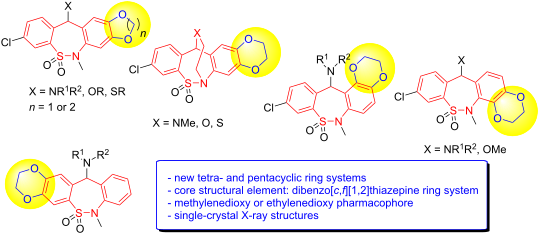
- step for the construction of the ring systems has been implemented by an intramolecular Friedel–Crafts cyclization. Altogether eight new ring systems are described here, five of them are also characterized by single-crystal X-ray diffraction. Keywords: acylation; bridged derivatives; cyclization
- removal of the acetyl group by intramolecular dehydrative thioetherification [3] to the bridged molecule 26. As regards the synthesis of compound 27, reduction of ketone 28 with NaBH4 (33), chlorination with SOCl2 (34) and treatment with 2-bromoethanol afforded 2-bromoethoxy derivative 35, which was
- cyclized to target compound 27 by intramolecular N-alkylation reaction. Structures of compounds 25, 26 and 27 have also been confirmed by single-crystal X-ray diffraction (Figure 5). Next, we synthesized some derivatives of new tetracyclic ketone 8 in a way that is already routinely used (Scheme 6


Thiazolidinones: novel insights from microwave synthesis, computational studies, and potentially bioactive hybrids
Beilstein J. Org. Chem. 2025, 21, 2618–2636, doi:10.3762/bjoc.21.203
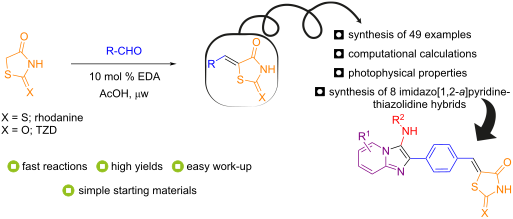
- (intramolecular charge transfer) process. Keywords: fluorescence; hybridization; imidazo[1,2-a]pyridines; Knoevenagel reaction; thiazolidinone; Introduction Heterocycles are compounds of significant interest to organic chemists as drug candidates due to their already widespread presence in many commercially
- . Photophysical studies indicated a fluorescence mechanism via intramolecular charge transfer (ICT). Results and Discussion Synthesis of 5-arylidene derivatives under microwave heating To find the ideal reaction conditions for the synthesis of 5-arylidene derivatives, benzaldehyde (1a) and rhodanine (2a) were
- through intramolecular hydrogen bonding. By comparing the data for λabs and λem, it is evident that the compounds exhibit significant Stokes shifts with values above 2,100 cm−1, reflecting their stability in the excited state [87][88][89]. The highest values of Stokes shifts were observed in polar protic






Efficient solid-phase synthesis and structural characterization of segetalins A–H, J and K
Beilstein J. Org. Chem. 2025, 21, 2612–2617, doi:10.3762/bjoc.21.202
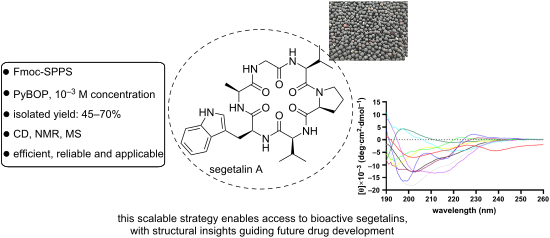
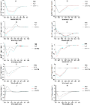
- stability of intramolecular hydrogen bonds in the peptide backbone, thereby promoting the formation of stable secondary structures (such as α-helices or β-sheets) in cyclic peptides. Spectra acquired in H2O, 0.01×PBS, and 30% TFE (Table S1, Supporting Information File 1) demonstrate: (i) definitive β-sheet


Silica gel with covalently attached bambusuril macrocycle for dicyanoaurate sorption from water
Beilstein J. Org. Chem. 2025, 21, 2604–2611, doi:10.3762/bjoc.21.201
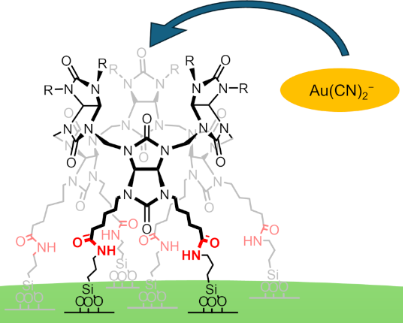
- affected by its long aliphatic arms terminated with carboxylic groups, whose flexibility can enable intramolecular complexation competing for an anion binding [13]. Bambusurils are known to bind a wide range of anions with varying selectivity. Dicyanoaurate is particularly relevant to the gold mining


Recent advances in total synthesis of illisimonin A
Beilstein J. Org. Chem. 2025, 21, 2571–2583, doi:10.3762/bjoc.21.199
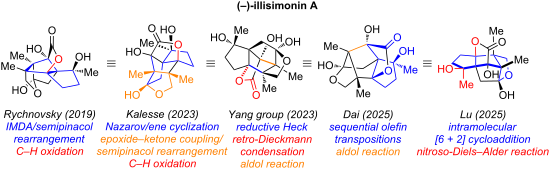
- directly, the team adopted a strategy involving rearrangement from the more accessible cis-pentalene isomer. They first assembled the cis-pentalene core through an elegant intramolecular Diels–Alder (IMDA) reaction. Subsequently, the conversion from cis to trans-pentalene was achieved via a semipinacol
- , obtained as a 1.7:1 mixture of diastereomers after protection of one of the carbonyl groups in 19 as enol ether with BOMCl. A silyl-tethered intramolecular Diels–Alder reaction of the in situ generated 22 constructed the tricyclo[5.2.1.01,5]decane core bearing a cis-pentalene unit, yielding compound 23
- , deprotonation, and intramolecular addition to ketone. Treatment of the silacycle with MeMgCl cleaved the Si–O bond and subsequent intramolecular nucleophilic substitution of the chloride with the adjacent hydroxy group yielded TMS-epoxide 41. Protonic acid-mediated opening of the TMS-epoxide, accompanied by TES






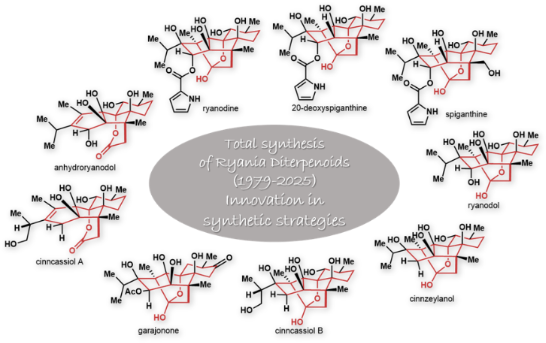
Total syntheses of highly oxidative Ryania diterpenoids facilitated by innovations in synthetic strategies
Beilstein J. Org. Chem. 2025, 21, 2553–2570, doi:10.3762/bjoc.21.198
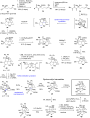
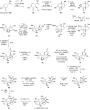
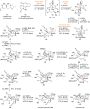
- pericyclic reactions [31][32][33][34][35][36][37][38][39][40][41][42][43][44], to control the formation of the crucial C5 chiral center precisely. Subsequent oxidative cleavage of the carbon–carbon double bond introduced in the Diels–Alder reaction, followed by an intramolecular aldol reaction, efficiently
- the correct relative configuration undergoes hydrolysis of its spirocyclic lactone moiety under basic conditions to yield 13, establishing the critical C5 chiral center. Under acidic conditions, intermediate 13 undergoes ketal deprotection followed by successive intramolecular aldol reactions
- anhydroryanodine (not shown) to the corresponding hemiacetal. However, common reducing agents proved ineffective for lactone reduction. Leveraging previous findings, the authors implemented an alternative strategy involving two sequential intramolecular reductive cyclizations to invert the configuration of the C3







Ni-promoted reductive cyclization cascade enables a total synthesis of (+)-aglacin B
Beilstein J. Org. Chem. 2025, 21, 2548–2552, doi:10.3762/bjoc.21.197
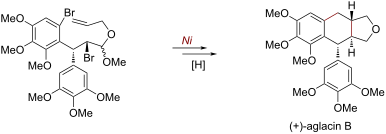
- the formation of inter- or intramolecular carbon–carbon bonds under mild conditions [9][10][11][12], and strategically applied this method for the divergent syntheses of some natural products [13][14][15][16][17]. Herein, we report our recent advance to a total synthesis of (+)-aglacin B (2), which


Rapid access to the core of malayamycin A by intramolecular dipolar cycloaddition
Beilstein J. Org. Chem. 2025, 21, 2542–2547, doi:10.3762/bjoc.21.196
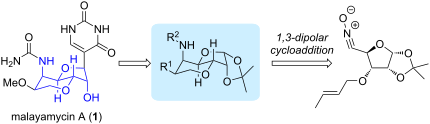
- smoothly to deliver the aldehyde which was immediately subjected to the condensation reaction with benzylhydroxylamine. The corresponding nitrone 10 then underwent an intramolecular cycloaddition. Adduct 11 was isolated as the major product in 42% yield for 2 steps. Comprehensive NMR analysis revealed the
- NaClO·5H2O, the in situ-generated nitrile N-oxide immediately underwent intramolecular dipolar cycloaddition to deliver the cycloadducts 18 in good yield as a mixture of two inseparable diastereoisomers. This telescoped step was readily performed on a gram scale without interrupted purification of the
- perhydrofuropyran core highlighted in blue). Synthetic strategies toward malayamycin A. (A) Previous synthetic route. (B) Our strategy toward the core skeleton. Rational for intramolecular dipolar cycloaddition. Proposed pathway for the enone formation. Modified route to access the core of malayamycins. Attempting