


Search results
Search for "kinetic control" in Full Text gives 57 result(s) in Beilstein Journal of Organic Chemistry.
Enzymatic synthesis of glycosides: from natural O- and N-glycosides to rare C- and S-glycosides
Beilstein J. Org. Chem. 2017, 13, 1857–1865, doi:10.3762/bjoc.13.180
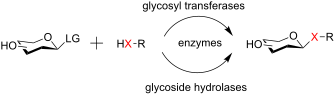
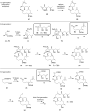
- –enzyme intermediate can be attacked by another nucleophile than water (like an alcohol) to stereospecifically yield a new glycoside [60]. The reaction is now under kinetic control and the enzyme is named a transglycosidase. The rules that guide the balance between hydrolysis and transglycosylation are




The chemistry and biology of mycolactones
Beilstein J. Org. Chem. 2017, 13, 1596–1660, doi:10.3762/bjoc.13.159









Framing major prebiotic transitions as stages of protocell development: three challenges for origins-of-life research
Beilstein J. Org. Chem. 2017, 13, 1388–1395, doi:10.3762/bjoc.13.135
- -specificity and functional integration achieved in a first protocellular scenario may be modest, but it is important that both kinetic control and spatial control mechanisms are included in the equation from the beginning, so that they can complement each other in their development. For an interesting bottom
- avenues in the field of systems chemistry [1][2]. For instance, although kinetic control mechanisms must play a central part in the explanation, dynamic kinetic stability [63] is not the answer (because replication is not all what matters for evolution, chemical or biological). It is probably too early to

How and why kinetics, thermodynamics, and chemistry induce the logic of biological evolution
Beilstein J. Org. Chem. 2017, 13, 665–674, doi:10.3762/bjoc.13.66
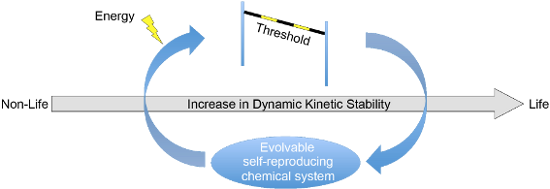
- -organisation of life, which, in turn, allows an assessment of semi-quantitative constraints on systems and environments from which life could evolve. Keywords: dynamic kinetic stability; kinetic control; origins of life; self-organisation; Introduction Although it is mostly understood in historic terms, the
- thermodynamic data. Indeed, there are many examples in which product formation is controlled by kinetics (reactions under kinetic control, corresponding to the situation in Figure 2), rather than by thermodynamic stabilities. In fact the presence of kinetic barriers is actually a requirement for the system to
- held far from equilibrium through the energy-fuelled supply of reactive units. Kinetic control. In many chemical reactions leading to different products, the final composition is determined by the height of the kinetic barriers corresponding to transition states (TS‡1 and TS‡2) rather than by the



Direct arylation catalysis with chloro[8-(dimesitylboryl)quinoline-κN]copper(I)
Beilstein J. Org. Chem. 2016, 12, 2757–2762, doi:10.3762/bjoc.12.272
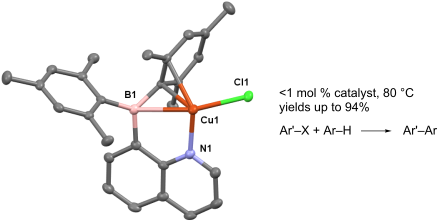
- substitution ratio is typical of substitutions on naphthalene under kinetic control that tend to favor the alpha C–H bonds due better resonance stabilization effects [53]. Importantly, we note the alpha protons are slightly more acidic than the beta protons [54]. The mechanism of Cu catalyzed coupling


Diels–Alder reactions in confined spaces: the influence of catalyst structure and the nature of active sites for the retro-Diels–Alder reaction
Beilstein J. Org. Chem. 2016, 12, 2181–2188, doi:10.3762/bjoc.12.208

- is reflected in the distribution products by a decrease of the endo-endo isomer (kinetic control product) jointed to an increase of the endo-exo (thermodynamic control product). Influence of catalyst surface We have seen that the DAR between cyclopentadiene and p-benzoquinone takes place thermally


Opportunities and challenges for direct C–H functionalization of piperazines
Beilstein J. Org. Chem. 2016, 12, 702–715, doi:10.3762/bjoc.12.70
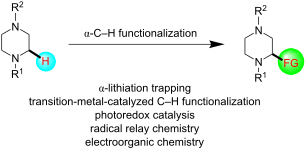
- of the lithiated N-Boc-N’-alkylpiperazines with sec-BuLi and TMEDA at −78 °C, the reaction was warmed up to −30 °C with addition of a chiral ligand. The chiral ligand coordinates with the racemic lithiation product to give a diastereomeric mixture which can be resolved under thermodynamic or kinetic
- control with electrophilic quench by a variety of electrophiles. After evaluating a few chiral diamino-alkoxide ligands, ligand 24 was identified as a superior choice. As shown in Figure 7, the result was not optimal with only 30–75% of the desired α-substituted products being obtained and the




The aminoindanol core as a key scaffold in bifunctional organocatalysts
Beilstein J. Org. Chem. 2016, 12, 505–523, doi:10.3762/bjoc.12.50
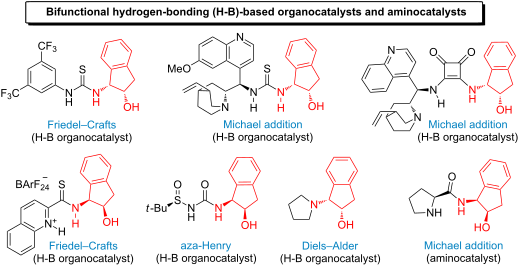
- -matched transition state (TS6) that allows a kinetic control of the second reaction. The enantioselective addition of indoles 2 to α,β-unsaturated acyl phosphonates 24, a) screening of different catalysts and b) optimized conditions using catalyst ent-4. Study of aliphatic β,γ-unsaturated α-ketoesters 26


Aggregation behavior of amphiphilic cyclodextrins in a nonpolar solvent: evidence of large-scale structures by atomistic molecular dynamics simulations and solution studies
Beilstein J. Org. Chem. 2016, 12, 73–80, doi:10.3762/bjoc.12.8
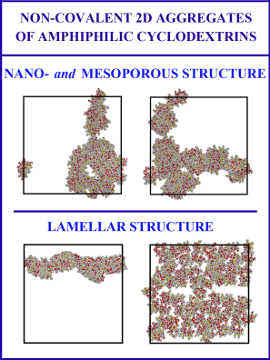
- geometries and their relative stability. In this way, we could propose various robust arrangements that could be fully stable within the simulation time at room temperature, suggesting that different metastable states could coexist together with the thermodynamically most stable ones and that kinetic control


Aggregation behaviour of amphiphilic cyclodextrins: the nucleation stage by atomistic molecular dynamics simulations
Beilstein J. Org. Chem. 2015, 11, 2459–2473, doi:10.3762/bjoc.11.267
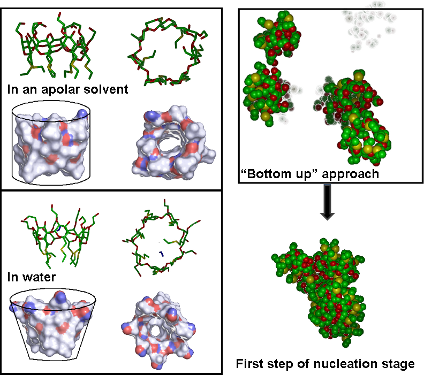
- aCD interactions in the nucleation stage, and give insights on the structure of the embryonic building blocks of the aCD’s supramolecular nanosystems. We also note that in the case of a kinetic control of aggregation taking place by sequential interaction of further aCD, the nature of these embryonic


Continuous formation of N-chloro-N,N-dialkylamine solutions in well-mixed meso-scale flow reactors
Beilstein J. Org. Chem. 2015, 11, 2408–2417, doi:10.3762/bjoc.11.262
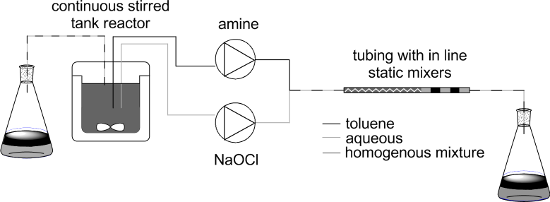
- of hazardous or unstable products. Furthermore smaller volumes with higher surface areas enable faster heat removal and better temperature control to limit unwanted side reactions. Further kinetic control is achieved with reactant concentrations, feed rates, mixing regime and residence time resulting


Surprisingly facile CO2 insertion into cobalt alkoxide bonds: A theoretical investigation
Beilstein J. Org. Chem. 2015, 11, 1340–1351, doi:10.3762/bjoc.11.144
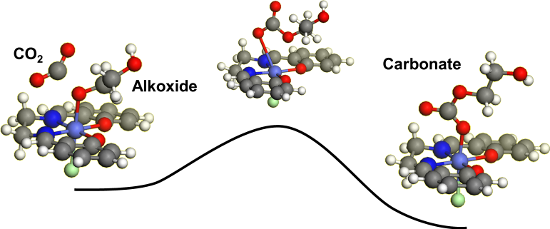
- polymers are thermodynamically less stable than cyclic carbonates, a kinetic control must be attained to direct the reaction to the polymeric products. To selectively lower the activation barrier towards polycarbonates, a rational development of suitable catalysts is essential. This current study aims to


The unexpected influence of aryl substituents in N-aryl-3-oxobutanamides on the behavior of their multicomponent reactions with 5-amino-3-methylisoxazole and salicylaldehyde
Beilstein J. Org. Chem. 2014, 10, 3019–3030, doi:10.3762/bjoc.10.320
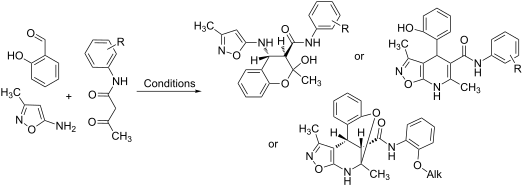
- azoloazine with high chemo- and regioselectivity [11][13][14][15]. In particular, three-component heterocyclizations involving 3-amino-1,2,4-triazoles or 4-substituted 5-aminopyrazoles yielded either 4,5,6,7-tetrahydroazolo[1,5-a]pyrimidine-6-carboxamides under ultrasonication at room temperature (kinetic
- control) or 4,7-dihydroazolo[1,5-a]pyrimidine-6-carboxamides at reflux in an applicable solvent (thermodynamic control), respectively (Scheme 1). The behavior of the reaction of 5-aminopyrazoles containing substituents in the position 3 is influenced by the structure of aminoazoles and aldehydes, giving


Inherently chiral calix[4]arenes via oxazoline directed ortholithiation: synthesis and probe of chiral space
Beilstein J. Org. Chem. 2014, 10, 2751–2755, doi:10.3762/bjoc.10.291
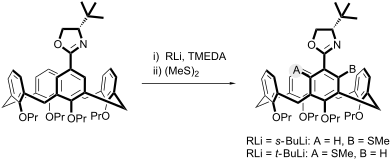
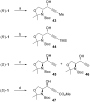
- File 1 for full details). Over the course of this work we have found that the lithiations are best performed at −78 °C and at a concentration of 0.15 M with either 5 or 6 equivalents of alkyllithium. Higher temperatures unsurprisingly resulted in poorer diastereoselectivity, pointing to kinetic control


Synthesis of graft polyrotaxane by simultaneous capping of backbone and grafting from rings of pseudo-polyrotaxane
Beilstein J. Org. Chem. 2014, 10, 2573–2579, doi:10.3762/bjoc.10.269
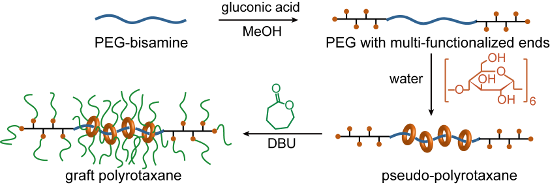
- polymerization proceeded properly only when robust hydrogen bonds formed between α-CDs were dissociated using a basic catalyst. Since the dissociation also induced dethreading, kinetic control of the polymerization and dissociation were crucial for producing graft polyrotaxanes. Consequently, this three-step
- base prevents hydrogen bond formation between the α-CDs. Meanwhile, prevention of the hydrogen bond formation is necessary for the α-CDs to access the monomers. Therefore, the kinetic control of both the dissociation of the hydrogen bonds and the polymerization is necessary. A stepwise increase in the


Selenium halide-induced bridge formation in [2.2]paracyclophanes
Beilstein J. Org. Chem. 2014, 10, 2550–2555, doi:10.3762/bjoc.10.266
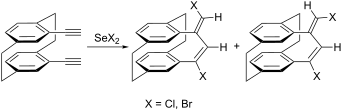
- 3 is formed under kinetic control, diene 2 being thermodynamically more stable. With regard to the addition of selenium dihalides to bis(acetylene) 1, the reaction mechanism should follow a similar course, consisting of the formation of a selenonium ion of type 10 rather than the addition of the


Preparation of phosphines through C–P bond formation
Beilstein J. Org. Chem. 2014, 10, 1064–1096, doi:10.3762/bjoc.10.106
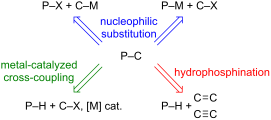
- protocol of Tunney and Stille starting from silylphosphines has been modified by Chan, Bergman and Toste to be enantioselective by using a [Pd(Et-FerroTANE)] catalyst. P-stereogenic phosphine boranes 111 and 112 were synthesized by arylation of racemic silylphosphines 110 under dynamic kinetic control


cis–trans Isomerization of silybins A and B
Beilstein J. Org. Chem. 2014, 10, 1047–1063, doi:10.3762/bjoc.10.105
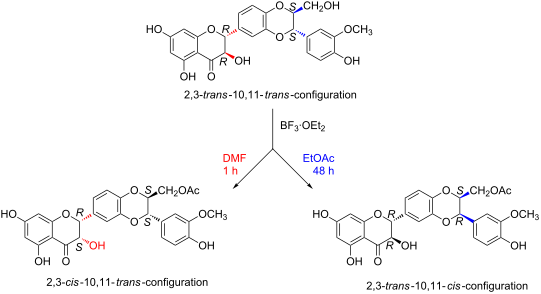
- . Although analogous isomerizations of similar compounds at respective C-2, C-3 centers have been described, we present here parallel isomerizations on both chiral centers under kinetic control. cis-Silybins were obtained by the chemoenzymatic separation methods mostly due to the sensitivity of new cis


Aza-Diels–Alder reaction between N-aryl-1-oxo-1H-isoindolium ions and tert-enamides: Steric effects on reaction outcome
Beilstein J. Org. Chem. 2014, 10, 848–857, doi:10.3762/bjoc.10.81
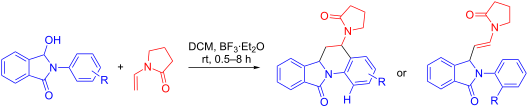
- diastereomer as a racemic mixture. Under kinetic control, inverse-electron demand aza-Diels–Alder as well as normal Diels–Alder reactions are known to favour endo products since the endo approach maximizes secondary orbital overlap [42]. The “boat-type” transition state favours an endo orientation (“inside of


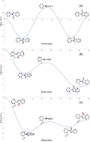
Continuous flow nitration in miniaturized devices
Beilstein J. Org. Chem. 2014, 10, 405–424, doi:10.3762/bjoc.10.38
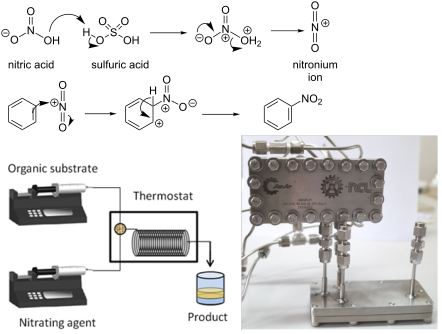
- bed. Moreover, the nitration of toluene with 90 wt % nitric acid using a microreactor was found almost entirely preceded under kinetic control. However, with only nitric acid as the nitrating agent, the nitrotoluenes were generated in a low yield. The formation of water adversely affected the


Continuous-flow Heck synthesis of 4-methoxybiphenyl and methyl 4-methoxycinnamate in supercritical carbon dioxide expanded solvent solutions
Beilstein J. Org. Chem. 2013, 9, 2886–2897, doi:10.3762/bjoc.9.325
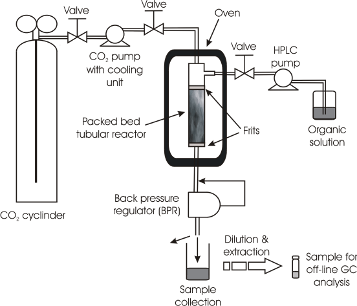
- can be formed under kinetic control. The third possibility is the geminal or branched (b) isomer which is usually formed where a cationic intermediate forms that facilitates migration of the σ-Pd–C bond from the terminal alkenic 1-position to the 2-position. In the majority of publications, the


Garner’s aldehyde as a versatile intermediate in the synthesis of enantiopure natural products
Beilstein J. Org. Chem. 2013, 9, 2641–2659, doi:10.3762/bjoc.9.300
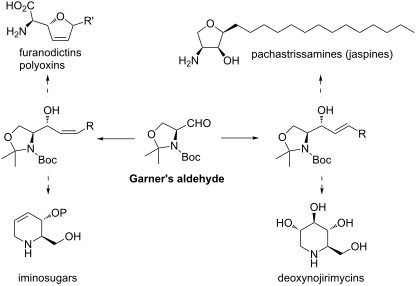
- lower temperatures (−40 °C) under kinetic control the Felkin–Anh product is predominant. At higher temperatures (−15 °C) the nucleophilic addition occurs via a thermodynamically more stable transition state that resembles the chelation control TS. These results are interesting as this is the first time




Regioselective carbon–carbon bond formation of 5,5,5-trifluoro-1-phenylpent-3-en-1-yne
Beilstein J. Org. Chem. 2013, 9, 2182–2188, doi:10.3762/bjoc.9.256
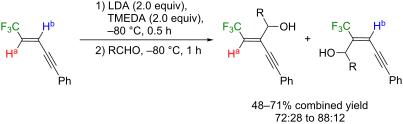
- substrate 4, we have reached to a conclusion that its initial lithiation would occur at both vinylic sites and the following reactions with appropriate electrophiles would proceed under kinetic control where equilibration of the resultant lithiated species might be effective if the capture of electrophiles


Homolytic substitution at phosphorus for C–P bond formation in organic synthesis
Beilstein J. Org. Chem. 2013, 9, 1269–1277, doi:10.3762/bjoc.9.143

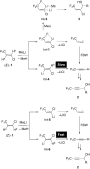
- the initial diorganophosphanyl radical (Scheme 7). The high E selectivity is attributable to kinetic control of the homolytic substitution, where R2P–PR2 preferentially approaches the vinyl radical from the roomier side. Although the transformation looks useful to construct an (E)-1,2


Enhancement of efficiency in organic photovoltaic devices containing self-complementary hydrogen-bonding domains
Beilstein J. Org. Chem. 2013, 9, 1102–1110, doi:10.3762/bjoc.9.122
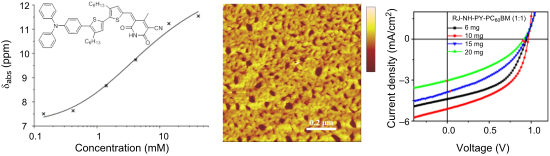
- under isodesmic kinetic control. The formation of interconnected nanostructures by 2, as observed in the AFM experiments, also leads to the interpretation of the 1H NMR self-association data as the formation of one-dimensional chains of 2. One possible mode of self-complementary interaction leading to





