


Search results
Search for "methanolysis" in Full Text gives 51 result(s) in Beilstein Journal of Organic Chemistry.
Asymmetric synthesis of propargylamines as amino acid surrogates in peptidomimetics
Beilstein J. Org. Chem. 2017, 13, 2428–2441, doi:10.3762/bjoc.13.240
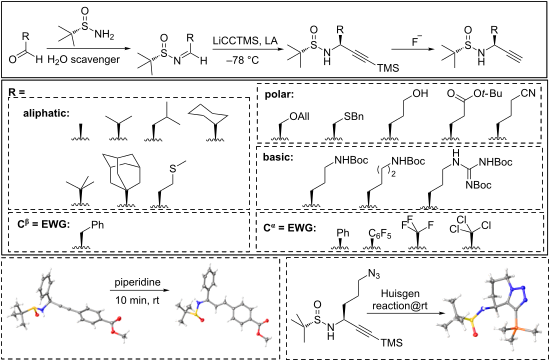
- low concentrations of acid under pressure, typical conditions of HPLC analysis. Consequently, the application of the tert-butylsulfinyl as protective group for the amine is restricted to very mild conditions. However, it can be easily cleaved from N-sulfinyl propargylamines by acidic methanolysis and


Phosphonic acid: preparation and applications
Beilstein J. Org. Chem. 2017, 13, 2186–2213, doi:10.3762/bjoc.13.219
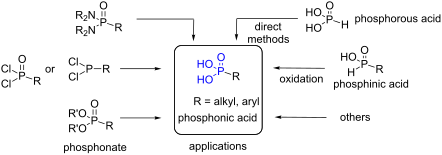
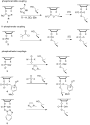
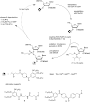
- group simultaneously to the formation of the P–C bond, are also surveyed. Among all these methods, the dealkylation of dialkyl phosphonates under either acidic conditions (HCl) or using the McKenna procedure (a two-step reaction that makes use of bromotrimethylsilane followed by methanolysis) constitute
- was almost quantitative. Other studies indicated that this reaction can be also applied to diisopropyl phosphonate, or di-tert-butyl phosphonate leading to the conclusion that all dialkyl phosphonates can be dealkylated by the transesterification followed by a methanolysis or hydrolysis subsequent
- Arbuzov reaction to produce the intermediate II [158]. The repetition of this mechanism produced de disilylated intermediate III. The hydrolysis of this intermediate III produced phosphonic acid, trimethylsilanol and hexamethyldisiloxane that are two volatile side products. The methanolysis of the


Intramolecular glycosylation
Beilstein J. Org. Chem. 2017, 13, 2028–2048, doi:10.3762/bjoc.13.201
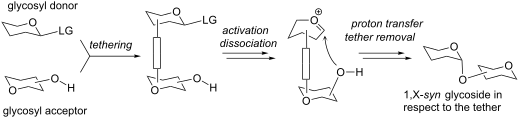
- (1→4) glycoside.” Indeed, after sequential glycosylation in the presence of TsOH at 50 oC, methanolysis, and per-acetylation, disaccharide 4 was isolated in 20% yield. The authors then very reasonably concluded that “Consequently, the presence of the ester linkage which kept the two sugar moieties in


Synthesis of oligonucleotides on a soluble support
Beilstein J. Org. Chem. 2017, 13, 1368–1387, doi:10.3762/bjoc.13.134
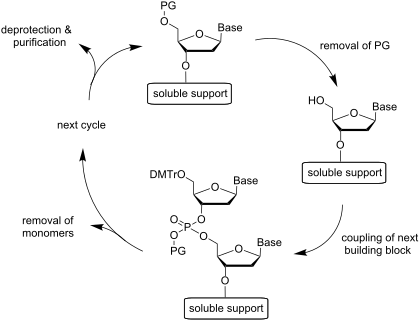
- short ODNs from base-moiety-protected 5´-(1-methoxy-1-methylethyl)-2´-deoxyribonucleoside 3´-phosphoramidites on a fully methylated β-cyclodextrin support [60]. The 1-methoxy-1-methylethyl group may be removed by acid-catalyzed methanolysis approximately as readily as the DMTr group, but it gives only






Towards potential nanoparticle contrast agents: Synthesis of new functionalized PEG bisphosphonates
Beilstein J. Org. Chem. 2016, 12, 1366–1371, doi:10.3762/bjoc.12.130
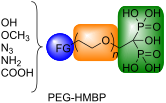
- functionalized substrates. In contrast, our lab has developed a new synthetic strategy starting from an acid chloride and tris(trimethylsilyl) phosphite, followed by a methanolysis step [15]. This one-pot procedure allows the synthesis of various aliphatic and aromatic bisphosphonic acids under mild conditions


(Thio)urea-mediated synthesis of functionalized six-membered rings with multiple chiral centers
Beilstein J. Org. Chem. 2016, 12, 462–495, doi:10.3762/bjoc.12.48
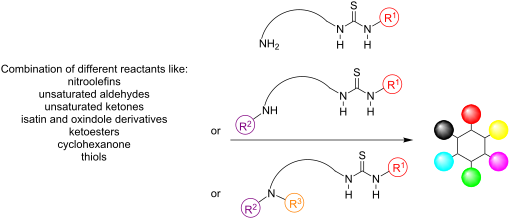
- the stereochemical outcome of the reaction. The same year, two different groups utilized thiourea catalyst 57 to catalyze the desymmetrization of meso anhydrides 58 and 59 through a methanolysis reaction (Scheme 20 and Scheme 21). Chin, Song and co-workers utilized the catalyst in 5–10 mol % catalyst


Study on the synthesis of the cyclopenta[f]indole core of raputindole A
Beilstein J. Org. Chem. 2016, 12, 334–342, doi:10.3762/bjoc.12.36

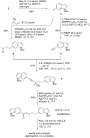
- . Alternatively, for a similar 1,3-shift, Nolan and coworkers proposed two sequential 1,2-shifts to occur after π-complexation of the triple bond by Au(I) [49]. Methanolysis (NaOMe/MeOH) of cyclopentenylacetate 50 afforded cyclopenta[f]indolinone 48 (96%). Conclusion It was our goal to explore how to efficiently




2-Hetaryl-1,3-tropolones based on five-membered nitrogen heterocycles: synthesis, structure and properties
Beilstein J. Org. Chem. 2015, 11, 2179–2188, doi:10.3762/bjoc.11.236
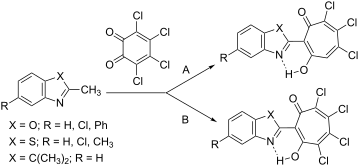
- [14][15]. An alternative method [16] involves the photooxygenation of cyclohepta-1,3,5-triene with singlet oxygen in carbon tetrachloride solution, methanolysis of the formed isomeric endoperoxides resulted in 1,2-dihydro-3-hydroxytropone and oxidation of the latter with chromium trioxide. A


![[Graphic 3]](/bjoc/content/inline/1860-5397-11-236-i8.png?max-width=637&scale=1.18182) N···H–O equilibrium in solutions of 2-hetaryl-5,6,7-trichloro- and 4,...
N···H–O equilibrium in solutions of 2-hetaryl-5,6,7-trichloro- and 4,...


Novel carbocationic rearrangements of 1-styrylpropargyl alcohols
Beilstein J. Org. Chem. 2015, 11, 1017–1022, doi:10.3762/bjoc.11.114
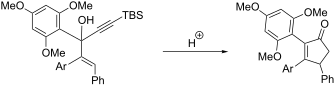
- 2) only the two acyclic ethers 25 and 26 were isolated. This observation strongly suggests that perrhenic acid is the active reagent generated from Re2O7 by methanolysis or hydrolysis with traces of water [12]. When removing methanol or replacing it with trifluoroethanol, the reaction mixture


A green approach to the synthesis of novel phytosphingolipidyl β-cyclodextrin designed to interact with membranes
Beilstein J. Org. Chem. 2014, 10, 2654–2657, doi:10.3762/bjoc.10.278
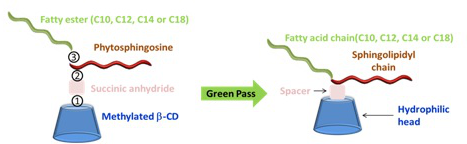
- succinic anhydride can be recovered easily by filtration at low temperature but part of the compound underwent methanolysis, preventing its reuse for another reaction. Insertion of phytosphingolipidyl arm In this step, the peptide coupling reagent plays an important role. Different peptide coupling


Solution phase synthesis of short oligoribonucleotides on a precipitative tetrapodal support
Beilstein J. Org. Chem. 2014, 10, 2279–2285, doi:10.3762/bjoc.10.237
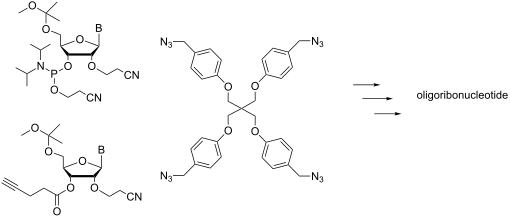
- acid-catalyzed methanolysis with HCl in a mixture of MeOH and dioxane. Removal of volatiles under reduced pressure and treatment of the residue with diethyl ether gave the deprotected support (8b) as a white powder. The homogeneity of 8b was verified by RP-HPLC (see Supporting Information File 1). The
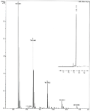
- methanolysis ([HCl] = 0.015 mol L−1). After 15 min, the mixture was neutralized by the addition of pyridine, concentrated to oil and the support was again precipitated from cold MeOH (Figure 2). The minor signal at 13 min (a) on the HPLC trace of the precipitate (A) refers to a support having one 2-cyanoethyl


Preparation of phosphines through C–P bond formation
Beilstein J. Org. Chem. 2014, 10, 1064–1096, doi:10.3762/bjoc.10.106
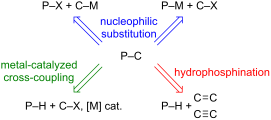
- phosphamide boranes 8 undergo methanolysis with inversion of configuration to produce intermediate phosphinite boranes 9 that are subsequently substituted with a second nucleophile. A following deprotection of the boranato group gives the chiral phosphines 10. Both enantiomers can be obtained by preparation


Recent applications of the divinylcyclopropane–cycloheptadiene rearrangement in organic synthesis
Beilstein J. Org. Chem. 2014, 10, 163–193, doi:10.3762/bjoc.10.14
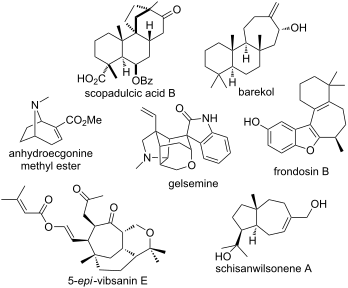
- [115][116], bearing a chiral auxiliary [117]. The intermediate cis-divinylcyclopropane 129 rearranged to the corresponding bridged cycloheptadiene 130 in a DVCPR. The chiral auxiliary was removed in the following using methanolysis conditions, followed by reduction of the more electron rich double bond




Stereoselectively fluorinated N-heterocycles: a brief survey
Beilstein J. Org. Chem. 2013, 9, 2696–2708, doi:10.3762/bjoc.9.306
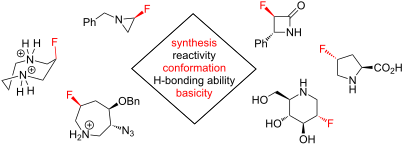
- . Fluorination has also been shown to influence reactivity in four-membered N-heterocycles (Scheme 1). Kanerva and co-workers [18] investigated a series of β-lactam derivatives (4a–c) in a lipase-catalysed methanolysis process. While the non-fluorinated derivative 4a was found to be unreactive under the reaction
- . Fluorination makes β-lactam derivatives more reactive towards lipase-catalysed methanolysis. Hyperconjugation rigidifies the ring pucker of a fluorinated organocatalyst 14, leading to higher enantioselectivity. General strategy for the synthesis of fluorinated N-heterocycles via deoxyfluorination. During the


New tridecapeptides of the theonellapeptolide family from the Indonesian sponge Theonella swinhoei
Beilstein J. Org. Chem. 2013, 9, 1643–1651, doi:10.3762/bjoc.9.188
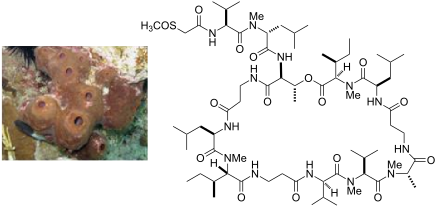
- 5.19) with the Me-Ile carbonyl group revealed the presence of an ester linkage. HMBC analysis also revealed that the amide carbonyl at δC 166.5 assigned to the methylsulfinylacetyl subunit was correlated to the Hα of Val-1 residue, thus establishing the acetylation of the N-terminus in 2. Methanolysis
- correlations and supported by the MS/MS spectrum of the methanolysis product mixture (see Supporting Information File 1). Thus, theonellapeptolide If (3) has been identified as a new member of the theonellapeptolide family differing from theonellapeptolide Id (1) by the replacement of two isoleucine residues
- setting (which was arbitrarily assigned a value of 100%). Structure of the known compound theonellapeptolide Id (1). Structures of sulfinyltheonellapeptolide (2) and theonellapeptolide If (3). COSY and key HMBC correlations (left) and MS/MS fragmentations of 2 and its ring-opened methanolysis product


A scalable synthesis of the (S)-4-(tert-butyl)-2-(pyridin-2-yl)-4,5-dihydrooxazole ((S)-t-BuPyOx) ligand
Beilstein J. Org. Chem. 2013, 9, 1637–1642, doi:10.3762/bjoc.9.187
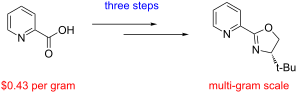
- , highly scalable synthesis of (S)-t-BuPyOx. Results and Discussion Initially, (S)-t-BuPyOx (1) was synthesized by methanolysis of 2-cyanopyridine (2) to afford methoxyimidate 3, and subsequent acid-catalyzed cyclization to afford the (S)-t-BuPyOx ligand (Figure 1) [27]. We found the yields of this


Acylsulfonamide safety-catch linker: promise and limitations for solid–phase oligosaccharide synthesis
Beilstein J. Org. Chem. 2012, 8, 2067–2071, doi:10.3762/bjoc.8.232
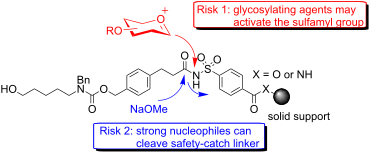
- linker 1 [13][14] (Figure 1) has been developed, which can be readily cleaved from the resin by basic methanolysis. The released chromophore-containing part, such as aromatic benzyl ether protecting groups, facilitates the purification of the synthetic oligosaccharides by HPLC. Final deprotection of the
- methanolysis of temporary ester protecting groups. This linker can only be cleaved after activation with TMSCH2N2 or ICH2CN, afterwards, the subsequent aromatic protection of the masked amine enables UV detection during HPLC purification of the resultant oligosaccharide [13]. Finally, the terminal amine group




Palladium-catalyzed dual C–H or N–H functionalization of unfunctionalized indole derivatives with alkenes and arenes
Beilstein J. Org. Chem. 2012, 8, 1730–1746, doi:10.3762/bjoc.8.198
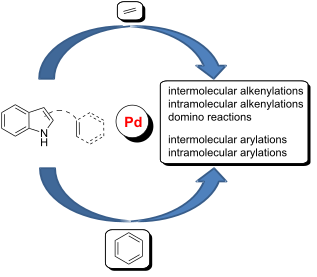
- . The subsequent transfer of carbon monoxide with stereochemical retention determines the generation of the σ-acyl-palladium complex XVIII, which in turn is converted in the final cis-substituted tetrahydrocarbazole by methanolysis giving the carboxylation step. Again, the released Pd(0) species




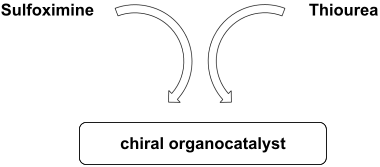
Synthesis of chiral sulfoximine-based thioureas and their application in asymmetric organocatalysis
Beilstein J. Org. Chem. 2012, 8, 1443–1451, doi:10.3762/bjoc.8.164
- starting material for a methanolysis in the presence of a catalytic amount of enantiopure (S)-3 (Scheme 2). To our delight, the use of a combination of 10 equiv of methanol and 10 mol % of (S)-3 in methyl tert-butyl ether (MTBE) at room temperature furnished the desired products, hemiesters 5 and ent-5, in


Functionalization of anthracene: A selective route to brominated 1,4-anthraquinones
Beilstein J. Org. Chem. 2011, 7, 1036–1045, doi:10.3762/bjoc.7.118

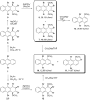
- (Scheme 2). Although the methanolysis was repeated several times, the product ratio remained almost the same. The compounds were separable by column chromatography and were isolated in 29 and 44% yield for 7 and 8, respectively. There are three possible stereoisomers that can be formed in the reaction




A gold-catalyzed alkyne-diol cycloisomerization for the synthesis of oxygenated 5,5-spiroketals
Beilstein J. Org. Chem. 2011, 7, 570–577, doi:10.3762/bjoc.7.66
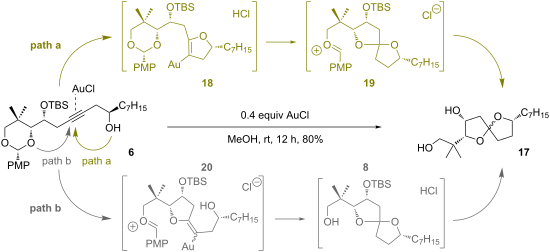
- reaction time was intentionally extended to ensure complete desilylation. A second mechanistic alternative, path b, cannot be ruled out at this time. Path b involves gold-activation of the alkyne followed by 5-exo-dig nucleophilic attack of the acetal oxygen. Methanolysis of the acetal and spirocyclization


Kinetic evaluation of the solvolysis of isobutyl chloro- and chlorothioformate esters
Beilstein J. Org. Chem. 2011, 7, 543–552, doi:10.3762/bjoc.7.62
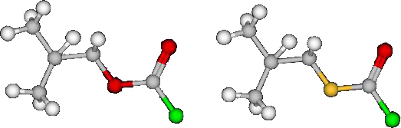
- strong rear-side solvation of the resonance-stabilized intermediate (Table 3). In Table 4, the methanolysis and ethanolysis specifc rate order is shown to be kMeOCOCl > kEtOCOCl ≈ kn-PrOCOCl ≈ kiBuOCOCl ≈ kOctOCOCl > kiPrOCOCl. As previously pointed out and shown in Figure 1, the presence of an
- methanolysis. Grunwald–Winstein analysis using Equation 1 for isobutyl chlorothioformate (2) in all 20 solvents studied (Table 1) resulted in l = 0.34 ± 0.18, m = 0.57 ± 0.13, R = 0.873, F-test = 27, and c = −0.11 ± 0.17. This scatter can be resolved by excluding the rate data for 2 in 100% EtOH, 90% EtOH, 100
- ) whose data points lie above the regression line (Figure 4), a dominant superimposed addition–elimination mechanism (AN + DN) is proposed. The rate order shown in Table 5, of kMeSCOCl ≈ kEtSCOCl ≈ kiPrSCOCl ≈ kiBuSCOCl, is for the methanolysis and ethanolysis of these alkyl chlorothioformate esters at


Synthesis of glycoconjugate fragments of mycobacterial phosphatidylinositol mannosides and lipomannan
Beilstein J. Org. Chem. 2011, 7, 369–377, doi:10.3762/bjoc.7.47
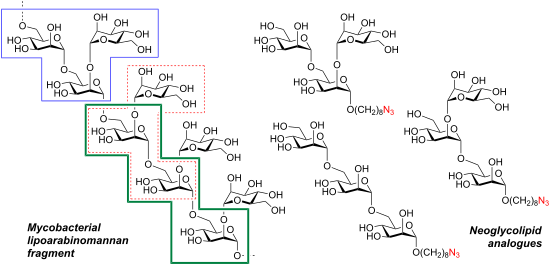
- reported using HCl in MeOH/Et2O [22]. The diol 15 was prepared by treatment of 12 with 2,3-butanedione and trimethyl orthoformate in the presence of catalytic acid in refluxing MeOH (Scheme 2) [37]. Trace amounts of the corresponding methyl glycoside were also obtained, arising from limited methanolysis of


Regioselective ester cleavage during the preparation of bisphosphonate methacrylate monomers
Beilstein J. Org. Chem. 2011, 7, 364–368, doi:10.3762/bjoc.7.46
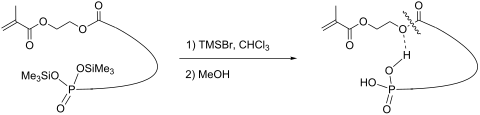
- function and, for most, an internal carboxylate group, were prepared for incorporation into copolymers with adhesive or anticorrosive properties. Methanolysis of some trimethylsilyl bisphosphonate esters not only deprotects the desired bisphosphonate function but also regioselectively cleaves the alkyl
- the phosphonic acids by using first trimethylsilyl bromide followed by a methanolysis step [27]. The first step is known to transform alkyl phosphonates into the corresponding trimethylsilyl phosphonates which are then cleaved to the phosphonic acids under hydrolytic conditions [28]. Phosphonates 1c
- . Concentration of the reaction mixture furnished phosphonic acids 1a–3a and 6a, 7a in good yields (Table 1, entries 1 and 2) while methanolysis of compounds 4b and 5b resulted in a mixture of the desired phosphonic acids 4a and 5a, HEMA (22) and the phosphonic acids 20 and 21, respectively (entries 4 and 5). In


N-alkyl-N-(phosphonoethyl) substituted (meth)acrylamides – new adhesive monomers for self-etching self-priming one part dental adhesive
Beilstein J. Org. Chem. 2009, 5, No. 72, doi:10.3762/bjoc.5.72
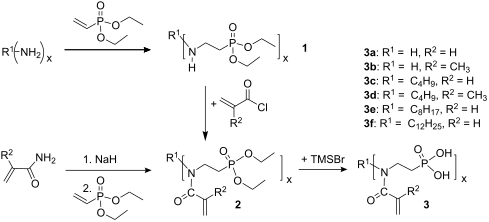
- . Results and Discussion (Meth)acrylamides 3c–3f, bis(meth)acrylamides 3g and 3h and tris(meth)acrylamides 3i and 3j were prepared in a three step reaction via addition of vinylphosphonic acid to amines, a Schotten-Baumann acylation with (meth)acrylolyl chloride and subsequent methanolysis of the phosphonic
- acid ethyl ester with trimethylsilyl bromide (Scheme 1, Table 1). (Meth)acrylamides 3a and 3b were prepared by addition of vinylphosphonic acid ethyl ester to acrylamide and methacrylamide respectively and the same procedure for methanolysis of the phosphonic acid ethyl ester as that described above
- ), 62.3 (2), 48.2 (5), 32.5 (4), 25.1 (3), 19.3 (10), 16.4 (1) ppm. 31P NMR (CH3OH-d4): δ = 21.0/21.3 and 24.6/26.0 ppm. Methacrylic acid phosphonomethyl ester (4): This compound was synthesized by esterification of methacrylic acid with diethyl (hydroxymethyl)phosphonate and subsequent methanolysis of





