Search results
Search for "origin" in Full Text gives 358 result(s) in Beilstein Journal of Organic Chemistry. Showing first 200.
Hydrogen-bond activation enables aziridination of unactivated olefins with simple iminoiodinanes
Beilstein J. Org. Chem. 2024, 20, 2305–2312, doi:10.3762/bjoc.20.197
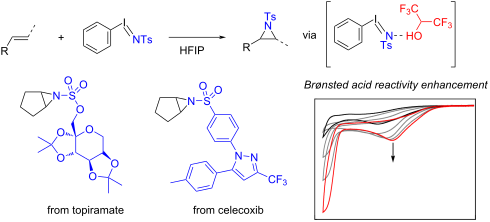
- ) and N-p-methoxysulfonyl (6h) aziridines obtained each in 22% yield; the drug topiramate could also be transferred to furnish aziridine 6j in 11% yield). We carried out a series of experiments to clarify the origin of the observed reactivity enhancement of N-arylsulfonyliminoiodinanes in the presence


Natural resorcylic lactones derived from alternariol
Beilstein J. Org. Chem. 2024, 20, 2171–2207, doi:10.3762/bjoc.20.187
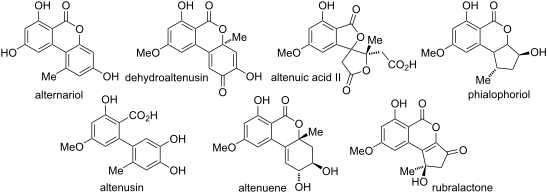
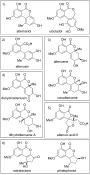
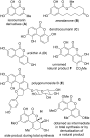
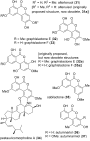
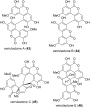
- ][57]. Its biosynthetic origin from acetate units by feeding 1-14C-labeled acetate precursors was recognized soon after [58][59], where more details on its biosynthesis are given in the respective chapter (vide infra). Alternariol is the main toxin produced by A. alternata and was isolated from further






Computational toolbox for the analysis of protein–glycan interactions
Beilstein J. Org. Chem. 2024, 20, 2084–2107, doi:10.3762/bjoc.20.180
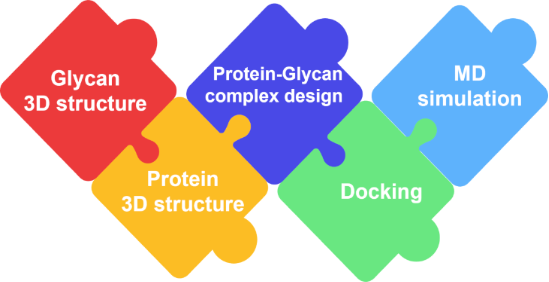
- spectroscopic and other information on glycan and glycoconjugate structures of prokaryotic, plant and fungal origin. The retrospective literature analysis is the main source of structural data, which are then manually curated and approved. Besides structures, the database includes bibliography, abstracts
- both taxonomic origin and structural fold (https://unilectin.unige.ch/). 7. GlycoShape3D [97]: It is a freely available database for academic user that enriches the landscape of glycobiology resources. It offers structural insights into glycoproteins, addressing challenges posed by glycan complexity


Diastereoselective synthesis of highly substituted cyclohexanones and tetrahydrochromene-4-ones via conjugate addition of curcumins to arylidenemalonates
Beilstein J. Org. Chem. 2024, 20, 2016–2023, doi:10.3762/bjoc.20.177
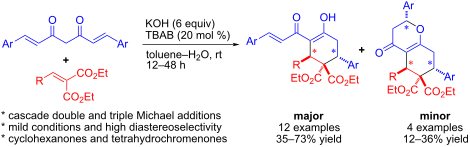
- reported in due course. Biologically active derivatives of cyclohexanones. X-ray structure of 4a (CCDC 2351387). Origin of stereoselectivity in the double Michael addition. The Michael donor–acceptor reactivity of curcumin: previous vs present work. A plausible reaction mechanism. Scale-up reaction


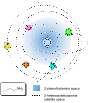
2-Heteroarylethylamines in medicinal chemistry: a review of 2-phenethylamine satellite chemical space
Beilstein J. Org. Chem. 2024, 20, 1880–1893, doi:10.3762/bjoc.20.163
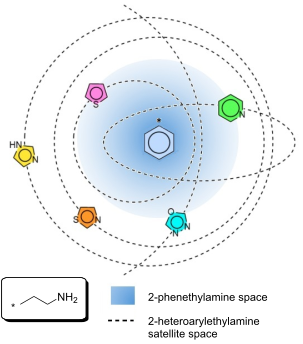
- better inhibitory data than for the aforementioned furyl analogues (Scheme 4). The authors suggested the replacement of furyl by a more polarizable aromatic ring such as thienyl as prospective origin of the observed IC50 downward shift. Berthelot et al. [23][24] expanded their studies on GABAB inhibitors




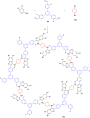
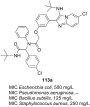
The Groebke–Blackburn–Bienaymé reaction in its maturity: innovation and improvements since its 21st birthday (2019–2023)
Beilstein J. Org. Chem. 2024, 20, 1839–1879, doi:10.3762/bjoc.20.162






A facile three-component route to powerful 5-aryldeazaalloxazine photocatalysts
Beilstein J. Org. Chem. 2024, 20, 1831–1838, doi:10.3762/bjoc.20.161
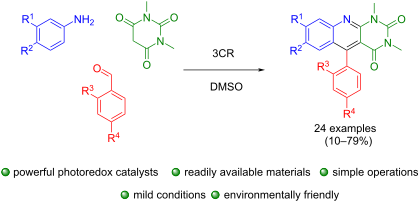
- purification. Thus, it significantly improves existing approaches. Keywords: catalysis; deazaalloxazine; flavin; multicomponent approach; one-pot reaction; Introduction Heterocyclic compounds containing pyrimidine and quinoline motifs in their structure, both of natural and synthetic origin, find a wide set
- were recorded on Agilent Cary 8454 spectrophotometer at 25 °C in analytical-grade DMF. Absorption spectra were processed by using Microsoft Excel and Origin 2018 (OriginLab). Typical procedure for the synthesis of 5-aryldeazaalloxazines 2: An equimolar mixture (3.0 mmol) of the corresponding aniline 3




Discovery of antimicrobial peptides clostrisin and cellulosin from Clostridium: insights into their structures, co-localized biosynthetic gene clusters, and antibiotic activity
Beilstein J. Org. Chem. 2024, 20, 1800–1816, doi:10.3762/bjoc.20.159

- cellulolyticum, and clostrubin, a polyphenolic polyketide antibiotic and the first reported polyketide from anaerobic bacteria [35][36][37]. Therefore, the discovery of a lantibiotic with a Clostridium origin, reported in this study, has significant implications for developing novel antibiotics. The unique
- because of the novelty that lanthipeptides from Clostridium could constitute, since no such BGCs with this taxonomic origin had been described before. The tree also indicates the presence of other yet unexplored LanM clades, such as from Bacilli, Cyanobacteria, and Actinobacteria, which could be
- function–structure relationships and how they impact biological activity. Since we have not found evidence of horizontal transfer of the cloA1 and cloA2 gene clusters, it is an interesting speculation that they could constitute the origin of this family and that, by duplicating one of these clusters, C




Methyltransferases from RiPP pathways: shaping the landscape of natural product chemistry
Beilstein J. Org. Chem. 2024, 20, 1652–1670, doi:10.3762/bjoc.20.147
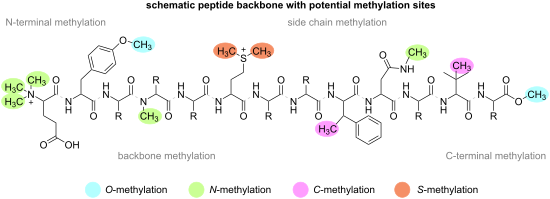
- /mL [107][108][109]. While originally thought to be of NRPS origin due to their extensive modifications, Freeman et al. discovered in 2012 that polytheonamides are actually of ribosomal origin [108]. Polytheonamides A and B contain eight methylated asparagine residues (Figure 4), all of which are
- Imani et al. Types I–III are of fungal origin, types IV–X are of bacterial origin [103]. Radical SAM C-methyltransferases. A) The different rSAM MT classes containing different functional domains. Class B includes a cobalamin binding domain (CBD) and class C a domain similar to HemN_C, which is an




Polymer degrading marine Microbulbifer bacteria: an un(der)utilized source of chemical and biocatalytic novelty
Beilstein J. Org. Chem. 2024, 20, 1635–1651, doi:10.3762/bjoc.20.146
- group in 25 is rare. Feeding [1-13C]acetate to the culture resulted the enrichment of C1, C3, C5, C7, and C9 carbons, which verified the origin of the carbon skeleton as being fatty acid-derived. Feeding experiments with ʟ-[methyl-13C]methionine yielded only enrichment of C11 methyl, indicating that




Photoswitchable glycoligands targeting Pseudomonas aeruginosa LecA
Beilstein J. Org. Chem. 2024, 20, 1486–1496, doi:10.3762/bjoc.20.132
- were performed by repeating the same protocol, but injecting the ligand into buffer solution. The supplied software Origin 7 or MicroCal PEAQ-ITC was used to fit the experimental data to a theoretical titration curve allowing the determination of affinity (i.e., dissociation constant, Kd), binding


Bioinformatic prediction of the stereoselectivity of modular polyketide synthase: an update of the sequence motifs in ketoreductase domain
Beilstein J. Org. Chem. 2024, 20, 1476–1485, doi:10.3762/bjoc.20.131
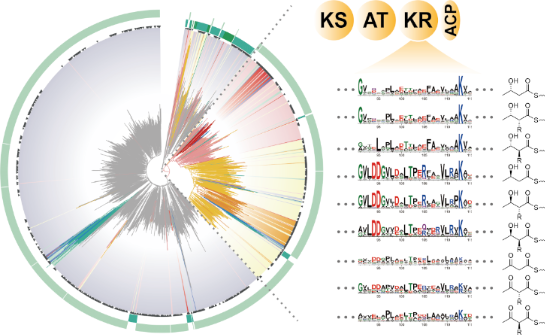
- characterized sequences. Conclusion In summary, we systematically assessed the stereoselectivity-associated sequence motifs from 1,762 KR sequences in bacterial modular cis-AT PKSs whose product structures were experimentally determined. Our analyses revealed that different KRs, by taxonomic origin or by module
- Figure 3. For full-length sequence logo, see Figure S5 in Supporting Information File 1. Summary of the updated fingerprints sorted by the taxonomic origin and the module type. Percentage numbers show KRs meeting the fingerprint description in our curated dataset. (a) Motifs useful for the stereochemical


Cofactor-independent C–C bond cleavage reactions catalyzed by the AlpJ family of oxygenases in atypical angucycline biosynthesis
Beilstein J. Org. Chem. 2024, 20, 1198–1206, doi:10.3762/bjoc.20.102
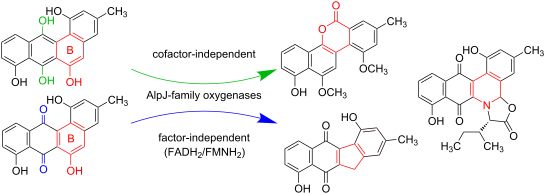
- [25]. On the other hand, the origin of 1, spontaneously derived from 8 under aerobic conditions, raises uncertainties about the actual production in vivo. Furthermore, the significance of the C12 hydroxy group in the hydroquinone intermediate 11 is evident in subsequent reactions, including the




Stability trends in carbocation intermediates stemming from germacrene A and hedycaryol
Beilstein J. Org. Chem. 2024, 20, 1189–1197, doi:10.3762/bjoc.20.101
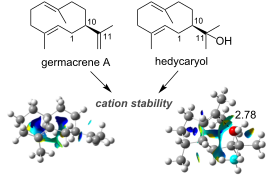
- Naziha Tarannam Prashant Kumar Gupta Shani Zev Dan Thomas Major Department of Chemistry and Institute of Nanotechnology and Advanced Materials, Bar-Ilan University, Ramat-Gan 52900, Israel 10.3762/bjoc.20.101 Abstract In the current work, we analyzed the origin of difference in stabilities among


Novel analogues of a nonnucleoside SARS-CoV-2 RdRp inhibitor as potential antivirotics
Beilstein J. Org. Chem. 2024, 20, 1029–1036, doi:10.3762/bjoc.20.91
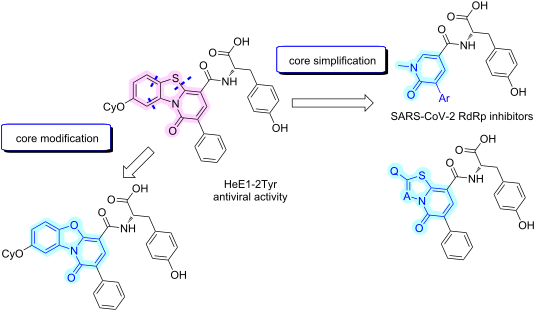
- the beginning of the pandemic, a variety of heterocyclic small molecules – either of natural or synthetic origin – was reported as promising inhibitors of the SARS-CoV-2 RdRp [13][14][15]. However, compounds with a sufficient combination of high potency and suitable pharmacokinetic properties are


Advancements in hydrochlorination of alkenes
Beilstein J. Org. Chem. 2024, 20, 787–814, doi:10.3762/bjoc.20.72
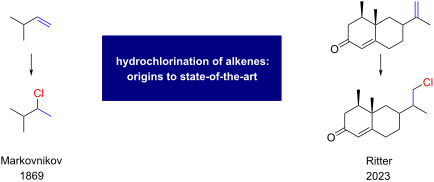
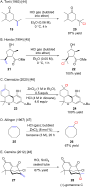
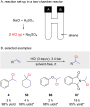
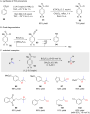
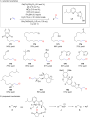
- deuterium incorporation. However, when D2O-saturated nitromethane was used >95% D-incorporation took place. Hence the small (500–2000 ppm) content of water in commercially available nitromethane was at the origin of the hydrochlorination reaction (Scheme 16). As a result, the reaction of 104 with water






Possible bi-stable structures of pyrenebutanoic acid-linked protein molecules adsorbed on graphene: theoretical study
Beilstein J. Org. Chem. 2024, 20, 570–577, doi:10.3762/bjoc.20.49
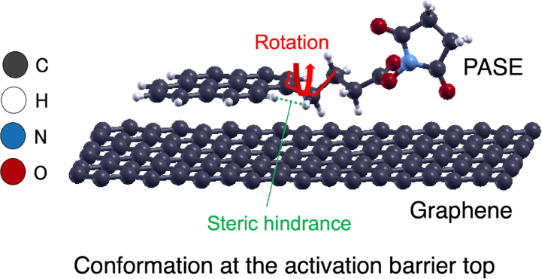
- pathway on the adiabatic potential energy surface that connects these conformations caused by the deformation of the PASE linker. The reaction pathway for the conformational change of the PASE itself was found to have a reaction activation barrier [9]. First, we identify that the origin of the barrier is
- , where conformation 1 corresponds to a 0 rotation, conformation 2 a 2π/3 rotation, and the conformation at the activation barrier top a π/3 rotation, respectively. To confirm the origin of the activation barrier that appears between conformation 1 and 2, we discuss the structural features of the
- how an activation barrier appears on the potential energy surface in PASE adsorbed on graphene. The conformational change between two bi-stable PASE structures can be regarded as rotational motion around a C–C bond in the alkyl chain. An origin of an activation barrier is the steric hindrance coming


Synthesis and biological profile of 2,3-dihydro[1,3]thiazolo[4,5-b]pyridines, a novel class of acyl-ACP thioesterase inhibitors
Beilstein J. Org. Chem. 2024, 20, 540–551, doi:10.3762/bjoc.20.46
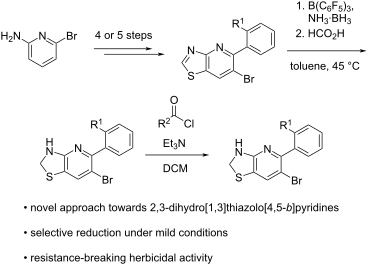
- seeds per pot depending on the plant species (10 seeds for corn and wheat spectrum). The harmful plants and crops used in greenhouse tests were the following species: Alopecurus myosuroides (ALOMY), resistant Alopecurus myosuroides (ALOMY_R, origin: Germany), Apera spica-venti (APESV), Brachiaria
- platyphylla (BRAPP), Bromus tectorum (BROTE), Echinochloa crus-galli (ECHCG), Digitaria sanguinalis (DIGSA), Eleusine indica (ELEIN), Glycine max (GLXMA), Lolium rigidum (LOLRI), Lolium sp. (LOLSS), resistant Lolium sp. (LOLSS_R, origin: France), Poa annua (POAAN), Setaria viridis (SETVI), Sorghum halepense


Enhanced host–guest interaction between [10]cycloparaphenylene ([10]CPP) and [5]CPP by cationic charges
Beilstein J. Org. Chem. 2024, 20, 436–444, doi:10.3762/bjoc.20.38
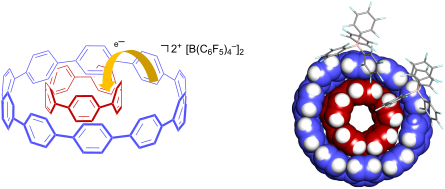
- suggested the partial electron transfer from [10]CPP to [5]CPP2+ in the complex, and this charge-transfer (CT) interaction is most likely the origin of the higher association constant of the dicationic complex than the neutral one. Keywords: charge-transfer; cycloparaphenylene; dication; host–guest
- photophysical and electrochemical analyses and DFT calculations. Therefore, this CT is most likely the origin of the increased Ka value. We also discuss the charged double-layer structure, as determined by X-ray crystallographic analysis. Results and Discussion The size-complementary interaction between CPP2




Additive-controlled chemoselective inter-/intramolecular hydroamination via electrochemical PCET process
Beilstein J. Org. Chem. 2024, 20, 264–271, doi:10.3762/bjoc.20.27
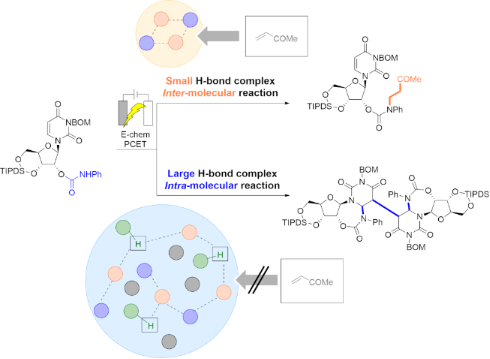
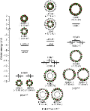
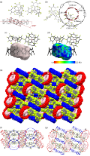
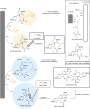
- radical acceptor moieties. Therefore, we investigated the origin of this selectivity under electrochemical conditions. Results and Discussion Anodic oxidation of uridine derivative 1 was performed in a CH2Cl2/Bu4NPF6 (0.1 M) electrolyte system using a carbon felt (CF) anode and a Pt cathode in the


Cycloaddition reactions of heterocyclic azides with 2-cyanoacetamidines as a new route to C,N-diheteroarylcarbamidines
Beilstein J. Org. Chem. 2024, 20, 17–24, doi:10.3762/bjoc.20.3
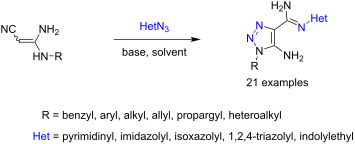
- cells within the concentration range. This indicates the low cytotoxicity of these compounds. Meanwhile, compounds 3m,l are characterized by a borderline inhibition of cell culture viability. Attention is drawn to the increased toxic effect of 3m on cells of tumor origin, in comparison with normal human



Studying specificity in protein–glycosaminoglycan recognition with umbrella sampling
Beilstein J. Org. Chem. 2023, 19, 1933–1946, doi:10.3762/bjoc.19.144
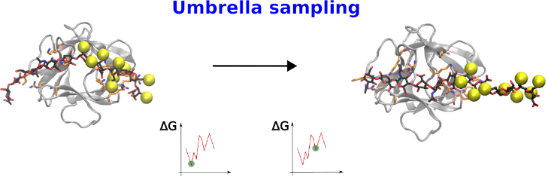
- , respectively), while on the way back, the still high correlation with the H-bond number (0.58) and an essentially decreased one with the native contact number (0.36) mean that hydrogen binding dominates the binding energetics of the system and is an origin of multipose binding. When correlating the values for




Anion–π catalysis on carbon allotropes
Beilstein J. Org. Chem. 2023, 19, 1881–1894, doi:10.3762/bjoc.19.140
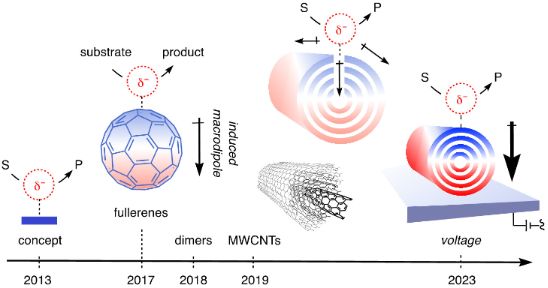
- (Figure 1C). Elongation of the tether in fullerenes 10 and 11 reduced product ratios to still significant A/D10/9 ~ A/D11/9 = 2.1. The origin of this decrease in anion–π catalysis is likely to include increasing entropy losses in pseudo-macrocyclic transition states. Normalized against the fullerene-free
- . The origin of autocatalysis on π-acidic surfaces was clarified only this year because the involvement of two molecules of water in the decisive transition state XI complicated the situation [70]. This reaction was intriguing for reasons beyond autocatalysis. It is the only example so far where
- graphite might be relevant with regard to early steps in the origin of life [124][125]. Conclusion Anion–π catalysis on carbon allotropes originates from the observation that access to strong anion–π interactions by increasing the intrinsic π acidity of aromatic surfaces is not realistic. Any permanent




Synthetic approach to 2-alkyl-4-quinolones and 2-alkyl-4-quinolone-3-carboxamides based on common β-keto amide precursors
Beilstein J. Org. Chem. 2023, 19, 1804–1810, doi:10.3762/bjoc.19.132
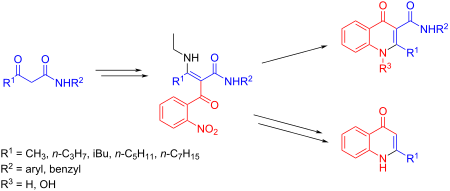
- natural products of microbial origin such as HHQ and its C5-congener. Two compounds with high activity against S. aureus have been identified among the newly obtained quinolones, with MICs ≤ 3.12 and ≤ 6.25 µg/mL, respectively. Keywords: antibacterial; β-keto amides; enaminones; 4-quinolones; quorum
- most prominent examples in this regard are the fluoroquinolone antimicrobials [3] – a remarkably successful drug class, used to treat bacterial infections caused by both Gram-positive and Gram-negative bacteria [4]. Other notable 4-quinolones of synthetic origin are ivacaftor [5] and elvitegravir [6
- avicennae [18]. Inhibition of hepatitis C virus replication by 2-nonyl-4-quinolone, isolated from Ruta angustifolia leaves, has also been reported [19]. Another significant group of natural 4-quinolones are those of microbial origin. The function of these compounds in the microbial world is a matter of


Effects of the aldehyde-derived ring substituent on the properties of two new bioinspired trimethoxybenzoylhydrazones: methyl vs nitro groups
Beilstein J. Org. Chem. 2023, 19, 1713–1727, doi:10.3762/bjoc.19.125
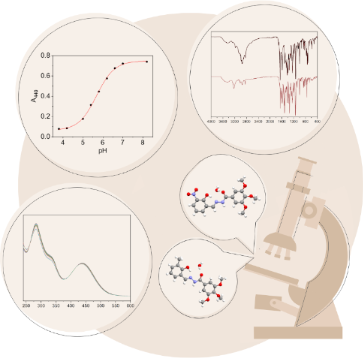
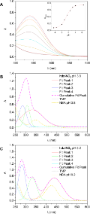
- /HEPES mixture (pH 7.4). Experimental conditions: l = 1.0 cm and T = (25.0 ± 0.1) °C. (A) Gaussian fitting of the bands in the spectrum at t0, along with the spectra of precursors TMP (dotted gray curve) and MBA (dotted purple). Deconvolution performed with Origin software. (B) Spectra measured at t0 and
- 10% DMSO/buffer mixtures (pH ranging from 3.8 to 8.2). Inset: A440 versus pH with sigmoidal fitting. Gaussian fitting of the bands in a solution of the hydrazone in (B) 10% DMSO/acetate buffer (pH 3.8) and (C) 10% DMSO/Tris-HCl buffer (pH 8.2). Deconvolution performed with Origin software. Spectra of