


Search results
Search for "protecting groups" in Full Text gives 332 result(s) in Beilstein Journal of Organic Chemistry. Showing first 200.
Synthesis and conformational analysis of pyran inter-halide analogues of ᴅ-talose
- Olivier Lessard,
- Mathilde Grosset-Magagne,
- Paul A. Johnson and
- Denis Giguère
Beilstein J. Org. Chem. 2024, 20, 2442–2454, doi:10.3762/bjoc.20.208
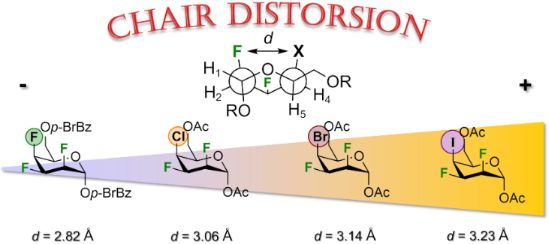
- to be confirmed by single-crystal diffraction analysis (see below) [33]. Unfortunately, trifluorinated analogue 12 was not crystalline. Thus, we removed the acetyl protecting groups and generated the corresponding p-bromobenzoate derivative 17 to obtain suitable crystalline material [24][34]. In

Graphical Abstract

Figure 1: Synthesis of trihalogenated pyrans: a) Chiron approach to multivicinal inter-halide derived from al...

Scheme 1: Synthesis of halogenated talopyranose analogues 13–15, and 17 that include a 2,3-cis, 3,4-cis relat...

Figure 2: Direct comparison of 19F resonances of halogenated talose analogues 12–15 (19F NMR; 470 MHz, CDCl3)....

Figure 3: X-ray analysis of compound 13–15, 17, and α-ᴅ-talose 18. ORTEP diagram showing 50% thermal ellipsoi...

Figure 4: Packing arrangement of compound compound 15; a) View down the b axis; b) proposed intermolecular in...
Multicomponent syntheses of pyrazoles via (3 + 2)-cyclocondensation and (3 + 2)-cycloaddition key steps
- Ignaz Betcke,
- Alissa C. Götzinger,
- Maryna M. Kornet and
- Thomas J. J. Müller
Beilstein J. Org. Chem. 2024, 20, 2024–2077, doi:10.3762/bjoc.20.178

- Scheme 7 [56]. In a consecutive process, after removing the protecting groups through acidic cleavage and cyclocondensation with 1,3-dicarbonyl compounds, the corresponding pyrazoles 25 were formed in a one-pot procedure. Interestingly, both β-aminoacrolein and β-aminovinylketones can also serve as

Graphical Abstract

Scheme 1: Consecutive three-component synthesis of pyrazoles 1 via in situ-formed 1,3-diketones 2 [44].

Scheme 2: Consecutive three-component synthesis of 4-ethoxycarbonylpyrazoles 5 via SmCl3-catalyzed acylation ...

Scheme 3: Consecutive four-component synthesis of 1-(thiazol-2-yl)pyrazole-3-carboxylates 8 [51].

Scheme 4: Three-component synthesis of thiazolylpyrazoles 17 via in situ formation of acetoacetylcoumarins 18 ...

Scheme 5: Consecutive pseudo-four-component and four-component synthesis of pyrazoles 21 from sodium acetylac...

Scheme 6: Consecutive three-component synthesis of 1-substituted pyrazoles 24 from boronic acids, di(Boc)diim...

Scheme 7: Consecutive three-component synthesis of N-arylpyrazoles 25 via in situ formation of aryl-di(Boc)hy...

Scheme 8: Consecutive three-component synthesis of 1,3,4-substituted pyrazoles 27 and 28 from methylhydrazine...

Scheme 9: Consecutive three-component synthesis of 4-allylpyrazoles 32 via oxidative allylation of 1,3-dicarb...

Scheme 10: Pseudo-five-component synthesis of tris(pyrazolyl)methanes 35 [61].

Scheme 11: Pseudo-three-component synthesis of 5-(indol-3-yl)pyrazoles 39 from 1,3,5-triketones 38 [64].

Scheme 12: Three-component synthesis of thiazolylpyrazoles 43 [65].

Scheme 13: Three-component synthesis of triazolo[3,4-b]-1,3,4-thiadiazin-3-yl substituted 5-aminopyrazoles 47 [67]....

Scheme 14: Consecutive three-component synthesis of 5-aminopyrazoles 49 via formation of β-oxothioamides 50 [68].
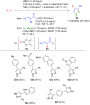
Scheme 15: Synthesis of 3,4-biarylpyrazoles 52 from aryl halides, α-bromocinnamaldehyde, and tosylhydrazine vi...

Scheme 16: Consecutive three-component synthesis of 3,4-substituted pyrazoles 57 from iodochromones 55 by Suzu...

Scheme 17: Pseudo-four-component synthesis of pyrazolyl-2-pyrazolines 59 by ring opening/ring closing cyclocon...

Scheme 18: Consecutive three-component synthesis of pyrazoles 61 [77].

Scheme 19: Three-component synthesis of pyrazoles 62 from malononitrile, aldehydes, and hydrazines [78-90].

Scheme 20: Four-component synthesis of pyrano[2,3-c]pyrazoles 63 [91].

Scheme 21: Three-component synthesis of persubstituted pyrazoles 65 from aldehydes, β-ketoesters, and hydrazin...

Scheme 22: Three-component synthesis of pyrazol-4-carbodithioates 67 [100].

Scheme 23: Regioselective three-component synthesis of persubstituted pyrazoles 68 catalyzed by ionic liquid [...

Scheme 24: Consecutive three-component synthesis of 4-halopyrazoles 69 and anellated pyrazoles 70 [102].

Scheme 25: Three-component synthesis of 2,2,2-trifluoroethyl pyrazole-5-carboxylates 72 [103].

Scheme 26: Synthesis of pyrazoles 75 in a one-pot process via carbonylative Heck coupling and subsequent cycli...

Scheme 27: Copper-catalyzed three-component synthesis of 1,3-substituted pyrazoles 76 [105].

Scheme 28: Pseudo-three-component synthesis of bis(pyrazolyl)methanes 78 by ring opening-ring closing cyclocon...

Scheme 29: Three-component synthesis of 1,4,5-substituted pyrazoles 80 [107].

Scheme 30: Consecutive three-component synthesis of 3,5-bis(fluoroalkyl)pyrazoles 83 [111].

Scheme 31: Consecutive three-component synthesis of difluoromethanesulfonyl-functionalized pyrazole 88 [114].

Scheme 32: Consecutive three-component synthesis of perfluoroalkyl-substituted fluoropyrazoles 91 [115].

Scheme 33: Regioselective consecutive three-component synthesis of 1,3,5-substituted pyrazoles 93 [116].

Scheme 34: Three-component synthesis of pyrazoles 96 mediated by trimethyl phosphite [117].

Scheme 35: One-pot synthesis of pyrazoles 99 via Liebeskind–Srogl cross-coupling/cyclocondensation [118].

Scheme 36: Synthesis of 1,3,5-substituted pyrazoles 101 via domino condensation/Suzuki–Miyaura cross-coupling ...

Scheme 37: Consecutive three-component synthesis of 1,3,5-trisubstituted pyrazoles 102 and 103 by Sonogashira ...

Scheme 38: Polymer analogous consecutive three-component synthesis of pyrazole-based polymers 107 [132].

Scheme 39: Synthesis of 1,3,5-substituted pyrazoles 108 by sequentially Pd-catalyzed Kumada–Sonogashira cycloc...

Scheme 40: Consecutive four-step one-pot synthesis of 1,3,4,5-substituted pyrazoles 110 [137].

Scheme 41: Four-component synthesis of pyrazoles 113, 115, and 117 via Sonogashira coupling and subsequent Suz...

Scheme 42: Consecutive four- or five-component synthesis for the preparation of 4-pyrazoly-1,2,3-triazoles 119...

Scheme 43: Four-component synthesis of pyrazoles 121 via alkynone formation by carbonylative Pd-catalyzed coup...

Scheme 44: Preparation of 3-azulenyl pyrazoles 124 by glyoxylation, decarbonylative Sonogashira coupling, and ...

Scheme 45: Four-component synthesis of a 3-indoloylpyrazole 128 [147].

Scheme 46: Two-step synthesis of 5-acylpyrazoles 132 via glyoxylation-Stephen–Castro sequence and subsequent c...

Scheme 47: Copper on iron mediated consecutive three-component synthesis of 3,5-substituted pyrazoles 136 [150].

Scheme 48: Consecutive three-component synthesis of 3-substituted pyrazoles 141 by Sonogashira coupling and su...

Scheme 49: Consecutive three-component synthesis of pyrazoles 143 initiated by Cu(I)-catalyzed carboxylation o...

Scheme 50: Consecutive three-component synthesis of benzamide-substituted pyrazoles 146 starting from N-phthal...

Scheme 51: Consecutive three-component synthesis of 1,3,5-substituted pyrazoles 148 [156].

Scheme 52: Three-component synthesis of 4-ninhydrin-substituted pyrazoles 151 [158].

Scheme 53: Consecutive four-component synthesis of 4-(oxoindol)-1-phenylpyrazole-3-carboxylates 155 [159].

Scheme 54: Three-component synthesis of pyrazoles 160 [160].

Scheme 55: Consecutive three-component synthesis of pyrazoles 165 [162].

Scheme 56: Consecutive three-component synthesis of 3,5-disubstituted and 3-substituted pyrazoles 168 and 169 ...

Scheme 57: Three-component synthesis of 3,4,5-substituted pyrazoles 171 via 1,3-dipolar cycloaddition of vinyl...

Scheme 58: Three-component synthesis of pyrazoles 173 and 174 from aldehydes, tosylhydrazine, and vinylidene c...

Scheme 59: Three-component synthesis of pyrazoles 175 from glyoxyl hydrates, tosylhydrazine, and electron-defi...

Scheme 60: Pseudo-four-component synthesis of pyrazoles 177 from glyoxyl hydrates, tosylhydrazine, and aldehyd...

Scheme 61: Consecutive three-component synthesis of pyrazoles 179 via Knoevenagel-cycloaddition sequence [179].

Scheme 62: Three-component synthesis of 5-dimethylphosphonate substituted pyrazoles 182 from aldehydes, the Be...

Scheme 63: Consecutive three-component synthesis of 5-(dimethyl phosphonate)-substituted pyrazoles 185 from al...

Scheme 64: Three-component synthesis of 5-(dimethyl phosphonate)-substituted pyrazoles 187 from aldehydes, the...

Scheme 65: Three-component synthesis of 5-diethylphosphonate/5-phenylsulfonyl substituted pyrazoles 189 from a...

Scheme 66: Pseudo-three-component synthesis of 3-(dimethyl phosphonate)-substituted pyrazoles 190 [185].

Scheme 67: Three-component synthesis of 3-trifluoromethylpyrazoles 193 [186].

Scheme 68: Consecutive three-component synthesis of 5-stannyl-substituted 4-fluoropyrazole 197 [191,192].

Scheme 69: Pseudo-three-component synthesis of 3,5-diacyl-4-arylpyrazoles 199 [195].

Scheme 70: Three-component synthesis of pyrazoles 204 via nitrilimines [196].

Scheme 71: Three-component synthesis of 1,3,5-substituted pyrazoles 206 via formation of nitrilimines and sali...

Scheme 72: Pseudo four-component synthesis of pyrazoles 209 from acetylene dicarboxylates 147, hydrazonyl chlo...

Scheme 73: Consecutive three-component synthesis of pyrazoles 213 via syndnones 214 [200].

Scheme 74: Consecutive three-component synthesis of pyrazoles 216 via in situ-formed diazomethinimines 217 [201].

Scheme 75: Consecutive three-component synthesis of 3-methylthiopyrazoles 219 from aldehydes, hydrazine, and 1...

Scheme 76: Three-component synthesis of 1,3,5-substituted pyrazoles 220 from aldehydes, hydrazines, and termin...

Scheme 77: Three-component synthesis of 1,3,4,5-substituted pyrazoles 222 from aldehydes, hydrazines, and DMAD ...

Scheme 78: Pseudo three-component synthesis of pyrazoles 224 from sulfonyl hydrazone and benzyl acrylate under...

Scheme 79: Titanium-catalyzed consecutive four-component synthesis of pyrazoles 225 via enamino imines 226 [211]. a...

Scheme 80: Titanium-catalyzed three-component synthesis of pyrazoles 227 via enhydrazino imine complex interme...

Scheme 81: Pseudo-three-component synthesis of pyrazoles 229 via Glaser coupling of terminal alkynes and photo...

Scheme 82: Copper(II)acetate-mediated three-component synthesis of pyrazoles 232 [216].

Scheme 83: Copper-catalyzed three-component synthesis of 1,3,4-substituted pyrazole 234 from oxime acetates, a...

Scheme 84: Three-component synthesis of 3-trifluoroethylpyrazoles 239 [218].

Scheme 85: Pseudo-three-component synthesis of 1,4-bisulfonyl-substituted pyrazoles 242 [219].

Scheme 86: Three-component synthesis of 4-hydroxypyrazole 246 [221].
Solvent-dependent chemoselective synthesis of different isoquinolinones mediated by the hypervalent iodine(III) reagent PISA
- Ze-Nan Hu,
- Yan-Hui Wang,
- Jia-Bing Wu,
- Ze Chen,
- Dou Hong and
- Chi Zhang
Beilstein J. Org. Chem. 2024, 20, 1914–1921, doi:10.3762/bjoc.20.167
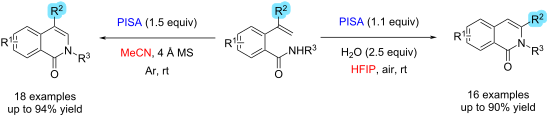
- conditions, leading to 3l. In particular, the presence of diverse nitrogen protecting groups, such as benzyloxy, phenyl, and alkyl, did not affect the smooth reaction, affording 3m–o in a moderate yield of 32–64% (Scheme 4). Just by changing the solvent of the reaction, we were able to obtain the isomeric 3

Graphical Abstract

Figure 1: Selected natural products, pharmaceuticals, and biologically active compounds having an isoquinolin...

Scheme 1: Chemoselective and PISA-mediated, solvent-controlled synthesis of different isoquinolinone derivati...
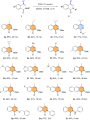
Scheme 2: Substrate scope for the synthesis of 4-substituted isoquinolinones 2. Reaction conditions: 1 (0.3 m...

Scheme 3: Optimal reaction conditions for the synthesis of 3-substituted isoquinolinone 3a.

Scheme 4: Substrate scope for the synthesis of 3-substituted isoquinolinones 3. Reaction conditions: 1 (0.3 m...

Scheme 5: Control experiment to test for radical intermediates.

Scheme 6: Proposed mechanism for the reaction between 1a and PISA in anhydrous acetonitrile.

Scheme 7: Two other resonance structures of the intermediate 1CC.

Scheme 8: Proposed mechanism for the reaction between 1a and PISA in wet HFIP.
Harnessing unprotected deactivated amines and arylglyoxals in the Ugi reaction for the synthesis of fused complex nitrogen heterocycles
- Javier Gómez-Ayuso,
- Pablo Pertejo,
- Tomás Hermosilla,
- Israel Carreira-Barral,
- Roberto Quesada and
- María García-Valverde
Beilstein J. Org. Chem. 2024, 20, 1758–1766, doi:10.3762/bjoc.20.154
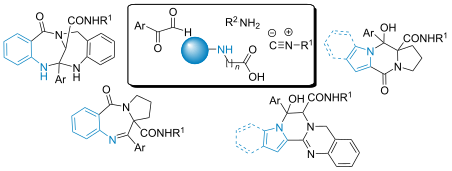
- [11]. Different strategies have been developed to avoid these competitive reactions, the most common ones being the use of protecting groups (Ugi/deprotection/cyclization strategy) [12][13][14] or of surrogates of amines [15]. However, direct incorporation of the second amine without derivatization is
- protecting groups, as the reduced nucleophilic character of the amino group of the anthranilic acid would prevent its participation in the Ugi reaction. In this way, the Ugi reaction was performed using arylglyoxals 1, anthranilic acid derivatives 2, amines 3 and isocyanides 4 following the most common

Graphical Abstract

Figure 1: Fused heterocycles containing the piperazine and diazepine core.

Scheme 1: Synthesis of benzodiazepinones 5 from anthranilic acid derivatives.

Scheme 2: Diastereoselective one-pot synthesis of benzodiazepinones 6.

Scheme 3: Synthesis of bis-1,4-benzodiazepines 7.

Scheme 4: Synthesis of benzodiazepinone 5c and pyrrolobenzodiazepinone 8 from anthranilic acid and 3-bromopro...

Scheme 5: Synthesis of pyrrolopiperazinones 9 from pyrrole and indole carboxylic acids.

Scheme 6: Synthesis of pyrrolopiperazinones 10 from N-phenylglicine.

Figure 2: X-ray diffraction structures of pyrrolopiperazinones 9a (left) and 10a (right). The thermal ellipso...

Scheme 7: Synthesis of pyrrolopiperazinone 11 using (S)-α-methylbenzylamine.

Scheme 8: Proposed mechanism in the spontaneous cyclization of Ugi adducts obtained from arylglyoxals and dea...

Scheme 9: Synthesis of pyrrolopiperazinoquinazolines 13.

Scheme 10: Synthesis of piperazinoquinazoline 14.

Scheme 11: Synthesis of dipyrrolopiperazinones 12.

Figure 3: X-ray diffraction structure of dipyrrolopiperazinone 12c. The thermal ellipsoid plot (Olex2) is at ...
Chemo-enzymatic total synthesis: current approaches toward the integration of chemical and enzymatic transformations
- Ryo Tanifuji and
- Hiroki Oguri
Beilstein J. Org. Chem. 2024, 20, 1693–1712, doi:10.3762/bjoc.20.151
- deprotonation to form exomethylene. Subsequent in situ removal of the silyl protecting groups led to the total synthesis of brassicicene K (27). Thus, the biosynthetic proposal featuring the Wagner–Meerwein-type skeletal rearrangement (9→11) through the catalysis of P450 enzyme BscF was successfully emulated by

Graphical Abstract

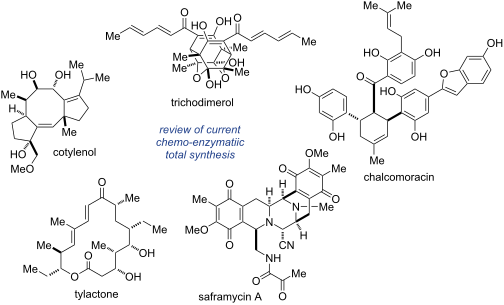
Scheme 1: Targeted natural products and key enzymatic transformations in the chemo-enzymatic total syntheses ...

Scheme 2: Biosynthetic pathway to brassicicenes in Pseudocercospora fijiensis [14]. (A) Cyclization phase catalyz...

Scheme 3: Chemo-enzymatic total synthesis of cotylenol (1) and brassicicenes. (A) Chemical cyclization phase....
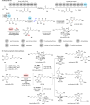
Scheme 4: (A) Biosynthetic pathway for trichodimerol (2) in Penicillium chrysogenum. (B) Chemo-enzymatic tota...
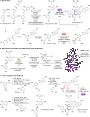
Scheme 5: (A) Proposed biosynthetic pathway for chalcomoracin (3) in Morus alba. (B) Outline of the biosynthe...

Scheme 6: (A) Chemo-enzymatically synthesized natural products by using the originally identified MaDA. (B) M...

Scheme 7: Proposed biosynthetic mechanism of tylactone (4) in Streptomyces fradiae.

Scheme 8: (A) Chemical synthesis and cascade enzymatic transformations of cyclization precursors. (B) Late-st...

Scheme 9: Proposed biosynthetic mechanism of saframycin A (5) in Streptomyces lavendulae.

Scheme 10: (A) Chemo-enzymatic total synthesis of saframycin A (5) and jorunnamycin A (103). (B) Chemo-enzymat...
Ring opening of photogenerated azetidinols as a strategy for the synthesis of aminodioxolanes
- Henning Maag,
- Daniel J. Lemcke and
- Johannes M. Wahl
Beilstein J. Org. Chem. 2024, 20, 1671–1676, doi:10.3762/bjoc.20.148
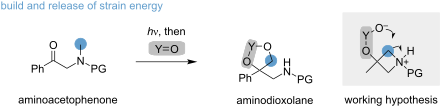
- demanding benzhydryl (Bzh) group showed progress towards azetidinol 3l with a yield of 10% (Table 1, entry 12). As it can be extracted from our study, sulfonyl-based protecting groups hold a unique role in the Norrish–Yang cyclization of α-aminoacetophenones, which was underpinned by the good performances

Graphical Abstract

Scheme 1: Build and release approach for the functionalization of simple precursors. a) General overview. b) ...
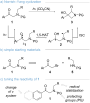
Scheme 2: Modularity of the Norrish–Yang cyclization for the synthesis of azetidines.

Scheme 3: Ring-opening reactions using electron-deficient ketones and boronic acids.
Synthesis of 1,4-azaphosphinine nucleosides and evaluation as inhibitors of human cytidine deaminase and APOBEC3A
- Maksim V. Kvach,
- Stefan Harjes,
- Harikrishnan M. Kurup,
- Geoffrey B. Jameson,
- Elena Harjes and
- Vyacheslav V. Filichev
Beilstein J. Org. Chem. 2024, 20, 1088–1098, doi:10.3762/bjoc.20.96
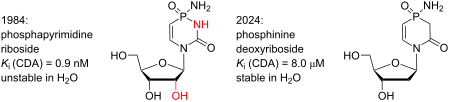
- racemisation, and nucleoside 14 with the same α/β ratio of 3:2 formed from either anomerically pure 17 or from a mixture of the anomers. Catalytic hydrogenation is usually used for the removal of benzyl protecting groups. However, standard hydrogenation conditions using 10% Pd/C led to reduction of the C=C

Graphical Abstract

Figure 1: A) Deamination of cytosine, dC and C as individual nucleosides or as part of a polynucleotide chain...

Scheme 1: i) Boc2O, DMAP, THF, rt, overnight; ii) aq 5 M NaOH, rt, 3 h, 89% yield over two steps; iii) 3, azo...

Scheme 2: i) NaN3, n-Bu4NHSO4, NaHCO3/CHCl3 (1:1), rt, 20 min, 88% yield; ii) a) H2, Pd/C, CH2Cl2, rt, 3 h; b...

Scheme 3: i) H2, 5% Pd/CaCO3/3% Pb, Et3N, CH2Cl2, rt, 1.5 h, 34% and 21% yield for α- and β-anomer of 18, res...

Figure 2: V0 of A3A mimic-catalysed deamination of 5'-dTTTTCAT in the absence (no inhibitor) and presence of ...
Auxiliary strategy for the general and practical synthesis of diaryliodonium(III) salts with diverse organocarboxylate counterions
- Naoki Miyamoto,
- Daichi Koseki,
- Kohei Sumida,
- Elghareeb E. Elboray,
- Naoko Takenaga,
- Ravi Kumar and
- Toshifumi Dohi
Beilstein J. Org. Chem. 2024, 20, 1020–1028, doi:10.3762/bjoc.20.90
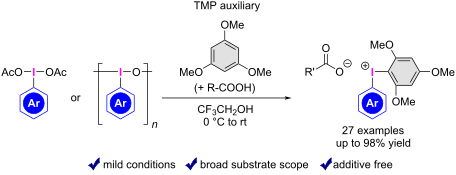
- % yield. Notably, this strategy allowed the synthesis of (diacetoxyiodo)arenes bearing acid-sensitive Boc protecting groups (1i) and heteroaromatic moieties such as pyridyl (1j) and thienyl (1k) groups. The reaction of bis(diacetoxyiodo)arene (1l) with 1,3,5-trimethoxybenzene (2.1 equiv) under the same

Graphical Abstract

Scheme 1: Synthetic approaches of diaryliodonium(III) trifluoroacetates.

Scheme 2: Synthesis of diaryliodonium(III) carboxylates.

Scheme 3: Scope of dummy ligands.

Scheme 4: Substrate scope of aryl(TMP)iodonium(III) acetates. a) 0.50 mmol scale of 1i. b) 1,3,5-Trimethoxybe...

Scheme 5: Substrate scope of the carboxylic acids and iodosylarenes. a) The reaction was conducted for 4 h. b...

Scheme 6: Representative applications of aryl(TMP)iodonium(III) carboxylates.
Enantioselective synthesis of β-aryl-γ-lactam derivatives via Heck–Matsuda desymmetrization of N-protected 2,5-dihydro-1H-pyrroles
- Arnaldo G. de Oliveira Jr.,
- Martí F. Wang,
- Rafaela C. Carmona,
- Danilo M. Lustosa,
- Sergei A. Gorbatov and
- Carlos R. D. Correia
Beilstein J. Org. Chem. 2024, 20, 940–949, doi:10.3762/bjoc.20.84
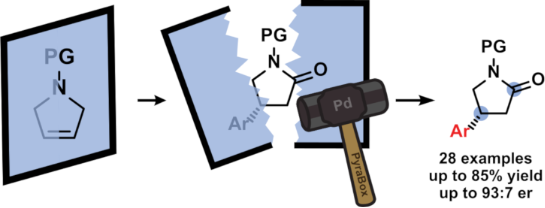
- -nitrophenyl)sulfonyl (2-Ns) as alternative protecting groups of 2,5-dihydro-1H-pyrrole (Scheme 5). Although the results with the 2-Ns protecting group were somewhat disappointing, the results with 4-Ns group were more promising, even with a welcome increase in the enantiomeric ratio in some cases (4dd and 4de
- for the treatment of muscle spasticity from spinal cord injury and multiple sclerosis [16]. Among all the sulfonyl-protecting groups used in this work, the removal of the N-nosyl group required milder conditions [22]. Deprotection of N-nosylated 4dd and 4de with thiophenol and K2CO3 at room
- 93:7. The methodology was shown to be robust, allowing the use of different protecting groups at the nitrogen of the 4-pyrroline substrate. We also report straightforward synthetic routes to obtain (R)-rolipram (5b, 61% overall yield, 3 steps, 82:18 er) and (R)-baclofen hydrochloride (6, 49% overall

Graphical Abstract

Scheme 1: Examples of drugs containing a γ-lactam and derivative.

Scheme 2: Desymmetrization strategies employing Heck-Matsuda reactions.

Scheme 3: Heck–Matsuda reaction (1) and Jones oxidation (2) of the N-Boc-protected 2,5-dihydro-1H-pyrrole 1a....

Figure 1: N,N-Ligands evaluated in this work.
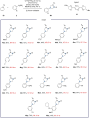
Scheme 4: Heck–Matsuda reaction of N-tosyl-2,5-dihydro-1H-pyrrole (1b). Reaction conditions: 1) pyrroline 1b ...

Scheme 5: Heck–Matsuda reaction of the protected 2,5-dihydro-1H-pyrrole with Ns and 2-Ns groups (pyrrolines 1c...

Scheme 6: Synthesis of (R)-baclofen hydrochloride (6) from 4dd and (R)-rolipram (5b) from 4de. Reaction condi...

Scheme 7: A rationale for the catalytic cycle for the Heck–Matsuda reaction of the protected 2,5-dihydro-1H-p...

Figure 2: Rationalization of the enantioselectivity obtained in the Heck–Matsuda reaction of protected 2,5-di...
(Bio)isosteres of ortho- and meta-substituted benzenes
- H. Erik Diepers and
- Johannes C. L. Walker
Beilstein J. Org. Chem. 2024, 20, 859–890, doi:10.3762/bjoc.20.78
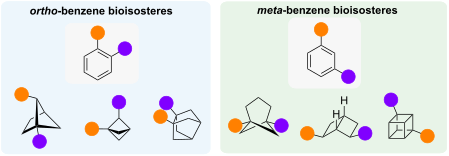
- and aldehyde protecting groups. Recently, Lebold, Sarpong, and co-workers showed that 1,2-BCPs (±)-14a–e are also accessible from 1,5-disubstituted 2-azabicyclo[2.1.1]hexanes 13 (2-aza-1,5-BCHs) through a skeletal editing strategy utilising commercially available Levin’s reagent [30][31] (Scheme 1D

Graphical Abstract

Figure 1: Scaffolds commonly reported as bioisosteric replacements of para-substituted benzene and examples p...

Figure 2: 1,2-BCPs as isosteres for ortho-and meta-substituted benzenes: comparison of reported exit vector p...

Scheme 1: 1,2-Disubstituted bicyclo[1.1.1]pentanes as isosteres of ortho-substituted benzenes. A: Baran, Coll...

Scheme 2: Synthesis of 1,2-BCPs from BCP 15 by bridge C–H bromination as reported by MacMillan and co-workers ...

Figure 3: Comparative physicochemical data of telmisartan, lomitapide and their BCP isosteres [26,33]. Shake flask d...
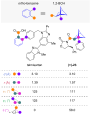
Figure 4: 1,2-Disubstituted bicyclo[2.1.1]hexanes as isosteres of ortho-benzenes: Exit vector parameters of t...

Scheme 3: Synthesis of 1,2-disubstituted bicyclo[2.1.1]hexanes via alkene insertion into bicyclo[1.1.0]butane...

Scheme 4: Synthesis of 1,2-disubstituted bicyclo[2.1.1]hexanes via intramolecular crossed [2 + 2] cycloadditi...

Figure 5: Comparison of physicochemical data of fluxapyroxad and boscalid and their 1,2-BCH bioisosteres [36]. Sh...

Figure 6: Antifungal activity of fluxapyroxad, its 1,5-BCH bioisostere (±)-55, boscalid and its bioisostere 1...
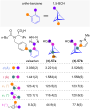
Figure 7: 1,5-Disubstituted bicyclo[2.1.1]hexanes as isosteres of ortho-substituted benzenes. Comparison of e...
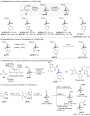
Scheme 5: Synthesis of 1,5-disubstituted bicyclo[2.1.1]hexanes as isosteres of ortho-benzenes via intramolecu...

Figure 8: Comparison of physicochemical data of fluxapyroxad and boscalid and their 1,5-BCH bioisosteres [45]. Sh...

Figure 9: Antifungal activity of fluxapyroxad, its 1,5-BCH bioisostere (±)-64, boscalid and its bioisostere 1...
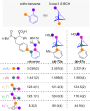
Figure 10: 1,5-Disubstituted 3-oxabicylco[2.1.1]hexanes as isosteres for ortho-benzenes: Comparison of exit ve...

Scheme 6: Synthesis of 1,5-disubstituted 3-oxabicyclo[2.1.1]hexanes as isosteres for ortho-benzenes via intra...

Figure 11: Comparison of physicochemical data of fluxapyroxad and boscalid and their 3-oxa-1,5-BCH bioisostere...

Figure 12: Antifungal activity of fluxapyroxad and boscalid and their 3-oxa-1,5-BCH bioisosteres (±)-75 and (±...

Figure 13: 1,2-Disubstituted bicyclo[3.1.1]heptanes as isosteres of ortho-benzenes. Schematic representation o...

Scheme 7: Synthesis of 1,2-disubstituted bicyclo[3.1.1]heptanes as isosteres for ortho-benzenes via alkene in...

Figure 14: 1,2-Disubstituted stellanes as ortho-benzene isosteres: Comparison of selected exit vector paramete...

Scheme 8: Synthesis of 1,2-disubstituted stellanes as isosteres for ortho-benzenes reported by Ryabukhin, Vol...

Figure 15: 1,2-Disubstituted cubanes as ortho-benzene isosteres: Comparison of substituent distances and angle...

Scheme 9: Synthesis of 1,2-disubsituted cubanes as isosteres for ortho-benzenes. A: Synthesis of 1,2-cubane d...
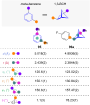
Figure 16: 1,3-Disubstituted bicyclo[2.1.1]hexanes as isosteres of meta-benzenes: comparative exit vector para...

Scheme 10: Synthesis of 1,3-disubstituted bicyclo[2.1.1]hexanes as isosteres for meta-benzenes reported by Wal...

Figure 17: 1,4-Disubstituted bicyclo[2.1.1]hexanes as isosteres of meta-benzenes: comparative exit vector para...

Scheme 11: Synthesis of 1,4-disubstituted bicyclo[2.1.1}hexanes as isosteres for ortho-benzenes via intramolec...

Figure 18: 1,4-Disubstituted-2-oxabicyclo[2.1.1]hexanes as meta-benzene isosteres: comparison of selected exit...

Scheme 12: Synthesis of 1,4-disubstituted 2-oxabicyclo[2.1.1]hexanes as isosteres for meta-benzenes. A: Mykhai...

Figure 19: Comparative physicochemical data for 2- and 3-oxa-1,4-BCHs and para-substituted benzene equivalents...

Figure 20: 1,5-Disubstituted bicyclo[3.1.1]heptanes as isosteres of meta-benzenes: comparison of exit vector p...

Scheme 13: Synthesis of [3.1.1]propellane as a precursor for 1,5-disubsituted bicyclo[3.1.1]heptanes. A: aGass...

Scheme 14: Synthesis of iodine-substituted 1,5-disubstituted bicyclo[3.1.1]heptanes as isosteres for meta-benz...

Scheme 15: Synthesis of nitrogen-, chalcogen- and tin-substituted 1,5-disubstituted bicyclo[3.1.1]heptanes as ...

Figure 21: Comparative physicochemical data of URB597 and 1,5-BCHep isostere 146 [27]. Kinetic aqueous solubility ...
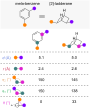
Figure 22: [2]-Ladderanes as isosteres of meta-benzenes: comparison of reported exit vector parameters [63].

Scheme 16: Synthesis of cis-2,6-disubstituted bicyclo[2.2.0]hexanes as isosteres for meta-benzenes. A: Brown a...

Figure 23: Comparative physicochemical data of meta-benzene 158 and [2]-ladderane isostere 159 [63]. Partition coe...

Figure 24: 1,3-Disubstituted cubanes as isosteres of meta-benzenes: comparison of selected exit vector paramet...
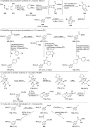
Scheme 17: Synthesis of 1,3-disubsituted cubanes as isosteres for meta-benzenes. A: MacMillan and co-workers’ ...

Figure 25: Comparative physicochemical data of lumacaftor and its 1,3-cubane bioisostere 183 [51]. Distribution co...

Figure 26: 1,3-Disubstituted cuneanes as isosteres of meta-benzenes: comparison of selected exit vector parame...

Scheme 18: Synthesis of 1,3-cuneanes as isosteres of meta-benzene. A: Synthesis of 1,3-cuneanes reported by La...

Figure 27: Comparative physicochemical data of sonidegib and its 1,3-cuneane isostere 190 [71]. aSolubility was to...

Figure 28: Exemplary polysubstituted scaffolds related to disubstituted scaffolds suggested as isosteres of or...
SOMOphilic alkyne vs radical-polar crossover approaches: The full story of the azido-alkynylation of alkenes
- Julien Borrel and
- Jerome Waser
Beilstein J. Org. Chem. 2024, 20, 701–713, doi:10.3762/bjoc.20.64
- partial conversion of the starting material was observed. We postulated that the presence of two Boc protecting groups on the nitrogen makes the oxidation of the C-centered radical challenging. By using 1o only bearing one protecting group the desired product could be obtained, albeit in only 17% yield

Graphical Abstract

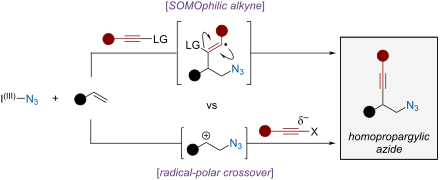
Scheme 1: Overview of homopropargylic azides importance and strategies for azido-alkynylation.

Scheme 2: Screening of nucleophilic alkynes and investigation of the photocatalyst solubility. n.o = not obse...

Scheme 3: Selected scope entries of the azido-alkynylation. The data were already published in ref. [45].

Scheme 4: Unsuccessful examples. The conditions used are the same as in Scheme 3. The yields reported were determined...

Scheme 5: Proposed mechanism.
Ligand effects, solvent cooperation, and large kinetic solvent deuterium isotope effects in gold(I)-catalyzed intramolecular alkene hydroamination
- Ruichen Lan,
- Brock Yager,
- Yoonsun Jee,
- Cynthia S. Day and
- Amanda C. Jones
Beilstein J. Org. Chem. 2024, 20, 479–496, doi:10.3762/bjoc.20.43
- undertaking a 1H NMR spectroscopic kinetic survey of solvent, ligand, and substituent effects on the general reaction 1 → 3 (with a variety of N-protecting groups), to supplement known qualitative observations. We found that, (1) electron-withdrawing phosphines accelerate hydroamination, (2) reactions are

Graphical Abstract
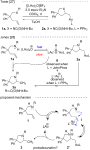
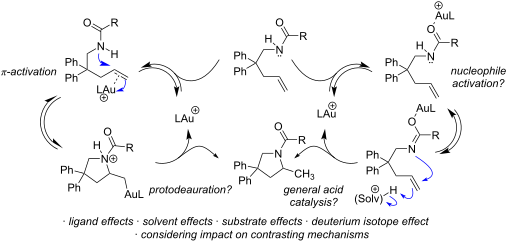
Scheme 1: Proposed mechanism and observation of alkylgold intermediates.

Figure 1: First order alkene decay for urea alkene 1a (0.05 M) hydroamination with [JPhosAu(NCCH3)]SbF6 (5, 2...

Figure 2: Cooperative effect of mixed CD2Cl2/MeOH on alkene 1a → 3a conversion with catalyst 5 (2.5 mol %). E...

Figure 3: Different additive impact on rate of 1a → 3a depending upon catalyst and co-solvent. The data for J...
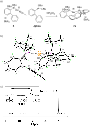
Figure 4: (a) Schematic for synthesis of [L–Au–L]SbF6 where L = JPhos. (b) Perspective drawing of the cation ...

Figure 5: (a) kobs for reaction of urea 1a (0.05 M) in DCM with catalyst 5 and titrated CH3OH/CH3OD. Data for...

Figure 6: Rate of urea 1a (0.05 M) hydroamination with JPhosAu(NCCH3)SbF6 (2.5 mol %) in CH2Cl2 with 5, 25, a...
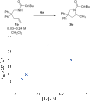
Figure 7: Observed rates for the reaction of carbamate 1b (0.03–0.24 M) with JackiephosAuNTf2 (0.0013 M, 6a) ...

Figure 8: Influence of catalyst 5 concentration on rate of 1a (0.05 M in CH2Cl2 with 0, 10 μL MeOH). Error ba...

Scheme 2: Proposed alternate mechanism.
Optimizations of lipid II synthesis: an essential glycolipid precursor in bacterial cell wall synthesis and a validated antibiotic target
- Milandip Karak,
- Cian R. Cloonan,
- Brad R. Baker,
- Rachel V. K. Cochrane and
- Stephen A. Cochrane
Beilstein J. Org. Chem. 2024, 20, 220–227, doi:10.3762/bjoc.20.22
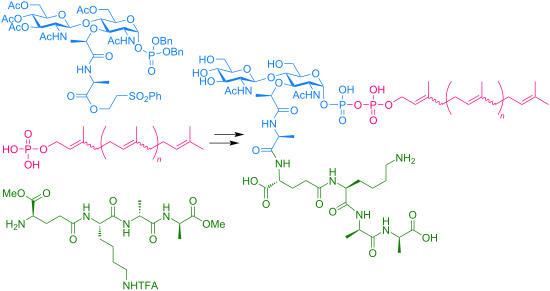
- combinations of protecting groups on glycosyl acceptors and donors, as represented by compounds 1a and 2a in Figure 2, are proficient in the efficient generation of lipid II disaccharide [35][36]. Subsequently, significant endeavors have been directed towards the exploration of glycosyl donors, such as N
- . Finally, the benzyl-protecting groups in compound 7 were cleaved via hydrogenolysis, followed by co-evaporation of the resulting crude product in pyridine. This yielded a monopyridyl salt, setting the stage for the final lipid coupling and deprotection sequence. To establish the vital lipid diphosphate

Graphical Abstract

Figure 1: Structure of lipid II, with variable positions shown in red and antimicrobial-binding motifs highli...

Figure 2: List of i) glycosyl donors and ii) glycosyl acceptors used in this study.

Scheme 1: Synthesis of disaccharide pentapeptide core 7.

Scheme 2: Synthesis of lipid II (11) and its analogues 8–10.
Comparison of glycosyl donors: a supramer approach
- Anna V. Orlova,
- Nelly N. Malysheva,
- Maria V. Panova,
- Nikita M. Podvalnyy,
- Michael G. Medvedev and
- Leonid O. Kononov
Beilstein J. Org. Chem. 2024, 20, 181–192, doi:10.3762/bjoc.20.18
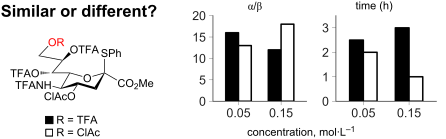
- and straightforward as it is usually considered. Keywords: concentration; glycosylation; protecting groups; reactivity; sialic acids; stereoselectivity; Introduction Glycoconjugates containing sialic acid occur on the surface of all cell types in a variety of organisms. They participate in a broad

Graphical Abstract

Scheme 1: Model sialylation reaction. TFA = CF3CO; ClAc = ClCH2CO.

Scheme 2: Synthesis of sialyl donor 2.
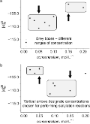
Figure 1: Concentration dependence of the specific optical rotation ([α]D28 / deg·dm−1·cm3·g−1) of solutions ...

Figure 2: Comparison of the outcome of the sialylation of glycosyl acceptor 3 with sialyl donors 1 or 2 perfo...
Synthesis of the 3’-O-sulfated TF antigen with a TEG-N3 linker for glycodendrimersomes preparation to study lectin binding
- Mark Reihill,
- Hanyue Ma,
- Dennis Bengtsson and
- Stefan Oscarson
Beilstein J. Org. Chem. 2024, 20, 173–180, doi:10.3762/bjoc.20.17
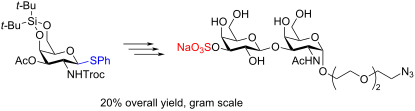
- been developed for further interaction studies with lectins (galectins and siglecs). The synthesis of the 3’-Su-TF antigen 2 comprises eight steps from the known N-galactosamine donor 3, where two of the steps, removal of the Troc- and DTBS protecting groups are performed in the same pot and the

Graphical Abstract

Figure 1: Structure of target compounds 1 and 2.

Scheme 1: Synthesis of target compounds 1 and 2. Key: a) NIS, AgOTf (20 mol %), 4 Å molecular sieves, CH2Cl2,...

Figure 2: Comparison of the 1H,13C HSQC spectra of 1 (top) and 3’-O-sulfated 2 (bottom), with circles highlig...
Long oligodeoxynucleotides: chemical synthesis, isolation via catching-by-polymerization, verification via sequencing, and gene expression demonstration
- Yipeng Yin,
- Reed Arneson,
- Alexander Apostle,
- Adikari M. D. N. Eriyagama,
- Komal Chillar,
- Emma Burke,
- Martina Jahfetson,
- Yinan Yuan and
- Shiyue Fang
Beilstein J. Org. Chem. 2023, 19, 1957–1965, doi:10.3762/bjoc.19.146

- long ODN synthesis and purification, correct sequence selection, gene construction to protein synthesis has been established. Because the present long ODN synthesis method does not need PCR assembly or ligation of short ODNs and secondary structures of ODNs are prevented by protecting groups during de

Graphical Abstract

Figure 1: Workflow for the construction, verification, and expression of the 800 bp GFP gene from chemically ...

Scheme 1: Structure of phosphoramidites 1a,b and 2, and the catching-by-polymerization (CBP) process.

Figure 2: Gel electrophoresis images of 399 bp (A), 401 bp (B), and 800 bp (C) dsODNs derived from synthetic ...

Figure 3: Gel electrophoresis images of ≈399 and ≈401 bp dsODNs originated from synthetic 399 and 401 nt ssOD...

Figure 4: Images of E. coli containing the GFP gene. (A) The GFP gene was derived from the 399 and 401 nt che...
Construction of diazepine-containing spiroindolines via annulation reaction of α-halogenated N-acylhydrazones and isatin-derived MBH carbonates
- Xing Liu,
- Wenjing Shi,
- Jing Sun and
- Chao-Guo Yan
Beilstein J. Org. Chem. 2023, 19, 1923–1932, doi:10.3762/bjoc.19.143
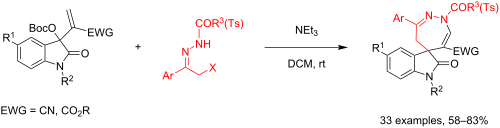
- [indoline-3,5'-[1,2]diazepines] 3a–m were obtained in reasonable to good yields. Both, α-chloro- and α-bromo-N-acylhydrazones could be successfully used in the reaction and gave similar results. Also, hydrazones with different benzoyl-protecting groups were well tolerated in the reaction. In general, α

Graphical Abstract

Scheme 1: Representative [4 + 3] cycloaddition reactions of MBH carbonates derived from isatins.
Scheme 2: Synthesis of spiro[indoline-3,5'-[1,2]diazepines] 3a–m. Conditions: α-halogenated acylhydrazone (0....

Scheme 3: Synthesis of spiro[indoline-3,5'-[1,2]diazepines] 5a–g. Conditions: α-halogenated acylhydrazone (0....

Scheme 4: Synthesis of dihydrospiro[indoline-3,5'-[1,2]diazepines] 7a–n. Conditions: α-halogenated N-tosylhyd...

Figure 1: Single crystal structure of the spiro compound 7a.

Scheme 5: Proposed reaction mechanism.

Scheme 6: Gram-scale synthesis of compound 7c.
Biphenylene-containing polycyclic conjugated compounds
- Cagatay Dengiz
Beilstein J. Org. Chem. 2023, 19, 1895–1911, doi:10.3762/bjoc.19.141
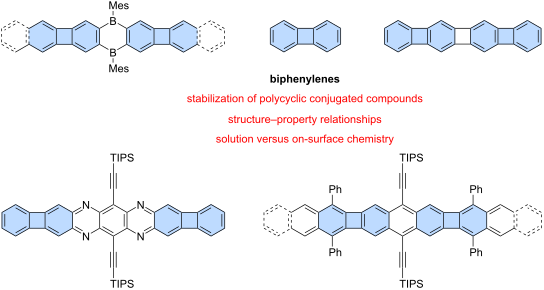
- through Sonogashira cross-coupling reactions with alkynes featuring different protecting groups such as TIPS, TES, and TIBS. Scheme 7 illustrates the derivatization process using one of the chosen examples, specifically the TIPS group. Accordingly, the cross-coupling products 33a–c were obtained in yields
- affected by the molecular packing, they have modified compound 34a using different protecting groups. In this context, triethylsilyl (TES), triisopropylsilyl (TIPS), and triisobutylsilyl (TIBS) groups were incorporated into the structure considering the increased dimensions. Thus, derivatives 34a-TES and

Graphical Abstract
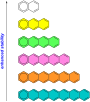
Figure 1: The correlation between stability and Clar's rule in acenes.

Scheme 1: General synthetic strategies to access the biphenylene core 1.

Figure 2: [N]Phenylenes 7–12 with different topologies.

Scheme 2: Synthesis of POAs 15a and 15b via reactions of BBD 13 and bis(cyanomethyl) compounds 14a and 14b.

Scheme 3: Synthesis of benzo[b]biphenylene (18).

Scheme 4: Synthesis of benzobiphenylene 18 and POA 21.

Scheme 5: Synthesis of symmetric POAs 25a and 25b.

Scheme 6: Synthesis of POA 29 via palladium-catalyzed annulation/aromatization reaction.

Scheme 7: Synthesis of bisphenylene-containing structures 34a–c.

Scheme 8: Synthesis of curved PAH 38 via Pd-catalyzed annulation and Ir-catalyzed cycloaddition reactions.

Scheme 9: Synthesis of [3]naphthylenes.

Scheme 10: Sequential Pd-catalyzed annulation reactions.

Scheme 11: Synthesis of biphenylene-containing unsymmetrical azaacenes 54a–c.

Scheme 12: Synthesis of biphenylene containing symmetrical azaacenes 58a,b.

Scheme 13: Synthesis of azaacene analogues 62–64.

Scheme 14: Synthesis of POA-type structure 69.

Scheme 15: Synthesis of boron-doped POA 73.

Scheme 16: Synthesis of “v”- and “z”-shaped B-POAs 77 and 78.

Scheme 17: Synthesis of boron-doped extended POA 84.

Scheme 18: Ag(111) surface-catalyzed synthesis of POA 87.

Scheme 19: Au(100) and Au(111) surface-catalyzed synthesis of POA 91.

Scheme 20: Au(111) on-surface synthesis of POA 87.
N-Sulfenylsuccinimide/phthalimide: an alternative sulfenylating reagent in organic transformations
- Fatemeh Doraghi,
- Seyedeh Pegah Aledavoud,
- Mehdi Ghanbarlou,
- Bagher Larijani and
- Mohammad Mahdavi
Beilstein J. Org. Chem. 2023, 19, 1471–1502, doi:10.3762/bjoc.19.106
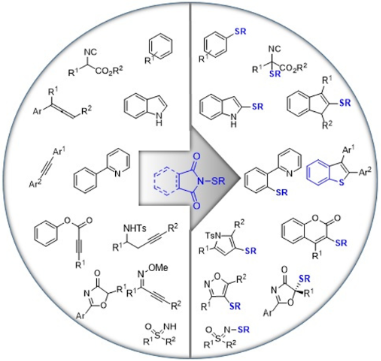
- sulfur reagents resulted in thiolated products 92 up to 99% ee, in the presence of quinidine as the organocatalyst (Scheme 38) [72]. For the study of enantioselectivity of products, different N-substituted oxindoles with H, Me, phenyl, and benzyl groups were investigated. As the size of N-protecting
- groups increased, the percentage of enantioselectivity decreased, where in the case of NH-oxindoles, the product was achieved with only 6% ee. Another sulfenylation at the 3-position of unprotected oxindoles with N-(phenylthio)phthalimide was reported by Feng et al. [73]. A chiral N,N′-dioxide-Sc(OTf)3

Graphical Abstract

Scheme 1: Sulfur-containing bioactive molecules.

Scheme 2: Scandium-catalyzed synthesis of thiosulfonates.

Scheme 3: Palladium-catalyzed aryl(alkyl)thiolation of unactivated arenes.

Scheme 4: Catalytic cycle for Pd-catalyzed aryl(alkyl)thiolation of unactivated arenes.

Scheme 5: Iron- or boron-catalyzed C–H arylthiation of substituted phenols.

Scheme 6: Iron-catalyzed azidoalkylthiation of alkenes.

Scheme 7: Plausible mechanism for iron-catalyzed azidoalkylthiation of alkenes.

Scheme 8: BF3·Et2O‑mediated electrophilic cyclization of aryl alkynoates.

Scheme 9: Tentative mechanism for BF3·Et2O‑mediated electrophilic cyclization of aryl alkynoates.

Scheme 10: Construction of 6-substituted benzo[b]thiophenes.

Scheme 11: Plausible mechanism for construction of 6-substituted benzo[b]thiophenes.

Scheme 12: AlCl3‑catalyzed cyclization of N‑arylpropynamides with N‑sulfanylsuccinimides.

Scheme 13: Synthetic utility of AlCl3‑catalyzed cyclization of N‑arylpropynamides with N‑sulfanylsuccinimides.

Scheme 14: Sulfenoamination of alkenes with sulfonamides and N-sulfanylsuccinimides.

Scheme 15: Lewis acid/Brønsted acid controlled Pd-catalyzed functionalization of aryl C(sp2)–H bonds.

Scheme 16: Possible mechanism for Lewis acid/Brønsted acid controlled Pd-catalyzed functionalization of aryl C...

Scheme 17: FeCl3-catalyzed carbosulfenylation of unactivated alkenes.

Scheme 18: Copper-catalyzed electrophilic thiolation of organozinc halides.

Scheme 19: h-BN@Copper(II) nanomaterial catalyzed cross-coupling reaction of sulfoximines and N‑(arylthio)succ...

Scheme 20: AlCl3‑mediated cyclization and sulfenylation of 2‑alkyn-1-one O‑methyloximes.

Scheme 21: Lewis acid-promoted 2-substituted cyclopropane 1,1-dicarboxylates with sulfonamides and N-(arylthio...

Scheme 22: Lewis acid-mediated cyclization of β,γ-unsaturated oximes and hydrazones with N-(arylthio/seleno)su...

Scheme 23: Credible pathway for Lewis acid-mediated cyclization of β,γ-unsaturated oximes with N-(arylthio)suc...

Scheme 24: Synthesis of 4-chalcogenyl pyrazoles via chalcogenation/cyclization of α,β-alkynic hydrazones.

Scheme 25: Controllable synthesis of 3-thiolated pyrroles and pyrrolines.

Scheme 26: Possible mechanism for controllable synthesis of 3-thiolated pyrroles and pyrrolines.

Scheme 27: Co-catalyzed C2-sulfenylation and C2,C3-disulfenylation of indole derivatives.

Scheme 28: Plausible catalytic cycle for Co-catalyzed C2-sulfenylation and C2,C3-disulfenylation of indoles.

Scheme 29: C–H thioarylation of electron-rich arenes by iron(III) triflimide catalysis.

Scheme 30: Difunctionalization of alkynyl bromides with thiosulfonates and N-arylthio succinimides.·

Scheme 31: Suggested mechanism for difunctionalization of alkynyl bromides with thiosulfonates and N-arylthio ...

Scheme 32: Synthesis of thioesters, acyl disulfides, ketones, and amides by N-thiohydroxy succinimide esters.

Scheme 33: Proposed mechanism for metal-catalyzed selective acylation and acylthiolation.

Scheme 34: AlCl3-catalyzed synthesis of 3,4-bisthiolated pyrroles.

Scheme 35: α-Sulfenylation of aldehydes and ketones.

Scheme 36: Acid-catalyzed sulfetherification of unsaturated alcohols.

Scheme 37: Enantioselective sulfenylation of β-keto phosphonates.

Scheme 38: Organocatalyzed sulfenylation of 3‑substituted oxindoles.

Scheme 39: Sulfenylation and chlorination of β-ketoesters.

Scheme 40: Intramolecular sulfenoamination of olefins.

Scheme 41: Plausible mechanism for intramolecular sulfenoamination of olefins.

Scheme 42: α-Sulfenylation of 5H-oxazol-4-ones.

Scheme 43: Metal-free C–H sulfenylation of electron-rich arenes.

Scheme 44: TFA-promoted C–H sulfenylation indoles.
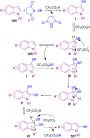
Scheme 45: Proposed mechanism for TFA-promoted C–H sulfenylation indoles.

Scheme 46: Organocatalyzed sulfenylation and selenenylation of 3-pyrrolyloxindoles.

Scheme 47: Organocatalyzed sulfenylation of S-based nucleophiles.

Scheme 48: Conjugate Lewis base Brønsted acid-catalyzed sulfenylation of N-heterocycles.

Scheme 49: Mechanism for activation of N-sulfanylsuccinimide by conjugate Lewis base Brønsted acid catalyst.

Scheme 50: Sulfenylation of deconjugated butyrolactams.

Scheme 51: Intramolecular sulfenofunctionalization of alkenes with phenols.

Scheme 52: Organocatalytic 1,3-difunctionalizations of Morita–Baylis–Hillman carbonates.

Scheme 53: Organocatalytic sulfenylation of β‑naphthols.

Scheme 54: Acid-promoted oxychalcogenation of o‑vinylanilides with N‑(arylthio/arylseleno)succinimides.

Scheme 55: Lewis base/Brønsted acid dual-catalytic C–H sulfenylation of aryls.

Scheme 56: Lewis base-catalyzed sulfenoamidation of alkenes.

Scheme 57: Cyclization of allylic amide using a Brønsted acid and tetrabutylammonium chloride.

Scheme 58: Catalytic electrophilic thiocarbocyclization of allenes with N-thiosuccinimides.

Scheme 59: Suggested mechanism for electrophilic thiocarbocyclization of allenes with N-thiosuccinimides.

Scheme 60: Chiral chalcogenide-catalyzed enantioselective hydrothiolation of alkenes.

Scheme 61: Proposed mechanism for chalcogenide-catalyzed enantioselective hydrothiolation of alkenes.

Scheme 62: Organocatalytic sulfenylation for synthesis a diheteroatom-bearing tetrasubstituted carbon centre.

Scheme 63: Thiolative cyclization of yne-ynamides.

Scheme 64: Synthesis of alkynyl and acyl disulfides from reaction of thiols with N-alkynylthio phthalimides.

Scheme 65: Oxysulfenylation of alkenes with 1-(arylthio)pyrrolidine-2,5-diones and alcohols.

Scheme 66: Arylthiolation of arylamines with (arylthio)-pyrrolidine-2,5-diones.

Scheme 67: Catalyst-free isothiocyanatoalkylthiation of styrenes.

Scheme 68: Sulfenylation of (E)-β-chlorovinyl ketones toward 3,4-dimercaptofurans.

Scheme 69: HCl-promoted intermolecular 1, 2-thiofunctionalization of aromatic alkenes.

Scheme 70: Possible mechanism for HCl-promoted 1,2-thiofunctionalization of aromatic alkenes.

Scheme 71: Coupling reaction of diazo compounds with N-sulfenylsuccinimides.

Scheme 72: Multicomponent reactions of disulfides with isocyanides and other nucleophiles.

Scheme 73: α-Sulfenylation and β-sulfenylation of α,β-unsaturated carbonyl compounds.
Synthesis of ether lipids: natural compounds and analogues
- Marco Antônio G. B. Gomes,
- Alicia Bauduin,
- Chloé Le Roux,
- Romain Fouinneteau,
- Wilfried Berthe,
- Mathieu Berchel,
- Hélène Couthon and
- Paul-Alain Jaffrès
Beilstein J. Org. Chem. 2023, 19, 1299–1369, doi:10.3762/bjoc.19.96
- mesylation produced 17.3. Then, the nucleophilic substitution (SN2) reaction of benzoate with 17.3 produced the benzoate ester 17.4 with an inversion of configuration. Then, the two protecting groups (ester and trityl) were removed to produce (S)-17.6. The modification of the sn-2 position is illustrated in
- ) myo-inositol (20.6). The oxidation of the phosphite intermediate with m-CPBA followed by the catalytic hydrogenolysis of the benzyl protecting groups produced PIP3-PAF (20.7). 2 Edelfosine and diether analogues PAF and PAF-analogues that feature an acyl or more generally an ester group in sn-2

Graphical Abstract

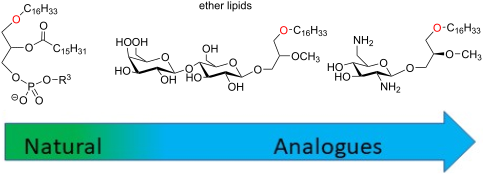
Figure 1: Chemical structure of some natural ether lipids (ELs).

Figure 2: Synthesis of lyso-PAF and PAF from 1-O-alkylglycerol [64].

Figure 3: Synthesis of lyso-PAF from 1,3-benzylideneglycerol 3.1 [69].
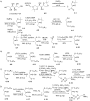
Figure 4: A) Synthesis of the two enantiomers of octadecylglycerol (4.6 and 4.10) from ᴅ-mannitol (4.1); B) s...

Figure 5: Four-step synthesis of PAF 5.6 from (S)-glycidol [73].

Figure 6: Synthesis of 1-O-alkylglycerol A) from solketal, B) from ᴅ- or ʟ-tartaric acid and the intermediate ...

Figure 7: Synthesis of EL building blocks starting from substituted glycidol 7.1a–c [82].

Figure 8: Synthesis of PAF 8.5 by using phosphoramidite 8.2 [86].

Figure 9: Synthesis of oleyl-PAF 9.7 from ʟ-serine [88].

Figure 10: Synthesis of racemic analogues of lyso-PAF 10.8 and PAF 10.9 featuring a phenyl group between the g...

Figure 11: Synthesis of racemic deoxy-lyso-PAF 11.7 and deoxy-PAF 11.8 [91].

Figure 12: Synthesis of racemic thio-PAF 12.8 [93].

Figure 13: Racemic synthesis of 13.6 to illustrate the modification of the glycerol backbone by adding a methy...

Figure 14: Racemic synthesis of 14.5 as an illustration of the introduction of methyl substituents on the glyc...

Figure 15: Synthesis of functionalized sn-2-acyl chains of PC-EL; A) Steglich esterification or acylation reac...

Figure 16: Synthesis of racemic mc-PAF (16.3), a carbamate analogue of PAF [102].

Figure 17: A) Synthesis of (R)-17.2 and (S)-17.6 starting from (S)-solketal (17.1); B) synthesis of N3-PAF (17...

Figure 18: Modification of the phosphocholine polar head to produce PAF analogues [81].

Figure 19: Racemic PAF analogues 19.3 and 19.5 characterized by the absence of the phosphate group [107].

Figure 20: Synthesis of PIP3-PAF (20.7) [108].

Figure 21: Large-scale synthesis of C18-edelfosine (21.8) [116].

Figure 22: Synthesis of C16-edelfosine (22.10) starting from isopropylidene-ʟ-glyceric acid methyl ester (22.1...

Figure 23: Phosphocholine moiety installation by the use of chlorophosphite 23.2 as key reagent [119].

Figure 24: Synthesis of rac-1-alkyl-2-O-methylglycerol (AMG) [120].

Figure 25: Synthesis of stereocontrolled 1-alkyl-2-O-methyl glycerol 25.9 (AMG) from dimethyl ᴅ-tartrate [81].

Figure 26: A) Racemic synthesis of thioether 26.4 [129,130], B) structure of sulfone analogue 26.5 [129].

Figure 27: Stereocontrolled synthesis of C18-edelfosine thioether analogue 27.8 [118].

Figure 28: Synthesis of thioether 28.4 that include a thiophosphate function [134].

Figure 29: Synthesis of ammonium thioether 29.4 and 29.6 [135].

Figure 30: Synthesis of the N-methylamino analogue of edelfosine 30.6 (BN52211) [138].

Figure 31: Synthesis of 1-desoxy analogues of edelfosine; A) with a saturated alkyl chain; B) synthesis of the...

Figure 32: Stereocontrolled synthesis of edelfosine analogue (S)-32.8 featuring a C18:1 lipid chain [142].

Figure 33: Synthesis of edelfosine analogues with modulation of the lipid chain; A) illustration with the synt...

Figure 34: Synthesis of phospholipid featuring a carbamate function to link the lipid chain to the glycerol un...

Figure 35: Synthesis of sesquiterpene conjugates of phospho glycero ether lipids [148].

Figure 36: Racemic synthesis of methyl-substituted glycerol analogues 36.7 and 36.10: A) synthesis of diether ...

Figure 37: Racemic synthesis of ilmofosine (37.6) [155,156].

Figure 38: A) Stereoselective synthesis of 38.5 via a stereoselective hydroboration reaction; B) synthesis of ...

Figure 39: Racemic synthesis of SRI62-834 (39.6) featuring a spiro-tetrahydrofurane heterocycle in position 2 ...

Figure 40: Racemic synthesis of edelfosine analogue 40.5 featuring an imidazole moiety in sn-2 position [160].

Figure 41: Racemic synthesis of fluorine-functionalized EL: A) Synthesis of 41.6 and B) synthesis of 41.8 [161-163].

Figure 42: A) Synthesis of the β-keto-ester 42.6 that also features a decyl linker between the phosphate and t...

Figure 43: Synthesis of phosphonate-based ether lipids; A) edelfosine phosphonate analogue 43.7 and B) thioeth...

Figure 44: Enantioselective synthesis of phosphonates 44.3 and 44.4 [171].

Figure 45: Racemic synthesis of phosphinate-based ether lipid 45.10 [172].

Figure 46: Racemic synthesis of edelfosine arsonium analogue 46.5 [173].

Figure 47: Synthesis of edelfosine dimethylammonium analogue 47.2 [118].

Figure 48: Synthesis of rac-C18-edelfosine methylammonium analogue 48.4 [176].

Figure 49: A) Synthesis of edelfosine N-methylpyrrolidinium analogue 49.2 or N-methylmorpholinium analogue 49.3...

Figure 50: A) Synthesis of edelfosine’s analogue 50.4 with a PE polar group; B) illustration of a pyridinium d...

Figure 51: A) Synthesis of 51.4 featuring a thiazolium cationic moiety; B) synthesis of thiazolium-based EL 51...

Figure 52: Synthesis of cationic ether lipids 52.3, 52.4 and 52.6 [135,183].

Figure 53: Synthesis of cationic carbamate ether lipid 53.5 [184].

Figure 54: Synthesis of cationic sulfonamide 54.5 [185].

Figure 55: Chemical structure of ONO-6240 (55.1) and SRI-63-119 (55.2).

Figure 56: Synthesis of non-ionic ether lipids 56.2–56.9 [188].

Figure 57: Synthesis of ether lipid conjugated to foscarnet 57.6 [189].

Figure 58: A) Synthesis of ether lipid conjugated to arabinofuranosylcytosine; B) synthesis of AZT conjugated ...

Figure 59: Synthesis of quercetin conjugate to edelfosine [191].

Figure 60: Synthesis of 60.8 (Glc-PAF) [194].

Figure 61: A) Synthesis of amino ether lipid 61.7 functionalized with a rhamnose unit and its amide analogue 6...

Figure 62: A) Synthesis of glucose ether lipid 62.4; B) structure of ether lipid 62.5 possessing a maltose uni...

Figure 63: A) Synthesis of glucuronic methyl ester 63.8; B) structure of cellobiose 63.9 and maltose 63.10 ana...

Figure 64: A) Synthesis of maltosyl glycerolipid 64.7; B) structure of lactose analogue 64.8 prepared followin...

Figure 65: A) Asymmetric synthesis of the aglycone moiety starting from allyl 4-methoxyphenyl ether; B) glycos...

Figure 66: A) Synthesis of ohmline possessing a lactose moiety. B) Structure of other glyco glycero lipids pre...

Figure 67: A) Synthesis of lactose-glycerol ether lipid 67.5; B) analogues possessing a maltose (67.6) or meli...

Figure 68: Synthesis of digalactosyl EL 68.6, A) by using trityl, benzyl and acetyl protecting groups, B) by u...

Figure 69: A) Synthesis of α-ohmline; B) structure of disaccharide ether lipids prepared by using similar meth...

Figure 70: Synthesis of lactose ether lipid 70.3 and its analogue 70.6 featuring a carbamate function as linke...

Figure 71: Synthesis of rhamnopyranoside diether 71.4 [196].

Figure 72: Synthesis of 1-O-hexadecyl-2-O-methyl-3-S-(α-ᴅ-1'-thioglucopyranosyl)-sn-glycerol (72.5) [225].

Figure 73: A) Preparation of lipid intermediate 73.4; B) synthesis of 2-desoxy-C-glycoside 73.10 [226].

Figure 74: Synthesis of galactose-pyridinium salt 74.3 [228].

Figure 75: Synthesis of myo-inositol derivative Ino-C2-PAF (75.10) [230].

Figure 76: A) Synthesis of myo-inositol phosphate building block 76.7; B) synthesis of myo-inositolphosphate d...

Figure 77: A) Synthesis of phosphatidyl-3-desoxy-inositol 77.4; B) synthesis of phosphono-3-desoxyinositol 77.9...

Figure 78: A) Structure of diether phosphatidyl-myo-inositol-3,4-diphosphate 78.1; B) synthesis of phosphatidy...

Figure 79: A) Synthesis of diether-phosphatidyl derivative 79.4 featuring a hydroxymethyl group in place of a ...

Figure 80: Synthesis of Glc-amine-PAF [78].

Figure 81: Synthesis of glucosamine ether lipid 81.4 and its analogues functionalized in position 3 of the ami...

Figure 82: Synthesis of fully deprotected aminoglucoside ether lipid 82.5 [246].

Figure 83: Synthesis of C-aminoglycoside 83.12 using Ramberg–Bäcklund rearrangement as a key step [250].

Figure 84: A) List of the most important glyco lipids and amino glyco lipids included in the study of Arthur a...

Figure 85: Synthesis of mannosamine ether lipid 85.6 [254].
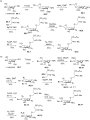
Figure 86: A) Synthesis of glucosamine ether lipids with a non-natural ʟ-glucosamine moiety; B) synthesis of e...

Figure 87: A) Structure of the most efficient anticancer agents 87.1–87.4 featuring a diamino glyco ether lipi...

Figure 88: A) Synthesis of diamino glyco ether lipid 87.4; B) synthesis of bis-glycosylated ether lipid 88.10 [256]....

Figure 89: Synthesis of triamino ether lipid 89.4 [260].

Figure 90: Synthesis of chlorambucil conjugate 90.7 [261].

Figure 91: Three main methods for the preparation of glycerol ether lipid 91.3; A) from solketal and via a tri...

Figure 92: Four different methods for the installation of the phosphocholine polar head group; A) method using...

Figure 93: Illustration of two methods for the installation of saccharides or aminosaccharides; A) O-glycosyla...
Aromatic C–H bond functionalization through organocatalyzed asymmetric intermolecular aza-Friedel–Crafts reaction: a recent update
- Anup Biswas
Beilstein J. Org. Chem. 2023, 19, 956–981, doi:10.3762/bjoc.19.72

- -workers demonstrated an enantioselective aza-Friedel–Crafts reaction between indoles 4 and isatin-derived ketimines 49. A chiral phase transfer catalyst O3 derived from urea assisted this organic transformation featuring a C3–H bond functionalization of indoles. Different protecting groups for the imine
- nitrogen and ring nitrogen of 49 were screened under optimal reaction conditions where Cbz and benzyl were the best protecting groups in terms of enantioselectivities. A product library was prepared by varying sterically and electronic divergent functionalities in the carbocyclic rings of both reactants

Graphical Abstract

Scheme 1: First organocatalyzed asymmetric aza-Friedel–Crafts reaction.

Scheme 2: Aza-Friedel–Crafts reaction between indoles and cyclic ketimines.

Scheme 3: Aza-Friedel–Crafts reaction utilizing trifluoromethyldihydrobenzoazepinoindoles as electrophiles.

Scheme 4: Aza-Friedel–Crafts reaction utilizing cyclic N-sulfimines as electrophiles.

Scheme 5: Aza-Friedel–Crafts reaction involving N-unprotected imino ester as electrophile.

Scheme 6: Aza-Friedel–Crafts and lactonization cascade.

Scheme 7: One-pot oxidation and aza-Friedel–Crafts reaction.

Scheme 8: C1 and C2-symmetric phosphoric acids as catalysts.

Scheme 9: Aza-Friedel–Crafts reaction using Nps-iminophosphonates as electrophiles.

Scheme 10: Aza-Friedel–Crafts reaction between indole and α-iminophosphonate.

Scheme 11: [2.2]-Paracyclophane-derived chiral phosphoric acids as catalyst.

Scheme 12: Aza-Friedel–Crafts reaction through ring opening of sulfamidates.

Scheme 13: Isoquinoline-1,3(2H,4H)-dione scaffolds as electrophiles.

Scheme 14: Functionalization of the carbocyclic ring of substituted indoles.

Scheme 15: Aza-Friedel–Crafts reaction between unprotected imines and aza-heterocycles.

Scheme 16: Anilines and α-naphthols as potential nucleophiles.

Scheme 17: Solvent-controlled regioselective aza-Friedel–Crafts reaction.
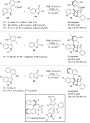
Scheme 18: Generating central and axial chirality via aza-Friedel–Crafts reaction.

Scheme 19: Reaction between indoles and racemic 2,3-dihydroisoxazol-3-ol derivatives.

Scheme 20: Exploiting 5-aminoisoxazoles as nucleophiles.

Scheme 21: Reaction between unsubstituted indoles and 3-alkynylated 3-hydroxy-1-oxoisoindolines.

Scheme 22: Synthesis of unnatural amino acids bearing an aza-quaternary stereocenter.

Scheme 23: Atroposelective aza-Friedel–Crafts reaction.

Scheme 24: Coupling of 5-aminopyrazole and 3H-indol-3-ones.

Scheme 25: Pyrophosphoric acid-catalyzed aza-Friedel–Crafts reaction on phenols.

Scheme 26: Squaramide-assisted aza-Friedel–Crafts reaction.

Scheme 27: Thiourea-catalyzed aza-Friedel–Crafts reaction.

Scheme 28: Squaramide-catalyzed reaction between β-naphthols and benzothiazolimines.

Scheme 29: Thiourea-catalyzed reaction between β-naphthol and isatin-derived ketamine.

Scheme 30: Quinine-derived molecule as catalyst.

Scheme 31: Cinchona alkaloid as catalyst.

Scheme 32: aza-Friedel–Crafts reaction by phase transfer catalyst.

Scheme 33: Disulfonamide-catalyzed reaction.

Scheme 34: Heterogenous thiourea-catalyzed aza-Friedel–Crafts reaction.

Scheme 35: Total synthesis of (+)-gracilamine.

Scheme 36: Total synthesis of (−)-fumimycin.
Photoredox catalysis enabling decarboxylative radical cyclization of γ,γ-dimethylallyltryptophan (DMAT) derivatives: formal synthesis of 6,7-secoagroclavine
- Alessio Regni,
- Francesca Bartoccini and
- Giovanni Piersanti
Beilstein J. Org. Chem. 2023, 19, 918–927, doi:10.3762/bjoc.19.70
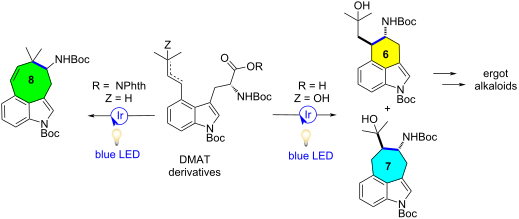
- Information File 1, Figure S1) due to the protecting groups complicates the analysis of the reaction products. However, the olefinic signals were a pair of two doublets representing two vicinal vinylic protons [6.48 (d, J = 8.0 Hz, 1H), 6.29 (d, J = 8.0 Hz, 1H), 5.31 (d, J = 8.0 Hz, 1H), and 5.28 (d, J = 8.0

Graphical Abstract

Figure 1: (a) Transformations of DMAT to different classes of ergot alkaloids. (b) and (c) Strategies for the...

Scheme 1: Synthesis of compound 5.

Scheme 2: Photoredox-catalyzed radical decarboxylative cyclization of 5.

Figure 2: Proposed reaction mechanism for photoredox-catalyzed radical decarboxylative cyclization.

Scheme 3: Synthesis of tryptophan derivatives 8 and 10.

Figure 3: Proposed reaction mechanism for photoredox-catalyzed radical decarboxylative cyclization.

Scheme 4: Methylation of 11 and the formal total synthesis of (±)-6,7-secoagroclavine.
Enolates ambushed – asymmetric tandem conjugate addition and subsequent enolate trapping with conventional and less traditional electrophiles
- Péter Kisszékelyi and
- Radovan Šebesta
Beilstein J. Org. Chem. 2023, 19, 593–634, doi:10.3762/bjoc.19.44
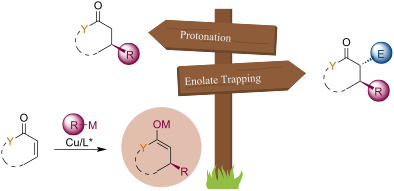
- several imines bearing various N-protecting groups [48]. We have argued that this protecting group could influence the enolate addition. Indeed, an effect of the nitrogen protecting group was observed. Interestingly, small sulfonyl-based protecting groups led to the (R,R,S)-diastereoisomer of the product

Graphical Abstract

Scheme 1: General scheme depicting tandem reactions based on an asymmetric conjugate addition followed by an ...

Scheme 2: Cu-catalyzed tandem conjugate addition of R2Zn/aldol reaction with chiral acetals.

Scheme 3: Cu-catalyzed asymmetric desymmetrization of cyclopentene-1,3-diones using a tandem conjugate additi...

Scheme 4: Stereocontrolled assembly of dialkylzincs, cyclic enones, and sulfinylimines utilizing a Cu-catalyz...

Scheme 5: Cu-catalyzed tandem conjugate addition/Mannich reaction (A). Access to chiral isoindolinones and tr...

Scheme 6: Cu-catalyzed tandem conjugate addition/nitro-Mannich reaction (A) with syn–anti or syn–syn selectiv...

Figure 1: Various chiral ligands utilized for the tandem conjugate addition/Michael reaction sequences.
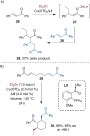
Scheme 7: Cu-catalyzed tandem conjugate addition/Michael reaction: side-product formation with chalcone (A) a...

Scheme 8: Zn enolate trapping using allyl iodides (A), Stork–Jung vinylsilane reagents (B), and allyl bromide...

Scheme 9: Cu-catalyzed tandem conjugate addition/acylation through Li R2Zn enolate (A). A four-component coup...

Scheme 10: Selected examples for the Cu-catalyzed tandem conjugate addition/trifluoromethylthiolation sequence....

Scheme 11: Zn enolates trapped by vinyloxiranes: synthesis of allylic alcohols.

Scheme 12: Stereoselective cyclopropanation of Mg enolates formed by ACA of Grignard reagents to chlorocrotona...

Scheme 13: Domino aldol reactions of Mg enolates formed from coumarin and chromone.

Scheme 14: Oxidative coupling of ACA-produced Mg enolates.

Scheme 15: Tandem ACA of Grignard reagents to enones and Mannich reaction.

Scheme 16: Diastereodivergent Mannich reaction of Mg enolates with differently N-protected imines.

Scheme 17: Tandem Grignard–ACA–Mannich using Taddol-based phosphine-phosphite ligands.

Scheme 18: Tandem reaction of Mg enolates with aminomethylating reagents.

Scheme 19: Tandem reaction composed of Grignard ACA to alkynyl enones.

Scheme 20: Rh/Cu-catalyzed tandem reaction of diazo enoates leading to cyclobutanes.

Scheme 21: Tandem Grignard-ACA of cyclopentenones and alkylation of enolates.

Scheme 22: Tandem ACA of Grignard reagents followed by enolate trapping reaction with onium compounds.

Scheme 23: Mg enolates generated from unsaturated lactones in reaction with activated alkenes.

Scheme 24: Lewis acid mediated ACA to amides and SN2 cyclization of a Br-appended enolate.

Scheme 25: Trapping reactions of aza-enolates with Michael acceptors.

Scheme 26: Si enolates generated by TMSOTf-mediated ACA of Grignard reagents and enolate trapping reaction wit...

Scheme 27: Trapping reactions of enolates generated from alkenyl heterocycles (A) and carboxylic acids (B) wit...

Scheme 28: Reactions of heterocyclic Mg enolates with onium compounds.

Scheme 29: Synthetic transformations of cycloheptatrienyl and benzodithiolyl substituents.

Scheme 30: Aminomethylation of Al enolates generated by ACA of trialkylaluminum reagents.

Scheme 31: Trapping reactions of enolates with activated alkenes.

Scheme 32: Alkynylation of racemic aluminum or magnesium enolates.

Scheme 33: Trapping reactions of Zr enolates generated by Cu-ACA of organozirconium reagents.

Scheme 34: Chloromethylation of Zr enolates using the Vilsmeier–Haack reagent.

Scheme 35: Tandem conjugate borylation with subsequent protonation or enolate trapping by an electrophile.

Scheme 36: Tandem conjugate borylation/aldol reaction of cyclohexenones.

Scheme 37: Selected examples for the tandem asymmetric borylation/intramolecular aldol reaction; synthesis of ...

Scheme 38: Cu-catalyzed tandem methylborylation of α,β-unsaturated phosphine oxide in the presence of (R,Sp)-J...

Scheme 39: Cu-catalyzed tandem transannular conjugated borylation/aldol cyclization of macrocycles containing ...

Scheme 40: Stereoselective tandem conjugate borylation/Mannich cyclization: selected examples (A) and a multi-...

Scheme 41: Some examples of Cu-catalyzed asymmetric tandem borylation/aldol cyclization (A). Application to di...

Scheme 42: Atropisomeric P,N-ligands used in tandem conjugate borylation/aldol cyclization sequence.

Scheme 43: Selected examples for the enantioselective Cu-catalyzed borylation/intramolecular Michael addition ...

Scheme 44: Selected examples for the preparation of enantioenriched spiroindanes using a Cu-catalyzed tandem c...
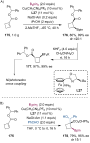
Scheme 45: Enantioselective conjugate borylation of cyclobutene-1-carboxylic acid diphenylmethyl ester 175 wit...

Scheme 46: Cu-catalyzed enantioselective tandem conjugate silylation of α,β-unsaturated ketones with subsequen...

Scheme 47: Cu-catalyzed enantioselective tandem conjugate silylation of α,β-unsaturated ketones with subsequen...
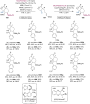
Scheme 48: Cu-catalyzed tandem conjugate silylation/aldol condensation. The diastereoselectivity is controlled...

Scheme 49: Chiral Ru-catalyzed three-component coupling reaction.

Scheme 50: Rh-Phebox complex-catalyzed reductive cyclization and subsequent reaction with Michael acceptors th...

Scheme 51: Rh-catalyzed tandem asymmetric conjugate alkynylation/aldol reaction (A) and subsequent spiro-cycli...

Scheme 52: Rh-bod complex-catalyzed tandem asymmetric conjugate arylation/intramolecular aldol addition (A). S...

Scheme 53: Co-catalyzed C–H-bond activation/asymmetric conjugate addition/aldol reaction.

Scheme 54: (Diisopinocampheyl)borane-promoted 1,4-hydroboration of α,β-unsaturated morpholine carboxamides and...

Figure 2: Some examples of total syntheses that have been recently reviewed.

Scheme 55: Stereoselective synthesis of antimalarial prodrug (+)-artemisinin utilizing a tandem conjugate addi...

Scheme 56: Amphilectane and serrulatane diterpenoids: preparation of chiral starting material via asymmetric t...

Scheme 57: Various asymmetric syntheses of pleuromutilin and related compounds based on a tandem conjugate add...
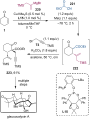
Scheme 58: Total synthesis of glaucocalyxin A utilizing a tandem conjugate addition/acylation reaction sequenc...
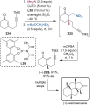
Scheme 59: Installation of the exocyclic double bond using a tandem conjugate addition/aminomethylation sequen...
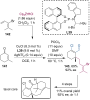
Scheme 60: Synthesis of the taxol core using a tandem conjugate addition/enolate trapping sequence with Vilsme...
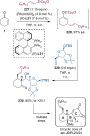
Scheme 61: Synthesis of the tricyclic core of 12-epi-JBIR-23/24 utilizing a Rh-catalyzed asymmetric conjugate ...
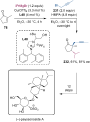
Scheme 62: Total synthesis of (−)-peyssonoside A utilizing a Cu-catalyzed enantioselective tandem conjugate ad...
Asymmetric synthesis of a stereopentade fragment toward latrunculins
- Benjamin Joyeux,
- Antoine Gamet,
- Nicolas Casaretto and
- Bastien Nay
Beilstein J. Org. Chem. 2023, 19, 428–433, doi:10.3762/bjoc.19.32
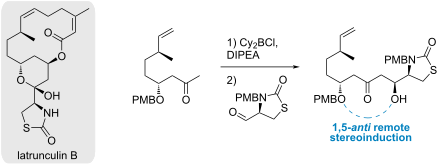
- by the PMB and other aromatic groups, while being disfavoured by silyl protecting groups. Alternatively, an (R)-configuration of C-15 could result from a polar Felkin–Anh model controlled by aldehyde 8 through chair-transition state B [14][15][16]. To determine the configuration of C-15, we initially
- –Tishchenko method [31][32], in presence of SmI2 and an aldehyde (Scheme 4). para-Nitrobenzaldehyde was used [33] to introduce a labile para-nitrobenzoate on the product, planning an easy deprotection of the alcohol. This would also pave the way to an orthogonal manipulation of protecting groups on the

Graphical Abstract

Figure 1: Structure of latrunculins (the red dots show the natural product stereopentade).

Figure 2: General strategy for latrunculin cycle disconnections (left), previous works towards linear precurs...

Scheme 1: Synthesis of fragment 15 from (+)-β-citronellene (10).
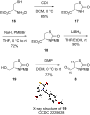
Scheme 2: Synthesis of fragment 8 from ʟ-cysteine ethyl ester hydrochloride (16).

Scheme 3: Synthesis of fragment 21 through a stereoselective aldol reaction.

Scheme 4: 1,3-Anti-diastereoselective reduction of 21 with PNBz transposition, and final determination of the...
1,4-Dithianes: attractive C2-building blocks for the synthesis of complex molecular architectures
- Bram Ryckaert,
- Ellen Demeyere,
- Frederick Degroote,
- Hilde Janssens and
- Johan M. Winne
Beilstein J. Org. Chem. 2023, 19, 115–132, doi:10.3762/bjoc.19.12
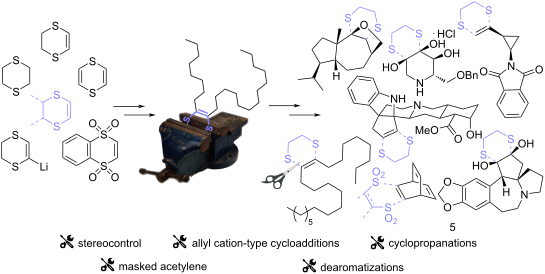
- 1,3-Dithianes are text book examples of versatile organic synthesis building blocks. They are familiar carbonyl protecting groups, but are more commonly known as ‘umpolung’ reagents, or acyl anion equivalents [1][2][3][4][5][6]. This is because they can be readily metalated and alkylated, allowing the
- (101), without the need for any protecting groups (Scheme 15b). Our group has also investigated non-cyclic analogs of 5,6-dihydro-1,4-dithiin-2-ylmethanol (90), such as the dimethylthio-substituted allyl alcohol 105 (Scheme 16) [103]. Surprisingly, we have found that these allyl alcohols totally lack

Graphical Abstract

Scheme 1: 1,3-Dithianes as useful synthetic building blocks: a) general synthetic utility (in Corey–Seebach-t...

Scheme 2: Metalation of other saturated heterocycles is often problematic due to β-elimination [16,17].

Scheme 3: Thianes as synthetic building blocks in the construction of complex molecules [18].
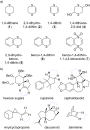
Figure 1: a) 1,4-Dithiane-type building blocks that can serve as C2-synthons and b) examples of complex targe...

Scheme 4: Synthetic availability of 1,4-dithiane-type building blocks.

Scheme 5: Dithiins and dihydrodithiins as pseudoaryl groups [36-39].
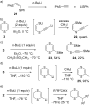
Scheme 6: Metalation of other saturated heterocycles is often problematic due to β-elimination [40-42].

Figure 2: Reactive conformations leading to β-fragmentation for lithiated 1,4-dithianes and 1,4-dithiin.

Scheme 7: Mild metalation of 1,4-dithiins affords stable heteroaryl-magnesium and heteroaryl-zinc-like reagen...
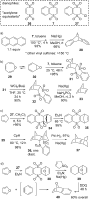
Scheme 8: Dithiin-based dienophiles and their use in synthesis [33,49-54].
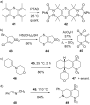
Scheme 9: Dithiin-based dienes and their use in synthesis [55-57].

Scheme 10: Stereoselective 5,6-dihydro-1,4-dithiin-based synthesis of cis-olefins [42,58].

Scheme 11: Addition to aldehydes and applications in stereoselective synthesis.

Figure 3: Applications in the total synthesis of complex target products with original attachment place of 1,...

Scheme 12: Direct C–H functionalization methods for 1,4-dithianes [82,83].

Scheme 13: Known cycloaddition reactivity modes of allyl cations [84-100].

Scheme 14: Cycloadditions of 1,4-dithiane-fused allyl cations derived from dihydrodithiin-methanol 90 [101-107].

Scheme 15: Dearomative [3 + 2] cycloadditions of unprotected indoles with 1,4-dithiane-fused allyl alcohol 90 [30]....

Scheme 16: Comparison of reactivity of dithiin-fused allyl alcohols and similar non-cyclic sulfur-substituted ...
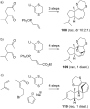
Scheme 17: Applications of dihydrodithiins in the rapid assembly of polycyclic terpenoid scaffolds [108,109].
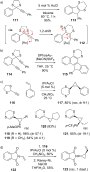
Scheme 18: Dihydrodithiin-mediated allyl cation and vinyl carbene cycloadditions via a gold(I)-catalyzed 1,2-s...

Scheme 19: Activation mode of ethynyldithiolanes towards gold-coordinated 1,4-dithiane-fused allyl cation and ...
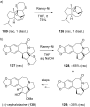
Scheme 20: Desulfurization problems.

Scheme 21: oxidative decoration strategies for 1,4-dithiane scaffolds.



