


Search results
Search for "quantum yield" in Full Text gives 208 result(s) in Beilstein Journal of Organic Chemistry. Showing first 200.
Efficient synthesis of fluorinated triphenylenes with enhanced arene–perfluoroarene interactions in columnar mesophases
Beilstein J. Org. Chem. 2024, 20, 3263–3273, doi:10.3762/bjoc.20.270
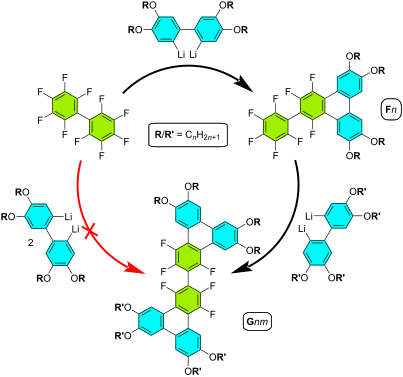
- been studied in various solutions and thin film: G66 emitted green light in solution with an absolute photoluminescent quantum yield of ca. 33%. Results and Discussion Synthesis and characterization We have recently generalized a very efficient “palladium-free” synthesis for the preparation of a




Advances in the use of metal-free tetrapyrrolic macrocycles as catalysts
Beilstein J. Org. Chem. 2024, 20, 3085–3112, doi:10.3762/bjoc.20.257
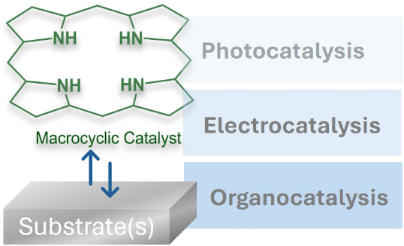
- splitting, high quantum yield for intersystem crossing, and long triplet state lifetime, act as robust electron mediators. This section highlights the use of metal-free porphyrins in organic photoredox catalysis. So far, mainly planar metal-free porphyrins have been explored as photoredox catalysts, paving


Extension of the π-system of monoaryl-substituted norbornadienes with acetylene bridges: influence on the photochemical conversion and storage of light energy
Beilstein J. Org. Chem. 2024, 20, 3061–3068, doi:10.3762/bjoc.20.254
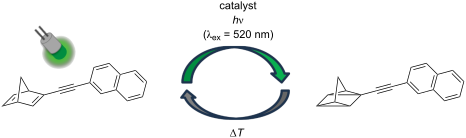
- , such as absorption in the range of the solar spectrum, a high quantum yield of the photoreaction, long half-lives of the photoproducts, and a high energy storage density [7][8][12][13][14]. In this context, several different MOST systems have been explored, including, for example, anthracenes [15
- sunlight. Furthermore, the photoisomerization quantum yield is very low and therefore not suitable for an application [7][8][14]. One promising way to overcome these disadvantages is the introduction of a donor–acceptor system at the norbornadiene double bonds, which has resulted in the development of new
- and the analogues 1c and 1e without an alkyne linker [29][30][34]. As the only exception, the m-substituted derivative 1k has a higher quantum yield than its analog 1b, which is, however, still lower than the one of the cyano-substituted norbornadiene 1c [30][34]. In addition, substitution at the 2


Tunable full-color dual-state (solution and solid) emission of push–pull molecules containing the 1-pyrindane moiety
Beilstein J. Org. Chem. 2024, 20, 3016–3025, doi:10.3762/bjoc.20.251

- unchanged. This represents a rare approach for the design of such fluorophores. Arylidene derivatives of pyrindane were found to be efficient fluorescent dyes showing a moderate to high emission quantum yield. The push–pull molecules were also characterized by a dual-state emission (in solution and in the
- , indicating that the more polar singlet excited state (S1) was much better stabilized by polar solvents than the ground state (S0). The highest fluorescence quantum yield of about 87% was observed in toluene. Then, the solvatochromic properties of stilbazole 1i, bearing a stronger electron-donating
- 1 in toluene were characterized by a high fluorescence quantum yield, reaching 87.5% for the para-methoxy-substituted derivative 1c. Emission maxima in DMSO were found to be in the range of 506–721 nm (Figure 6, right), associated with a fluorescence color from green to red (Figure 7, bottom). The


Recent advances in transition-metal-free arylation reactions involving hypervalent iodine salts
Beilstein J. Org. Chem. 2024, 20, 2891–2920, doi:10.3762/bjoc.20.243

- involving variations in light exposure and quantum yield established the need for continuous irradiation and eliminated the possibility of a radical chain mechanism for the reaction. Recently in 2023, Yadav and colleagues demonstrated that diaryliodonium salts are effective for arylating and cyclizing




Synthesis of pyrrole-fused dibenzoxazepine/dibenzothiazepine/triazolobenzodiazepine derivatives via isocyanide-based multicomponent reactions
Beilstein J. Org. Chem. 2024, 20, 2870–2882, doi:10.3762/bjoc.20.241
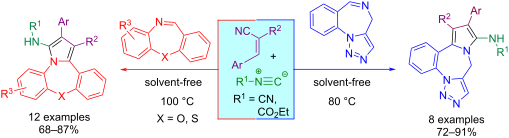
- numerous reports, quantum yield is one of the most important photophysical parameters for describing luminescent molecules and materials since high quantum efficiency is important for a wide range of applications, including displays, lasers, bio-imaging, solar cells, and accurate measurement of the quantum
- yield is therefore important [52][53][54]. Therefore, the quantum yield was determined using the standard of quinine sulfate for all the products (4a–l and 6a–h). Products 4a and 6c, which had the highest intensity of absorption and emission from derivatives of benzoxazepines and triazolobenzodiazepines
- , respectively, their quantum yield was calculated and 4a was obtained with 48.35% and 6c with 1.04% (Figure 5A and 5B) [55]. According to the results obtained from the quantum yield, we can claim that these synthesized derivatives pyrrole-fused dibenzoxazepine/dibenzothiazepine/triazolobenzodiazepine







Investigation of a bimetallic terbium(III)/copper(II) chemosensor for the detection of aqueous hydrogen sulfide
Beilstein J. Org. Chem. 2024, 20, 2818–2826, doi:10.3762/bjoc.20.237

- exhibited high luminescence (with a quantum yield of 68%) and displayed the characteristic trivalent terbium emission bands with emission peaks at 491 nm, 545 nm, 583 nm, and 621 nm, corresponding to transitions from the 5D4 excited state to the 7F6, 7F5, 7F4, and 7F3 ground states, respectively (Figure 2
- glutathione. The change in luminescence emission spectra (λex = 250 nm) of the solutions was also investigated after the subsequent addition of 1.0 molar equivalent of 1 mM Na2S(aq). Quantum yields. The quantum yield (φ) was determined using a quinine sulfate standard (φ = 0.55) for Tb·1, in water at pH 7.4


Synthesis of benzo[f]quinazoline-1,3(2H,4H)-diones
Beilstein J. Org. Chem. 2024, 20, 2708–2719, doi:10.3762/bjoc.20.228
- , the presence of N,N-dimethylamino groups leads to strongly enhanced quantum yields up to 71%. The highest quantum yield is observed for 5d (71%), followed by 5f with 51%. However, the presence of a pair of donor and acceptor groups appears to be disadvantageous in terms of quantum yield and the




5th International Symposium on Synthesis and Catalysis (ISySyCat2023)
Beilstein J. Org. Chem. 2024, 20, 2704–2707, doi:10.3762/bjoc.20.227
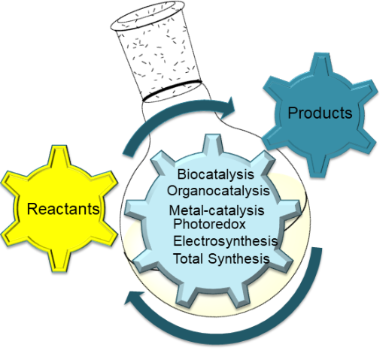
- fluorescence quantum yield, which is an important property for their potential application in the field of optoelectronics (particularly for energy and biological chemistry applications). In this thematic issue, Nieto et al. contributed a timely Review article on the chemical space of 2-phenethylamines

Photoluminescence color-tuning with polymer-dispersed fluorescent films containing two fluorinated diphenylacetylene-type fluorophores
Beilstein J. Org. Chem. 2024, 20, 2682–2690, doi:10.3762/bjoc.20.225
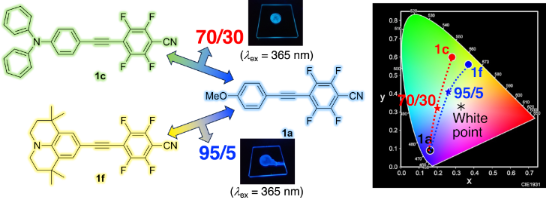
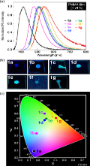
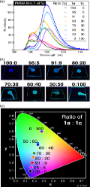
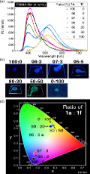
- 10 s. For photophysical measurements, thin and smooth films were prepared by spin-coating followed by solvent evaporation. Photophysical properties The PL spectra and quantum yields were measured using a Quantaurus-QY C11347-01 absolute PL quantum yield spectrometer (Hamamatsu Photonics, Japan). The


Metal-free double azide addition to strained alkynes of an octadehydrodibenzo[12]annulene derivative with electron-withdrawing substituents
Beilstein J. Org. Chem. 2024, 20, 2234–2241, doi:10.3762/bjoc.20.191
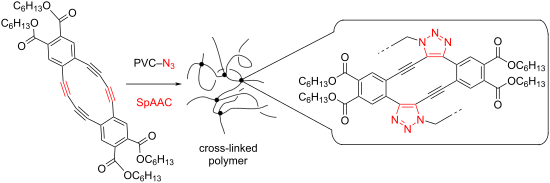
- addition. Thus, compound 6a shows an ultraviolet absorption peak at 249 nm (λmax) and no absorption in the visible region was observed. When excited at 249 nm, an emission band at 513 nm (λem) appeared in the spectrum with a fluorescence quantum yield (Φ) of 7.0%. The absorption and fluorescence spectra
- previously reported electron-donating hexyloxy substituents. The addition pattern was experimentally investigated by 2D NMR, which was also supported by DFT calculations. The bistriazole product displayed fluorescence in the visible range with a fluorescence quantum yield of 7.0%. Finally, the developed




The Groebke–Blackburn–Bienaymé reaction in its maturity: innovation and improvements since its 21st birthday (2019–2023)
Beilstein J. Org. Chem. 2024, 20, 1839–1879, doi:10.3762/bjoc.20.162







Synthesis and characterization of 1,2,3,4-naphthalene and anthracene diimides
Beilstein J. Org. Chem. 2024, 20, 1767–1772, doi:10.3762/bjoc.20.155
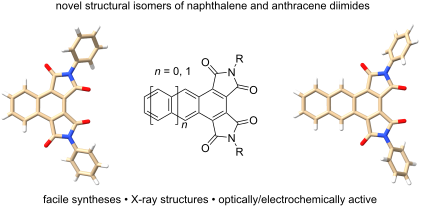
- has low fluorescence intensity (Φ = 0.006) [20], 7-Hex emits more efficiently with Φ = 0.41. Interestingly, 7-Ph has nearly no emission intensity, as evidenced by the low signal-to-noise ratio in the data and a near-zero quantum yield when excited at 400 nm. This fluorescence quenching is likely


A fiber-optic spectroscopic setup for isomerization quantum yield determination
Beilstein J. Org. Chem. 2024, 20, 1684–1692, doi:10.3762/bjoc.20.150

- setup for isomerization quantum yield determination is reported. The setup combines fiber-coupled LEDs, a commercially calibrated thermopile detector for measurement of the photon flux, and a fiber-coupled UV–vis spectrometer. By solving the rate equations numerically, isomerization quantum yields can
- is the dependence of the Φ on the irradiation wavelength [25]. Clear differences are reported between irradiation of the different absorption bands, due to the so-called anti-Kasha behavior of this molecule, i.e., the wavelength dependency of the quantum yield of reaction [22][24]. Despite its
- textbook example status, the photoisomerization of azobenzene is still under active investigation. Over the past two decades, both experimental [23][26] and theoretical work [27][28][29][30][31][32] has been performed to explain the differences in quantum yield. Not only the exact details of the


Mechanistic investigations of polyaza[7]helicene in photoredox and energy transfer catalysis
Beilstein J. Org. Chem. 2024, 20, 1236–1245, doi:10.3762/bjoc.20.106
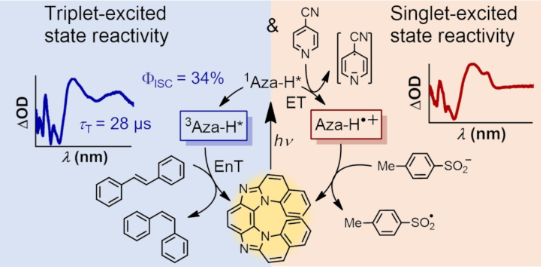
- with a quantum yield of 0.34. The pronounced triplet formation was exploited for the isomerization reaction of (E)-stilbene to the Z-isomer and the cyclization of cinnamyl chloride. Catalyst degradation mainly occurs through the long-lived Aza-H triplet (28 µs), but the photostability is greatly
- , yielding clear-cut evidence for the proposed reaction mechanism [47][48][49][50][51][52][53][54][55][56][57]. We found that quenching of the singlet-excited Aza-H by 4-cyanopyridine is the main pathway for the 3-CR, while the triplet state of our catalyst, which is formed with a quantum yield as high as
- with its relatively high formation quantum yield and an energy of 2.32 eV can be used for isomerizing photoswitches like stilbene and for the cyclization of cinnamyl chloride. Our goal was not only to clarify the reaction pathway but also to provide a clear method for distinguishing between singlet and




Novel route to enhance the thermo-optical performance of bicyclic diene photoswitches for solar thermal batteries
Beilstein J. Org. Chem. 2024, 20, 1053–1068, doi:10.3762/bjoc.20.93
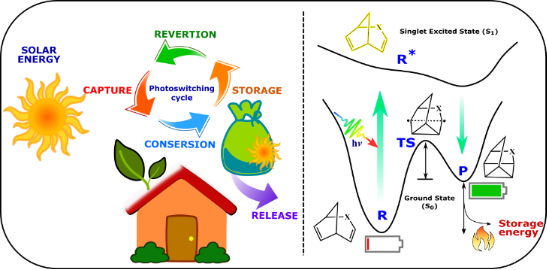
- [10]. These properties include the large storage energy, high gravimetric energy storage density, large barrier for thermal back isomerization reaction, photoabsorption in the visible range, high quantum yield of photoisomerization, and so forth [10]. Photoswitches like dihydroazulene


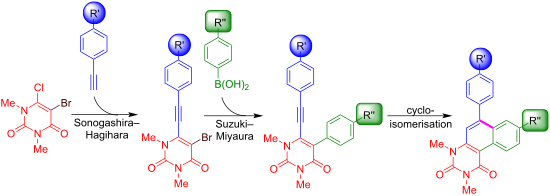
Synthesis and properties of 6-alkynyl-5-aryluracils
Beilstein J. Org. Chem. 2024, 20, 898–911, doi:10.3762/bjoc.20.80
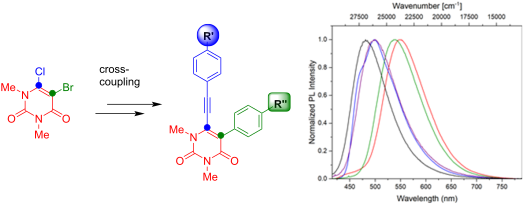
- observed, despite the presence of the π-donor group at the same position. However, a shoulder on the emission peak was observed, which may indicate the influence of the double bond. Finally, the quantum yields of all compounds were determined and compared. Compound 5f afforded the highest quantum yield
- with 23% and 5k the lowest with 2%. The second highest quantum yield was obtained with 5d closely followed by 5m. With regard to the previously discussed data, this could also be due to the influence of a π-donor group directly connected to the core system. This again shows the influence of the




Synthesis of new representatives of A3B-type carboranylporphyrins based on meso-tetra(pentafluorophenyl)porphyrin transformations
Beilstein J. Org. Chem. 2024, 20, 767–776, doi:10.3762/bjoc.20.70
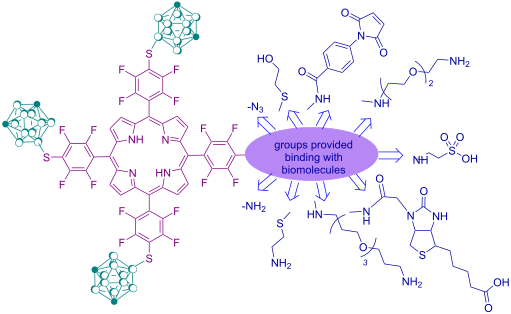
- [8]. Further improvement of the PDT method requires the search for new photosensitizers having higher photoactivity, tumor selectivity, and high singlet oxygen quantum yield, as well as low in vivo toxicity [7]. Therefore, some strategies have been developed to enhance the therapeutic efficiency of


Synthesis of photo- and ionochromic N-acylated 2-(aminomethylene)benzo[b]thiophene-3(2Н)-ones with a terminal phenanthroline group
Beilstein J. Org. Chem. 2024, 20, 552–560, doi:10.3762/bjoc.20.47
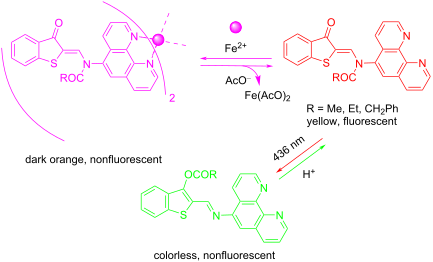
- “overall quantum yield” is used in Table 1 [29]. The formation of the short-lived E-isomer was earlier observed only in vitrified solvents at 77 K or under flash photolysis conditions [14]. As such, the parameters of the thermal acyl migration under steady-state irradiation conditions were not determined
- )methyl)-N-phenylacetamide was used as an actinometer for the quantum yield calculations (φfl = 0.60 ± 0.005) [14][33]. For preparative purposes, a Sweko IP65 led emitter (SUL-S1-20W-230-4000K-WH) was used. Spectral-fluorescent experiments were performed using solutions in acetonitrile or DMSO in quartz


Switchable molecular tweezers: design and applications
Beilstein J. Org. Chem. 2024, 20, 504–539, doi:10.3762/bjoc.20.45

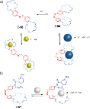
- reversibly reopened by the addition of TREN as a competitive ligand. The authors reported a slight luminescence quenching in the zinc-closed state with a decrease in the quantum yield from 0.27 to 0.21. However, Hg2+ presented a special behavior with the formation of a 2:1 complex, the closing of the
- tweezers by the first equivalent generating an allosteric binding site specific to a second Hg2+ ion. While the addition of one equivalent of Hg2+ decreased the quantum yield to 0.09, the formation of a bis-coordinated [tweezers-Hg2]4+ complex resulted in a total luminescence quenching (quantum yield <10−3




Facile approach to N,O,S-heteropentacycles via condensation of sterically crowded 3H-phenoxazin-3-one with ortho-substituted anilines
Beilstein J. Org. Chem. 2024, 20, 336–345, doi:10.3762/bjoc.20.34
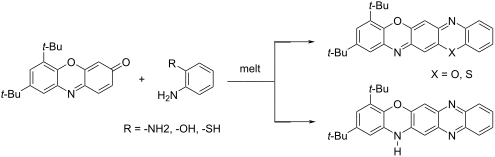
- fluorescence quantum yield was determined relative to quinine bisulfate in 0.05 M H2SO4 as standard (ΦF = 0.52, excitation at 365 nm for 5a–c and 6a,b) [26] and cresyl violet perchlorate in ethanol (ΦF = 0.54, excitation at 510 nm for 10c) [27]. Mass spectrometric analysis was performed on a Bruker UHR-TOF


Photochromic derivatives of indigo: historical overview of development, challenges and applications
Beilstein J. Org. Chem. 2024, 20, 228–242, doi:10.3762/bjoc.20.23
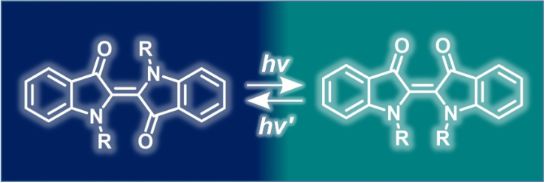
- ) were measured. The significant difference in the quantum yield values between the compounds was attributed to the increase in the population of triplet excited states because of spin–orbit coupling by bromine atoms. On the contrary with previous studies, it was found that the effect of proton and





Perspectives on push–pull chromophores derived from click-type [2 + 2] cycloaddition–retroelectrocyclization reactions of electron-rich alkynes and electron-deficient alkenes
Beilstein J. Org. Chem. 2024, 20, 125–154, doi:10.3762/bjoc.20.13
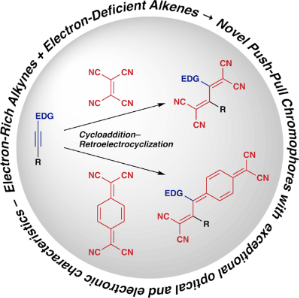
- -emission (AIE)-active aggregates exhibit emissive behavior in hexane, with an emission peak at 679 nm and a shoulder at 717 nm along with a fluorescence quantum yield of 8.5%. This luminescence phenomenon can be aptly considered to be AIE, considering the pronounced constraints imposed on molecular


Visible-light-induced radical cascade cyclization: a catalyst-free synthetic approach to trifluoromethylated heterocycles
Beilstein J. Org. Chem. 2024, 20, 118–124, doi:10.3762/bjoc.20.12
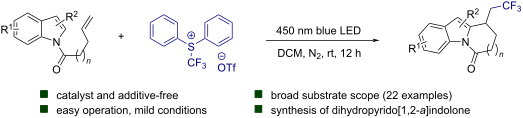
- EDA charge transfer complex because there was no obvious EDA charge transfer band in the UV–vis spectra (Figure 2). Their indole substrate was more electron-rich in structure. The quantum yield was measured to investigate whether there was a radical chain process or not. The procedure was following a
- precedent work [32] (see Supporting Information File 1), and the calculated quantum yield was 2.2, which revealed that one photon generates more than one product molecule. Based on preliminary experiments and previous reports [33][34], we propose a plausible mechanism (Scheme 4). Upon light irradiation




Optimizing reaction conditions for the light-driven hydrogen evolution in a loop photoreactor
Beilstein J. Org. Chem. 2024, 20, 74–91, doi:10.3762/bjoc.20.9
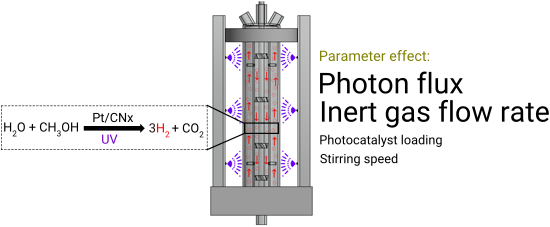
- and reaction rate [42], which was used in this work to fit the experiment results (see Equation 4). where is the average (observed) reaction rate, k* is the kinetic rate constant, θ is the surface coverage of the photocatalyst, α is the optical density, ϕ is the quantum yield, qp is the volumetric
- transport is of major importance for the performance of the studied reaction. The used loop reactor provides excellent mass transport properties, which eventually enabled an increase of the apparent quantum yield by a factor of 10. This result is even more relevant than the demonstration of the scale-up as





