Search results
Search for "reactivity" in Full Text gives 1661 result(s) in Beilstein Journal of Organic Chemistry. Showing first 200.
Non-central chirality in organic chemistry
Beilstein J. Org. Chem. 2026, 22, 370–371, doi:10.3762/bjoc.22.24
- . Collectively, the articles in this Thematic Issue should not be viewed as an exhaustive account of non-central chirality but rather as representative snapshots of an evolving landscape. They capture the current state of the field, where structure, reactivity, dynamics, and function increasingly intersect under
Recent advances in the cleavage of non-activated amides
Beilstein J. Org. Chem. 2026, 22, 352–369, doi:10.3762/bjoc.22.23
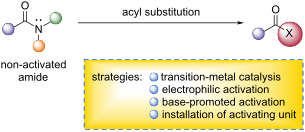
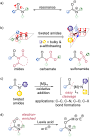
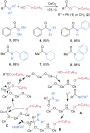
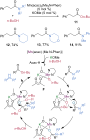
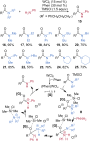
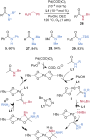
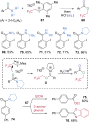
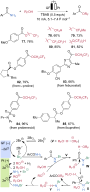
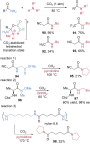
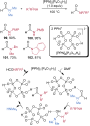
- , bioactive molecules, and advanced materials. However, its exceptional resonance stabilization renders the C–N bond highly inert, posing a persistent synthetic challenge for its transformation. While twisted amides with distorted C–N bonds have offered useful reactivity enhancements, the selective activation
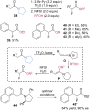
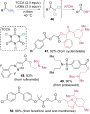
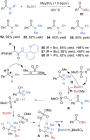
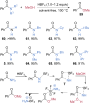
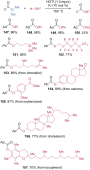
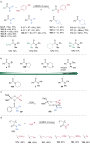
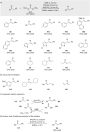
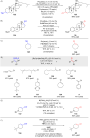
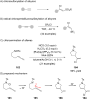
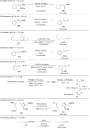
- strongly activating reagents are typically required to cleave the amide C–N bond for its chemical transformation [20][21][22][23]. To address this reactivity issue, twisted amides have emerged as a powerful solution [24][25][26][27]. Incorporation of sterically demanding and electron-withdrawing
- lower reactivity than the twisted N-Boc-N-phenylbenzamide (177) but was more reactive than N,N-dialkylamides 3, 4, 168, 169, and 170. Computational analysis also revealed that the intramolecular nucleophilic attack of intermediate AF through transition state AG constitutes the rate-determining step










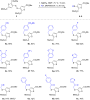
Synthesis of tricyclic fused pyrrolidine nitroxides from 2-alkynylpyrrolidine-1-oxyls
Beilstein J. Org. Chem. 2026, 22, 344–351, doi:10.3762/bjoc.22.22

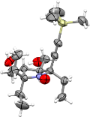
- literature data on reactivity of 5-azidopentyne derivatives in intramolecular Huisgen cycloaddition reactions are contradictory. Some authors successfully obtained 5-azidopentyne derivatives upon nucleophilic substitution at 80 °C in DMF, and additional heating at 170 °C was necessary for cyclization to




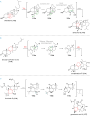
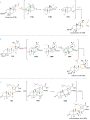
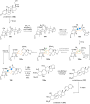
Ring contraction and ring expansion reactions in terpenoid biosynthesis and their application to total synthesis
Beilstein J. Org. Chem. 2026, 22, 289–343, doi:10.3762/bjoc.22.21






Spirobarbiturates with a pyrrolizidine moiety: synthesis, structure and biological evaluation
Beilstein J. Org. Chem. 2026, 22, 274–288, doi:10.3762/bjoc.22.20
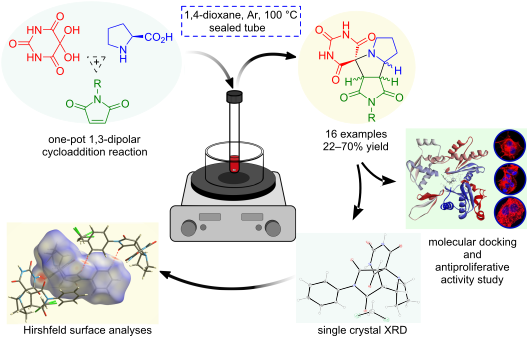
- -proline), tetracyanoethylene, chalcone, and dimethyl acetylenedicarboxylate all failed to produce the target spiro adducts – chalcone and dimethyl acetylenedicarboxylate showed no reactivity, while tetracyanoethylene led to complete resinification. The structure of the products, including the




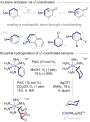
Arene activation via π-bond localization: concepts and opportunities
Beilstein J. Org. Chem. 2026, 22, 257–273, doi:10.3762/bjoc.22.19
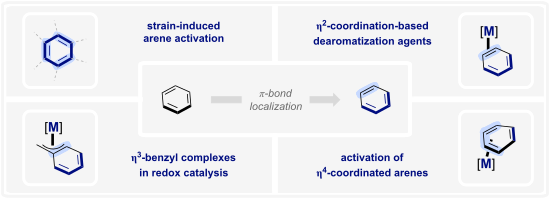
- as well as transition metal coordination to aromatic fragments in an η2-, η3-, and η4-fashion. The structural and reactivity consequences of these perturbations are analyzed in detail, and representative examples of stoichiometric and, where available, catalytic applications in synthesis are
- molecular structure and reactivity, yet it cannot be measured directly [4]. This inherent elusiveness contributed to decades of debate over the structure of benzene, the prototypical aromatic molecule, until August Kekulé proposed his venerable representation: a six-membered carbon ring with alternating
- single and double bonds (Figure 1A) [5]. However, despite its strength in representing a planar cyclic arrangement of tetravalent carbon atoms, this formalism fails to accurately depict the observed reactivity, structure, and stability of benzene. It implies three rapidly equilibrating, localized double




A mild and atom-efficient four-component cascade strategy for the construction of biologically relevant 4-hydroxyquinolin-2(1H)-one derivatives
Beilstein J. Org. Chem. 2026, 22, 244–256, doi:10.3762/bjoc.22.18
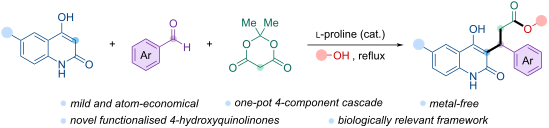
- , replacing alcohols with secondary amines (e.g., pyrrolidine) as the reaction medium did not lead to the desired amides. Experimental trials resulted in the formation of complex mixtures (as confirmed by 1H NMR), suggesting that the high reactivity of amines interferes with the selectivity of the cascade


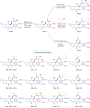
Base-promoted deacylation of 2-acetyl-2,5-dihydrothiophenes and their oxygen-mediated hydroxylation
Beilstein J. Org. Chem. 2026, 22, 192–204, doi:10.3762/bjoc.22.13
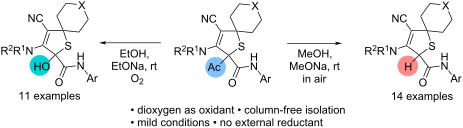
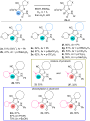
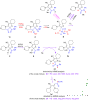
- double bond, sulfur and amide group. The difference in the stability of these types of anions results in their distinct reactivity. Conclusion We have reported the solvent dependent transformation of dihydrothiophenes 1 under mild conditions. It was found that, in ethanolic solution in the presence of




A new synthesis of Tyrian purple (6,6’-dibromoindigo) and its corresponding sulfonate salts
Beilstein J. Org. Chem. 2026, 22, 167–174, doi:10.3762/bjoc.22.10
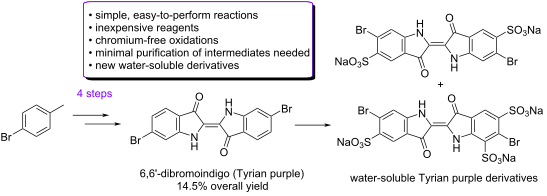
- not able to be achieved for 1 [25]. The sulfonation of 1 appears to be more challenging than the corresponding sulfonation of indigo, which requires less forcing conditions [25]. This suggests that the bromine substituents deactivate the reactivity of the aromatic ring. As was reported for sulfonated


Circumventing Mukaiyama oxidation: selective S–O bond formation via sulfenamide–alcohol coupling
Beilstein J. Org. Chem. 2026, 22, 158–166, doi:10.3762/bjoc.22.9
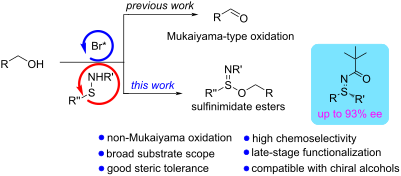
- interest due to their unique reactivity and value as intermediates in molecular design and medicinal chemistry [5][6][7][8][9][10] (Figure 1). In contrast, sulfinimidate esters, which feature a tetravalent sulfur–oxygen (S(=N)–O) motif, remain a relatively underexplored subclass of organosulfur compounds
- [11][12][13][14]. The highly polarized S–O bond imparts distinctive reactivity, making them promising modular electrophilic intermediates for the construction of complex and functionally rich sulfur–nitrogen architectures [14]. Despite their synthetic potential, general and efficient methods for the
- constructing S–C and S–N bonds, particularly in the synthesis of sulfilimines [19][20][21][22][23][24][25][26][27][28][29][30][31] and sulfinamidines [32][33][34]. Their tunable reactivity and modularity have positioned them as versatile scaffolds for sulfur–nitrogen architecture development. Our group


Asymmetric Mannich reaction of aromatic imines with malonates in the presence of multifunctional catalysts
Beilstein J. Org. Chem. 2026, 22, 151–157, doi:10.3762/bjoc.22.8
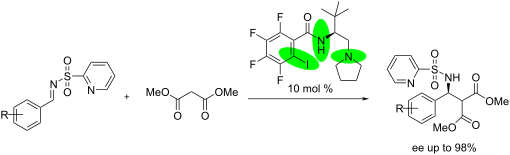
- product in a slightly less enantioselective way (71% ee). When comparing the halogen bond donor properties of tetrafluoroiodophenyl and iodophenyl moieties, the latter is weaker as it is less electron-withdrawing. However, there is a very small difference between reactivity and selectivity for catalysts E
- the halogen bond is not essential for the stereoselectivity of the reaction, but the halogen atom has a beneficial effect on both reactivity and stereoselectivity. A comparative experiment using an imine with a para-toluenesulfonyl protecting group afforded the product in lower selectivity (Table 1
- , resulting in the formation of a racemic product (Table 2, entry 4). Similar trends with catalyst E were observed: the amidic proton is essential to achieve high reactivity and selectivity and changing the halogen atom with other groups slightly decreases the stereoselectivity of the reaction. Steric effects


Total synthesis of natural products based on hydrogenation of aromatic rings
Beilstein J. Org. Chem. 2026, 22, 88–122, doi:10.3762/bjoc.22.4
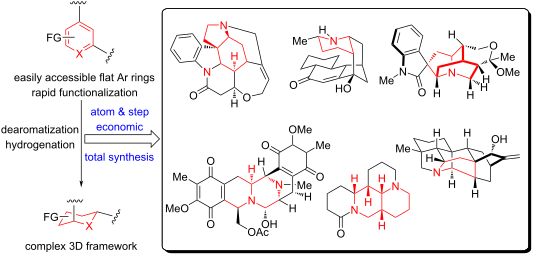
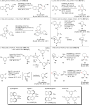
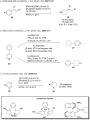
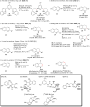
- building blocks used in natural product syntheses are often difficult to prepare or scale-up, constrained by subtle chemical reactivity, functional group compatibility, and control of stereoselectivity. Together, these factors continue to shape the pursuit of concise and practical synthetic routes to
- complex natural products [16][17]. Arenes and heteroarenes have long been readily accessible, as many can be obtained through industrial synthesis or microbial fermentation. The diverse reactivity of aromatic compounds has made them indispensable starting materials in synthetic and medicinal chemistry [18
- substrate electronic environments [29]. Reactivity is governed by the electron density of arenes, which directly influences kinetics and product distributions [30][31]. The inability to generically modulate this interaction has confined most catalytic systems to narrow substrate scopes. Addressing this






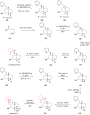


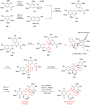


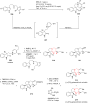

Advances in Zr-mediated radical transformations and applications to total synthesis
Beilstein J. Org. Chem. 2026, 22, 71–87, doi:10.3762/bjoc.22.3
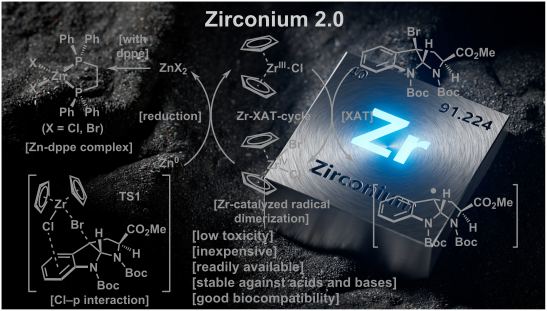
- experiments, coordination of thiourea 26 to the Zr center was suggested. This effect is considered to have tuned the reactivity of the Zr-catalyst, thereby having a positive effect on the reaction process. Finally, the regioselectivity of epoxide ring opening was compared between low-valent titanocene and








Reactivity umpolung of the cycloheptatriene core in hexa(methoxycarbonyl)cycloheptatriene
Beilstein J. Org. Chem. 2026, 22, 64–70, doi:10.3762/bjoc.22.2
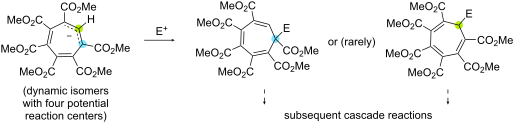
- , Russian Federation 10.3762/bjoc.22.2 Abstract A reactivity umpolung approach for the derivatization of cycloheptatrienes was extended to hexa(methoxycarbonyl)cycloheptatriene, which forms the corresponding anion reactive towards electrophiles. Despite the presence of four potential reactive sites, the
- , include the formation of norcaradienes, dihydroindazoles, a tetracyclodecene and a hydrazonocycloheptatriene derivative. Keywords: azo shift; cascade reactions; cycloheptatriene; relief of antiaromaticity; umpolung; Introduction Reactivity umpolung [1] is a synthetic concept in organic chemistry that
- ; these equivalents can be transformed after the desired connection has taken place. For instance, nitroalkanes [1] and nitroalkenes [5][6] are regarded as equivalents of unavailable acyl anions and vinyloxenium cations, respectively. Reversed reactivity patterns also emerge due to non-uniform structures


Synthesis and applications of alkenyl chlorides (vinyl chlorides): a review
Beilstein J. Org. Chem. 2026, 22, 1–63, doi:10.3762/bjoc.22.1
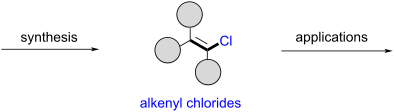
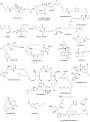
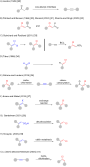
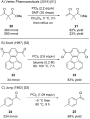
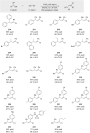
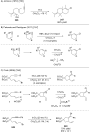
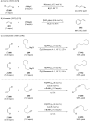
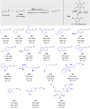
- prepared in 1868 by Charles Friedel – best known for the Friedel–Crafts reaction – via the reaction of ketones with phosphorus pentachloride, these compounds have steadily gained attention over the decades. In recent years, their distinct reactivity and potential in organic synthesis have been increasingly
- important and versatile functional group. Keywords: alkenyl chloride; chloroalkenes; chloro olefins; vinyl chlorides; Introduction Alkenyl chlorides, while less extensively investigated than their brominated analogues, constitute a synthetically valuable class of organohalides with distinct reactivity
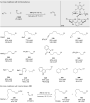
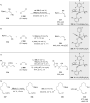
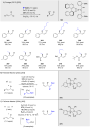
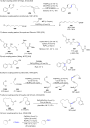
- review, and the reader is referred to the recent comprehensive accounts by Li [89] and Mitchenko [90] for further details. Hydrochlorination of terminal alkynes frequently results in complex product mixtures due to the greater reactivity of the initially formed alkenyl chloride intermediate (e.g., 150























Total synthesis of asperdinones B, C, D, E and terezine D
Beilstein J. Org. Chem. 2025, 21, 2730–2738, doi:10.3762/bjoc.21.210
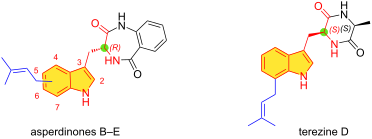
- . Asperidinones 1–4 were obtained in 7% average yields via the direct prenylation route, and 14% from the allylation/cross-metathesis route, whereas terezine D (6) was isolated in 44% overall yield. Insights into the reactivity and stability of the iodozinc N-Fmoc-ᴅ-alanyl anthranilamide reagent derived from 29


Competitive cyclization of ethyl trifluoroacetoacetate and methyl ketones with 1,3-diamino-2-propanol into hydrogenated oxazolo- and pyrimido-condensed pyridones
Beilstein J. Org. Chem. 2025, 21, 2716–2729, doi:10.3762/bjoc.21.209
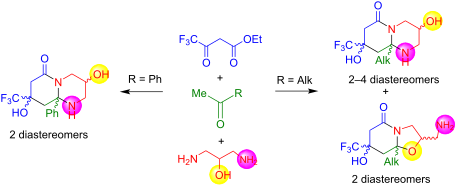
- starting substrates in multicomponent syntheses [17][18][19]; at the same time, they often show extraordinary reactivity. For example, the introduction of polyfluoroalkyl-3-oxo esters into the aforementioned Hantzsch and Biginelli reactions leads to the hydrated heterocycles, which can provide insight into


Mechanistic insights into hydroxy(tosyloxy)iodobenzene-mediated ditosyloxylation of chalcones: a DFT study
Beilstein J. Org. Chem. 2025, 21, 2703–2715, doi:10.3762/bjoc.21.208
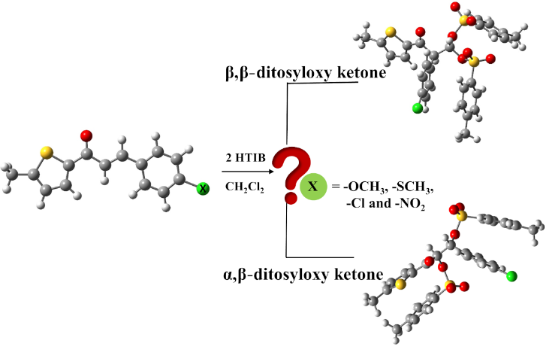
- . The reactivity characteristics of these compounds are similar to transition metal reagents, as a result these hypervalent compounds can be used as an alternative. For example, iodobenzene diacetate (PhI(OAc)2), can be used to selectively oxidize alcohols to aldehydes or ketones over toxic chromium(VI


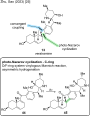
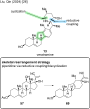
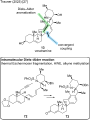
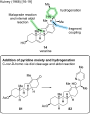
Recent advancements in the synthesis of Veratrum alkaloids
Beilstein J. Org. Chem. 2025, 21, 2657–2693, doi:10.3762/bjoc.21.206
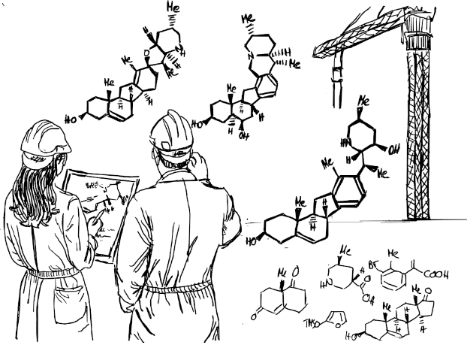
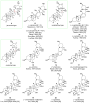
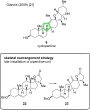
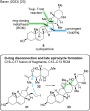
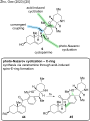
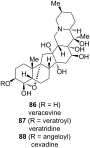
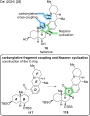
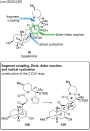
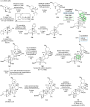
- group in the sequence to temporarily mask that specific group and its reactivity. The latter are considered undesirable transformations, since they do not contribute to advancing the complexity of the synthetic intermediate toward the target and should therefore be avoided, or at least minimized in use
- trifluoroethanol enabled the desired [4 + 2]-addition. Some aromatization as well as ketal deprotection was observed, so by optimization, AgSbF6 and diethyl fumarate enhanced this reactivity, while this modification also significantly improved the yield to 59% of this step. It was noted that the silver salt helped
















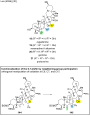
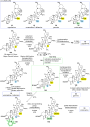
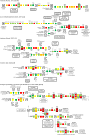
Chemoenzymatic synthesis of the cardenolide rhodexin A and its aglycone sarmentogenin
Beilstein J. Org. Chem. 2025, 21, 2637–2644, doi:10.3762/bjoc.21.204
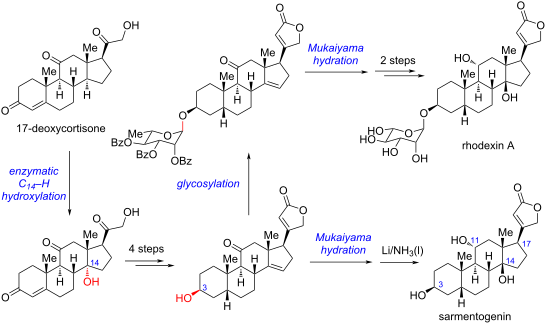
- reagent [20], the key intermediate 8 bearing a butenolide motif was obtained in 76% yield. Next, with the aid of the strong Lewis acid Bi(OTf)3, the regioselective elimination of 8 was achieved to produce the Δ14 olefin intermediate 9 in 86% yield. Afterwards, we evaluated the reactivity of 9 towards



Thiazolidinones: novel insights from microwave synthesis, computational studies, and potentially bioactive hybrids
Beilstein J. Org. Chem. 2025, 21, 2618–2636, doi:10.3762/bjoc.21.203
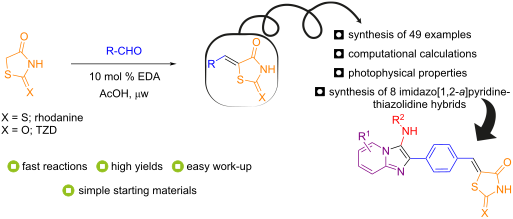
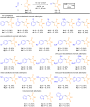
- forms of compounds 3n and 4n exhibited smaller HOMO–LUMO gaps compared to their protonated and deprotonated counterparts, suggesting higher reactivity (Table 5). Conclusion In summary, we have developed a straightforward approach to a Knoevenagel condensation-type reaction using ethylenediamine (EDA) as






Total syntheses of highly oxidative Ryania diterpenoids facilitated by innovations in synthetic strategies
Beilstein J. Org. Chem. 2025, 21, 2553–2570, doi:10.3762/bjoc.21.198
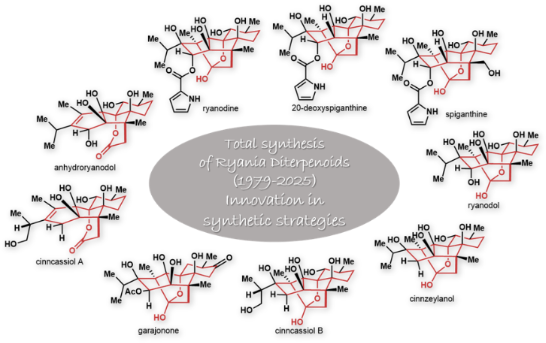
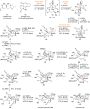
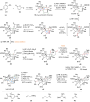
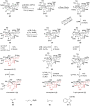
- , the bis-epoxy ketone exhibited distinct reactivity under ring-opening conditions compared to mono-epoxy substrates, presumably due to steric constraints. Leveraging the directing ability of the C10 hydroxy group, stereospecific Mukaiyama hydration of the C6–C7 double bond was achieved, furnishing







Rapid access to the core of malayamycin A by intramolecular dipolar cycloaddition
Beilstein J. Org. Chem. 2025, 21, 2542–2547, doi:10.3762/bjoc.21.196
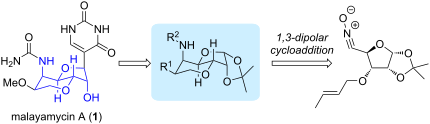
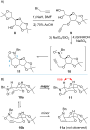
- inaccessible (Scheme 5) [41]. We assumed the steric hinderance of the Boc protecting group might have a great impact to the reactivity of ketone. Investigation along this line is currently on the way. Conclusion In summary, we have streamlined the rapid construction of the core perhydrofuropyran skeleton of




Pentacyclic aromatic heterocycles from Pd-catalyzed annulation of 1,5-diaryl-1,2,3-triazoles
Beilstein J. Org. Chem. 2025, 21, 2524–2534, doi:10.3762/bjoc.21.194
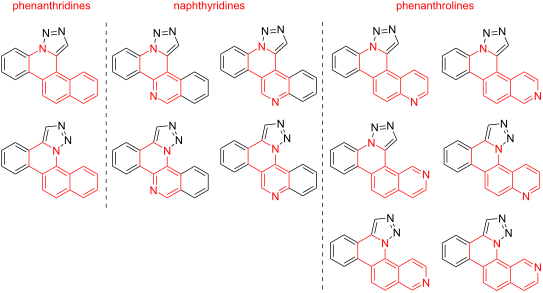
- reactivity of this family of pentacyclic aromatic heterocycles towards N-benzylation and the antimicrobial properties of such resulting quaternary ammonium compounds are ongoing. Examples of polycyclic aromatic heterocycle structures: phenanthridine (left), 1,5-naphthyridine (center), and 1,9-phenanthroline


Assembly strategy for thieno[3,2-b]thiophenes via a disulfide intermediate derived from 3-nitrothiophene-2,5-dicarboxylate
Beilstein J. Org. Chem. 2025, 21, 2489–2497, doi:10.3762/bjoc.21.191
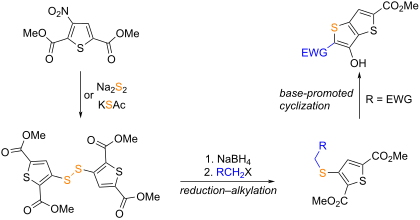
- addition to potassium thioacetate, the reactivity of ester 1 was investigated with other related S-nucleophiles, such as potassium ethyl xanthate (KSC(S)OEt), sodium diethyldithiocarbamate (NaSC(S)NEt2) as well as thioacetamide in the presence of K2CO3 and Na2S2 (Table 1, entries 2–5). In each case, the
- . Conclusion In summary, this study reveals an unusual and previously poorly understood reactivity of 3-nitrothiophene-2,5-dicarboxylate toward sulfur-containing nucleophiles such as potassium thioacetate or thioacetamide, which resulted in the efficient formation of both bis(thiophen-3-yl) sulfide and