


Search results
Search for "reagent" in Full Text gives 1319 result(s) in Beilstein Journal of Organic Chemistry. Showing first 200.
Sustainable electrochemical synthesis of aliphatic nitro-NNO-azoxy compounds employing ammonium dinitramide and their in vitro evaluation as potential nitric oxide donors and fungicides
Beilstein J. Org. Chem. 2025, 21, 2739–2754, doi:10.3762/bjoc.21.211
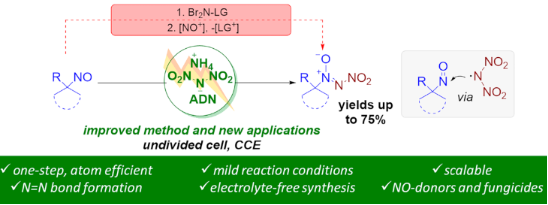
- overcome existing constraints in functional group compatibility, efficiency, and reagent scope. In this regard, the direct formation of nitrogen-nitrogen or nitrogen-oxygen bonds presents a significant challenge due to the variety of possible side processes and the low thermodynamic driving force for N–N
- group developed a one-step electrochemical approach to the synthesis of nitro-NNO-azoxy arenes employing ammonium dinitramide (ADN) [87]. The achieved use of ADN, known as prospective chlorine-free green oxidant for aerospace propulsion applications [89][90][91], as both a reagent and an electrolyte is
- compounds with ammonium dinitramide, leading to efficient formation of the nitro-NNO-azoxy group. The developed strategy involves performing the electrosynthesis in an undivided cell under high current density with ADN employed as both a reagent and an electrolyte. The synthesized aliphatic nitro-NNO-azoxy





Total synthesis of asperdinones B, C, D, E and terezine D
Beilstein J. Org. Chem. 2025, 21, 2730–2738, doi:10.3762/bjoc.21.210
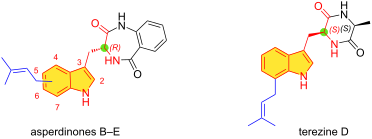
- product 11 in 37% yield (Scheme 2). Despite the modest yield, product 11 was transformed to the corresponding tertiary alcohol 12. Removal of the N-Piv group and dehydration with the Burgess reagent [35] led to an inseparable mixture of olefins slightly in favor of the exo-olefin isomer. Dehydration in
- -methylindole [41] in excellent yields. The Negishi cross-coupling reaction with the organozinc reagent prepared from iodoalanine derivative (vide infra) has been used to prepare various aryl-substituted tryptophans in 76–96% yields [42]. In principle, this protocol should be applicable to all the C4–C7
- amino acid reagent that could be removed under non-acidic conditions after the cross-coupling reaction. To this end, we prepared iodo N-Fmoc-ᴅ-alanyl anthranilamide methyl ester 29 from ᴅ-serine. Treatment of prenylindoles 14–17 with iodine and KOH followed by acetylation afforded the corresponding


Competitive cyclization of ethyl trifluoroacetoacetate and methyl ketones with 1,3-diamino-2-propanol into hydrogenated oxazolo- and pyrimido-condensed pyridones
Beilstein J. Org. Chem. 2025, 21, 2716–2729, doi:10.3762/bjoc.21.209
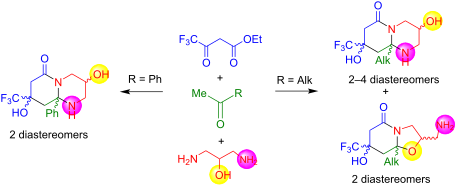
- trifluoroacetoacetate (1) with methyl ketones 2. This reagent has alternative N- and O-reactive centers and thus can react as an N,N- or N,O-dinucleophile, generating in a single synthesis trifluoromethyl octahydropyrido[1,2-a]pyrimidin-6-ones or hexahydrooxazolo[3,2-a]pyridin-5-ones, or both that contain an additional


Mechanistic insights into hydroxy(tosyloxy)iodobenzene-mediated ditosyloxylation of chalcones: a DFT study
Beilstein J. Org. Chem. 2025, 21, 2703–2715, doi:10.3762/bjoc.21.208
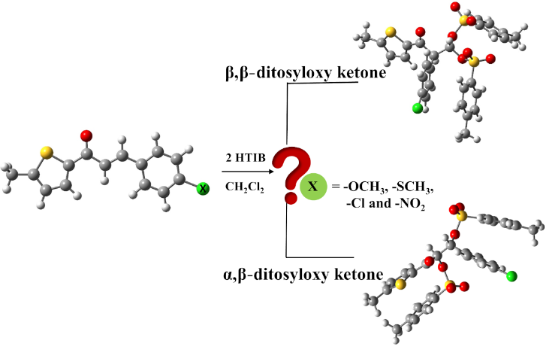
- their versatility, eco-friendliness and low cost, the organo hypervalent iodine reagents have become popular in the field of synthetic chemistry in the last few decades. Hydroxy(tosyloxy)iodobenzene (HTIB) is a hypervalent iodine(III) reagent that contains both a hydroxy and a tosyloxy group. Oxidative


Recent advancements in the synthesis of Veratrum alkaloids
Beilstein J. Org. Chem. 2025, 21, 2657–2693, doi:10.3762/bjoc.21.206
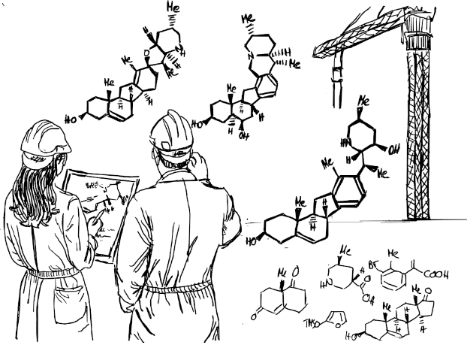
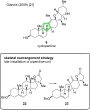
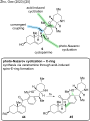
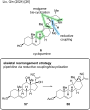
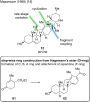
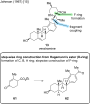
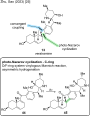
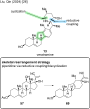
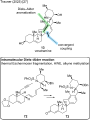
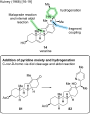
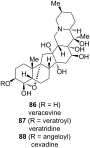
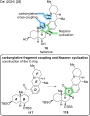
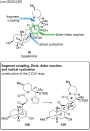
- 3-position, a copper-mediated C–H activation of position 12 and subsequent protection of the introduced hydroxy moiety to give compound 25 (Scheme 6). Installation of the lactone moiety in 22 was carried out in a three-step sequence via a 1,2-addition of organocerium reagent 26 to the ketone
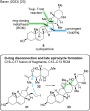
- manipulations were carried out, the double bond isomerized to position C5–C6, and a reduction was performed, all in an optimized three-step, scalable sequence. Alkylation with phosphonate reagent 36 and subsequent Horner–Wadsworth–Emmons (HWE) reaction formed ring C, followed by an enolate alkylation to forge
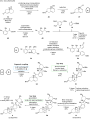
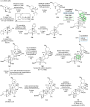
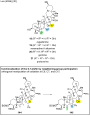
- regioselectively desaturated to furnish known phenylsulfonylenamine (Scheme 23). Conversion toward the bromohydrin, treatment with potassium hydride, and subsequent addition of the crotyl-Grignard reagent 75 gave the desired isomer 76 in 22% yield over four steps. More exactly, the diastereomeric piperidine was
















Chemoenzymatic synthesis of the cardenolide rhodexin A and its aglycone sarmentogenin
Beilstein J. Org. Chem. 2025, 21, 2637–2644, doi:10.3762/bjoc.21.204
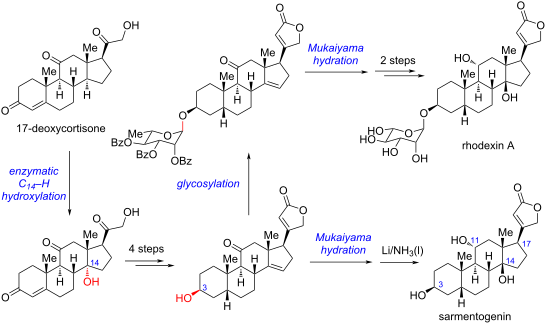
- reagent [20], the key intermediate 8 bearing a butenolide motif was obtained in 76% yield. Next, with the aid of the strong Lewis acid Bi(OTf)3, the regioselective elimination of 8 was achieved to produce the Δ14 olefin intermediate 9 in 86% yield. Afterwards, we evaluated the reactivity of 9 towards



Efficient solid-phase synthesis and structural characterization of segetalins A–H, J and K
Beilstein J. Org. Chem. 2025, 21, 2612–2617, doi:10.3762/bjoc.21.202
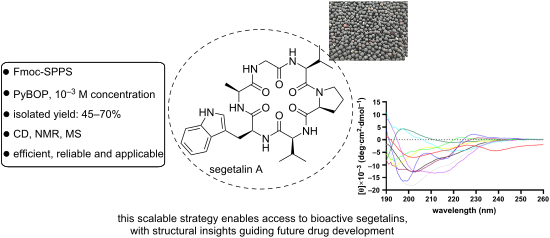
- , successful macrocyclization was achieved by employing benzotriazol-1-yloxytripyrrolidinophosphonium hexafluorophosphate (PyBOP) as the coupling reagent in DMF at a concentration of 10−3 M. After cleavage from the resin and global side-chain deprotection, the crude cyclic peptides were purified by preparative
- reagent for the challenging head-to-tail macrocyclization step under moderate dilution (10−3 M). This protocol afforded the target cyclic peptides in practical isolated yields (45–70%) and high purity. Comprehensive structural characterization by HRESIMS, NMR, and HPLC confirmed the identity and high


Total syntheses of highly oxidative Ryania diterpenoids facilitated by innovations in synthetic strategies
Beilstein J. Org. Chem. 2025, 21, 2553–2570, doi:10.3762/bjoc.21.198
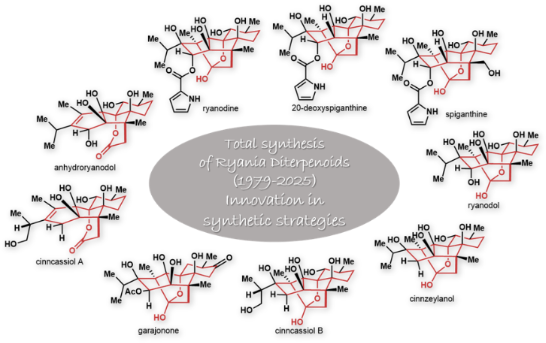
- route commenced from (−)-pulegone. After introducing oxidation states at C6 and C10 and installing an alkynyl group at C11, oxidative cleavage of a double bond yielded the key propargylic alcohol intermediate 66. This compound underwent a 1,2-addition with alkynyl Grignard reagent 67, and the resulting
- , and introduction of an isopropenyl group afforded compound 75. Subsequent protection of the vicinal diol as a boronic ester and diastereoselective reduction of the C3 carbonyl group yielded compound 76. Esterification with acylating reagent 77 under basic conditions, followed by boronic ester removal







Ni-promoted reductive cyclization cascade enables a total synthesis of (+)-aglacin B
Beilstein J. Org. Chem. 2025, 21, 2548–2552, doi:10.3762/bjoc.21.197
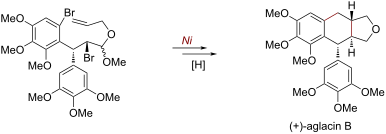
- asymmetric conjugate addition was carried out [20][21]. The in situ generated aryl–copper(I) species was obtained under the action of CuBr·Me2S with Grignard reagent 8, and then added to a THF solution of the α,β-unsaturated acyl oxazolidinone 7 at −48 °C. This reaction demonstrated an excellent


Palladium-catalyzed regioselective C1-selective nitration of carbazoles
Beilstein J. Org. Chem. 2025, 21, 2479–2488, doi:10.3762/bjoc.21.190
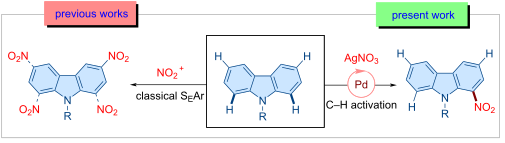
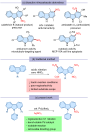
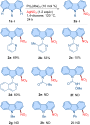
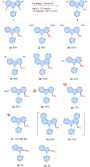
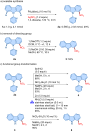
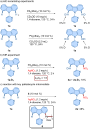
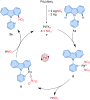
- reagent resulted in complete loss of reactivity (Table 1, entry 12). Further, extending the reaction time had no significant effect on the yield (Table 1, entry 13). Finally, our investigation using various 3d transition metal catalysts such as Ni(OAc)2, Cu(OAc)2, and Co(OAc)2 in place of Pd₂(dba)3 did


Ex-situ generation of gaseous nitriles in two-chamber glassware for facile haloacetimidate synthesis
Beilstein J. Org. Chem. 2025, 21, 2465–2469, doi:10.3762/bjoc.21.188
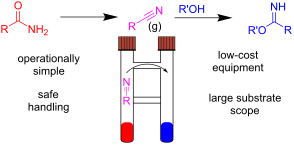
- donor; haloacetimidates; haloacetonitrile; two-chamber reactor; Introduction Trifluoroacetonitrile is an electrophilic reagent that has seen a variety of uses, mostly for incorporating trifluoromethyl groups into organic compounds [1]. As an example it has been successfully utilized for the synthesis
- [14][15][16][17]. Recently, 2,2,2-trifluoroacetaldehyde O-(aryl)oxime has been introduced as a precursor for trifluoroacetonitrile allowing to work under mild conditions at room temperature (Figure 1) [18]. Whether one prepares a precursor or the actual reagent, a separate setup is needed and hence


Transformation of the cyclohexane ring to the cyclopentane fragment of biologically active compounds
Beilstein J. Org. Chem. 2025, 21, 2416–2446, doi:10.3762/bjoc.21.185
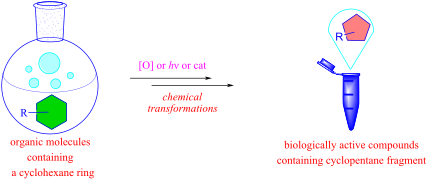
- reagent 118 using trifluoromethanesulfonic acid (TfOH) or TMSOTf as Lewis acids. The authors suggested that the reaction proceeded via the formation of an intermediate 119 followed by reaction with an alcohol nucleophile and a 1,2-carbon migration to produce a cyclopentane derivative 120 with a yield of
- 50% yield. Banerjee et al. [95] demonstrated an alternative method for the synthesis of cyclopentane derivatives. The method included the cleavage of epoxides using Grignard reagents followed by ring contraction. Treatment of epoxide 212 with Grignard reagent through intermediates 213 and 214
- produced aldehyde 215, and further reaction of 215 with the Grignard reagent gave alcohol 216 (Scheme 38). A promising method for the contraction of cyclohexane rings is the semipinacol rearrangement. For the enantioselective total synthesis of (−)-citrinadin A (217) and (+)-citrinadin B (218), the authors


Comparative analysis of complanadine A total syntheses
Beilstein J. Org. Chem. 2025, 21, 2334–2344, doi:10.3762/bjoc.21.178
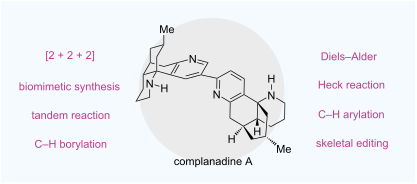
- with an Ir-catalyzed regioselective C–H borylation developed simultaneously by Ishiyama, Miyaura, Hartwig, and co-workers and Smith and co-workers [26][27]. First, the triflate group of 33 was removed by a Pd-catalyzed reduction with ammonium formate as the reducing reagent. The resulting Boc-protected



Halogenated butyrolactones from the biomass-derived synthon levoglucosenone
Beilstein J. Org. Chem. 2025, 21, 2297–2301, doi:10.3762/bjoc.21.175
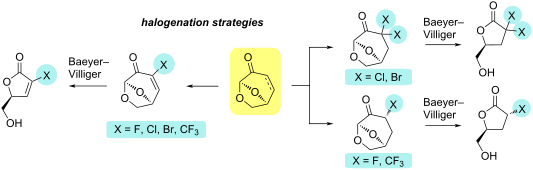
- reduced form 6, which is sold as a solvent, is an inexpensive commercially available reagent (Scheme 1) [21]. Monohalogenation of LGO giving chloride 7a [22] and bromide 7b [23] is readily achieved in a single step, however, fluorinated 7c, which is a potent inflammasone inhibitor (0.8 ± 0.5 µM), has only
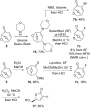
- monochlorination and bromination of ketone 6 via enamine 9a [31], and it was envisaged that 9a would be a suitable substrate to achieve the double halogenation using an excess of electrophilic halogen. When enamine 9a was treated with 1.0 mol equivalent of trichloroisocyanouric acid (TCCA), a reagent which can
- using CF3 donors in copper-catalyzed [34], base- and Lewis acid-mediated reactions [35][36][37]. The reaction of enamine 9a with Togni’s reagent (18) and subsequent hydrolysis gave the substituted derivative 19 in 35% yield (qNMR) (Scheme 4). The yield was improved using the N-methylpiperazine-derived



Enantioselective radical chemistry: a bright future ahead
Beilstein J. Org. Chem. 2025, 21, 2283–2296, doi:10.3762/bjoc.21.174
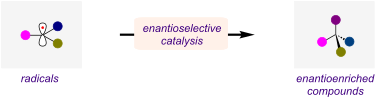
- phosphoric acid catalytic system [31]. Aminoalkenes react with Togni’s reagent in the presence of a catalytic amount of CuCl and a chiral phosphoric acid to yield pyrrolidines. Using this methodology, chiral α-quaternary substituted pyrrolidines were synthesized in good yields and excellent


Pathway economy in cyclization of 1,n-enynes
Beilstein J. Org. Chem. 2025, 21, 2260–2282, doi:10.3762/bjoc.21.173
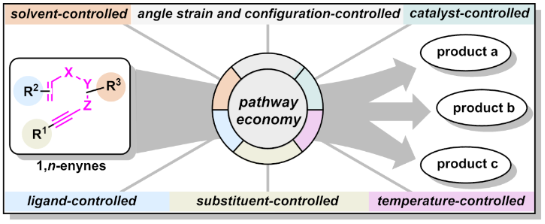
- components such as solvents, catalysts, ligands and so on. Unlike traditional “one-to-one” reactions, pathway-controlled “one-to-many” transformations synthesize multiple products from single intermediates, dramatically reducing preparation time and reagent requirements (Scheme 1b). As an exceptionally


Research towards selective inhibition of the CLK3 kinase
Beilstein J. Org. Chem. 2025, 21, 2250–2259, doi:10.3762/bjoc.21.172
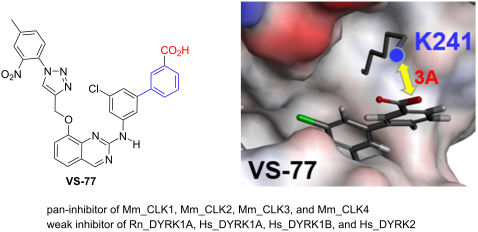
- reagent the 3-(methoxycarbonyl)phenylboronic acid ester 11. All derivatives have spectral and analytical data in agreement with the proposed structures (see experimental section and Supporting Information File 1). Kinase inhibition studies Our molecules have been submitted first to a primary screening


Pd-catalyzed dehydrogenative arylation of arylhydrazines to access non-symmetric azobenzenes, including tetra-ortho derivatives
Beilstein J. Org. Chem. 2025, 21, 2234–2242, doi:10.3762/bjoc.21.170
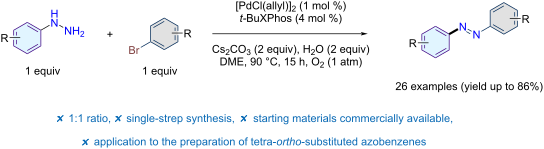
- efficacious but face significant challenges when applied to non-symmetric systems [24], particularly in achieving regioselectivity. These methods frequently require a particular reagent pair or an excess of one reactant, which limits their efficiency and versatility. In contrast, Baeyer–Mills reactions, which
- avoiding excess reagent, and simplifies purification and scale-up. With the most suitable reaction conditions in hand, the substrate scope was examined. First, the reactivity of different aryl bromides with phenylhydrazine (1a) to form non-symmetric azobenzene was explored (Scheme 1). Most of the


C2 to C6 biobased carbonyl platforms for fine chemistry
Beilstein J. Org. Chem. 2025, 21, 2103–2172, doi:10.3762/bjoc.21.165
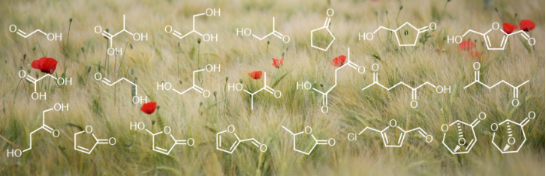
- 50% yield and 99% ee after kinetic resolution using Escherichia coli (Scheme 57) [189]. Other reactions: Yamamoto synthesized 6-hydroxy-2-(trifluoromethyl)-2H-pyran-3(6H)-ones from furfural via trifluoromethylation using the Ruppert–Prakash reagent (TMSCF3), followed by a photo-Achmatowicz reaction


The application of desymmetric enantioselective reduction of cyclic 1,3-dicarbonyl compounds in the total synthesis of terpenoid and alkaloid natural products
Beilstein J. Org. Chem. 2025, 21, 2085–2102, doi:10.3762/bjoc.21.164
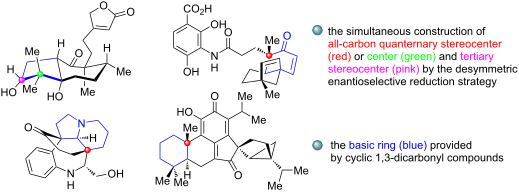
- , protection of the resultant primary alcohol, and hydrogenation afforded ketone 65. The LaCl3·LiCl-promoted addition of 65 with Grignard reagent followed by TES protection of the resulting secondary alcohol, regioselective deprotection of the TES group and in situ oxidation provided aldehyde 66. Next, 66
- underwent the 1,2-addition of isopropenyllithium reagent (prepared from n-BuLi/tetraisopropenyltin (67) [55]) and DMP oxidation to afford ketone 68. A three-step transformation including RCM, Mukaiyama hydration, and esterification, 68 was converted to methyl oxalate 69. Irradiation of the reaction mixture
- hydroxyketone 86 in 60% yield with 92% ee and 8.4:1 dr. A secondary hydroxy-directed Grignard reagent addition of 86 followed by selective protection, generated alcohol ester 87. After one recrystallization, the ee value of 87 could be increased to 99%. Subsequently, TMSOTf-promoted transacetalation and in situ





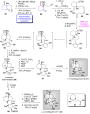


Bioinspired total syntheses of natural products: a personal adventure
Beilstein J. Org. Chem. 2025, 21, 2048–2061, doi:10.3762/bjoc.21.160
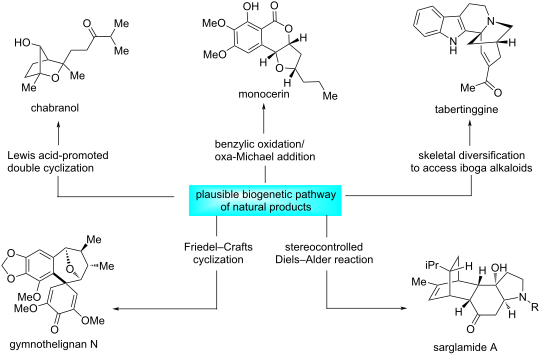
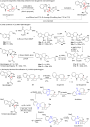
- -dithiane linchpin coupling (Scheme 3b). To our delight, using DDQ as the optimal oxidizing reagent, the expected THF-containing product 23 was generated as a sole diastereoisomer, suggesting the pQM 22 underwent oxa-Michael addition only with the C10 alcohol. The free C12 alcohol did not affect this
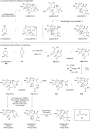
- proposed key transformations (Scheme 6). Starting from the diaryl-THF-type precursor 36 with a phenol moiety, oxidation of the phenol with hypervalent iodine reagent PIDA generated the putative oxa-carbenium intermediate 37, which successfully underwent the Friedel–Crafts cyclization to provide




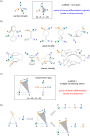
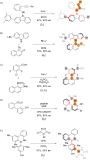
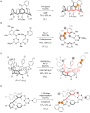
Measuring the stereogenic remoteness in non-central chirality: a stereocontrol connectivity index for asymmetric reactions
Beilstein J. Org. Chem. 2025, 21, 1995–2006, doi:10.3762/bjoc.21.155
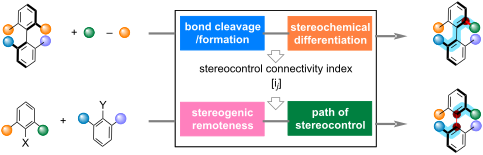
- substituents. Intuitively, the intrinsic spatial separation among prochiral stereogenic elements, the reactive sites, and the stereochemical-defining substituents makes stereoinduction for non-central chirality using a chiral catalyst or reagent particularly challenging. However, a quantitative




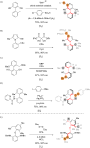

Photochemical reduction of acylimidazolium salts
Beilstein J. Org. Chem. 2025, 21, 1973–1983, doi:10.3762/bjoc.21.153
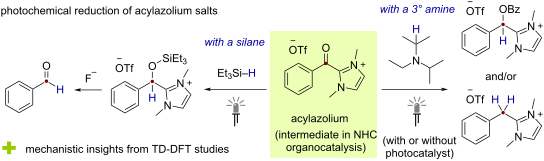
- the maximum of 50% achievable using DIPEA. This study also led to the development of a novel silane-mediated photoreduction method where triethylsilane serves as both as terminal reductant and alkoxide trapping reagent, with subsequent treatment with fluoride providing the corresponding aldehyde


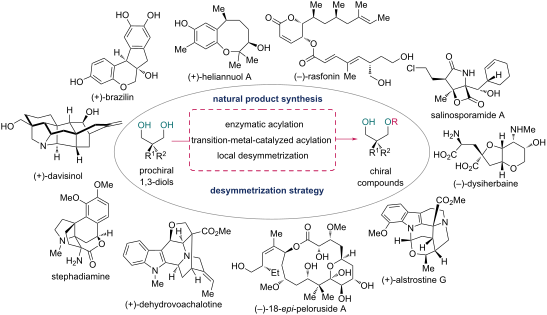
Enantioselective desymmetrization strategy of prochiral 1,3-diols in natural product synthesis
Beilstein J. Org. Chem. 2025, 21, 1932–1963, doi:10.3762/bjoc.21.151
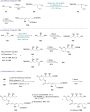
- norlignans hyperione A and ent-hyperione B was reported by the Deska group (Scheme 4) [33]. The synthesis commenced with a two-step conversion of ketone 22 to alkyne 23. Pd-catalyzed Tsuji-type reaction with zinc reagent 24, followed by acetonide hydrolysis, furnished allenic diol 25. Treating allenic diol










Synthesis, biological and electrochemical evaluation of glycidyl esters of phosphorus acids as potential anticancer drugs
Beilstein J. Org. Chem. 2025, 21, 1909–1916, doi:10.3762/bjoc.21.148
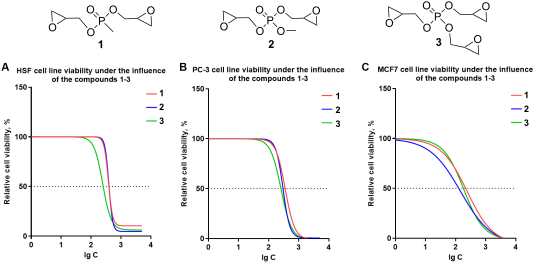
- , 1,000 μM, 2,500 μM, and 5,000 μM. Each concentration was tested in triplicate. Control wells received an equivalent volume of culture medium without compounds and served as untreated negative controls. Cytotoxicity analysis of compounds. After 48 hours of treatment, MTT reagent was added to each well at





