


Search results
Search for "thin film" in Full Text gives 92 result(s) in Beilstein Journal of Organic Chemistry.
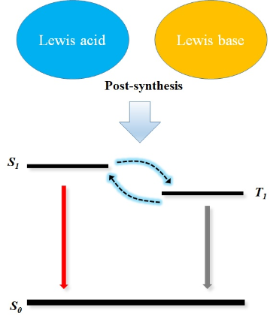
Post-synthesis from Lewis acid–base interaction: an alternative way to generate light and harvest triplet excitons
Beilstein J. Org. Chem. 2022, 18, 825–836, doi:10.3762/bjoc.18.83
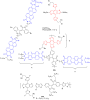
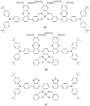
- ][32], e.g., organic thin-film transistors [45][46], organic photovoltaics [47], and chemical sensing [48]. Chemical structures of Lewis acid examples. Chemical structures of Lewis basic fluorescent polymer poly{2,5-pyridylene-co-1,4-[2,5-bis(2-ethylhexyloxy)]phenylene} 1 and D–A–D compound 2,5-bis((N


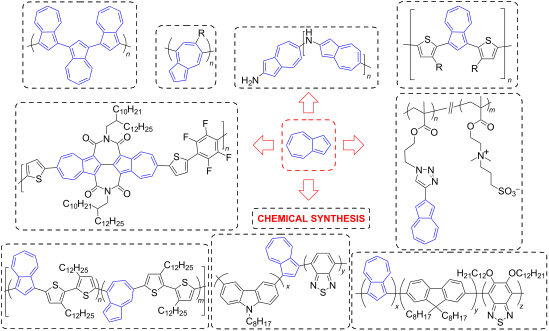
Chemical syntheses and salient features of azulene-containing homo- and copolymers
Beilstein J. Org. Chem. 2021, 17, 2164–2185, doi:10.3762/bjoc.17.139
- absorption spectra of 69, 71, and 72 in chloroform displayed strong absorption at 667, 670, and 627 nm, and in the thin-film form they were further red-shifted. The optical energy gaps for 69, 71, and 72 were 1.33, 1.38, and 1.23 eV, respectively. Thin-films of 69 and 71, in which azulene was incorporated
- donor for organic PV cells and the blend of thin-film 69 with PC71BM showed a power conversion efficiency (PCE) of 2.04%. In 2018, Gao and co-workers [37] reported the synthesis of conjugated polymers containing 2,6-connected azulene units in the polymer backbone. The key monomer, N,N’-bis(2
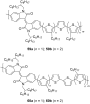
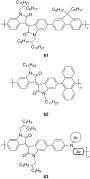
- stability was excellent as they had Td above 400 °C. The solution-state absorption spectra of the polymers 81 and 83 in o-dichlorobenzene displayed a strong absorption band at 661 and 516 nm, respectively. The thin-film transistors made out of these polymers displayed electron mobility of 0.42 cm2 V−1 s−1




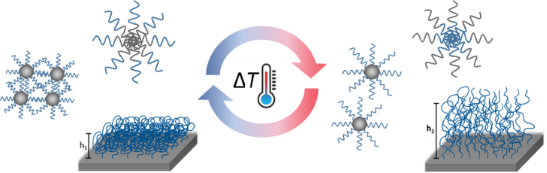
Constrained thermoresponsive polymers – new insights into fundamentals and applications
Beilstein J. Org. Chem. 2021, 17, 2123–2163, doi:10.3762/bjoc.17.138


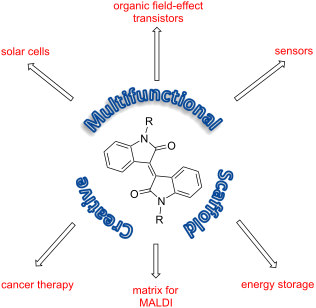
Recent advances in the application of isoindigo derivatives in materials chemistry
Beilstein J. Org. Chem. 2021, 17, 1533–1564, doi:10.3762/bjoc.17.111
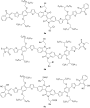
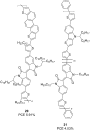
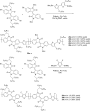
- %) [20]. One of the highest efficiency values (4.7%) among low-molecular-weight isoindigo derivatives was shown by a two-component OSC based on isoindigo 9a, containing an alkoxylated p-phenylene fragment and PC71BM in a ratio of 1:0.7 (w/w), a thin film of which was obtained from chloroform with 0.5 vol
- % N-methylpyrrolidone (Scheme 7). As the authors believe [21], the addition of this viscous solvent made it possible to provide a better surface morphology of a thin-film layer since without it, the efficiency was almost two times lower (2.8%). Therein, the key role of the structure of the acceptor
- , as a consequence, higher velocity transport of electrons under irradiation. Within the framework of this direction, the importance of the method for preparing a thin film of the active layer of OSC was also shown. In reference [35], the OSCs based on a mixture of polymers 23a,b with PC71BM and an














Design, synthesis and photophysical properties of novel star-shaped truxene-based heterocycles utilizing ring-closing metathesis, Clauson–Kaas, Van Leusen and Ullmann-type reactions as key tools
Beilstein J. Org. Chem. 2021, 17, 1374–1384, doi:10.3762/bjoc.17.96
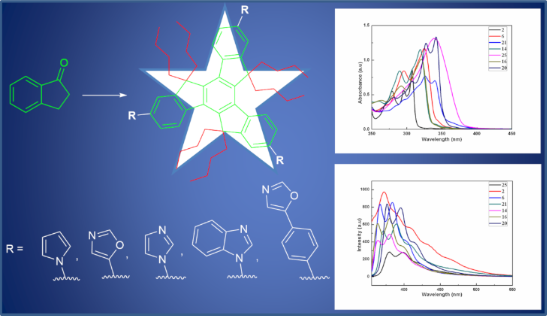
- applications ranging from organic thin‐film transistors (OTFTs), organic light-emitting diodes (OLEDs), dye‐sensitized solar cells (DSSCs), fluorescent probes, organic photovoltaics (OPVs) to the high hole mobility semiconductors, blue light-emitting materials, nonlinear optical materials and so forth [5][6][7


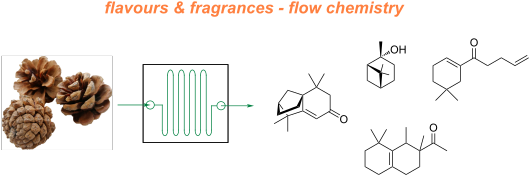
A comprehensive review of flow chemistry techniques tailored to the flavours and fragrances industries
Beilstein J. Org. Chem. 2021, 17, 1181–1312, doi:10.3762/bjoc.17.90






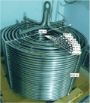

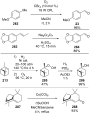



Dawn of a new era in industrial photochemistry: the scale-up of micro- and mesostructured photoreactors
Beilstein J. Org. Chem. 2020, 16, 2484–2504, doi:10.3762/bjoc.16.202
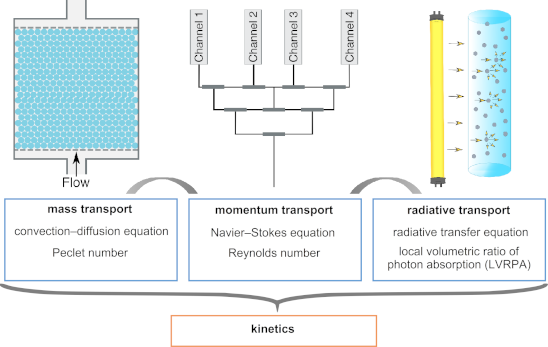
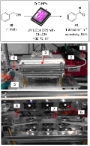
- NETmix reactor with a monolithic reactor packed with translucent cellulose acetate monolithic structures. The front glass of the slab, the network of the channels, and the chambers imprinted in the back stainless steel slab of the NETmix reactor were coated with a thin-film photocatalyst (TiO2-P25) by




pH- and concentration-dependent supramolecular self-assembly of a naturally occurring octapeptide
Beilstein J. Org. Chem. 2020, 16, 2017–2025, doi:10.3762/bjoc.16.168
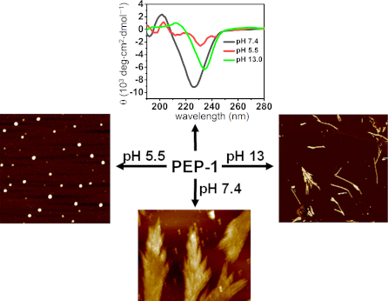
- the desired pH values. AFM samples were prepared by drop-casting 10 μL of the respective sample onto a mica surface, followed by spin-coating at 1000 rpm, and then, the thin film was dried at room temperature for 24 h. After that, images were captured on a Multimode® 8 SPM System (AXS Bruker). Silicon


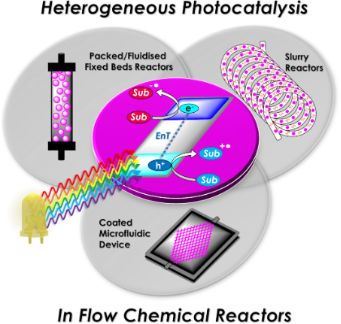
Heterogeneous photocatalysis in flow chemical reactors
Beilstein J. Org. Chem. 2020, 16, 1495–1549, doi:10.3762/bjoc.16.125










Formal preparation of regioregular and alternating thiophene–thiophene copolymers bearing different substituents
Beilstein J. Org. Chem. 2020, 16, 317–324, doi:10.3762/bjoc.16.31
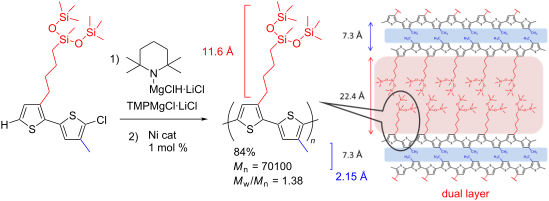
- several copolymers showed a superior solubility. X-ray diffraction analysis of the thin film of the alternating copolymers composed of methyl and branched oligosiloxane substituents was also performed, and the results suggested the formation of a dual-layered film structure. Keywords: alternating
- copolymers. X-ray diffraction measurements revealed that the alternating copolymers bearing different side chain lengths had dual-layer structures in the thin-film state. Experimental General Polymerization was carried out with the standard Schlenk technique under a nitrogen or argon atmosphere. 1H NMR (400
- fluoroalkyl group and a branched oligosiloxane unit in hexanes was noted. XRD analysis of the copolymer 6c, bearing branched oligosiloxane and methyl groups, was carried out. Two remarkable peaks were observed at 2θ = 3.94° and 12.18°, respectively, as shown in Figure 2a. The result suggested that the thin


Synthesis and optoelectronic properties of benzoquinone-based donor–acceptor compounds
Beilstein J. Org. Chem. 2019, 15, 2914–2921, doi:10.3762/bjoc.15.285

- photoluminescence quantum yield (ΦPL) of 3 is poor at 4%. We next investigated the solid-state PL behavior of 3 in a 10 wt %-doped thin film using PMMA as host matrix. The PL spectrum of 3 exhibited two bands, one at 550 nm, corresponding to the emission of 3 and a second high-energy band at 450 nm that was
- theoretical, electrochemical, and photophysical properties of the donor–acceptor compounds 2–5 were determined in solution and thin film. While compounds 2, 4, and 5 were very poorly emissive, 3 showed a green emission with a biexponential lifetime characterized by a prompt nanosecond component and a delayed
- degassed DCM and in 10 wt %-doped films in a PMMA matrix (λexc = 400 nm). Time-resolved PL plots. a) Prompt decay and b) delayed decay curve of 3 in thin film (λexc = 378 nm). Mild and direct C–H monofunctionalization of BQ 1: previous [14] and this work. Synthesis of 2–4 via mild and direct C–H


Towards the preparation of synthetic outer membrane vesicle models with micromolar affinity to wheat germ agglutinin using a dialkyl thioglycoside
Beilstein J. Org. Chem. 2019, 15, 937–946, doi:10.3762/bjoc.15.90
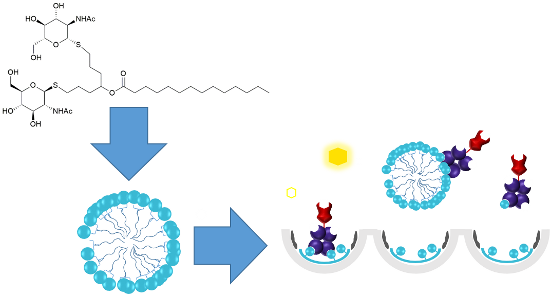
- -glycosylated compounds were observed. Preparation of vesicles upon hydration of a thin film of phospholipids and glycolipids Once synthesized, the compounds 5 and 8 bearing GlcNAc residues were used to produce giant vesicles (GVs) upon hydration with PBS (pH 7.4) by modifying reported procedures [28][29][30
- ]. GVs were prepared by hydrating a thin film containing 90:10 (mol %) of those glycoconjugates in mixture with a natural phospholipid: 1-palmitoyl-2-oleoyl-sn-glycero-3-phosphocholine (POPC). As expected, the mixture once hydrated showed a high tendency to vesiculate (Figure 3, images a–e and h




![[Graphic 2]](/bjoc/content/inline/1860-5397-15-90-i4.svg?max-width=637&scale=0.472728) ) and (○) ...
) and (○) ...
Synthesis of polydicyclopentadiene using the Cp2TiCl2/Et2AlCl catalytic system and thin-layer oxidation of the polymer in air
Beilstein J. Org. Chem. 2019, 15, 733–745, doi:10.3762/bjoc.15.69
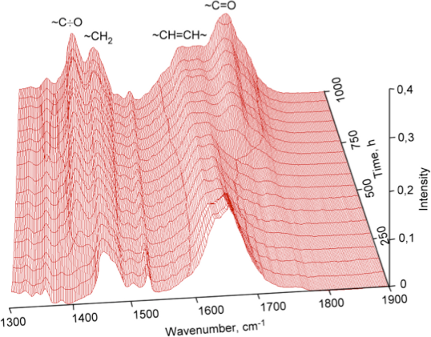
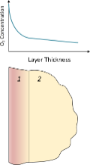
- possibility of the formation of a thin film of a chemically modified polymer, which reduces its permeability to corrosive media. We assume that in case of PDCPD oxidation, the formation of chemically modified polymer layers also occurs, which reduce the permeability of the film to oxygen. The double bonds
- polymerization of dicyclopentadiene. Polymer thin-film coatings of PDCPD obtained via cationic polymerization in air undergo oxidation and transformation. Oxidation in air of unsaturated bonds in layers occurs gradually and takes place during several weeks and comes amid with the growth of carbonyl and hydroxy
- process with a digital thermometer, consisting of a platinum thin film resistance thermometer placed on a ceramic substrate and placed in a stainless steel thin-wall case. The catalyst for cationic DCPD polymerization is a complex that is formed during the interaction of Cp2TiCl2 with AlEt2Cl. The




Tetrathiafulvalene – a redox-switchable building block to control motion in mechanically interlocked molecules
Beilstein J. Org. Chem. 2018, 14, 2163–2185, doi:10.3762/bjoc.14.190
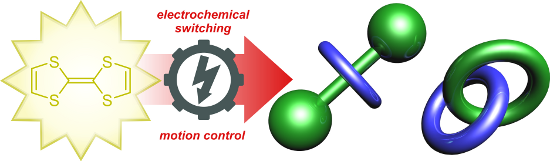
- -decorated TTF-rotaxanes was achieved by Gao and co-workers [95]. They deposited a thin-film of bistable donor–acceptor rotaxanes on an indium tin oxide (ITO)-coated substrate. A clean electrochemical switching on the substrate was observed with current–voltage curves showing a clear memory effect. The




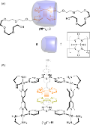

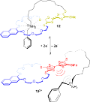


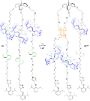


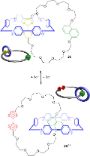


An amine protecting group deprotectable under nearly neutral oxidative conditions
Beilstein J. Org. Chem. 2018, 14, 1750–1757, doi:10.3762/bjoc.14.149
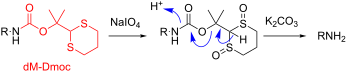
- chromatography (SiO2, 4:1 hexanes/EtOAc) to afford the title compound as a white amorphous solid (6.24 g, 84%): TLC Rf = 0.3 (4:1 hexanes/EtOAc); IR (thin film) ν 3339, 2930, 1420 cm−1; 1H NMR (400 MHz, CDCl3) δ 1.32 (s, 6H), 1.73–1.85 (m, 1H), 2.00–2.07 (m, 1H), 2.41 (s, 1H), 2.78–2.90 (m, 4H), 4.10 (s, 1H) ppm
- combined organic layer was dried over anhydrous Na2SO4, filtered and concentrated. Flash column chromatography (SiO2, 9:1 hexanes/EtOAc) gave 4 as a white amorphous solid (10.0 g, 81%): TLC Rf = 0.4 (5:1 hexanes/EtOAc); IR (thin film) ν 3083, 2981, 1713, 1592, 1522 cm−1; 1H NMR (400 MHz, CDCl3) δ 1.70 (s
- /EtOAc), 5c (6:1 hexanes/EtOAc; Rf = 0.5, 3:1 hexanes/EtOAc), and 5d (9:1 hexanes/EtOAc; Rf = 0.5, 6:1 hexanes/EtOAc) were purified with flash column chromatography (SiO2). 2-(1,3-Dithian-2-yl)propan-2-yl benzylcarbamate (5a): Colorless oil (0.084 g, 92%); IR (thin film) ν 3343, 3020, 2937, 1697, 1506


Recent advances in phosphorescent platinum complexes for organic light-emitting diodes
Beilstein J. Org. Chem. 2018, 14, 1459–1481, doi:10.3762/bjoc.14.124
- , photophysical properties and OLED performances, Chi, Kim and co-workers analyzed the X-ray structures of Pt(fppz)2 (13) and other related platinum(II) complexes 14 and 15 in both single crystal and thin film samples (Figure 7) [13]. They observed different degrees of crystallinity as a function of the
- crystallinity and molecular orientation are key parameters that can make great differences for the resulting thin-film optoelectronic performances. Apart from display applications, general lighting efficiency currently constitutes a main concern of our society and white-emitting OLEDs (WOLEDs) represent a
- reducing vibronic sideband contributions to the overall emission spectrum. The complexes displayed PLQY above 0.7 in PMMA thin-film with λem maxima centred at ca. 450 nm. OLED devices employing complexes 30–32 as emitting materials were fabricated with the following architecture: ITO/HATCN (10 nm)/NPD (40






Two novel blue phosphorescent host materials containing phenothiazine-5,5-dioxide structure derivatives
Beilstein J. Org. Chem. 2018, 14, 869–874, doi:10.3762/bjoc.14.73
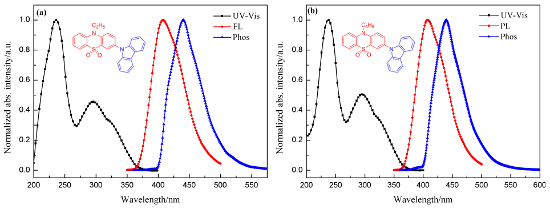
- light-emitting diodes (OLEDs) with ultra-thin film by using vacuum evaporation technology. It has attracted much attention to develop it. In recent years, OLEDs have been rapidly developed and widely used in lighting and display because of many unique performance advantages such as wide viewing angle


Reactivity of bromoselenophenes in palladium-catalyzed direct arylations
Beilstein J. Org. Chem. 2017, 13, 2862–2868, doi:10.3762/bjoc.13.278
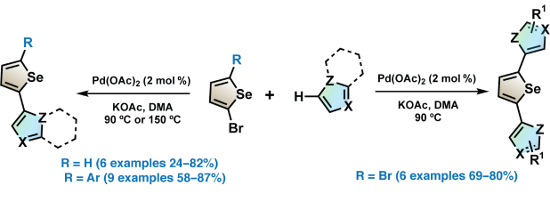
- properties, especially for the preparation of artificial photosynthetic systems for solar energy conversion or for thin film transistor applications [1][2][3]. In most cases, these (hetero)arylated selenophenes are currently prepared through the use of transition-metal-mediated reactions such as Stille [3][4



Synthesis and application of trifluoroethoxy-substituted phthalocyanines and subphthalocyanines
Beilstein J. Org. Chem. 2017, 13, 2273–2296, doi:10.3762/bjoc.13.224
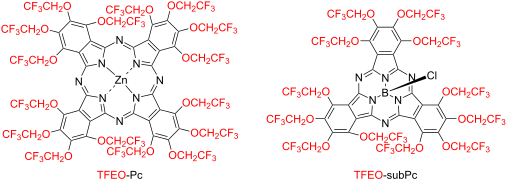
- for organic thin-film solar cells The introduction of trifluoroethoxy groups imparts not only a non-aggregation property and high solubility but also an electron-deficient π space and thermal or chemical stability to the phthalocyanine. For these reasons, it is expected that TFEO-Pcs will be developed
- . Therefore, the structural development of acceptor molecules is restricted. TFEO-Pcs could be developed as a new acceptor-type molecule. In fact, solar cells that utilize the ability of TFEO-Pc to accept energy have been developed. A planar heterojunction organic thin-film solar cell was prepared by using
- with a single trifluoroethoxy group introduced at the β-position, rather than trifluoroethoxy full-coated phthalocyanine, showed the best performance. In the development of organic thin-film solar cells, dye material needs a moderate aggregation property for effective energy transfer [110]. Therefore








Enzymatic separation of epimeric 4-C-hydroxymethylated furanosugars: Synthesis of bicyclic nucleosides
Beilstein J. Org. Chem. 2017, 13, 2078–2086, doi:10.3762/bjoc.13.205
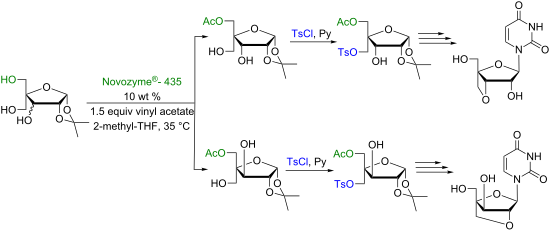
- Novozymes Inc., Copenhagen, Denmark. For all the lipase-mediated reactions, AR grade organic solvents were used, which were purchased from SD Fine-Chem Ltd., Mumbai, India. The IR spectra were recorded by using thin film for oils and by making KBr discs for solid samples. The 1H and 13C NMR spectra were
- system to afford the two monoacetylated sugar derivatives 4a and 4b. 5-O-Acetyl-4-C-hydroxymethyl-1,2-O-isopropylidene-α-D-ribofuranose (4a). It was obtained as colourless oil (1.0 g, 42% yield). Rf = 0.4 (5.0% methanol in chloroform); [α]D18 +9.16 (c 0.1, MeOH); IR (thin film) νmax: 3471, 2946, 1739
- ); IR (thin film) νmax: 3446, 2943, 1739, 1377, 1248, 1164, 1048, 862 cm−1; 1H NMR (CDCl3, 400 MHz) δ 5.93 (d, J = 4.4 Hz, 1H), 4.64–4.63 (m, 1H), 4.31–4.19 (m, 3H), 3.77 (d, J = 11.2 Hz, 1H), 3.63 (d, J = 4.8 Hz, 1H), 2.82 (s, 1H), 2.15 (s, 1H), 2.11 (s, 3H), 1.53 (s, 3H), 1.30 (s, 3H); 13C NMR (CDCl3


Mechanically induced oxidation of alcohols to aldehydes and ketones in ambient air: Revisiting TEMPO-assisted oxidations
Beilstein J. Org. Chem. 2017, 13, 2049–2055, doi:10.3762/bjoc.13.202
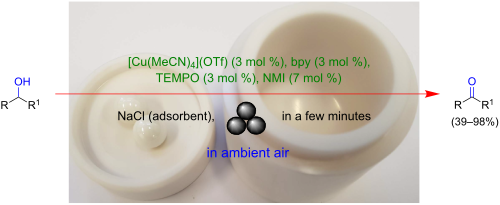
- red/brown thin film. Subsequently, solid 4-nitrobenzyl alcohol (1a, 2 mmol) was added together with two more stainless steel balls (12 mm Ø), and the resulting mixture was milled until the starting alcohol was completely oxidized. Despite the poor reactivity of the 4-nitrobenzyl alcohol, the reaction


Block copolymers from ionic liquids for the preparation of thin carbonaceous shells
Beilstein J. Org. Chem. 2017, 13, 1693–1701, doi:10.3762/bjoc.13.163
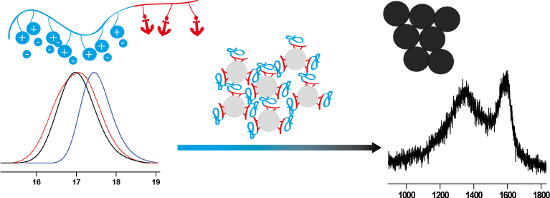
- with an anchor group to bind on the nanoparticle surface allows the formation of a homogenous and thin coating. So far, polyacrylonitrile has been used as a carbonizable block, but polymeric ionic liquids are attractive as well. An approach to coat nanoparticles with either (i) a thin film of PILs or


Nitration of 5,11-dihydroindolo[3,2-b]carbazoles and synthetic applications of their nitro-substituted derivatives
Beilstein J. Org. Chem. 2017, 13, 1396–1406, doi:10.3762/bjoc.13.136
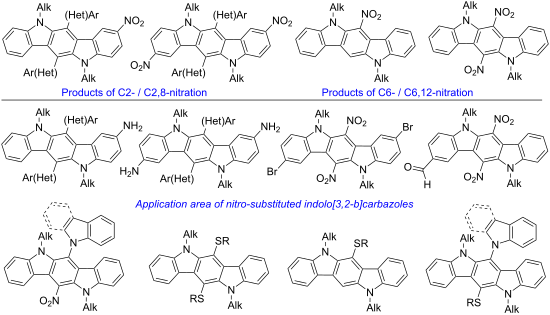
- , based on a ring-fused molecular architecture, have attracted great attention of researchers in the last two decades, because of their plausible use as promising materials for thin film electronic and photonic devices [1][2][3][4][5][6]. In this context, the fused π-conjugated backbone of 5,11


Molecular-level architectural design using benzothiadiazole-based polymers for photovoltaic applications
Beilstein J. Org. Chem. 2017, 13, 863–873, doi:10.3762/bjoc.13.87
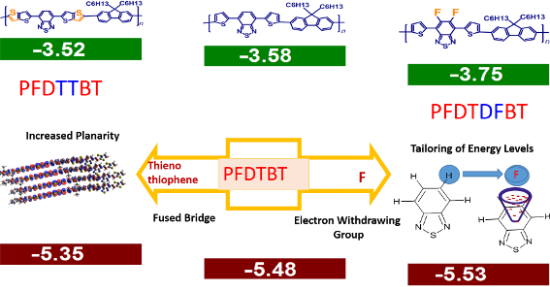
- energy region due to π–π* transitions. A bathochromic shift in the λmax of all thin film spectra of the polymers was observed, as compared to the solution spectra. This is due to the enhanced interchain stacking and ordered structural organization of the polymers in the thin film. The intensity of the



Fast and efficient synthesis of microporous polymer nanomembranes via light-induced click reaction
Beilstein J. Org. Chem. 2017, 13, 558–563, doi:10.3762/bjoc.13.54
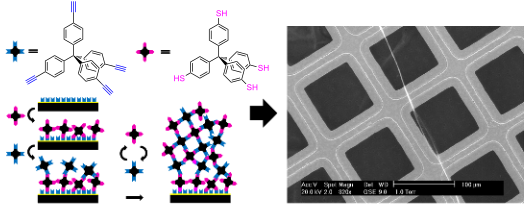
- (IRRAS). Figure 2 shows the IRRA spectrum of the CMP thin film after 20 reaction cycles and the corresponding band assignments. The absence of bands associated to alkyne and thiol functional groups in the IRRA-spectra suggest an almost quantitative reaction. (For IRRA-spectra of the starting materials
- , see Supporting Information File 1, Figures S1–S3.) We evaluated the thickness of the CMP thin film using ellipsometry. The measurements show an average thickness of about 25.1 ± 0.1 nm with a mean squared error (MSE) value of 5.69 after fitting with Cauchy mode with the parameters An = 1.399, Bn
- = 0.051, Cn = −0.0026, k-amplitude = 0 and exponent = 1.5 suggesting a very low surface roughness. To further confirm the thickness we performed the LbL synthesis on a sacrificial substrate [27][28]. Prior to the dissolution of the substrate, we coated the CMP thin film with a stabilizing layer of poly





