


Search results
Search for "transition metal" in Full Text gives 728 result(s) in Beilstein Journal of Organic Chemistry. Showing first 200.
Enantioselective radical chemistry: a bright future ahead
Beilstein J. Org. Chem. 2025, 21, 2283–2296, doi:10.3762/bjoc.21.174
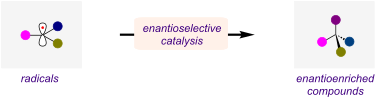
- describes several important catalytic asymmetric strategies applied to enantioselective radical reactions, including chiral Lewis acid catalysis, organocatalysis, photoredox catalysis, chiral transition-metal catalysis and photoenzymatic catalysis. The application of electrochemistry to asymmetric radical
- catalysis is discussed initially. This is followed by the recently emerging areas of transition-metal catalysis, photoenzymatic catalysis, and electrochemistry. Perspective Radical generation and reactions Synthetic methods based on free radical chemistry are some of the most efficient and powerful tools
- radical reaction and can occur either intermolecularly or as an intramolecular cyclization reaction. Radical coupling or combination is a possible transformation that is more feasible when one of the radicals is relatively stabilized (a persistent radical). Trapping a radical with a transition metal is


Pathway economy in cyclization of 1,n-enynes
Beilstein J. Org. Chem. 2025, 21, 2260–2282, doi:10.3762/bjoc.21.173
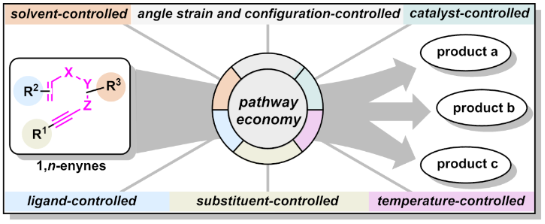
- could be further derivatized (e.g., via borylation, epoxidation), establishing a versatile platform for accessing fused-ring natural products. Substituent-controlled cyclization of 1,n-enynes In transition metal-catalyzed cyclization reactions, the electronic properties and steric hindrance of
- strategy employed transition metal-catalyzed carbene intermediates to mediate stereoselective cyclization, affording bicyclo[4.3.0]nonane derivatives with configurations distinct from Diels–Alder adducts. In 2013, Alami and co-workers demonstrated catalyst-dependent cycloisomerization of aromatic enynes
- aromatic enyne precursors, where product selectivity was controlled by the catalytic system employed. In 2014, Ma and co-workers disclosed a regioselective synthetic strategy for carbazole derivatives, where the directionality of alkyl migration was modulated by the choice of transition metal catalysts


Pd-catalyzed dehydrogenative arylation of arylhydrazines to access non-symmetric azobenzenes, including tetra-ortho derivatives
Beilstein J. Org. Chem. 2025, 21, 2234–2242, doi:10.3762/bjoc.21.170
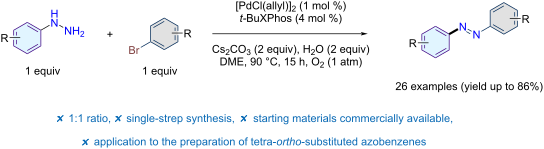
- intricate and inefficient using these standard synthetic protocols. The transition-metal-catalyzed C–N bond formation has emerged as a viable route to access non-symmetric azobenzenes, owing to the broad functional group tolerance of Buchwald–Hartwig amination reactions [34][35][36][37][38][39][40]. Kong


Electrochemical cyclization of alkynes to construct five-membered nitrogen-heterocyclic rings
Beilstein J. Org. Chem. 2025, 21, 2173–2201, doi:10.3762/bjoc.21.166
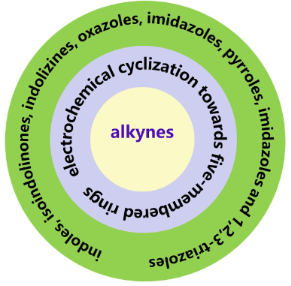
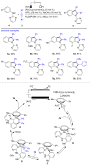
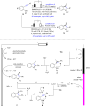
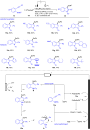
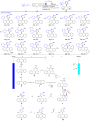
- transformations far from thermodynamic equilibria have emerged abundantly with the consideration of green chemistry [89][90][91][92]. Redox-active organic compounds, transition metal coordinating compounds and even an electrode surface were commonly employed as catalysts in the electrochemical transformations [93









C2 to C6 biobased carbonyl platforms for fine chemistry
Beilstein J. Org. Chem. 2025, 21, 2103–2172, doi:10.3762/bjoc.21.165
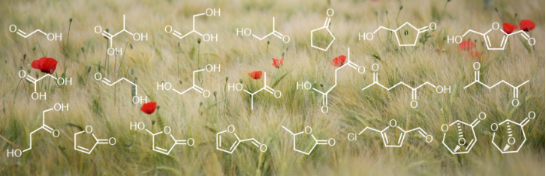
- MPa NH3 and 2 MPa H2. The reaction could be carried for 10 catalytic cycles without deactivation. Zhang developed a transition-metal copper-catalyzed chemoselective asymmetric hydrogenation of the carbonyl group in exocyclic α,β-unsaturated cyclopentanones. Chiral exocyclic allylic pentanols (a


The application of desymmetric enantioselective reduction of cyclic 1,3-dicarbonyl compounds in the total synthesis of terpenoid and alkaloid natural products
Beilstein J. Org. Chem. 2025, 21, 2085–2102, doi:10.3762/bjoc.21.164
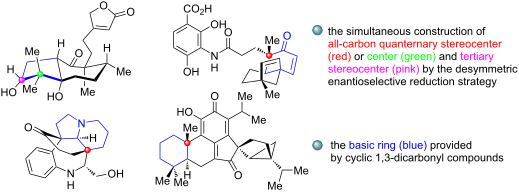
- cyclic prochiral dicarbonyl substrates. In addition, various approaches could be used for the desymmetrization reactions such as enzyme catalytic-, organocatalyst-, and transition-metal-catalyzed reductions [5][6][7]. Advance about the synthesis of several terpenoid and alkaloid natural products (1–5







Photochemical reduction of acylimidazolium salts
Beilstein J. Org. Chem. 2025, 21, 1973–1983, doi:10.3762/bjoc.21.153
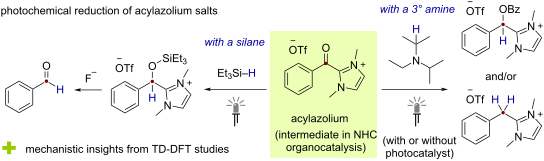
- transition-metal complexes such as the Grubbs’ second-generation metathesis catalyst, NHCs are now also well-established as organocatalysts. With the first application pre-dating the unambiguous characterization of a free NHC by nearly 50 years, NHCs can facilitate numerous synthetically attractive


Asymmetric total synthesis of tricyclic prostaglandin D2 metabolite methyl ester via oxidative radical cyclization
Beilstein J. Org. Chem. 2025, 21, 1964–1972, doi:10.3762/bjoc.21.152
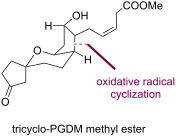
- by the anomeric effect [23] in the tricyclic scaffold. Compound 13 could be produced from olefin 14 via cross-metathesis. The regio- and diastereoselective connection of C8 and C12 in compound 14 could be realized through a transition-metal-mediated oxidative radical cyclization through TS-1 from β
- -keto ester 15 [24]. The β-keto ester 15 was expected to be derived from compounds 16 and 17 via an asymmetric aldol reaction [25]. The first phase of the synthesis required the efficient preparation of compound 14, for which a transition-metal-mediated oxidative radical cyclization of β-keto ester 15
- transition-metal-mediated oxidative radical cyclization for constructing cyclopentanone 14. First, we used Mn(OAc)3·2H2O/Cu(OAc)2·H2O [21] as the oxidant system to perform oxidative annulation of β-keto ester 15 in MeCN as solvent. However, only 9% of the desired product 14 was obtained after conducting the

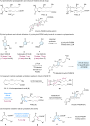


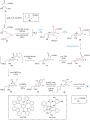
Enantioselective desymmetrization strategy of prochiral 1,3-diols in natural product synthesis
Beilstein J. Org. Chem. 2025, 21, 1932–1963, doi:10.3762/bjoc.21.151
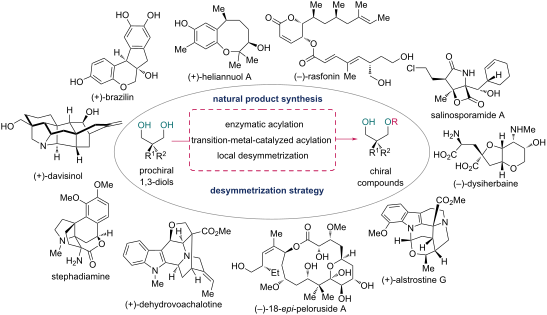
- biologically active molecules. Based on the reaction types, three strategies are discussed: enzymatic acylation, transition-metal-catalyzed acylation, and local desymmetrization. Keywords: asymmetric synthesis; desymmetrization; 1,3-diols; natural product; total synthesis; Introduction Natural products
- emphasis on the desymmetrization of diols. Prochiral 1,3-diols, as simple and practical substrates, have been widely used in developed desymmetrization methodologies with applications in the total synthesis of natural products and bioactive molecules, including enzymatic acylation, transition-metal
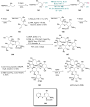
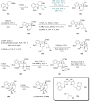
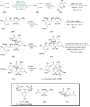
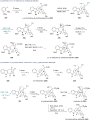
- (125) was obtained through a 12-step sequence from 124. Desymmetrization via transition-metal-catalyzed acylation Although enzymatic acylation reactions are widely employed in total synthesis, certain substrates are incompatible with acylation catalyzed by existing lipases. Inspired by enzymatic










Stereoselective electrochemical intramolecular imino-pinacol reaction: a straightforward entry to enantiopure piperazines
Beilstein J. Org. Chem. 2025, 21, 1897–1908, doi:10.3762/bjoc.21.147
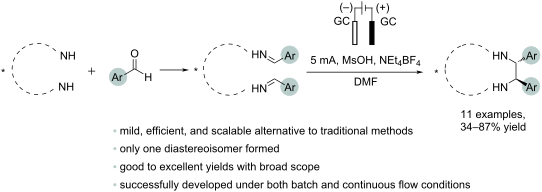
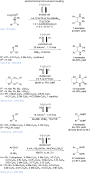
- photochemical and electrochemical methods, have been explored. Over the past two decades a variety of light-promoted imino-pinacol coupling reactions have been developed, involving the use of catalytic transition-metal complexes [35][36], organic dyes [37][38][39], and polyaromatic compounds [40][41] as





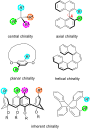
Chiral phosphoric acid-catalyzed asymmetric synthesis of helically chiral, planarly chiral and inherently chiral molecules
Beilstein J. Org. Chem. 2025, 21, 1864–1889, doi:10.3762/bjoc.21.145
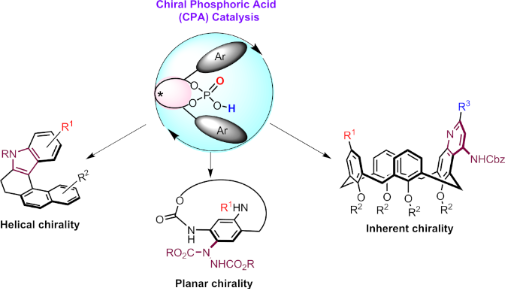
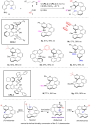
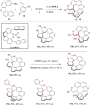
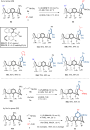
- molecular platforms in various applications, such as circularly polarized luminescence (CPL) materials, chiral liquid crystals and asymmetric catalysis. Currently, the asymmetric catalytic synthesis of helicenes predominantly revolves around transition metal-catalyzed asymmetric annulation reactions
- , including the asymmetric [2 + 2 + 2] cycloaddition of aryl-substituted polyynes and hydroarylation of alkynes [18][19]. In contrast, the application of asymmetric organocatalysis for enantioselective synthesis of chiral helicenes remains relatively underdeveloped compared to transition metal-catalyzed
- enantioselectivity. Overall, with the recent rapid advancements of CPA catalysis, along with the utilization of CPA catalysts in asymmetric radical chemistry, transition metal-catalyzed reactions and photoredox chemistry, we envision that CPA catalysts will continue to play a central role in the future asymmetric










Fe-catalyzed efficient synthesis of 2,4- and 4-substituted quinolines via C(sp2)–C(sp2) bond scission of styrenes
Beilstein J. Org. Chem. 2025, 21, 1799–1807, doi:10.3762/bjoc.21.142
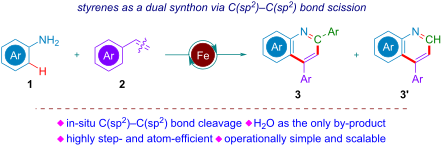
- strategies have been explored in recent decades for the synthesis of structurally diverse quinolines. Among them, transition-metal-catalyzed multicomponent reactions (MCRs) have emerged as particularly effective for constructing complex quinoline-based heterocycles [26][27][28]. Catalytic pathways such as
- -metal catalysts. One of the key transformations in organic synthesis is the selective oxidative cleavage of alkenes to yield ketones or aldehydes [43][44][45][46][47]. Traditionally, such transformations have been achieved using various oxidizing agents, transition-metal-based systems, organo- and
- promising industrial relevance. Oxidative cleavage of alkenes to yield carbonyl compounds is one of the key transformations in synthetic organic chemistry [41][42]. Over the past two decades, this field has witnessed significant advancements, primarily through the use of organic oxidants and transition




Catalytic asymmetric reactions of isocyanides for constructing non-central chirality
Beilstein J. Org. Chem. 2025, 21, 1648–1660, doi:10.3762/bjoc.21.129
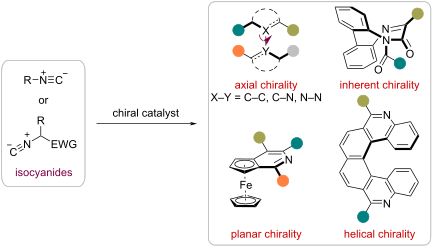
- ], insertion reactions [16][17][18], cycloaddition reactions (e.g., [4 + 1], [3 + 2]) [19][20], and others [21][22][23]. Particularly, isocyanides have been widely exploited toward the preparation of centrally chiral structures through transition-metal-catalyzed or organocatalytic asymmetric reactions [24][25
- , and inherent chirality, remain largely underdeveloped. To date, only a single example has been reported for each case, all of which are restricted to palladium-catalyzed isocyanide insertion reactions. Second, the catalytic systems employed thus far are relatively limited. Although transition metal




Photocatalysis and photochemistry in organic synthesis
Beilstein J. Org. Chem. 2025, 21, 1645–1647, doi:10.3762/bjoc.21.128
- of a dehydroalanine derivative using silane-mediated halogen atom transfer [28]. Dual catalytic approaches that merge photocatalysis with Lewis acid [29], organo- [30], or transition metal catalysis [31] have enabled access to bond formations that are otherwise challenging to achieve. In particular
- , the combination of nickel catalysis and photoredox catalysis has become one of the most studied strategies to forge carbon–carbon bonds. The groups of Soengas and Rodríguez-Solla used this strategy to develop a general method for the synthesis of enaminones [32]. Light-induced transition metal
- catalysis that does not require exogenous photocatalysts has emerged as a new paradigm in photochemical synthesis [33]. Here, a transition metal complex plays a dual role by harnessing photon energy to facilitate bond-breaking and bond-forming events. For example, Sipos and co-workers demonstrate in this

Transition-state aromaticity and its relationship with reactivity in pericyclic reactions
Beilstein J. Org. Chem. 2025, 21, 1613–1626, doi:10.3762/bjoc.21.125
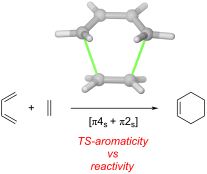
- the aromaticity of the transition state and the activation barriers of different pericyclic reactions spanning from the parent Diels–Alder reactions to higher-order cycloadditions or even transition-metal-mediated transformations [22][23][24][25][26][27][28][29]. By selecting illustrative examples, in


3-Aryl-2H-azirines as annulation reagents in the Ni(II)-catalyzed synthesis of 1H-benzo[4,5]thieno[3,2-b]pyrroles
Beilstein J. Org. Chem. 2025, 21, 1595–1602, doi:10.3762/bjoc.21.123
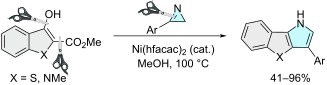
- reactions of intermolecular annulation of a variety of non-aromatic five- [4][5][6] and six-membered carbo- and heterocycles [7][8][9] with azirines, which occur under transition metal catalysis or photocatalysis. Annulation of the pyrrole ring to an aromatic system is limited to reactions of functionalized
- heteroaromatic system have been reported to date. The formation of dihydrobenzofuro[3,2-b]pyrrole cycloadducts as by-products has been observed in the synthesis of aziridines by the transition metal-catalyzed reaction of benzofurans with 3-arylazirines [16]. This paper presents the use of azirines as annulation
- discussed. Results and Discussion Guided by the known fact that 3-arylazirines in the presence of transition metal compounds are sensitive to the enol form of 1,3-dicarbonyls [5][17][18][19], we chose for our study methyl 3-hydroxybenzo[b]thiophene-2-carboxylate (1) as an aromatic substrate having a 1,3



Azide–alkyne cycloaddition (click) reaction in biomass-derived solvent CyreneTM under one-pot conditions
Beilstein J. Org. Chem. 2025, 21, 1544–1551, doi:10.3762/bjoc.21.117
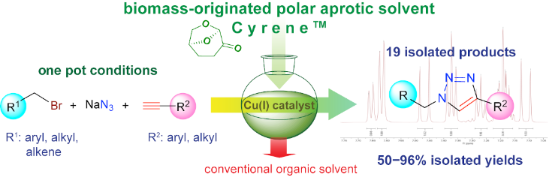
- important transformation exhibiting higher chemical and environmental safety. Keywords: alternative solvent; click chemistry; cycloaddition; CyreneTM; 1,2,3-triazoles; Introduction In the past few decades, transition-metal-catalyzed coupling and addition reactions have represented one of the most powerful
- it is negative in the Ames test [25]. Recently, we determined key physicochemical properties of CyreneTM and showed that it has a negligible vapor pressure (<9.6 kPa) and low viscosity (<6.8 mPa·s) at typical transition-metal-catalyzed reaction temperatures (30–140 °C) [26]. CyreneTM has been
- obtained for Cu sources in different solvent systems [40][41]. Although CuAAC reactions can be efficiently performed in water, the moisture content of the organic reaction environment could have a significant effect on the efficiency of a transition-metal-catalyzed reaction. Because CyreneTM is fully


General method for the synthesis of enaminones via photocatalysis
Beilstein J. Org. Chem. 2025, 21, 1535–1543, doi:10.3762/bjoc.21.116
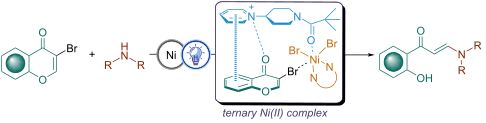
- the reactivity of unsaturated esters towards an aza-Michael addition is the use of transition metal complexes as catalysts/promoters [40][41][42]. Considering this background, we reasoned that Ni(II) could be a suitable catalyst for the amination of unsaturated systems. Initial investigations were




Copper catalysis: a constantly evolving field
Beilstein J. Org. Chem. 2025, 21, 1477–1479, doi:10.3762/bjoc.21.109

- , decarboxylative functionalizations, and Chan–Lam coupling reactions. In doing so, the authors point out the combination of transition-metal catalysis and electrochemistry as an efficient, sustainable method for the oftentimes challenging formation of C–C and C–heteroatom bonds in complex molecules. Another Review
- , Burley, Watson, and co-workers present a new synthesis of germyl triazoles from germyl alkynes through a copper-catalyzed azide–alkyne cycloaddition (CuAAC) reaction [6]. The resulting Ge-substituted triazoles could be further diversified. For example, through chemoselective transition-metal-catalyzed
Microwave-enhanced additive-free C–H amination of benzoxazoles catalysed by supported copper
Beilstein J. Org. Chem. 2025, 21, 1462–1476, doi:10.3762/bjoc.21.108
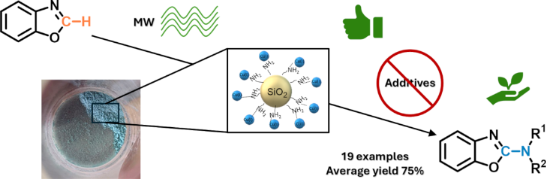
- -amination of benzoxazoles by transition-metal-catalysed reactions that traditionally involve aryl halide scaffolds [11][12][13][14]. However, these procedures entail disadvantages that need to be overcome if green chemistry criteria are to be met; high temperatures, long reaction times, the need for ligands



Advances in nitrogen-containing helicenes: synthesis, chiroptical properties, and optoelectronic applications
Beilstein J. Org. Chem. 2025, 21, 1422–1453, doi:10.3762/bjoc.21.106
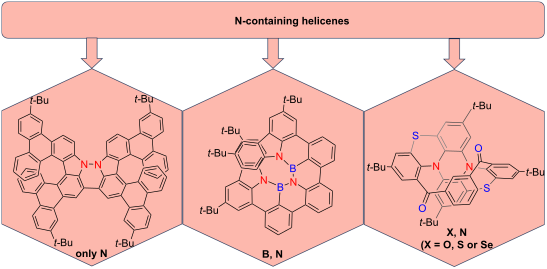
- stimuli-responsive chiral electrochromic materials. In the same year, You’s group developed a transition-metal-catalyzed C–H/C–H-type regioselective C3-arylation of benzothiophenes using molecular oxygen as the oxidant [79]. This strategy afforded the TADF-active compound 64a, which exhibits efficient
- ), pronounced chiroptical activity (|gabs| = 0.0054–0.0056), and substantial ΦF of 0.21–0.32 under both neutral and acidic conditions. This work exemplifies the power of transition-metal catalysis for constructing enantioenriched helicenes with tunable photophysical properties. These contributions from 2021

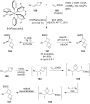
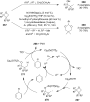
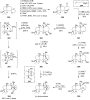
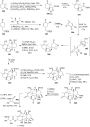
Oxetanes: formation, reactivity and total syntheses of natural products
Beilstein J. Org. Chem. 2025, 21, 1324–1373, doi:10.3762/bjoc.21.101








Recent advances in amidyl radical-mediated photocatalytic direct intermolecular hydrogen atom transfer
Beilstein J. Org. Chem. 2025, 21, 1306–1323, doi:10.3762/bjoc.21.100
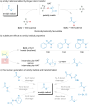
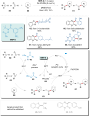
- molecules. On the other hand, C–H bonds exhibit low reactivity due to their relatively high bond dissociation energy (BDE) (Figure 1a). Therefore, the direct functionalization of C–H bonds is extremely challenging [1][2][3][4][5]. In recent decades, transition-metal-catalyzed C–H bond functionalization
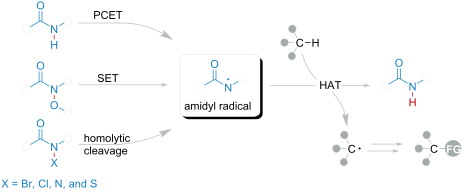
- principles. (a) BDE of C–H. (b) Direct functionalization of C–H catalyzed by transition-metal. (c) Direct functionalization of C–H via HAT process. (a) Amidyl radical-enabled hydrogen atom transfer. (b) Substituent effects to amidyl radical properties. (c) This review: generation of amidyl radical and






Recent advances in oxidative radical difunctionalization of N-arylacrylamides enabled by carbon radical reagents
Beilstein J. Org. Chem. 2025, 21, 1207–1271, doi:10.3762/bjoc.21.98
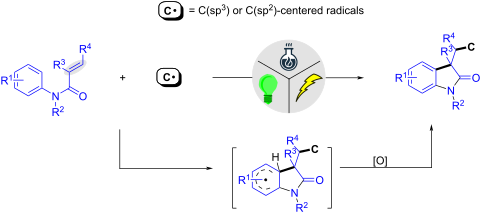
- a specific focus on strategies involving carbon-centered radicals. The reactions are systematically categorized according to their initiation modes and radical sources, including (1) transition-metal-catalyzed radical reactions, (2) peroxide-mediated thermal processes, (3) photoredox-catalyzed
- catalysts for generating trifluoromethyl radicals, thereby eliminating the need for expensive transition-metal catalysts and external oxidants, which enhances both the economic and environmental benefits of the process. Furthermore, the research demonstrated the method's broad applicability across various N
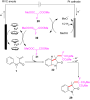
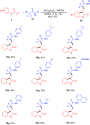
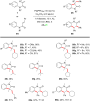
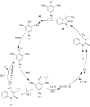
- oxidation, ultimately forming the final oxindole product 76a. Interestingly, the reaction proceeds via two distinct pathways depending on the presence of an alkene radical acceptor, with DMSO or dimethyl sulfone as the byproduct. In addition to transition-metal and photocatalyzed systems, several metal-free












Synthesis of β-ketophosphonates through aerobic copper(II)-mediated phosphorylation of enol acetates
Beilstein J. Org. Chem. 2025, 21, 1192–1200, doi:10.3762/bjoc.21.96
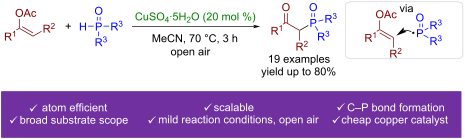
- , which generally employed stoichiometric amounts of oxidants or more expensive transition metal catalysts, the present protocol employs only cheap copper sulfate pentahydrate as a catalyst under mild reaction conditions. The achieved phosphorylation proceeds via the formation of P-centered radicals
- oxyphosphorylation of styrenes [40], this strategy was further extended [41] to phenylacetylenes [42][43][44], cinnamic [45][46][47][48] and α,β-alkynyl carboxylic acids [42], and vinyl azides [49][50] (Scheme 1a). As a rule, transition metal catalysts (Fe [42][44][51][52], Cu [42][44][46][51][53], Ag [54], Mn [55
- product was observed. Other transition metal salts were also ineffective in the discovered transformation (Table 1, entries 18–20). With optimal conditions in hand, the scope of the developed phosphorylation protocol was evaluated (Scheme 2). The discovered phosphorylation is applicable to various





