Search results
Search for "PEG" in Full Text gives 143 result(s) in Beilstein Journal of Organic Chemistry.
Multicomponent reactions (MCRs): a useful access to the synthesis of benzo-fused γ-lactams
Beilstein J. Org. Chem. 2019, 15, 1065–1085, doi:10.3762/bjoc.15.104
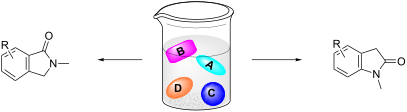
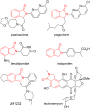
- (33) is replaced by bromoisobenzofuranone 61, also leading to isoindoloquinazoline derivatives 57 (Scheme 18) [99]. After optimization of the reaction conditions, a 4:1 combination of water and PEG-400 was chosen as the best solvent and an array of nineteen isoindoloquinazolinones 57 with yields






Catalyst-free assembly of giant tris(heteroaryl)methanes: synthesis of novel pharmacophoric triads and model sterically crowded tris(heteroaryl/aryl)methyl cation salts
Beilstein J. Org. Chem. 2019, 15, 642–654, doi:10.3762/bjoc.15.60
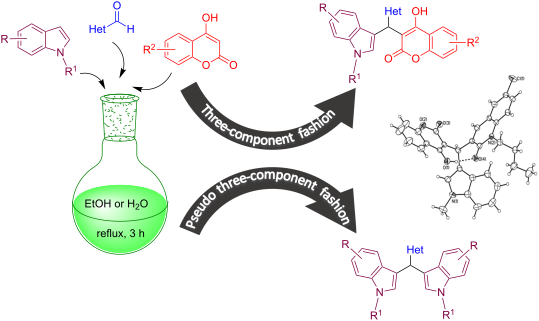
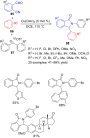
- ]. Furthermore, it is highly desirable to perform these reactions in environmentally friendly solvents such as water, ethanol, and PEG [6][7]. Motifs bearing triarylmethane (Ar3CH) [8][9][10] and their heterocyclic variants (Het-Ar)3CH [8][9][10][11][12], constitute an integral part of a number of bioactive








Cyclopropene derivatives of aminosugars for metabolic glycoengineering
Beilstein J. Org. Chem. 2019, 15, 584–601, doi:10.3762/bjoc.15.54
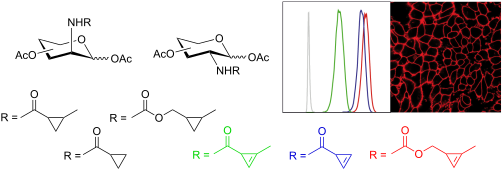
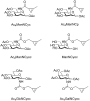
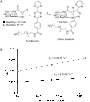
- allowed the determination of rate constants in aqueous solution. As reported for ManNCyoc, an excess of ManNCyc and ManNCp, respectively, was reacted with water-soluble tetrazine Tz-PEG-OH in acetate buffer (pH 4.7, Figure 2A). The decrease of absorption of Tz-PEG-OH at λmax = 522 nm was measured and
- peracetylation step. Stock solutions of Tz-PEG-OH and sugar were prepared in acetate buffer (pH 4.8) and mixed in a quartz cuvette to give final concentrations of 1 mM Tz-PEG-OH and 10 mM, 13.3 mM and 16.6 mM, respectively, of ManCyc or ManCp. The reaction was monitored by measuring the absorption of the
- tetrazine at 522 nm. Pseudo-first-order rate constants were determined for every concentration of ManNCyc and ManNCp, respectively, by plotting ln(A0/At) versus time. For the determination of A0, a 1 mM solution of Tz-PEG-OH was used. At is the absorption of the reaction at time point t. Analysis by linear



Aqueous olefin metathesis: recent developments and applications
Beilstein J. Org. Chem. 2019, 15, 445–468, doi:10.3762/bjoc.15.39
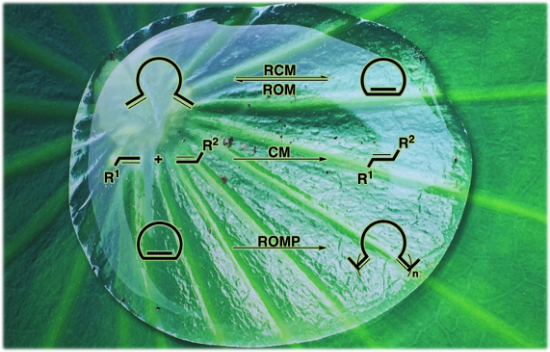
- metathesis to proceed efficiently “in water” [36]. Lipshutz and co-workers generalized the application of a three-component non-ionic surfactant for numerous reactions in water, including olefin metathesis [37][38][39]. The surfactant, PTS, incorporates α-tocopherol, sebacic acid and PEG moieties as part of
- analogues (Scheme 8). However, catalysts 1 and 2 are unstable in water and their use is limited to ROMP. Polyethylene glycol (PEG)-tagged catalysts (10 and 11, Figure 1c) showed significantly improved RCM activities in water, but they tend to form aggregates in water due to their high molecular weight (ca
- (Figure 1c) through host–guest interactions [61]. Chung and co-workers used a PEG-tethered adamantyl ligand for various metathesis reactions in water and DCM [62]. The authors showed that the catalyst can be easily removed by generating a host–guest complex between silica-grafted β-cyclodextrin and the




Olefin metathesis in multiblock copolymer synthesis
Beilstein J. Org. Chem. 2019, 15, 218–235, doi:10.3762/bjoc.15.21

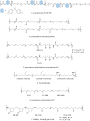
- -substituted NB with poly(ethylene glycol) (PEG) [69]. Ring-opening metathesis copolymerization of the rather strained cyclooctene (COE) and a strainless 27-membered macrocyclic olefin (MCO) led to the multiblock copolymer consisting of octenylene blocks linked with ring-opened MCO segments (Scheme 6) [70




Olefin metathesis catalysts embedded in β-barrel proteins: creating artificial metalloproteins for olefin metathesis
Beilstein J. Org. Chem. 2018, 14, 2861–2871, doi:10.3762/bjoc.14.265
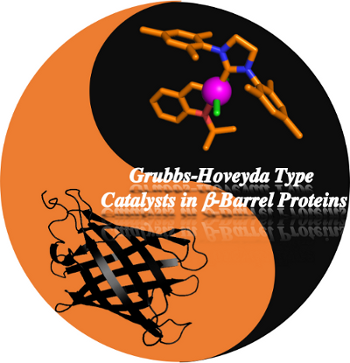
- catalyst and carbohydrate or small polyethylene glycol (PEG) groups were attached [11]. As another strategy to modify a protein surface with olefin metathesis, Isarov and Pokorski introduced a Grubbs 3rd generation catalyst on the surface of lysozyme and performed ring-opening metathesis polymerization
- (ROMP) on the protein surface employing a PEGylated norbornene derivative as substrate [13]. This led to proteins modified with PEG chains. These two examples illustrate the potential applications of olefin metathesis in protein modification. Further applications would be the implementation of olefin


The design and synthesis of an antibacterial phenothiazine–siderophore conjugate
Beilstein J. Org. Chem. 2018, 14, 2646–2650, doi:10.3762/bjoc.14.242
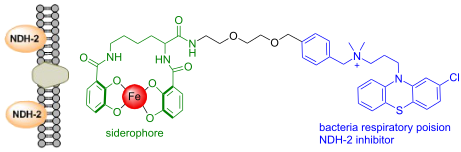
- -cleavable linker. A polyethylene glycol (PEG) linker was selected as PEG linkers demonstrate enhanced water solubility in comparison to alkyl chain linkers. We then had to make a decision on the position of attachment for the PEG linker to compound 1. For siderophore conjugates, it is crucial that the
- suitable position for PEG linker attachment [13]. From commercially available 2-(2-aminoethoxy)ethanol the amine functionality was Boc-protected under standard conditions to give compound 2 (Scheme 1). Under basic conditions 2 underwent an SN2 reaction with commercially available p-xylylene dichloride to
- suitable to progress to the next steps. Initially, the reaction of 3 with chlorpromazine (free base) was attempted at room temperature; however, it was found refluxing was required to drive the reaction to completion to generate compound 4 in excellent yield. The final PEG-amine-functionalised


Calixazulenes: azulene-based calixarene analogues – an overview and recent supramolecular complexation studies
Beilstein J. Org. Chem. 2018, 14, 2488–2494, doi:10.3762/bjoc.14.225
- Stueker of Compute/Calcul Canada via the Westgrid and Acenet facilities. The late Prof. R. Marceau, Vice-President Research, M.U.N. is gratefully acknowledged for research support to PEG.


On the design principles of peptide–drug conjugates for targeted drug delivery to the malignant tumor site
Beilstein J. Org. Chem. 2018, 14, 930–954, doi:10.3762/bjoc.14.80
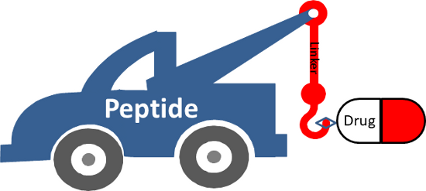
- linker tethering the transporting vehicle to the cytotoxic warhead, d) the “programmable” navigating/targeting moiety (i.e., receptor-specific ligand) and e) the “stealth” carrier (i.e., PEG) transfusing enhanced bioavailability. These modules are encoded in Figure 2A with different colors: the


Crystal structure of the inclusion complex of cholesterol in β-cyclodextrin and molecular dynamics studies
Beilstein J. Org. Chem. 2018, 14, 838–848, doi:10.3762/bjoc.14.69
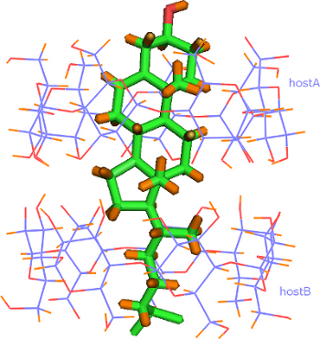
- increased safety in NPC animal models [12]. Moreover, superstructures of cyclodextrins like mono-lactose-appended β-CD [13] and biocleavable pluronic/β-CD-based polyrotaxanes [14] as well as PEG-lipid micelles (DSPE-PEG) in combination with HP-β-CD [15] have shown enhanced therapeutic effects and exhibit a


Nanoreactors for green catalysis
Beilstein J. Org. Chem. 2018, 14, 716–733, doi:10.3762/bjoc.14.61
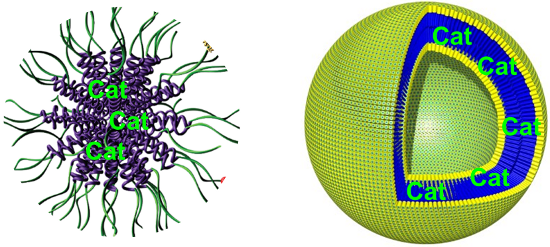
- for facile tuning of their properties such as size [13][74], membrane permeability [75] and stability [76]. Various copolymers have been reported for polymersome formation such as poly(ethylene glycol)-b-polystyrene (PEG-b-PS) [14][77], polystyrene-b-polyisocyanopeptide (PS-b-PIAT)[21][22] and poly(N
- conversion of glucose in a tandem reaction [82]. The hydrophilic block of their polymersomes was PEG, and the hydrophobic block contained both poly[2-(diethylamino)ethyl methacrylate] (PDEAEM) which is pH responsive, and poly[4-(3,4-dimethylmaleimido)butyl methacrylate] (PDMIBM) as cross-linker. The activity
- in yields above 70%. Moreover, the Pd@PNIPAM nanoreactors could be easily recycled thanks to the reversible phase-transition of the polymeric brushes [112]. Que et al. reported the synthesis of gold nanoparticles (Au NPs) sheltered in PEG-PS nanogels for the reduction of 4-nitrophenol (4NP) [121


Synthesis and biological evaluation of RGD and isoDGR peptidomimetic-α-amanitin conjugates for tumor-targeting
Beilstein J. Org. Chem. 2018, 14, 407–415, doi:10.3762/bjoc.14.29
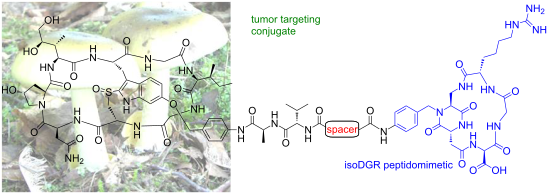
- as in the A549 and MDA-MB-468 (αVβ3−) cell lines (2.4–3.1 times, cf. entry 1 with entry 5 in Table 3). The cyclo[DKP-isoDGR]-α-amanitin conjugate bearing the lysosomally cleavable Val-Ala linker and a PEG-4 spacer 11 proved slightly more potent than α-amanitin in both the U87 (αVβ3+) and MDA-MB-468
- -amanitin (10) and cyclo[DKP-isoDGR]-PEG-4-Val-Ala-α-amanitin (11). Synthesis of α-amanitin-cyclo[DKP-RGD] and α-amanitin-cyclo[DKP-isoDGR] conjugates 7–10. Reagents and conditions: a) 1. glutaric anhydride, DMAP, iPr2NEt, DMF, overnight, 2. DIC, N-hydroxysuccinimide, DMF, overnight; b) di-N-succinimidyl
- -isoDGR]-PEG-4-Val-Ala-α-amanitin conjugate 11. Reagents and conditions: a) 4-pentynoic acid N-hydroxysuccinimidyl ester, iPr2NEt, DMF, overnight; b) N3-PEG-4-cyclo[DKP-isoDGR], sodium ascorbate, CuSO4·5H2O, DMF/water, rt, overnight. Inhibition of biotinylated vitronectin binding to αvβ3 and αvβ5


Preparation of trinucleotide phosphoramidites as synthons for the synthesis of gene libraries
Beilstein J. Org. Chem. 2018, 14, 397–406, doi:10.3762/bjoc.14.28
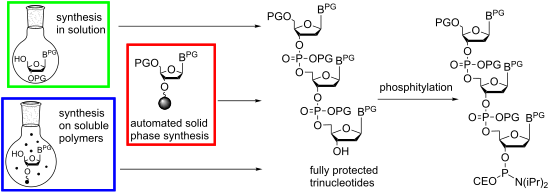
- of the desired products [34][39]. 4. Preparation of trinucleotides on soluble supports Another strategy of combining the advantages of solution chemistry and solid-phase methods is the assembly of oligonucleotides on soluble supports. Among the supports used for this purpose, polyethylene glycol (PEG


5-Aminopyrazole as precursor in design and synthesis of fused pyrazoloazines
Beilstein J. Org. Chem. 2018, 14, 203–242, doi:10.3762/bjoc.14.15
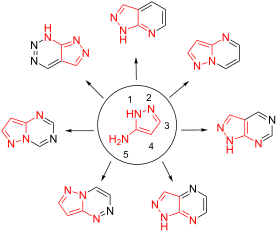
- -diazopyrazole derivative 158 with 4-substituted benzylidene-3-methyl-1H-pyrazol-5(4H)-one 159 in PEG-400. The reaction resulted in the synthesis of 6,7-dihydropyrazolo[1,5-a]pyrimidine derivatives 160 (Scheme 45). Selected compounds were studied for their interaction with calf thymus DNA using various


Phosphonic acid: preparation and applications
Beilstein J. Org. Chem. 2017, 13, 2186–2213, doi:10.3762/bjoc.13.219
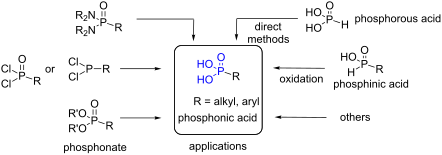
- that were used for self-assembled monolayers (e.g., compound 61 [187]), polymers (PEG derivative 62 [188] or functionalized polyethylene 63 [189]) were reported. The McKenna’s procedure was also applied to prepare polyphosphonic acids as exemplified by the compounds 64 [120], 65 [190], 66 [191] and the


Solid-state mechanochemical ω-functionalization of poly(ethylene glycol)
Beilstein J. Org. Chem. 2017, 13, 1963–1968, doi:10.3762/bjoc.13.191
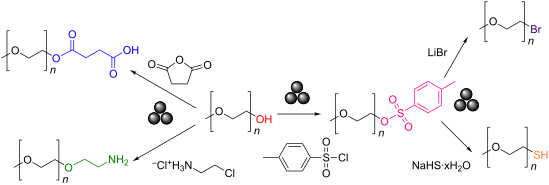
- Michael Y. Malca Pierre-Olivier Ferko Tomislav Friscic Audrey Moores Department of Chemistry, McGill University, 801 Sherbrooke Street West, Montreal, QC, H3A 0B8, Canada 10.3762/bjoc.13.191 Abstract Poly(ethylene glycol) (PEG) is a linear polymer with a wide range of applications in chemical
- manufacturing, drug development and nanotechnology. PEG derivatives are being increasingly used to covalently modify small molecule and peptide drugs, as well as bioactive nanomaterials in order to improve solubility in biological serum, reduce immunogenicity, and enhance pharmacokinetic profiles. Herein we
- present the development of mechanochemical procedures for PEG functionalization without the need for bulk solvents, offering a cleaner and more sustainable alternative to existing solution-based PEG procedures. The herein presented mechanochemical procedures enable rapid and solvent-free derivatization of


Mechanochemical synthesis of thioureas, ureas and guanidines
Beilstein J. Org. Chem. 2017, 13, 1828–1849, doi:10.3762/bjoc.13.178
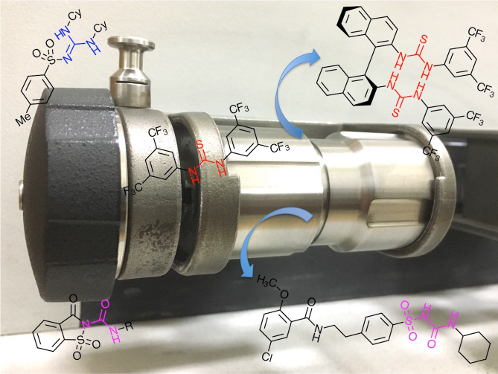
- polymeric macromolecular catalysts, e.g., PEG 200 and PEG 10000 as solid auxiliaries to enhance crystallization under LAG mechanochemical conditions in "polymer and liquid-assisted grinding" or POLAG [22][23]. While the focus in these investigations has been on the improvement of the macroscopic parameters




Chiral phase-transfer catalysis in the asymmetric α-heterofunctionalization of prochiral nucleophiles
Beilstein J. Org. Chem. 2017, 13, 1753–1769, doi:10.3762/bjoc.13.170
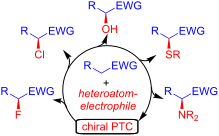
- synthesis of differently substituted ketoesters 3 with good to high enantioselectivities by using just 2 mol % of the bifunctional catalyst. Very interestingly, Shi’s group very recently also reported PEG-bound derivatives of these catalysts which performed more or less equally selective for this


An efficient Pd–NHC catalyst system in situ generated from Na2PdCl4 and PEG-functionalized imidazolium salts for Mizoroki–Heck reactions in water
Beilstein J. Org. Chem. 2017, 13, 1735–1744, doi:10.3762/bjoc.13.168
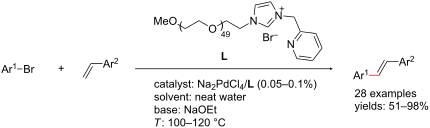
- Nan Sun Meng Chen Liqun Jin Wei Zhao Baoxiang Hu Zhenlu Shen Xinquan Hu College of Chemical Engineering, Zhejiang University of Technology, Hangzhou 310032, China 10.3762/bjoc.13.168 Abstract Three PEG-functionalized imidazolium salts L1–L3 were designed and prepared from commercially available
- 10,000. Keywords: aqueous homogeneous catalysis; Mizoroki–Heck reaction; Na2PdCl4; PEG-functionalized imidazolium salts; Introduction Nowadays, both increasing environmental concerns and drastic commercial competition are the driving forces to develop more sustainable and economic processes for
- activity in Mizoroki–Heck reactions with DMF as solvent [66]. With this regards, we herein report the development of a new poly(ethylene glycol, PEG) and pyridine bi-functionalized imidazolium salt L1 (Figure 1), which was employed as a water soluble NHC ligand precursor for an in situ generated Pd–NHC


2-Methyl-2,4-pentanediol (MPD) boosts as detergent-substitute the performance of ß-barrel hybrid catalyst for phenylacetylene polymerization
Beilstein J. Org. Chem. 2017, 13, 1498–1506, doi:10.3762/bjoc.13.148
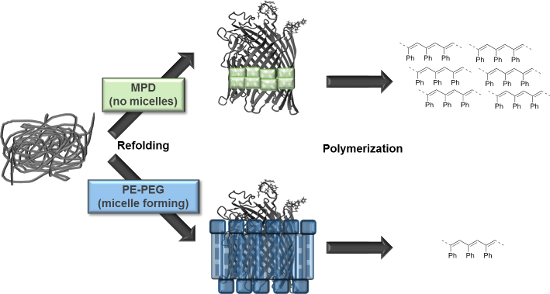
- membrane of Escherichia coli (E. coli) [30]. For extraction of membrane proteins, commonly micelle-forming detergents such as sodium dodecyl sulfate (SDS), polyethylene–polyethyleneglycol (PE–PEG), sugar glycosides or polyoxyethylenes are applied [24][25][28][31][32]. SDS is an efficient detergent for
- carried out, reaching higher molecular weights and yields compared to catalysis with the micelle-forming refolding reagent PE–PEG. Minimum of MPD molecules was analyzed by molecular dynamics studies to enable refolding of SDS-denatured transmembrane protein FhuA ΔCVFtev [29]. This report aims to
- demonstrate the importance of the right choice of the membrane protein stabilizer for biohybrid catalysis. Results and Discussion For solubilizing the transmembrane protein FhuA ΔCVFtev PE–PEG and MPD were applied as stabilizing agent and phenylacetylene polymerization was performed as model reaction (Figure


Synthesis of oligonucleotides on a soluble support
Beilstein J. Org. Chem. 2017, 13, 1368–1387, doi:10.3762/bjoc.13.134
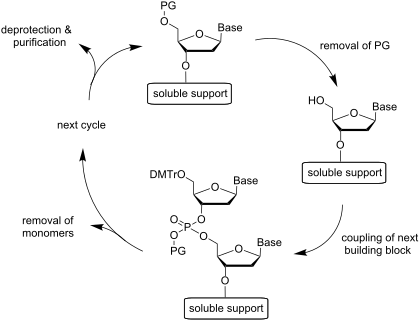
- by Bonora et al. [37] on polyethylene glycol (PEG 5000) monomethyl ester. The overall strategy was rather similar to that of the solid-supported chemistry (Scheme 2). Accordingly, the 3´-terminal nucleoside, 5´-O-DMTr-N6-Bz-dA, was attached to the support via a 3´-succinyl linker, the 5´-O-DMTr group
- DCM/Et2O. In spite of several precipitations and recrystallizations, one coupling cycle could be completed in 5 hours, the stepwise coupling yield ranging from 90% to 95% and the crude PEG-bound octamer was obtained in 79% yield. The coupling of dGibu proceeded, however, in more than 100% yield, which
- tetramethylguanidine in aq dioxane [39] and aq ammonia, and purified by ion-exchange chromatography on DEAE cellulose. From 980 mg of crude PEG-octamer, 85 mg of pure lyophilized TEA salt of d(5´-TAGCGCTA-3´) was obtained. In other words, the yield of the isolation step was less than 30%. To avoid the modification of






One-pot synthesis of block-copolyrotaxanes through controlled rotaxa-polymerization
Beilstein J. Org. Chem. 2017, 13, 1310–1315, doi:10.3762/bjoc.13.127
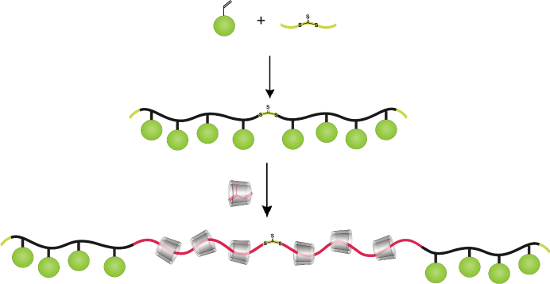
- already started from a PEG α-CD pseudopolyrotaxane, but unthreading of α-CD was found to be a severe problem during polymerization, which could only be overcome by elaborate attachment of “molecular hooks” to both chain ends [30]. Furthermore, polyisoprene is advantageous for biomedical applications


Correction: Fluorescent carbon dots from mono- and polysaccharides: synthesis, properties and applications
Beilstein J. Org. Chem. 2017, 13, 1136–1138, doi:10.3762/bjoc.13.112
- polysaccharide-derived CDs in the presence of PEG-200 and how the starting material composition is conferred to the CD products. Corrected Scheme 22 of the original article. Hyaluronic acid (HA) and glycine-derived CDs, suspected to be decorated in unreacted HA, allowing receptor-mediated cell uptake.


Glyco-gold nanoparticles: synthesis and applications
Beilstein J. Org. Chem. 2017, 13, 1008–1021, doi:10.3762/bjoc.13.100
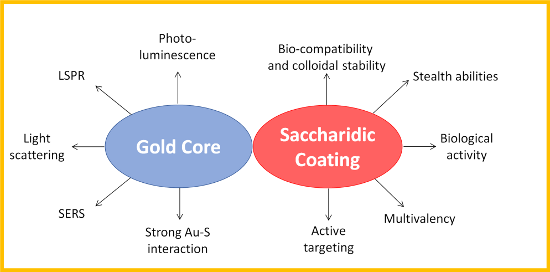
- intracellular stability. Liz-Marzan et al. assessed the ability of glycan ligands to reduce the protein corona formation around rod-shaped AuNPs [71]. Lactose- and polyethylene glycol (PEG)-functionalized gold nanorods demonstrated similar ability in reducing the interaction with proteins, when compared to
- citrate-AuNPs. Moreover, comparing the macrophage NP uptake, the authors demonstrated that the lactose shell can prevent phagocytosis more efficiently than PEG coating. A deep knowledge of any aspect which can influence the GAuNP behavior is important to drive the correct design of the nanosystem and is
- ). By means of this sugar chips the carbohydrate−protein interactions have been analyzed and quantified in a very small volume with results confirmed by the conventional LSPR biosensors. Gibson et al. [66] designed 40 nm AuNPs capped with glyco-PEG ligands to discriminate different strains of E. coli


Aggregation behaviour of a single-chain, phenylene-modified bolalipid and its miscibility with classical phospholipids
Beilstein J. Org. Chem. 2017, 13, 995–1007, doi:10.3762/bjoc.13.99
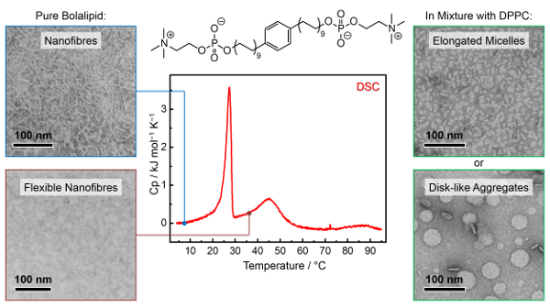
- DPPC/DHPC systems [49], or for mixtures of phospholipids with other amphiphilic substances, e.g., in PEG-stabilized bilayer systems [50][51], for phospholipids with membrane scaffold proteins [52][53] or in combination with copolymers [54][55], or for DPPC in mixture with a T-shaped amphiphile [56